10 Historic California Hotels That Still Know How To Make An Entrance
Historic hotels have a flair modern buildings keep trying to fake.
The entrance usually gives it away first. Heavy doors. Grand staircases. Old tile. Chandeliers with better posture than most people.
A lobby that makes guests slow down because rushing through it would feel almost disrespectful.
California still has hotels where checking in feels like joining the room’s long-running story.
These places were built to impress before travel became so frictionless and forgettable.
Their best details are not just decorative. They carry the mood of old coastal resorts, desert hideaways, and grand retreats where architecture did half the hosting.
A good historic hotel does more than offer a bed.
It creates an arrival. Guests notice the ceiling, the front desk, the polished wood, the sense that countless suitcases have crossed the same floor before theirs.
The night may be comfortable, but the first step inside is the part that makes the memory start early.
1. Hotel del Coronado, Coronado
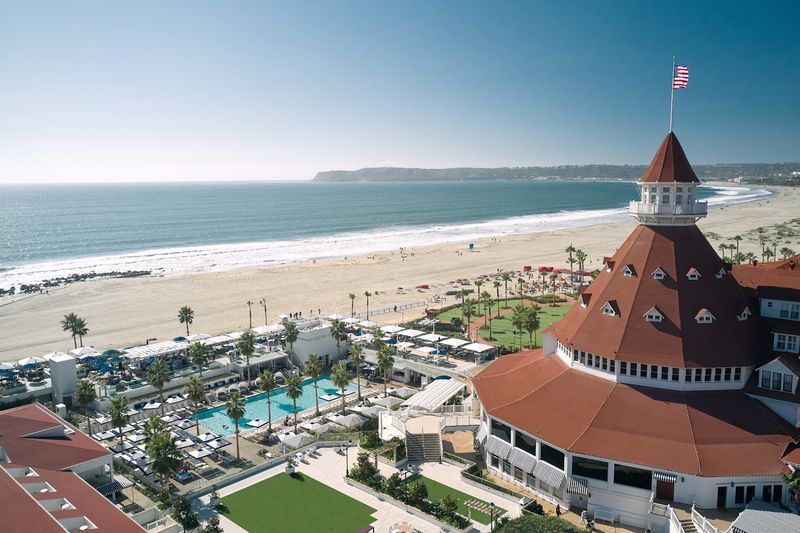
Standing at 1500 Orange Ave, Coronado, CA 92118, the Hotel del Coronado has been turning heads since 1888, and it shows no signs of stopping.
Built almost entirely from wood, it ranks among the largest wooden structures in the United States, a feat that feels almost impossible when you see how intricate the craftsmanship really is.
The red turrets and gingerbread trim catch the light in a way that makes the building look almost like a storybook illustration come to life.
The main entrance, positioned along the south side of the resort, historically featured a broad covered veranda flanked by two stately stairways, and that sense of ceremony has never fully left the property.
Stained-glass windows accent the interiors, with some carefully recreated during restoration work to match the originals. The resort spans 28 oceanfront acres, making it feel more like a small village than a single hotel.
Arriving here on a clear Southern California afternoon, with the Pacific glittering just beyond the lawns, is one of those travel moments that tends to linger in memory long after checkout.
Weekdays tend to feel calmer, while weekends draw larger crowds to the beach and public areas nearby.
2. The Mission Inn Hotel & Spa, Riverside
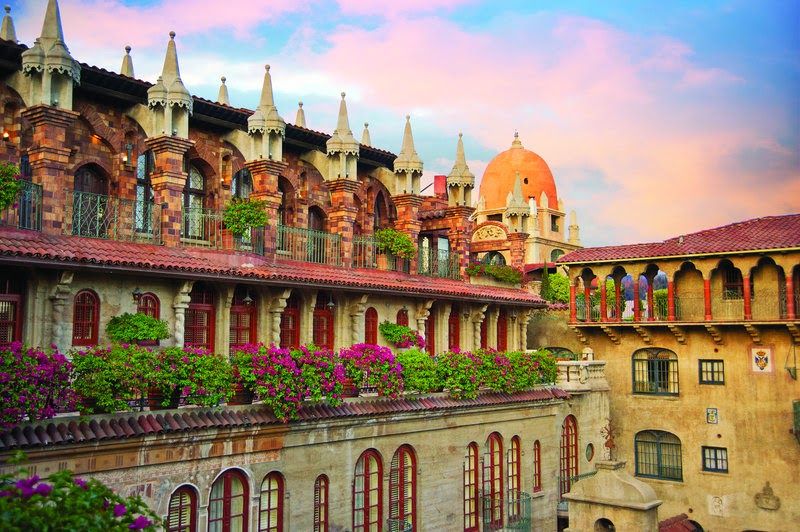
Few hotels in California occupy an entire city block with the kind of architectural confidence that The Mission Inn Hotel and Spa brings to downtown Riverside.
Located at 3649 Mission Inn Ave, Riverside, CA 92501, the property began its life as a modest guesthouse called Glenwood Cottage back in 1876 before growing into something far more ambitious over the following decades.
The transformation was driven by a passion for collecting art, bells, and architectural curiosities from around the world.
Walking toward the entrance today, guests pass under a vine-draped arch with a distinctive bell tower rising above it, setting a tone that is equal parts theatrical and genuinely historic.
A bell brought from China and a pair of canons standing guard near the entrance hint at the eclectic collection housed within.
Macaws have been known to greet visitors near the entry, adding an unexpected warmth to an already memorable arrival.
Inside, the oldest Christian bell in the world is among the artifacts on display, a detail that tends to stop first-time visitors mid-step.
The mix of Spanish Mission grandeur with influences gathered from global travels gives the property a layered personality that rewards slow exploration rather than a quick walkthrough.
3. Palace Hotel, San Francisco
The original Palace Hotel that opened in San Francisco in 1875 was considered the grandest hotel on the planet at the time, a reputation built on sheer scale and opulence.
The 1906 earthquake and the fires that followed reduced it to rubble, but what rose in its place in 1909 may actually be more beautiful than what came before.
Situated at 2 New Montgomery Street, San Francisco, CA 94105, the current building anchors the corner of Market and New Montgomery streets with quiet authority.
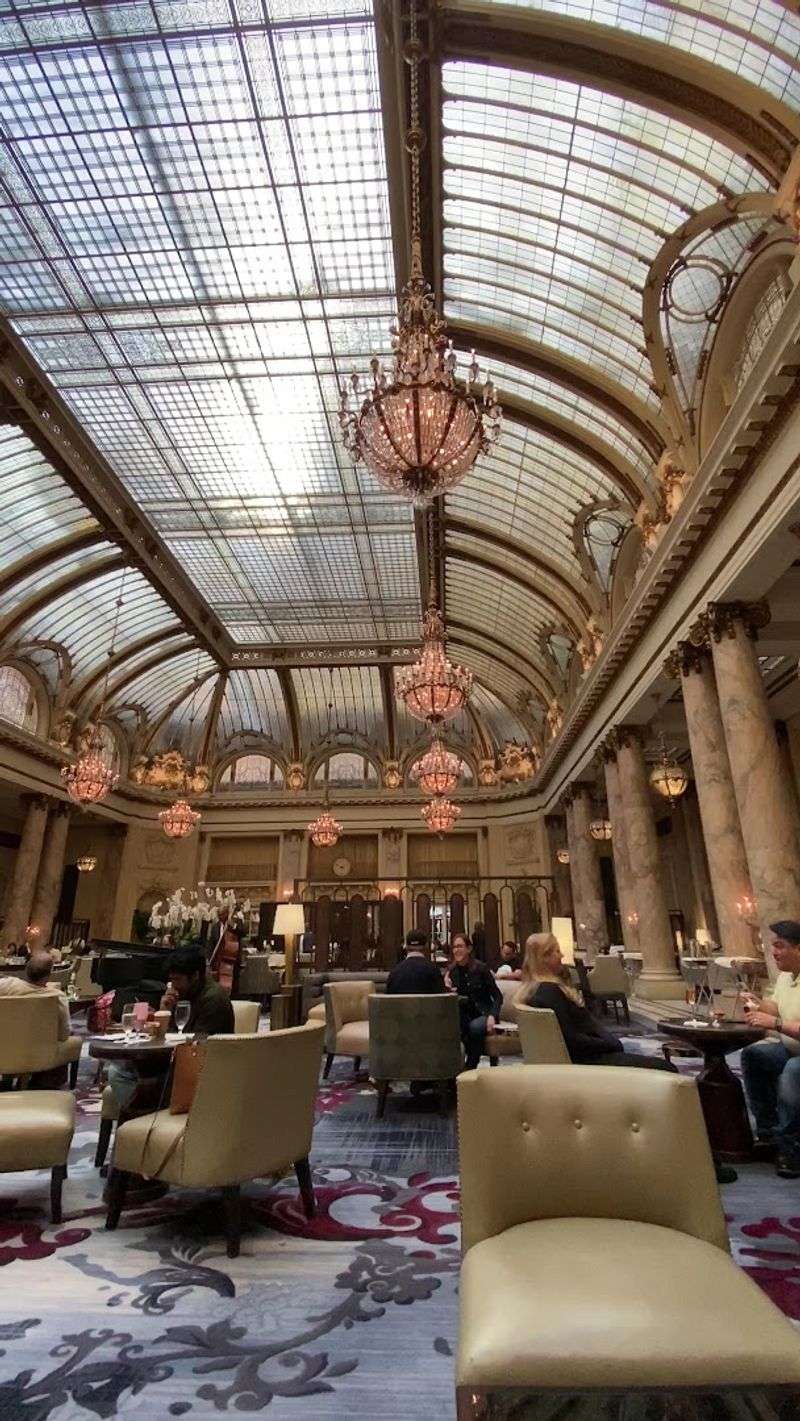
The Garden Court is the beating heart of the property and one of the most photographed interior spaces in Northern California.
A ceiling made from 70,000 individual pieces of stained glass arches overhead, filtering light into the room in shifting patterns throughout the day.
Twenty Austrian crystal chandeliers hang below it, and sixteen Italian marble columns line the space, together evoking the full grandeur of the Gilded Age.
The Garden Court was modeled after the original hotel’s carriage entrance, which gives it a sense of movement and ceremony even when standing still.
Arriving through the main entrance and walking into that light-filled room for the first time is an experience that holds up no matter how many times it has been described.
Visiting on a quieter weekday morning tends to allow for a more unhurried appreciation of the space.
4. The Hollywood Roosevelt, Los Angeles
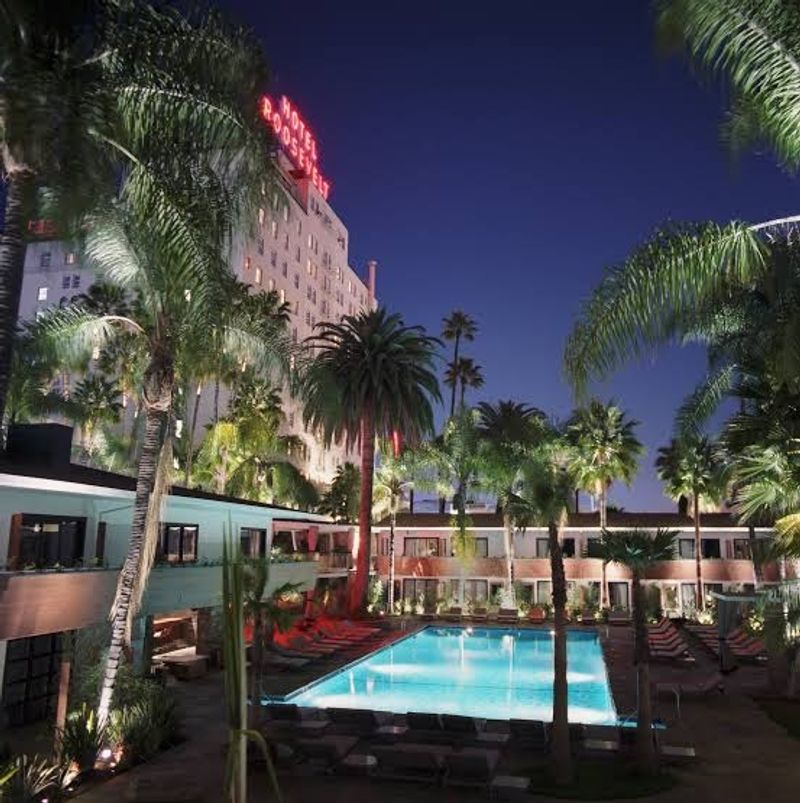
Opening its doors in 1927 along one of the most recognizable stretches of road in the world, The Hollywood Roosevelt holds the distinction of being Los Angeles’s oldest continuously operating hotel.
Positioned at 7000 Hollywood Blvd, Los Angeles, CA 90028, it sits directly across from the TCL Chinese Theatre, placing it at the geographic center of old Hollywood mythology.
The building’s exterior carries a stately calm that contrasts pleasantly with the bustle of the boulevard outside.
The hotel’s place in cinematic history was cemented early, as the inaugural Academy Awards ceremony took place in its Blossom Ballroom in 1929.
That connection to the birth of Hollywood’s most celebrated tradition gives the property a cultural weight that no renovation can manufacture or replicate.
Walking through the lobby, the architecture reflects the Spanish Colonial Revival style that was fashionable in 1920s Los Angeles, with arched details and warm plaster surfaces throughout.
Guests staying here tend to find that the location alone makes it worth the choice, with the Hollywood Walk of Fame running directly in front of the building and multiple historic theaters within easy walking distance.
Early mornings on weekdays offer a calmer experience before tour groups and boulevard foot traffic pick up.
The sense of layered history feels most tangible in the quieter interior spaces away from the main entrance.
5. The Biltmore Los Angeles, Los Angeles
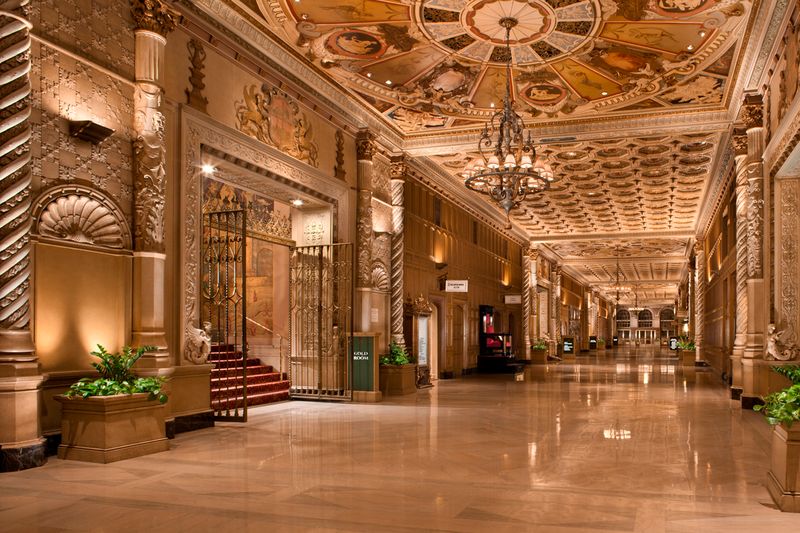
On October 1, 1923, The Biltmore Los Angeles opened as the largest hotel west of Chicago, a title it wore with full Beaux Arts confidence.
The Beaux Arts design is layered with Renaissance Revival touches that reward careful observation from the sidewalk.
Stepping inside through the current Grand Avenue entrance, which occupies what was originally the Music Room, reveals a ceiling that is genuinely hard to prepare for.
The Moorish Revival plaster work overhead is accented with 24-carat gold, and two original Italian chandeliers from 1923 still hang in the space, casting a warm and slightly golden light across the room.
A Spanish Baroque Revival bronze doorway nearby holds an astronomical clock that has kept time since the hotel first opened.
Found at 506 S Grand Ave, Los Angeles, CA 90071, the building still commands attention from the street, its stone facade rising over Grand Avenue with the kind of presence that newer high-rises rarely achieve despite their height.
There are plans to eventually restore the original Olive Street entrance, which would return the building’s arrival experience to something closer to what guests encountered a century ago.
For now, the Grand Avenue entry offers its own kind of drama, particularly during quieter afternoon hours when the lobby is less crowded and the ceiling details are easier to absorb at a comfortable pace.
6. Fairmont San Francisco, San Francisco
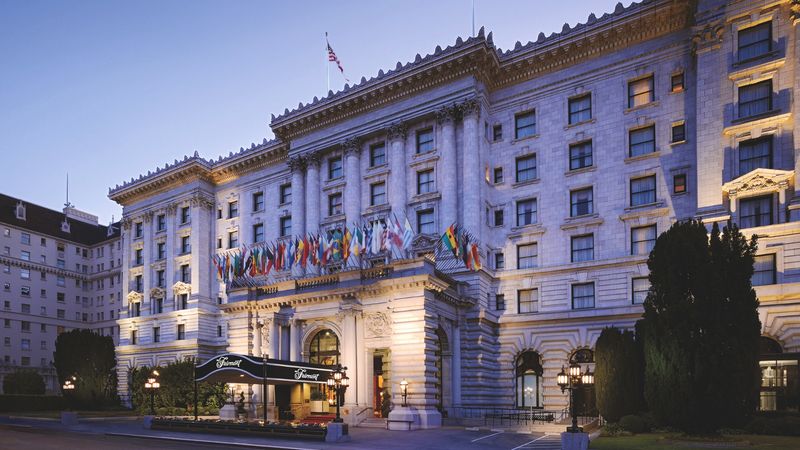
Perched at the top of Nob Hill, the Fairmont San Francisco carries a history that stretches across more than a century of the city’s most significant moments.
The grand entrance is marked by flags from every nation that signed the United Nations Charter in 1945, a ceremony that took place within the hotel itself.
That detail transforms the facade from a beautiful piece of architecture into a quiet monument to a pivotal moment in world history.
The hotel at 950 Mason St, San Francisco, CA 94108, was designed by the architectural firm of James and Merritt Reid and opened on April 18, 1907, exactly one year after the earthquake that had leveled much of the city around it.
Julia Morgan oversaw the repairs that made that reopening possible, a detail that adds another layer of significance to the building’s story.
The Beaux Arts exterior, with its broad steps and imposing columns, sets an appropriately serious tone before guests even reach the front door.
From the hilltop position, panoramic views of San Francisco extend in multiple directions, and the cable car line running along Mason Street connects the hotel to the rest of the city with a satisfying old-fashioned efficiency.
Arriving by cable car and stepping off directly in front of the entrance is one of those small travel experiences that tends to feel more memorable than it has any right to be.
7. InterContinental Mark Hopkins San Francisco, San Francisco
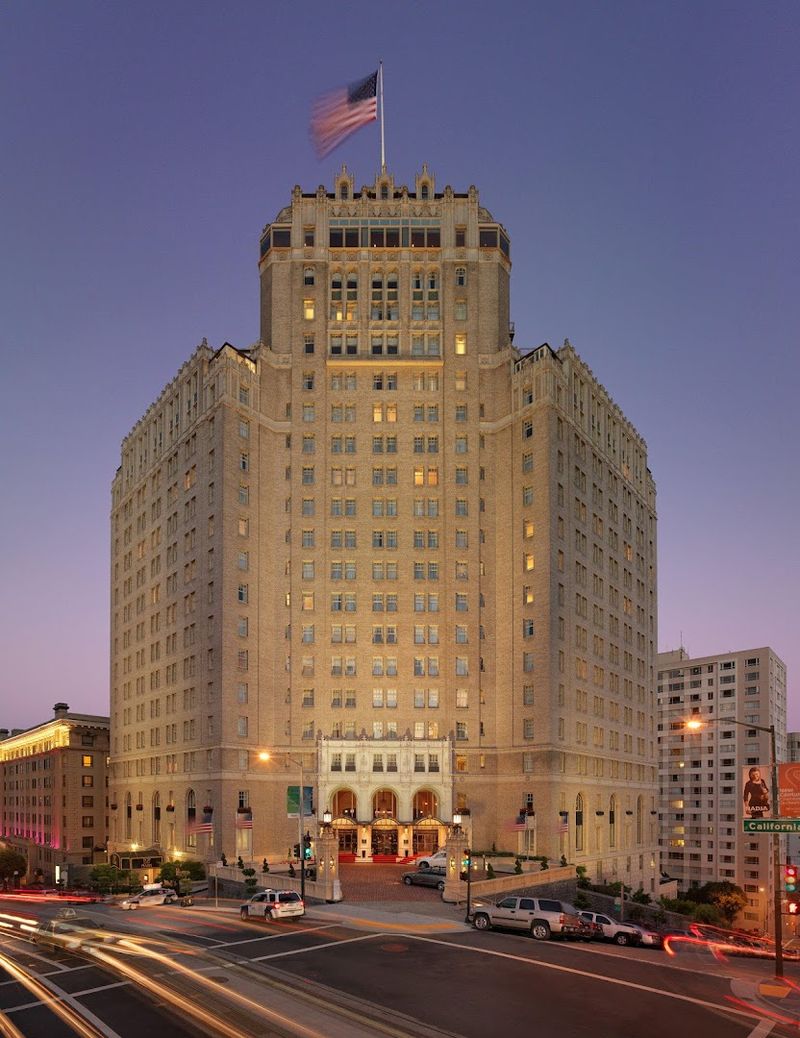
Rising nineteen stories from the crest of Nob Hill, the InterContinental Mark Hopkins San Francisco opened on December 4, 1926, on a site that carries its own dramatic backstory.
The hotel stands at 999 California St, San Francisco, CA 94108, on the exact ground where the mansion of Mark Hopkins once stood before the 1906 earthquake reduced it to ruins.
That layered history gives the building a weight that goes beyond its impressive architectural presence.
The exterior blends French chateau styling with Spanish Renaissance details, all wrapped in elaborate terracotta ornament that catches the afternoon light in ways that reward a slow approach on foot.
The combination of influences sounds unlikely on paper but reads as genuinely cohesive in person, with the terracotta details providing a textural richness that photographs rarely capture fully.
Arriving on foot along California Street, with the cable car tracks running alongside, heightens the sense of arrival in a way that driving up rarely matches.
At the top of the building, the nineteenth floor houses the Top of the Mark, a sky-level space that has offered nearly 360-degree views of San Francisco since its conversion from a penthouse suite in 1939.
The views from that elevation on a clear day extend across the bay, the bridges, and the hills beyond, making it one of the more reliably impressive vantage points in the entire city.
8. La Valencia Hotel, La Jolla / San Diego
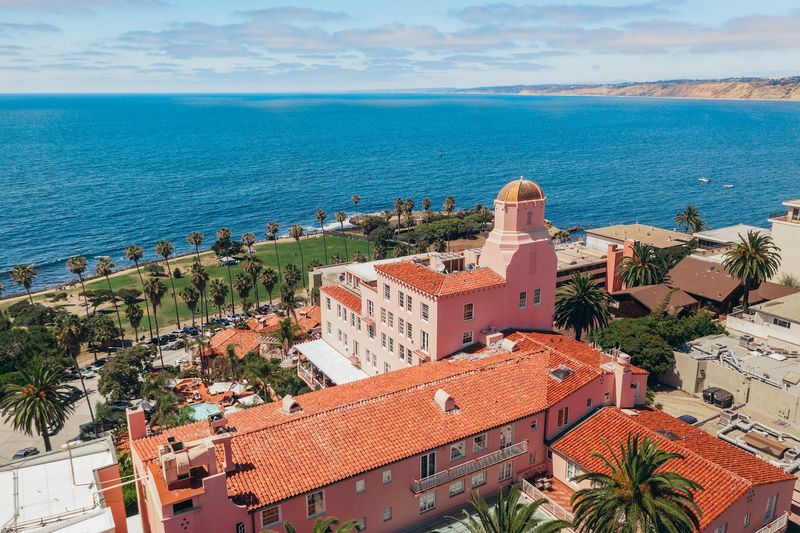
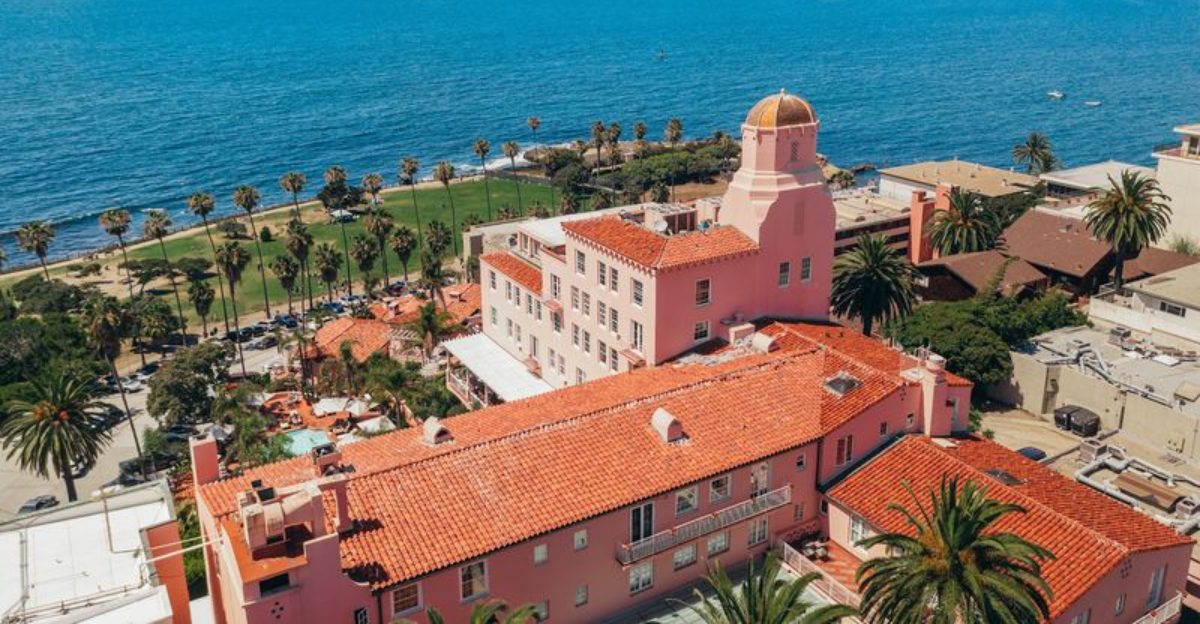
Known affectionately as the Pink Lady for its unmistakable rose-colored exterior, La Valencia Hotel has been a fixture above the La Jolla Cove cliffs since 1926.
Perched along Prospect Street at 1132 Prospect St, La Jolla, CA 92037, the building’s Spanish-tiled tower and hand-painted murals give it a Mediterranean warmth that feels genuinely earned rather than decorative.
The pink exterior is not a gimmick but a defining characteristic that has made the hotel one of the most recognizable landmarks along the San Diego coastline.
Approaching the entrance from Prospect Street, the Pacific Ocean comes into view before the front door does, and the combination of the hotel’s soft color against the blue water below creates a visual contrast that tends to stop people mid-stride.
The classic Mediterranean architecture carries through from the exterior into the interior spaces, where ocean-view terraces and arched corridors reinforce the sense of being somewhere genuinely different.
Hand-painted murals throughout the property add a personal, almost intimate quality to the common areas.
The surrounding village of La Jolla is walkable from the hotel, with boutiques, museums, and art galleries reachable on foot within a short distance.
The ocean-view pool offers a quieter alternative to the beach below, particularly during midweek visits when the area tends to feel more relaxed and unhurried.
9. Hotel Casa del Mar, Santa Monica
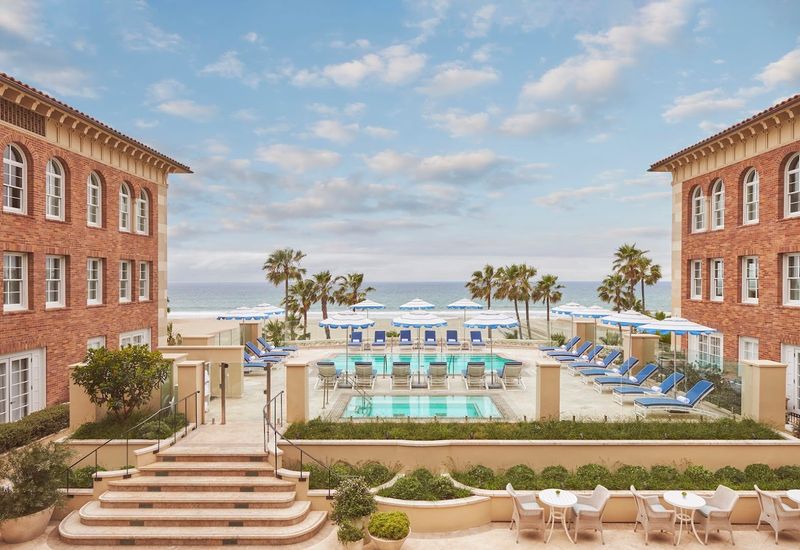
Built directly on Santa Monica Beach and opened on May 1, 1926, Hotel Casa del Mar began its life as Club Casa del Mar before evolving into the luxury hotel it is today.
The architecture is formal in proportion but warm in material, with stone and plaster surfaces that have softened gracefully over the decades.
Inside, the lobby offers a coffered ceiling of considerable height, intricate mosaic tile floors underfoot, and copper sconces mounted atop mahogany pillars that cast a gentle amber glow across the space.
The combination of textures and materials creates an atmosphere that feels layered and genuinely old rather than period-inspired, a distinction that visitors tend to notice even without knowing the building’s history.
The building at 1910 Ocean Way, Santa Monica, CA 90405, presents an Italian Renaissance Revival facade to the street, with a grand double stairway at the entrance that announces its intentions clearly and without hesitation.
A significant $50 million restoration completed in 1999 returned the property to its 1920s appearance after years of different uses.
Subsequent refreshes have kept the interiors current without erasing the original character, which is a balance that historic hotels do not always manage successfully.
The beach access from the property is direct, and arriving at the hotel from the sand side rather than the street offers a perspective on the facade that feels quietly cinematic in the best possible way.
10. The Lafayette Hotel and Club, San Diego
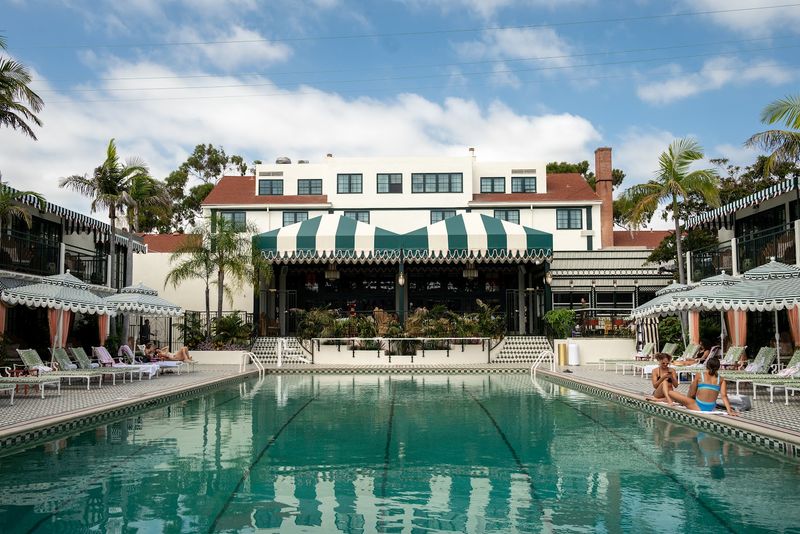
Originally known as Imig Manor when it opened on July 1, 1946, The Lafayette Hotel and Club in San Diego has carried several identities over its long life before finding its way back to something close to its original self.
Located at 2223 El Cajon Blvd, San Diego, CA 92104, the property underwent an extensive $31 million transformation before reopening in July 2023.
The Colonial-style architecture that defines the building’s exterior remained a guiding reference point throughout the process.
Stepping through the formal entry, guests encounter rich plastered crown moldings overhead and tumbled vintage checkered marble floors underfoot, two surfaces that together establish a tone of old-world seriousness immediately.
Sparkling crystal chandeliers hang above the entry space, and lush plantings soften the formal geometry of the architecture without competing with it.
The lobby restrooms, with their decorative tile and deep basin sinks, reflect an attention to detail that extends well beyond the main public spaces.
The hotel’s original concept as a self-contained community, sometimes described as a city within a city, has been honored in the restored property through the range of spaces and experiences available on-site.
The result is a hotel that feels genuinely inhabited rather than preserved, which is a meaningful distinction for a building that has been through as much as this one has.