You Might Not Expect This Tiny Connecticut Town To Be One Of America’s Happiest Hidden Gems
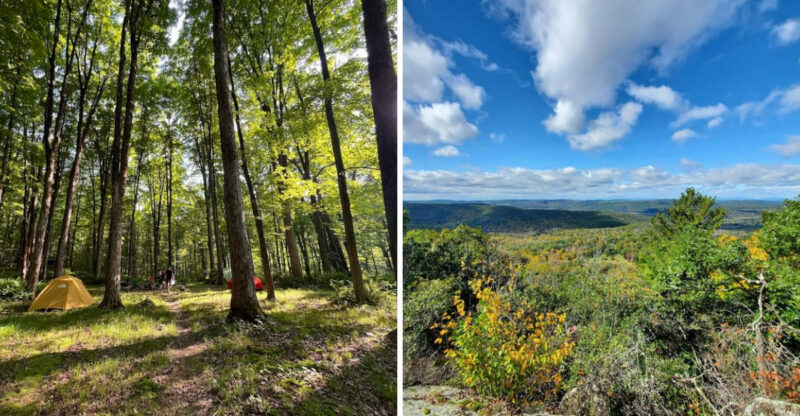
Tiny towns can be full of surprises, but this one feels almost unfairly charming. The village green sets an easy pace, and the surrounding hills make everything seem a little quieter than usual.
Nothing feels staged. It simply works.
In northwestern Connecticut, this small community has earned praise as one of the state’s best small towns.
That reputation makes sense once you look closer. Summer concerts bring world-class music to an old performance hall, while nearby trails lead through thousands of acres of forest.
A stone tower waits above the trees with wide views across the region. Even the local architecture has personality, thanks to historic buildings that give the center a distinctive look.
The best part is the mood. Life seems to move at a friendlier speed here, without feeling sleepy.
It is peaceful, creative, and refreshingly real. For a town this small, it leaves a surprisingly big impression.
1. A Tiny Litchfield Hills Town With Big Character
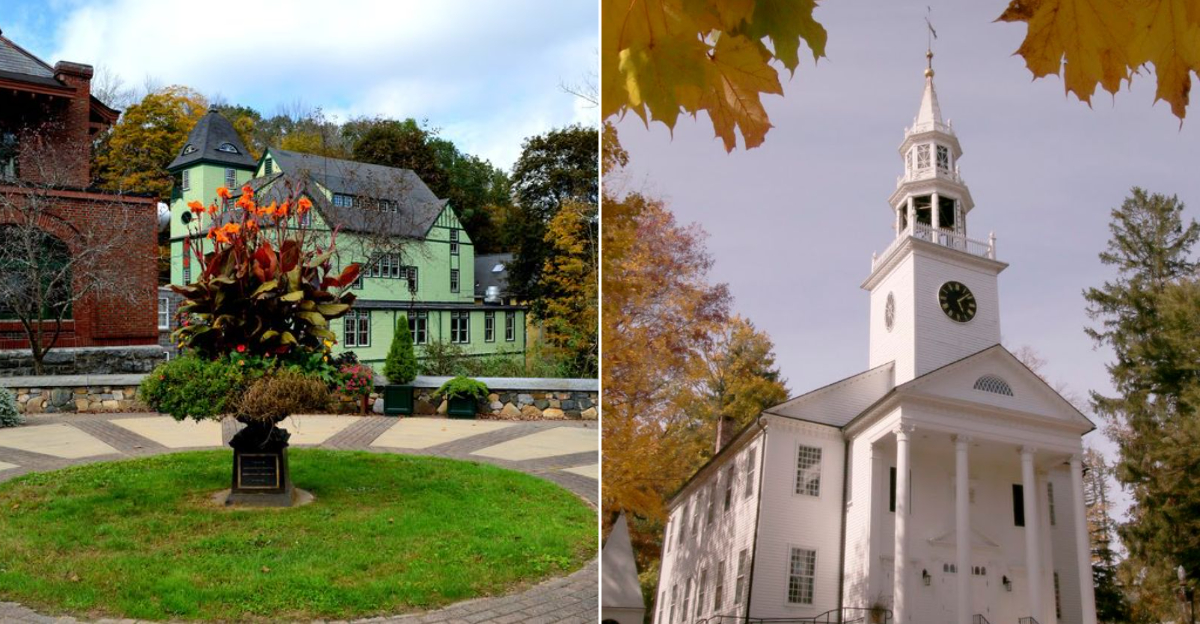
History feels close at hand in this town, where wooded hills, handsome civic buildings, and a strong cultural spirit reflect more than two centuries of change.
First settled in 1744 and incorporated in 1758, Norfolk grew in the Berkshire foothills near the Massachusetts border while preserving its rural character.
One of its greatest treasures is the Norfolk Library, an 1888 Shingle Style landmark designed by Hartford architect George Keller. Rich woodwork, soaring interior details, and stained-glass rose windows give the building remarkable visual warmth.
It remains an active gathering place, hosting art exhibitions, concerts, lectures, films, and programs throughout the year.
The Norfolk Historical Society Museum adds another window into the community’s past through collections of artifacts, photographs, and documents tied to local life and industry.
By 1900, residents already benefited from telephone and electrical service, along with public water and sewer systems, revealing an ambitious civic outlook.
Visitors can find the library at 9 Greenwoods Road East and the museum at 13 Village Green. With a 2020 population of 1,588, Norfolk remains compact, yet its architecture, cultural institutions, and forward-looking history give it a presence far larger than its size.
2. The Historic Village Green Anchors The Center
At the heart of Norfolk lies a long, triangular Village Green that has served as the geographic and civic center of town since the 18th century.
Stretching roughly 500 feet in a north-south direction, the green sits within the Norfolk National Register District and is framed by well-kept homes, churches, and institutions that reflect nearly three centuries of community life.
A distinctive pink granite fountain, created by Stanford White in 1889 and dedicated to Joseph Battell, anchors the green with understated elegance.
Nearby, a marble bench and two tall bronze lamps complete the original design, while a sundial mounted on a concrete pedestal marks the center of a crushed stone walkway that runs east to west through the space.
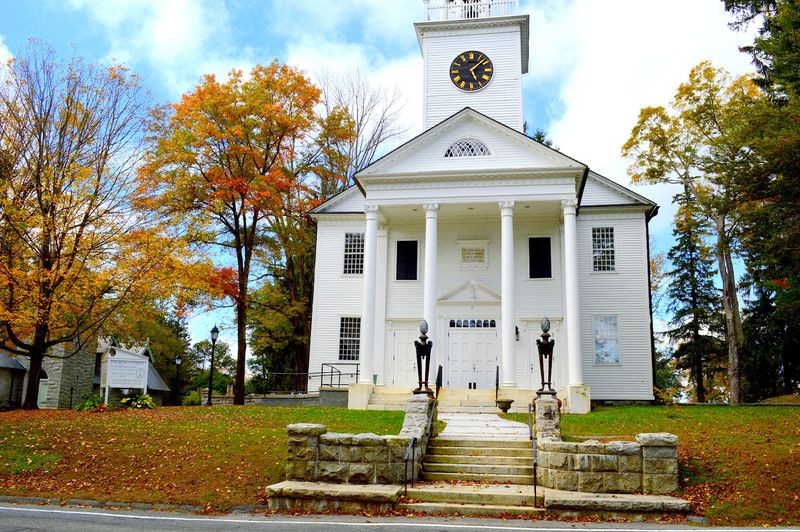
Monuments throughout the green honor those who served in both the Civil War and World War Two, giving the space a quiet sense of gravity alongside its everyday charm. The Congregational Church, built in 1813, stands on the west side of the green and adds to its architectural continuity.
Routes 272 and 44 converge at the northwest corner, where a replica 19th-century wooden directional sign, complete with carvings of a jackrabbit and a stag, is carefully removed each winter for preservation.
3. Haystack Mountain Offers Sweeping Hilltop Views
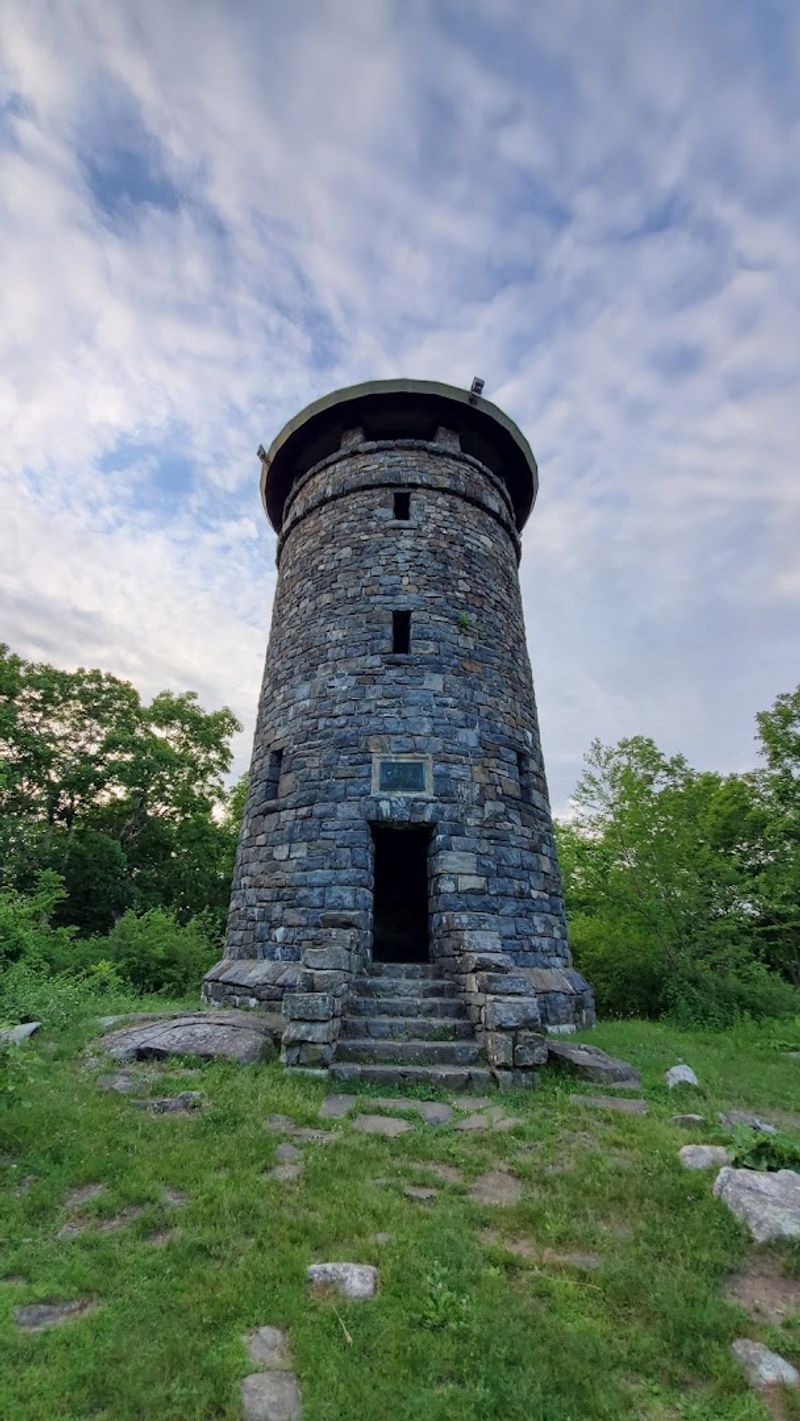
Rising to an elevation of 1,716 feet, Haystack Mountain is one of the most rewarding natural landmarks in northwest Connecticut.
The summit is home to a 34-foot stone observation tower built in 1929, listed on the National Register of Historic Places, and offering panoramic views of the Berkshires, parts of Massachusetts, New York, Vermont’s Green Mountains, and on exceptionally clear days, Long Island Sound.
The main entrance to Haystack Mountain State Park is located on Route 272 in Norfolk, CT 06058, and the park encompasses 292 acres of forested terrain.
Two well-marked trails lead to the summit, including a two-mile paved road and a rocky mile-long Tower Loop Trail with a lower trailhead near the park entrance.
The paved road is open to vehicles from the third weekend in April through the end of October.
Partway up the drive, a serene meadow and a pond with picnic tables offer a peaceful resting spot before the final climb. Wildlife commonly spotted on the mountain includes deer, bears, bobcats, foxes, and coyotes.
Robbins Battell, a Norfolk resident, purchased the mountaintop in the 19th century specifically to protect its natural beauty, a decision that continues to benefit visitors well over a century later.
4. Summer Music Fills The Famous Music Shed
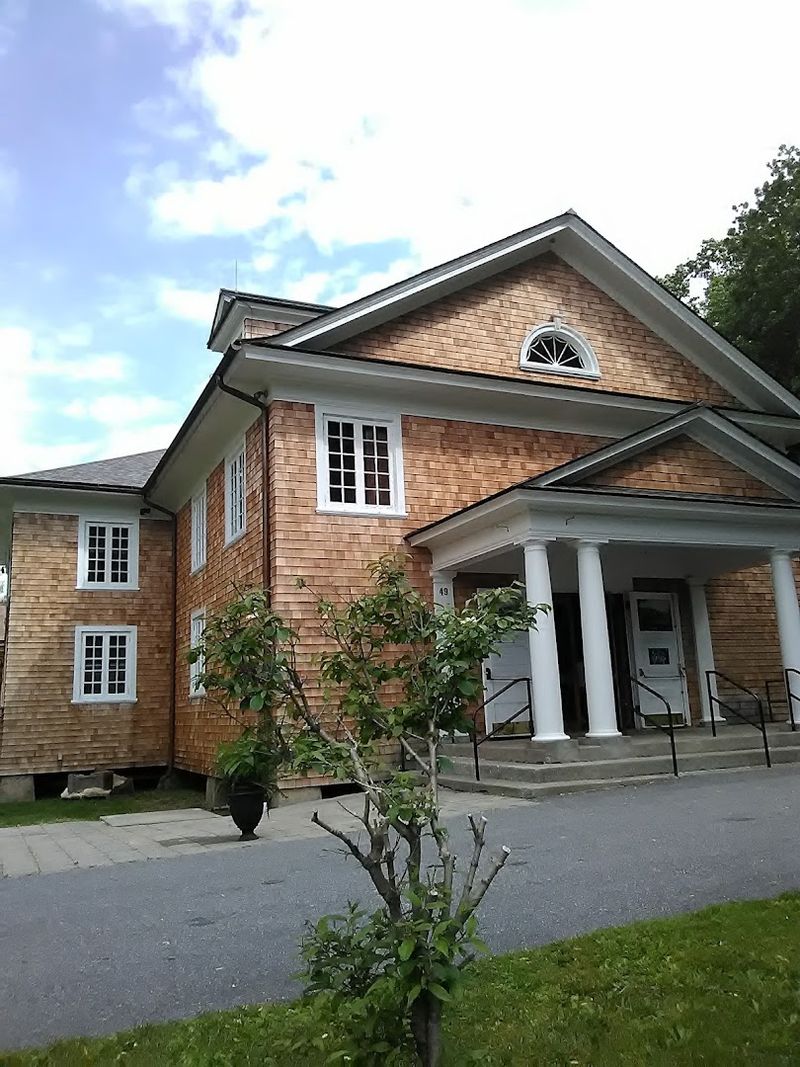
Each summer, Norfolk transforms into one of New England’s most celebrated destinations for classical and chamber music, drawing performers and audiences from across the country.
The Norfolk Chamber Music Festival, held at the Ellen Battell Stoeckel Estate, has been running for well over a century and remains one of the oldest and most respected summer music programs in the United States.
Performances take place in the Music Shed, a beloved open-air wooden venue nestled among towering trees on the estate grounds. The natural acoustics, combined with the surrounding forest canopy, create a listening experience that feels both intimate and extraordinary.
Audiences often arrive early to picnic on the grounds before concerts begin, making the evening as much a social occasion as a musical one.
The festival is affiliated with the Yale School of Music and typically runs from late June through mid-August, featuring faculty, students, and guest artists performing a wide range of chamber repertoire.
Ticket availability and scheduling can vary by season, so checking directly with the festival for current programming is always a good idea.
For a town this small, hosting a festival of this caliber year after year says a great deal about Norfolk’s enduring cultural ambition.
5. Alfredo Taylor’s Architecture Shapes The Streetscape
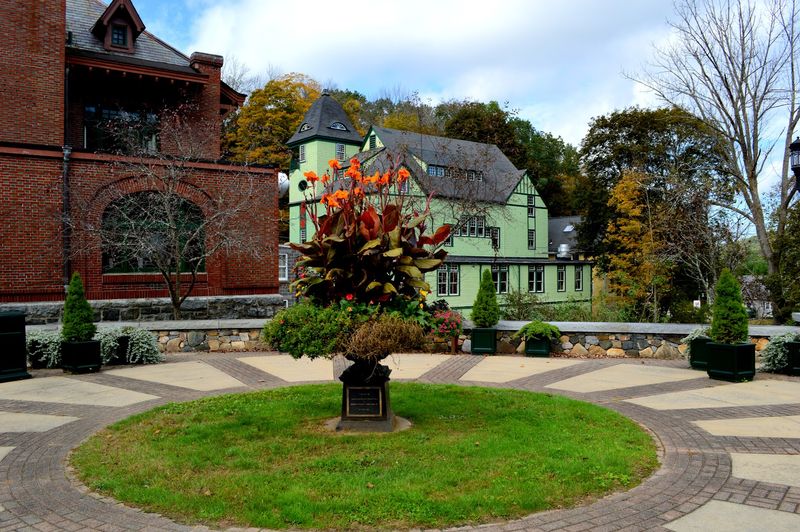
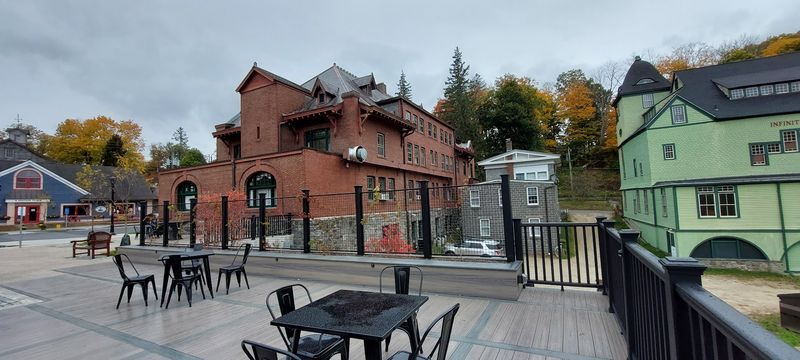
Walking through Norfolk’s village center feels a bit like stepping into a well-preserved architectural catalog, where different eras of American design exist side by side without competing for attention.
Much of what gives the town its visual coherence can be traced to the influence of Alfredo Taylor, a prominent figure in shaping Norfolk’s built environment during the late 19th and early 20th centuries.
Taylor’s work contributed to the distinctive character of several buildings and estates throughout the town, helping establish the refined yet approachable aesthetic that Norfolk is still known for today.
His designs tended to favor craftsmanship and proportion over ostentation, which fits naturally with the town’s understated personality.
The result is a streetscape that feels earned rather than manufactured.
Visitors who take time to walk the streets near the Village Green will notice how the architecture complements rather than overwhelms the natural landscape.
The interplay between stone walls, pitched rooflines, and mature tree canopy gives Norfolk a visual rhythm that feels rare in contemporary New England towns.
For architecture enthusiasts, even a slow stroll through the village center rewards careful attention, with details that reveal themselves gradually rather than all at once.
6. Great Mountain Forest Adds Miles Of Woodland
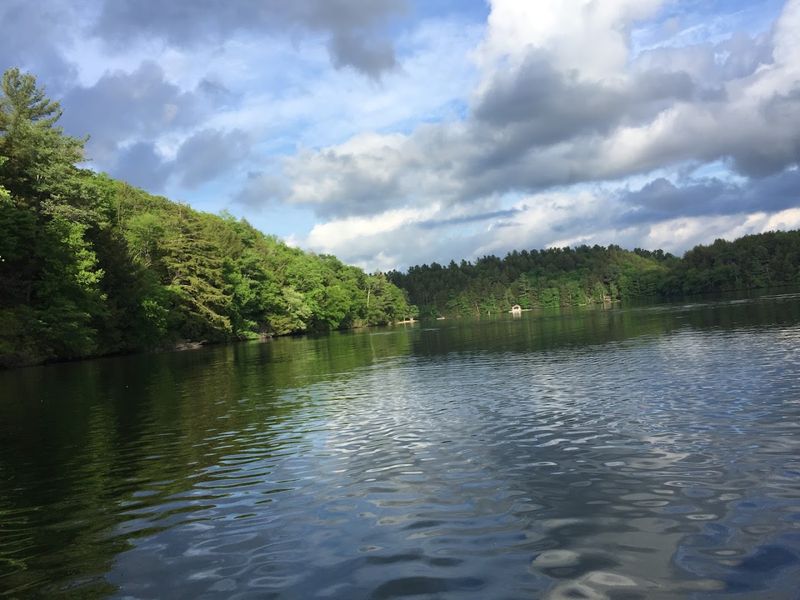
Covering thousands of acres in and around Norfolk, Great Mountain Forest is one of the largest privately managed forests in the northeastern United States and a cornerstone of the town’s outdoor identity.
Open to the public for hiking, trail running, mountain biking, cross-country skiing, and snowshoeing, the forest provides year-round access to deep woodland that feels genuinely remote despite being just minutes from the village center.
The forest is managed with a focus on long-term ecological health and sustainable forestry, making it a living example of how conservation and land management can coexist productively.
Trails wind through mixed hardwood and conifer stands, crossing streams and passing through meadows that shift dramatically with the seasons.
Spring brings wildflowers and birdsong, summer offers dense shade, autumn delivers some of the most vivid foliage in the region, and winter transforms the landscape into a quiet, snow-covered corridor.
Wildlife sightings are common throughout the forest, with white-tailed deer, wild turkey, and various raptor species among the more frequently observed residents.
No admission fee is typically required for recreational access, though conditions and trail availability can vary, so checking with local land trust resources before visiting is a practical step.
Great Mountain Forest adds a sense of genuine wildness to Norfolk that distinguishes it from more manicured destinations.
7. Campbell Falls Brings A Dramatic Natural Landmark

Straddling the border between Connecticut and Massachusetts, Campbell Falls is one of the most visually striking natural features accessible from Norfolk.
The falls drop approximately 50 feet over a series of dark schist ledges, creating a powerful cascade that roars after heavy rain and softens to a delicate trickle during drier summer months.
Either way, the setting is worth the short hike to reach it.
Campbell Falls State Park preserves the area around the falls and provides a maintained trail that leads visitors through hemlock-shaded forest before opening up to the dramatic outcropping where the water meets the rocks below.
The trail is relatively short and manageable for most fitness levels, making it accessible to a wide range of visitors including families with older children.
Seasonal foliage turns the surrounding forest into a vivid backdrop from late September through mid-October.
Because the falls sit on the state line, the experience has a slightly boundary-defying quality that adds a small layer of novelty to the visit.
Parking is limited and the area can draw weekend visitors during peak foliage season, so arriving earlier in the day tends to make for a more relaxed experience.
Campbell Falls represents the kind of natural landmark that makes a day trip to the Norfolk area feel genuinely complete.
8. Quiet Streets Help Preserve Its Hidden-Gem Appeal
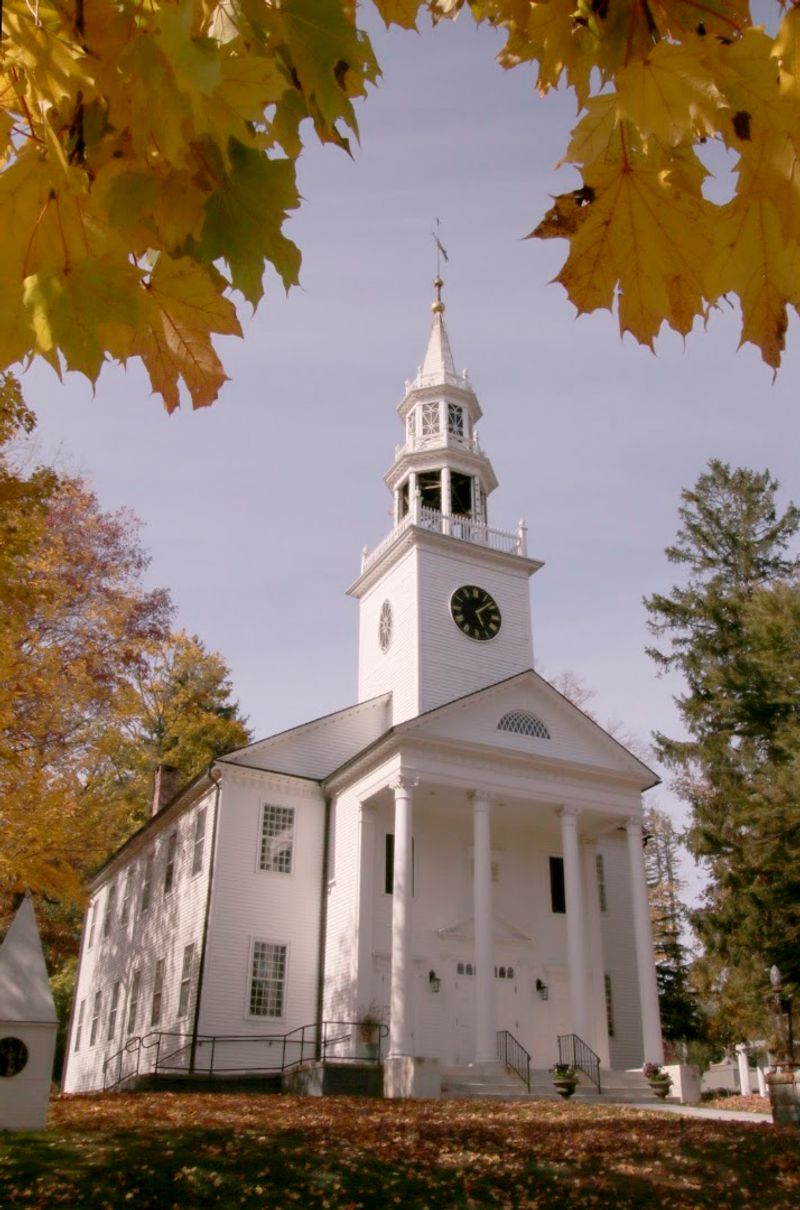
Quiet streets and wooded views give Norfolk a personality that feels increasingly rare. Instead of crowds, chain storefronts, and oversized commercial spaces, visitors find historic homes, stone walls, locally run institutions, and stretches of landscape left open to trees and sky.
That slower character has developed over generations. Residents have long valued privacy, natural beauty, and cultural life, helping the town preserve an identity that feels lived-in rather than designed for tourism.
Even the center maintains a gentle rhythm, with the village green offering a place to wander before exploring trails or landmarks.
A weekend here unfolds without pressure. Mornings can begin in the forests maintained by the Norfolk Land Trust or Great Mountain Forest, followed by an afternoon around town and an evening performance at the Music Shed.
The Norfolk Chamber Music Festival continues to bring acclaimed musicians to this small community, adding cultural depth to its rural setting.
Norfolk rarely demands attention, and that restraint is part of its appeal. Travelers can discover it at their own pace, free from packed itineraries and constant noise.
By the time the weekend ends, the town feels less like a stop on a list and more like a place quietly remembered.