This North Carolina Park Once Filled Its Lawn With Giant Rabbits That Glowed After Dark
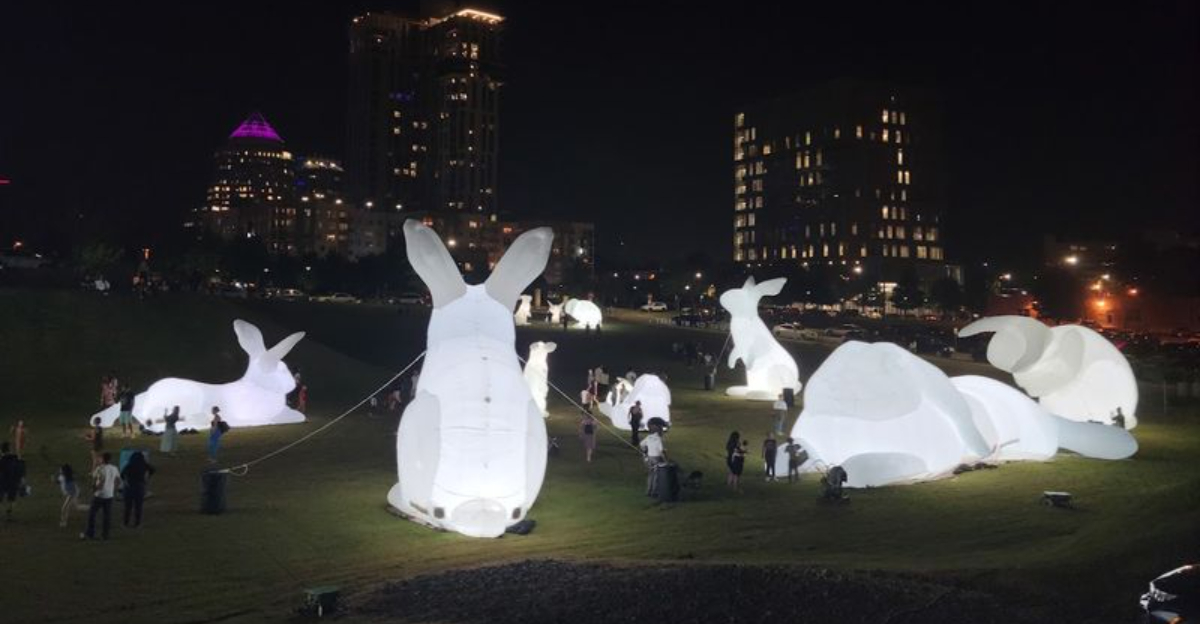
Charlotte has seen plenty of unusual visitors, but few have arrived twelve feet tall with glowing ears.
Back in 2021, a grassy field near Uptown became a surreal nighttime scene when giant inflatable rabbits appeared beneath the skyline.
After sunset, the oversized figures lit up and made the city look as though it had wandered into a very strange bedtime story.
Their enormous size made the installation playful at first glance. Look a little longer, though, and the meaning became more serious.
The artwork used familiar animals to raise questions about nature, human impact, and what happens when something harmless grows far beyond its proper scale.
North Carolina had already met the rabbits during an earlier Charlotte appearance, so their return felt like an oddly lovable reunion.
They are gone now, but the photographs remain. So does the memory of a downtown lawn briefly taken over by glowing creatures that looked ready to nibble the skyline.
The Giant Rabbits That Took Over Uptown
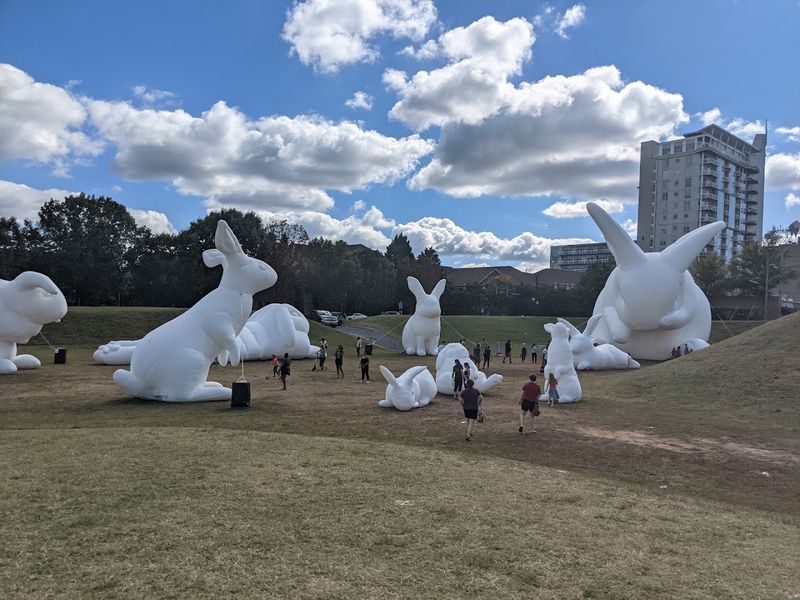
Twelve oversized figures reportedly appeared around the First Ward area during the 2021 presentation, with some sculptures rising several stories above visitors. Each rabbit was shaped from white inflatable material and positioned in a relaxed pose that contrasted with its enormous scale.
Children could stand beside a paw larger than their bodies, while adults found themselves looking upward to take in the full height. Nothing about the scene resembled a standard park decoration.
Parer’s work transformed familiar green space into a temporary outdoor gallery that felt accessible without requiring tickets, formal clothing, or previous knowledge of contemporary art.
Crowds could approach the pieces from different angles and decide for themselves whether they seemed charming, strange, or slightly unsettling.
Charlotte had already welcomed Intrude during the 2019 Charlotte SHOUT! festival, although that earlier display appeared at The Green on South Tryon Street rather than First Ward Park.
Strong public interest helped make the rabbits one of the festival’s most recognizable attractions.
Their 2021 return proved that Charlotte had not forgotten them, even after two years and a change of setting.
See Why The Art Looked Stranger After Sunset
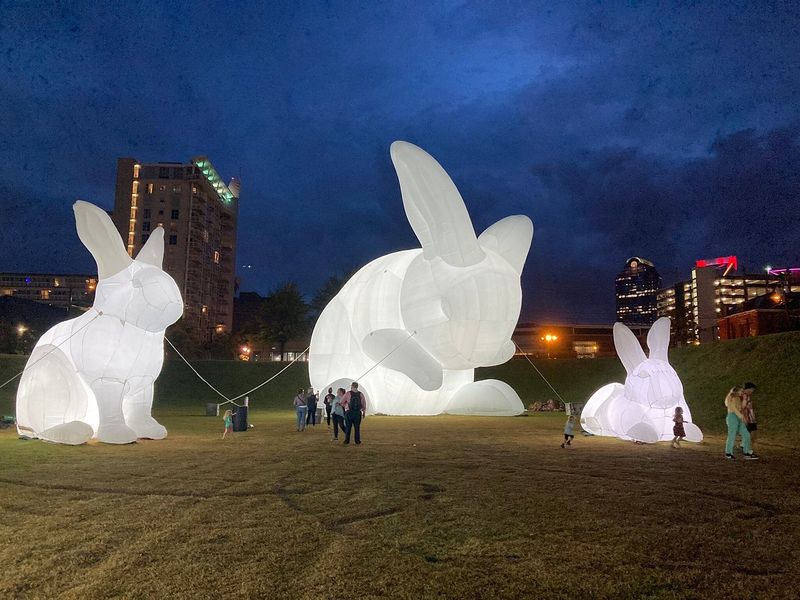
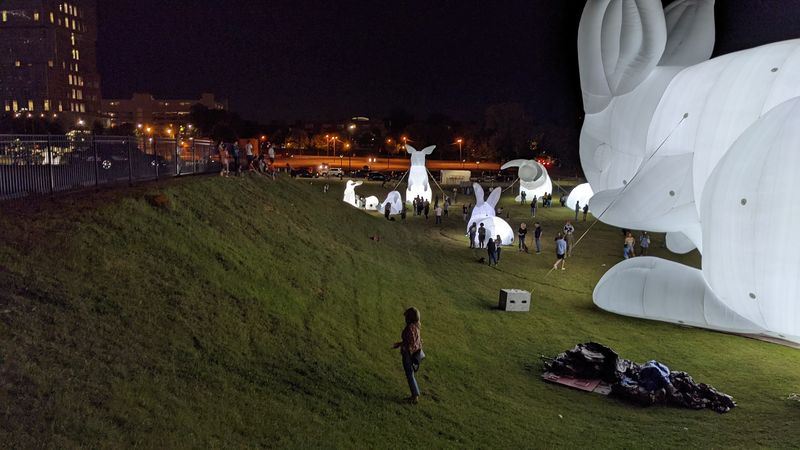
Daylight revealed every curve, seam, and oversized feature, but darkness gave the installation its defining look. Internal lighting turned each white rabbit into a luminous form that appeared almost weightless against the evening sky.
Nearby buildings faded into shadow while windows and streetlights created a sharp urban backdrop. Visitors who had already seen the sculptures during the afternoon often returned because nighttime altered the mood so completely.
Soft illumination made the rabbits look inviting from one angle and slightly mysterious from another. Parer used that tension intentionally.
Her animals appeared gentle and familiar, yet their scale suggested that nature had expanded beyond human control.
Photographs captured the glowing outlines, although they could not fully reproduce the experience of standing beneath them.
City sounds continued in the surrounding streets while the field itself felt temporarily removed from ordinary Uptown life. People slowed down, stayed longer than expected, and waited for clear moments to frame their favorite sculpture.
Night viewing became the most widely recommended way to see the display, and contemporary coverage specifically noted that the illuminated rabbits were best appreciated after dark.
Follow The Story Back To Charlotte SHOUT!
Charlotte first met Parer’s glowing rabbits during the inaugural Charlotte SHOUT! festival in 2019. Organizers filled Uptown with concerts, performances, installations, and public programs designed to make art feel part of everyday city life.
Intrude quickly became one of the event’s most photographed attractions. Those rabbits stood at The Green during the original festival, while another illuminated installation transformed First Ward Park later in the schedule.
Public enthusiasm gave the bunnies a lasting connection with Charlotte even after the first event ended.
Plans for a larger festival return were disrupted in 2021, but several outdoor artworks still appeared as separate presentations.
Intrude returned near First Ward Park from late September through October 12, allowing residents to revisit a favorite without waiting for a full festival program. That second appearance strengthened the installation’s local reputation and introduced it to people who had missed the earlier version.
Charlotte SHOUT! later continued as an annual arts celebration, yet the rabbits remained one of its most recognizable early images.
Their popularity showed how a single temporary artwork could become tied to the identity of a much broader cultural event.
The Skyline Made The Bunnies Feel Even Bigger
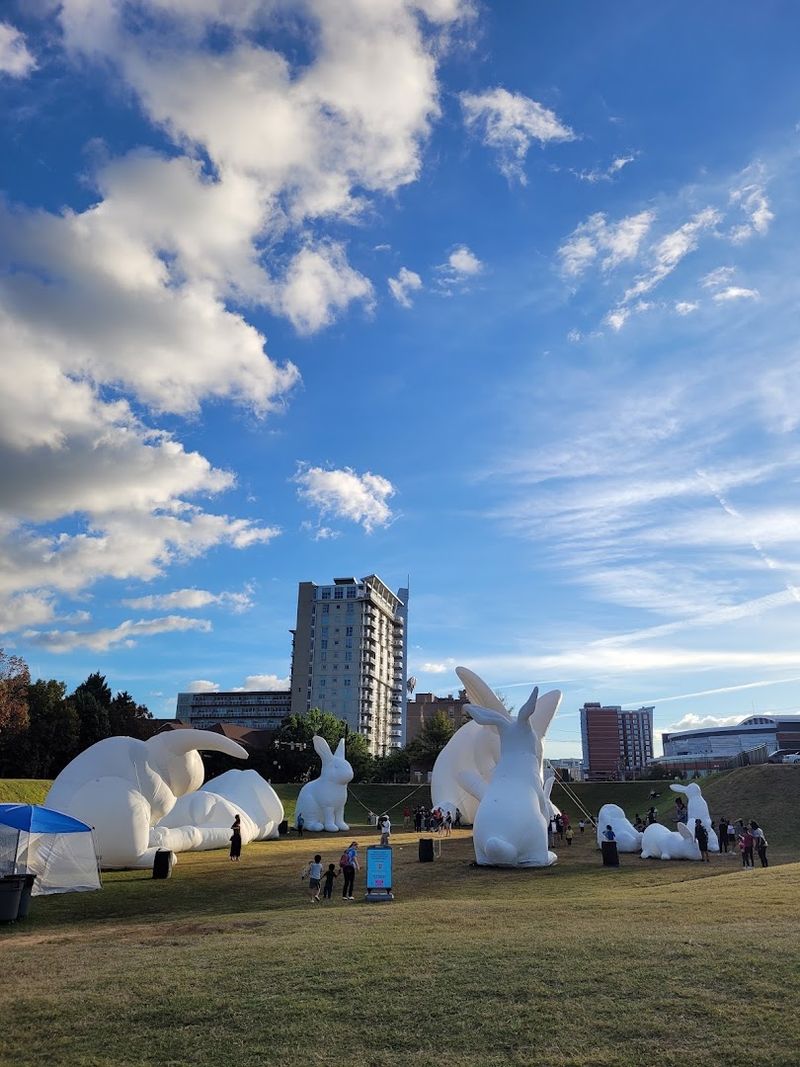
Charlotte’s high-rises added scale without diminishing the animals. Glass towers stood behind the rounded white figures, creating photographs that looked carefully staged even when visitors captured them casually.
Curved bodies and long ears contrasted with sharp rooflines, straight windows, and rigid architectural grids. One sculpture could appear almost equal to a nearby building when photographed from a low angle.
Another might seem small until a person walked beside it and revealed its real proportions. First Ward’s open lawn gave viewers enough distance to study those relationships rather than seeing only isolated details.
City lights strengthened the effect after sunset, especially when reflections appeared across surrounding windows. Such visual contrasts helped the installation work particularly well in an urban setting.
Rabbits usually suggest fields, gardens, or woodland edges, not a busy center surrounded by offices and apartments. Placing them among towers made their presence feel deliberately out of place.
At the same time, their calm poses softened the city around them. Hard surfaces suddenly shared space with rounded forms that looked organic despite being made from fabric and air.
Uptown became an active part of the artwork rather than a simple background.
Not A Current Fixture
Anyone planning a visit should understand that the rabbits disappeared years ago. Intrude was a temporary installation, and its 2021 Charlotte presentation ended on October 12.
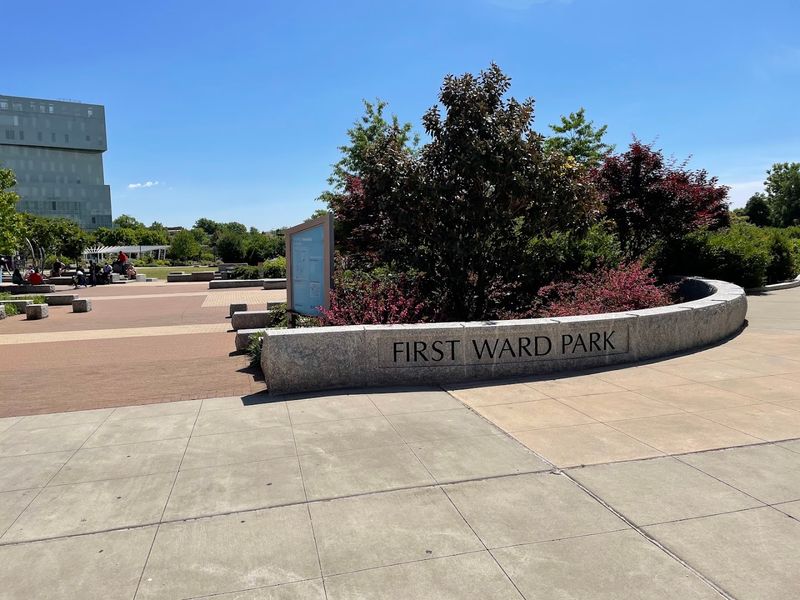
No permanent sculpture remained behind once crews removed the inflatable forms. First Ward Park still welcomes visitors, but current trips should focus on the space itself rather than expecting illuminated animals.
Its 4.6 acres include broad lawns, paths, seating areas, and connections to nearby Uptown attractions.
Trees and landscaping create welcome breaks from surrounding streets, while the open design supports community gatherings and seasonal programming.
Past photographs can make the rabbits look like an established part of the grounds, so checking the date matters before building an itinerary around them. Their absence does not weaken the story.
Temporary public art often gains power because it interrupts a familiar place and then vanishes. Residents who saw the display remember an experience that cannot be recreated exactly, while later visitors can compare old images with the lawn as it appears today.
First Ward Park stands near 301 East 7th Street in Charlotte, where the setting remains accessible even though its largest former guests are long gone.
Use First Ward Park As The Urban-Green-Space Hook
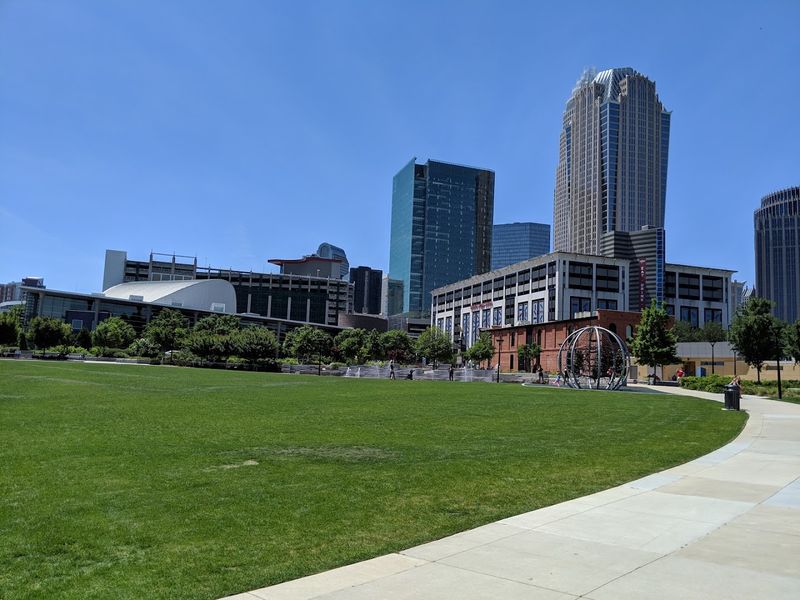
Modern towers surround the park, yet its open lawn gives Uptown room to breathe. First Ward Park covers approximately 4.6 acres beside the UNC Charlotte Center City building, ImaginOn, and the light-rail corridor.
Walkways make it easy to pass through during a broader day downtown, while benches and grassy areas encourage a longer pause. Families often appreciate the open sightlines and room for children to move without leaving the city center.
Office workers can step outside for a break, and photographers gain clear views of nearby architecture. Public programming occasionally brings performances, installations, or community events back onto the grounds, continuing the creative role the space played during the rabbit display.
Its setting also makes it practical to combine with museums, markets, and other Uptown destinations without returning to a car between stops. Nothing about the park is enormous by regional standards, but size is not its greatest strength.
Convenience, visibility, and flexible open space allow it to support uses that a larger suburban park might not handle as naturally. Giant rabbits once demonstrated how dramatically the lawn could change when art entered the picture.
Remembering The Rabbits
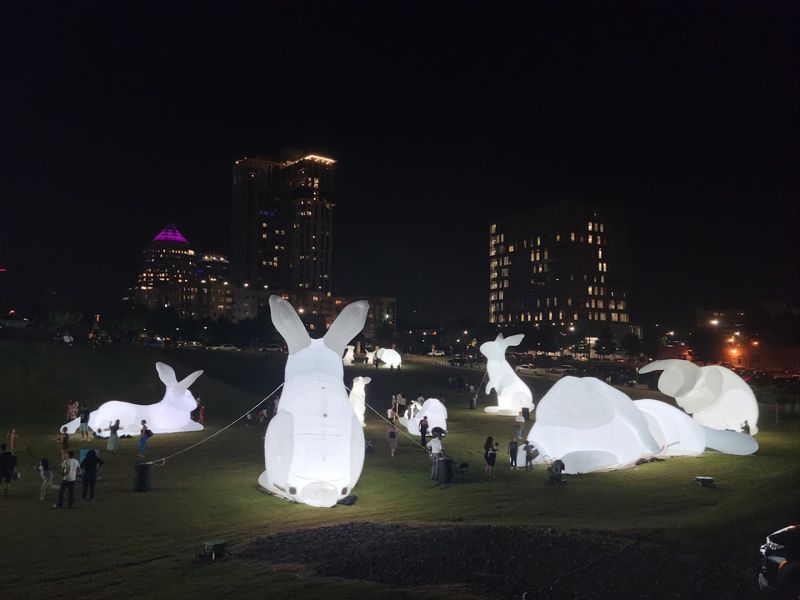
Public response helped the installation become more than an unusual photo opportunity. Families laughed while moving between the sculptures, strangers offered to take pictures for one another, and children reacted with the kind of open amazement adults rarely display.
Yet Parer’s work was never intended as decoration alone. Rabbits were introduced to Australia by European settlers and later caused extensive ecological damage, making them a complicated symbol in the artist’s home country.
Their harmless appearance conflicted with the serious consequences behind the concept. Enlarging them to overwhelming proportions forced viewers to reconsider an animal usually associated with softness and innocence.
Charlotte audiences could appreciate the visual humor while still engaging with questions about human choices and environmental imbalance. That combination made the work approachable without emptying it of meaning.
Some people spent only a few minutes taking photographs. Others paused to read about the artist and understand why the series carried the name Intrude.
Both responses belonged within the experience. Effective public art does not require every visitor to reach the same conclusion.
Glowing rabbits gave Uptown a shared event, while their deeper message remained available to anyone willing to look beyond their playful expressions.
The Nighttime Glow
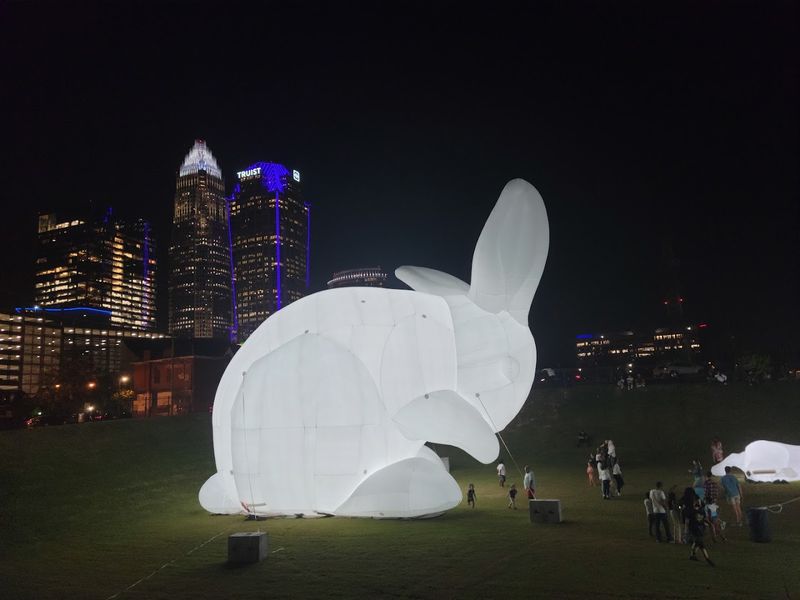
Memories of the display usually return to one detail first: brilliant white figures glowing across a dark lawn. Internal illumination gave each rabbit a clean outline that remained visible from several blocks away.
Long ears rose into the night, rounded bodies cast faint light onto nearby grass, and people became small silhouettes while walking between them. That visual relationship made the installation feel larger after sunset than it had during the day.
Charlotte’s skyline contributed additional points of light without competing with the sculptures. Instead, windows, traffic signals, and building signs framed a scene that felt unmistakably urban.
Visitors often lingered because movement continually changed the view. Passing behind one rabbit could reveal another previously hidden figure, while shifting position altered how each sculpture lined up with surrounding towers.
Evening also brought a calmer rhythm as the brightest daytime activity faded around the park. Nothing moved dramatically, yet the inflated forms responded subtly to outdoor conditions and never looked completely static.
Their glow became the emotional center of the experience.
Scale drew people toward the lawn, but light transformed those enormous shapes into the images Charlotte residents continued sharing after the installation disappeared from North Carolina.