This Open-Air Nebraska Steam Train Ride Winds Past Wildlife Before The Crowds Catch On
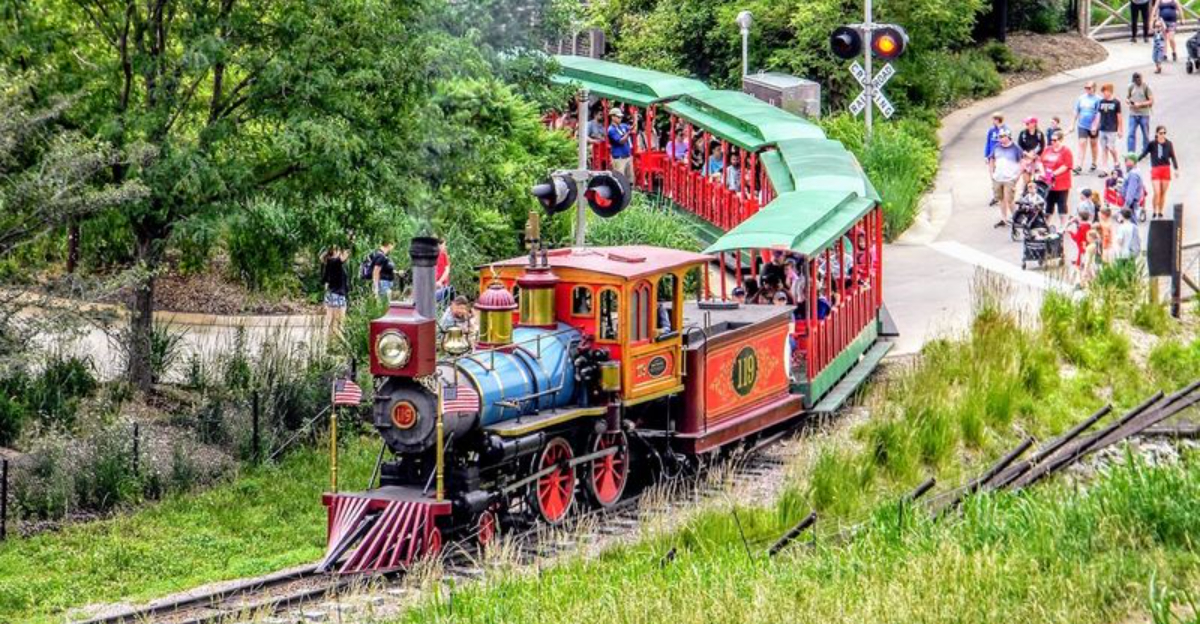
A zoo visit usually involves a lot of walking. This ride offers a much better deal: sit down, feel the breeze, and let a steam locomotive handle the hills.
The open-air cars roll along a winding route where animal habitats and unexpected views appear beyond the tracks.
Children lean toward the railings. Adults quietly appreciate the chance to stop checking the map. Then the whistle sounds, and the entire outing suddenly feels borrowed from another era.
Few Nebraska attractions combine wildlife watching and old-fashioned train travel quite this naturally.
The railroad has carried zoo visitors since 1968, yet it can still feel like a bonus discovered after everyone else rushed toward the biggest exhibits.
What might appear around the next bend? That small uncertainty keeps eyes moving between the scenery, the tracks, and the habitats beyond them.
The Train Uses Genuine Open-Air Passenger Cars
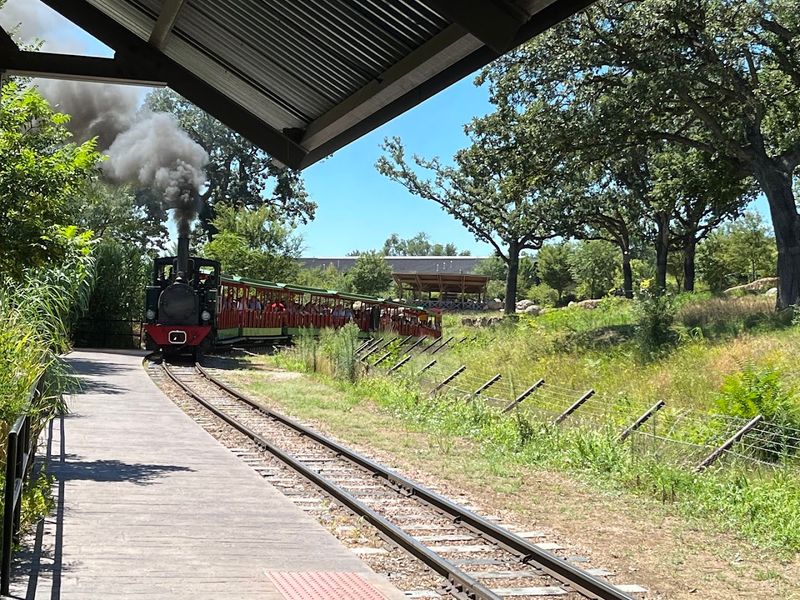
Riding in a fully enclosed train car is one thing, but sitting in an open-air coach with the breeze moving through is something else entirely.
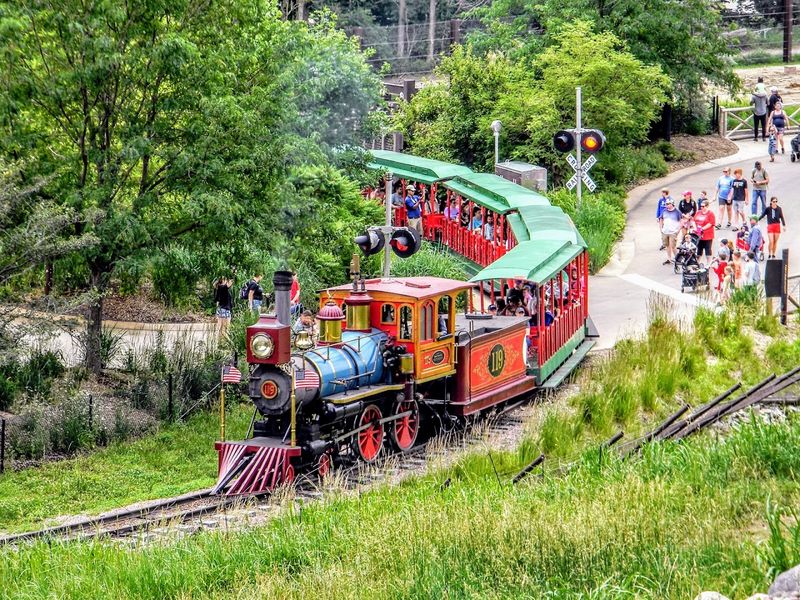
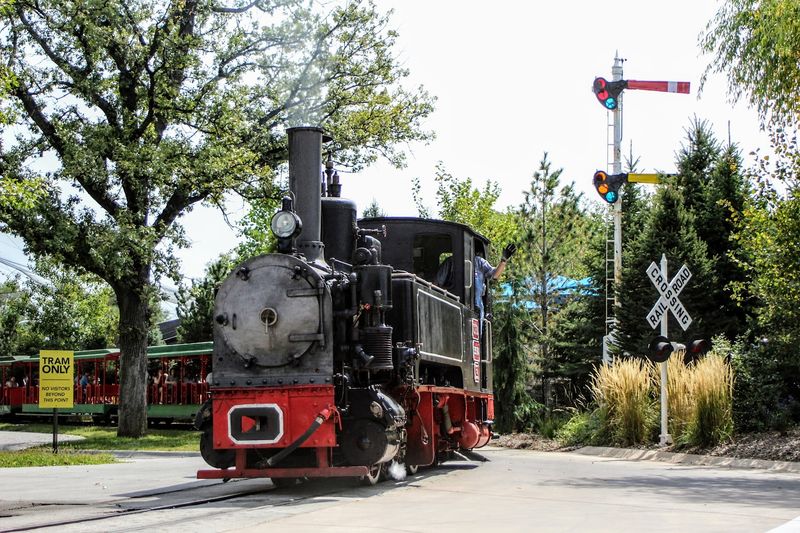
Locomotive No. 119 typically pulls five open-air coaches, while the older Riva locomotive generally operates with six open-air coaches and a caboose trailing behind.
The bench-style seating faces outward, which keeps the surrounding zoo environment close and largely unobstructed throughout the entire journey.
The open sides mean passengers can hear the sounds of the zoo, feel the shift in temperature as the train moves through shaded and sunny stretches, and catch glimpses of habitats without craning around barriers.
For photographers, the unobstructed sightlines can make a real difference compared to viewing through glass or fencing on foot.
Families with young children tend to enjoy the sensory quality of the ride, since there is always something to look at or listen to.
The coaches have a simple, utilitarian charm that suits the historic character of the locomotives pulling them.
It Travels Around One Of America’s Largest Zoos
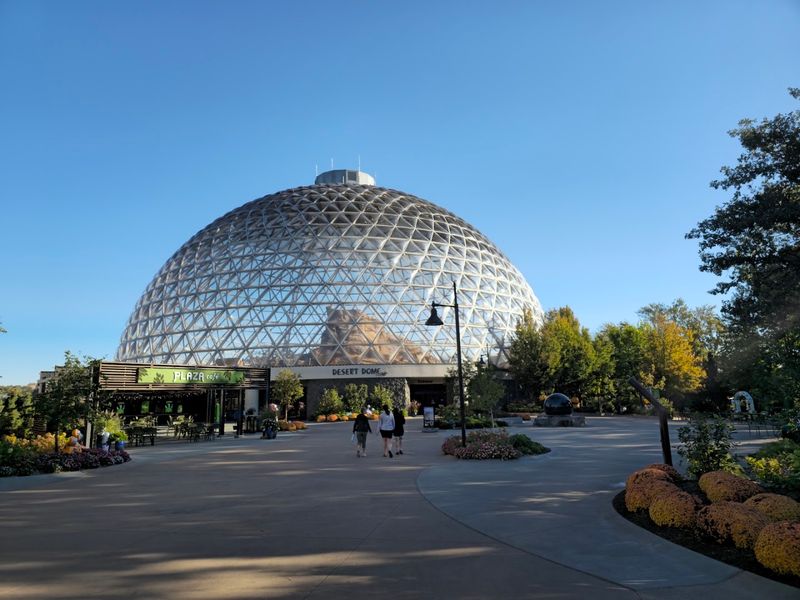
Henry Doorly Zoo and Aquarium covers 160 acres in Omaha, Nebraska, and navigating the full grounds on foot can be genuinely exhausting, especially on a warm afternoon with hills involved.
The Omaha Zoo Railroad operates entirely within the zoo property, offering a moving vantage point across a landscape that includes animal habitats, landscaped gardens, indoor exhibit buildings, and elevated terrain.
Seeing the zoo from a train seat gives a sense of its true scale that walking alone rarely provides.
The zoo consistently ranks among the top zoological institutions in the United States, drawing visitors from across the region and beyond.
Having a railroad operating inside those grounds is an unusual feature that sets Henry Doorly apart from most comparable facilities.
Most large zoos offer trams or shuttle carts, but few maintain working steam locomotives with genuine historical significance.
The railroad route winds through sections of the property that may feel less familiar to visitors who stick to the main walking paths.
That shift in perspective, combined with the motion and sound of the train, makes the zoo feel like a place worth exploring more slowly rather than rushing through exhibit by exhibit.
The Route Covers Roughly 1.8 Miles
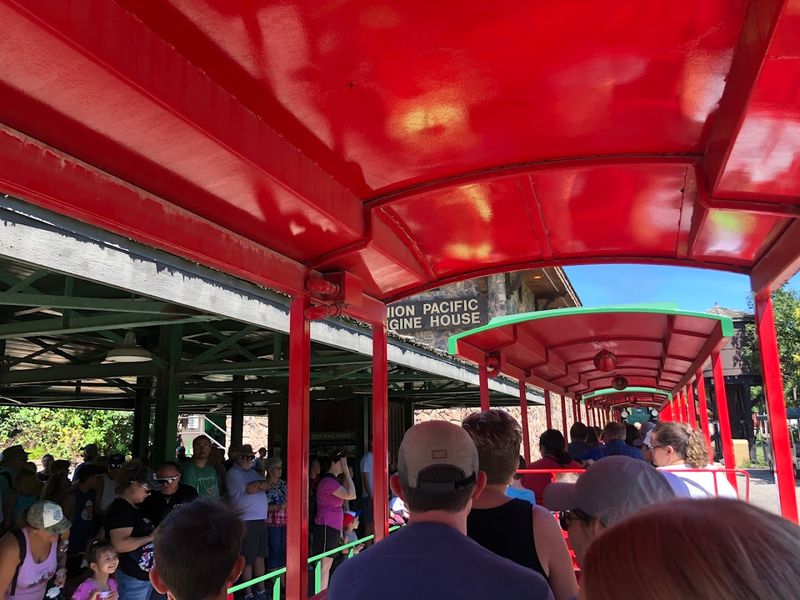
A complete circuit on the Omaha Zoo Railroad covers approximately 1.8 miles of narrow-gauge track, with the gauge measuring 2 feet 6 inches wide.
That distance is enough to feel like a proper train journey rather than a quick loop around a parking lot, and a full trip typically takes between 15 and 20 minutes from departure to return.
For a zoo attraction, that runtime is generous and gives passengers enough time to settle in and actually absorb the surroundings.
Narrow-gauge railroads have a distinct character compared to standard-gauge lines.
The smaller track width and lighter equipment create a slightly different ride quality, and the locomotives themselves tend to have a more compact and approachable look that appeals to both children and adults.
The 2-foot-6-inch gauge used here is historically consistent with many working railways that operated across Europe and parts of North America during the 19th and early 20th centuries.
Planning around the 15-to-20-minute ride time is useful for visitors managing a full zoo day.
Knowing the duration in advance helps with scheduling around feeding times, show schedules, or simply deciding whether to do a one-way trip or stay on for the full loop.
Wildlife Can Appear Beyond The Cars
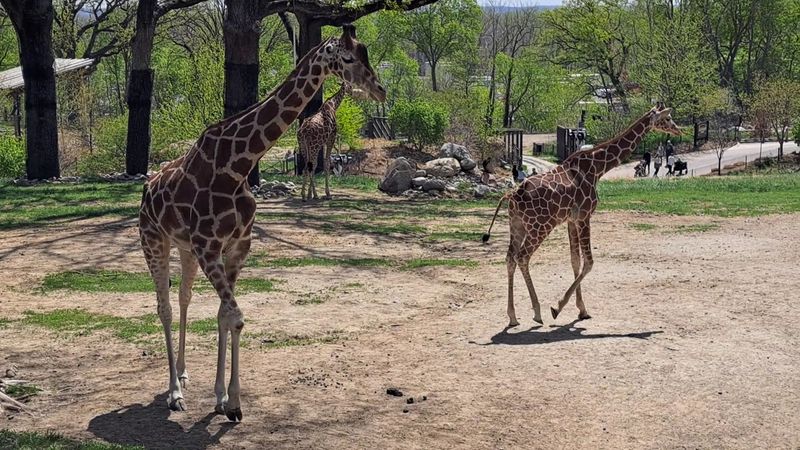
Spotting animals from a moving train adds a layer of spontaneity that walking through exhibits rarely matches.
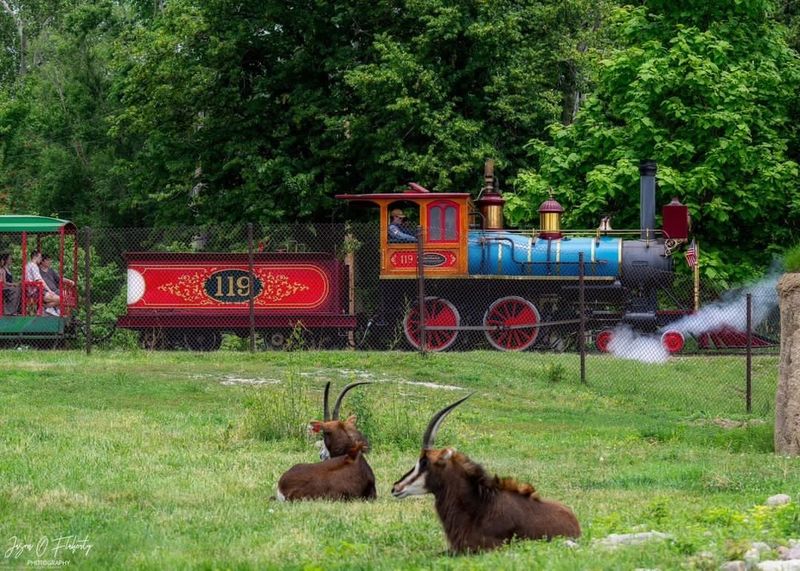
As the Omaha Zoo Railroad winds through the grounds, riders may catch views of giraffe enclosures, elephant areas, flamingo habitats, and other landscaped sections that border the route.
Sightings naturally vary depending on animal activity, vegetation density, and the time of day the ride takes place.
Trees and habitat walls do block some views along certain stretches, so expecting a clear panoramic look at every animal would set the wrong expectation.
What the train actually offers is more like a series of partial glimpses and passing impressions, which suits the relaxed pace of the ride.
Some riders find those brief, unexpected views more memorable than standing directly in front of a glass enclosure.
An older feature of the railroad included a stop near Pachyderm Hill where passengers could disembark, explore the area, and then re-board a later train.
Whether that option remains available on any given day is worth confirming at the station before boarding.
The conductor typically shares interesting facts and context during the ride, which adds an informational layer that makes the wildlife views feel more connected to the broader zoo experience.
One Locomotive Was Built To Resemble Union Pacific No. 119
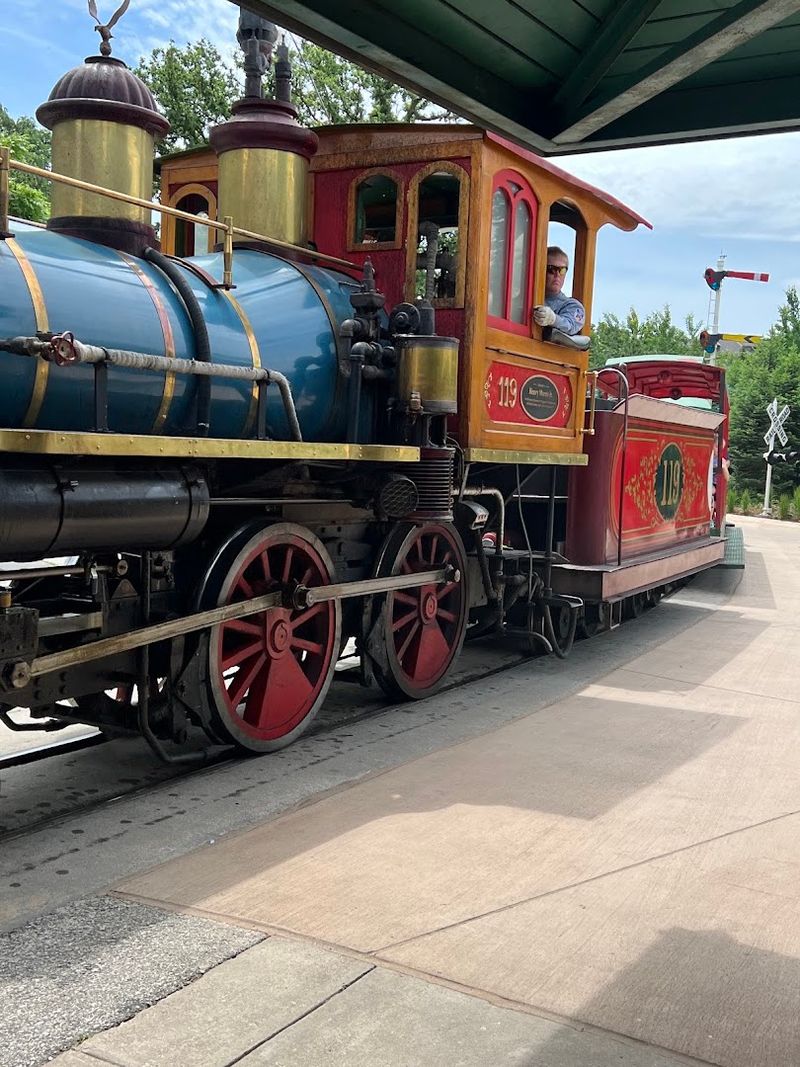
Few zoo trains can claim a direct visual connection to one of the most celebrated moments in American railroad history, but the Omaha Zoo Railroad’s No. 119 comes close.
Built in 1968 by Crown Metal Products, the locomotive was designed to resemble Union Pacific’s ceremonial engine No. 119, the very engine present at Promontory Summit, Utah, when the first transcontinental railroad was completed on May 10, 1869.
That historical reference gives the zoo’s replica a sense of weight and meaning beyond its role as a passenger carrier.
The original Union Pacific No. 119 became an enduring symbol of American ambition and engineering during the 19th century.
Having a visual echo of that locomotive operating inside Nebraska’s most prominent zoo feels like a fitting tribute, given that Omaha served as the eastern starting point for the Union Pacific’s transcontinental line.
The connection between the zoo railroad and Nebraska’s broader railroad heritage is genuine rather than decorative.
Visitors with an interest in railroad history may find the replica more compelling once they understand the backstory behind its design.
The locomotive’s colorful finish and polished details make it visually striking even for those who arrive with no prior knowledge of the original No. 119.
The Railroad Also Owns A Locomotive Built In 1890
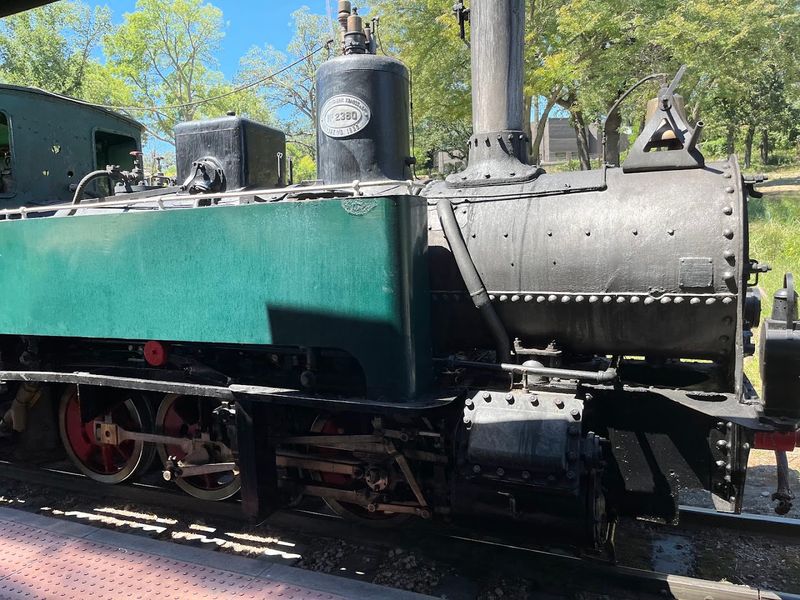
Not every zoo railroad can point to a locomotive that was built before the 20th century even began, but the Omaha Zoo Railroad can.
Riva, numbered 104, was manufactured in 1890 by Krauss Works in Linz, Austria, making it well over a century old and still capable of pulling a full train of passengers through a modern American zoo.
The locomotive was donated to the zoo in 1974 and entered service after undergoing restoration.
The age alone makes Riva remarkable, but its continued operational status is what elevates it from a museum curiosity to a living piece of railroad history.
Machinery from the 1890s that still performs its original function in regular public service is genuinely rare, and finding one operating on zoo grounds in Omaha is not something most visitors expect when they arrive at Henry Doorly.
Riva’s European origins give it a visual character that is noticeably different from American-built locomotives of the same period.
Its compact proportions and mechanical layout reflect the design conventions of late 19th-century Austrian engineering rather than the bolder, more ornate styling common to American locomotives of the era.
Visitors Can Purchase One-Way Or Round-Trip Tickets
Ticket pricing at the Omaha Zoo Railroad is straightforward, with a round-trip ride listed at $7 per person and a one-way ride available for half that amount.
Children aged two and younger ride without charge, which makes the train accessible for families with toddlers who might not otherwise participate in paid attractions during a zoo visit.
Zoo members can receive a five-percent discount by presenting their membership card alongside valid identification at the time of purchase.
Because pricing can change with little advance notice, confirming the current fare on the zoo’s website or at the Guest Services desk before heading to the station is a practical step.
What appears in published guides or online articles may not reflect the most current rates, especially during special events or seasonal promotions.
Building the train fare into the overall zoo budget from the start avoids any surprise at the ticket window.
The pricing structure reflects the railroad’s position as an optional add-on rather than a core part of zoo admission.
Some visitors skip it entirely for budget reasons, while others consider it one of the better value experiences available inside the zoo given the historical significance of the equipment and the length of the ride.
Either perspective is reasonable depending on individual priorities for the day.
Zoo Admission Is Separate From The Train Fare
Accessing the Omaha Zoo Railroad requires a zoo admission ticket first, since the railroad operates entirely within the grounds of Henry Doorly Zoo and Aquarium.
The train fare is an additional cost on top of zoo admission rather than something bundled into the standard entry price.
That distinction matters for budget planning, particularly for larger families where individual ticket costs add up quickly across multiple attractions.
The zoo is located at 3701 S 10th St, Omaha, NE 68107, and Guest Services near the entrance can provide current information on whether any combination packages or seasonal promotions are available that might include the train fare.
Asking at the entrance rather than assuming a bundle exists is the safer approach, since promotional offerings tend to change throughout the year.
Understanding the separate pricing structure before arriving helps set the right expectations for the day.
Visitors who budget only for zoo admission and then discover the train costs extra at the station may feel caught off guard, especially if the train ride was a primary motivation for the visit.
A few minutes of advance research eliminates that friction and lets the day start on a more relaxed footing.
The Ride Is Particularly Valuable On A Hot Or Busy Day
A full day at Henry Doorly Zoo involves more physical effort than most visitors anticipate before arriving.
The 160-acre property includes significant elevation changes, long distances between major exhibits, and outdoor stretches that can become genuinely uncomfortable during peak summer heat.
Sitting in a moving open-air coach with a breeze moving through the car offers a natural recovery moment that walking simply cannot provide.
On high-attendance days when the main paths fill with strollers and tour groups, the train station tends to offer a quieter and more manageable experience than the congested central walkways.
Boarding the train removes visitors from the foot traffic entirely for 15 to 20 minutes, which can reset the mood and make the second half of a zoo visit feel less rushed.
The combination of motion, fresh air, and changing scenery makes the railroad a practical tool for managing the pacing of a long zoo day rather than just a novelty ride.
Visitors who treat it as a strategic rest stop rather than an optional extra often find that they cover more ground overall and enjoy the exhibits they do visit with more energy and attention than they would have otherwise.
Planning the train ride into the middle of the day rather than saving it for the end tends to maximize its benefit.