This 2-Mile California Boardwalk Trail Crosses A Coastal Lake Before Reaching The Pacific
Most coastal walks make you choose between lake views and ocean scenery. This one quietly offers both.
The trail begins with an easy pace, leading walkers across wooden stretches where the landscape feels calm, open, and unexpectedly removed from the busier parts of the coast.
Birds move through the reeds, water reflects the sky, and the path keeps pulling forward without revealing everything at once.
Along this stretch of California’s coast, famous shoreline hikes often steal the spotlight from gentler routes like this one.
The biggest reward waits beyond the first stretch, where the scenery begins shifting and the air starts carrying a stronger hint of salt.
How many two-mile walks can completely change character before the end? This one does.
The Trail Covers Two Easy Miles Round Trip
Two miles might sound short, but the Oso Flaco Lake Trail packs a surprising amount of scenery into that distance.
The round trip covers roughly two miles total, making it manageable for most people including older adults and families with younger children. There are no steep climbs or technical sections to worry about.
The terrain stays flat throughout, which means visitors can focus on looking around rather than watching their footing.
Walking at a relaxed pace, the full out-and-back trip typically takes between one and one and a half hours. That timing can stretch longer if someone stops frequently to watch birds or rest at a bench.
Because the trail is short and flat, it tends to attract a wide range of visitors who might not attempt longer or more demanding hikes.
Comfortable walking shoes are usually sufficient, though sandals are not recommended on the sandy dune sections.
The trail connects several distinct environments within its two miles, moving from shaded woodland to open wetland to coastal dunes before reaching the Pacific.
A Long Boardwalk Crosses Directly Over Oso Flaco Lake
Walking out over open water on a wooden boardwalk is one of those experiences that feels a little different every time, depending on the light and the season.
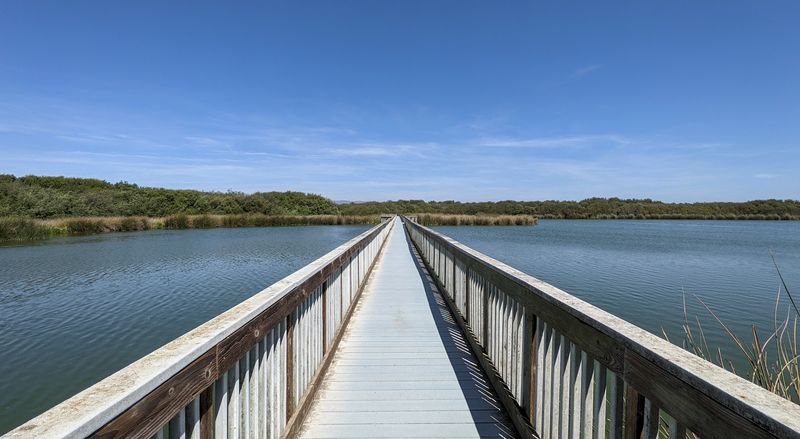
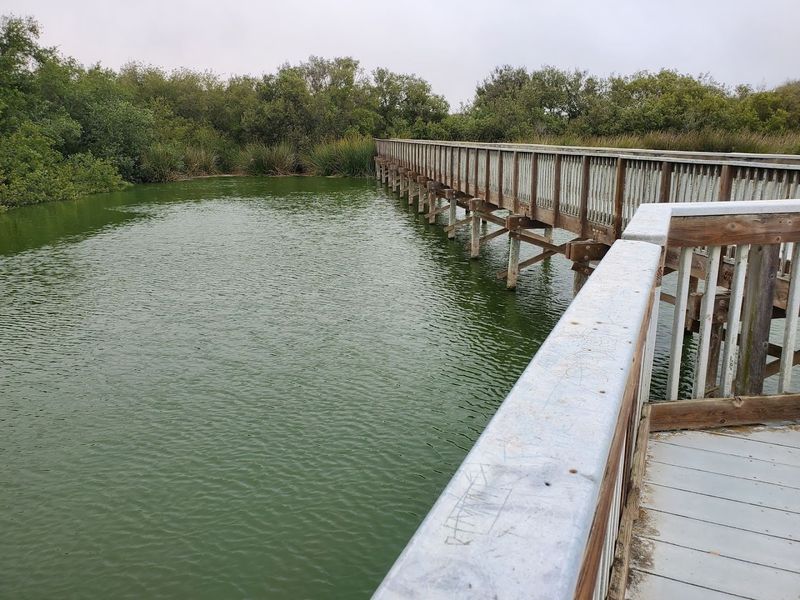
The boardwalk at Oso Flaco Lake stretches directly across the lake’s surface, giving visitors an elevated view of the water below and the reeds growing along its edges.
The structure is sturdy and well-maintained, allowing people to walk comfortably without feeling unsteady.
From the boardwalk, the lake spreads out on both sides, and the stillness of the water often creates clear reflections of the sky and surrounding vegetation.
On calm mornings, the surface can look almost mirror-like. The boardwalk continues beyond the lake and transitions into the dune section of the trail, so there is no backtracking needed at this point.
The elevated position also gives a clear sightline for spotting wildlife resting on the water or along the shoreline.
Herons, coots, and various duck species are commonly seen from this section of the trail.
The boardwalk is wide enough for two people to walk side by side comfortably, and the wooden planks create a soft rhythmic sound underfoot that adds to the overall calming atmosphere of the walk.
The Lake Is One Of California’s Rarest Coastal Wetlands
Coastal freshwater lakes are genuinely rare in California, and Oso Flaco Lake is considered one of the most ecologically significant examples that remains intact.
Unlike many wetlands that have been drained or developed over the decades, this lake has been protected as part of the larger Guadalupe-Nipomo Dunes Natural Area.
That protection has allowed it to retain its natural character in a way that few similar sites along the California coast still can.
The lake sits just inland from the ocean, separated from the Pacific by a narrow band of dunes.
That proximity to saltwater creates a unique mix of conditions that supports an unusually wide variety of plant and animal life.
Freshwater species and coastal species coexist here in ways that scientists and naturalists find particularly interesting to study.
Visitors do not need a biology background to appreciate what makes the lake special.
Simply standing on the boardwalk and looking out across the open water, surrounded by dense stands of tule and cattail, gives a clear sense of how different this environment is from most places along the California coast.
Birds Gather Just Feet From The Walkway
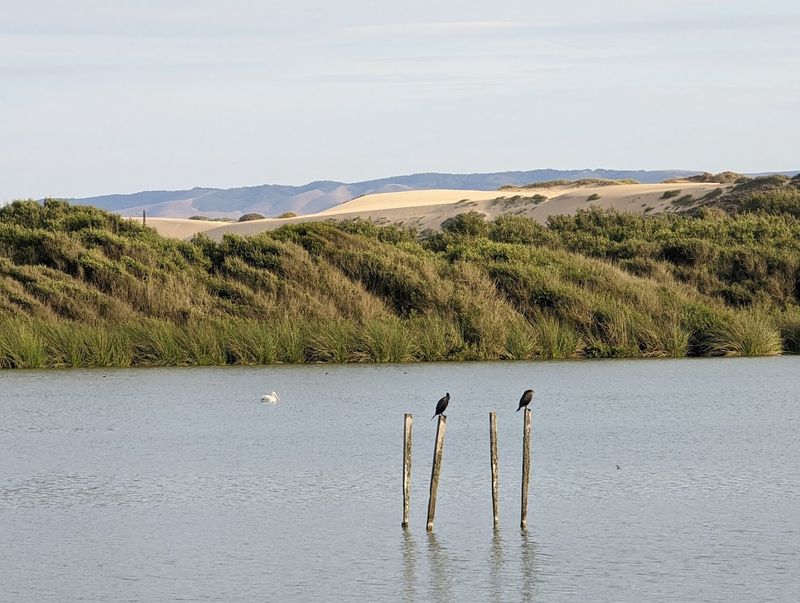
Birdwatching at Oso Flaco Lake does not require binoculars or expert knowledge to be enjoyable.
Many of the birds that live in and around the lake are so accustomed to the presence of the boardwalk that they continue feeding and resting even when visitors are walking just a few feet away.
That proximity makes the experience feel remarkably up close compared to most wildlife encounters.
Great blue herons are among the most commonly spotted birds along the trail and they tend to stand motionless in the shallows for long periods, making them easy to observe.
Ducks, coots, and various shorebirds also frequent the lake edges throughout the year. During migration seasons, the area can attract a wider range of species passing through the Central Coast corridor.
The trail sits within a region that is recognized as an important stopover for migratory birds, which means the variety of species visible from the boardwalk can change significantly between visits.
Bringing a small pair of binoculars can enhance the experience, but it is not necessary to see birds clearly from the walkway.
The Route Passes Through Shady Willow Trees
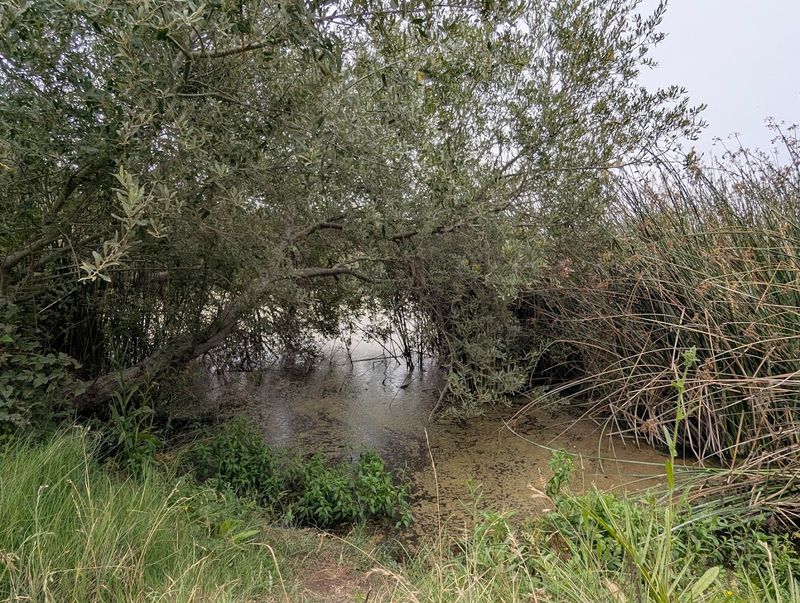
Before the boardwalk begins, the trail opens through a shaded corridor of willow and wax myrtle trees that feels noticeably cooler than the open dune sections ahead.
That shaded stretch at the start of the trail sets a calm tone for the walk and gives visitors a moment to settle into the pace of the environment before reaching the lake.
The canopy overhead filters the sunlight into soft patches that shift across the path as the breeze moves through the branches.
Willow trees are naturally drawn to moist soil, and their presence near the lake edge reflects the wetland conditions just a short distance away.
The roots of these trees help stabilize the soil and provide cover for small birds and insects that live along the trail corridor.
Walking through this section, the sounds of the surrounding dunes and ocean are muffled, replaced by the rustling of leaves and occasional birdsong.
The shaded start also makes the trail more comfortable during warmer months when the open dune sections can feel quite exposed to the sun.
Visitors who tend to overheat quickly may want to bring sunscreen and a hat for the later portions of the walk, since the tree cover ends before the trail reaches the boardwalk over the lake.
The Boardwalk Continues Across Rolling Coastal Dunes
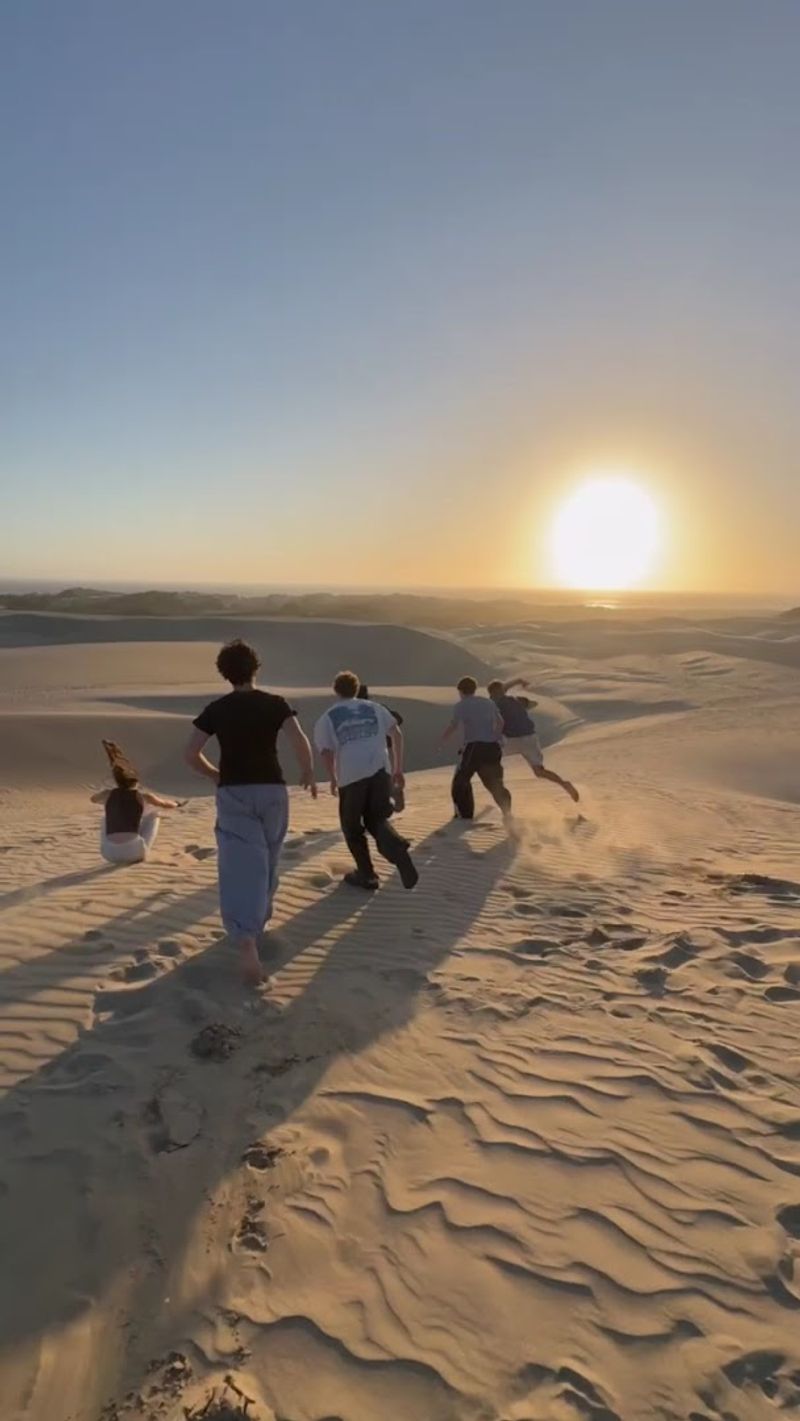
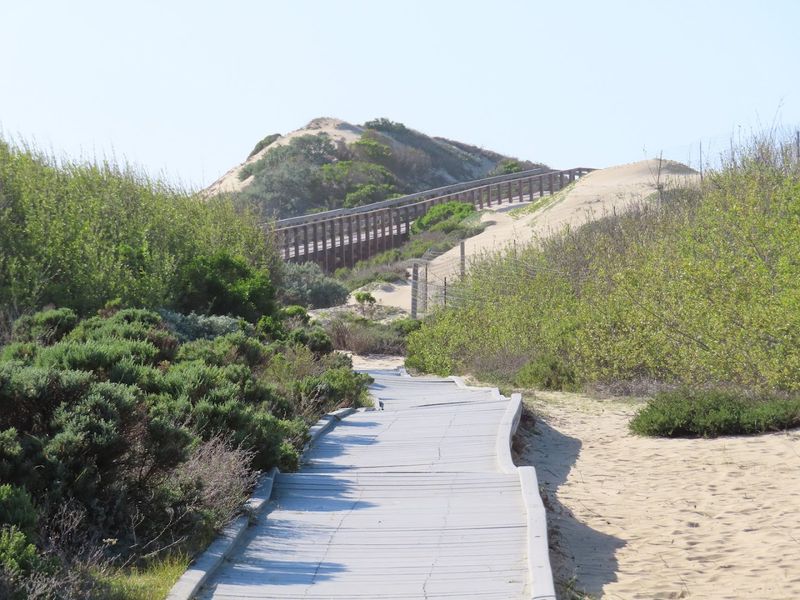
After crossing the lake, the boardwalk does not end. It continues forward, carrying visitors up and across the rolling coastal dunes that separate the lake from the ocean.
Walking across dunes on a boardwalk rather than through loose sand makes the experience significantly easier and keeps foot traffic from damaging the fragile dune vegetation that holds the sand in place.
The elevated path also offers a clear view of the dune landscape stretching in both directions.
The dunes here are part of the Guadalupe-Nipomo Dunes Complex, which is described as the largest remaining coastal dune system in California.
The scale of the dunes becomes more apparent as the boardwalk rises and falls with the terrain, giving visitors a sense of the depth and texture of the landscape.
The wind tends to pick up in this section, which can feel refreshing on warm days but may require securing hats and loose items.
Coastal dune plants like beach buckwheat and sand verbena can be spotted growing in the sandy areas between the boardwalk planks and along the edges of the path.
These plants play a critical role in stabilizing the dunes and protecting the inland wetland from encroaching sand.
More Than 1,000 Plant And Animal Species Live Nearby
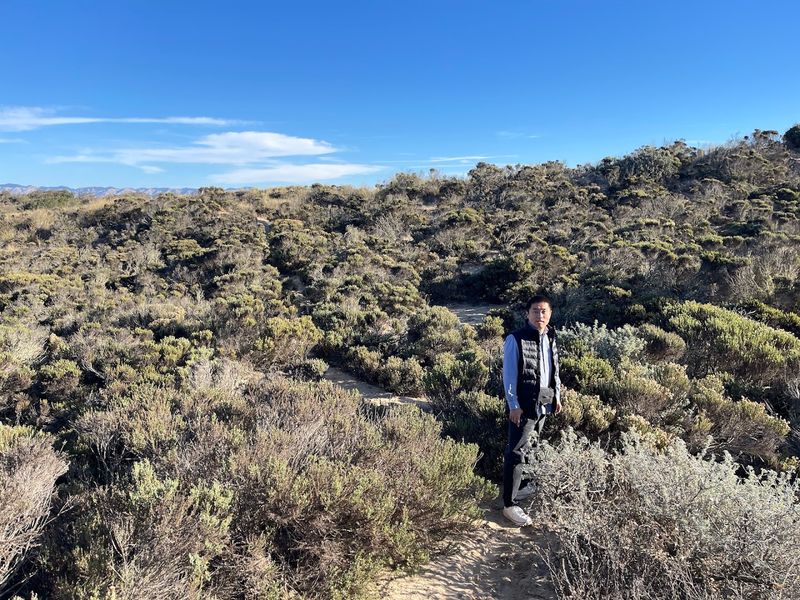
The number 1,000 is easy to read past, but stopping to think about it adds a different dimension to the walk.
The Guadalupe-Nipomo Dunes Complex, which surrounds the Oso Flaco Lake Trail, supports more than 1,000 species of plants and animals.
That level of biodiversity in a coastal dune system is genuinely unusual and reflects decades of conservation effort to protect the area from development and motorized recreation.
Among those species are several that are listed as threatened or endangered at either the state or federal level.
The western snowy plover nests in the open sandy areas of the dunes, and the California least tern has been documented in the region as well.
Plant species range from common coastal shrubs to rare endemic species found nowhere else in the world.
Most visitors will not identify all or even most of the species they encounter during a single walk, but the density of life is noticeable even to a casual observer.
The vegetation along the trail changes in texture, height, and color as the path moves from woodland to wetland to dune, and each zone supports its own community of species.
Interpretive signs along parts of the trail offer some guidance about what to look for and why the habitat matters.
The Final Stretch Opens Toward The Pacific Ocean
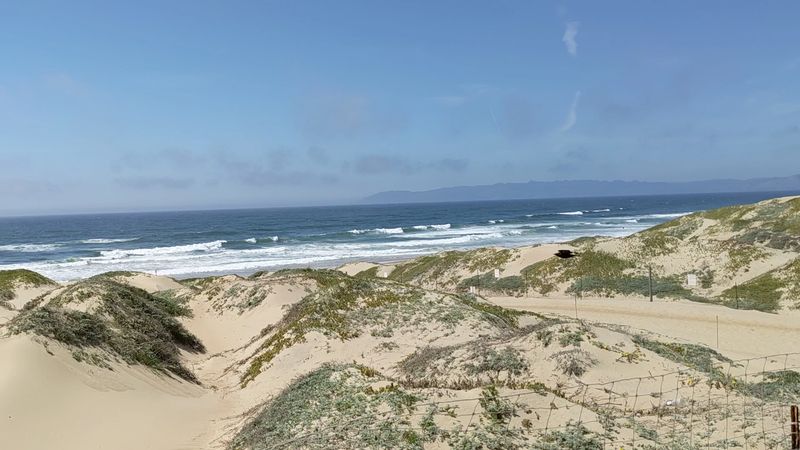
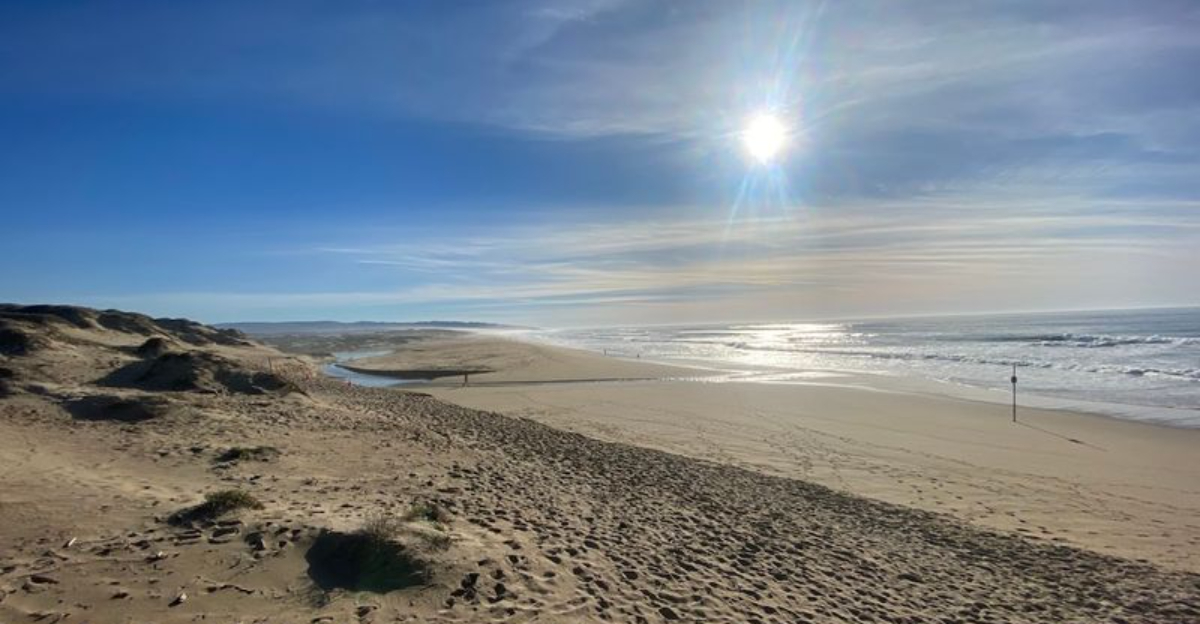
Something shifts in the atmosphere just before the trail reaches the ocean. The air carries more salt, the wind picks up, and the sound of waves begins to filter through the dunes ahead.
That gradual buildup makes the moment the Pacific finally comes into view feel like a genuine payoff rather than just the end of a walk.
The contrast between the enclosed wetland environment and the wide open ocean horizon is striking.
Standing at the end of the boardwalk with the Pacific spread out ahead is one of those moments that tends to slow people down naturally.
The beach at this point is largely undeveloped, with no commercial activity or infrastructure visible along the shoreline.
That absence of development gives the coastline a raw and uninterrupted quality that is increasingly rare on the California coast.
The trail does not deposit visitors onto a crowded beach scene. Instead, it opens to a relatively quiet stretch of shoreline where the main sounds are waves and wind.
Visitors can walk down to the water’s edge from the end of the boardwalk, though the sand can be soft and shifting near the waterline.
The best time to experience the ocean end of the trail with softer light and fewer people tends to be early morning on weekdays.
An Ocean Overlook Waits At The End
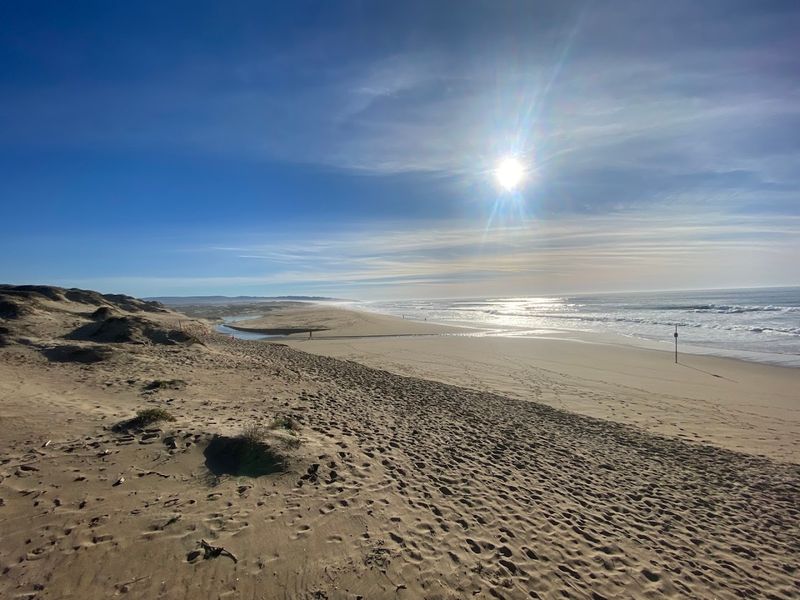
At the very end of the boardwalk, before the path meets the open beach, there is an overlook area that gives visitors a wide view of the Pacific and the surrounding dune landscape.
It is a natural stopping point where people tend to pause, take photos, and simply stand for a few minutes before turning back.
The overlook does not have a formal platform or railing, but the elevated position of the dune provides a clear sightline in both directions along the coast.
On clear days, the view from this point can extend far up and down the coastline, with the Santa Lucia Mountains visible to the north and the broader Central Coast stretching south.
The combination of open ocean, undeveloped beach, and rolling dunes creates a visual that feels genuinely remote even though the parking area is only about a mile behind.
That sense of distance from everyday life is part of what makes the overlook memorable.
Spending time at the overlook rather than rushing back is worth considering, especially if the walk out was done at a quick pace.
The return trip covers the same path, so there is no risk of missing anything on the way back.