This Roadside Nebraska Steakhouse Serves Thick-Cut Onion Rings With Their Own Signature Sauce
Roadside steakhouses rarely earn loyal followings through subtlety.
They win people over with hearty plates, familiar service, and side dishes that refuse to stay in the background.
Here, the onion rings arrive crisp and sturdy enough to handle a generous dip into the house sauce without falling apart.
Across Nebraska, plenty of travelers know the best meal on a long drive may be waiting beyond an unassuming highway exit.
The setting adds to the experience.
There is a strong sense of history, a little roadside eccentricity, and the comfortable feeling that this place has been serving hungry guests long enough to know exactly what works.
Steak may be the expected order, but those golden rings have built a reputation of their own.
Twelve Thick-Cut Onion Rings Arrive In One Order
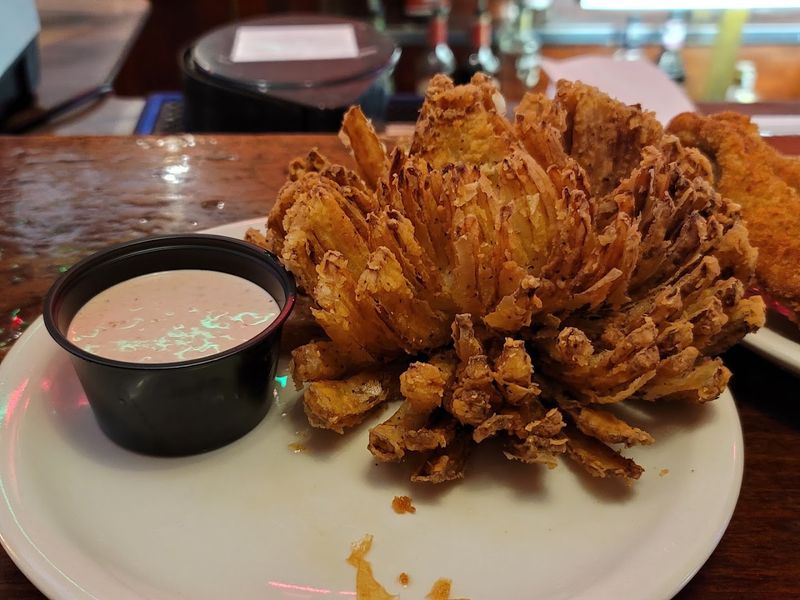
Few appetizers make a statement quite like a full dozen thick-cut onion rings landing on the table before the main course arrives.
At Ole’s Big Game Steakhouse and Lounge, located at 123 N Oak St, Paxton, NE 69155, each order comes with twelve rings that are lightly breaded and fried to a satisfying golden finish.
The portion size alone signals that this kitchen takes its starters seriously.
The rings are cut thick enough to hold their shape through the frying process, giving each bite a good balance of tender onion and crisp coating.
They arrive hot, which makes a real difference in texture compared to rings that sit under a lamp. The lightly breaded style keeps things from feeling too heavy before the entree even shows up.
Pairing these rings with a cold drink while scanning the trophy-lined walls is a pretty solid way to settle into the Ole’s experience.
The portion is generous enough to share comfortably across a table of two or three people.
Ole’s Own Ring Sauce Gives Them A Signature Finish
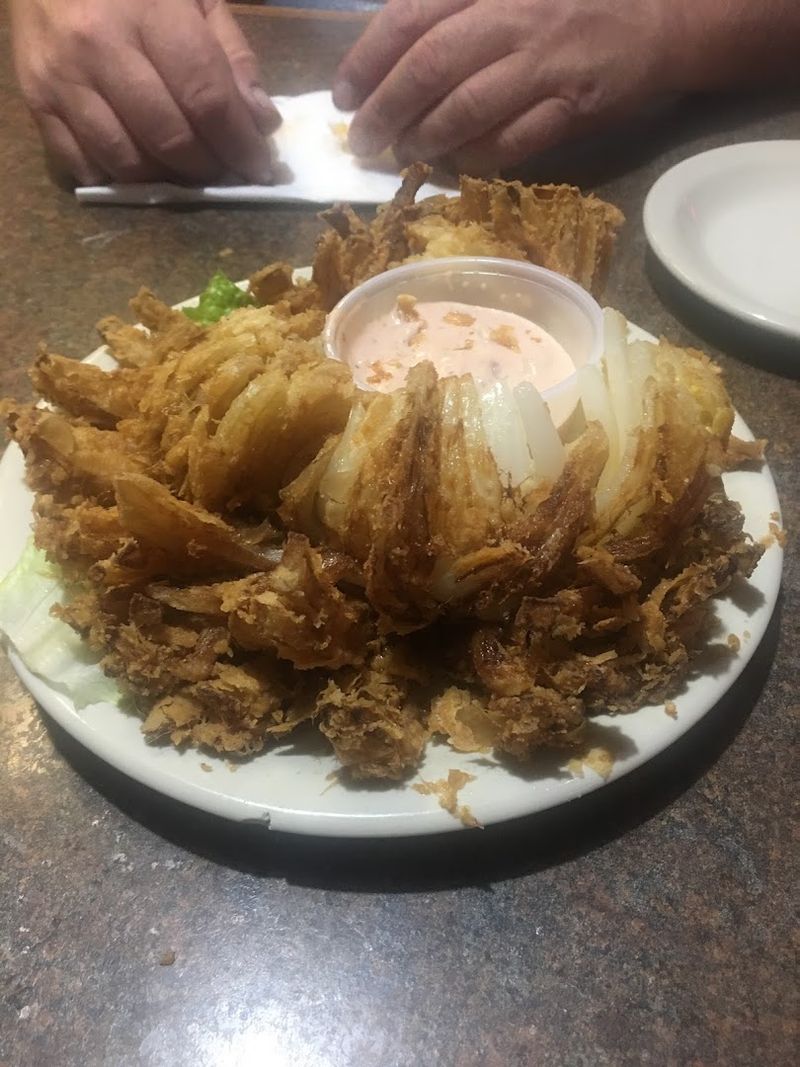
A good dipping sauce can quietly elevate an entire appetizer, and Ole’s Own Ring Sauce does exactly that.
Rather than setting out a generic bottle of ketchup or a store-bought ranch, the kitchen at Ole’s pairs its onion rings with a house-made sauce that carries its own distinct flavor profile.
That kind of detail tends to stick in the memory long after a meal wraps up.
The sauce has become part of the identity of the onion ring order itself, to the point where the two are essentially inseparable on the menu.
Regulars tend to mention it specifically when describing what makes the appetizer worth ordering.
For first-time visitors, it often comes as a pleasant surprise that a roadside steakhouse in a small Nebraska town is putting that much thought into its condiments.
Having a signature sauce tied to a specific dish is a smart way to create a reason for people to return and order the same thing again.
It also gives the restaurant something genuinely its own in a category where most places rely on the same interchangeable options.
The Ring Sauce is a small touch that adds up to a meaningful part of the Ole’s experience.
Nebraska Beef Keeps The Steak Menu Grounded
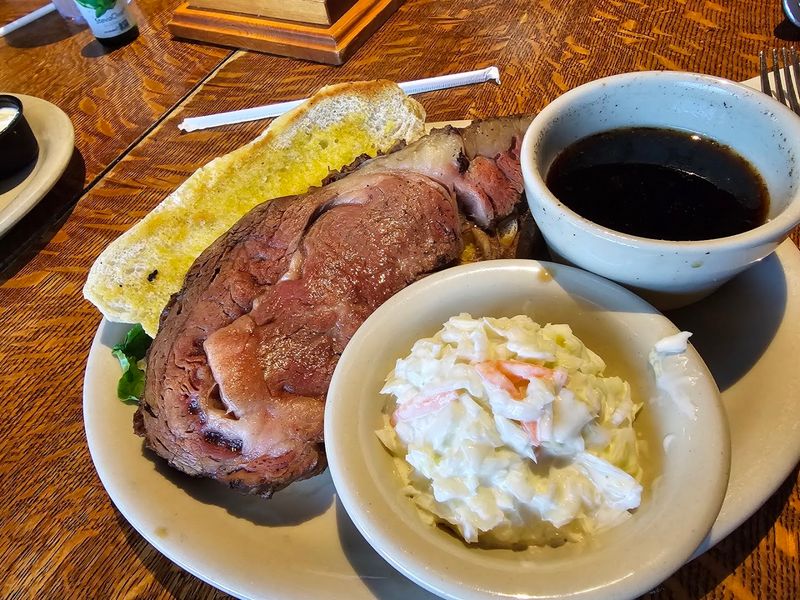
There is something reassuring about knowing that the beef on the plate traveled a very short distance to get there.
Ole’s sources its Nebraska beef from a third-generation butcher whose shop sits just one block north of the restaurant, which means the supply chain is about as local as it gets.
That proximity tends to show up in the freshness and quality of what arrives on the plate.
The steak menu stays grounded in classic American cuts rather than chasing trends or overly complicated preparations.
High-choice or higher grades of Nebraska corn-fed beef are used, and cuts like the ribeye and chicken-fried steak are prepared with that sourcing in mind.
The kitchen’s approach leans toward letting the quality of the meat carry the dish rather than masking it with heavy seasonings or sauces.
Knowing where your food comes from has become increasingly important to a lot of diners, and Ole’s has been operating this way long before it became a marketing point for most restaurants.
The connection to a local butcher is a practical decision that also happens to reflect the broader character of the place.
Supporting nearby producers while feeding travelers and locals alike is a tradition worth noticing.
More Than 200 Big Game Trophies Cover The Interior
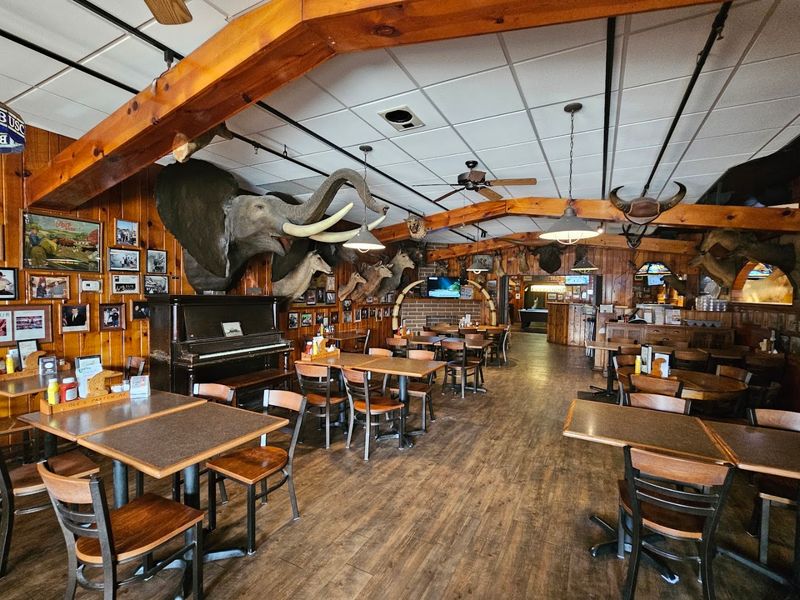
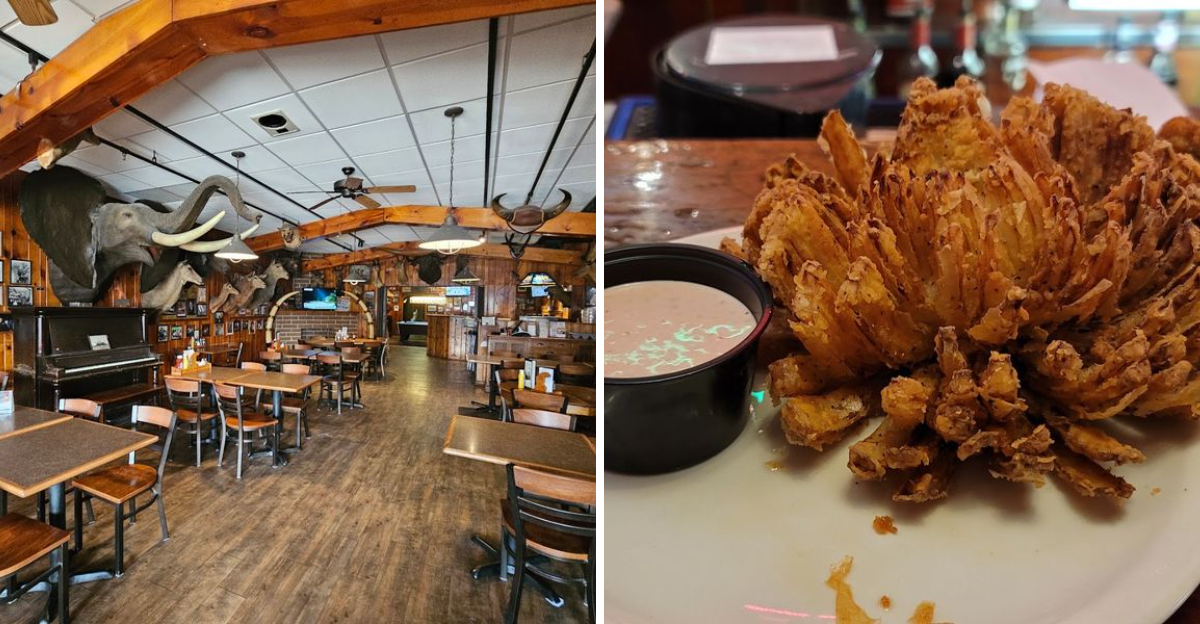
Walking into Ole’s for the first time can feel a little like stepping into a natural history museum that also serves prime rib.
More than 200 big game trophies are mounted across the walls, ceiling, and various corners of the dining room, creating an atmosphere that has no real equivalent at any other restaurant along Interstate 80.
The sheer density of the collection takes a few minutes to fully absorb.
The trophies represent animals from nearly every continent, gathered over 35 years of worldwide safaris by the restaurant’s founder, Rosser Ole Herstedt.
His expeditions concluded in 1973, meaning the collection has been on display for decades and has become as much a part of Ole’s identity as the food itself.
Each mount has a story behind it, and the variety of species on display reflects just how far those travels reached.
For families with kids, the displays offer a natural conversation starter between courses.
Children tend to wander from table to table pointing out different animals, which gives parents a relaxed moment to enjoy their meal.
The collection turns a simple dinner stop into something closer to an experience, which is probably why so many people who pass through once end up making a return trip.
A Towering Polar Bear Commands Immediate Attention
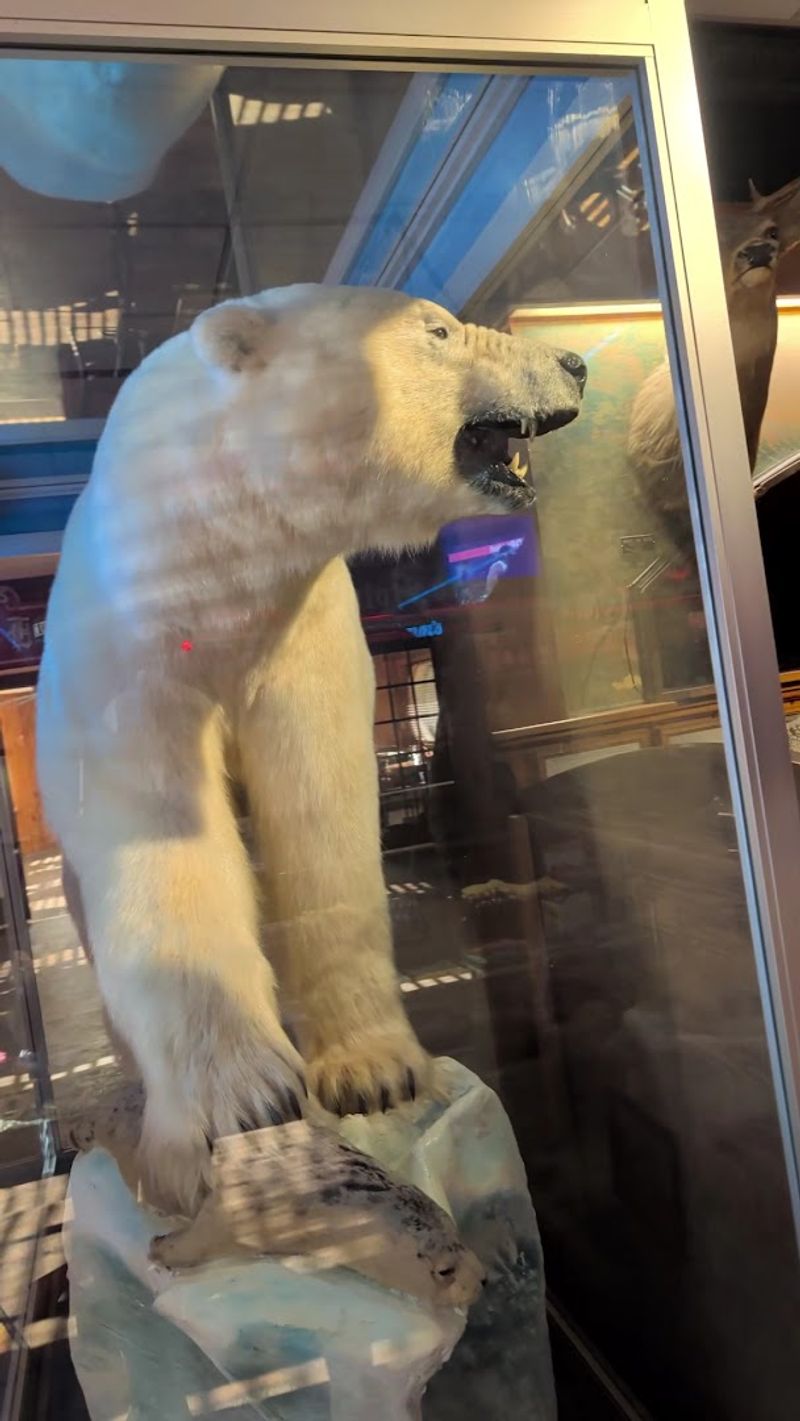
Most restaurant entryways greet guests with a host stand or a menu board. At Ole’s, the first thing that stops people in their tracks is a full, stuffed polar bear standing near the entrance.
The sheer size of the mount is striking, and it tends to be the first thing visitors reach for their phones to photograph before they even find a seat.
The bear was acquired by founder Ole Herstedt during a hunt on Russia’s Chukchi Sea in 1969, making it one of the more historically specific pieces in the entire collection.
It has been a fixture of the restaurant for decades and has taken on a kind of mascot status among regular visitors.
Reviews and travel accounts from people passing through Nebraska on road trips frequently mention it by name.
Standing near the polar bear and looking around the room gives a pretty good sense of the scale of Ole’s collection as a whole.
The bear anchors the space visually and sets the tone for everything else on display.
For a first-time visitor trying to get a feel for what makes this steakhouse different from every other roadside stop along I-80, spending a moment near the entrance before being seated is a good way to start.
The Restaurant Has Welcomed Travelers Since 1933
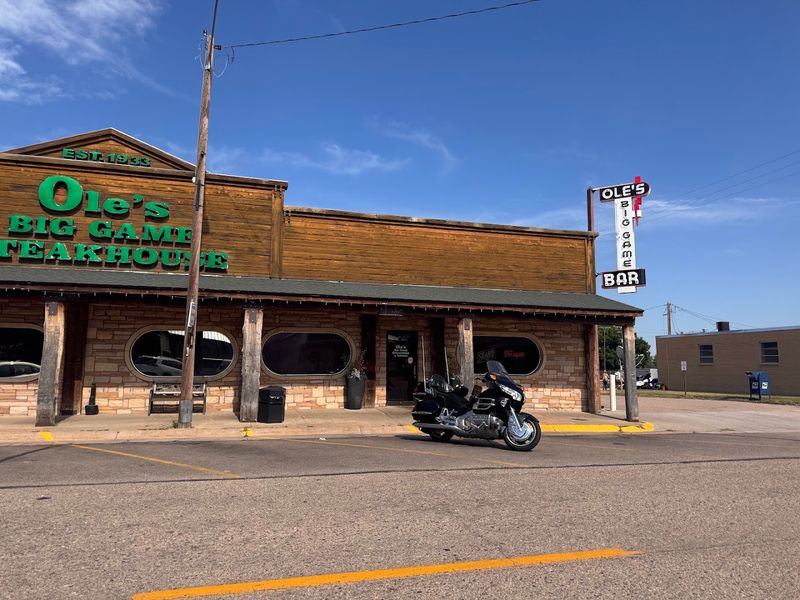
Few restaurants anywhere in the country can claim a starting date as specific as Ole’s.
The establishment opened at 12:01 a.m. on August 9, 1933, which was exactly one minute after Prohibition ended in Nebraska.
That precise founding moment gives the place a kind of origin story that most restaurants simply do not have, and it has been a continuous presence in Paxton ever since.
Over nine decades of operation, the restaurant has served generations of travelers making their way across the country on what eventually became the Interstate 80 corridor.
Families who stopped in as children have returned with their own kids and grandchildren, creating layers of shared memory tied to a single building in a small Nebraska town.
That kind of multigenerational loyalty is rare and speaks to something durable in the Ole’s experience.
The longevity of the place is not just a talking point but a practical reality that shapes how the restaurant operates.
Decades of feedback and repeat business have refined what works on the menu and in the dining room.
Staying open and relevant for over 90 years in a small town along a major interstate requires consistent quality and a genuine connection to the community that passes through its doors.
Its Original Walnut Bar Has A Story Of Its Own
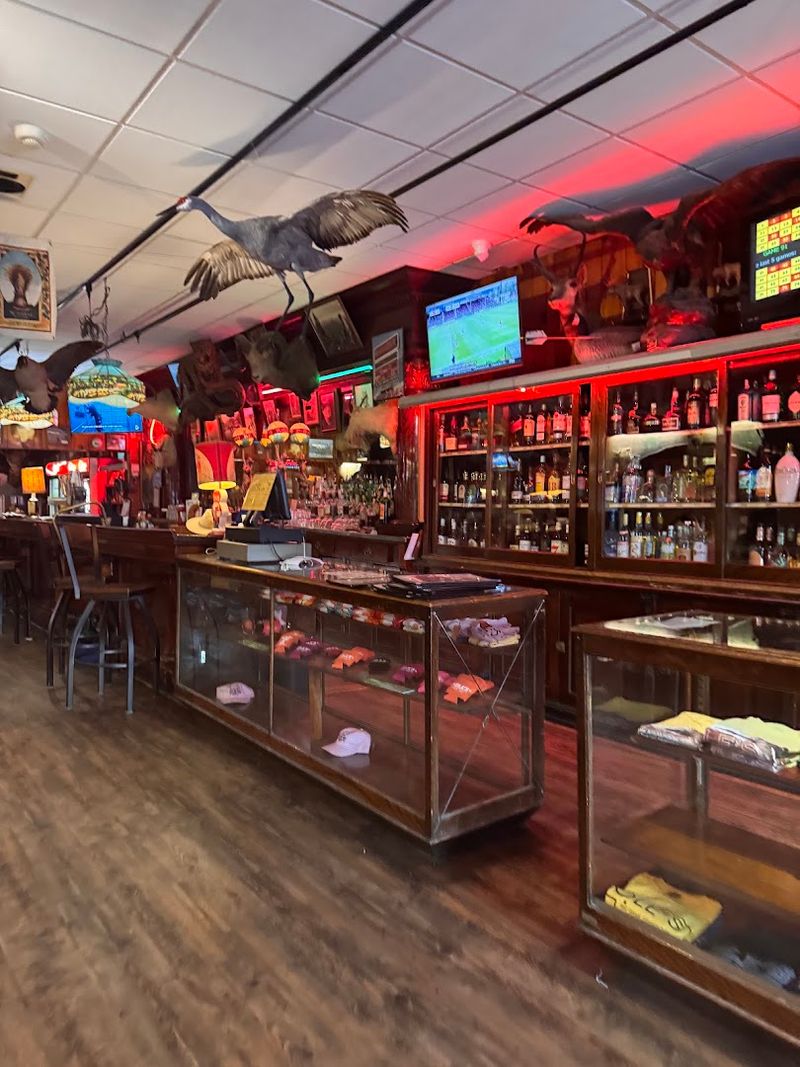
Behind every great bar there is usually a story, and the one at Ole’s is genuinely hard to top.
According to the restaurant’s history, founder Ole Herstedt won the walnut bar in a baseball game after the promised fifty-dollar prize could not be paid.
That single transaction resulted in one of the most distinctive pieces of furniture in any roadside establishment in Nebraska.
The bar was originally crafted for the Plains Hotel in Cheyenne, Wyoming, which gives it a provenance that extends well beyond Paxton.
It spans the entire east wall of the lounge and has been a fixture of Ole’s since the early years of the restaurant’s operation.
The craftsmanship holds up visually even after all these decades, and the wood carries the kind of warmth that only comes with genuine age.
For visitors who enjoy the details of a place as much as the food, the bar is worth a closer look.
Running a hand along the edge of something that was built for a hotel in Wyoming and ended up in a steakhouse in Nebraska through a baseball wager is the kind of small moment that makes a road trip stop feel genuinely memorable.
Prime Rib Remains One Of The Biggest Dinner Draws
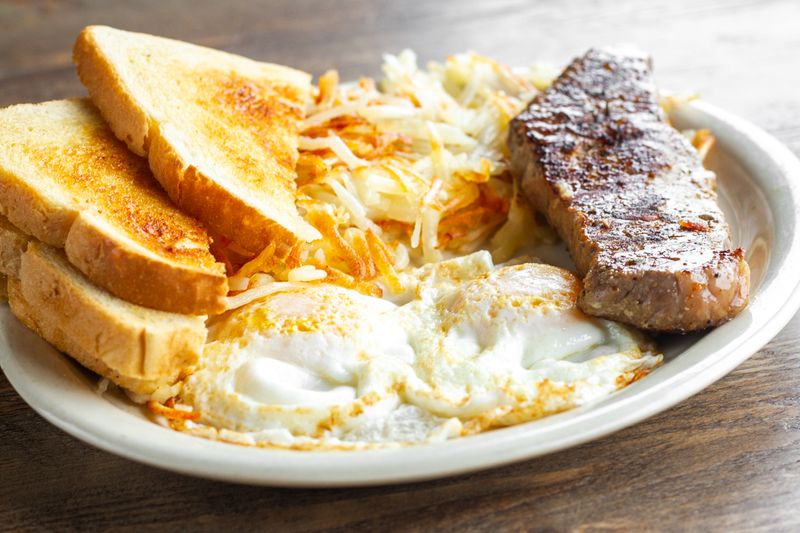
Prime rib has a way of drawing people back to a restaurant, and at Ole’s it has earned a reputation as one of the most consistently highlighted items on the dinner menu.
The cut is slow-roasted and served in the traditional steakhouse style, which rewards patience with a tender, flavorful result that holds up well against the kind of appetite a long day of driving tends to build.
It is the sort of dish that anchors an evening rather than just filling a seat.
One thing worth knowing before making a special trip for the prime rib is that it is typically available starting at 5 p.m.
Arriving earlier in the day and expecting to order it at lunch could lead to disappointment, so planning the stop with that timing in mind makes for a smoother experience.
The restaurant is open daily from 9 a.m. to 10 p.m., which gives plenty of window for a dinner visit.
The prime rib at Ole’s benefits from the same locally sourced Nebraska beef that runs through the rest of the steak menu.
Having access to high-quality, regionally raised beef from a nearby butcher gives the kitchen a strong foundation to work from.