You’ve Called Georgia Home Your Whole Life And Still Haven’t Discovered These 10 Places
You think you know your own backyard. You grew up here, drove these same roads a hundred times, and figured there was nothing left to find.
Then one lazy Saturday changes everything. A friend mentions a spot you have never heard of, and suddenly your whole idea of home gets flipped upside down.
I felt that exact shock driving through Georgia last month. Places that locals barely talk about, hiding in towns I thought I knew by heart.
Some made me laugh. Some made me stop the car just to stare.
This is the strange thing about Georgia. The longer you live here, the more it seems to keep secrets just for the curious ones.
Turns out home still has surprises waiting, if you know where to look.
1. Elberton Granite Museum, Elberton
Most people drive past Elberton without a second thought, but this small city quietly runs the granite world. Elberton holds the official title of the Granite Capital of the World, and the museum at 150 College Ave, Elberton, GA 30635 tells that story in full detail.
Over 45 active quarries and 150 manufacturing plants operate right here.
The ground beneath this part of the state holds a massive bed of blue granite formed from molten magma 400 to 500 million years ago. About 90 percent of the granite quarried here becomes cemetery memorials, roughly 250,000 pieces every single year.
That number is staggering when you think about it.
The museum’s three tiers of self-guided exhibits showcase antique tools used in quarrying, sawing, polishing, and sandblasting. The standout piece is a Confederate statue nicknamed Dutchy, sculpted in 1898 from local granite.
Residents found it so unflattering that they toppled and buried it in 1900.
Dutchy was dug back up in 1982 and given a place of honor inside the museum. The town even built its high school football stadium, the Granite Bowl, from 100,000 tons of blue granite.
That level of commitment to a single material is genuinely impressive and worth seeing firsthand.
2. The Foxfire Museum, Mountain City
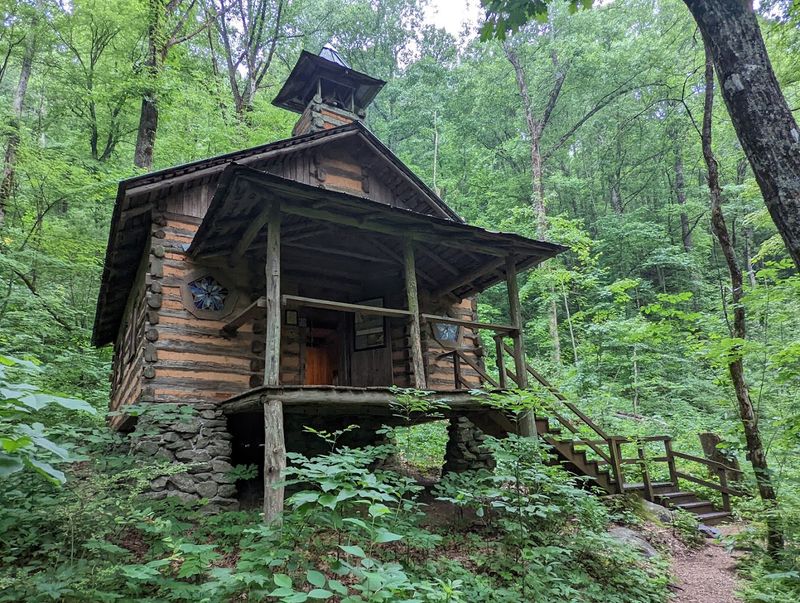
Somewhere between a classroom and a time machine, the Foxfire Museum earns its reputation fast. Spread across more than 100 acres beside Black Rock Mountain State Park, this place started as a student magazine project in 1966.
Students at Rabun County High School began interviewing local elders to document disappearing Appalachian traditions.
The name Foxfire comes from a bioluminescent fungus that glows on rotting wood in these mountain forests. That tiny glowing detail perfectly captures the museum’s spirit.
Royalties from the wildly popular Foxfire Book series, first published in 1972, funded the land purchase in 1974.
Today, over 20 historic log cabins and replicas fill the outdoor village at 98 Foxfire Ln, Mountain City, GA 30562. Some structures date back to the early 1800s and are packed with artifacts from Appalachian life between 1820 and 1940.
A half-mile walking trail connects them all, with interpreters demonstrating blacksmithing and weaving along the way.
One cabin dates to the 1820s, and a 1790s tar grinder wagon connected to the Trail of Tears sits on the grounds. The Foxfire Archive preserves over 50 years of oral history, images, and video recordings.
A Children’s Village with kid-sized cabins makes this a spot the whole family genuinely enjoys together.
3. ABAC’s Georgia Museum Of Agriculture, Tifton
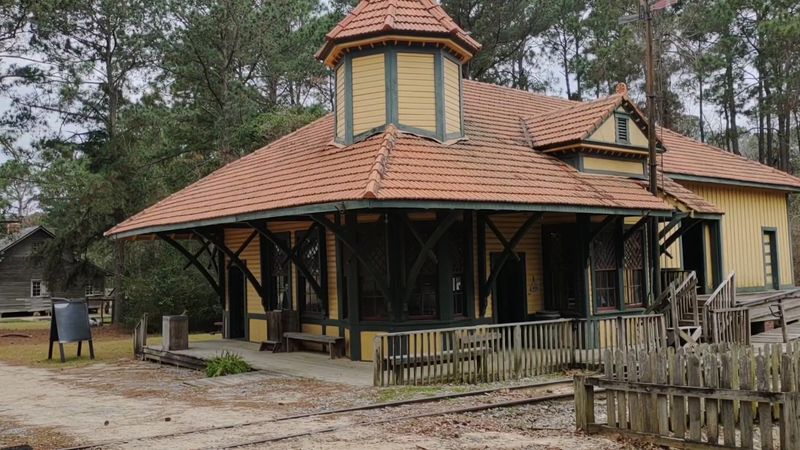
Step onto the grounds at 1392 Whiddon Mill Rd, Tifton, GA 31793 and the air itself smells different, like sawdust, earth, and something cooking over a wood fire. This 95-acre living history museum opened in 1976 and is now managed by Abraham Baldwin Agricultural College.
It recreates rural life in this part of the state from the late 1800s through 1910.
The museum splits into five distinct areas, each telling a separate chapter of agricultural history. The 1870s Traditional Farm Community shows subsistence farming with a farmstead, church, and cabins.
The 1890s Progressive Farmstead demonstrates how technology began changing everything on the land.
The Industrial Sites Complex features a working sawmill powered by an 1892 Atlas 25 horsepower steam engine. A turpentine still and blacksmith shop round out the industrial picture of a functioning mill town.
These buildings are not replicas, they are restored originals moved carefully to this site.
The Vulcan Iron Works Steam Locomotive is the only steam-powered train regularly operating in the state, and visitors can ride it. Costumed docents bring every corner of this place to life with demonstrations that feel completely authentic.
4. Dahlonega Gold Museum, Dahlonega
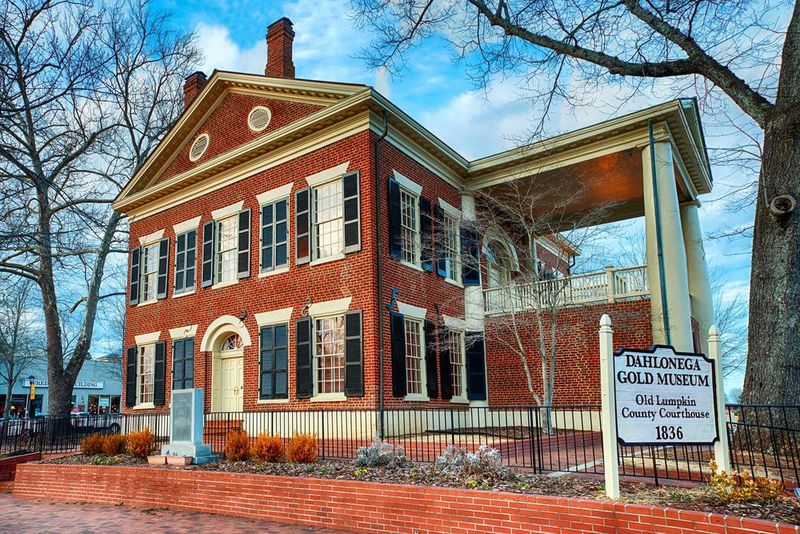
America had a gold rush long before California ever did, and the proof sits right in the middle of Dahlonega’s town square. The Dahlonega Gold Museum at 1 Public Square N, Dahlonega, GA 30533 occupies the Old Lumpkin County Courthouse, built in 1836.
That makes it the oldest surviving county courthouse in the state.
The gold rush here began in 1828 when Benjamin Parks made his discovery, a full two decades before the famous California rush. From 1838 to 1861, a U.S.
Branch Mint right here in Dahlonega coined over $6 million worth of gold. The museum displays a complete set of those rare coins, which is a collection few places in the country can match.
Gold nuggets, including one weighing over five ounces, sit behind glass alongside hydraulic cannons once used to blast entire mountainsides open. An educational film walks visitors through mining techniques and prospector life without making it feel like a lecture.
The preserved judge’s chambers and 1889 wooden chapel seats add a courthouse layer to the whole experience.
The famous phrase, there is gold in them thar hills, is credited to Dahlonega and was supposedly shouted from these very courthouse steps. The nearby University of North Georgia’s Price Memorial Hall steeple gleams with 13 ounces of local gold.
The courthouse bricks themselves reportedly contain trace amounts of the real thing.
5. Tybee Island Light Station & Museum, Tybee Island
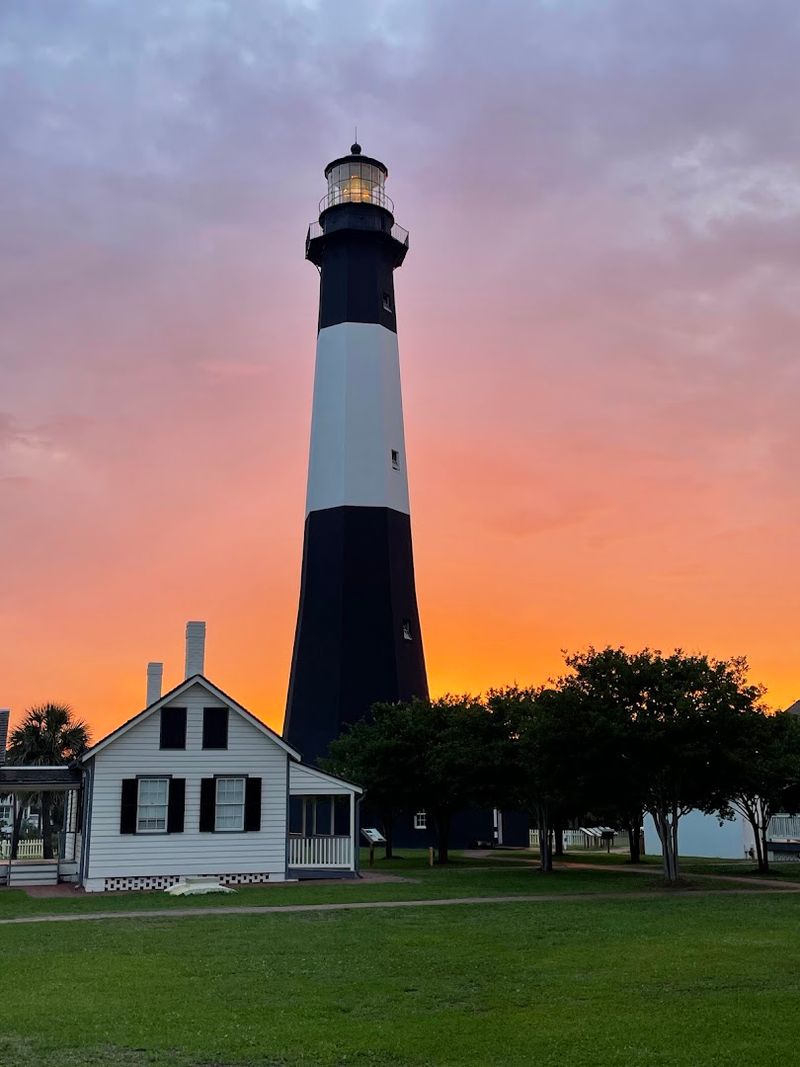
Few structures in the entire Southeast carry 285 years of maritime history the way this lighthouse does. The Tybee Island Light Station at 30 Meddin Dr, Tybee Island, GA 31328 is the oldest and tallest lighthouse in the state.
General James Oglethorpe ordered the original wooden marker built in 1736 to guide ships into the Savannah River.
After storms and erosion destroyed earlier versions, the third brick tower completed in 1773 now forms the lower 60 feet of the current structure. Confederate troops burned the lighthouse in 1861 to stop Union forces from using it, removing the precious lens before they left.
The 145-foot tower seen today was finished in 1867 and fitted with a powerful First Order Fresnel lens.
Climbing the 178 steps to the top is absolutely worth it. Rest areas every 25 steps keep the climb manageable, and the 360-degree view from the observation deck takes in the Atlantic Ocean, Tybee Island, and the mouth of the Savannah River all at once.
That view alone justifies the trip.
Three original Light Keeper’s Cottages from 1881 and an 1812 summer kitchen still stand on the three-acre site. The Tybee Island Museum inside Battery Garland, an 1898 coastal defense battery, covers maritime history, the Euchee tribe, and Fort Screven’s military role.
Seven different flags, including Spanish, French, and Pirate, have all flown over this island at various points in history.
6. Georgia Sea Turtle Center, Jekyll Island
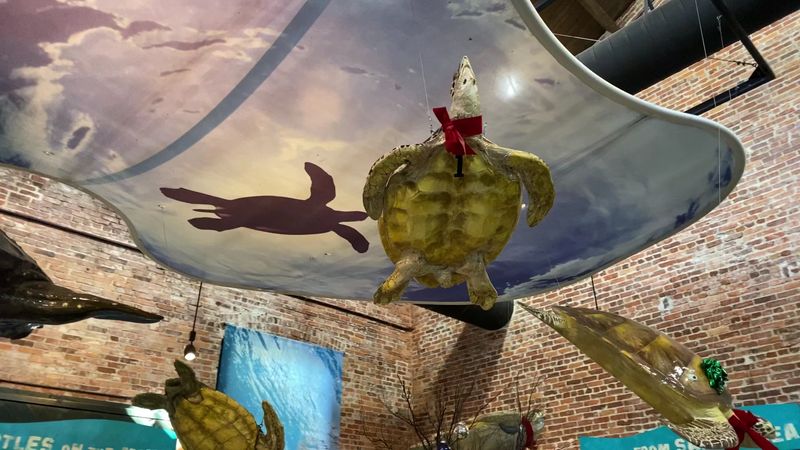
Not many places let you watch a veterinarian treat a sea turtle through a viewing window, but this one does. The Georgia Sea Turtle Center at 214 Stable Rd, Jekyll Island, GA 31527 opened in 2007 as the state’s only sea turtle education and rehabilitation hospital.
Before it existed, injured turtles from this coastal region had to be transported to neighboring states for treatment.
Since opening, the center has treated over 3,000 animals, with more than 750 turtles successfully rehabilitated and returned to the ocean. Veterinarians and marine scientists here treat turtles suffering from boat strikes, fishing line entanglement, and cold stunning.
Every admission fee goes directly toward that life-saving care and ongoing research.
The rehabilitation pavilion is the heart of the visitor experience. Through medical pool viewing windows, you can watch real patients recovering in real time.
Information boards introduce each turtle by name and explain exactly what happened to them and what treatment they are receiving.
Interactive exhibits cover sea turtle biology, migration patterns, and life cycles in ways that genuinely hold attention for all ages. Year-round programs like Turtle Walks, Night Patrol, and Behind the Scenes tours offer even deeper access.
Hanging from the ceiling inside is a massive skeleton of Archelon, a prehistoric sea turtle that makes the modern ones look small. A gift shop rounds out the visit, with every purchase supporting the mission.
7. World’s Largest Peanut Monument, Ashburn
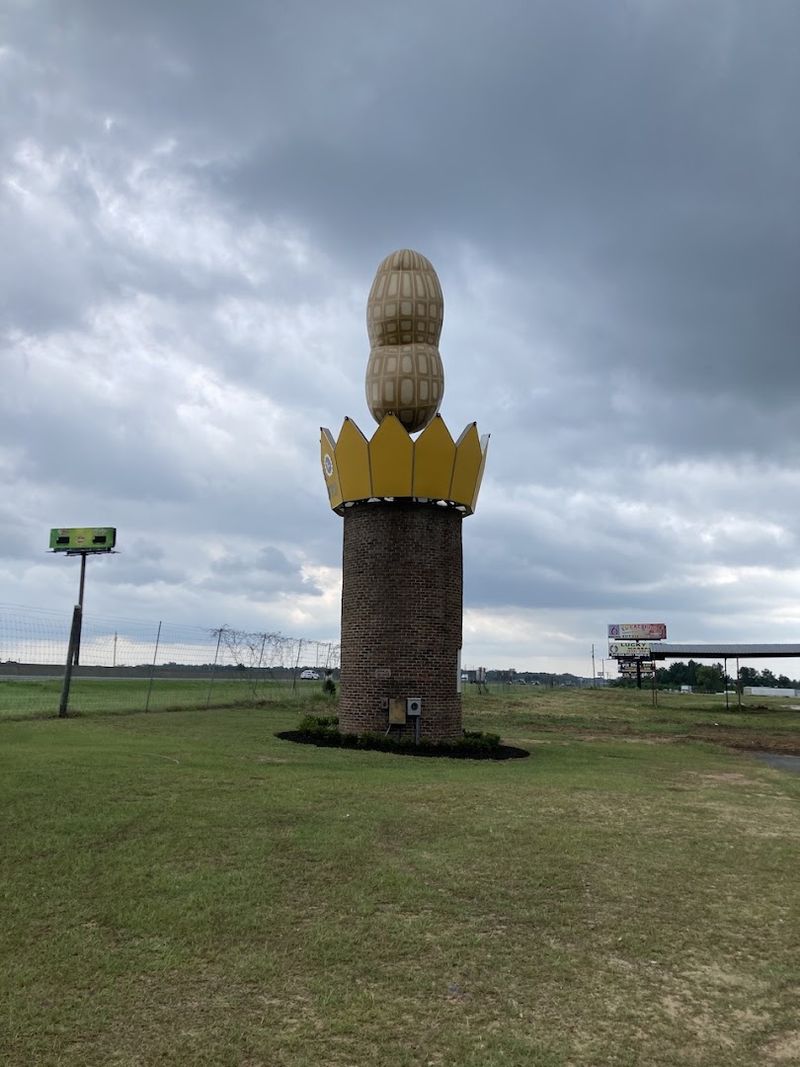
Cruising down I-75 near exit 82, you spot something enormous and peanut-shaped rising above the treeline, and yes, it is exactly what you think it is. Ashburn officially carries the title of The Peanut Capital of the World, and the monument at I-75, Ashburn, GA 31714 makes sure nobody forgets it.
This roadside landmark was first erected in 1975 as a tribute to the peanut processing industry that built Turner County’s economy.
The original fiberglass monument stood 20 feet tall, with a 10-foot peanut resting on a 15-foot brick cylinder. Hurricane Michael damaged it severely in 2018, leaving only the brick base standing.
The community refused to let it stay down.
A rebuilding effort funded largely by the Georgia Department of Agriculture and local residents raised about $70,000 to bring it back. The new monument was rededicated in June 2023 and is now made of sheet metal, weighs around 5,000 pounds, and stands over 40 feet tall including its 20-foot pedestal.
A golden crown tops the whole structure, lit up by LED lights at night.
Peanuts are the official state crop, and this monument earned recognition as an official state symbol in 1998. Golden Peanut, believed to be the world’s largest peanut shelling plant, operates right here and processes over 100,000 tons annually.
This monument has been a Jeopardy clue and has caught the attention of celebrities including Ashton Kutcher and Mila Kunis.
8. Rock City Gardens, Lookout Mountain
Perched on Lookout Mountain straddling the Georgia and Tennessee border, Rock City Gardens has been surprising visitors since 1932. Frieda Carter designed the winding paths herself, marking trails with red string and planting native wildflowers she loved.
She imported European gnomes to give the whole place a fairytale personality that still feels fresh today.
During the Great Depression, her husband Garnet hired artists to paint See Rock City on barn roofs across 19 states. That clever campaign put this mountain attraction on the national map before modern advertising existed.
You can find the address at 1400 Patten Rd, Lookout Mountain, GA 30750, right where Tennessee and this corner of the state share a mountain.
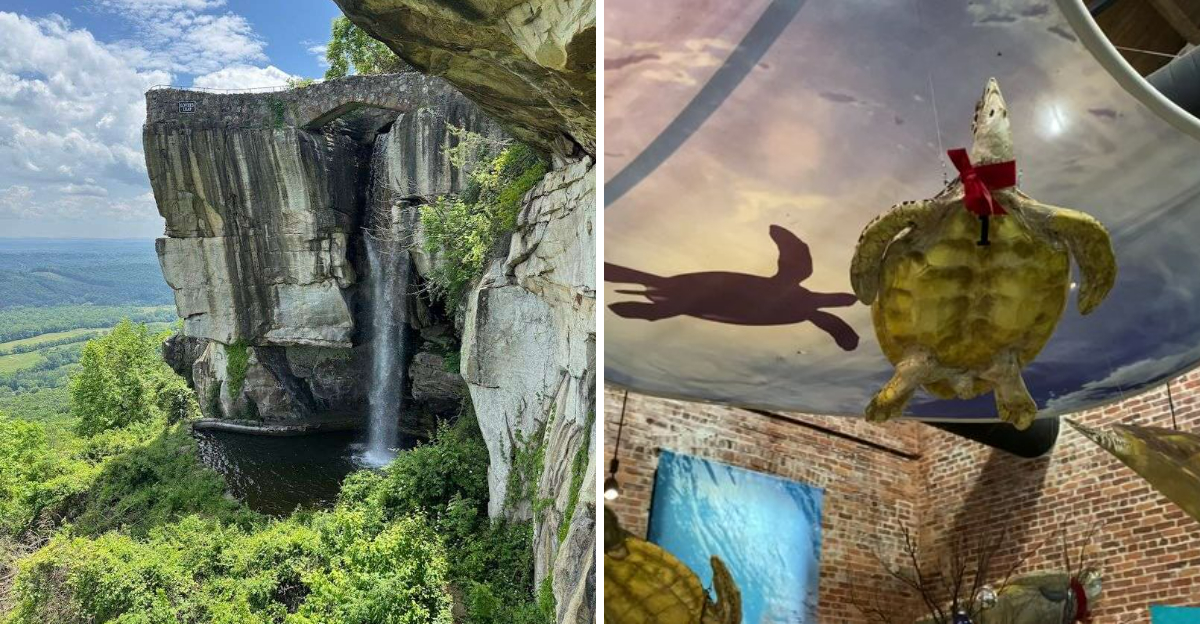
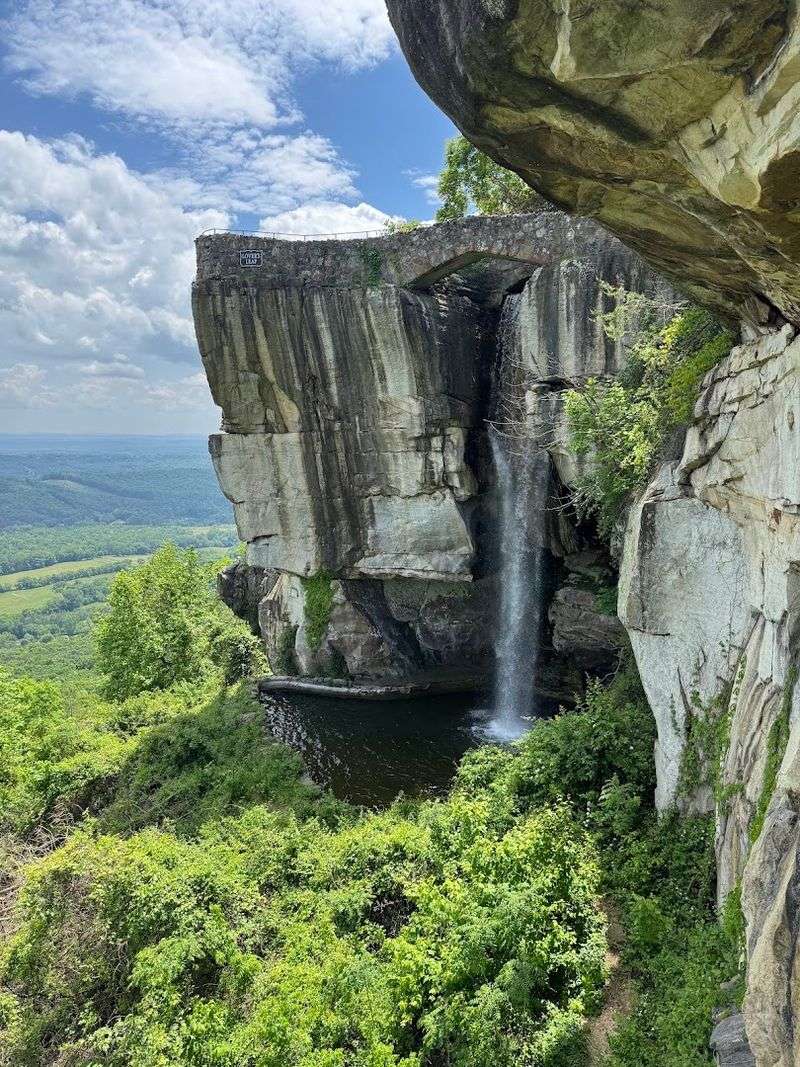
The 4,100-foot Enchanted Trail winds through ancient rock formations, past the iconic Lover’s Leap overlook where, on a clear day, you can supposedly see seven states from 1,700 feet above sea level. High Falls, a 100-foot waterfall, drops dramatically nearby.
Fat Man’s Squeeze, a narrow crevice between two towering boulders, is a crowd favorite that tests even slim visitors.
Fairyland Caverns and Mother Goose Village feature blacklight-lit dioramas of classic fairytales carved into natural rock caves. Over 400 native plant species grow throughout the gardens, including a vibrant Azalea Bowl in bloom season.
The Enchanted Garden of Lights transforms the entire trail during winter into something completely different and worth a second visit.
9. Folk Pottery Museum Of Northeast Georgia, Sautee Nacoochee
Free admission to one of the most specific museums in the country sounds like a trick, but it is completely real. The Folk Pottery Museum of Northeast Georgia at 283 GA-255, Sautee Nacoochee, GA 30571 sits on the campus of the Sautee Nacoochee Center and focuses entirely on Southern folk pottery.
It is one of only a handful of museums globally dedicated exclusively to this craft.
The region’s pottery tradition stretches back to ceramics from the Savannah River area dated to 2500 B.C. Stoneware became prominent in the early 1800s, introduced by potters migrating from the Carolinas.
Families like the Meaders, Hewell, Dorsey, and Ferguson made this corner of the state nationally known for the craft, and the Meaders family was later featured in a Smithsonian documentary.
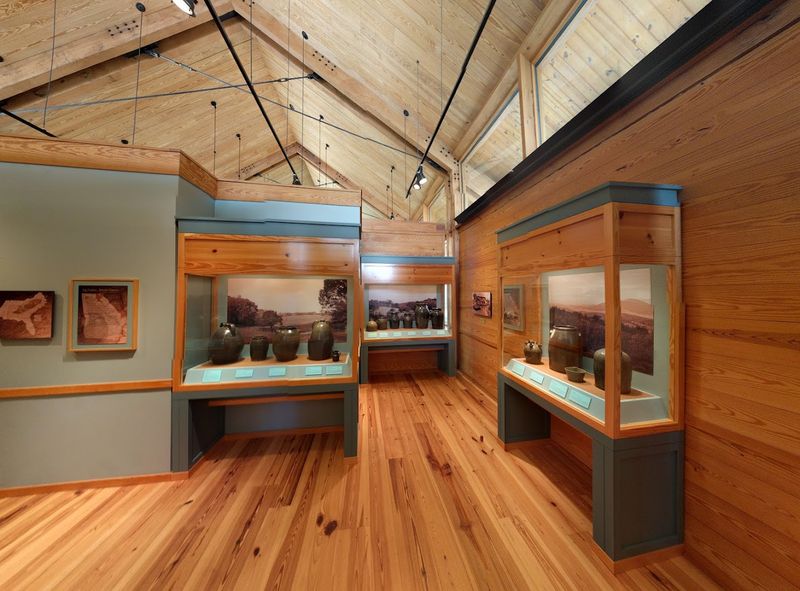
The permanent Pottery Maze displays over 200 pieces, some dating from the 1840s and standing four feet tall. One bowl is believed to have been made by Nacoochee Indians in the 1400s.
The rotating Face Jugs exhibit traces the surprising connections between Southern face vessels, African traditions, and German ceramic influences.
A 10-minute documentary features the Meaders family explaining their methods in their own words. The museum building itself is designed to echo the shape of a traditional potter’s kiln shed.
The new John Burrison Pottery Studio offers hands-on workshops for visitors who want to get their hands genuinely dirty and make something lasting.