Nebraska Has A Steakhouse So Rustic It Looks More Like A Country Mansion Than A Restaurant
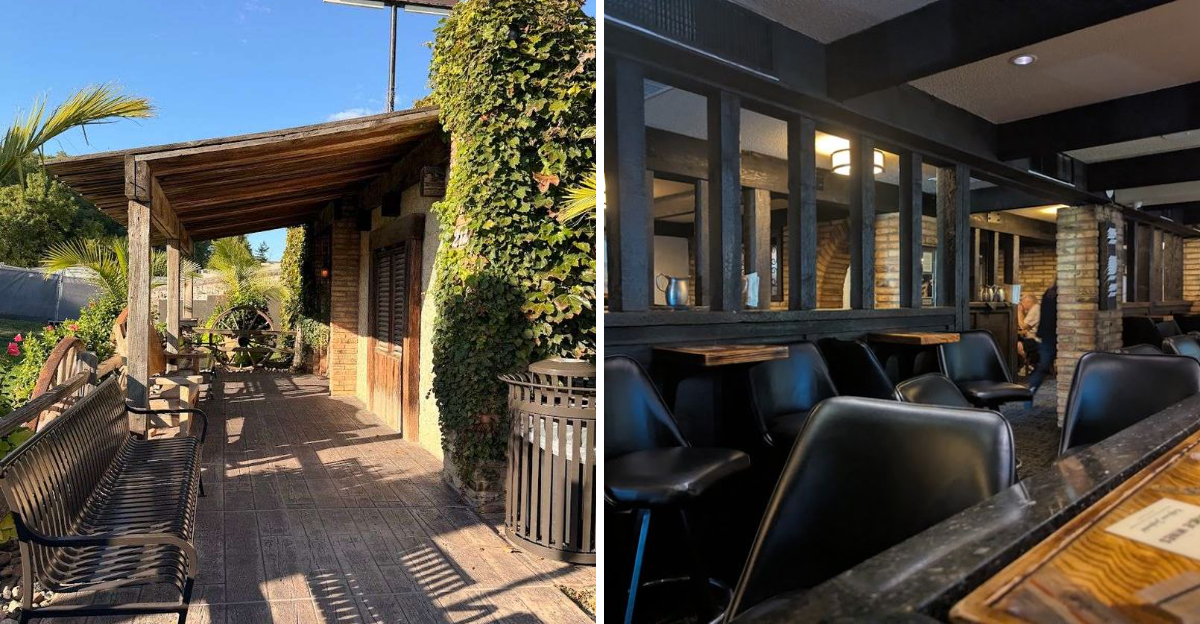
Pulling up for dinner feels different when the building looks ready to host a family gathering instead of a busy restaurant crowd.
Heavy wood, warm lighting, and a rambling country-house appearance give the place an unmistakably rustic personality before the first plate arrives.
Inside, the mood stays relaxed and traditional. Guests settle into comfortable booths and steak remains the clear reason most people walk through the door.
Omaha gives Nebraska diners plenty of modern options, yet this longtime favorite continues to lean proudly into its old-school character.
The appeal comes from more than décor. Thick cuts, hearty sides, and a signature steak create the kind of meal people remember long after leaving the table.
It may look like a country mansion from the road, but the real welcome waits inside, where classic steakhouse traditions still shape every evening.
The Entrance Looks Straight Out Of The Old West
Before a single bite of food is ordered, the exterior of this Omaha steakhouse has already made a strong impression.
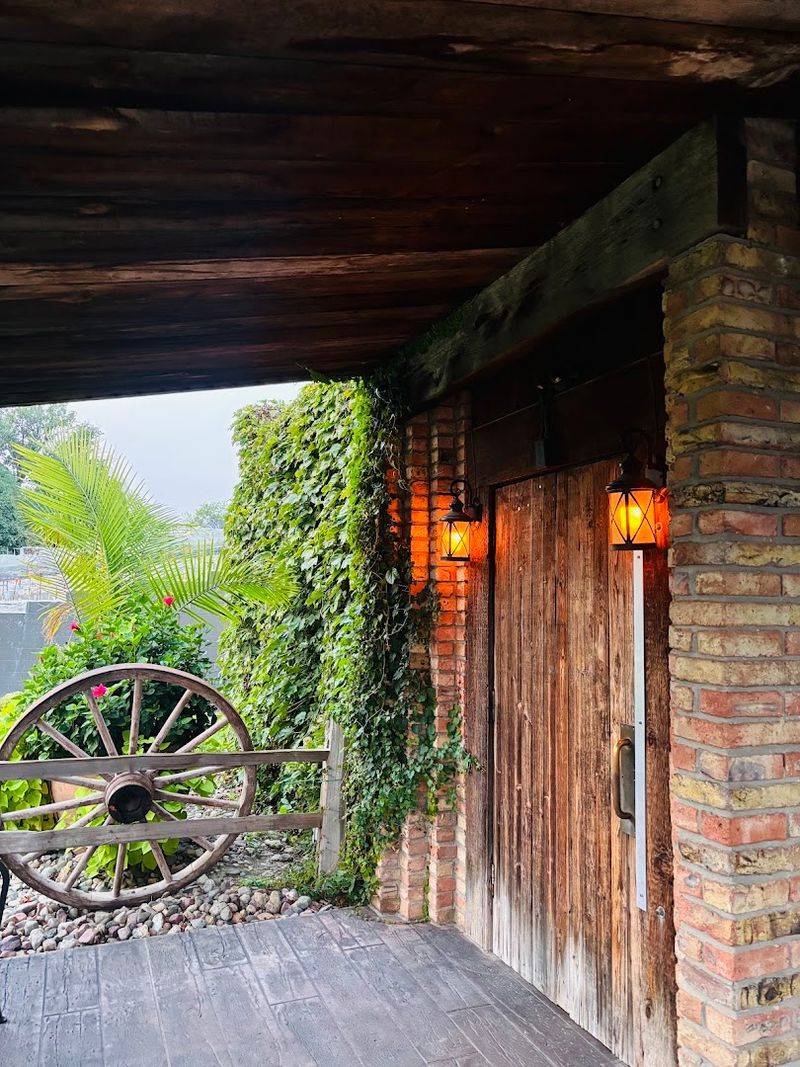
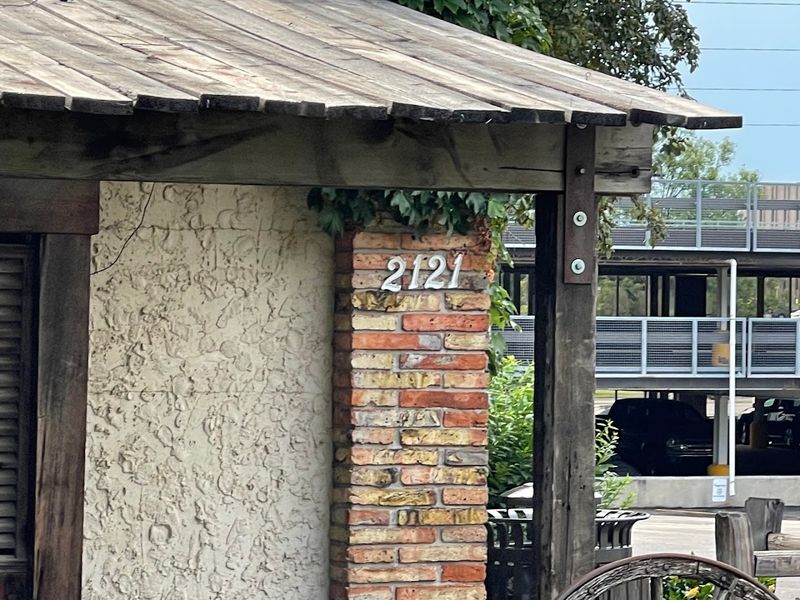
Weathered timber beams and solid brick walls frame the entrance in a way that feels deliberately rooted in an older era.
Barrel planters filled with greenery sit alongside rustic lanterns, softening the rugged edges just enough to feel welcoming rather than austere.
A covered wooden walkway guides guests toward the front door, giving the approach a slow, unhurried quality that sets the tone for the meal ahead.
Large wagon wheels are positioned near the entrance, and their presence immediately signals that the cattle-country theme is not just a passing decorative choice.
Every element out front works together to create a sense of arrival rather than just walking into a building.
The Drover, located at 2121 S 73rd St in Omaha, Nebraska 68124, has maintained this ranch-style exterior for decades without chasing trends.
The result is an entrance that feels genuinely earned rather than staged, and that distinction is something visitors tend to notice right away.
Reaching the front door already feels like stepping somewhere worth the trip.
Climbing Vines Nearly Hide The Building
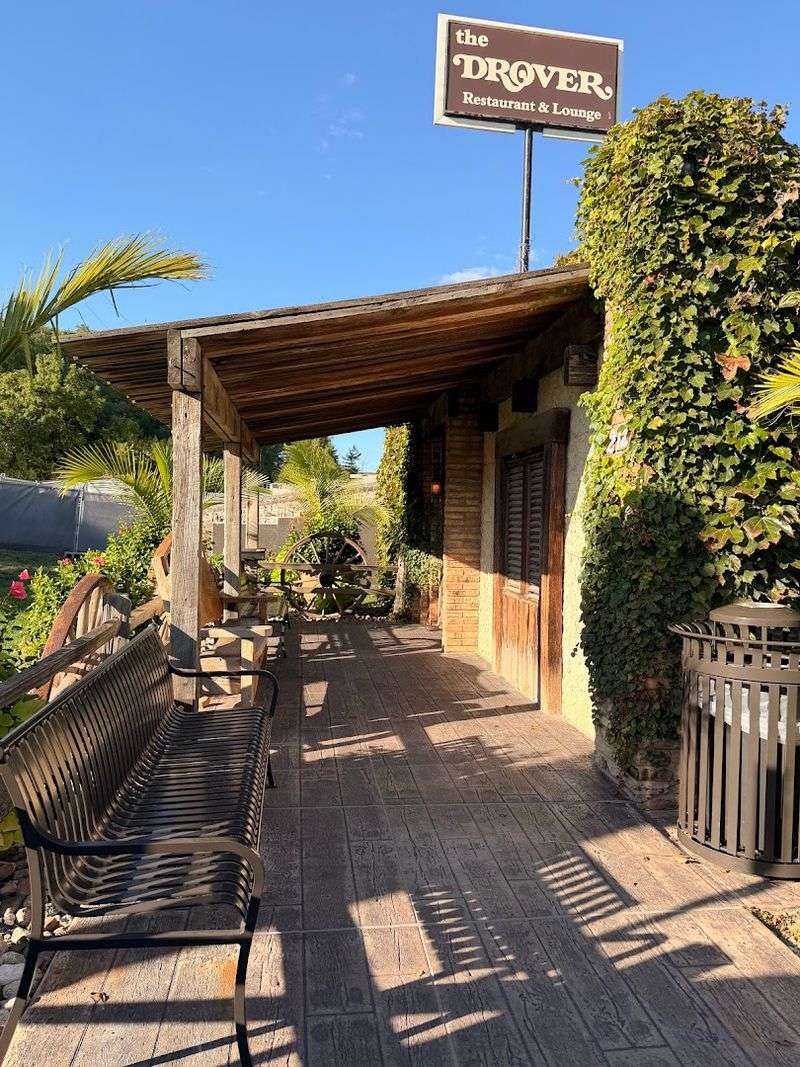
There is something quietly dramatic about a building that lets nature partially take it over, and during warmer months The Drover leans into that quality fully.
Thick green vines spread across large sections of the low-slung exterior, softening the brick and timber beneath them and giving the structure an aged, almost secretive appearance.
From the street, the building can look more like a forgotten countryside retreat than an active restaurant.
This natural covering sets the steakhouse apart visually from the commercial buildings that surround it, which tend to look clean and freshly maintained by comparison.
The contrast is striking without being overdone, and the vines contribute to a sense that this place has been quietly holding its ground for a long time.
That impression turns out to be accurate, since the building has been in continuous operation since the late 1960s.
The overgrown exterior is not accidental neglect but rather part of what gives the restaurant its distinctive character.
Guests who visit during spring and summer get the fullest version of this effect, when the foliage is dense and the building almost disappears behind it.
Returning in winter reveals a more skeletal version of the same charm, with bare vines tracing the walls like old handwriting.
The Dining Rooms Feel Warm And Secretive
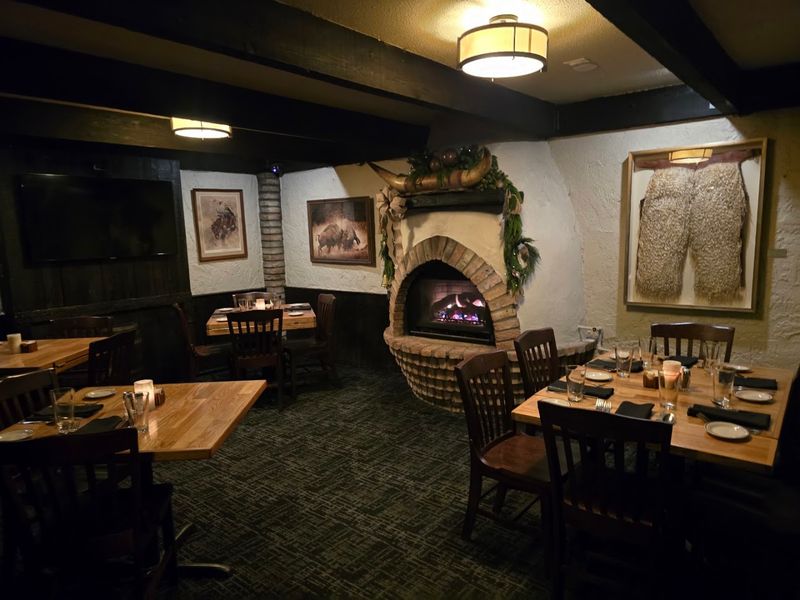
Walking through the front door of Nebraska’s The Drover is a sensory shift that takes a moment to adjust to, and that adjustment is part of the experience.
The interior is divided into several smaller dining spaces rather than one large open room, which immediately creates a sense of privacy that most modern restaurants do not offer.
Dim lighting casts a soft, warm glow across each area, making the space feel settled and unhurried from the moment guests are seated.
Low ceilings press the atmosphere downward in a way that feels cozy rather than cramped, and exposed brick walls add a texture that smooth drywall simply cannot replicate.
Dark carpeting absorbs sound, keeping the noise level noticeably lower than restaurants with hard floors, which makes conversation easier and the overall mood calmer.
Heavy wooden furniture completes the picture, with solid chairs and tables that feel built to last rather than chosen for style alone.
The effect across all of these elements together is something closer to dining inside a well-worn ranch house than eating in a commercial establishment.
Each small room has its own contained atmosphere, so different tables can feel genuinely separate from one another even when the restaurant is busy.
That sense of seclusion is something guests tend to mention long after the meal itself.
Fireplace Nooks Make Dinner Feel Especially Cozy
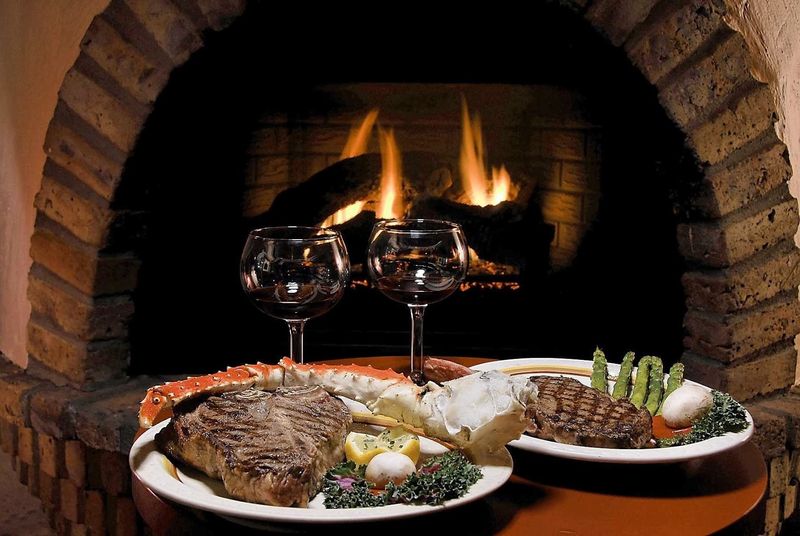
Certain corners of The Drover feel less like a restaurant section and more like a room inside an old ranch house that happened to be set for dinner.
Brick fireplaces and adobe-style hearths are tucked into various nooks throughout the interior, and the areas around them carry a warmth that goes beyond just the physical heat.
Western artwork and longhorn decorations fill the walls nearby, reinforcing the sense that each nook has its own personality rather than being a generic extension of the dining room.
The fireplace areas tend to draw guests who are settling in for a longer, more relaxed meal rather than a quick dinner.
The ambient glow from the hearths adds a layer of soft light that works alongside the already dim overhead lighting, creating a mood that feels genuinely comfortable rather than manufactured.
Seating near a fireplace nook on a cold Omaha evening is a noticeably different experience from sitting in the same restaurant in summer.
These architectural details are part of what makes The Drover feel lived-in rather than designed.
A fireplace in a restaurant is not unusual, but a fireplace surrounded by longhorn mounts and rough brick in a room with a low ceiling and heavy wooden furniture is something else entirely.
The Steak Is The Main Attraction
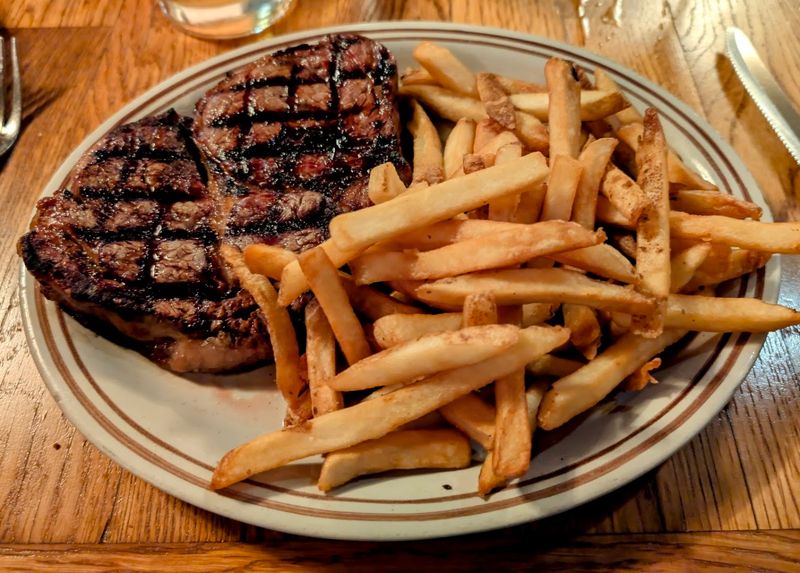
A single menu item has done more for The Drover’s reputation than anything else on the menu, and that is the marinated steak.
The preparation involves soaking the beef in a closely guarded marinade shortly after an order is placed, a timed process that allows the flavors to penetrate without overwhelming the natural character of the meat.
The result is a steak with a buttery tenderness that guests frequently describe as unlike what they expected.
Ribeye and filet are among the most popular cuts prepared this way, and both carry the marinade differently based on their fat content and texture.
The ribeye tends to deliver a richer, more robust flavor, while the filet offers a softer, more delicate experience.
Both benefit from the marinade in ways that feel complementary rather than uniform, which is part of what makes the menu feel varied even when most guests are ordering a version of the same thing.
The whiskey marinade is not a glaze applied after cooking but a pre-grill treatment that works from within the meat outward.
That distinction matters to the final texture and flavor profile, producing a steak that is noticeably different from a simply seasoned cut.
For many guests, trying the whiskey steak for the first time is the kind of meal they end up describing to people for years afterward.
The Salad Bar Has Barely Changed In Decades
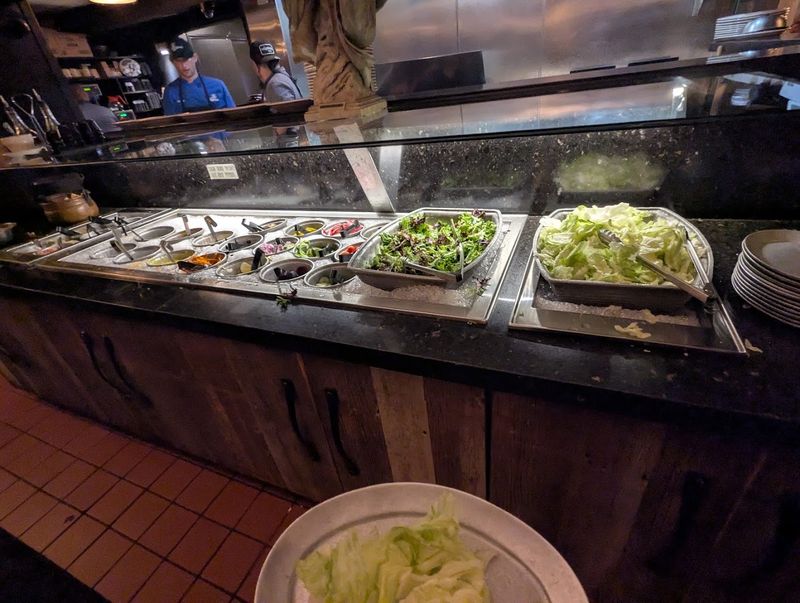
Not every restaurant feature needs to evolve, and the salad bar at The Drover makes a quiet case for that argument every single night.
Chilled metal plates are provided for guests, keeping the salad ingredients cool from the first scoop to the last bite.
That small detail, cold plates rather than room-temperature ones, is the kind of thing that signals genuine attention to how food is served rather than just what food is available.
The selection is anchored by crisp iceberg lettuce and roughly a dozen familiar toppings that have not changed much over the years.
Cherry tomatoes, black olives, mushrooms, boiled eggs, cucumber, green pepper, Parmesan cheese, pickled beets, and bacon bits represent the kind of lineup that feels nostalgically complete rather than limited.
Nothing on the salad bar is trying to surprise anyone, and that reliability is exactly what generations of Omaha diners have come to appreciate about it.
The salad bar functions as a grounding element in a meal that could otherwise feel heavy with expectation.
It gives guests something familiar to start with before the main event arrives, and its consistency across decades means that longtime customers can count on it being exactly what they remember.
Lunch Offers A Quieter Way To Experience It
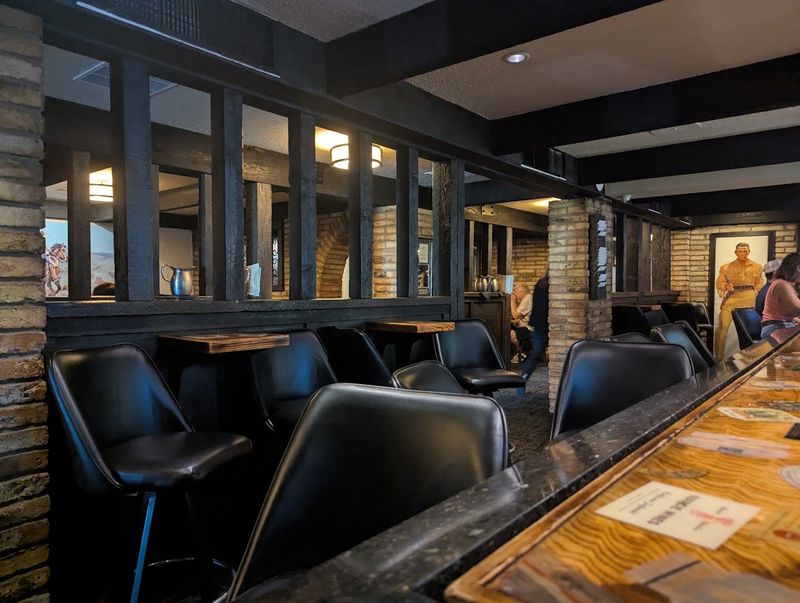
Weekday lunch at The Drover runs from 11 AM to 2 PM Monday through Friday, and that window offers a noticeably calmer version of the restaurant compared to its dinner service.
The dining rooms are less crowded, the pace is more relaxed, and the atmosphere settles into something that feels almost contemplative by steakhouse standards.
Guests who have tried the restaurant only at dinner sometimes find the lunchtime version a pleasant surprise.
The lunch menu includes steak, prime rib, pork chops, chicken, and seafood, with most entrees served alongside a choice of soup or salad-bar access and a side such as French fries, coleslaw, or cottage cheese.
The New York strip and filet are available at lunch, which means the signature cuts are accessible outside of dinner hours for guests whose schedules do not allow for an evening visit.
The quality standard does not appear to drop between services.
Lunch is also a practical option for visitors who want to experience the atmosphere without competing for a reservation during the busy Friday and Saturday dinner rush.
The dim lighting and wooden interiors feel just as effective at noon as they do at eight in the evening, and the salad bar is fully stocked regardless of the time of day.
It Has Been An Omaha Institution For Generations
A restaurant that has been operating continuously since the late 1960s earns the word institution in a way that newer establishments simply cannot claim.
The Drover’s roots stretch back more than half a century, and that longevity is visible in everything from the physical wear on the building’s exterior to the familiarity guests feel when they walk through the door for the tenth or twentieth time.
History of that depth tends to accumulate in a place rather than just being reported about it.
Generations of Omaha families have marked occasions at The Drover, and the restaurant has absorbed that accumulated significance without turning it into a marketing angle.
The atmosphere does not feel like a museum of its own past but rather like a place that has simply stayed true to itself long enough for that consistency to become its defining quality.
That is a harder thing to achieve than it sounds, particularly across the kind of changes that five decades inevitably bring.
The combination of genuine age, family continuity, a signature menu item, and an intact physical environment gives The Drover a credibility that most restaurants never develop.
Newer steakhouses can replicate the decor and approximate the menu, but they cannot replicate the years.