This Quiet North Carolina Coastal Town Is Becoming A Favorite For Travelers Who Avoid Crowds
Some coastal towns want your money and your patience in equal measure. This one in North Carolina seems mildly indifferent to both.
The parking situation is not a situation. Restaurants take reservations because it is polite, not because you need one.
You will hear boat engines, gulls, and the occasional screen door. That is roughly the extent of the noise.
Travelers who hate crowds have started trading notes about this place. They arrive with paperbacks and low expectations, then extend their stay.
Mornings here move at the pace of the tide, which is to say slowly and without apology. Locals will chat if you chat first, and they will not oversell anything.
Nobody here is performing hospitality at you. You came looking for a beach town without the beach town chaos.
You will find one, and you will immediately start doing the arithmetic on how often you could reasonably return.
America’s Oldest Town
Bath, North Carolina holds a title most towns would brag about loudly. Founded in 1705, it is the oldest incorporated town in North Carolina.
That fact alone is worth the trip. Most visitors do not expect a place this small to carry that much history.
The town sits along Bath Creek, a quiet tributary of the Pamlico River. The water is calm, the streets are narrow, and the pace is slow.
You will not find traffic jams or long lines here. What you will find is a town that has barely changed in centuries.
Walking through Bath feels like stepping into a living history book. The colonial-era buildings are still standing.
The St. Thomas Church, built in 1734, is the oldest surviving church in North Carolina. Bath is not trying to impress you.
It already has.
St. Thomas Episcopal Church
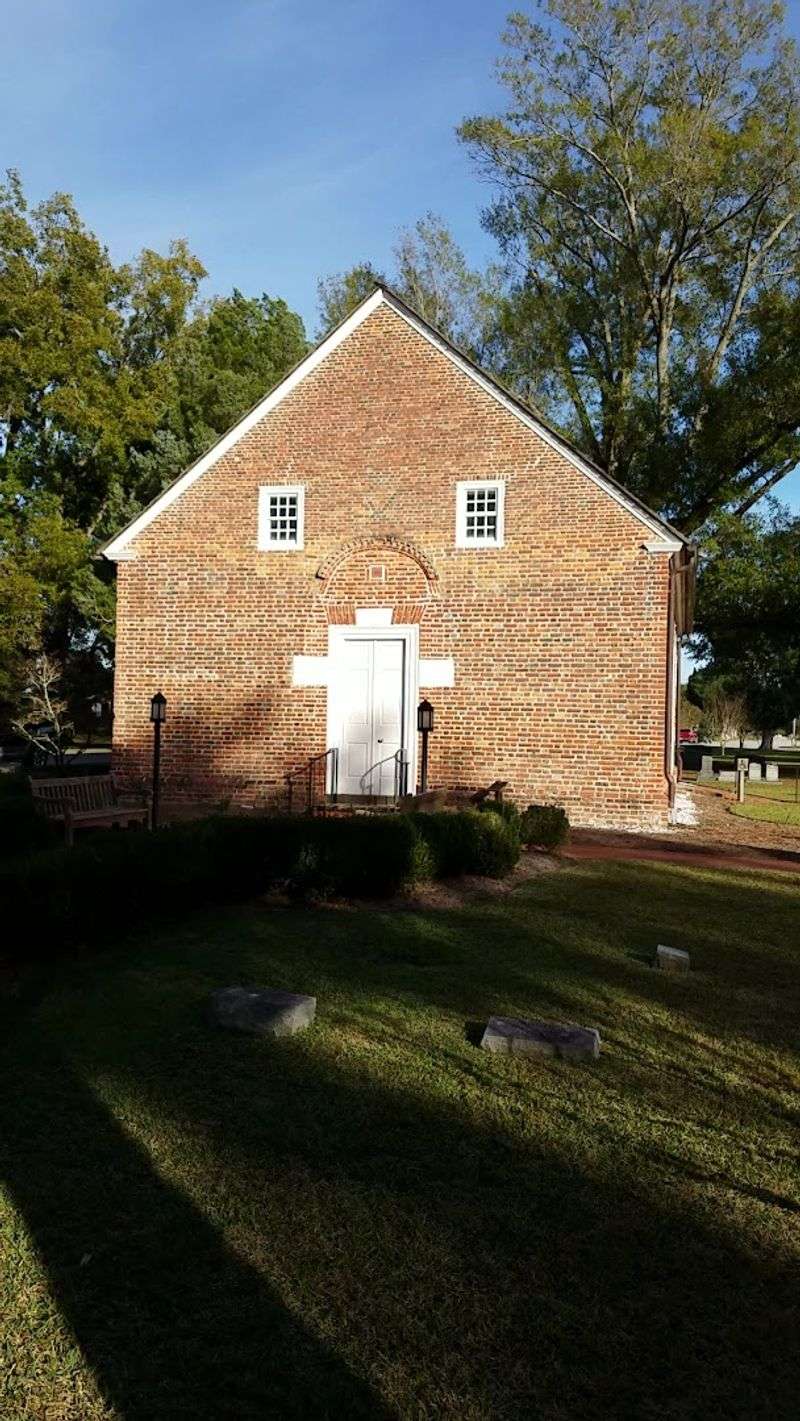
St. Thomas Episcopal Church in Bath is not just old. It is the oldest church still standing in North Carolina, built in 1734.
That is nearly 300 years of Sunday mornings in one small building. The walls have stories no tour guide can fully explain.
The church is simple and honest in its design. No grand steeple, no marble columns.
Just solid brick, wooden pews, and windows that let in soft afternoon light. It feels humble in a way that makes it feel more powerful, not less.
Visitors are welcome to step inside and sit quietly. The cemetery outside holds graves from the 1700s.
Reading the old names carved into the stones gives you a strange, grounding feeling. History here is not behind glass.
It is right under your feet, and that is what makes Bath so different from any museum you have ever visited.
Bonnet’s Creek And The Blackbeard Connection
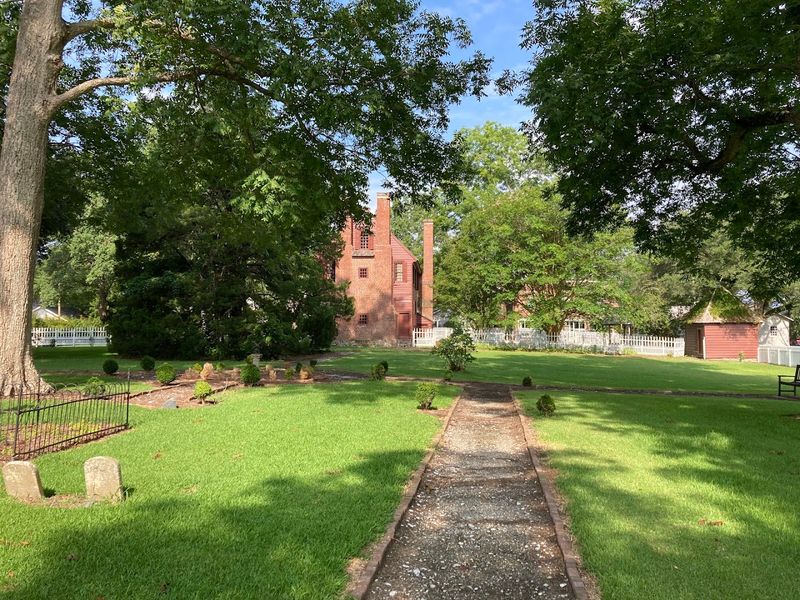
Blackbeard, the most famous pirate in American history, once called Bath home. That is not a legend.
That is a documented historical fact. The pirate Edward Teach, known as Blackbeard, received a pardon from North Carolina’s governor in Bath around 1718.
He briefly settled here before returning to his old ways.
Bonnet’s Creek, near the town, is said to have been one of his favorite spots to anchor. Standing at the water’s edge today, you can almost imagine why a pirate would choose this place.
It is quiet, protected, and easy to disappear into.
The Blackbeard connection gives Bath a layer of intrigue that most small towns simply do not have. Local historians take this part of the story seriously.
You can learn more at the Historic Bath State Historic Site visitor center. It is one of those pieces of history that sounds too good to be true, but every word checks out.
Historic Bath State Historic Site
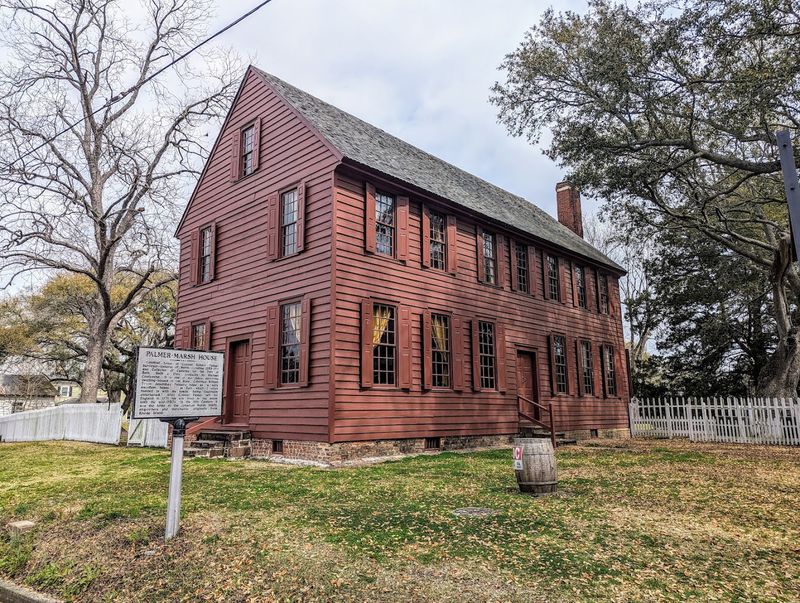
The Historic Bath State Historic Site is where the town’s full story comes together in one place. The visitor center does a solid job of laying out Bath’s history without overwhelming you.
It is the kind of museum that respects your time and your curiosity equally.
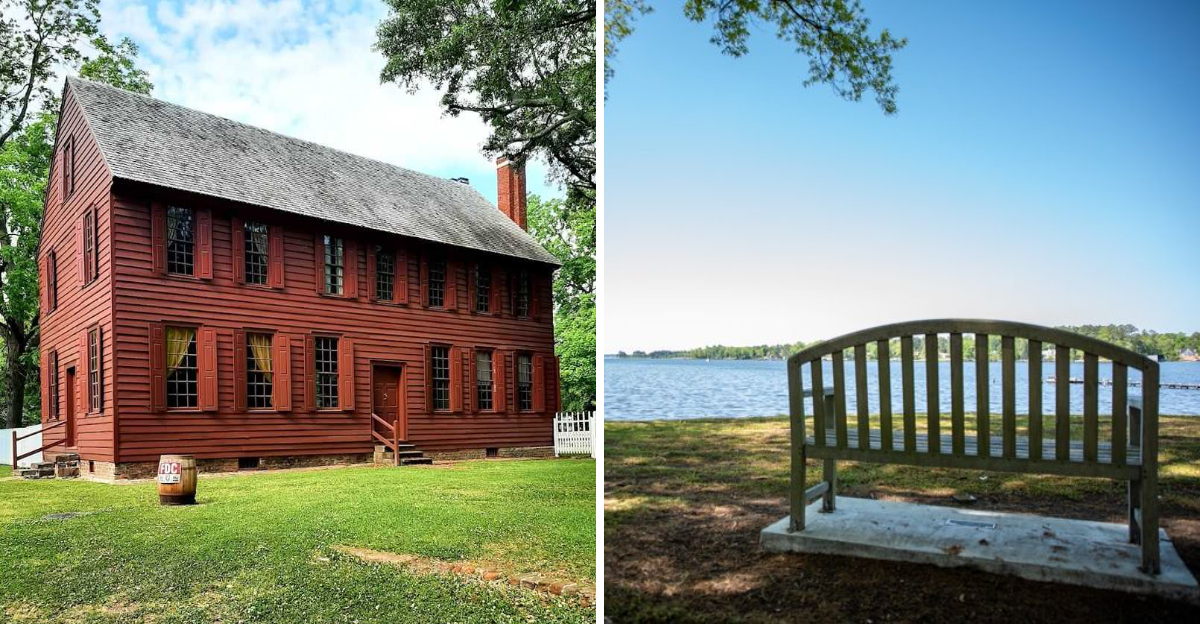
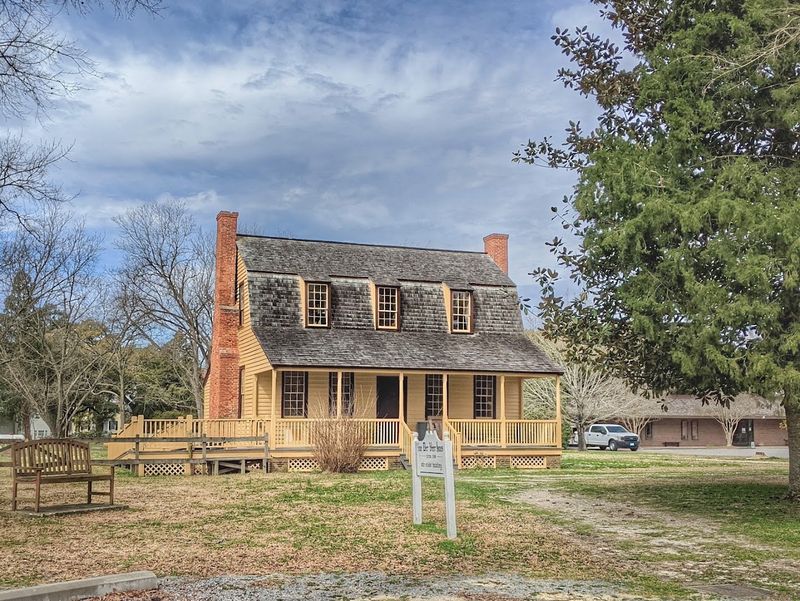
Guided tours take you through several preserved historic structures, including the Palmer-Marsh House and the Bonner House. Both homes date back to the 1700s.
The interiors have been carefully restored to reflect colonial life in coastal North Carolina. It is detailed without being stuffy.
The site is well-maintained and easy to explore at your own pace. Admission is affordable, and the staff genuinely enjoy talking about the town’s history.
If you only have a few hours in Bath, start here. The context you gain from this visit will make everything else in town feel twice as interesting.
It is a strong anchor for the whole experience.
Pamlico River Views And Waterfront Scenery
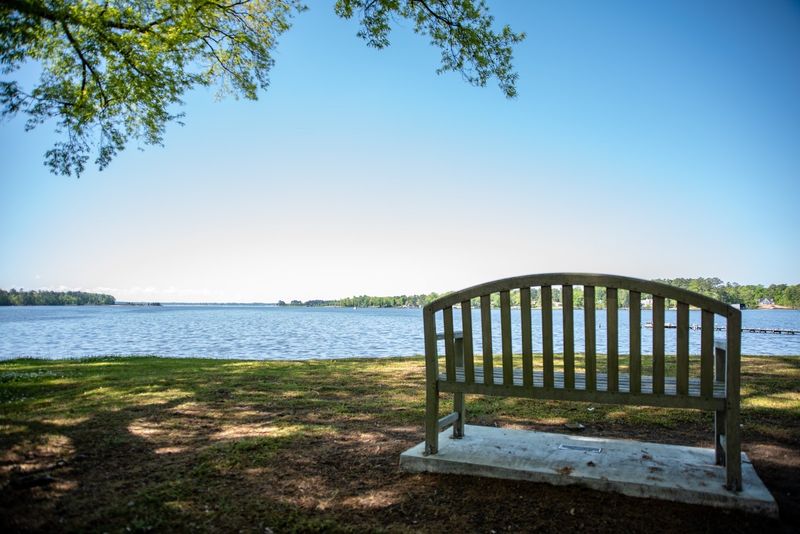
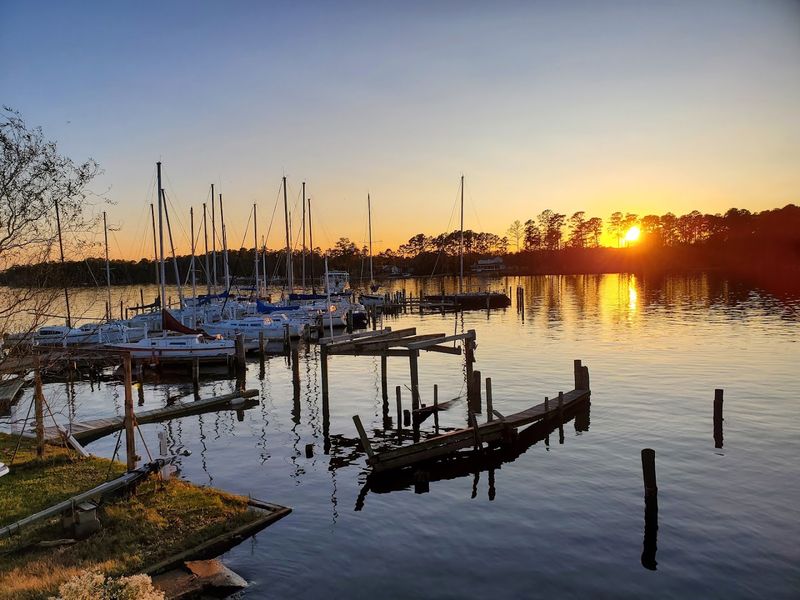
The Pamlico River does not need a filter. Standing along the waterfront in Bath, the view is wide, calm, and completely uncluttered by development.
There are no resort towers or souvenir stands blocking the horizon. Just water, sky, and trees stretching out in every direction.
Sunsets over the Pamlico are the kind that make you stop mid-sentence. The light turns the river gold and pink in ways that feel almost theatrical.
Locals seem used to it. First-time visitors absolutely are not, and that reaction gap is charming to watch.
Kayaking and fishing on the river are popular with both locals and visitors. The water is peaceful, and the surrounding marshland is rich with wildlife.
Great blue herons are a common sight. Osprey circle overhead.
If you want outdoor scenery without the chaos of a crowded beach town, the Pamlico River delivers exactly that. Bring a camera, or just bring your full attention.
The Palmer-Marsh House
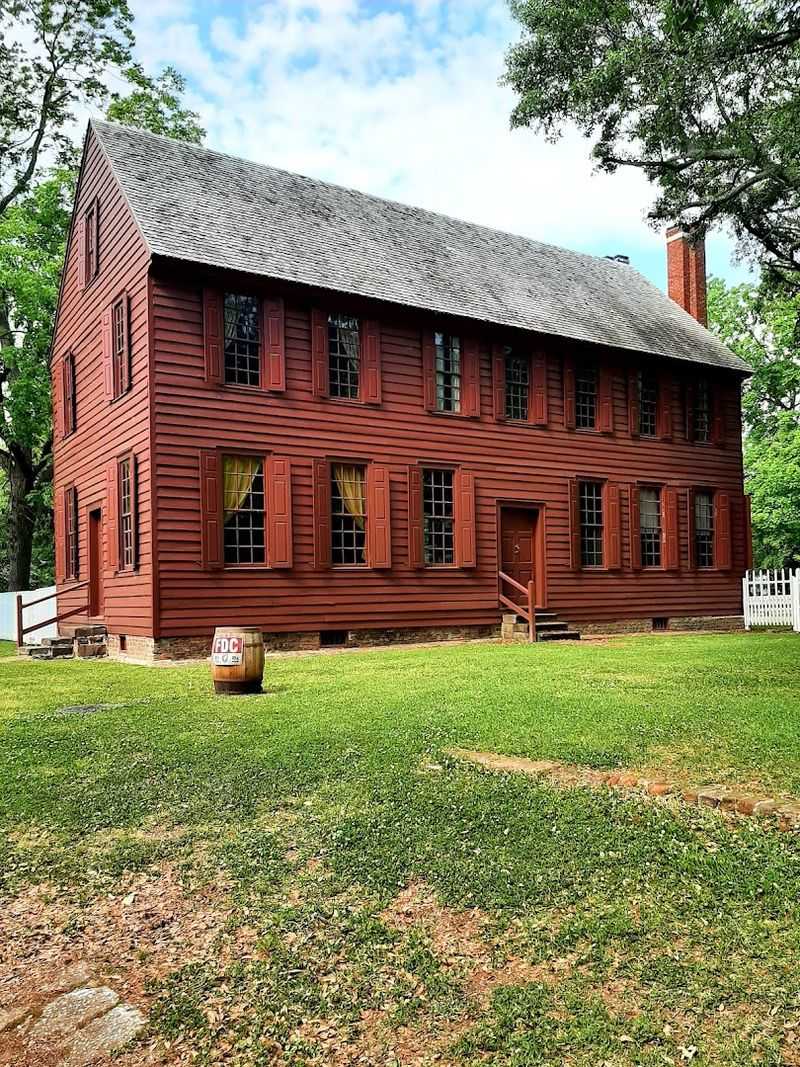
The Palmer-Marsh House is one of the oldest surviving colonial homes in North Carolina. Built around 1751, the house has stood through wars, storms, and centuries of change.
It is still standing, still solid, and still impressive for a building that old.
What makes the house interesting beyond its age is the detail. The original floors, the massive fireplaces, the low ceilings built for a different era of people.
Every room tells you something about how life actually worked in colonial coastal Carolina. It is specific in a way that makes it feel real.
Tours of the Palmer-Marsh House are offered through the Historic Bath State Historic Site. The guides bring genuine enthusiasm to the stories behind each room.
You leave knowing more than you expected to learn. Most people who visit say the house was the highlight of their Bath trip.
That says a lot, considering Bath has quite a few highlights worth talking about already.
Local Dining And Small-Town Eats
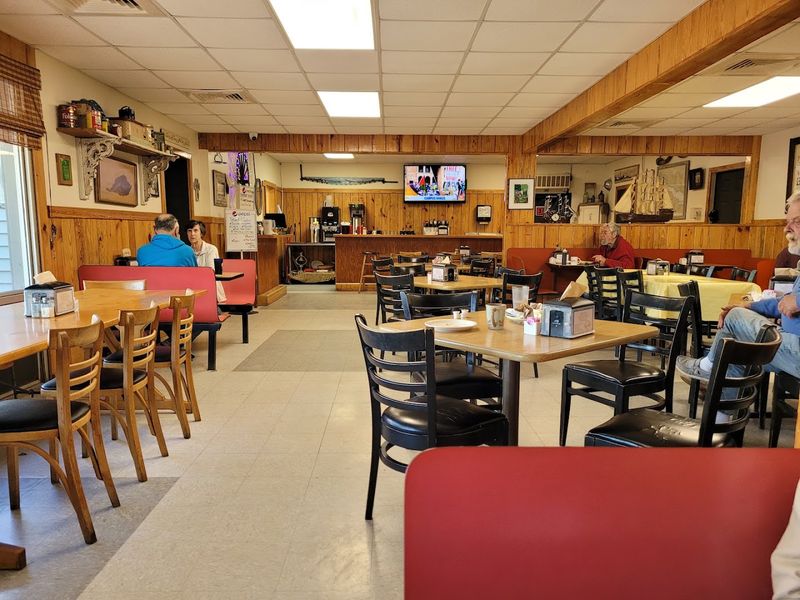
Bath is a small town, so the dining scene is small too. But small does not mean disappointing.
The local spots in and near Bath serve fresh seafood and Southern comfort food that feels honest and satisfying. No pretension, no trendy plating.
Just good food made with care.
Nearby Washington, North Carolina, just a short drive from Bath, has a broader range of restaurants along its revitalized waterfront. Fresh crab, shrimp, and locally caught fish show up on menus regularly.
The portions are generous and the prices are fair. That combination is harder to find than it should be.
Eating near Bath is part of the overall experience. You are not rushing through a meal to catch a show or beat a crowd.
You sit, you eat slowly, and you talk to whoever is nearby. More often than not, you end up learning something new about the area from the person at the next table.
That kind of meal is genuinely hard to replicate anywhere else.
Why This Town Is Worth The Drive
Bath is not on the way to anywhere obvious. You have to choose to go there.
That choice is exactly what keeps it uncrowded, unhurried, and genuinely pleasant to visit. The travelers who find Bath tend to be the kind who prefer substance over spectacle.
The drive in is part of the reward. Eastern North Carolina’s landscape opens up beautifully as you head toward the coast.
Flat farmland, pine forests, and wide rivers create a rhythm that slows you down before you even arrive. By the time you reach Bath, you are already in the right mood.
Bath works well as a day trip or a quiet overnight stay. Either way, it leaves a strong impression.
The history is real, the scenery is genuine, and the town does not perform for tourists. It simply exists, and that authenticity is increasingly rare.
If you are looking for a coastal North Carolina experience that feels nothing like a crowded beach resort, Bath is the answer you were looking for.