This Arizona Science Museum Is Unlike Anything You’ve Ever Seen
A rainforest, an ocean, and a fog desert under one glass roof? Yes, it is real!
It began as one bold sealed experiment and slowly grew into a truly fascinating living laboratory. It seals so many wild biomes together. That is why the sheer scale feels almost unreal up close.
Arizona guards a legendary research dome where whole ecosystems thrive beneath a single dome.
You drift between steamy jungle and cool coral sea in a handful of astonished minutes.
Science buffs and wide-eyed first-timers both wander out completely, happily rewired.
Ready to see three entirely wild ecosystems stacked under one enormous glass structure today?
The Bold Experiment That Started It All
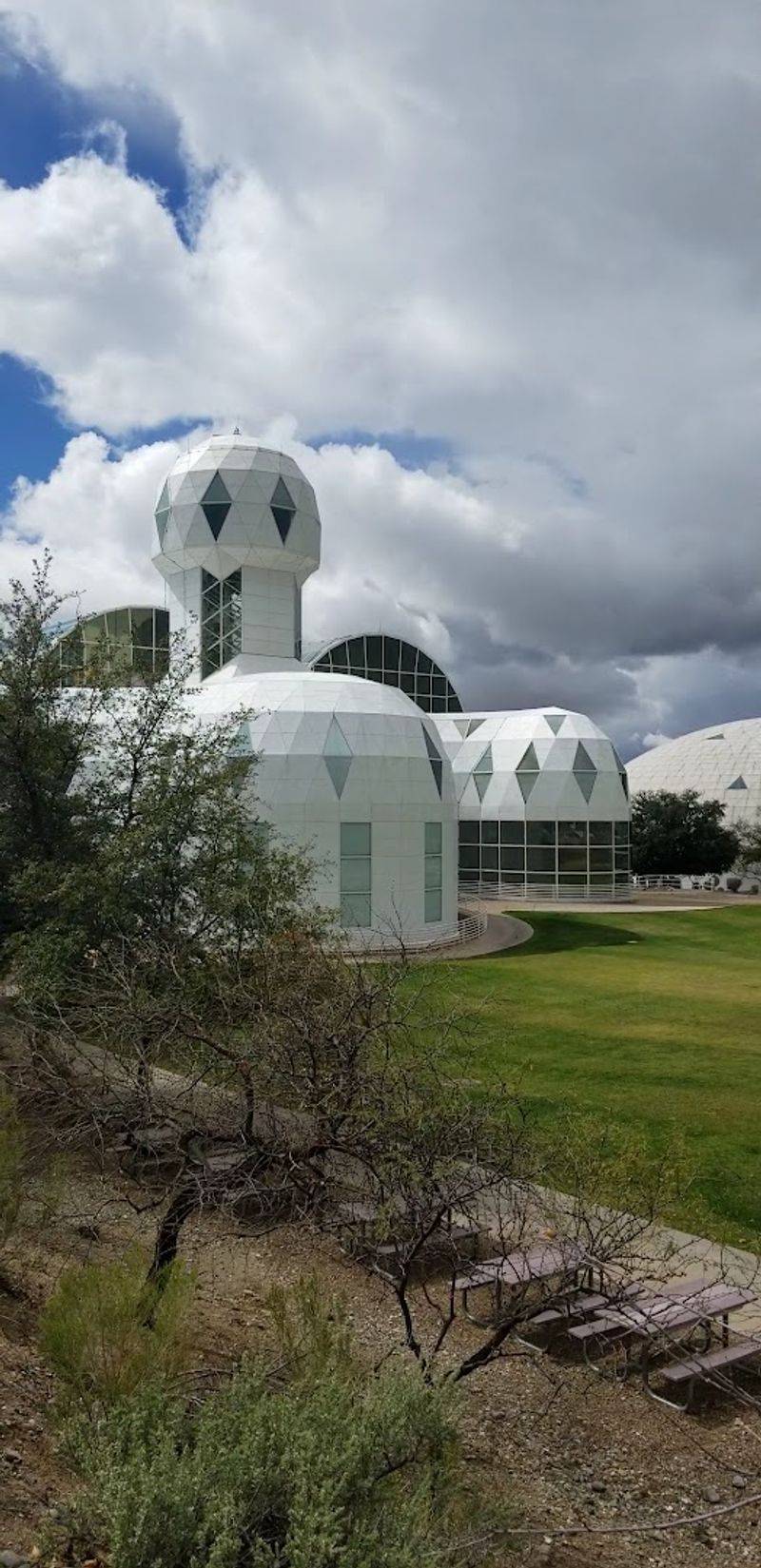
Few scientific projects have captured the public imagination quite like the one that gave this facility its name.
Built in the late 1980s and completed in 1991, Biosphere 2 was designed as a sealed, self-sustaining ecological system in the Arizona desert.
The name makes more sense once you learn that Biosphere 1 is Earth itself, and this structure was meant to be a miniature, controlled version of our home planet.
The original mission was audacious. A small crew of researchers, often called Biospherians, sealed themselves inside for two years starting in 1991, attempting to live entirely off what the enclosed environment could produce.
They grew their own food, recycled their water, and breathed air generated by the plants around them. It was a test of whether humans could survive in a closed ecological system, with potential implications for long-term space travel.
The experiment faced real challenges, including lower-than-expected oxygen levels and difficulty producing enough food. Those challenges, however, became some of the most valuable scientific lessons the project produced.
A Rainforest Hiding in the Desert
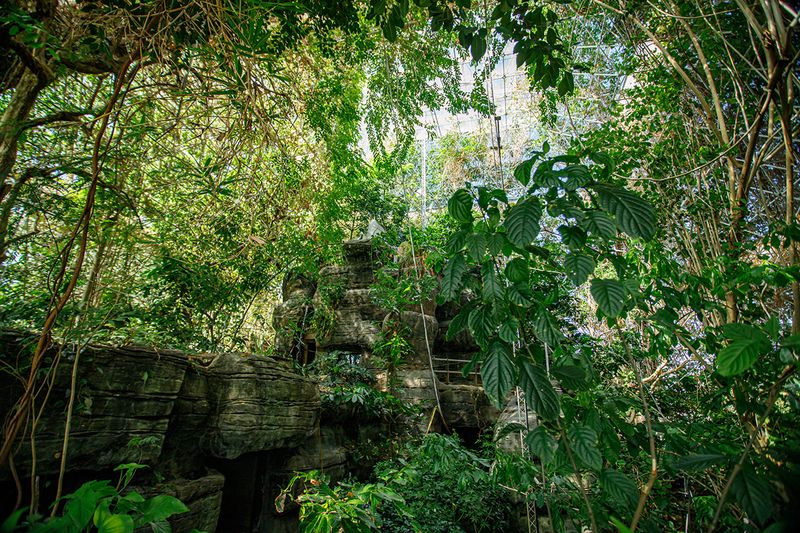
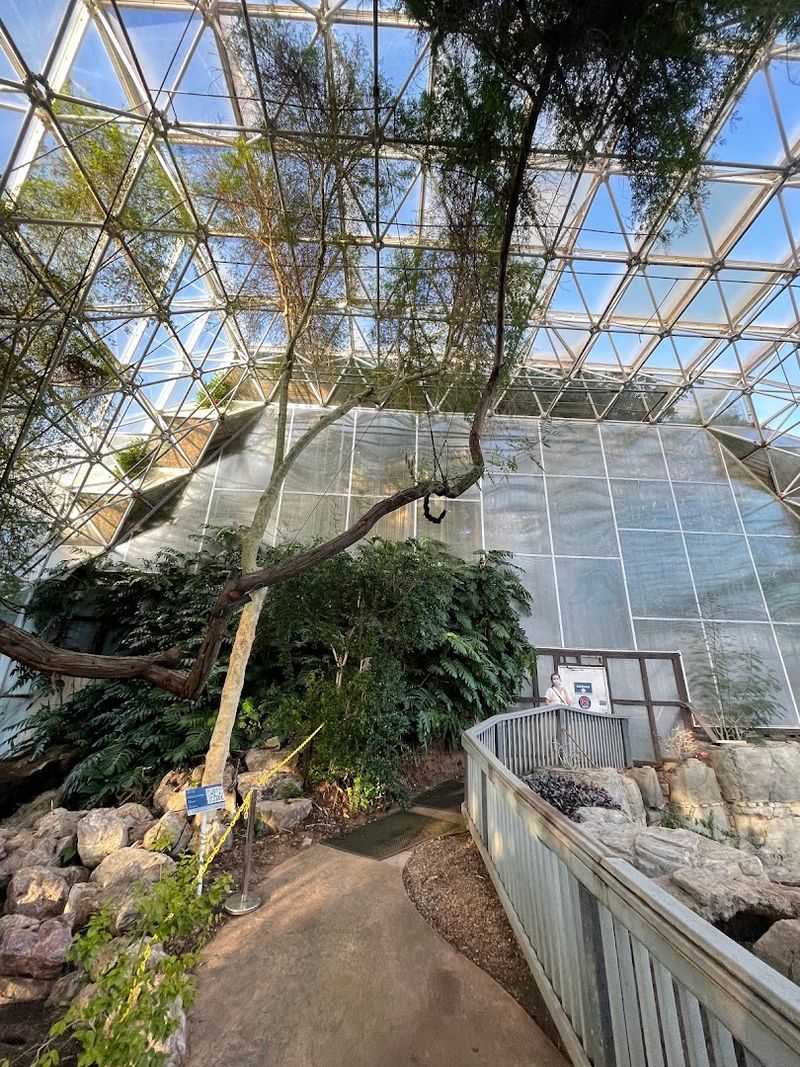
The humidity hits you first when you walk into the rainforest biome at 32540 S Biosphere Rd in Oracle. A warm, thick wall of moisture is completely at odds with the dry Arizona air just outside.
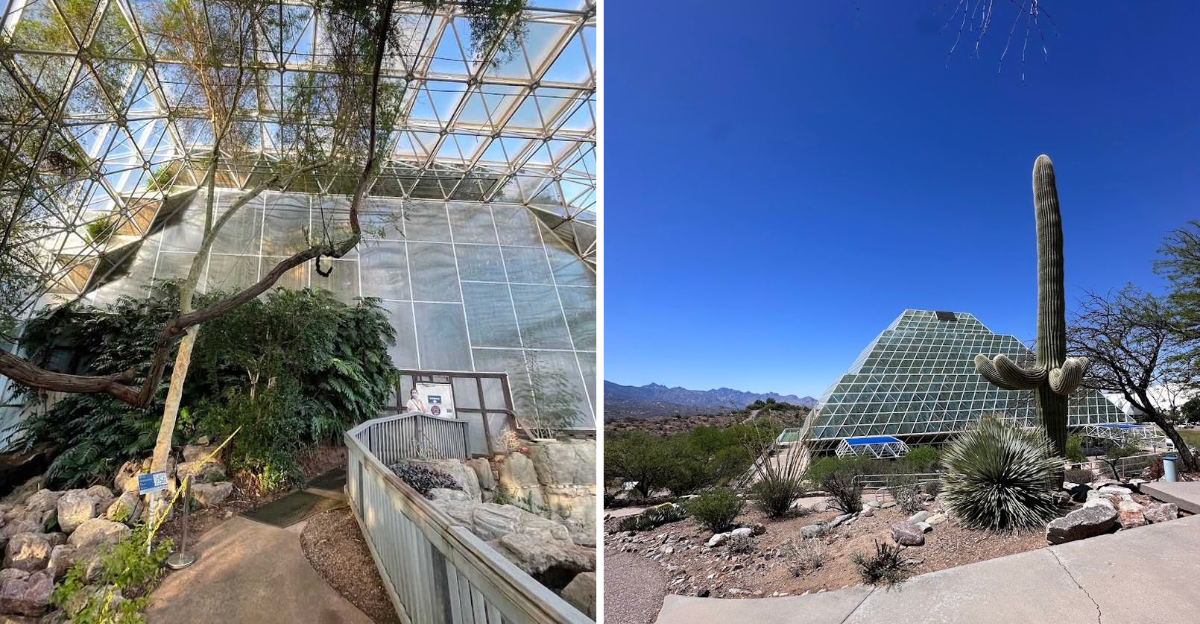
Towering plants, dense canopies, and the sound of water create an atmosphere that feels genuinely tropical, which makes it all the more remarkable when you remember you are standing in the middle of the Sonoran Desert.
The rainforest was one of the original biomes designed for the 1991 experiment, and it has continued to grow and evolve ever since.
Researchers use this space to study how tropical ecosystems respond to changes in carbon dioxide levels and temperature, making it far more than just a pretty garden.
The flora here is rich and diverse, offering incredible opportunities for plant photography. Visitors walking through this section often comment on how real it feels.
The dense green growth overhead, the winding paths beneath your feet, and the steady drip of moisture from the leaves above all work together to create a convincing sense of place.
The Breathing Lung You Have to See
Of all the engineering marvels packed into this facility, the structure known as the lung might be the most memorable.
The lung is a massive metal dome connected to the main Biosphere 2 structure, and its job is to regulate air pressure inside the sealed glass building.
As the air inside heats up during the day and expands, the lung inflates. When temperatures drop at night, it deflates. Watching it, you genuinely get the sense that the building is breathing.
There are actually two lungs on the property, and visitors who opt for the add-on Lung Tour get to see these mechanical giants up close.
Standing in front of one of them and watching the massive rubber membrane flex and move is one of those rare moments where engineering becomes genuinely awe-inspiring.
The Lung Tour is widely recommended by those who have done it, and for good reason. It pulls back the curtain on the behind-the-scenes mechanics that made the original mission possible.
An Ocean Reef Inside A Building
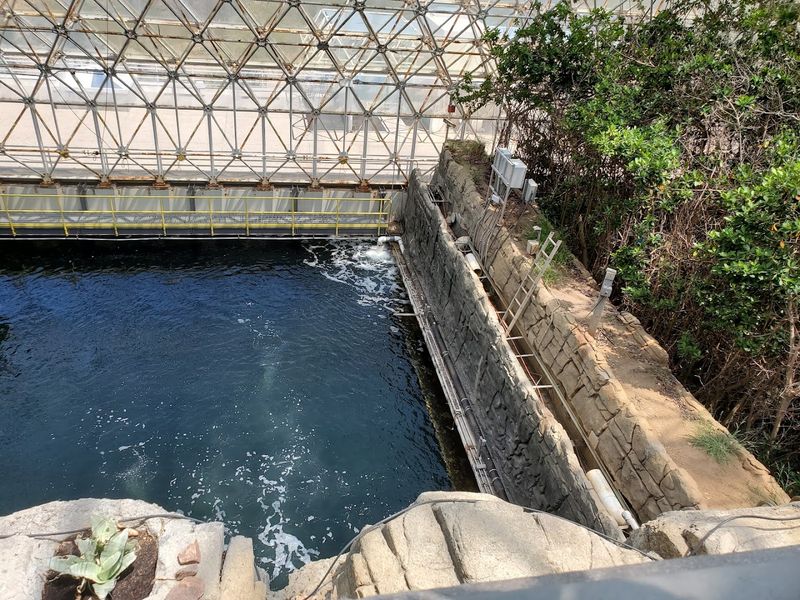
Seeing a million-gallon ocean inside a desert research facility is one of those experiences that takes a moment to fully process.
The ocean biome at Biosphere 2 contains a functioning coral reef system, complete with saltwater, marine organisms, and carefully controlled conditions that mimic a real ocean environment.
Considering that this entire structure sits in the middle of the Arizona high desert, the contrast is nothing short of extraordinary.
This biome serves a serious scientific purpose. Researchers here study ocean acidification, coral bleaching, and the effects of rising temperatures on marine ecosystems.
The work being done in this artificial ocean has real implications for understanding what is happening to natural reefs around the world. It is research that matters, happening in one of the most unexpected locations imaginable.
For visitors, the ocean biome offers a rare chance to observe a coral reef system up close and at eye level, without getting wet. The viewing areas allow you to see the reef structure clearly, and the audio tour provides solid context for what you are looking at.
How The Self-Guided Tour Works
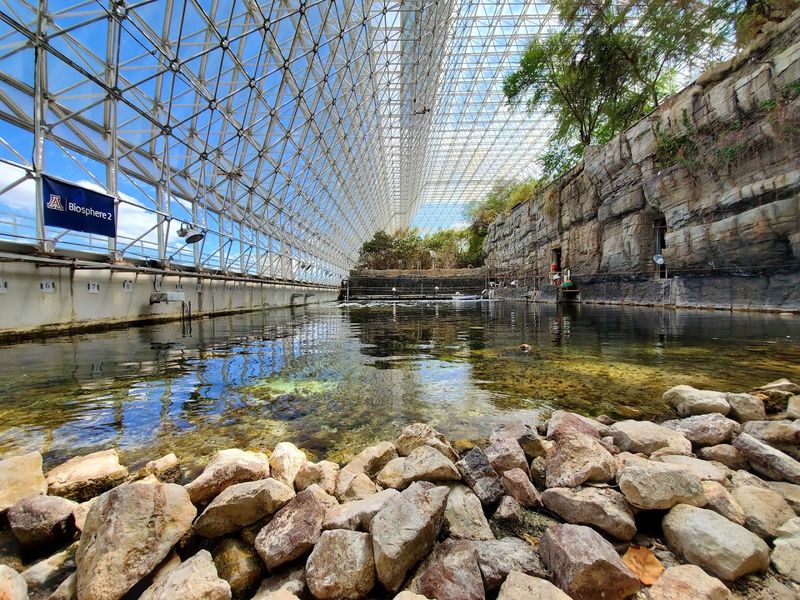
The tour experience at Biosphere 2 has evolved quite a bit over the years, and the current format puts you firmly in control of your own pace.
The self-guided tour runs through a dedicated app, which narrates each stop along the route with a combination of audio and video content.
Arrows are painted on the ground throughout the facility, so navigation is easy and stress-free even without a guide leading the way.
One important tip before you arrive: download the app and let it fully update before you get to the site. The app has around 226 steps to download, and a full update can take up to 30 minutes on a slower connection.
Arriving with a pre-loaded app means you can start exploring right away instead of standing around waiting for content to load. The facility does offer on-site Wi-Fi, so downloading on location is possible, just not ideal.
Staff members are stationed throughout the facility and are happy to answer questions as you move through the different areas.
The Setting Where Desert Meets Science
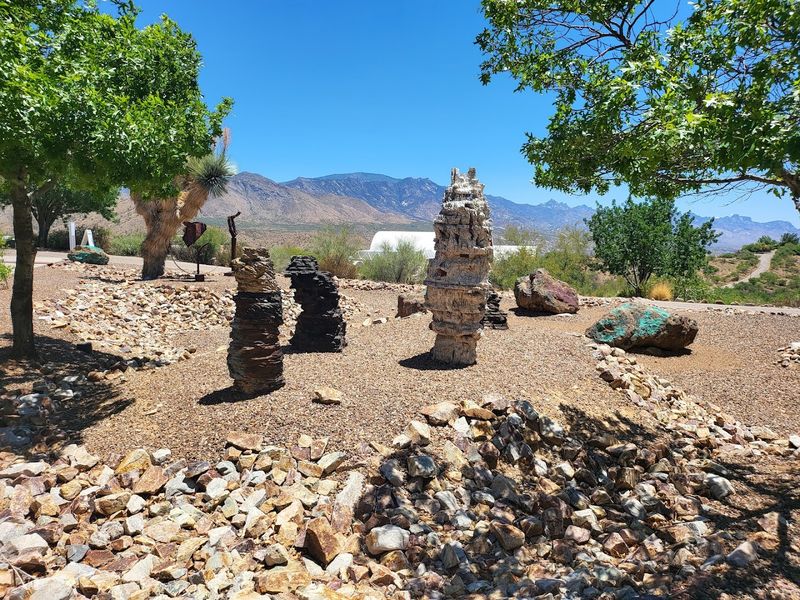
The drive out to this facility is part of the experience.
The road to Oracle winds through open desert terrain, and the isolation of the landscape makes the sudden appearance of those giant glass structures all the more dramatic.
Sitting at an elevation of around 3,900 feet in the Santa Catalina Mountain foothills, the site enjoys slightly cooler temperatures than the Phoenix metro area, though it can still get intensely hot, especially in summer months.
The campus itself is surprisingly spacious. There is plenty of parking, and the grounds between the different structures give you room to breathe and take in the architectural scale of what was built here.
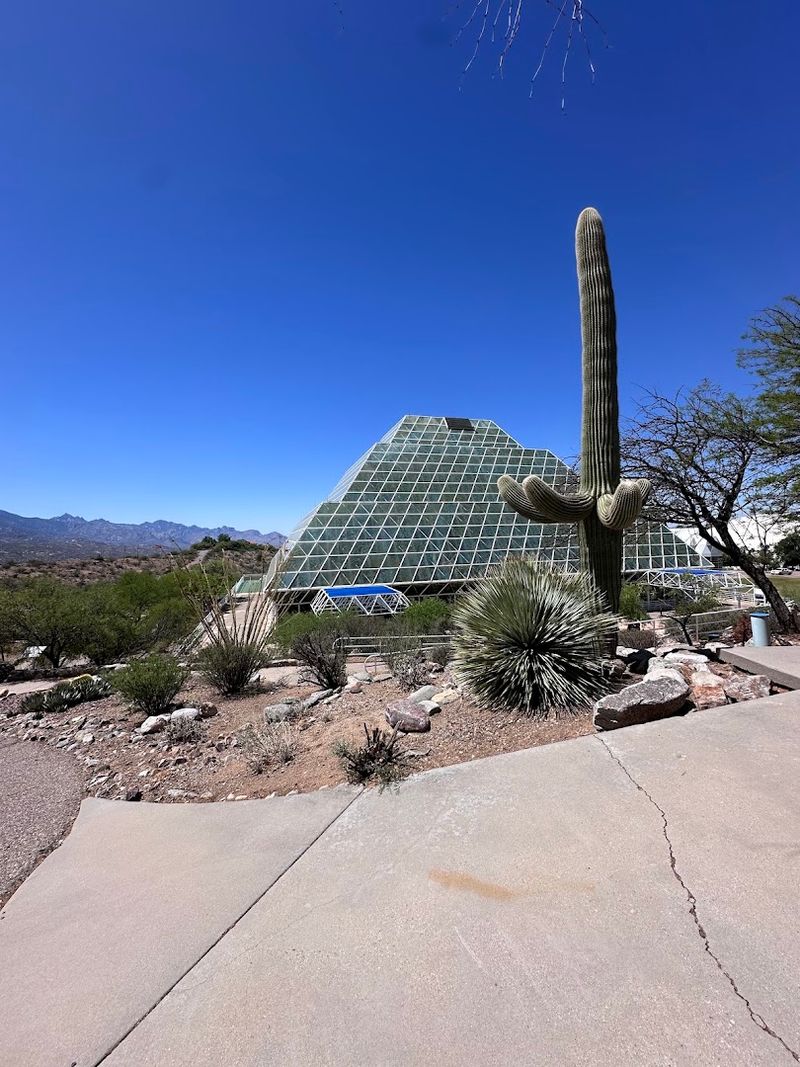
The glass and white steel framework of the main structure reflects light in a way that looks almost futuristic against the backdrop of saguaro cacti and rocky hills. It is a setting that rewards photographers at almost every angle.
Arizona as a state is known for dramatic landscapes, but this corner of the state offers something that goes beyond scenery.
The juxtaposition of cutting-edge science infrastructure and raw desert wilderness creates a visual contrast that stays with you long after you leave.
Research That Still Matters Today
Since the University of Arizona took over management of Biosphere 2, the facility has transformed from a headline-grabbing experiment into a serious, ongoing center for earth and climate science research.
The work happening here today focuses on some of the most pressing environmental questions of our time.
That includes how ecosystems respond to drought, how ocean acidification affects coral systems, and how forests interact with the atmosphere under changing conditions.
One of the most compelling aspects of a visit is realizing that this is not a museum frozen in time.
Real researchers are actively working here, using the controlled environments of the biomes to run experiments that would be impossible to conduct cleanly in the outside world.
The sealed nature of the structure, once seen as a limitation, turns out to be one of its greatest scientific assets. It allows scientists to manipulate variables and measure outcomes with precision that open-air studies cannot match.
The University of Arizona connection also means there is a strong educational mission running alongside the research. Graduate students, visiting scientists, and academic partners from around the world contribute to projects at this facility.
Tips For Making The Most Of Your Visit
A little preparation goes a long way when visiting this facility.
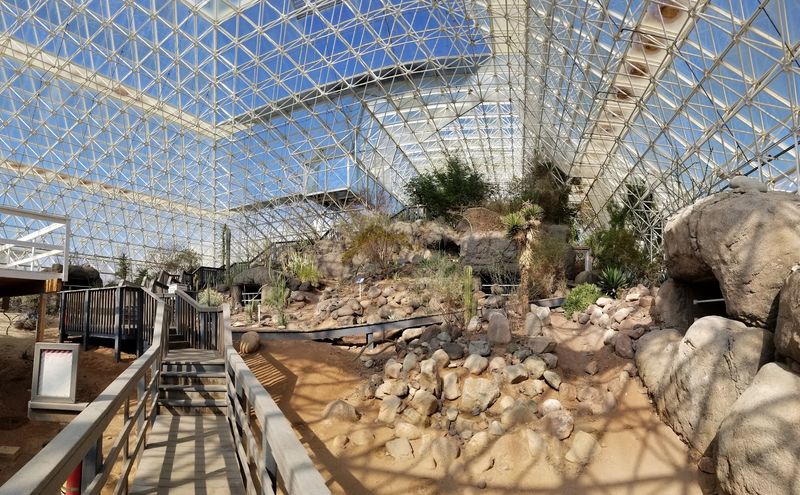
Because the tour takes you through multiple distinct climate zones, including the humid rainforest, the dry desert biome, and outdoor walkways between structures, dressing in layers is genuinely useful advice.
A lightweight jacket or zip-up that can be easily removed and carried is ideal for managing the temperature swings you will encounter throughout the tour.
Hydration is another non-negotiable. Water refill stations are available at the start of the tour, and there are additional fountains at points along the route.
Bring a reusable water bottle and fill it before you head into the main structure.
The combination of Arizona heat and the physical demands of walking a large campus with stairs and varied terrain adds up faster than you might expect.
The facility is open daily from 9 AM to 4 PM, and the gift shop is worth a browse before or after your tour.
For those who want to go deeper, add-on tours including the Lung Tour and the library tour offer access to areas not covered in the standard self-guided experience.