13 Easy California Getaways From Los Angeles Worth Taking In 2026
Los Angeles has a funny way of making two free days feel too valuable to waste at home.
Throw a bag in the car, point yourself away from traffic, and the scenery can start changing surprisingly fast.
Ocean air replaces freeway heat. Mountain roads begin climbing. A small downtown appears just in time for lunch, and suddenly your ordinary weekend has developed vacation energy.
Escaping the routine is remarkably easy when so many corners of California sit within road-trip range.
You do not need plane tickets or a week off. These are the kinds of trips that work when Friday afternoon arrives and staying home simply feels boring.
A night or two can bring beaches, desert landscapes, and enough distance to make Monday seem temporarily irrelevant.
Keep the itinerary loose and the overnight bag ready.
These 13 easy getaways prove that leaving Los Angeles behind for a little while can be the simplest part of the weekend.
1. Santa Barbara
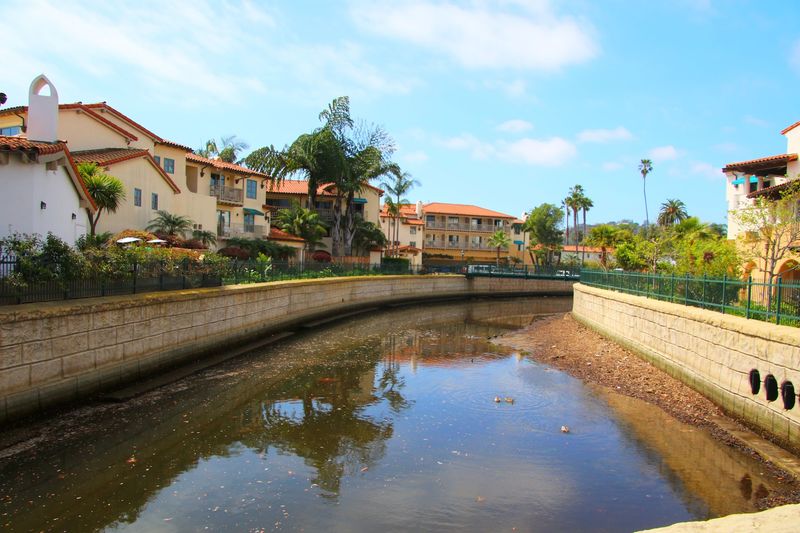
Few coastal cities in California carry the architectural consistency that Santa Barbara does, and that visual harmony is part of what makes arriving here feel immediately different from the drive up.
The Spanish Colonial Revival style, with its white stucco walls and red clay tile roofs, runs through most of downtown and gives the city a distinctly Mediterranean character.
Stearns Wharf stretches out into the Santa Barbara Channel and serves as one of the most recognizable landmarks in the area.
Completed in 1872, it remains California’s oldest working wooden wharf and offers seafood restaurants, small shops, and open views of the Santa Ynez Mountains from the far end of the pier.
State Street functions as the pedestrian-friendly core of downtown, lined with boutiques, galleries, and outdoor dining patios.
A farmers market runs on Tuesday afternoons along the 600 and 700 blocks, and the drive from Los Angeles takes roughly one hour and fifty minutes, making Santa Barbara a realistic option for either a day trip or a weekend stay.
2. Ojai
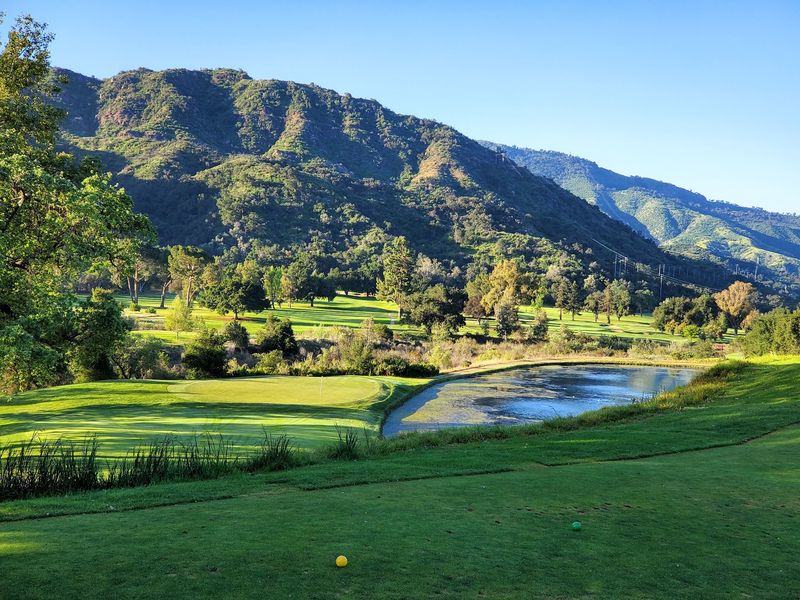
In a narrow valley about 90 minutes from Los Angeles, Ojai operates at a pace that feels almost deliberately unhurried.
The downtown arcade, a covered walkway lined with small shops and galleries, runs along Ojai Avenue and gives the town center a walkable quality that encourages slow exploration rather than rushing between stops.
The surrounding landscape is citrus country, and the smell of orange blossoms in spring is one of those sensory details that tends to stick with visitors long after the trip ends.
The Topa Topa mountain range frames the northern edge of the valley, and the so-called Pink Moment, a natural light phenomenon where the mountains glow rosy at sunset, draws people to open viewpoints each evening.
Ojai is also known for its concentration of artists and independent galleries, which give the town a creative undercurrent without feeling self-consciously trendy.
Hiking trails fan out into the Los Padres National Forest from various trailheads nearby, offering options that range from easy walks to more demanding climbs.
The overall atmosphere rewards visitors who arrive without a packed itinerary and are willing to follow the day wherever it leads.
3. Solvang
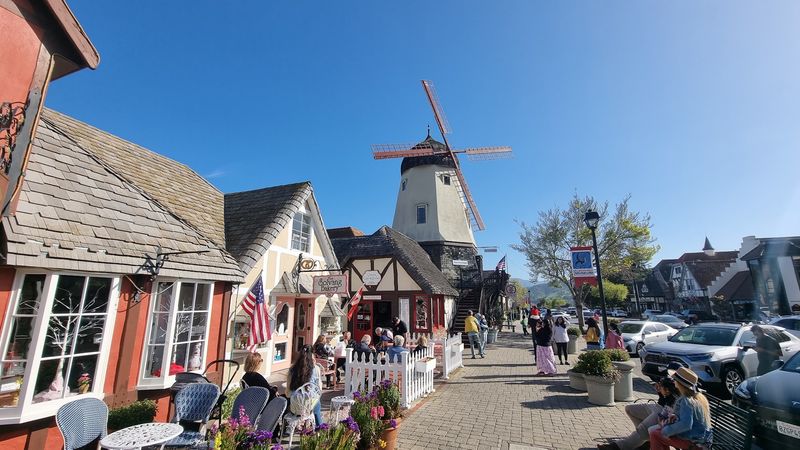
Driving into Solvang for the first time tends to produce a mild double-take, because the town looks genuinely unlike anything else in California.
Half-timbered buildings, working windmills, gas lamp-style street lights, and shop signs written in Danish create an atmosphere that feels transplanted from northern Europe rather than built in the Santa Ynez Valley.
The Danish heritage here is real.
Solvang was founded in 1911 by Danish immigrants who wanted to establish a school and community rooted in their cultural traditions, and the architectural identity has been maintained and expanded ever since.
Bakeries along the main streets sell traditional pastries like aebleskiver, a round Danish pancake typically served with jam and powdered sugar, and the smell from open bakery windows tends to pull pedestrians off the sidewalk.
Beyond the food, the town has a solid collection of small shops selling Scandinavian imports, locally made goods, and Danish-themed gifts.
The Hans Christian Andersen Museum, located above a bookshop at 1680 Mission Drive, offers a quiet look at the life and work of the famous Danish author.
Solvang sits about two and a half hours from Los Angeles and pairs naturally with a stop in nearby Los Olivos or Buellton.
4. Laguna Beach
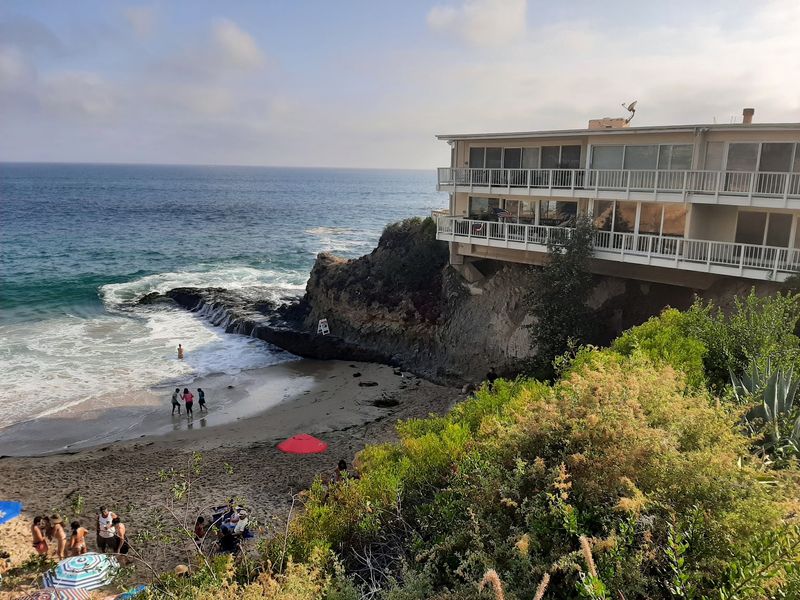
Laguna Beach has a geography that does most of the work on its own.
The coastline here is broken into a series of coves and rocky points rather than one long flat stretch of sand, which gives each beach a slightly different character and makes exploration feel rewarding rather than repetitive.
Heisler Park runs along the bluff above several of these coves and offers a paved walking path with consistent ocean views.
The tide pools at Heisler Park and along the rocky stretches near Crescent Bay are accessible during low tide and tend to hold sea stars, hermit crabs, and other marine life close enough to observe without any special equipment.
The town itself is compact and walkable, with a downtown core along Forest Avenue and PCH that holds galleries, casual restaurants, and a few well-regarded art institutions.
Laguna Beach has maintained a strong arts identity since the early 20th century, and the Laguna Art Museum at 307 Cliff Drive continues to anchor that reputation with rotating exhibitions focused on California art.
The drive from Los Angeles takes about an hour under reasonable traffic conditions, and arriving on a weekday tends to mean noticeably fewer crowds at the coves and along the bluff trail.
5. Catalina Island
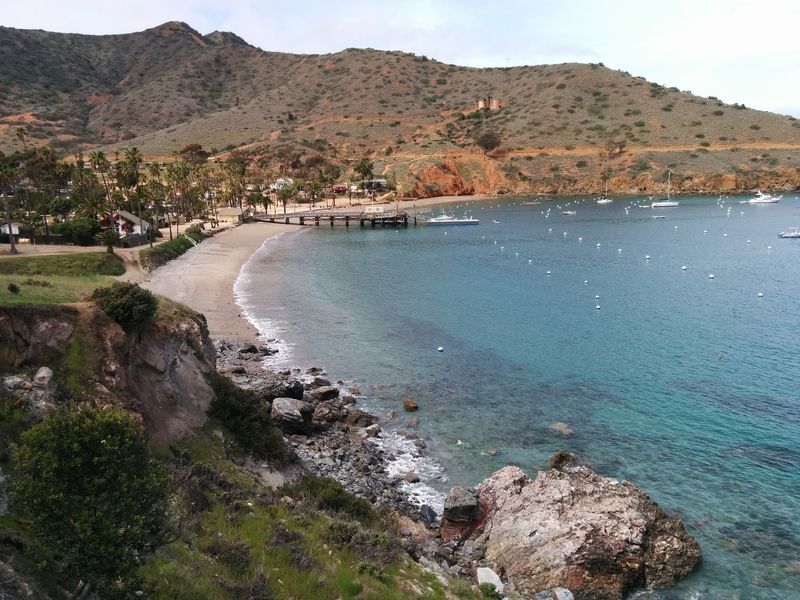
Getting to Catalina Island requires a ferry, and that short crossing is part of what makes the destination feel genuinely removed from the mainland even though the island sits only about 22 miles off the coast of Los Angeles.
Ferries run from San Pedro, Long Beach, and Dana Point, with crossing times ranging from roughly 45 minutes to about an hour and 15 minutes depending on the departure point.
Avalon is the main town on the island and functions almost entirely without personal vehicles, which gives it a pedestrian quality that feels rare and a little surprising.
Golf carts are a common way to get around, and the waterfront promenade is lined with shops, restaurants, and the Casino Ballroom, a 1929 landmark that remains one of the most photographed buildings on the island.
Beyond Avalon, the island’s interior is largely undeveloped and managed as a nature preserve, with hiking and biking trails that pass through open grasslands and coastal scrub.
Buffalo, descendants of animals brought to the island for a 1924 film production, still roam freely across parts of the island.
6. Joshua Tree National Park
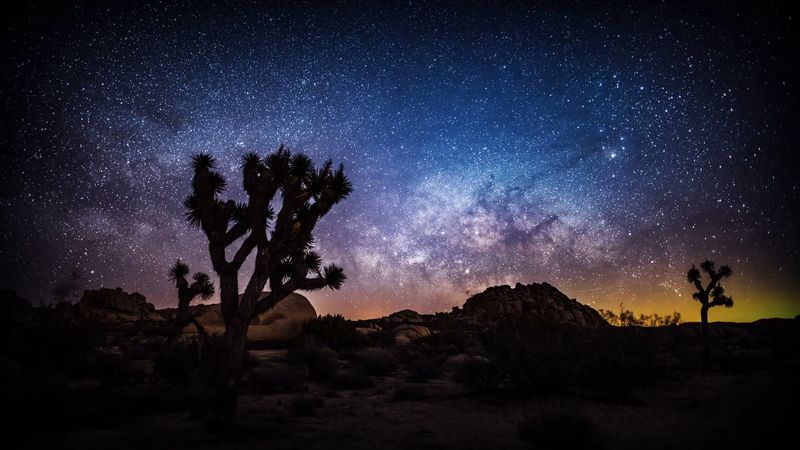
Joshua Tree National Park sits at the intersection of two distinct desert ecosystems, the Mojave and the Colorado, and the boundary between them creates a landscape that shifts noticeably as you move through the park.
The western portion, higher in elevation and cooler in temperature, holds the dense concentrations of Joshua trees that give the park its name.
The eastern side transitions into a lower, hotter, sparser environment that feels more classically desert.
The boulder formations scattered throughout the park are one of its most visually striking features.
Massive piles of rounded granite, formed by ancient geological processes and exposed over millions of years of erosion, create natural climbing areas and unusual silhouettes against the sky.
Skull Rock, accessible from a short trail near the Jumbo Rocks campground, is one of the more easily recognized formations and makes a good starting point for first-time visitors.
Stargazing here is exceptional because light pollution is minimal and the park holds International Dark Sky Park designation.
Sunrise and late afternoon tend to offer the most dramatic light for photography, particularly around the boulder fields.
The park entrance is roughly two to two and a half hours from Los Angeles, and the north entrance near Twentynine Palms Highway is the most commonly used access point from the west.
7. Big Bear Lake
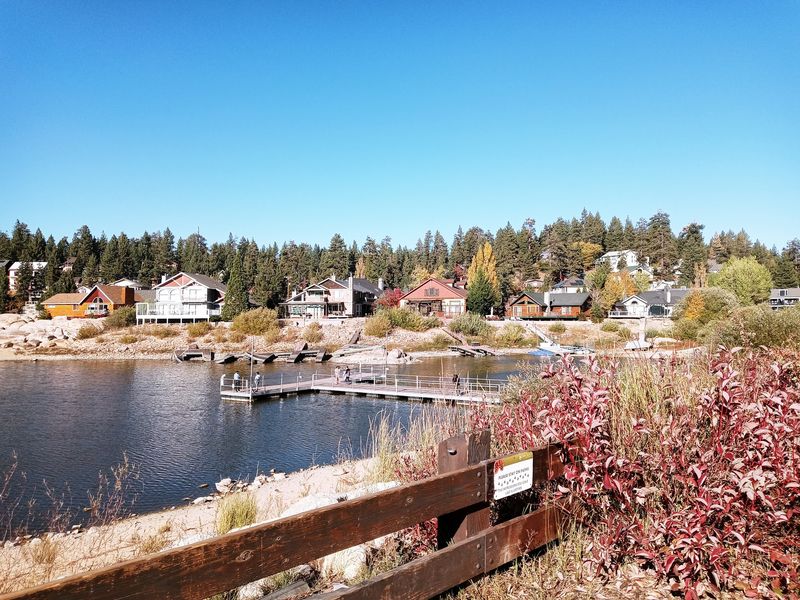
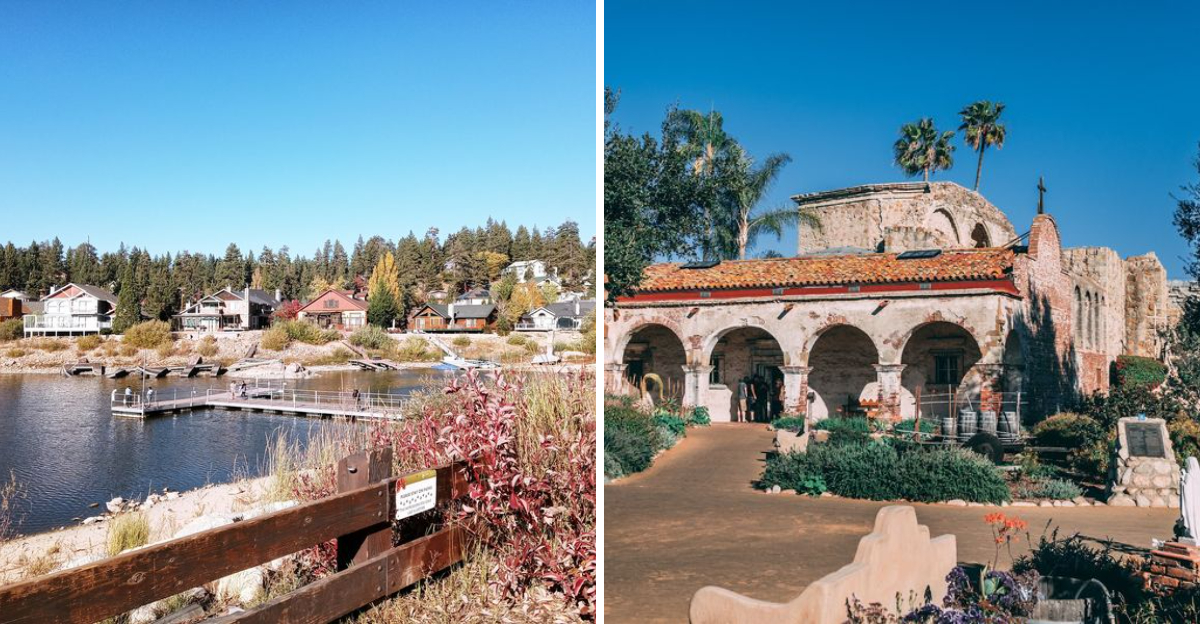
The elevation at Big Bear Lake sits at around 6,752 feet, which means the air genuinely feels different up there compared to the basin below.
Summer temperatures tend to run 20 to 30 degrees cooler than Los Angeles, making it a practical escape during hot months when the city can feel relentlessly warm.
The lake itself covers about 2,600 acres and supports kayaking, paddleboarding, fishing, and boat rentals throughout the warmer season.
Big Bear Village is the commercial center of the area, with a walkable main street holding restaurants, shops, and outfitters that cater to both summer and winter visitors.
The surrounding national forest offers a wide range of hiking trails, from easy lakeside walks to more strenuous climbs with views that extend across the San Bernardino Mountains.
In winter, Big Bear Mountain Resort operates two ski areas, Snow Summit and Bear Mountain, which draw snowboarders and skiers from across Southern California.
The drive from Los Angeles takes about two hours under normal conditions, though the final stretch up Highway 18 or Highway 38 involves winding mountain roads that can require chains or snow tires during winter storms.
8. Palm Springs
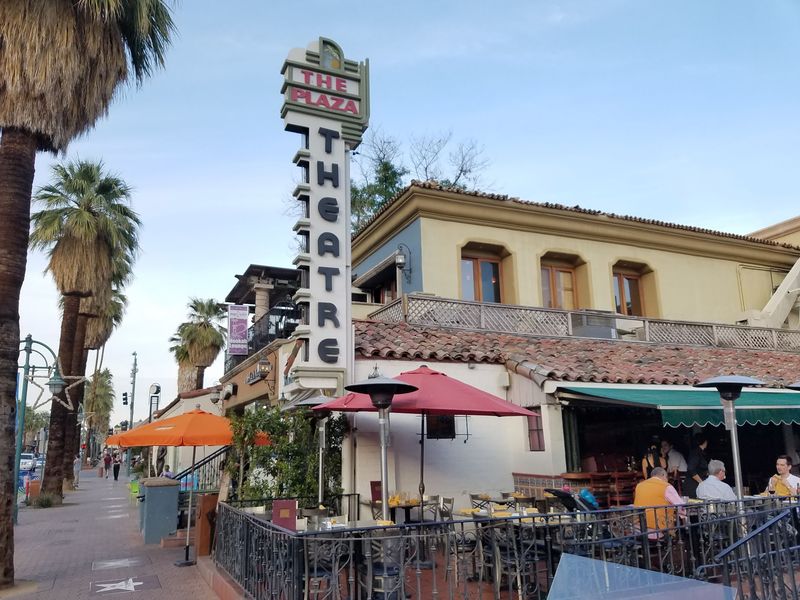
Palm Springs has a particular visual identity that comes from its concentration of midcentury modern architecture, most of it built between the 1940s and 1970s when the desert city became a popular retreat for Hollywood figures.
The low-slung lines, flat roofs, floor-to-ceiling glass walls, and kidney-shaped pools that define the style are visible throughout residential neighborhoods and along the main commercial corridor-
The Palm Springs Aerial Tramway rotates slowly during its ascent up the sheer cliff face of Chino Canyon and deposits passengers at the Mountain Station at about 8,516 feet.
The temperature difference between the desert floor and the top of the tram can be 30 to 40 degrees, and trails into Mount San Jacinto State Park are accessible from the upper station year-round.
Downtown Palm Springs along Palm Canyon Drive holds a walkable stretch of shops and the Palm Springs Art Museum, which maintains a strong collection of modern and contemporary art alongside a notable architecture.
The drive from Los Angeles takes roughly two hours, and visiting during spring or fall tends to offer the most comfortable outdoor temperatures for exploring on foot.
9. Ventura
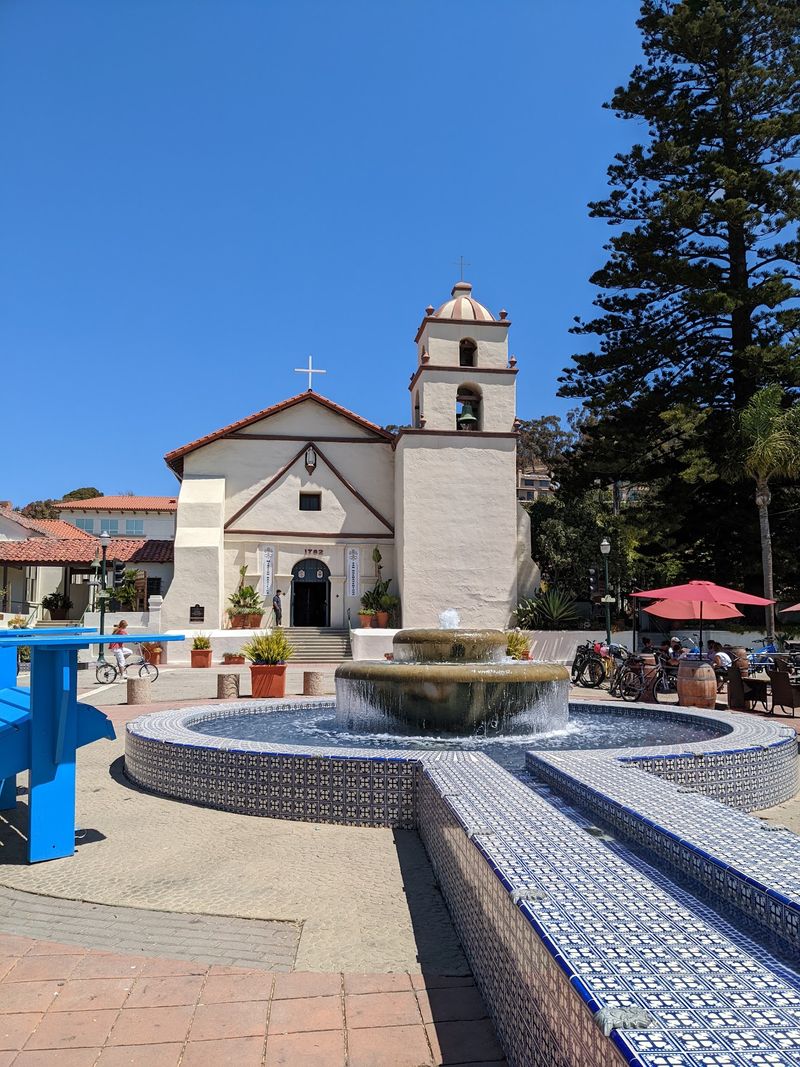
While it often gets bypassed in favor of Santa Barbara to the north, that tendency to overlook it is part of what gives Ventura a relaxed quality that some visitors find more appealing than a more polished destination.
The downtown area along Main Street has a lived-in feel, with independent shops, vintage stores, and casual restaurants spread across several blocks without a heavy tourism infrastructure around them.
Mission San Buenaventura, founded in 1782, anchors the historic core of downtown and remains an active parish church in addition to operating as a museum.
The mission garden and small museum are open to visitors and offer a grounded look at the region’s Spanish colonial history without large crowds.
The pier at the end of California Street extends over the water and provides a straightforward place to walk out over the ocean and look back at the coastline.
Channel Islands National Park headquarters is also located in Ventura, and boat trips to the islands depart from Ventura Harbor, making the city a practical base for those interested in exploring the archipelago.
The drive from Los Angeles takes about an hour under reasonable traffic conditions.
10. Dana Point
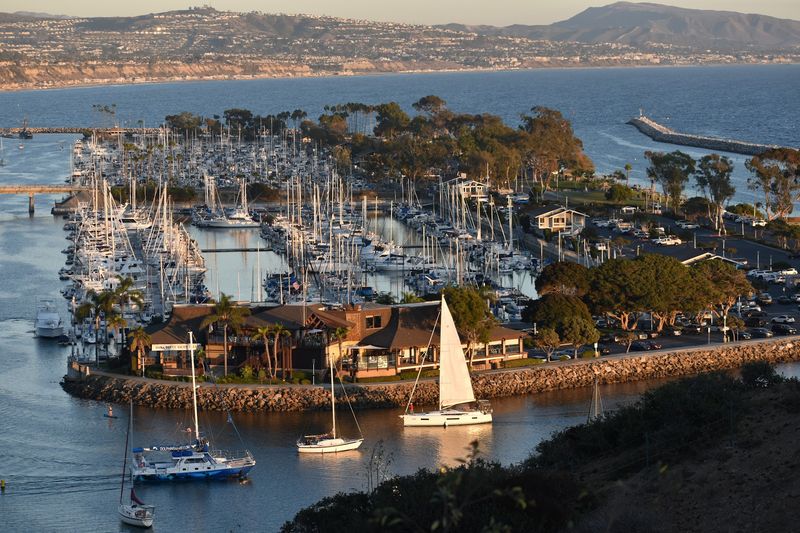
Sitting in a protected cove along the Orange County coast is Dana Point which has a low-key character that feels more like a working marina than a tourist destination, even though it draws plenty of visitors.
The harbor walk along the inner edge of the marina passes boat slips, waterfront restaurants, and a small collection of shops without ever feeling crowded or overbuilt.
Whale watching is one of the more distinctive draws here, and Dana Point has historically been one of the more productive departure points for whale-watching trips along the Southern California coast.
Gray whales pass through during winter migration, and blue whales, the largest animals on Earth, are sometimes spotted offshore during summer months.
Several operators run trips from the harbor throughout the year.
The Headlands area above the harbor offers coastal bluff trails with open views of the ocean and the rocky coastline below.
Doheny State Beach, just south of the harbor, provides a wide sandy beach with calm water near the mouth of San Juan Creek that tends to suit families and beginning paddlers.
The drive from Los Angeles takes about an hour to an hour and 15 minutes depending on traffic, with the 5 Freeway being the most direct route south.
11. San Juan Capistrano
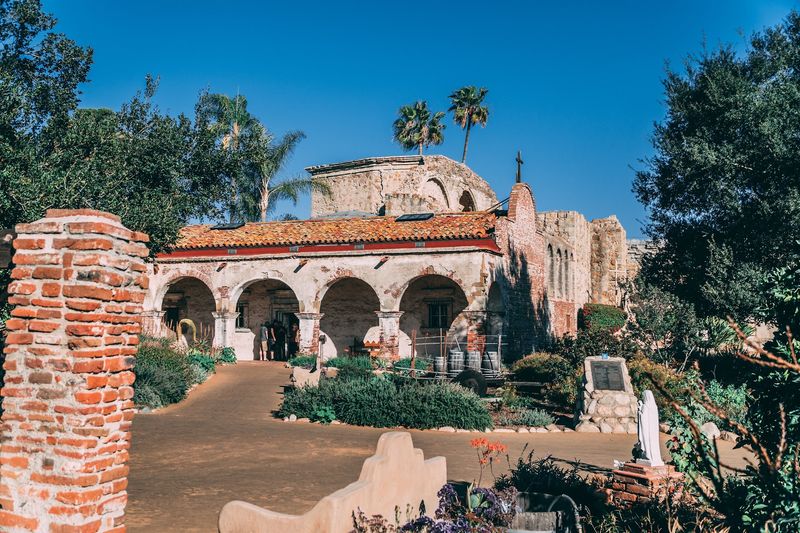
San Juan Capistrano has one of the most intact historic cores of any city near Los Angeles, and walking through the area around the mission feels noticeably different from most Southern California downtowns.
Adobe buildings, stone walls, and narrow streets give the neighborhood a texture and age that is genuinely rare in a region where development has erased most pre-20th century structures.
Mission San Juan Capistrano was founded in 1776 and remains one of the most visited missions in California.
The ruins of the Great Stone Church, destroyed by an earthquake in 1812, are preserved within the mission grounds and provide a striking visual contrast between the collapsed walls and the intact garden spaces that surround them.
The Los Rios Historic District, adjacent to the mission, is recognized as one of California’s oldest neighborhoods and contains adobe homes dating back to the late 18th and early 19th centuries.
The Amtrak station in San Juan Capistrano sits within walking distance of the mission and the historic district, making the town accessible without a car for visitors coming from Los Angeles.
12. Idyllwild
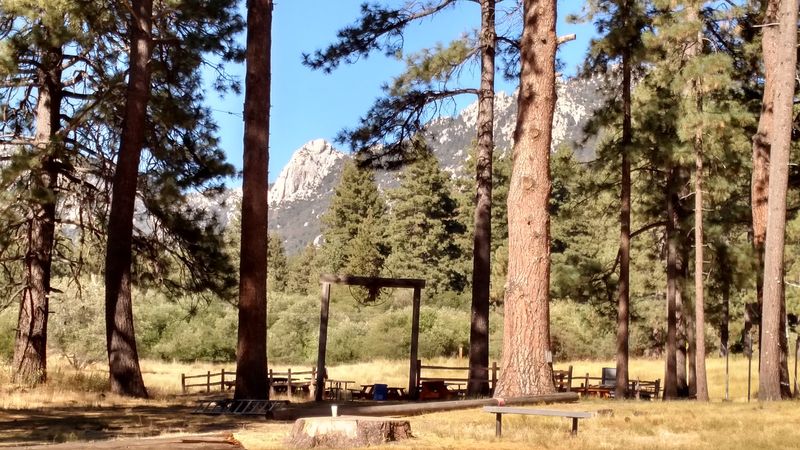
At around 5,400 feet in the San Jacinto Mountains, Idyllwild feels like a completely different California from the desert floor below.
The air carries the smell of pine and cedar, the streets are quiet and largely free of chain businesses, and the general pace of the town seems calibrated toward people who came specifically to slow down.
The main commercial area along Village Center Drive and North Circle Drive holds art galleries, bookshops, and small restaurants within a walkable few blocks.
Hiking is the primary outdoor activity, and the trails accessible from Idyllwild range from short walks through the forest to serious climbs toward the summit of San Jacinto Peak at 10,834 feet.
The Marion Mountain Trail and the Deer Springs Trail both provide access to the upper mountain, though permits are required for certain areas and conditions can change significantly with season.
The rocky granite formations that rise above the tree line, including Suicide Rock and Tahquitz Rock, are well-known among climbers and visible from various points around town.
Idyllwild sits about two hours from Los Angeles via the 10 Freeway and Highway 243, with the final stretch up the mountain involving a winding road that rewards the effort with forest scenery and a genuine sense of arrival.
13. Carpinteria
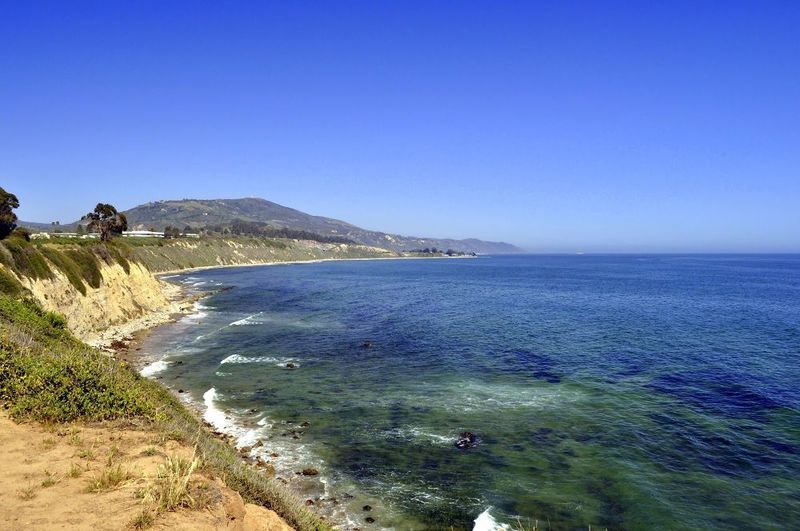
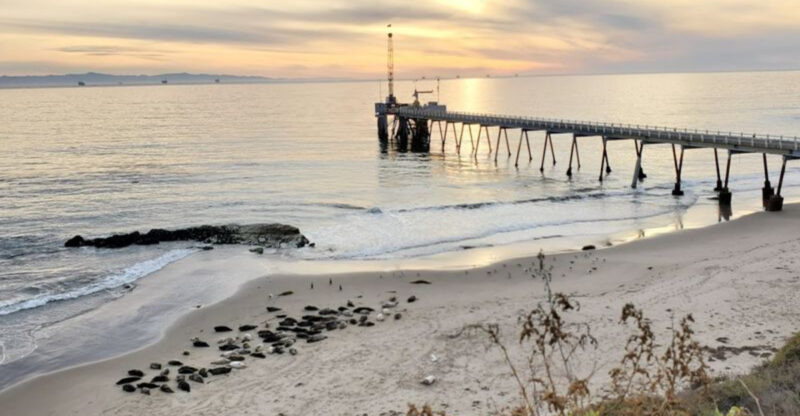
Carpinteria sits about 12 miles east of Santa Barbara and offers much of the same coastal appeal with considerably less foot traffic on most days.
The beach here is wide and sandy, protected by a natural kelp reef that keeps the surf relatively calm and makes the water more accessible for swimming and paddling than many other spots along this stretch of coast.
The beach has historically been called one of the safest swimming beaches in the world, a characterization backed by its sheltered geography.
The small downtown along Linden Avenue runs a few blocks from the beach and holds a mix of local restaurants, a farmers market on Wednesdays, and shops with a neighborhood rather than resort character.
The overall scale of Carpinteria is small enough that most of what visitors come for is reachable on foot from the beach parking area.
Bluffs Trail, which runs along the coastal edge above the beach, provides views of the Channel Islands on clear days and connects to the beach at several points.
The California Condor is sometimes spotted soaring above the bluffs, particularly in the early morning hours.