This Stunning New Mexico Botanical Garden Is More Than Just A Place To See Flowers
Expect a few flowers, and leave wondering how you ended up exploring a desert farm, glass conservatories, wildlife habitats, riverside trails.
You can find all of that at one of New Mexico’s most fascinating green spaces.
Every path leads somewhere different. Immersive outdoor exhibits showcase native succulents and rare high-desert flora alongside modern sculpture installations.
One moment you’re surrounded by towering cacti. The next you’re watching butterflies drift through blooming gardens or spotting roadrunners darting across the landscape.
It never settles into one thing for very long. That’s exactly what makes every visit feel like an adventure instead of an ordinary stroll.
Roots Of Radiance, The Garden’s Surprising History
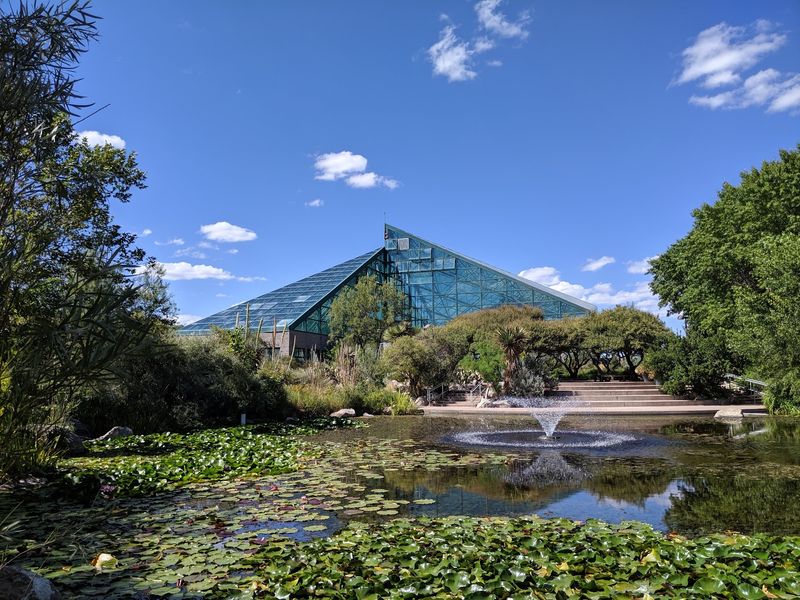
Not many botanical gardens can trace their roots back to the 1920s, but this one can.
The City of Albuquerque established a Municipal Botanic Garden in the early 1920s, focused on preserving the unique plant life of the surrounding this region of the state.
That original vision quietly grew over the decades, eventually becoming the expansive, award-winning destination we know today.
The ABQ BioPark – Botanic Garden officially opened in its current form in 1996, part of the larger ABQ BioPark complex. It spans an impressive 32 to 36 acres along the scenic Rio Grande, creating a striking contrast against Albuquerque’s high desert backdrop.
The garden earned the 2019 Architecture and Community Award from the New Mexico Architectural Foundation, recognizing how thoughtfully natural beauty and structural design were woven together here.
That award is not just a plaque on a wall. It reflects a real commitment to making every corner of this garden feel intentional and welcoming.
Beyond aesthetics, the garden carries out science-based conservation work both locally and globally.
You can find this remarkable destination at 2601 Central Ave NW in Albuquerque, sitting conveniently near the historic Old Town neighborhood.
Glasshouses That Defy The Desert
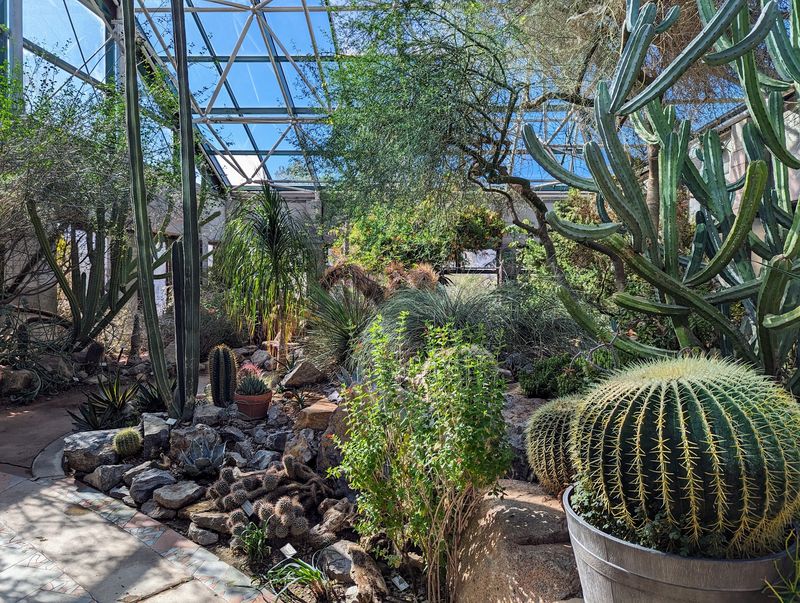
The ABQ BioPark – Botanic Garden pulls it off beautifully with two adjoining solar-powered pavilions, each maintaining its own distinct climate and plant collection.
The engineering behind these structures is genuinely impressive, using different glazing types, carefully placed vents, and masonry heat sinks.
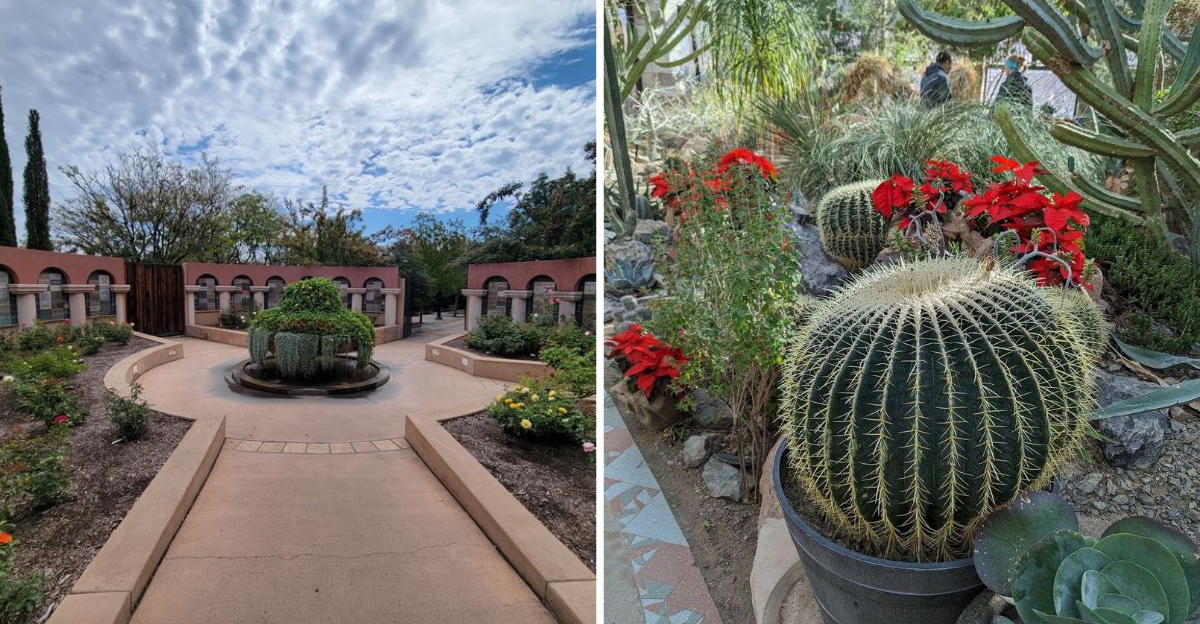
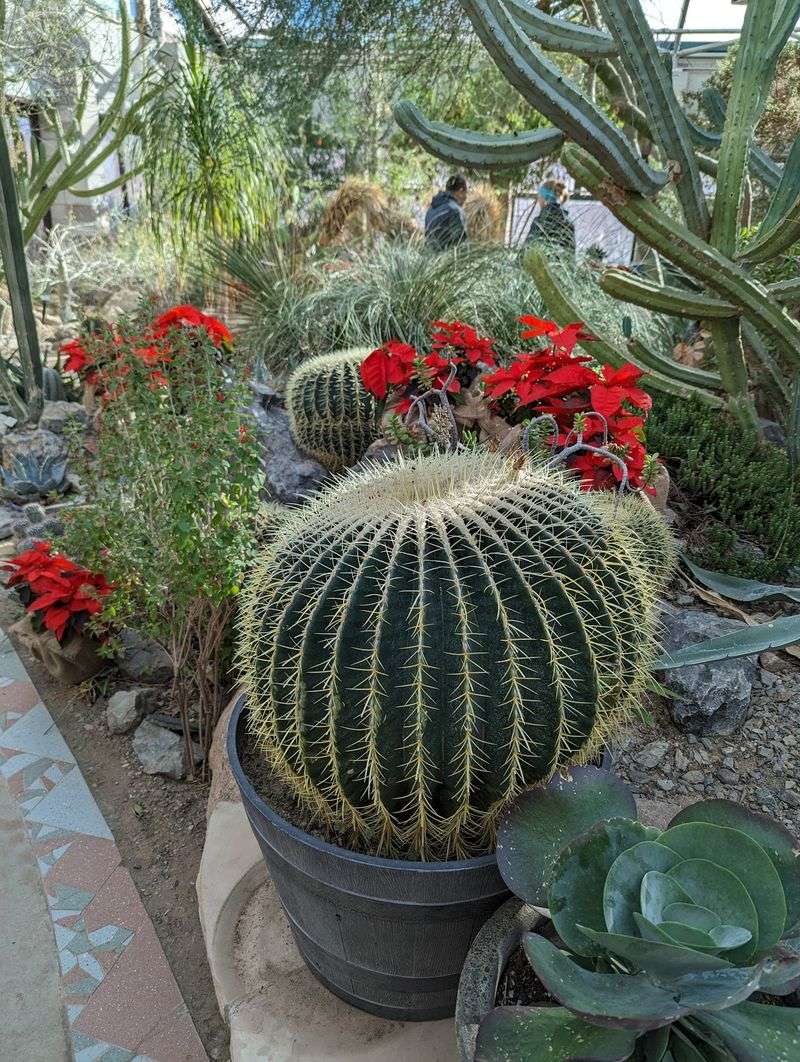
The Desert Conservatory is the first of the two wings, and it hits you immediately with towering saguaro cacti, palo verde trees, and Chihuahuan Desert yuccas.
Elephant trees from Baja California add an almost sculptural quality to the space. The air is warm and dry, exactly as these plants prefer it.
Cross into the Mediterranean Conservatory and the mood shifts entirely. Humidity rises, greenery thickens, and suddenly you are surrounded by a carob tree, a date palm, carnivorous pitcher plants, and kangaroo paws from Australia.
A cinnamon tree from China and graceful papyrus complete this botanical world tour. These conservatories stay lush and green even through winters, making them a reliable retreat when outdoor gardens slow down seasonally.
A Japanese Garden Born From Friendship
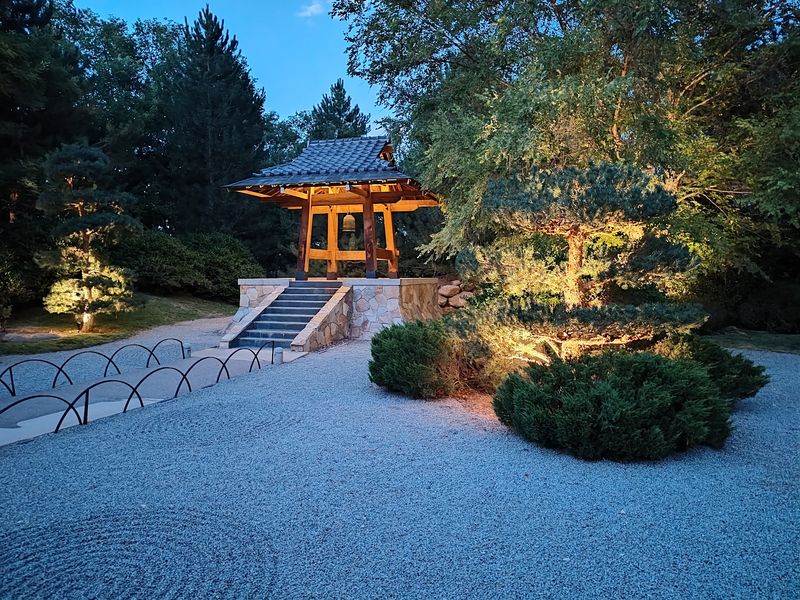
There is something quietly extraordinary about finding a four-acre Japanese garden in the middle of the American Southwest.
The Sasebo Japanese Garden at the ABQ BioPark – Botanic Garden exists as a living tribute to the sister city relationship between Albuquerque and Sasebo, Japan.
That cross-cultural friendship is embedded in every carefully placed stone and every pruned branch here.
The layout feels informal and organic, which is exactly the point. A serene lake anchors the space, fed by a gracefully tiered waterfall that you can hear before you see it.
A tranquil koi pond invites visitors to slow down and watch colorful fish glide beneath the surface. A distinctive bell tower sits beside a raked gravel garden, adding an element of meditative calm that feels genuinely transportive.
A meandering stream ties the entire composition together, enhancing that sense of natural flow that Japanese garden design does so well.
The combination of traditional Japanese plants and subtle native species creates a botanical tapestry unlike anything else in the state. Even in the cooler months, much of this garden stays green and photogenic.
Step Back To A 1930s Rio Grande Farm
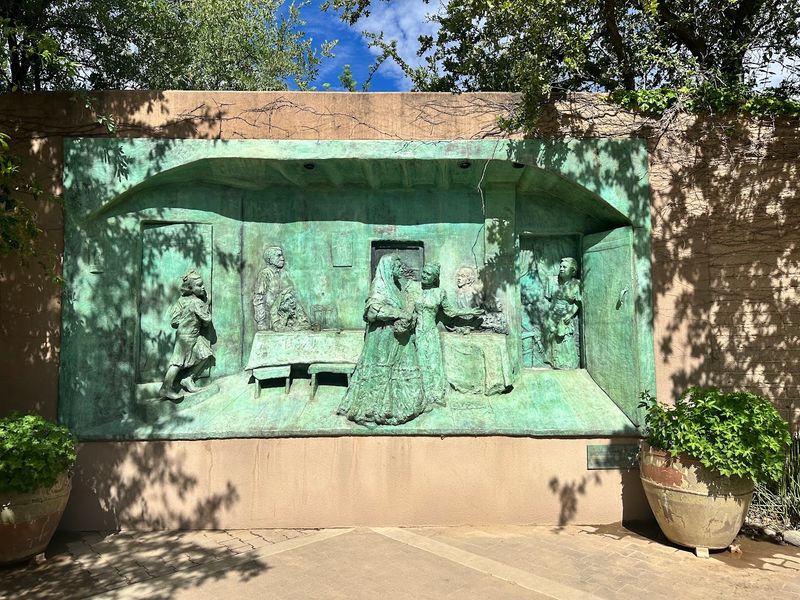
Somewhere between the rose garden and the conservatory, the ABQ BioPark – Botanic Garden surprises you with a fully realized 1930s-era farmstead.
The Rio Grande Heritage Farm stretches across ten acres and recreates life in the Rio Grande valley as it would have looked nearly a century ago. It is one of those exhibits that quietly earns its place as a trip highlight.
Traditional crops grow alongside apple orchards and vineyards, while horses, sheep, cattle, chickens, and turkeys go about their days in a setting that feels genuinely authentic.
Kids who have never seen a working farm up close tend to be completely captivated here.
The adobe farmhouse hosts artisans practicing traditional crafts like quilting, rug hooking, and woodcarving, connecting visitors to the deep cultural heritage of New Mexico.
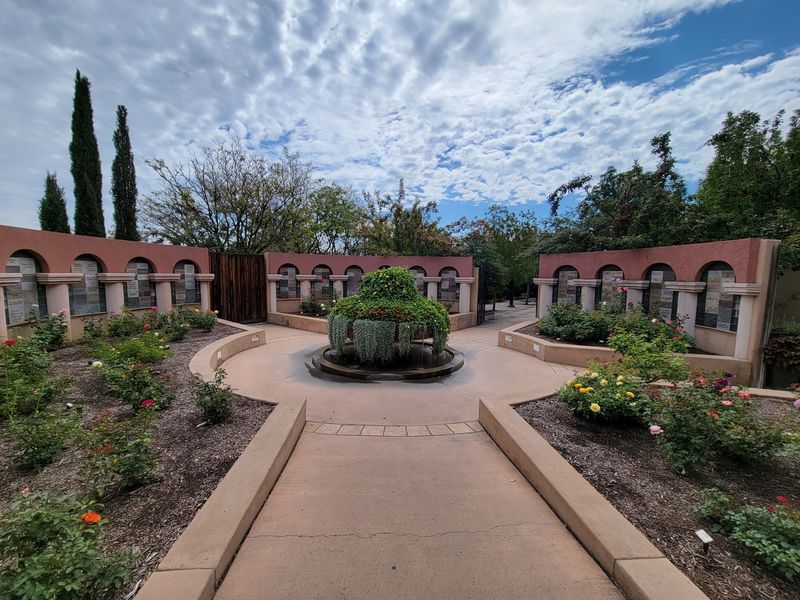
Adjacent to the Heritage Farm, the Old World Walled Gardens flow through three distinct installations, including a Spanish-Moorish Garden with intricate tilework, the Jardin Redondo rose collection, and a Ceremonial Garden with an arched walkway.
Imagination Runs Wild In The Children’s Areas
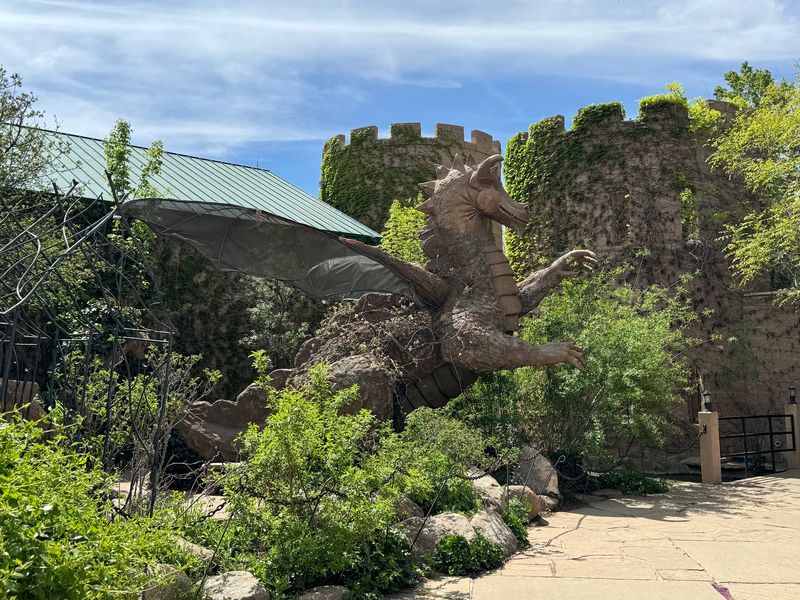
Few botanical gardens commit this fully to sparking imagination in younger visitors, and the ABQ BioPark – Botanic Garden deserves credit for going all in.
The Children’s Fantasy Garden has long been a beloved space, and it is currently undergoing a major transformation into Dreamlands: Exploring a Mythical World. The ambition behind this redesign is hard not to appreciate.
Future visitors can look forward to a vibrant rainbow path leading through immersive environments, giant butterfly canopies casting kaleidoscopic shadows, and musical sculptures that respond to movement and touch.
Hidden treasures, giant gemstones, and woodland trolls are woven throughout the landscape. A castle ruin at the highest point promises sweeping views across this reimagined mythical world.
Not far away, the Railroad Garden offers a completely different kind of delight.
Two 400-foot loops of rails wind through miniature landscapes complete with bridges and tunnels, a collaborative project between the garden and the New Mexico Garden RailRoaders Club.
Then there is the Butterflies and Bees exhibit, a year-round immersive space showcasing 40 species of native butterflies and moths alongside non-stinging native bees and fig beetles.
Native Plants And Wild Neighbors
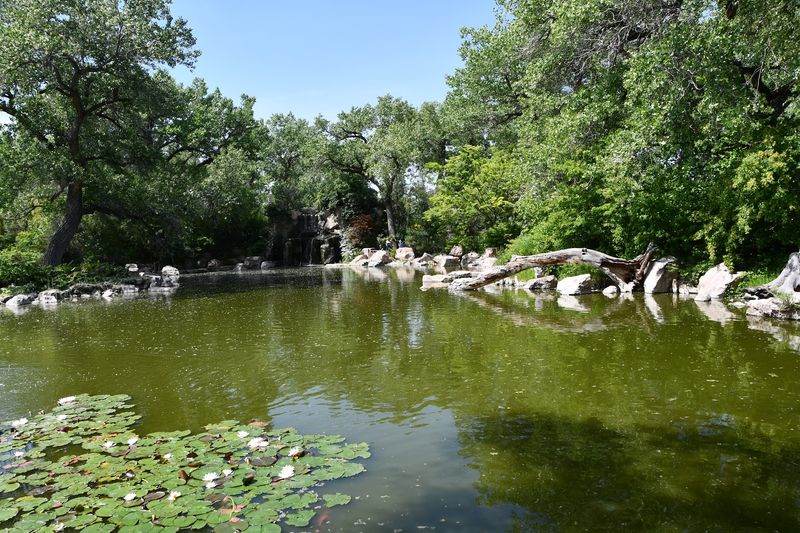
One of the most underappreciated sections of the entire garden is the Cottonwood Gallery, a five-acre stretch at the northern end that showcases a restored section of the Rio Grande Bosque.
This riparian habitat once thrived along the river before development reshaped much of the valley. Walking beneath a canopy of mature cottonwoods here feels like stepping into a quieter, older version of New Mexico.
The understory is filled with native trees and shrubs, and the wildlife that calls this corridor home is genuinely exciting to spot. Roadrunners dart across the path. Kestrels perch in the upper branches.
Porcupines and great-horned owls have also been observed here, making every visit feel a little like a wildlife encounter waiting to happen.
Beyond the Cottonwood Gallery, themed landscape areas like Desert Mountains and Grasslands, Lava Flow, Southwest Sand Hills, Mojave Desert, and Chihuahuan Desert each showcase specific regional habitats in careful detail.
The Curandera Garden adds a cultural dimension, featuring medicinal plants like osha, goldenseal, and elkweed, with interpretive tours explaining their traditional uses.
Conservation Work Happening Right Now
Behind the beautiful paths and colorful blooms, the ABQ BioPark – Botanic Garden is doing some genuinely important scientific work.
The garden partners with the New Mexico Forestry Division, the U.S. Fish and Wildlife Service, and the University of New Mexico to establish off-site populations of threatened, rare, and endangered native plants.
Horticulture staff germinate seeds provided by these partners inside the BioPark greenhouses, carefully tending to each plant through its early stages.
They also participate in seed collection efforts and contribute to ongoing research projects focused on preserving biodiversity across the region.
The Sacramento prickly poppy is one notable example, with the Botanic Garden serving as a state-wide seed source for this rare species.
Informative plant labels and interpretive signs throughout the garden bring these conservation efforts to life for everyday visitors.
Educational programs extend the mission further, with field trips, virtual learning options, and hands-on discovery stations engaging students of all ages. Guided tours and online resources through BioPark Connect offer additional learning pathways.
Planning Your Visit Like A Pro
Over 1.5 miles of walking paths wind through the ABQ BioPark – Botanic Garden, and a relaxed stroll through all the exhibits typically takes two to three hours.
The paths are mostly flat, a mix of paved and gravel surfaces, and free wheelchairs are available at the ticket booth on a first-come, first-served basis. Planning a little in advance goes a long way here.
The garden is open daily from 9 AM to 5 PM, though winter hours bring Monday closures between Veterans Day and Presidents Day. The garden is also closed on January 1st, Thanksgiving, and December 25th.
Purchasing timed tickets online before your visit is strongly recommended, especially during peak seasons when crowds build quickly.
Timing your visit thoughtfully makes a real difference. Spring, particularly April and May, brings desert wildflowers and comfortable temperatures. Autumn offers crisp air and spectacular foliage, especially in the Japanese Garden.
Summer visitors should arrive right at opening to enjoy outdoor paths before midday heat sets in, then retreat to the cool conservatories.