These 11 Abandoned Ruins Offer Great Historical Exploring In Georgia
I once stood in front of a crumbling stone wall and felt like I had walked onto a movie set nobody bothered to finish. That is when it hit me how much history this state has quietly buried in plain sight.
Old foundations, forgotten mills, and remains of entire communities sit just off the beaten path, waiting for no one in particular. Most people drive right past without knowing what once stood there.
I have spent weekends chasing these places down, and every single one left me with more questions than answers. Some sites go back centuries.
Others tell stories of towns that simply vanished. This state holds onto its past in a way that feels almost personal once you start digging.
Bring curiosity and sturdy shoes, because these ruins are not going to explain themselves.
1. Dungeness Ruins, Cumberland Island
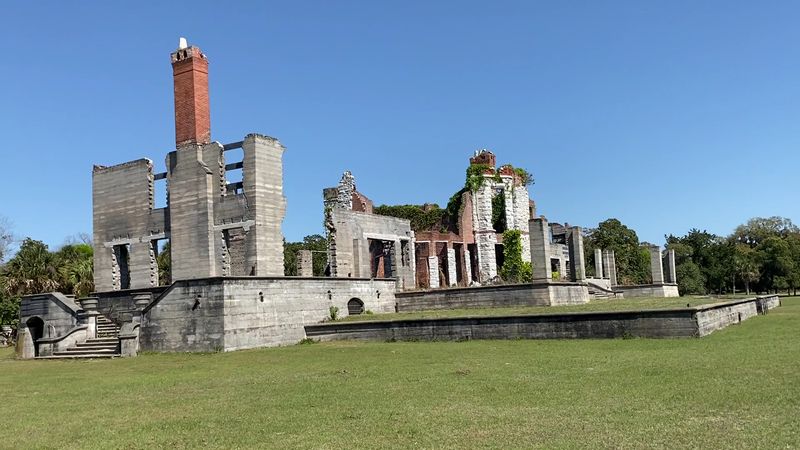
Wild horses roaming through the skeletal walls of a 35,000-square-foot mansion is not something you see every day. The Dungeness Ruins on Cumberland Island are exactly that kind of surreal, unforgettable experience.
You have to catch a ferry from St. Marys, GA 31558, which honestly makes it feel even more like an adventure.
Nathanael Greene first claimed 11,000 acres here back in 1783. His widow later built a four-story tabby mansion around 1800.
That original structure sat empty for years before it was eventually destroyed by fire in 1866.
Thomas and Lucy Carnegie then built their own grand Dungeness mansion in 1884. It covered roughly 35,000 square feet and served as their winter retreat.
A fire in 1959 left only the dramatic brick and stone walls standing today.
The National Park Service took over the island in 1972. Now visitors explore the ruins while horses wander freely around them.
It feels less like a history lesson and more like walking through a painting that time forgot.
2. New Manchester Mill Ruins, Sweetwater Creek State Park
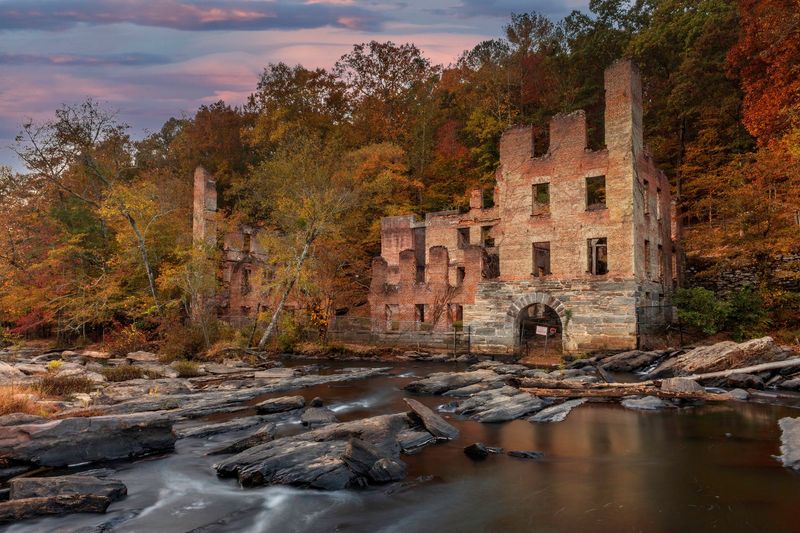
Imagine a five-story cotton mill rising from the Georgia wilderness, its stone walls still standing after more than 160 years. That is exactly what greets you at Sweetwater Creek State Park in Lithia Springs, GA 30122.
The Red Trail leads you straight there, following the sound of rushing whitewater rapids the whole way.
The New Manchester Mill was built in 1849 and quickly became the heart of a bustling mill town. A fire destroyed it in 1864, and the mill never fully recovered.
The ruins have stood quietly ever since, slowly becoming one with the forest around them.
What makes this spot extra cool is its Hollywood connection. Scenes for “The Hunger Games” were filmed here, using the dramatic ruins as a backdrop.
You might find yourself recognizing the scenery as you hike through.
The trail is family-friendly and truly beautiful. Sweetwater Creek rushes alongside the path, making the whole hike feel cinematic.
Visiting this mill ruin feels like combining a nature walk with a proper history lesson, and that is a combination worth making time for.
3. Sope Creek Paper Mill Ruins, Marietta
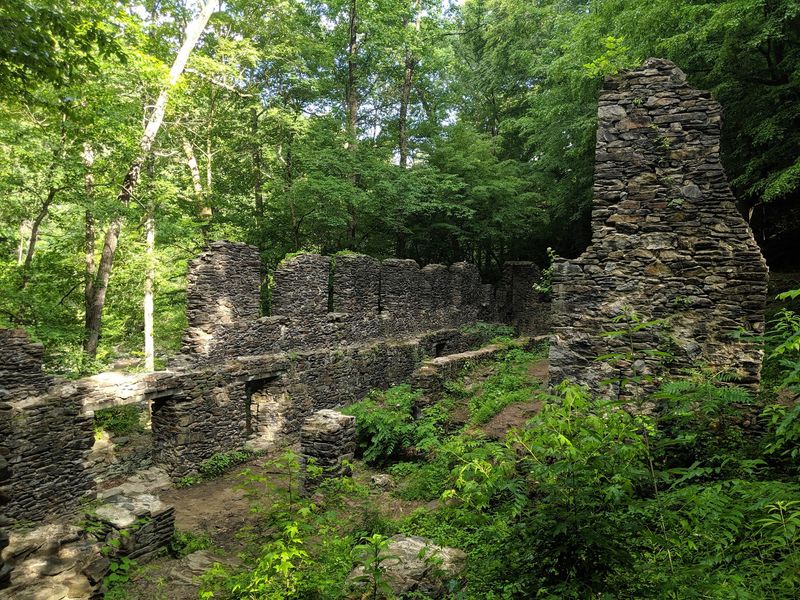
Not many paper mills can claim a history quite like this one. The Sope Creek Paper Mill Ruins sit quietly along Paper Mill Rd SE, Marietta, GA 30067, inside the Chattahoochee River National Recreation Area.
It is a surprisingly peaceful spot for a place with such an interesting backstory.
The Marietta Paper Mill was incorporated in 1859 and stood as one of the first wood-using mills in the area. It produced newsprint and paper for the region during the 1860s.
A fire in 1864 left the structure damaged, and the stone walls have been whispering that story ever since.
The mill was later rebuilt and kept operating until 1902. The towering stone remains you see today are truly impressive up close.
Preservation efforts are currently underway to stabilize the masonry before time takes more of it.
Hiking trails lead right to the ruins, making this an easy and rewarding outing for families. The creek beside the ruins adds a calming soundtrack to your visit.
It is the kind of place that makes local history feel alive rather than distant.
4. Scull Shoals Historic Site, Watkinsville
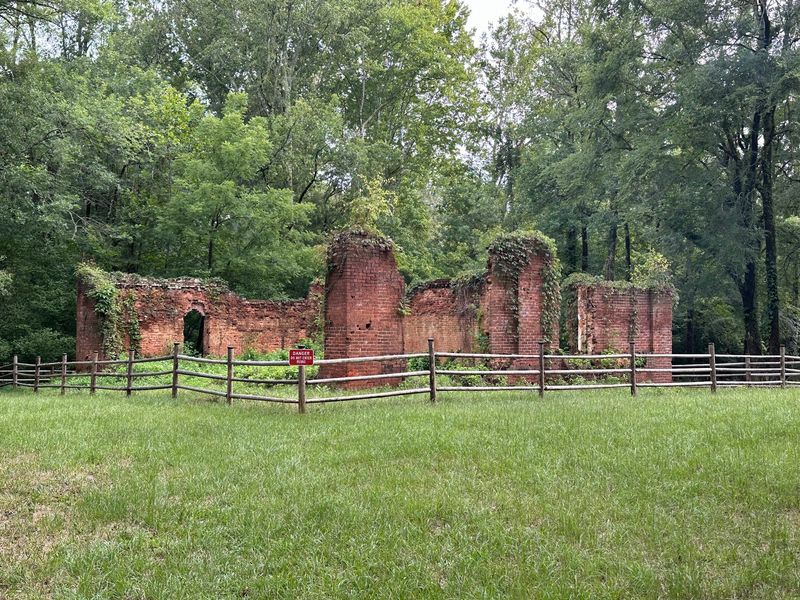
Ten thousand years of human history packed into one riverside ghost town is a bold claim, but Scull Shoals absolutely earns it. Located along Skull Shoals Rd, Watkinsville, GA 30677, this site traces a jaw-dropping arc from early Native Americans all the way through to the 1800s.
Explorer Hernando de Soto reportedly passed through here in the 1540s.
By 1811, the area had become home to one of the state’s very first paper mills. A full frontier town eventually grew up around the industry on the banks of the Oconee River.
Then, like so many boom towns, it quietly faded away and was swallowed by the forest.
Today, visitors can take a gentle hike through the remains of the old Scull Shoals Village. The ruins sit in a dreamy, overgrown setting that rewards slow, curious walkers.
You get the sense that every mossy stone has at least three good stories attached to it.
The site is open during daylight hours and free to explore. No crowds, no ticket booths, just you and 10,000 years of layered history.
That kind of raw, unfiltered access to the past is genuinely rare and worth every step.
5. Fort King George State Historic Site, Darien
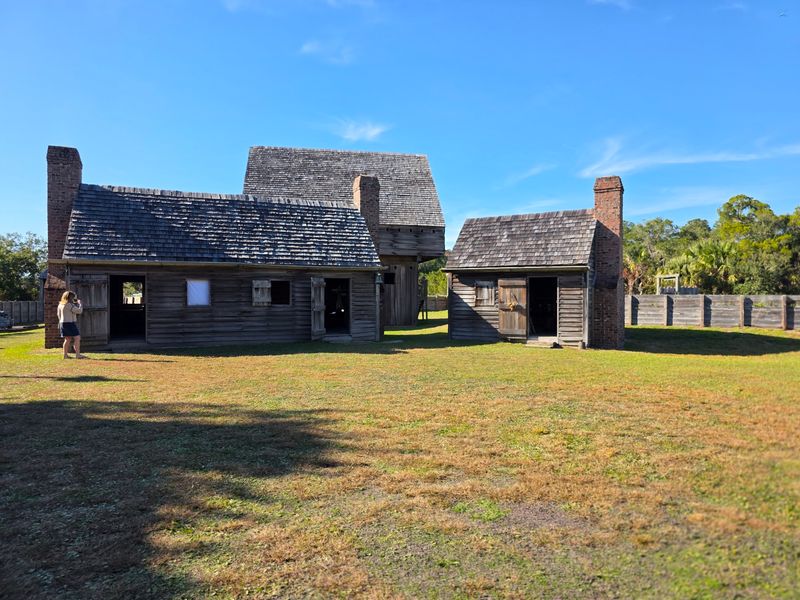
Before there was a British colony called Georgia, there was Fort King George, standing alone as the southernmost outpost of the British Empire in 1721. You can visit it today at 302 McIntosh Rd, Darien, GA 31305, and the reconstructed site makes colonial history surprisingly easy to picture.
Colonel John “Tuscarora Jack” Barnwell oversaw its original construction.
The fort featured a cypress blockhouse, barracks, and palisaded earthen fortifications. A fire destroyed it in 1726, but it was rebuilt the very next year.
General James Oglethorpe later brought Scottish Highlanders to the site in 1736, and their settlement became the town of Darien.
Darien grew into an important lumber export center, shaped by those early Highland settlers. The present site features authentically reconstructed buildings, including officer’s quarters, barracks, a guardhouse, and a moat.
Remains of three sawmills and tabby ruins are also still visible on the grounds.
A museum on-site tells the layered story of the Guale Indians, Spanish missions, and British colonists who all shaped this stretch of coastline. Few historic sites pack this many civilizations into one small footprint.
Fort King George is a genuinely underrated stop along the Georgia coast.
6. Wormsloe State Historic Site, Savannah
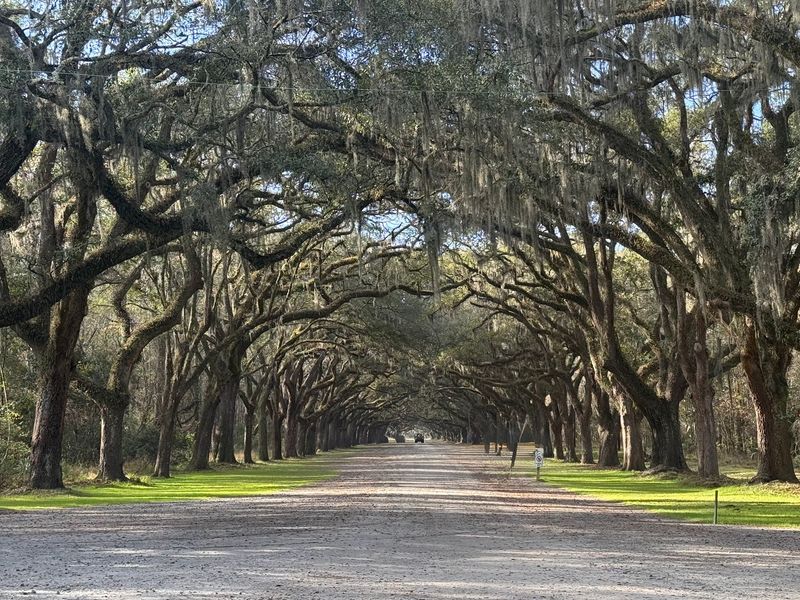
A mile-long avenue of live oak trees draped in Spanish moss is enough to make anyone slow down and stare. Wormsloe State Historic Site at 7601 Skidaway Rd, Savannah, GA 31406 delivers that view before you even reach the actual ruins.
It is one of those places that earns its reputation every single time.
The estate once belonged to Noble Jones, a carpenter who arrived with General James Oglethorpe in 1733. Jones built a fortified tabby house between 1737 and 1745, and its ruins are considered among the oldest standing structures in the Savannah area.
Tabby, for the curious, is a concrete made from lime, sand, water, and oyster shells.
The estate played a strategic role in protecting Savannah from Spanish ships sailing up the coast. That mix of domestic life and military purpose makes Wormsloe feel genuinely layered and complex.
Nature trails, a museum, and a Colonial Life Area round out the full experience.
During special events, costumed interpreters demonstrate colonial-era skills right on the grounds. Watching someone practice 18th-century craftsmanship beside ancient tabby walls is something that sticks with you.
Wormsloe rewards visitors who take their time and soak in every corner of it.
7. Fort Frederica National Monument, St. Simons Island
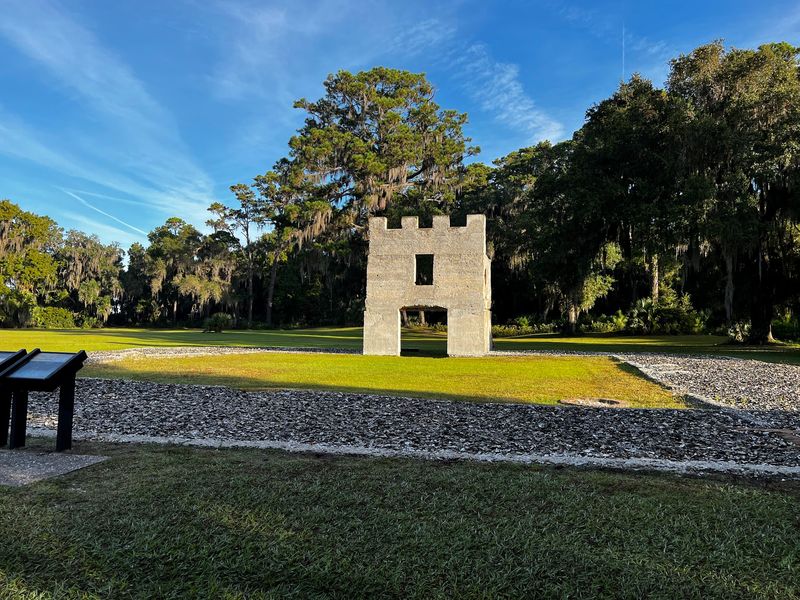
General James Oglethorpe had a talent for building forts in dramatic locations, and Fort Frederica on St. Simons Island proves that point beautifully. Find it at 6515 Frederica Rd, St Simons Island, GA 31522, and plan to spend more time there than you originally intended.
The ruins have a quiet magnetic pull that is hard to explain until you are standing in them.
Oglethorpe founded the fort in 1736, constructing it from tabby concrete to defend against Spanish and French forces. It played a pivotal role in the Battle of Bloody Marsh in 1742, which secured British control of the region.
The victory at the Battle of Bloody Marsh helped secure British control of Georgia and influenced the future of the colony.
By 1758, the fort had been abandoned following a devastating fire that left its walls empty and silent. The site is now preserved as a National Monument, with archaeological remnants spread across the grounds.
Visitors can explore through a visitor center, museum, and a range of educational programs.
The combination of coastal scenery and layered military history makes this stop genuinely compelling. You are walking through a place that changed the map of a continent.
That kind of weight is worth feeling in person.
8. New Echota State Historic Site, Calhoun
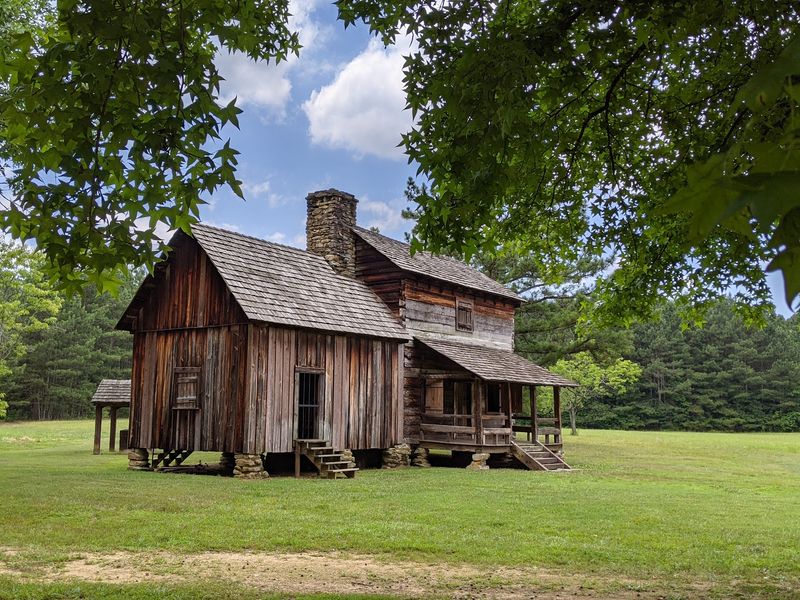
The capital city of an entire nation once stood right here in northwest Georgia, and most people have never heard of it. New Echota served as the capital of the Cherokee Nation from 1825 to 1838, located at 1211 GA-225, Calhoun, GA 30701.
It was a fully functioning seat of government, complete with its own constitution and court system.
The Cherokee Nation ratified a constitution modeled after the U.S. Constitution in 1827.
New Echota also housed the Cherokee Phoenix, the first newspaper ever published in a Native American language. That printing press was not just a communication tool; it was a declaration of cultural identity.
Visitors today can see 12 original and reconstructed buildings spread across the site. The Council House, Court House, reconstructed farmstead, restored Vanns Tavern, and a working print shop are all part of the experience.
Walking among them, you get a real sense of how sophisticated and organized this civilization truly was.
New Echota is recognized as one of the most significant Cherokee sites in the entire country. The stories told here are complex, important, and deeply human.
Coming here with an open mind and a willingness to listen makes all the difference.
9. Etowah Indian Mounds State Historic Site, Cartersville
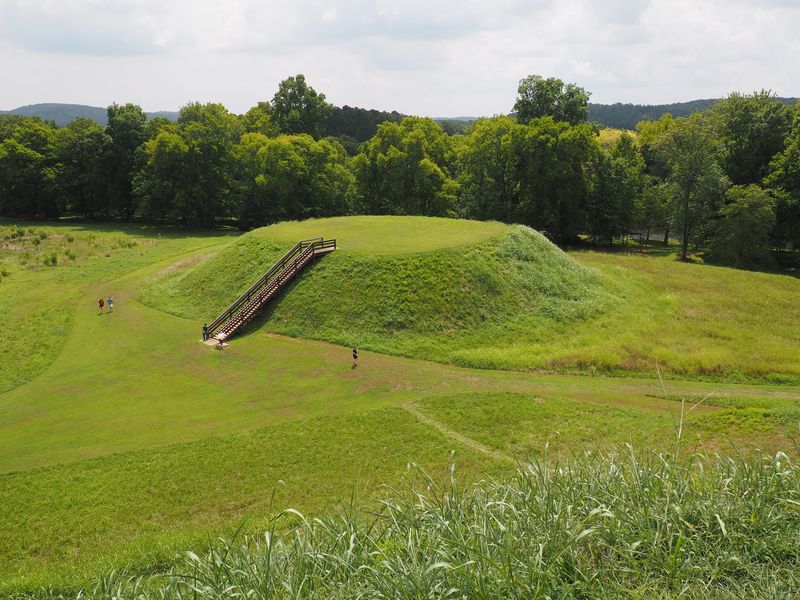
Standing at the base of a 63-foot earthen mound built entirely by hand over 500 years ago puts things in perspective fast. The Etowah Indian Mounds at 813 Indian Mound Rd SE, Cartersville, GA 30120 cover 54 acres and represent the most intact Mississippian Culture site in the entire Southeast.
The scale of human effort here is almost impossible to wrap your head around.
From around 1000 A.D. to 1550 A.D., several thousand Native Americans called this place home. The site protects six earthen mounds, a central plaza, and an extensive village area.
Mound A, the largest, stands as tall as a six-story building and once served as a platform for temples and public structures.
A nature trail winds along the Etowah River and passes an ancient v-shaped fish trap still visible in the water. The on-site museum displays pottery, stone effigies, and other artifacts recovered from the mounds.
Each object tells a piece of a story that spans centuries of trade, ceremony, and community life.
This site was a major political, religious, and trade hub for its time. The mounds are not just impressive structures; they are proof of a deeply organized society.
Cartersville deserves way more credit for having this in its backyard.
10. Fort Morris State Historic Site, Midway
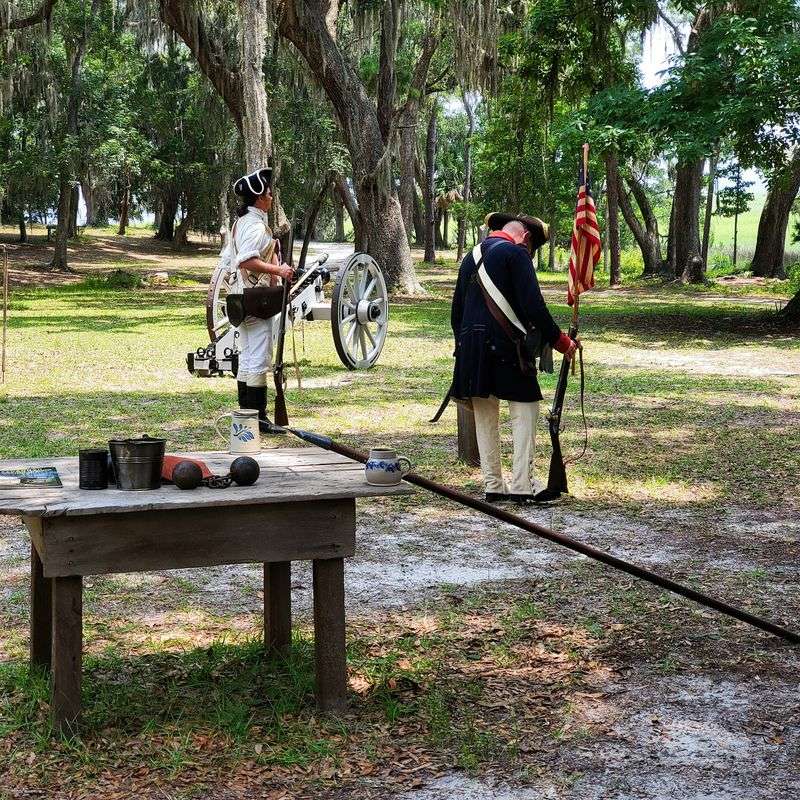
“Come and take it” is one of the boldest things ever said in early American history, and it happened right here. Fort Morris State Historic Site at 2559 Ft Morris Rd, Midway, GA 31320 sits on the banks of the Medway River, where Colonel John McIntosh delivered that legendary reply in 1778.
The line became a rallying cry that still echoes through American history.
The fort protected the colonial seaport of Sunbury, which was once a thriving commercial hub rivaling Savannah in importance. Earthen remnants of the original fort are still visible on the grounds today.
Walking along the outer edges of those earthworks, you can almost feel the spirit of the era that helped define a young nation.
The site also has ties to the early 1800s, adding another chapter to its already rich history. A museum and film on-site bring the story of Sunbury and the fort to life in vivid detail.
Leisurely walking trails weave through coastal forests, giving the whole visit a relaxed, exploratory feel.
Fort Morris is not the most famous stop on this list, but it might be the most quietly impressive. The combination of natural beauty and historical spirit makes it truly worth the drive.
Midway punces well above its weight with this one.
11. Andersonville National Historic Site, Andersonville
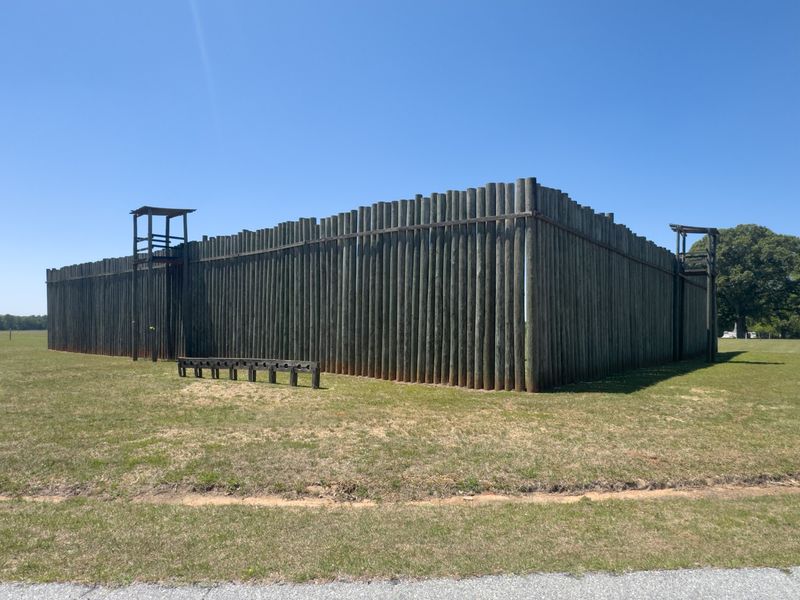
Few places in America carry the kind of historical depth that Andersonville does, and visiting it changes the way you think about remembrance. The Andersonville National Historic Site at 760 POW Rd, Andersonville, GA 31711 serves as a memorial honoring American service members across history.
It is a place built for reflection, education, and deep respect.
The site preserves Camp Sumter, a 19th-century historic site that once held more than 45,000 people during its 14 months of operation. Restored sections of the original stockade give visitors a tangible sense of the site’s physical scale.
A self-guided driving tour takes you around the full perimeter at your own pace.
The National POW Museum, which opened in 1998, uses artifacts and oral histories to honor American service members from all eras. Exhibits are thoughtfully designed to inform without overwhelming.
Every display feels purposeful and deeply human.
Andersonville National Cemetery is also part of the site and remains an active burial ground today. The combination of museum, historic site, and active cemetery makes this one of the most layered and meaningful historic sites in the entire country.
Come here ready to listen and learn.