Most Travelers Never Discover These 9 Hidden Massachusetts Places
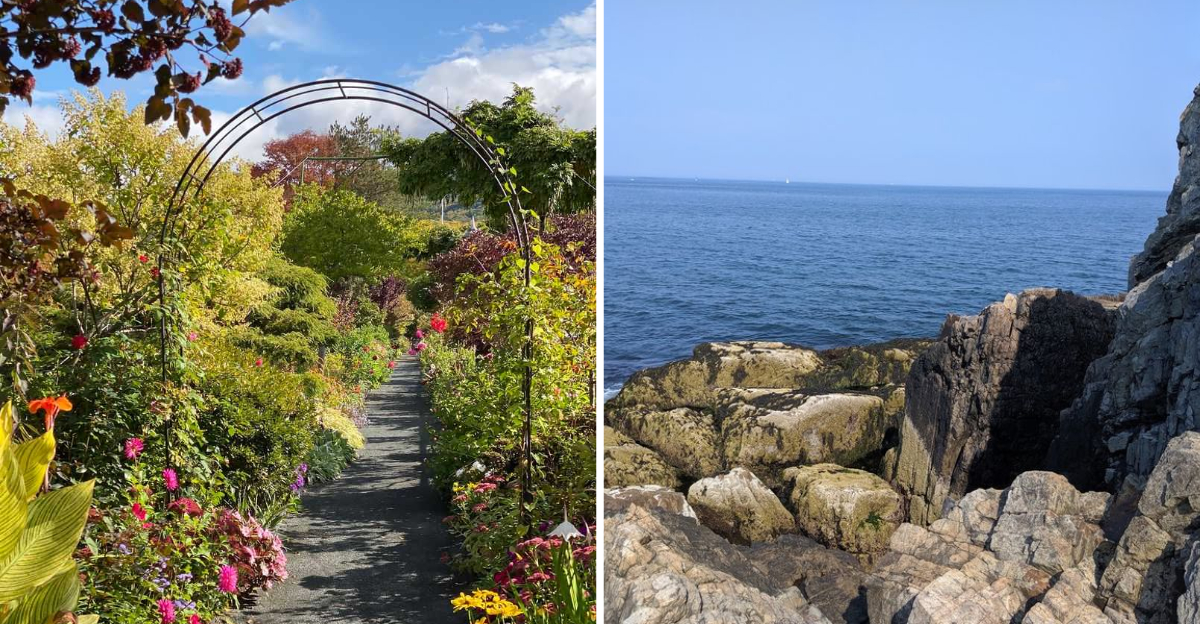
You think Massachusetts has already shown you everything? That’s exactly what these hidden places want you to believe.
Beyond the famous landmarks lies a completely different side of the state.
Dinosaur footprints, peaceful island gardens, secret trails, forgotten ruins, and unexpected natural wonders quietly wait for anyone curious enough to look.
Every destination feels like finding a page missing from the guidebook.
Quiet coastal coves and tucked-away mountain overlooks remain delightfully free of big crowds. The surprises only get better as you go.
Suddenly, the places everyone talks about don’t seem nearly as interesting.
1. Mytoi, Edgartown,
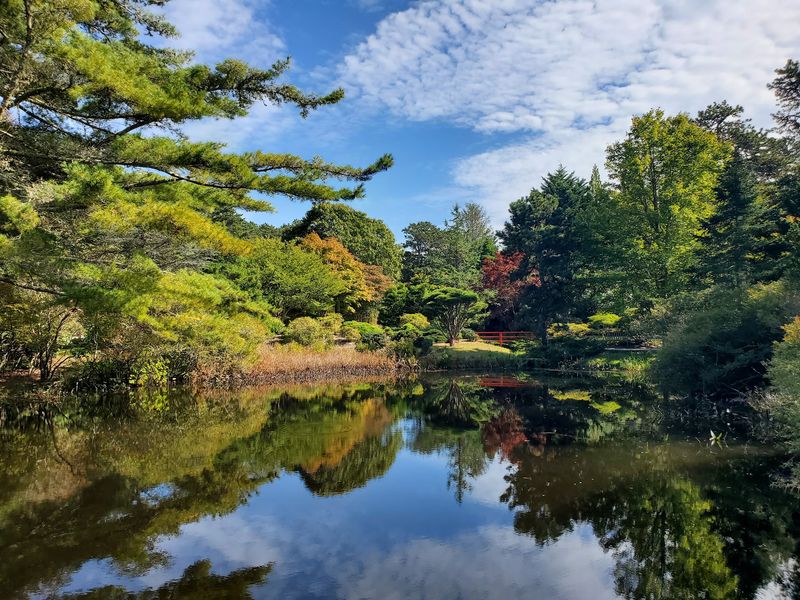
Mytoi is a Japanese-style garden tucked into the landscape of Martha’s Vineyard, Edgartown. It feels nothing like the busy ferry crowds just a short ride away.
The garden was created in 1958 by architect Hugh Jones, who fell in love with Japanese garden design during his military service.
He called it his “toy,” which is exactly where the name Mytoi comes from.
After Hurricane Bob tore through in 1991 and damaged over 70% of the plantings, the garden was carefully restored by landscape architect Julie Moir Messervy and a devoted team of volunteers.
A raised bridge leads to a small island in the center of a peaceful pond, where turtles, frogs, and goldfish go about their day completely unbothered.
The design follows a clever “window theme,” meaning each section of the garden frames a distinct foreground and background view. A birch walk, a camellia dell, a stone garden, and a hillside garden each offer something different around every bend.
Osprey sometimes glide overhead along the path toward nearby Poucha Pond, adding a wild, natural energy to the otherwise serene setting.
Picnic blankets are welcome here, and the rustic shelter gives sweeping views across the garden landscape. The address is 41 Dike Rd, Edgartown.
This hidden garden rewards every traveler who makes the effort to seek it out.
2. Motif #1, Rockport
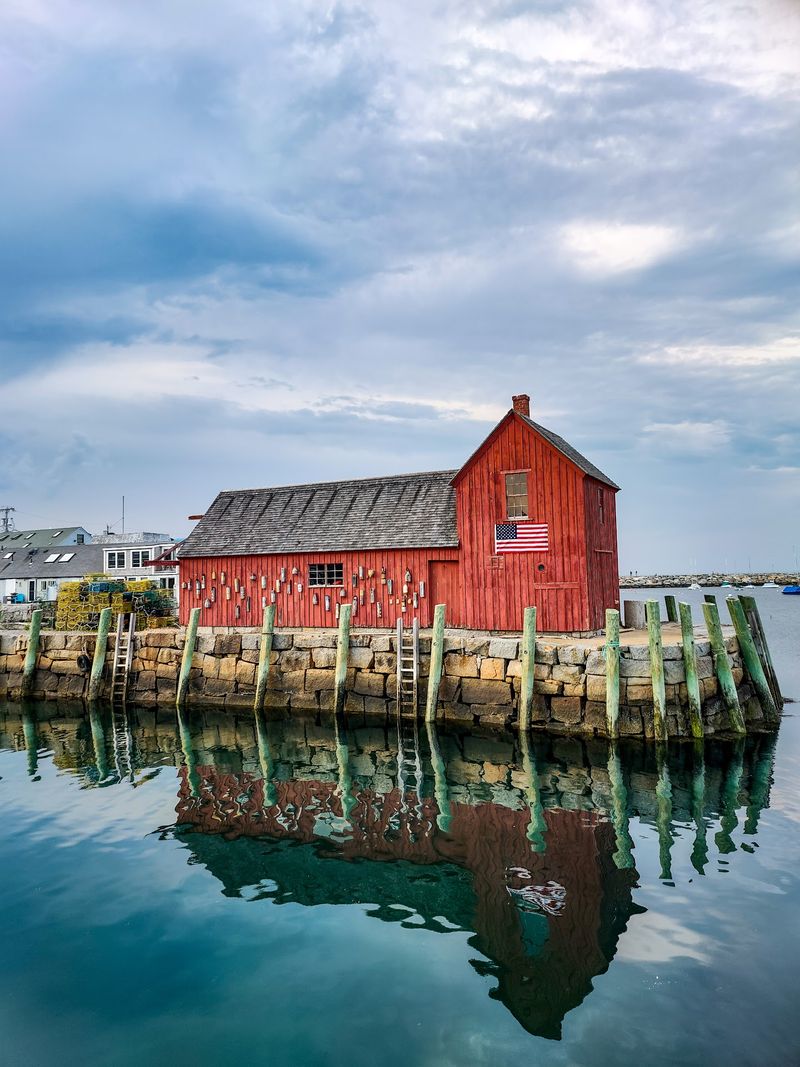
There is a small red shack in Massachusetts that has been painted more times than almost any building on the entire planet.
Motif #1 sits on Bradley Wharf in Rockport and it has earned a reputation as one of the most painted structures in America. Some sources even argue it holds that title for the whole world.
The original shack was built sometime in the 1840s or 1884, and by the late 19th century, Rockport had grown into a thriving art colony.
Painter Lester Hornby gave it the name “Motif No. 1” because of how irresistibly it appeared on every local artist’s canvas. In 1945, the town of Rockport took ownership and dedicated the building as a monument to veterans of the Armed Services.
The Blizzard of 1978 destroyed the original structure completely, but the town rebuilt an exact replica that same year with impressive dedication.
Officials even selected a specific shade of red paint designed to look weathered from day one, keeping its historic character intact. Overhead wires and advertising signs are kept away from the area to preserve the classic view.
Rockport celebrates the building every year with Motif No. 1 Day, a festival that honors both the arts and the town’s deep fishing heritage.
The shack has appeared in films and even on a U.S. postage stamp. Find it at Bradley Wharf in Rockport. Standing there in person, you finally understand why painters keep coming back.
3. Dinosaur Footprints, Holyoke
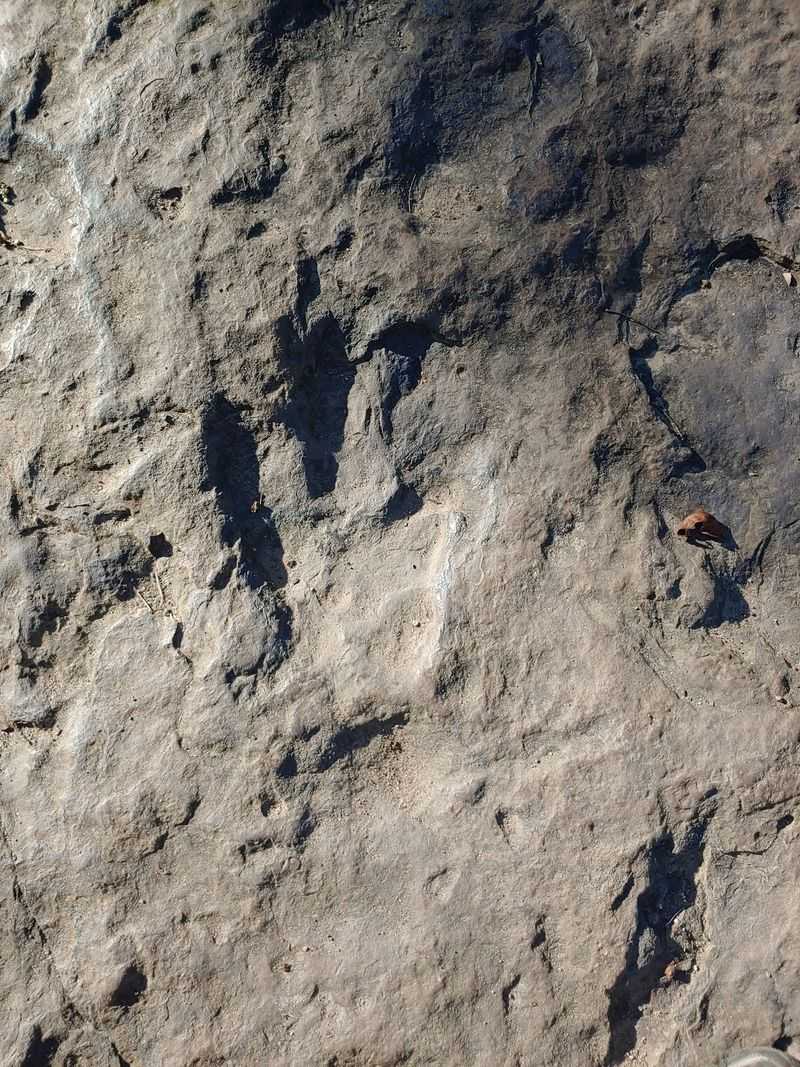
You can walk up to actual dinosaur tracks in Massachusetts and touch rock that recorded history 200 million years ago.
The Dinosaur Footprints reservation in Holyoke covers 8 acres and holds hundreds of prehistoric tracks pressed into sandstone slabs along the Connecticut River.
These are among the very first dinosaur prints ever scientifically described, with that milestone dating back to 1836.
During the Early Jurassic period, this entire valley was a subtropical landscape filled with ancient lakes and swamps. Bipedal dinosaurs roamed here, ranging from smaller plant-eaters to large meat-eaters that stretched up to 20 feet long.
The parallel alignment of many trackways provided early scientific evidence that dinosaurs may have traveled together in groups.
The largest tracks at 1099 US-5 are called Eubrontes, and when they were first discovered, researchers initially mistook them for prints left by enormous birds.
Smaller tracks named Grallator and Anchisauripus likely belonged to younger or juvenile members of the same species.
Beyond footprints, the site also preserves fossilized burrows, insect traces, plant imprints, and ripple marks from the ancient lake bottom.
Dinosaur tracks are officially the state fossil of Massachusetts, which makes this site feel especially significant on a local level. The Trustees of Reservations acquired the land for public use in 1935, and a short family-friendly trail leads directly to the rocks.
4. Natural Bridge State Park, North Adams
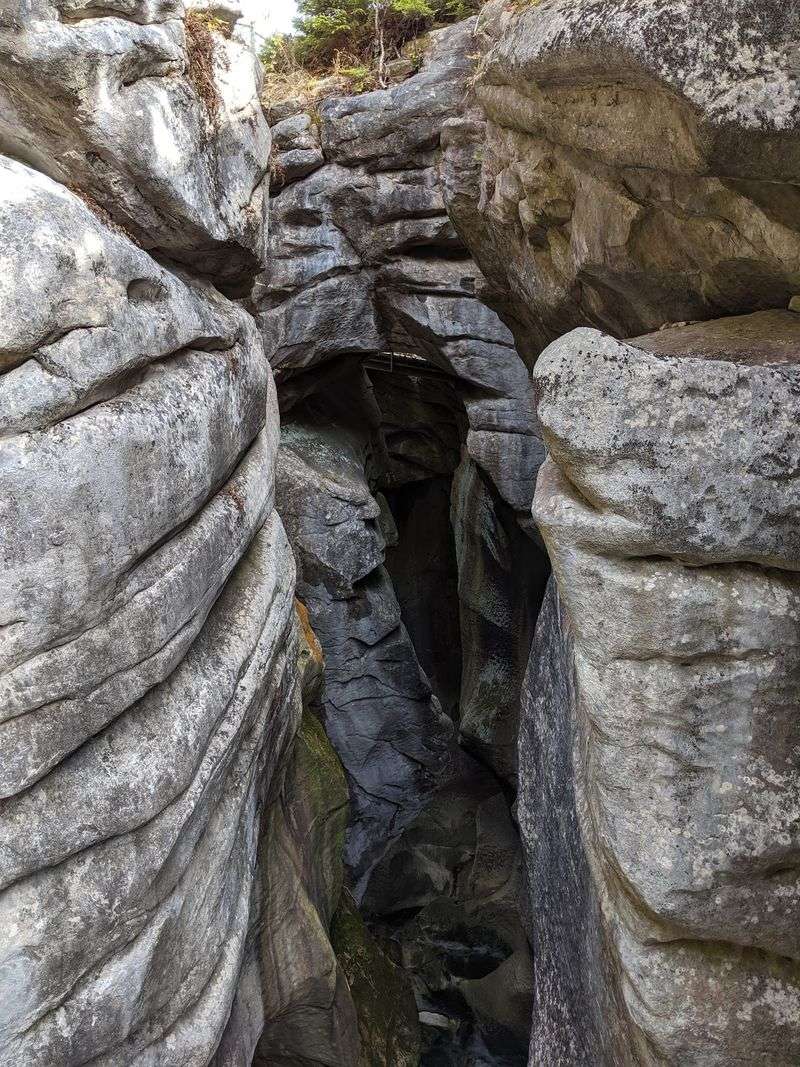
Natural Bridge State Park in North Adams is a geological wonder that most road-trippers speed right past. The bedrock marble here is estimated to be an astonishing 550 million years old.
The arch itself was carved by powerful glacial meltwater over 13,000 years ago, and Hudson Brook still rushes through the dramatic 60-foot-deep gorge it created.
The park also contains a unique man-made white marble dam and the remains of a historic marble quarry that operated commercially from 1810 to 1947.
Workers who carved stone here left their names etched into the marble walls, and those inscriptions are still visible today.
After the quarry closed, the site ran as a private tourist attraction from 1950 to 1983 before becoming a state park in 1985.
Even author Nathaniel Hawthorne explored this fascinating landscape back in 1838. During summer months, park interpreters share the bridge’s layered natural and human history with curious visitors.
Family-friendly trails run along the quarry ridgeline, offering views of the Berkshires that are especially stunning in autumn. Picnic tables and grills make it easy to turn a geology lesson into a relaxed outdoor afternoon.
An occasional musical performance called “Music for a Quarry” fills the natural amphitheater with atmospheric tones at astronomical sunset. The park is accessed at McAuley Rd. Few parks manage to blend science, history, and sheer beauty this effortlessly.
5. Dogtown Commons, Gloucester
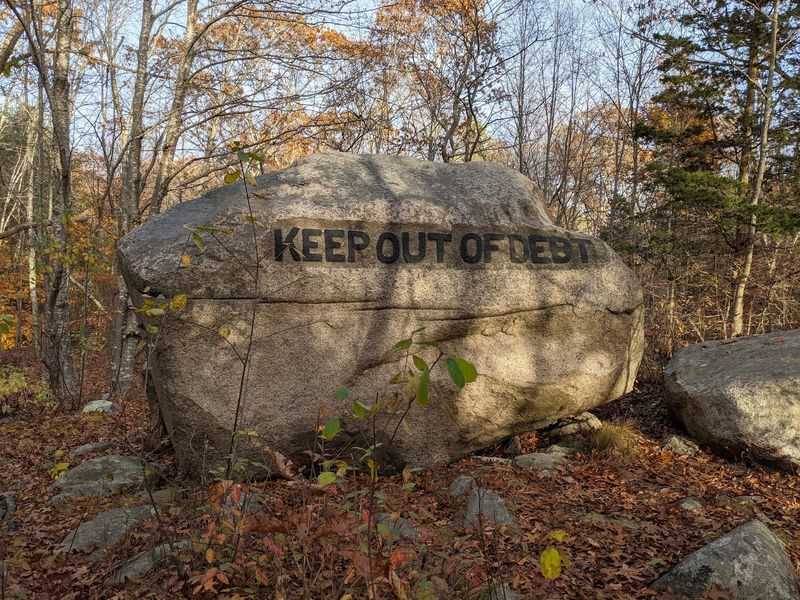
What do you get when you mix a ghost town, glacial boulders, and Depression-era motivational carvings all in one forest?
Dogtown Commons in Gloucester covers 3,600 acres of forested land packed with history, mystery, and raw natural beauty. This is not your typical city park, and that is exactly the point.
The area was originally called the Commons Settlement when it was established in the mid-1600s, growing into a prosperous inland community.
Its rocky interior offered protection from pirates and hostile groups, making it a practical choice for early settlers.
After the American Revolutionary War, the community gradually emptied as residents moved closer to the harbor, leaving behind only cellar holes and stories.
Local lore holds that the name “Dogtown” came from the dogs that residents kept for protection while their husbands were away at war.
Roger Babson, founder of Babson College and a local philanthropist, mapped the old cellar holes and commissioned unemployed Finnish quarry workers to carve 24 motivational sayings into the boulders during the Great Depression.
Those carved rocks, known as the Babson Boulders, are now one of the most talked-about features of the entire area.
A prominent formation called Whale’s Jaw can be found in the northern section, and numbered cellar holes mark the exact footprints of long-gone homes.
Hikers and bikers can explore a network of crisscrossing trails and old abandoned roads throughout the forest.
Trail maps are available to help navigate this unusual landscape. Dogtown rewards the curious with layers of history that reveal themselves slowly.
6. Bridge Of Flowers, Shelburne Falls
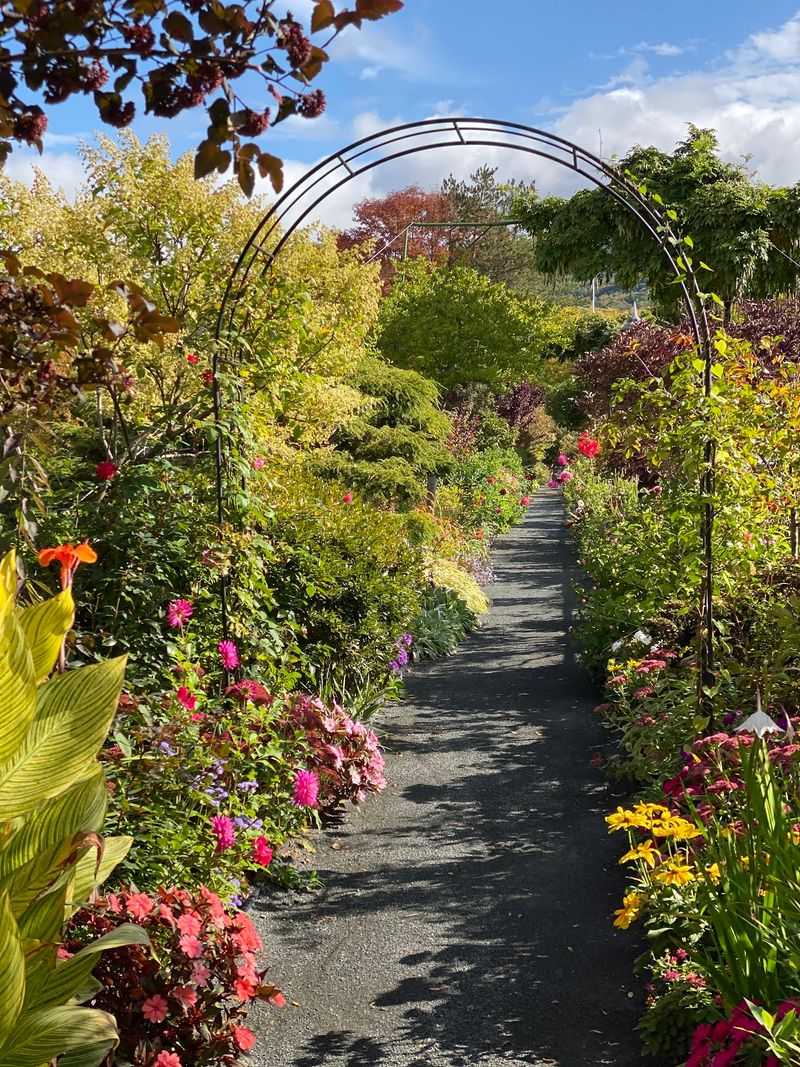
Just imagine for a second a bridge so covered in flowers that it barely looks like a bridge at all.
The Bridge of Flowers in Shelburne Falls is the only structure of its kind in the entire world, and it earns that title every single blooming season.
What started as an abandoned trolley bridge has become a 400-foot garden crossing the Deerfield River between the towns of Shelburne and Buckland.
The bridge was originally built in 1908 by the Shelburne Falls and Colrain Street Railway Company to carry freight and passengers across the river. When automobiles took over and the trolley company folded in 1927, the bridge sat unused and overgrown.
Local resident Antoinette Burnham had the inspired idea in 1928 to turn the eyesore into a garden, and the Shelburne Falls Women’s Club made it happen the following year.
From April through October, over 500 varieties of plants bloom in a carefully planned sequence to ensure continuous color throughout every season.
Flowering trees, shrubs, perennials, vines, bulbs, and annuals all take turns putting on a show at 22 Water St.
A small granite bench and flagpole at the center of the bridge overlook a memorial honoring veterans of both World Wars from Buckland and Shelburne.
The bridge also carries a working water main that serves both towns, making it both beautiful and genuinely useful. After a multi-million dollar repair project, the floral pathways reopened in 2025.
The nearby Shelburne Falls Trolley Museum adds even more local history to the outing.
7. Purgatory Chasm State Reservation, Sutton
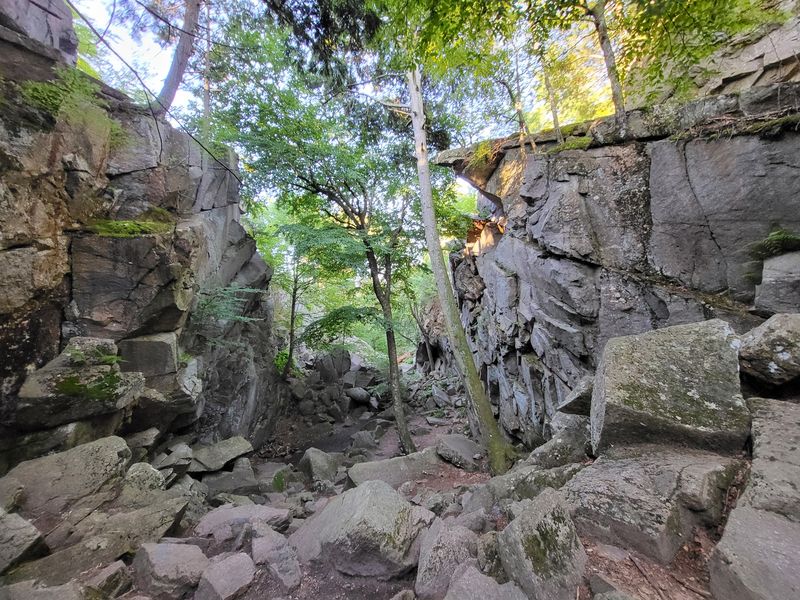
I will be the first to admit that a place named “Purgatory” did not sound like a family picnic destination, but Purgatory Chasm State Reservation in Sutton completely changed my expectations.
This quarter-mile-long chasm was carved into solid granite bedrock, and its walls rise as high as 70 feet in some sections. Geologists believe it formed around 14,000 years ago when dammed glacial meltwater suddenly released with tremendous force.
The sheer power of that ancient water carved smooth, straight walls and left behind a dramatic split in the earth that some describe as resembling a wound from a gigantic hatchet.
Rock formations throughout the chasm have been given wonderfully evocative names like The Corn Crib, The Coffin, The Pulpit, Lover’s Leap, and Fat Man’s Misery. The park at 198 Purgatory Rd offers 2 miles of hiking trails that connect all of these distinctive features.
Declared a state park in 1919, Purgatory Chasm has accumulated a rich collection of myths and legends over the centuries, including Native American folklore tied to its dramatic landscape.
Rock climbing is permitted within the chasm for those who have a proper permit.
The reservation also includes picnic areas and a playground near the visitor center, making it genuinely welcoming for families with young children.
The main chasm trail closes during winter due to icy conditions, but other trails stay open year-round for those who want a quieter cold-weather walk. Park rangers occasionally lead guided tours through the chasm.
8. Castle Rock, Marblehead
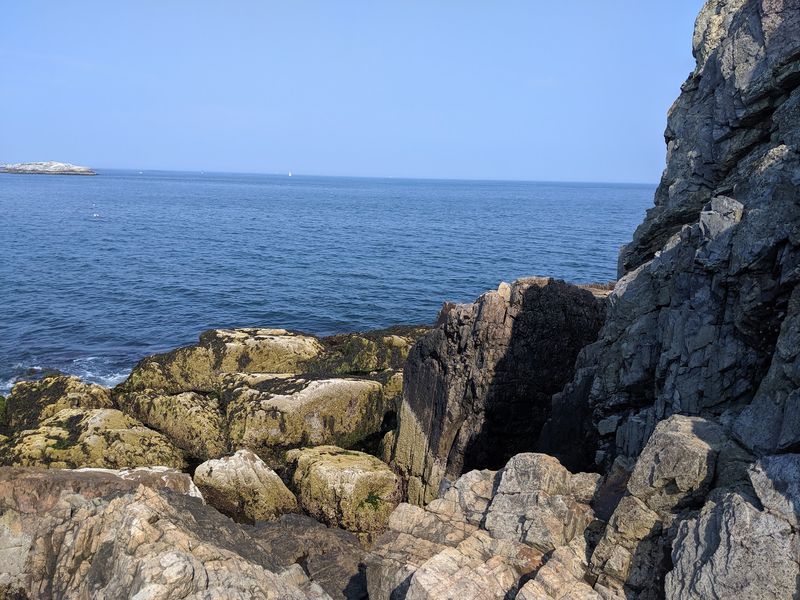
Are you seeing what I am seeing? A 1.20-acre park perched on a rocky peninsula with unobstructed views of the Atlantic Ocean and Massachusetts Bay, and most travelers have never heard of it.
Castle Rock sits on Marblehead Neck in Marblehead, and it delivers the kind of ocean panorama that makes you forget whatever was stressing you out before you arrived.
The park features dramatic cliffs, layered rock terraces, and tide pools that reward anyone willing to scramble down for a closer look.
A stone staircase winds down from the main overlook to a small, secluded beach tucked below the cliffs. Benches are placed thoughtfully around the park, giving everyone a comfortable spot to sit and simply absorb the rhythm of the waves.
The name Castle Rock comes from the impressive private residence called Carcassonne Castle that stands right next to the park.
Historically, this prominent outcropping was known as “Great Head” and served as a strategic lookout point for spotting arriving fishing fleets and watching for pirate or enemy ships.
Today, the South Essex Ocean Sanctuary stretches out beyond the rocks, and the ocean spray and sea air make every visit feel genuinely refreshing.
Fishing from the rocky shores is a popular activity, and the setting makes it easy to lose track of time. Castle Rock works perfectly as a short sightseeing stop or as a peaceful afternoon picnic destination.
Once you have stood on those cliffs and watched the Atlantic stretch endlessly before you, this hidden park will stay with you for a long time.
9. The Icon Museum And Study Center, Clinton
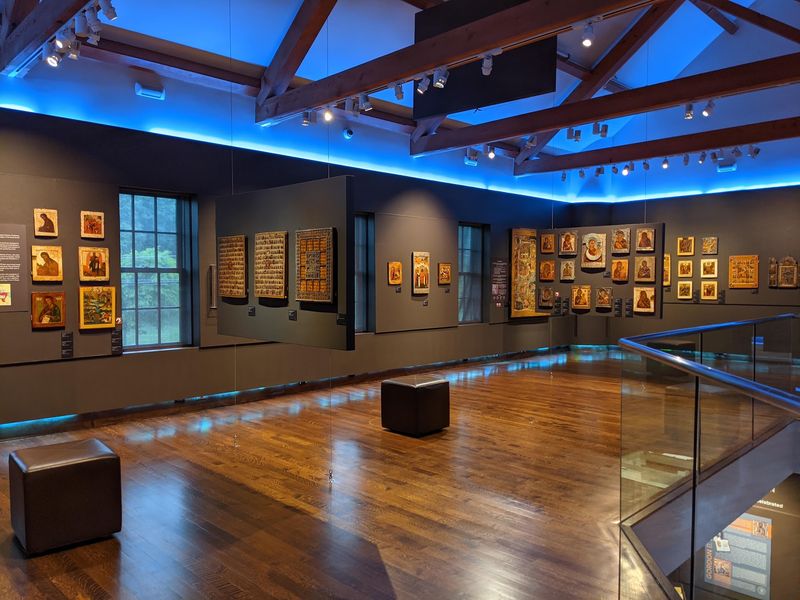
Correct me if I am wrong, but a world-class museum housing the largest collection of Russian icons in North America probably deserves a lot more attention than a small Massachusetts mill town typically gets.
The Icon Museum and Study Center in Clinton holds the most comprehensive collection of icons and Eastern Christian art in the entire United States. Its collection spans nearly two millennia, with pieces dating from 1450 all the way to the present day.
A highlight of the collection is an extraordinarily rare pair of 17th-century Royal Doors, once used at the high altar of an Orthodox Church in Russia and considered the finest pair in the United States.
The museum complex at 203 Union S itself occupies beautifully restored historic buildings that previously served as a mill, a courthouse, and even a jail.
A contemporary addition ties the historic spaces together into five distinct galleries, a research library, and an auditorium.
The institution originally opened in October 2006 as the Museum of Russian Icons, built around a private collection that grew from a 1989 trip to Russia.
In October 2023, it was rebranded as The Icon Museum and Study Center, reflecting an expanded mission to include sacred icons from Greek, Veneto-Cretan, Ethiopian, and other Eastern Christian traditions.
The Study Center publishes the online Journal of Icon Studies, a peer-reviewed publication dedicated to icon scholarship.
Visitors can explore permanent and rotating exhibitions, take part in an all-ages scavenger hunt, and browse the Museum Shop. The atmosphere is calm, contemplative, and genuinely unlike anything else in New England.
This is one of those rare cultural treasures that leaves you quietly astonished by what small-town Massachusetts quietly holds.