You Can Climb Into A Dark Lava-Tube Cave Hidden Beneath The Idaho Desert
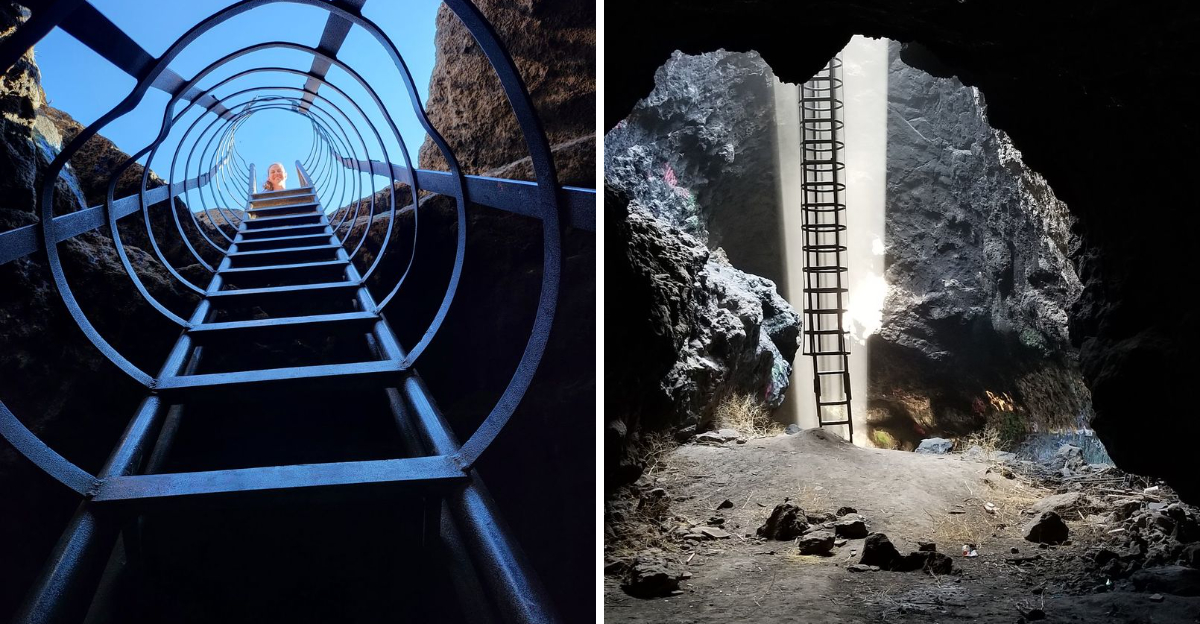
I knew this was going to be interesting the moment the desert suddenly asked me to climb underground.
One minute I was standing in a wide, dry stretch of Idaho with nothing but open land around me. The next, I was looking down into a lava tube and seriously reconsidering how adventurous I had claimed to be. Naturally, I went in.
The temperature dropped almost immediately, the daylight started disappearing behind me, and every step made the outside world feel farther away. This is not the kind of place where you casually glance around for five minutes and leave.
The cave keeps pulling you deeper.
At some point, I stopped thinking about the desert above and started wondering how something this strange had been sitting underneath it the entire time.
That is the fun of it.
You arrive expecting empty Idaho landscape.
Then the ground opens up and completely changes the day.
Climb Down Before The Desert Heat Catches Up
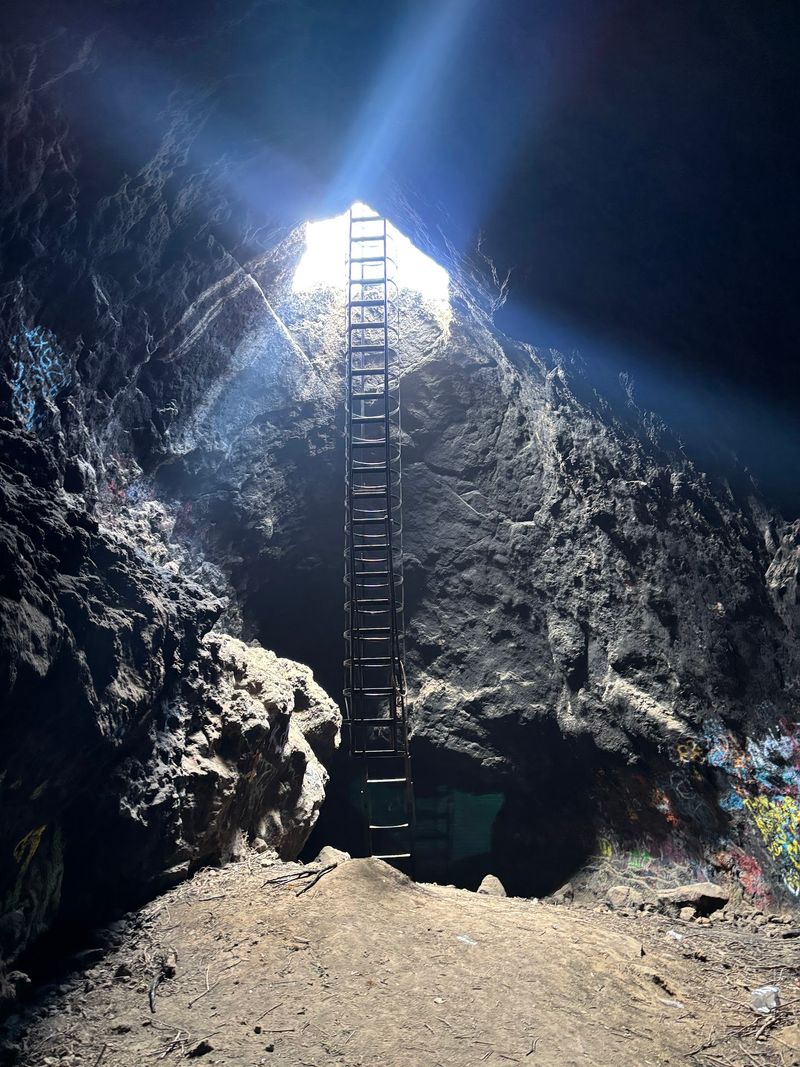
Summer creates a dramatic temperature change between the sagebrush flats and the underground passage. Published cave descriptions consistently place the interior near 56 degrees throughout the year.
That can feel surprisingly cool after standing in direct sun above the opening. Morning remains a sensible time to arrive because the exposed surface offers little protection from intense heat.
It also gives you more daylight for navigating the approach and returning to your vehicle. Long pants and a light layer make more sense underground than shorts alone.
The cooler air is refreshing at first, but it becomes noticeable during a longer visit. Water still belongs in the plan, even though you will not feel the desert heat while exploring below.
The road deserves attention too. BLM has described the access routes as unimproved and prone to deep ruts during wet conditions.
Check recent weather before driving out. Dry ground can make the approach straightforward, while rain can change those dirt tracks quickly.
The contrast between hot desert and cool lava tube is memorable enough without making the trip harder through poor timing.
Let The Ladder Make The Entrance Feel Like A Secret
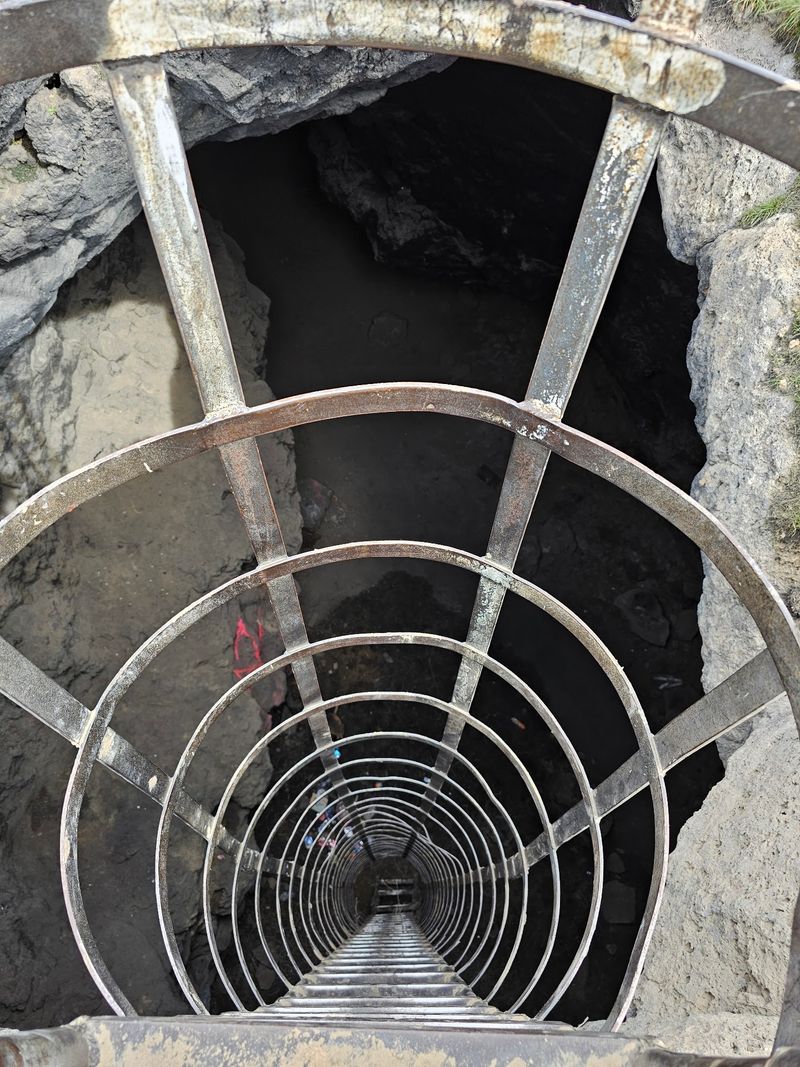
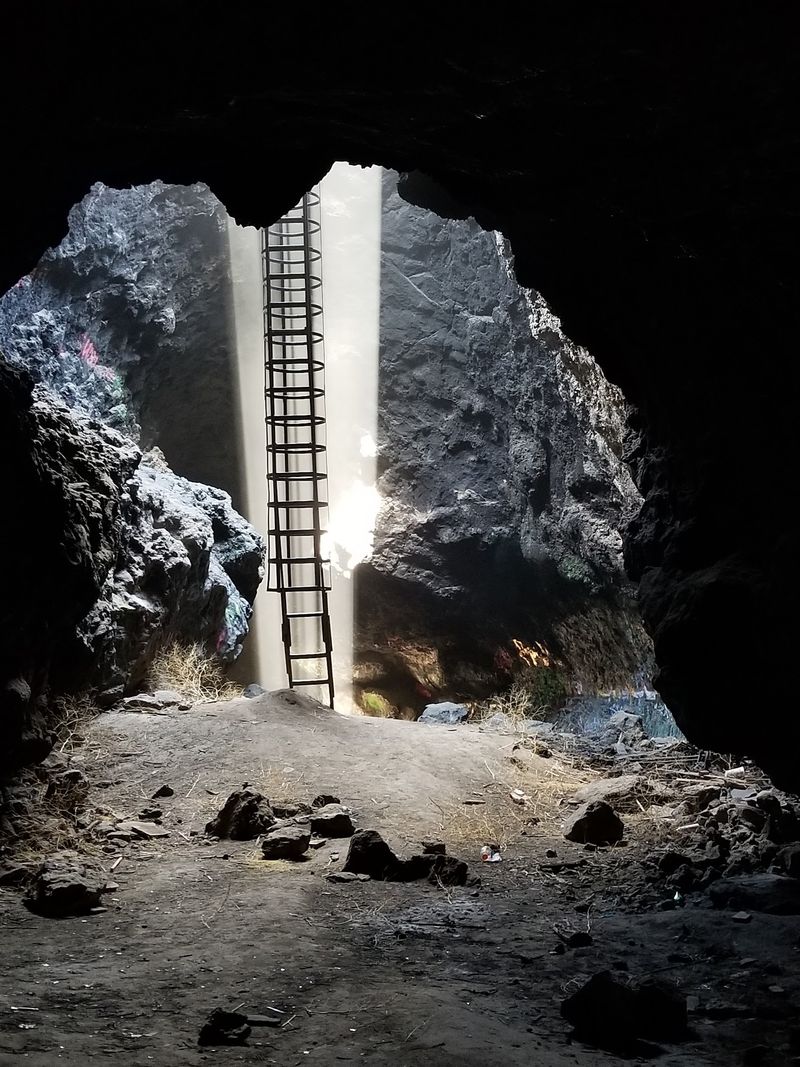
A vertical ladder separates the open desert from the main cavern floor. Most published descriptions put the drop at about 50 feet, making the descent more substantial than the small surface opening initially suggests.
The ladder has a protective cage around portions of it, but that should not be confused with a maintained recreation facility. BLM specifically identified the entrance ladder as something needing safety improvements when it developed its Kuna Cave proposal.
Take the climb slowly and keep both hands available. A backpack is easier to manage than anything carried loosely.
Anyone uncomfortable with heights, confined spaces, or a long vertical climb should think carefully before descending. The same ladder is your only practical way back to the surface.
Crowds can also complicate things because people must give one another enough room to climb safely. Wait until the person ahead has cleared the ladder instead of following closely.
The entrance supplies plenty of adventure on its own. There is no need to turn the descent into a race or test of nerve.
Bring A Headlamp Because Daylight Disappears Fast
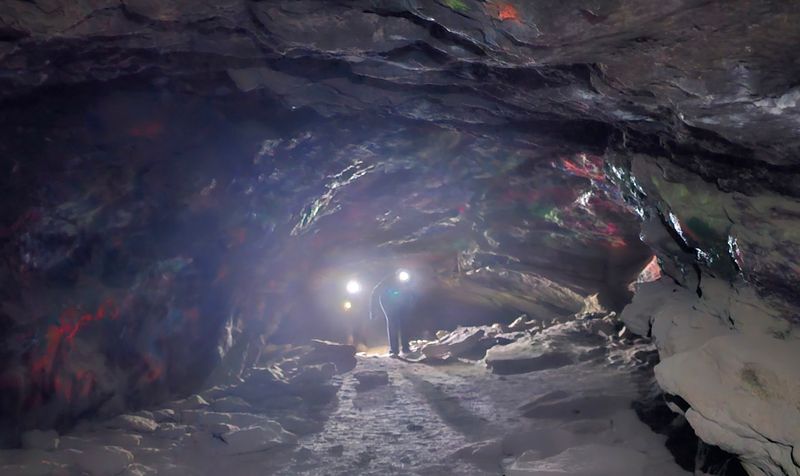
Sunlight reaches the chamber below the opening, then loses its usefulness quickly once you move away from the ladder. A headlamp keeps both hands free and should be treated as essential equipment rather than an optional convenience.
Bring a second independent light too. Phone flashlights are poor backups when you are navigating rough underground terrain.
Kuna Cave has no installed lighting or marked interior route. The passage includes uneven surfaces, low ceilings, loose material, and tighter areas that demand attention.
Published descriptions of the southern arm mention a narrow trench near its far end. The northern section also becomes low enough to require stooping or crawling in places.
A helmet can add useful protection where the ceiling drops. Gloves also help on dusty rock and during the ladder climb.
Decide on a turnaround point before your light begins fading or fatigue sets in. Darkness removes visual landmarks that would feel obvious outside.
Staying aware of the route back matters more than reaching the farthest possible point. The most enjoyable visit is one where everyone returns to the entrance with plenty of light and energy remaining.
Feel The Temperature Drop Beneath The Sagebrush
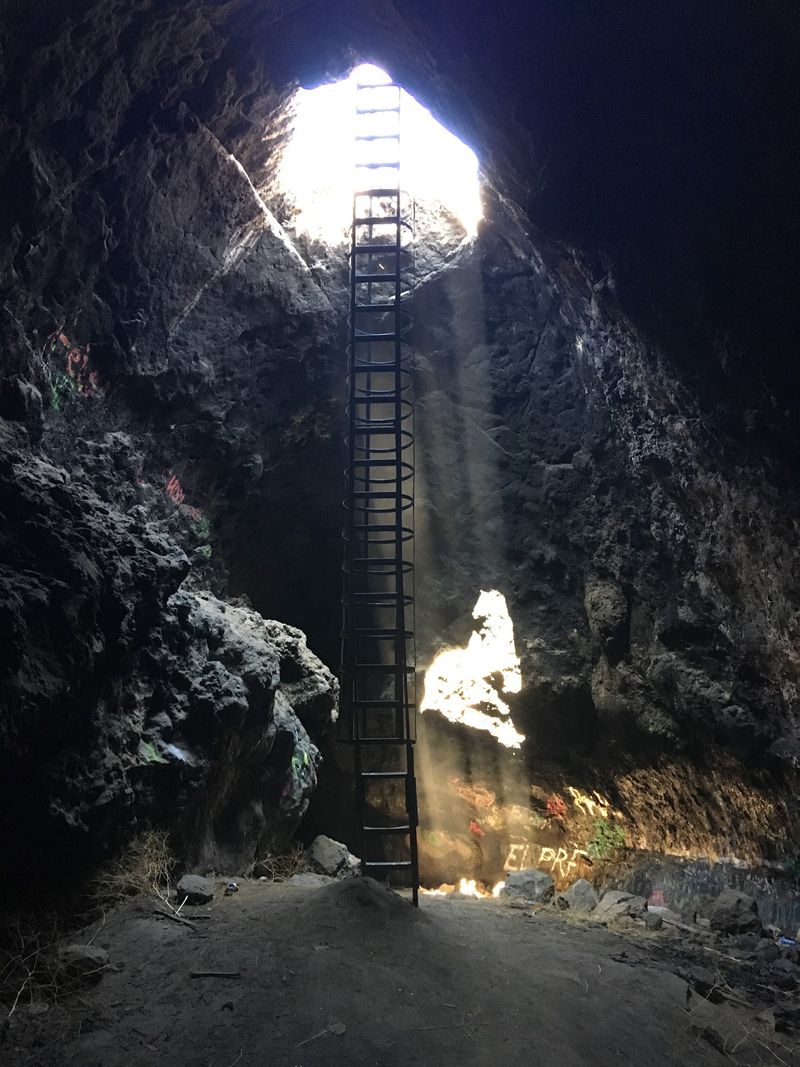
The first few minutes underground can make the surface feel unexpectedly distant. Warm desert air disappears, sound changes, and the temperature settles near the mid-50s.
That steady underground climate is one of Kuna Cave’s most interesting characteristics. The cave formed as lava moved across the Snake River Plain.
The outside of a flow cooled and hardened while hotter material continued moving within it. When that lava drained away, the hollow passage remained.
Today, the result is a dark basalt corridor beneath an otherwise open landscape. The cool air can make August seem far away for a while, but it does not turn the cave into a polished summer attraction.
Dust, rough ground, and low ceilings remain part of the experience. Layers are useful because standing still underground feels different from crawling or walking.
Avoid building fires for warmth. A BLM ranger specifically noted that fires are prohibited inside the cave, and old fires have left lasting marks on the rock.
The temperature shift is already dramatic enough without changing the environment around it.
Watch The Lava-Rock Walls Turn The Walk Unearthly
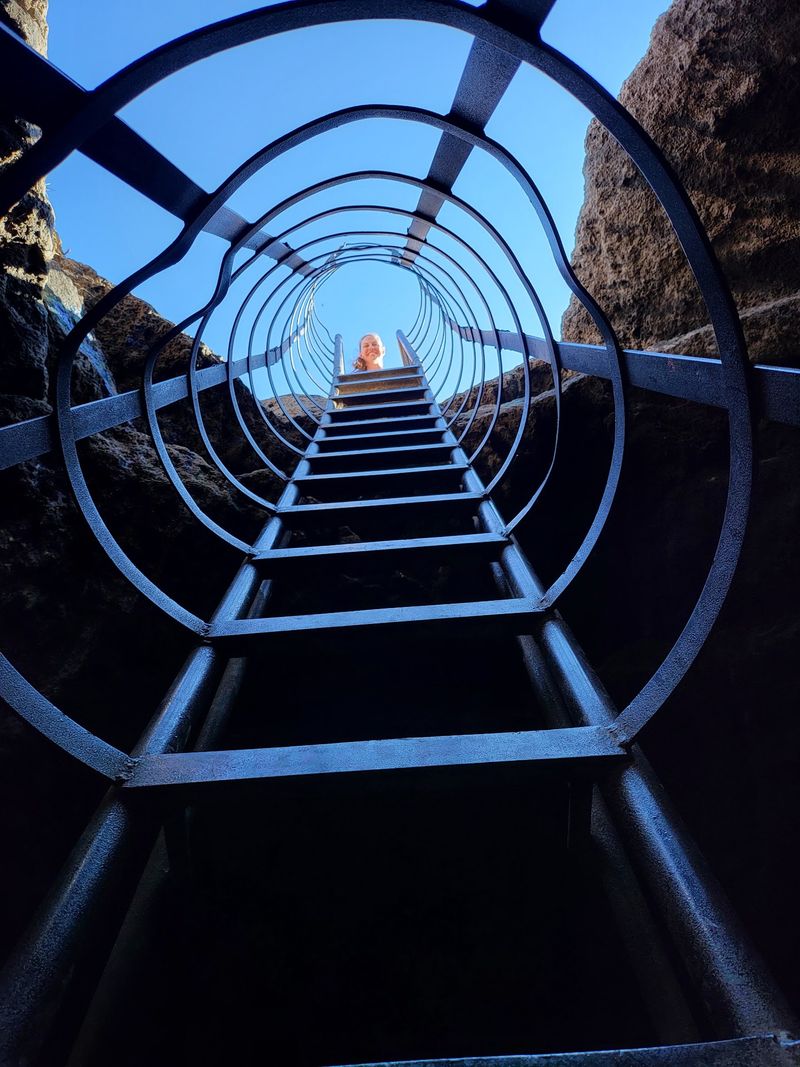
Rough black and brown basalt does most of the storytelling once your light moves away from the entrance. Kuna Cave is a lava tube rather than a limestone cavern filled with familiar stalactites.
Its walls formed from volcanic rock associated with the Snake River Plain’s long history of lava flows. Ridges, irregular surfaces, and changes in passage shape become much easier to notice when a headlamp sweeps across them.
The cave branches in two main directions from the entrance. Published accounts describe a longer northern arm and a southern route extending roughly 1,000 feet.
Conditions become tighter farther inside, so exploring every reported foot is not necessary to understand the geology. A short distance from the ladder already shows the tube’s scale and structure.
Avoid touching unusual mineral deposits or removing rocks as souvenirs. BLM notes that cave ecosystems and geological features can be fragile, even when the surrounding stone looks durable.
The most interesting details are often the ones left exactly where volcanic activity placed them.
Keep Your Footing On The Rough Cave Floor
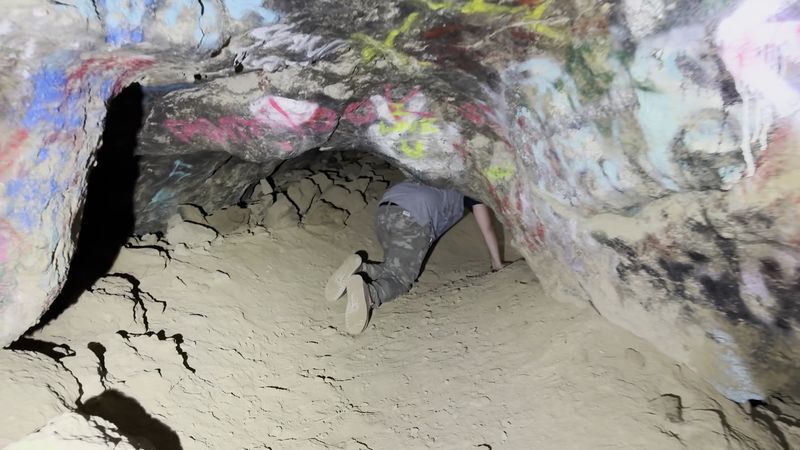
Smooth pavement ends long before the adventure begins. Inside, the floor can include loose rock, dusty clay, uneven basalt, and areas where crouching becomes necessary.
Recent visitor reports also describe substantial fine dust in parts of the cave. Shoes with dependable traction are far more useful than casual sneakers with worn soles.
Long pants protect knees and legs if the ceiling forces you lower. Gloves can make crawling and the ladder climb more comfortable.
A helmet is also worth considering because a low ceiling is difficult to judge accurately in darkness. Move slowly enough to see where each step lands before transferring your weight.
The cave is not maintained like a commercial attraction, and no staff member is stationed underground to redirect visitors around rough spots. Anyone entering should be able to climb the ladder independently and handle irregular terrain.
This is especially important when deciding whether the trip suits younger visitors. Turning around early is completely reasonable.
The cave does not become more worthwhile simply because you reached its tightest section. Good footing, reliable light, and enough energy for the climb out matter much more.
Treat The Graffiti And Darkness As Part Of The Rugged Mood
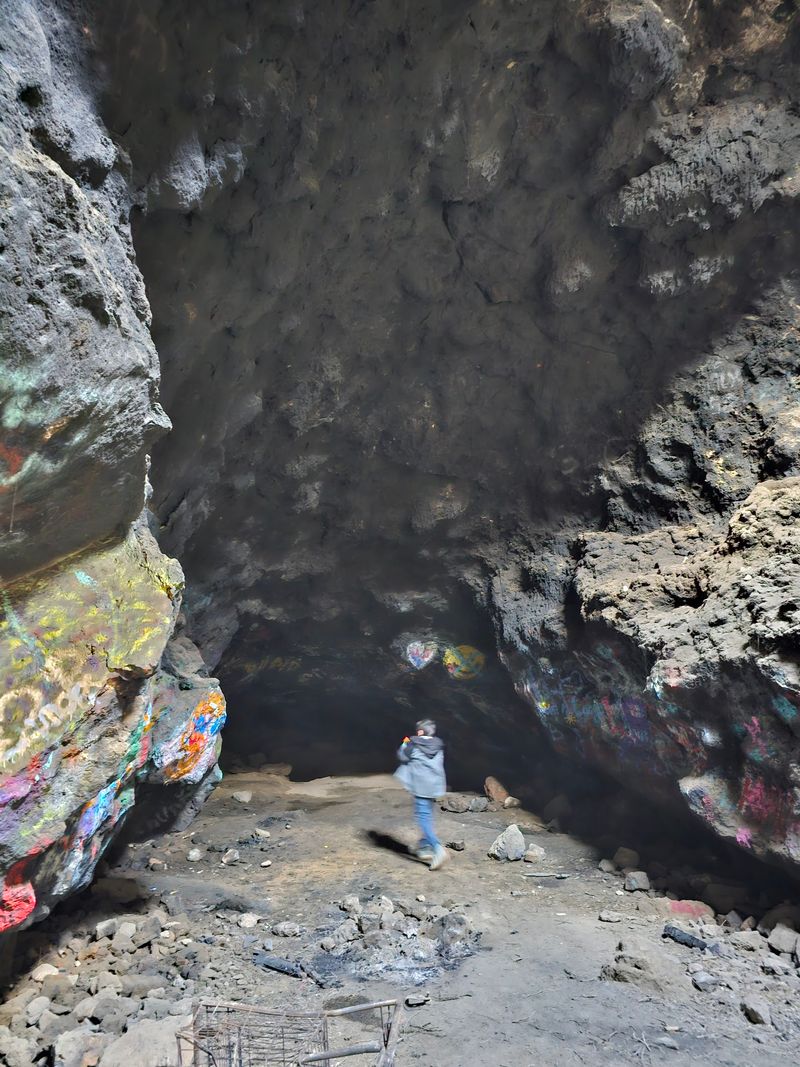
Graffiti is impossible to ignore inside Kuna Cave, but it should not be treated as part of the attraction. BLM has documented repeated spray painting, dumping, abandoned trash, and fires at the site.
Removing that damage is difficult and expensive. A BLM ranger told Idaho News 6 that graffiti on the hard lava walls can become extremely difficult to clean.
The agency has also spent thousands of dollars removing dumped material from the area. In 2021, BLM proposed a grate and other improvements intended partly to discourage further dumping and vandalism.
The proposal specifically kept public entry in mind rather than permanently sealing the cave. Existing paint may make the interior look unusual, but adding another name or mark only compounds the problem.
Fires are prohibited as well. Leave spray paint, markers, and anything intended for altering the cave at home.
Photographs preserve a visit without changing the walls. Kuna Cave’s volcanic history took far longer to create than the few seconds required to leave permanent damage behind.
Leave The Cave Cleaner Than You Found It
Everything carried underground should return to the surface with you. That includes food wrappers, bottles, batteries, broken gear, and anything else that might be easy to forget in the darkness.
Existing litter does not make another abandoned item harmless. BLM has repeatedly dealt with dumping at Kuna Cave, and cleanup can become costly because material must be removed from below the surface.
Bringing a small trash bag makes packing out your own waste simple. Avoid moving or damaging natural rock features while collecting litter.
The same restraint applies above ground. Stay on existing vehicle routes, especially when the soil is wet, and do not create new tracks across the surrounding desert.
BLM has previously identified the rutted access roads as a management concern. Before visiting, check current conditions with the Four Rivers Field Office because access or management rules can change.
Kuna Cave remains compelling precisely because an ordinary patch of desert suddenly opens into a volcanic world below. Treating that space carefully gives the next visitor a better chance to experience the geology rather than somebody else’s mess.