9 Wonderfully Weird Museums Across Arizona
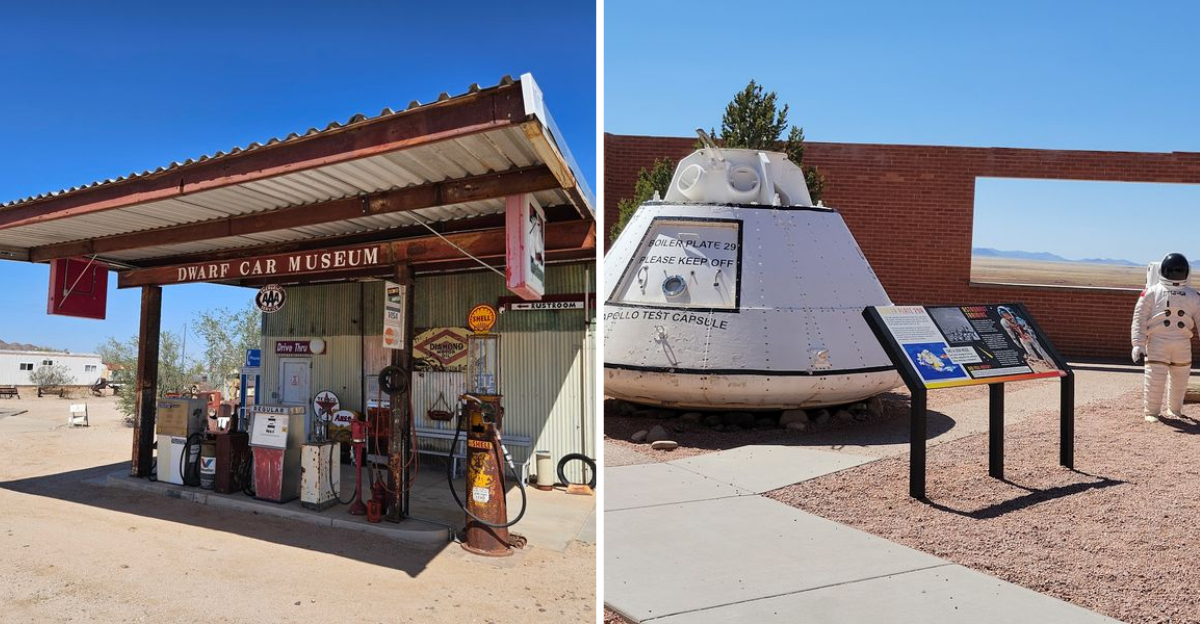
Some museums display famous paintings. These celebrate the wonderfully unexpected.
Arizona is filled with delightfully unusual attractions where meteorites, odd inventions, quirky collections, and downright bizarre stories steal the spotlight from traditional exhibits.
Every stop catches you off guard in a different way.
You might spend one hour exploring space rocks and the next staring at something so strange you immediately reach for your camera. That’s half the fun.
These places don’t take themselves too seriously, and neither should you.
Sometimes the weirdest roadside stop becomes the memory everyone talks about long after the trip ends.
1. Bisbee Mining & Historical Museum, Bisbee
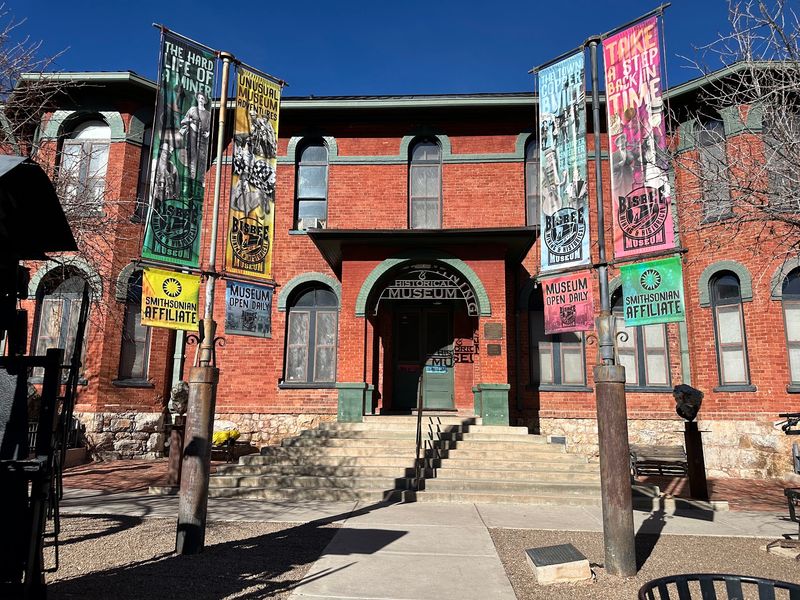
Just imagine for a second a mountain town so steeped in copper history that even the buildings seem to tell stories.
Tucked into the rugged Mule Mountains of southern Arizona, the Bisbee Mining and Historical Museum is a Smithsonian Affiliate that brings the gritty, fascinating world of copper mining to vivid life.
It sits inside the former headquarters of the Copper Queen Consolidated Mining Company, a structure that practically hums with industrial history.
The exhibits walk you through Bisbee’s rise as one of the most productive mining districts in American history. Massive photographs, original equipment, and personal artifacts paint a picture of the thousands of workers who carved their lives into these hillsides.
You begin to understand how deeply mining shaped not just the local economy, but the cultural identity of the entire region.
There is something genuinely moving about seeing the everyday objects that belonged to the miners and their families.
The museum does a brilliant job of connecting visitors to the human side of industry, not just the machinery. Displays cover immigration, labor rights, and the social fabric of a booming mining town in the late 1800s and early 1900s.
Kids and adults alike tend to linger longer than expected, drawn in by the layered storytelling. The building itself is worth admiring before you even walk through the door.
Head to 5 Copper Queen Plaza in Bisbee to experience a corner of history that truly gets under your skin.
2. The Mini Time Machine Museum Of Miniatures, Tucson

The Mini Time Machine Museum of Miniatures in Tucson is one of those rare attractions that sounds whimsical on paper but absolutely floors you in person.
Founded on a lifelong passion for small-scale art, this 15,000-square-foot space is packed with some of the most intricate craftsmanship you will ever see.
The collection grew from founder Patricia Arnell’s childhood love of miniatures, which evolved into a serious pursuit by 1979.
She and her husband Walter dreamed of creating an educational, interactive space where people of all ages could explore different historical eras through tiny, detailed worlds. The museum opened in 2009 and has been delighting curious minds ever since.
One standout piece is a miniature colonial mansion called Lagniappe, which recreates the life of an 18th-century sea captain across 25 meticulously furnished rooms.
Other displays reference the Spanish Renaissance and Chinese Ming Dynasty, offering a genuinely global perspective on history.
Some pieces in the collection date as far back as 1742, making this the oldest miniature display in the United States. The level of detail in each scene is almost hard to process.
Tiny books have readable spines, miniature kitchens hold real ceramic dishes, and period-accurate textiles drape over furniture no bigger than your thumb. Find it at 4455 E Camp Lowell Dr in Tucson, and set aside more time than you think you will need.
3. World’s Smallest Museum, Superior
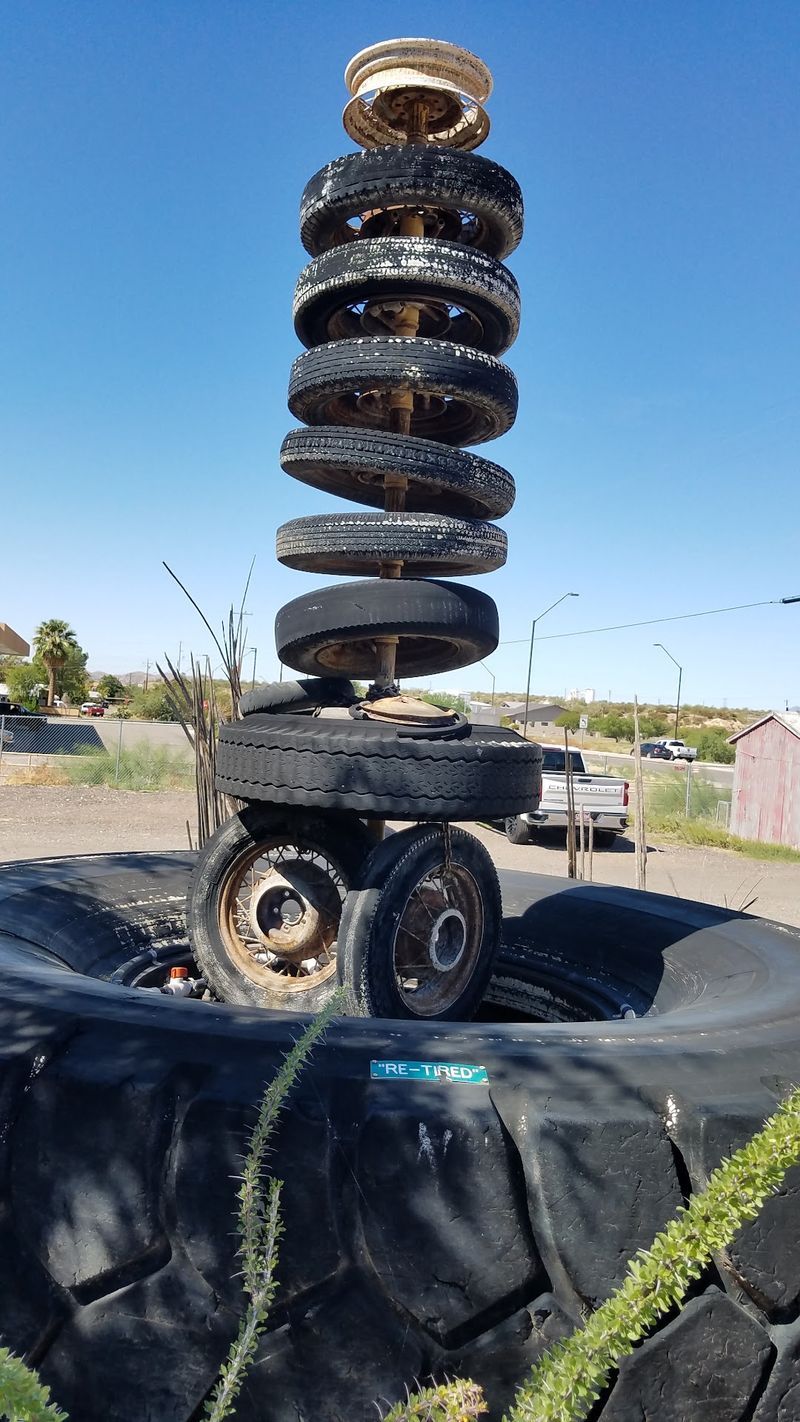
My jaw +dropped when I realized the entire museum fits inside a single 134-square-foot shed.
Sitting right along US-60 in the small town of Superior, the World’s Smallest Museum is exactly what it sounds like, and somehow so much more.
Created by Dan Wight and Jake Reaney in the mid-1990s, this pint-sized attraction has a surprisingly big heart and an even bigger sense of humor.
The building itself is a work of art before you even peek inside. Its western-style roof is constructed from approximately 1,800 recycled aluminum cans, and the surrounding yard features fountains made from old tires and wheelbarrows.
A pair of street signs marks the corner of Memory Lane and Waterfall Avenue, setting the playful tone perfectly.
Inside, ten glass display cases hold what the creators call Artifacts of Ordinary Life, a collection honoring everyday Americans and their working-class stories.
You might spot a 1984 Compaq home computer, pieces of barbed wire from the Gila River Internment Camp, or a chunk of rock billed as the World’s Largest Apache Tear.
A letter from President-elect John F. Kennedy to co-founder Jake Reaney also sits among the exhibits, lending a surprising touch of historical weight to the tiny space.
The whole experience is designed to spark nostalgia and curiosity in equal measure. It is not about grand spectacle but about the quiet dignity of ordinary things remembered.
Stop by 1111 US-60 in Superior, and you will walk away smiling at the proof that big stories genuinely do come in small packages.
4. The Thing, Dragoon
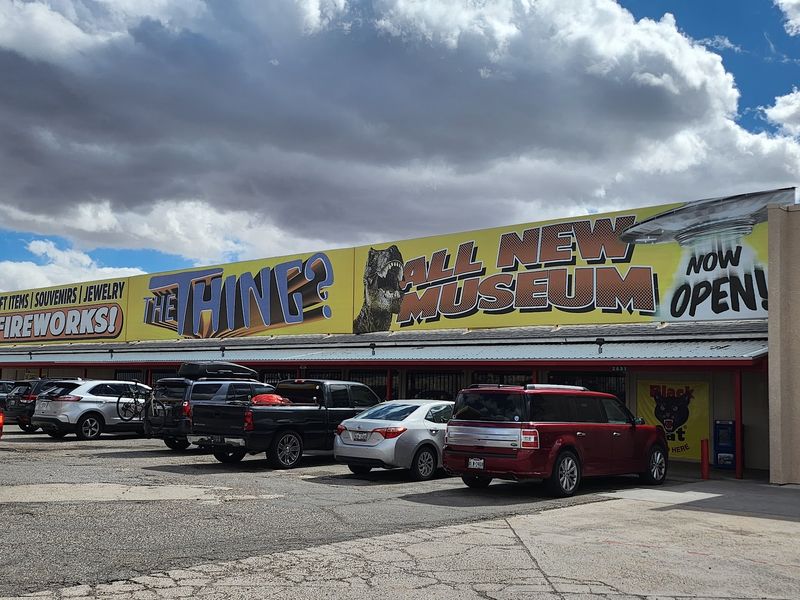
Are you seeing what I am seeing on those billboards that seem to stretch for miles along Interstate 10?
The Thing, located near Dragoon is one of the most legendary roadside mysteries in the entire American Southwest.
The teaser signs begin appearing long before you reach the exit, each one cranking up the curiosity just a little bit more. By the time you arrive, the suspense has been building for what feels like half the state.
Originally conceived by attorney Thomas Binkley Prince, the attraction was relocated to Arizona in 1965 and has been a highway staple ever since.
A major renovation in 2018 transformed it into a sprawling 12,000-square-foot museum with a wild new narrative involving aliens, dinosaurs, and ancient civilizations.
Towering creatures stand ready for battle beneath 17-foot ceilings, and the exhibits suggest extraterrestrial influence on everything from ancient empires to 20th-century world conflicts.
At the center of it all is the Thing itself, a mummified figure believed by many to be the handiwork of legendary sideshow creator Homer Tate.
If you buy into the mythology or not, the presentation is genuinely entertaining and more than a little unsettling in the best possible way. The figures are now displayed separately, each with their own dramatic context.
Families, road-trippers, and the perpetually curious all tend to leave with a grin and a healthy dose of bewilderment. Head to 2631 N Johnson Rd in Dragoon, and prepare to leave with far more questions than you arrived with.
5. Rose Tree Museum, Tombstone
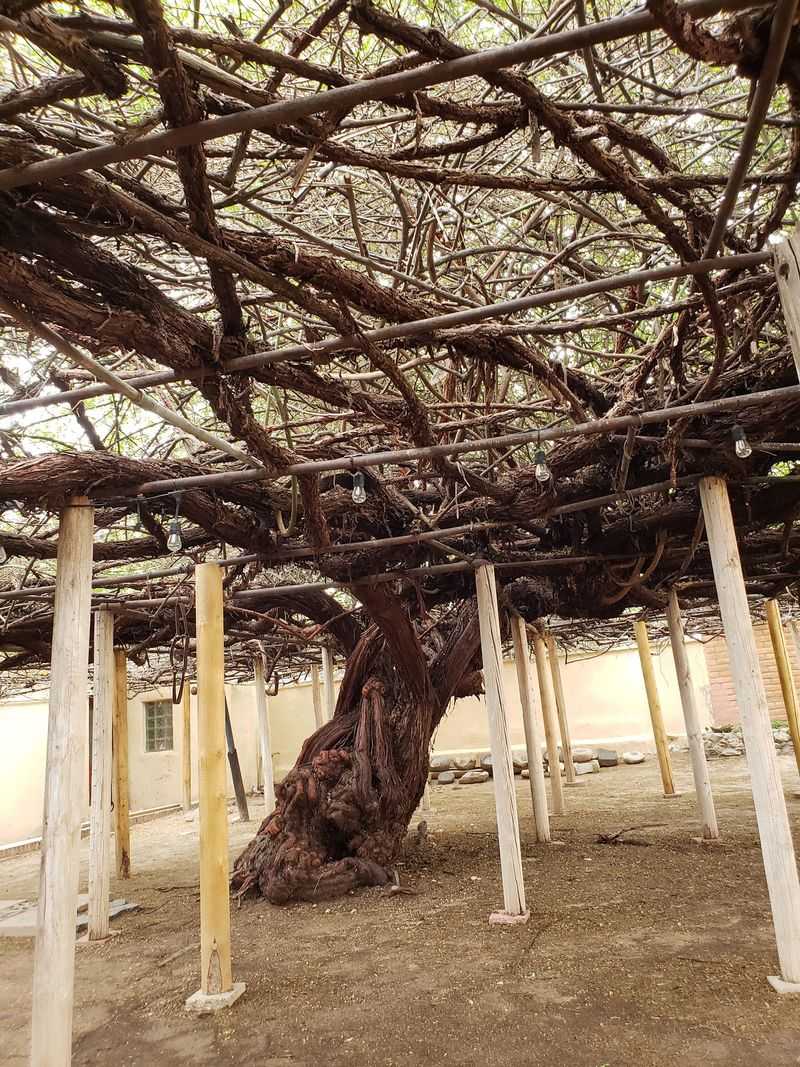
Finding the world’s largest rose bush in a Wild West town best known for gunfights is not something most people see coming.
The Rose Tree Museum in Tombstone is home to a single white Lady Banksia rose that has grown to cover an astonishing 8,000 square feet.
Its trunk measures between 13 and 14 feet in circumference, and the whole magnificent tangle is supported by a framework of wooden struts that stretches across the property like a living canopy.
The story behind the rose is just as remarkable as the rose itself. In 1884, a young Scottish bride named Mary Gee arrived in Tombstone, far from home and longing for something familiar.
She befriended Amelia Adamson, who ran a local boarding house, and in the spring of 1885 a cutting arrived from Mary’s family in Scotland. Amelia planted it behind the boarding house, and the rest is botanical history.
The rose was first officially declared the World’s Largest Rose Tree in the late 1930s, and it later earned a Guinness World Record.
Showman and journalist Robert Ripley helped spread its fame through his Believe It or Not column, bringing curious travelers to Tombstone for a reason beyond the famous gunfight at the O.K. Corral.
The bloom season runs for about six weeks in March and April, when the bush erupts in a breathtaking cloud of white petals.
Visiting outside of bloom season still offers a fascinating look at the sheer scale of this living landmark. Find the Rose Tree Museum at 118 S 4th St in Tombstone, where history grows in more ways than one.
6. Hall Of Flame Fire Museum, Phoenix
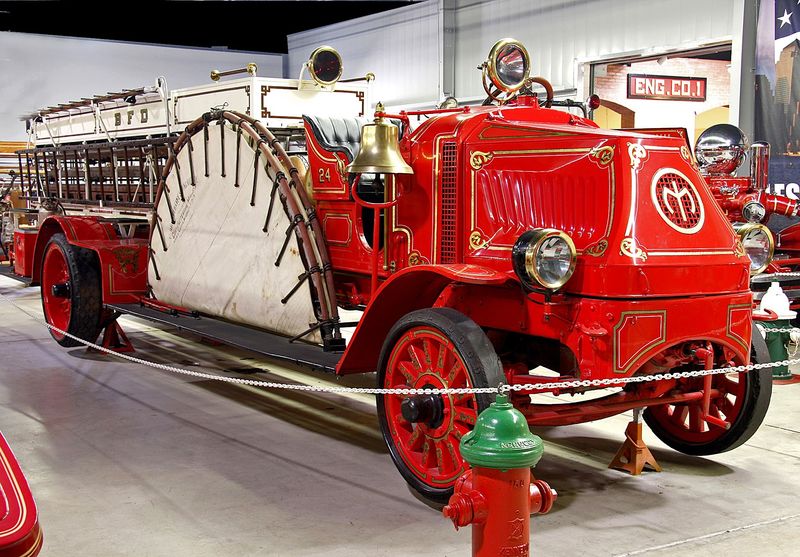
What if the world’s largest historical firefighting museum was hiding in plain sight in the middle of Phoenix?
The Hall of Flame Fire Museum is exactly that, a 70,000-square-foot tribute to the brave history of fire suppression that stretches back nearly three centuries.
Founded in 1961 by collector George F. Getz Jr., the museum moved to its current Phoenix home in 1974 after his wife gifted him a 1924 American LaFrance fire engine and ignited a passion that never burned out.
The collection includes more than 130 restored pieces of firefighting apparatus from around the world, dating as far back as 1725.
Hand-pumped engines, gleaming horse-drawn steam rigs, and modern fire trucks stand side by side in galleries organized by era and equipment type.
Each machine tells a story about the evolving science and courage behind firefighting across different centuries and continents.
Beyond the vehicles, the museum houses an extensive array of antique helmets, fire department patches, and fire insurance marks that document how communities organized protection long before professional fire departments existed.
One of the most meaningful sections is the National Firefighting Hall of Heroes, a solemn and respectful commemoration of U.S. firefighters who gave their lives in the line of duty.
Younger visitors have their own dedicated play area, making this a genuinely family-friendly stop on any Phoenix itinerary.
The sheer variety of artifacts keeps every room feeling fresh and surprising. You will find the Hall of Flame Fire Museum at 6101 E Van Buren St in Phoenix, where history burns bright in every exhibit.
7. Titan Missile Museum, Green Valley
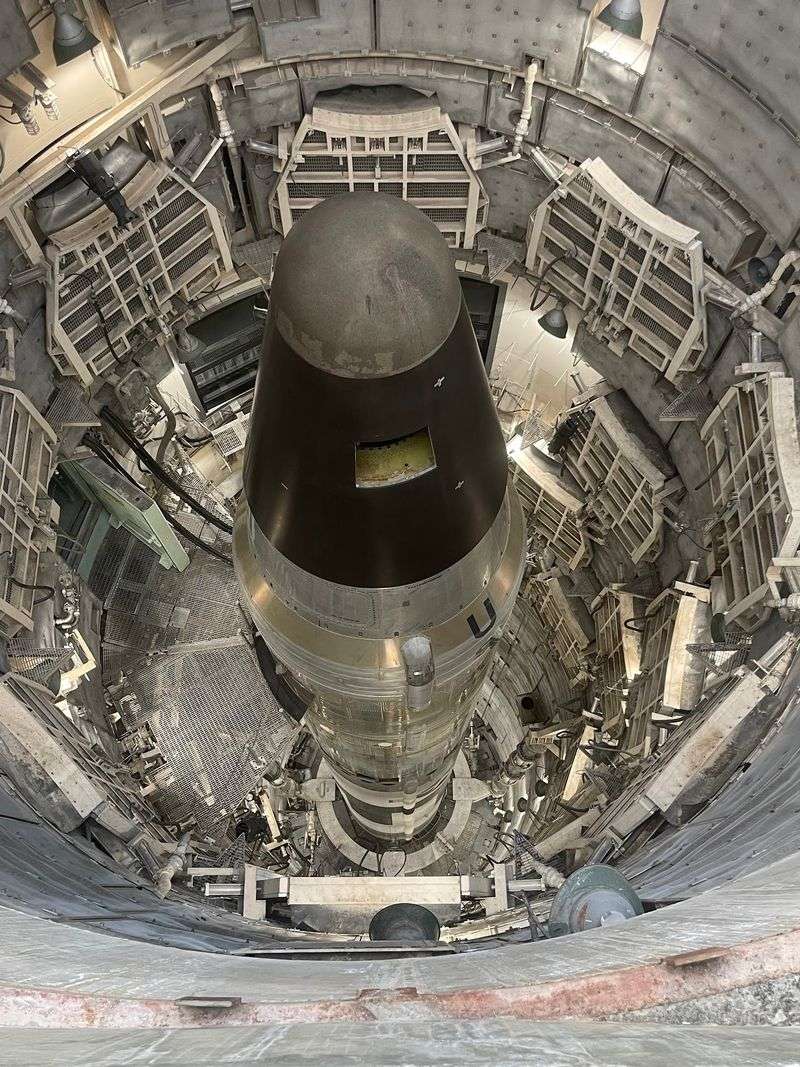
Have you given any thought to what it actually feels like to stand next to a real intercontinental ballistic missile?
The Titan Missile Museum in Green Valley makes that experience possible in a way that is equal parts thrilling and deeply sobering.
This is the only publicly accessible Titan II ICBM silo left in the world, preserved exactly as it operated during the Cold War and open for exploration today.
Descending 55 feet underground, you enter a world of reinforced concrete corridors, blast-proof doors, and equipment that once sat at the center of global nuclear strategy.
The actual Titan II missile, standing 103 feet tall, remains in the silo. It is a real missile, disarmed but otherwise authentic, and seeing it in person reframes everything you thought you understood about that tense era of history.
The museum guides visitors through the daily routines of the crews who lived and worked underground, sometimes for days at a time. Their job was simple in description and impossible in weight: stand ready.
Exhibits explain the technology, the strategy, and the human cost of maintaining a nuclear deterrent around the clock for decades. The immersive quality of the tour makes abstract history feel startlingly immediate.
Few attractions manage to combine education, genuine historical weight, and a physical sense of awe quite like this one does. The scale of the missile and the claustrophobic intensity of the tunnels create an experience that lingers long after you resurface.
The Titan Missile Museum is at 1580 W Duval Mine Rd in Green Valley, and it is absolutely worth the trip south of Tucson.
8. Dwarf Car Museum, Maricopa
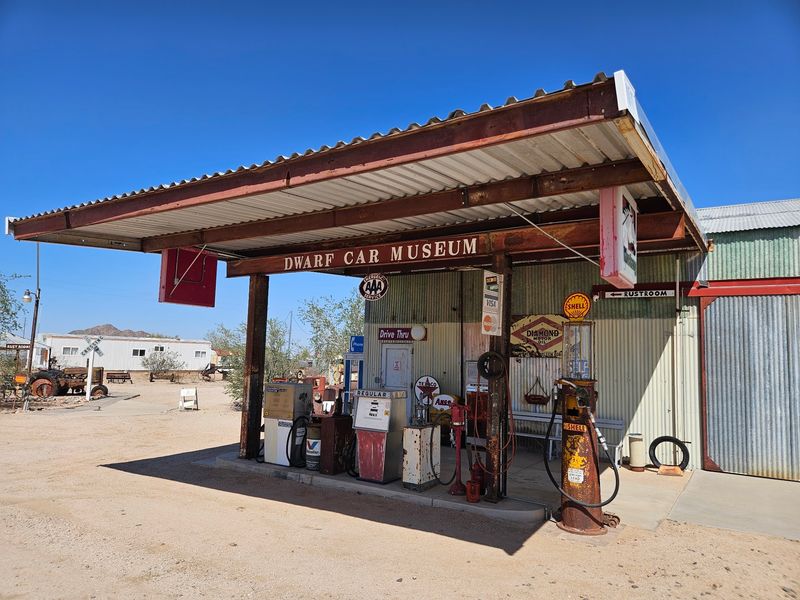
Call me crazy, but stumbling across a private museum full of hand-built, fully functional miniature cars sounds like the kind of thing you dream up and then discover is completely real.
The Dwarf Car Museum in Maricopa is the life’s work of one remarkably dedicated man named Ernie Adams, the originator of the dwarf car concept.
His scaled-down replicas of classic American automobiles are built to roughly three-quarter scale and are street legal in Arizona, which makes them even more extraordinary.
Adams began gathering materials for his first build back in 1962, and his debut creation, a miniature 1928 Chevy two-door sedan, rolled into existence in 1965.
He built it using steel salvaged from nine old refrigerators, shaped with nothing more than a homemade hacksaw, a hammer, and a chisel.
Powered by an 18 hp Wisconsin motor, that first car, affectionately known as Grandpa Dwarf, is still running today after more than five decades.
What makes the museum particularly special is the presence of a full-sized 1939 Chevy parked alongside one of its dwarf counterparts.
The comparison is immediate and almost comic, making the craftsmanship of the miniature version even more impressive. Every curve, window, and detail has been painstakingly reproduced at a fraction of the size using the most basic of tools.
This is grassroots American ingenuity at its most pure and most joyful. There is real warmth in knowing one person built all of this by hand over a lifetime.
The Dwarf Car Museum is at 52954 W Halfmoon Rd in Maricopa, and it rewards every mile of the drive to get there.
9. Meteor Crater Natural Landmark & Barringer Space Museum, Winslow
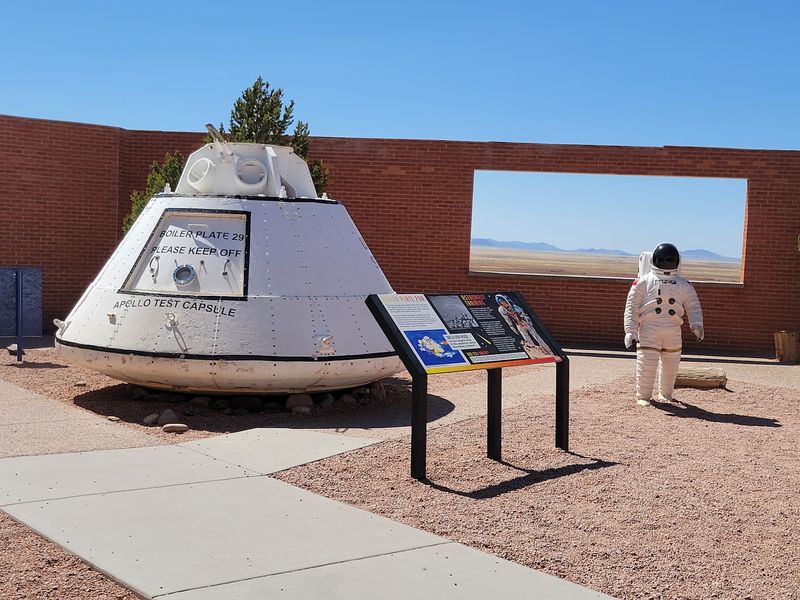
I am still trying to wrap my head around a hole in the ground that stretches nearly a mile across and plunges more than 550 feet deep.
The Meteor Crater Natural Landmark and Barringer Space Museum near Winslow preserves the best-maintained meteorite impact site on the entire planet.
About 50,000 years ago, an iron meteorite roughly 150 feet wide slammed into the Colorado Plateau at roughly 26,000 miles per hour, and the result is the perfectly preserved cosmic scar you can walk around today.
Its extraordinary condition comes down to two factors: the crater is geologically young, and Arizona’s dry desert climate has protected it from the erosion that has worn down similar sites elsewhere on Earth.
Scientists initially assumed volcanic activity was responsible, but the eventual discovery of meteorite fragments from the Canyon Diablo meteorite confirmed its true origin.
That finding changed the way researchers studied planetary geology and impact events worldwide.
The site became so scientifically significant that NASA used it as a training ground for Apollo astronauts preparing for lunar missions.
Standing on the rim, 148 feet above the surrounding plains, you get a physical sense of just how violent and transformative that ancient impact was.
The Barringer Space Museum inside the visitor center details the event through exhibits on geology, impact science, and space exploration history.
Fragments of the Canyon Diablo meteorite are on display, and the interactive elements make the science accessible and genuinely exciting for all ages.
This designated National Natural Landmark connects you to forces far bigger than anything on this planet. Find it at I-40 Exit 233 near Winslow, and prepare to feel very small in the most wonderful way.