You’ll Swear You’re In Europe When You Explore These 10 Breathtaking Places In Oregon
Oregon never set out to imitate anywhere. That is what makes this whole list a little funny.
A hilltop monastery in the Willamette Valley was founded by monks who came straight from an abbey in Switzerland, so the Romanesque church up there is not a copy of anything. It is the real thing, simply relocated.
Elsewhere you get a mansion built in French Renaissance style, formal gardens perched above the Pacific, and a mountain range locals happily call the Little Switzerland of America. There is a stone observatory with a marble interior standing seven hundred feet above a river gorge.
You will start doing that thing where you compare everything to a photo you once saw. Resist that urge for a moment and look properly.
These places are not standing in for Europe at all. They are simply beautiful, and they all sit a short drive from your own home.
1. Mount Angel Abbey
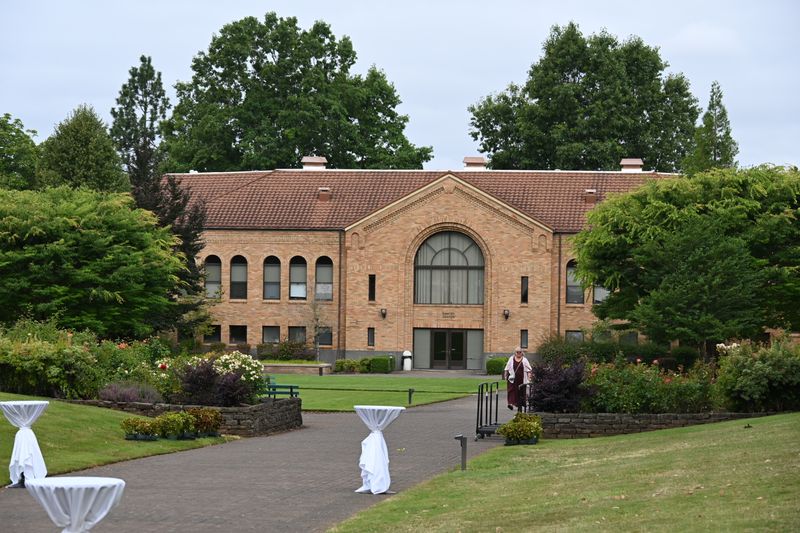
Perched on a quiet hill in Saint Benedict, this Benedictine monastery looks like it belongs in the Swiss Alps. The grounds are immaculate, the architecture is Romanesque, and the silence feels almost sacred.
You half expect a monk to hand you a baguette.
Mount Angel Abbey, located at 1 Abbey Drive, has welcomed visitors since 1882. It is an active monastery, so the atmosphere is genuinely calm, not performed for tourists.
The library alone, designed by Finnish architect Alvar Aalto, is worth the drive.
The hilltop views stretch across the Willamette Valley farmland below. It honestly looks like Tuscany with better coffee options nearby.
Visitors can attend Mass, walk the grounds, or browse the gift shop for locally made goods.
Spring and fall are the best times to visit. The gardens bloom beautifully, and the crowds stay thin.
This place rewards slow, quiet exploration, so leave the rush-hour mindset at home.
2. Timberline Lodge
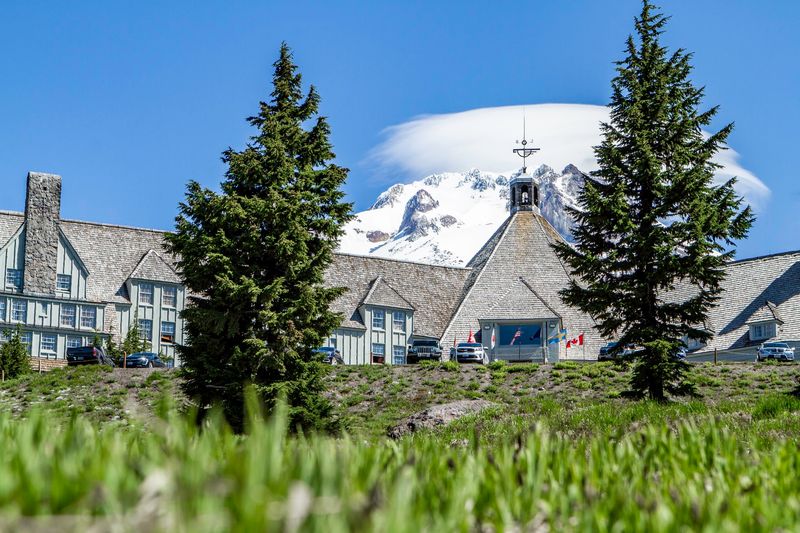
Few buildings in America feel as dramatically European as Timberline Lodge sitting against Mount Hood. The stone masonry, the hand-carved woodwork, the steep rooflines, it all screams Austrian ski chalet.
Except it was built by American craftsmen during the 1930s New Deal era.
At 27500 East Timberline Road in Government Camp, the lodge sits at 6,000 feet elevation. That alone makes the air feel different.
Crisp, thin, and absolutely worth the climb.
Inside, the craftsmanship is staggering. Every inch was built by hand, from the wrought iron fixtures to the hand-hooked rugs.
The WPA workers who built it treated the project like fine art, and it shows.
Skiing is available here nearly year-round, which feels almost surreal. The mountain stays snowy long after the valleys turn green.
Even if you skip the slopes, the lodge restaurant serves hearty Pacific Northwest food with mountain views that make every bite taste better.
First-time visitors often just stand in the lobby and stare. That reaction is completely normal and honestly encouraged.
3. Vista House At Crown Point
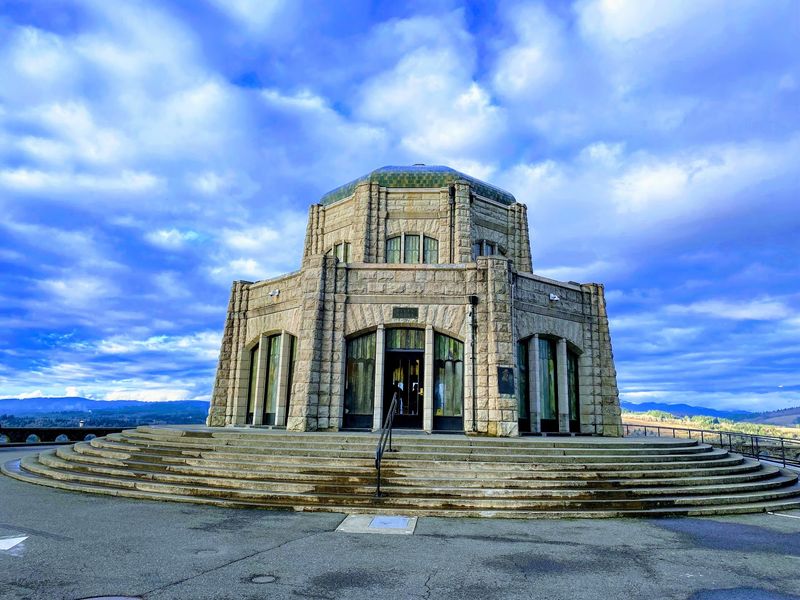
Standing at the edge of a 733-foot basalt cliff, Vista House looks like it was airlifted from a German hilltop. The Art Nouveau stone rotunda was built in 1918 as a rest stop for early road travelers.
That is possibly the most elegant rest stop concept in American history.
The Columbia River Gorge stretches out below in every direction. On clear days, you can see for miles.
On misty mornings, the whole scene turns into something from a fairy tale painting.
Located at 40700 Historic Columbia River Highway in Corbett, Vista House is free to visit and open seasonally. The interior features Oregon marble floors and detailed bronze work.
Rangers are often on hand to share the history, which is surprisingly rich.
The drive to get here along the Historic Columbia River Highway is half the experience. The road winds through dense forest with stunning viewpoints every few miles.
Europeans built scenic roads like this for centuries, and Oregon quietly matched that energy in the early 1900s.
Bring a jacket. The wind at Crown Point is real, relentless, and oddly refreshing.
4. Multnomah Falls
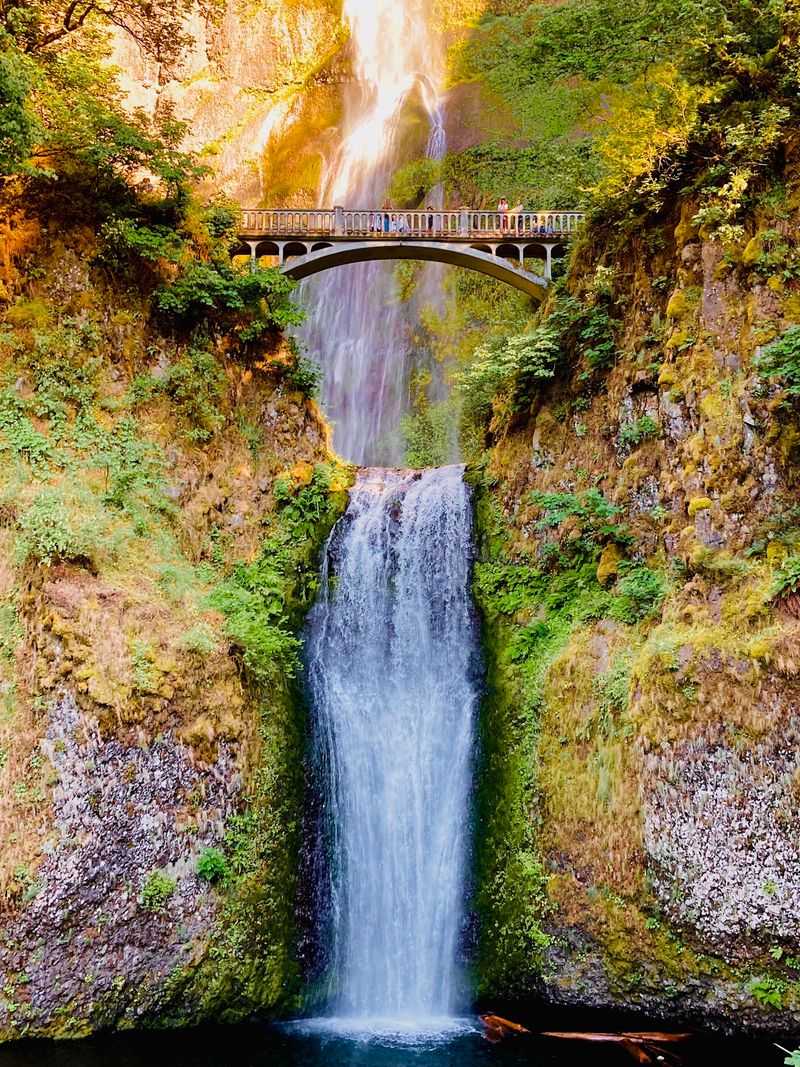
At 620 feet tall, Multnomah Falls does not ask for your attention politely. It commands it.
The roar hits you before the view does, and then the view finishes the job completely.
The historic Benson Bridge arches across the middle of the falls like something from a Victorian nature park. It was built in 1914 and somehow looks more charming every decade.
Standing on it with mist on your face is genuinely one of Oregon’s best free experiences.
Located along the Historic Columbia River Highway near Bridal Veil, the falls are accessible year-round. Winter visits are especially dramatic when ice forms along the rock face.
Summer brings crowds, so arriving early rewards you with quieter, more personal moments.
A trail winds up to the top of the falls for hikers willing to earn the view. The climb is moderate and the payoff is enormous.
Looking down from above flips the whole perspective in the best possible way.
Switzerland has its Alps, and Oregon has Multnomah Falls. Both make you feel genuinely small in the most wonderful sense.
5. Pittock Mansion
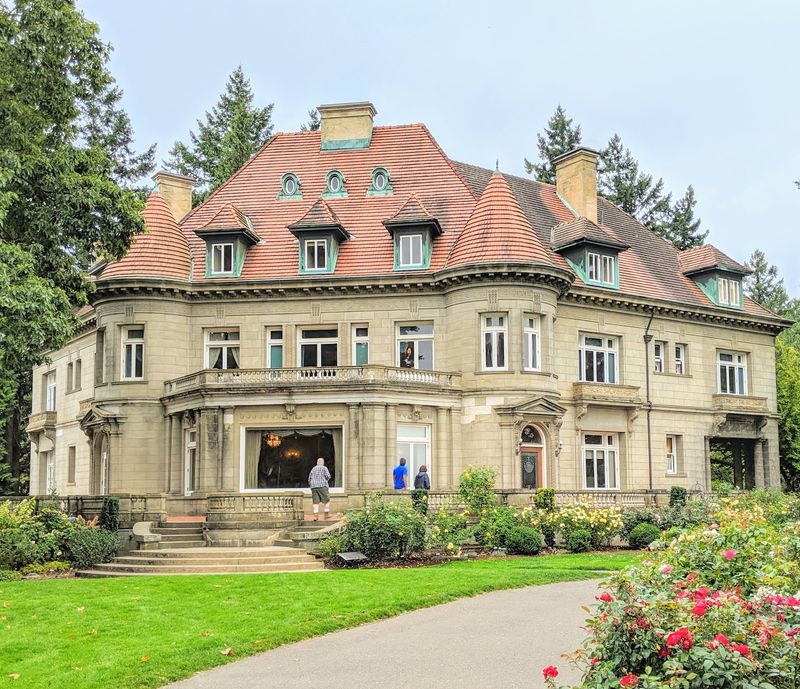
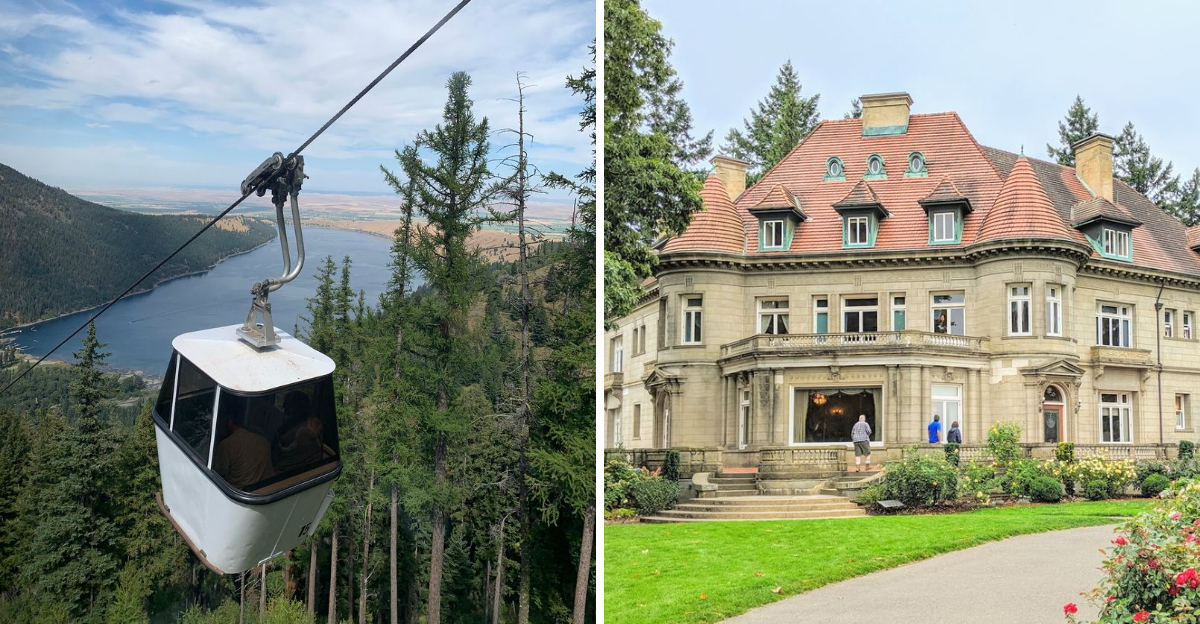
Built in 1914 for newspaper publisher Henry Pittock, this French Renaissance chateau sits 1,000 feet above Portland with views that stretch to Mount Hood and Mount Saint Helens. It looks like the kind of place where European royalty would summer.
Oregon just happened to build it first.
The mansion at 3229 Northwest Pittock Drive is now a museum open to the public. Inside, the rooms are restored to their early 20th-century grandeur.
The Turkish smoking room alone is worth the admission price.
Every detail was thoughtful, from the central vacuum system that was revolutionary in 1914 to the multiple fireplaces that still look ready to use. The Pittocks clearly believed a home should be both beautiful and functional.
They were absolutely right.
The surrounding grounds are part of Forest Park, one of the largest urban forests in the United States. Trails connect the mansion to miles of woodland paths.
You can walk from Portland’s city streets into forest within minutes, which never gets old.
Visiting in late afternoon gives you the best light on the mountain views. Bring a camera and a little extra time to simply sit and take it all in.
6. Silver Falls State Park
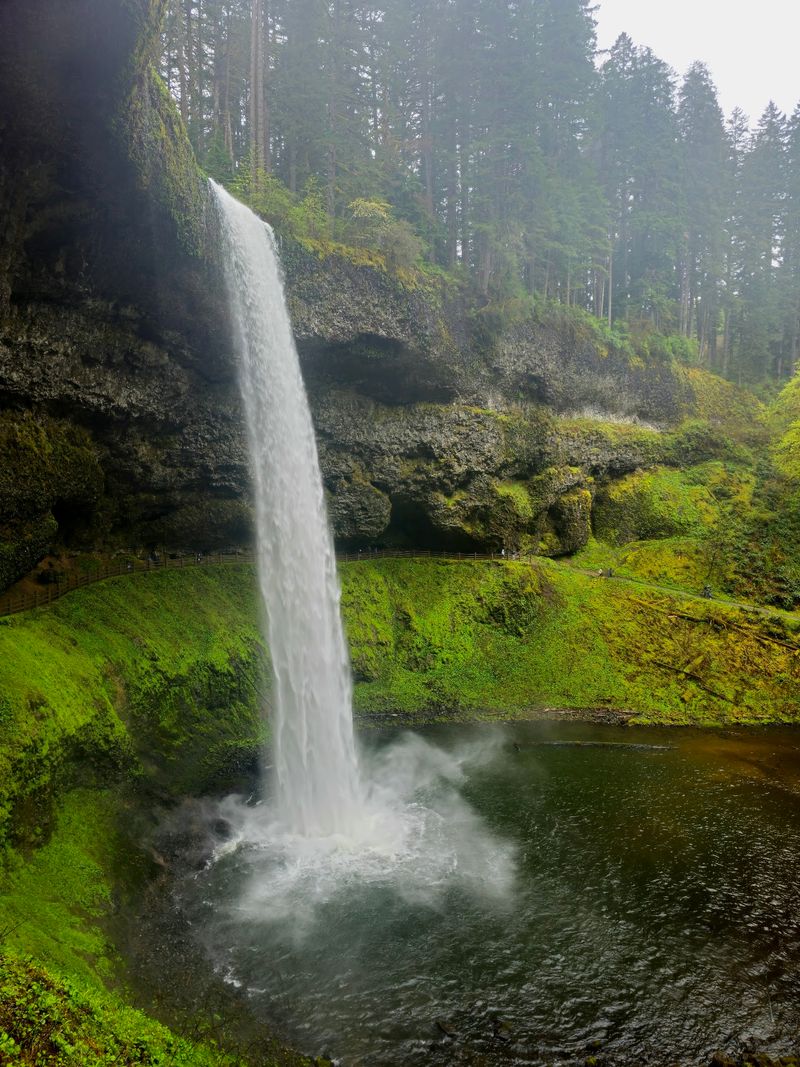
Oregon’s largest state park contains ten waterfalls reachable on a single trail loop. That is not a typo.
Ten waterfalls, one hike, zero complaints. The Trail of Ten Falls feels like hiking through a living painting.
The signature experience is walking behind South Falls, a 177-foot drop where the trail passes directly under the waterfall curtain. The sound and sensation are unlike anything you can replicate.
It feels like something from a fantasy novel, except it is very real and very free to experience.
Located along Silver Falls Highway Southeast near Sublimity, the park covers over 9,000 acres of old-growth forest. The mossy canyon walls and fern-lined paths look straight out of the Scottish Highlands.
Except the Oregon version has better parking and cleaner restrooms.
Spring brings the highest water flow, making the falls thunderous and dramatic. Fall colors turn the canyon into something almost impossibly beautiful.
Even winter visits have a moody, cinematic quality that photography enthusiasts love.
The full loop trail runs about seven miles. Shorter options exist for families with younger kids.
Either way, you will leave with muddy boots and a very full memory card.
7. Shore Acres State Park
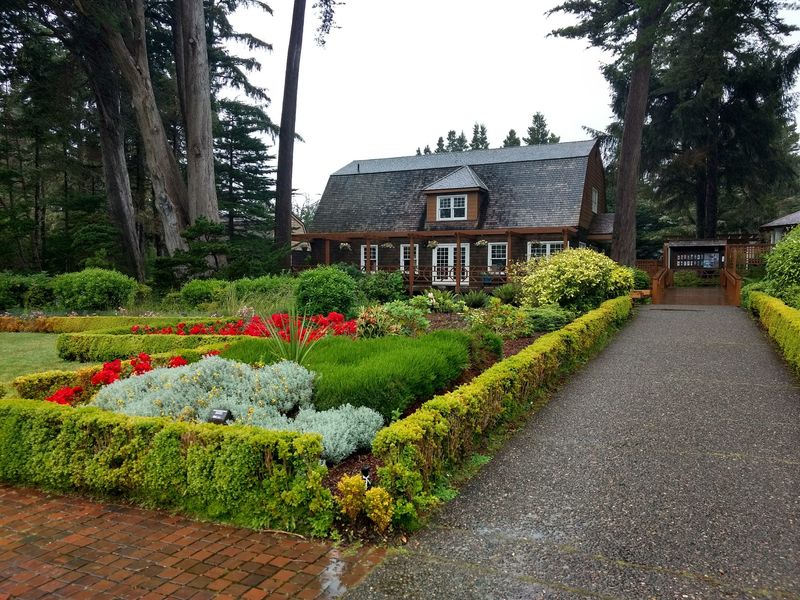
Most people do not expect to find formal European-style botanical gardens on a rugged Oregon cliff above the Pacific Ocean. Shore Acres State Park exists specifically to defy expectations.
The contrast between sculpted rose gardens and crashing ocean waves is genuinely breathtaking.
The park sits at 89526 Cape Arago Highway near Coos Bay, on land that once belonged to timber baron Louis Simpson. He built elaborate gardens here in the early 1900s, and the state has maintained them beautifully ever since.
The formal garden design feels unmistakably English.
Roses, dahlias, and Japanese maples bloom throughout the seasons. A small enclosed garden greenhouse adds a Victorian botanical conservatory vibe.
Nearby observation points let you watch massive waves crash against sandstone cliffs with dramatic force.
During the holiday season, the gardens are lit with thousands of lights that draw visitors from across the state. It becomes something genuinely magical without trying too hard.
Few holiday light displays come with an ocean backdrop.
The surrounding Cape Arago State Park adds tide pools and wildlife viewing to the experience. Harbor seals often lounge on rocks just offshore.
Shore Acres rewards every kind of visitor with something genuinely memorable.
8. The Astoria Column
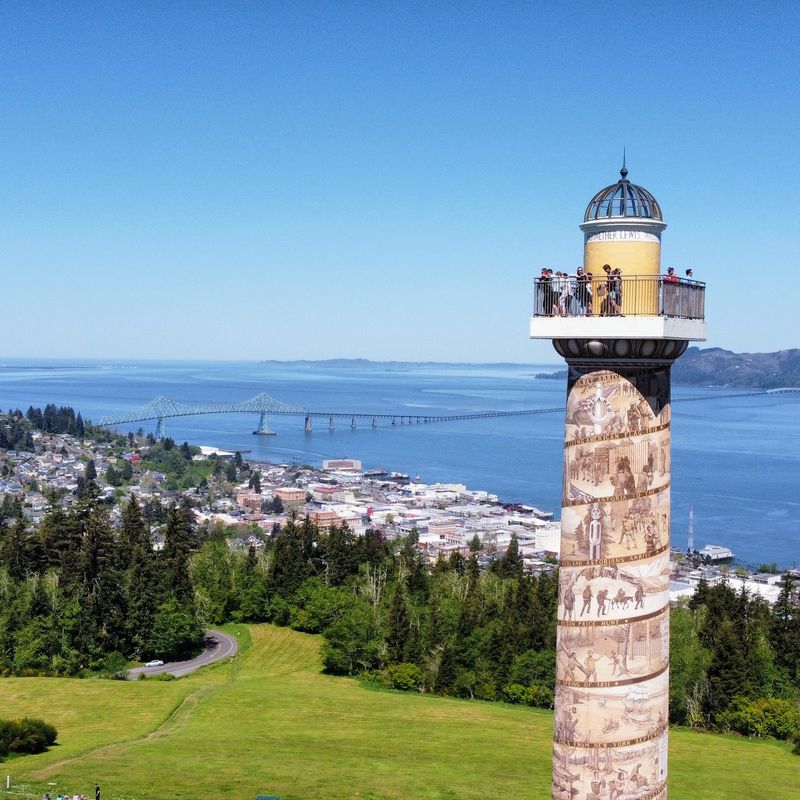
Modeled directly after Trajan’s Column in Rome, the Astoria Column spirals 125 feet into the Oregon sky with a painted frieze wrapping around its entire exterior. Standing beneath it, you genuinely feel like you have been teleported to Italy.
Except the view from the top is all Pacific Northwest.
Built in 1926 on Coxcomb Hill at 1 Coxcomb Drive in Astoria, the column commemorates the region’s history through detailed murals. The climb to the top involves 164 steps.
Every step is worth it when the Columbia River and Pacific Ocean come into view simultaneously.
Astoria itself is one of Oregon’s oldest cities, settled in 1811. The town has a distinctly European character with Victorian homes stacked on hillsides above the river.
The column fits perfectly into that aesthetic.
A beloved local tradition involves buying a small wooden glider at the gift shop and launching it from the top platform. Watching dozens of tiny planes spiral down through the trees is oddly satisfying.
Kids love it, but honestly, adults love it just as much.
Visit on a clear day for maximum views. Foggy days have their own moody charm, but the panorama on a sunny afternoon is simply unbeatable.
9. Lithia Park
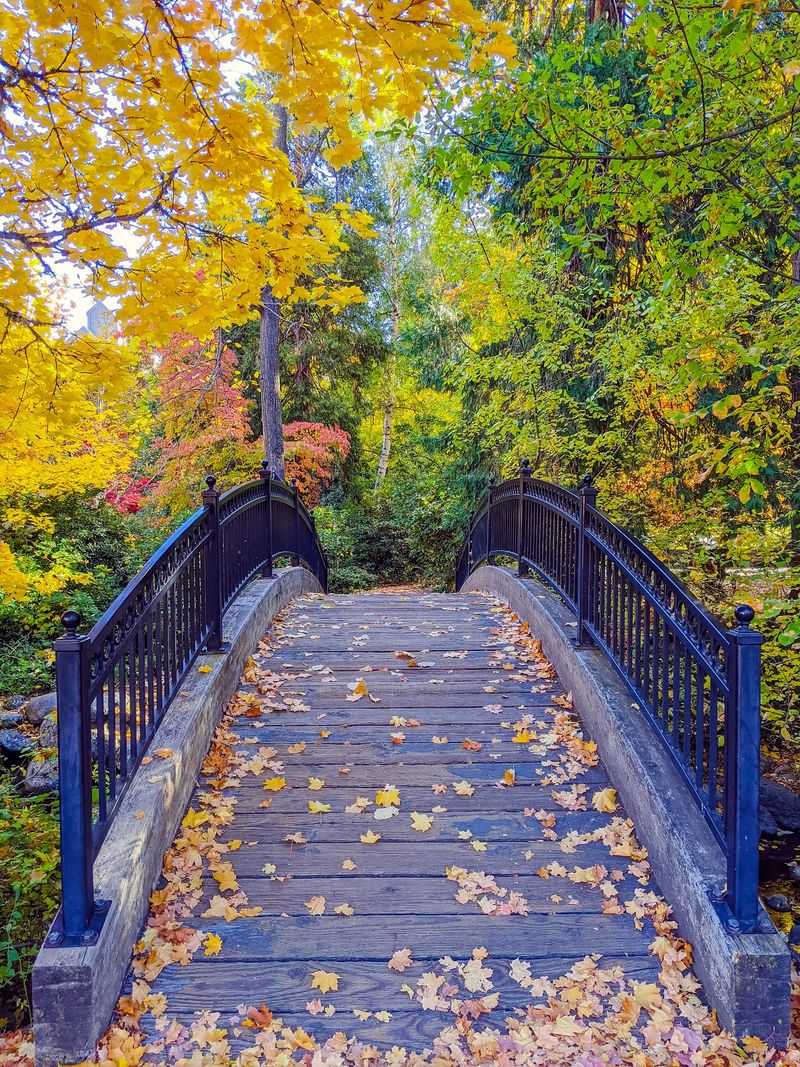
Designed by John McLaren, the same landscape architect behind San Francisco’s Golden Gate Park, Lithia Park in Ashland draws from classic European park design.
The result is 93 acres of formal gardens, woodland paths, and creek-side promenades that feel genuinely refined.
Located on Winburn Way in Ashland, the park sits just steps from the Oregon Shakespeare Festival theaters. That combination of high culture and beautiful green space gives Ashland an unmistakably European town square energy.
You can watch a Shakespeare play and then stroll through a Japanese garden within the same afternoon.
The park features a formal rose garden, duck ponds, and a Japanese garden section with stone lanterns and carefully placed plantings. Lithia Creek runs through the center, providing a constant soundtrack.
Benches line the water at perfect intervals for people who believe sitting quietly is an underrated activity.
Summer brings outdoor concerts, festivals, and the constant pleasant hum of a lively cultural town. Fall turns the sycamore trees into a golden canopy that rivals anything in New England.
Winter quiets everything down beautifully.
Locals treat this park as their living room, which is the highest compliment a park can receive. Visitors quickly understand why.
10. Wallowa Lake Tramway
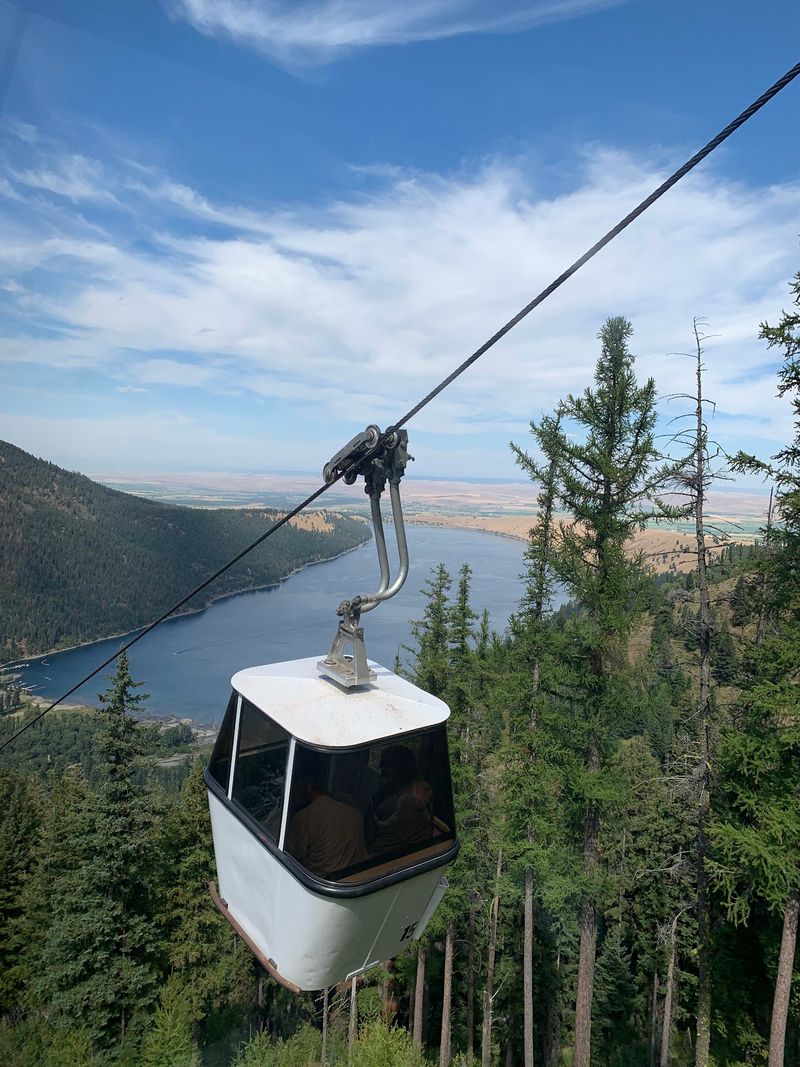
Riding the Wallowa Lake Tramway feels like being launched directly into the Swiss Alps. The gondola climbs 3,700 vertical feet in about 15 minutes, passing over terrain so dramatic it barely feels real.
By the time you reach the summit, Oregon looks entirely different.
Located at 59919 Wallowa Lake Highway near Joseph, the tramway is the steepest gondola in North America. That detail lands differently once you are actually in the cabin watching the valley shrink below you.
It is thrilling in the best possible way.
The summit sits at 8,150 feet elevation in the Eagle Cap Wilderness. From the top, the Wallowa Mountains stretch in every direction with the deep blue of Wallowa Lake shimmering far below.
People call this region the Oregon Alps, and the nickname is completely earned.
A summit restaurant serves food with what might be the most spectacular outdoor dining view in the state. Even a simple sandwich tastes extraordinary at 8,000 feet.
Hiking trails extend from the summit for those wanting to go even deeper into the wilderness.
The tramway operates seasonally, so check ahead before planning your visit. Reservations during peak summer months are strongly recommended.
This one fills up fast, and for very good reason.