This Boise, Idaho Hiking Destination Has Trails For Every Skill Level
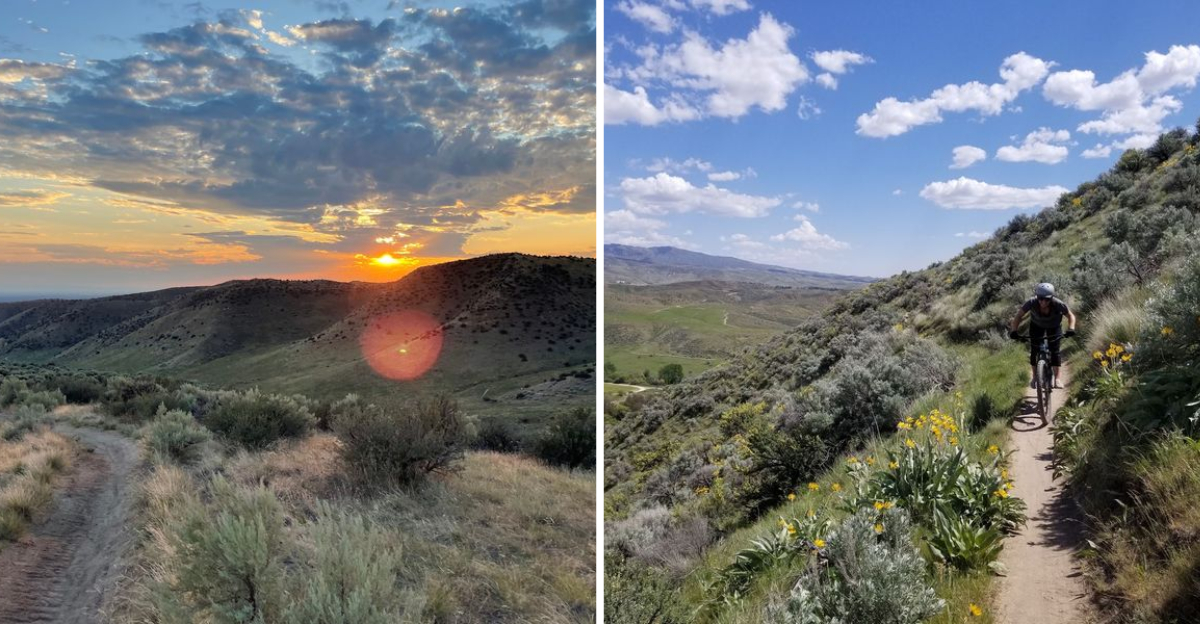
Five minutes ago, you were sitting in traffic. Now you’re surrounded by open hills, sweeping views, and trails that make the city feel a world away.
That’s the magic of this Boise destination!
Beginners can enjoy gentle paths without breaking a sweat, while experienced hikers have plenty of opportunities to stretch their legs a little farther.
Keep your eyes open, too. Deer, hawks, and other wildlife make surprise appearances often enough to keep every walk interesting.
Some places require a full weekend to enjoy. This one delivers the reset you’re craving before lunchtime even rolls around.
Trails For Every Skill Level
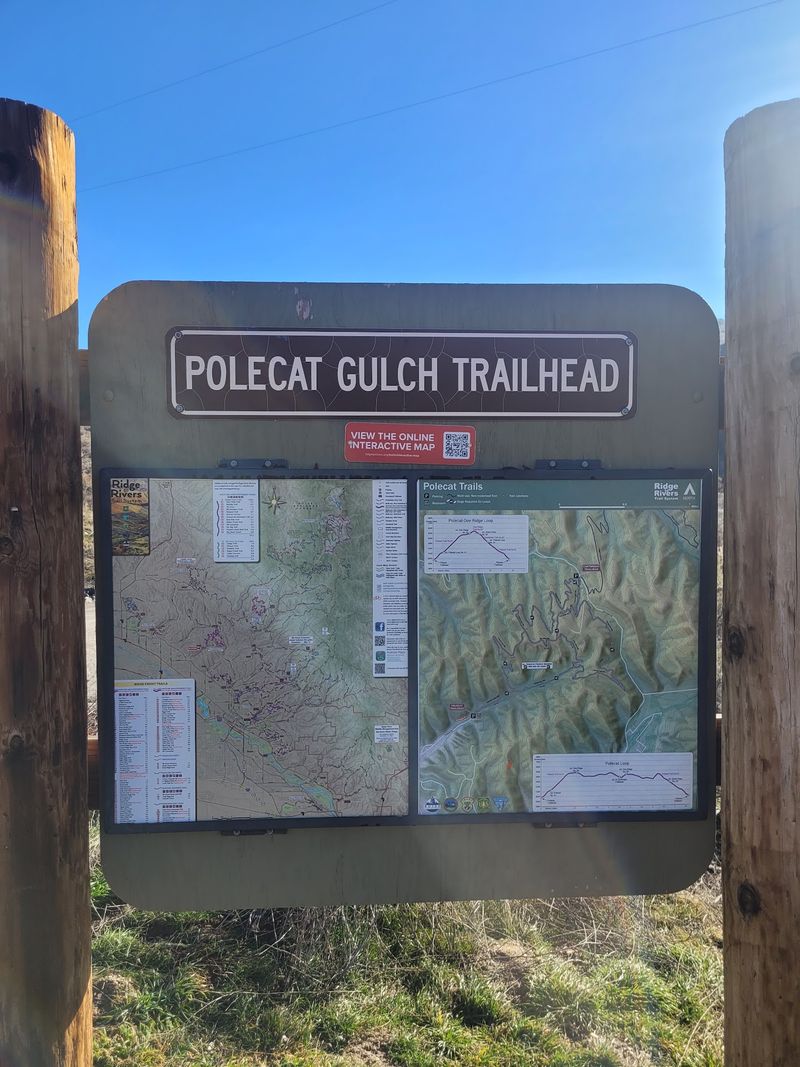
Not every trail system can honestly claim to welcome everyone, but Polecat Gulch-Collister Trailhead and Parking makes a strong case.
The reserve offers over seven miles of winding singletrack, spread across routes that range from quick jaunts to longer, more immersive loops.
The centerpiece is the Polecat Loop Trail, stretching roughly 5.8 to 6 miles, and it serves as the backbone of the entire network.
Shorter options like Doe Ridge Trail and Quick Draw Trail let visitors tailor the experience to their energy level and available time.
The initial climb from the trailhead gains about 450 feet in elevation, which sounds demanding but rewards you almost immediately with expansive views of the Treasure Valley. The grade is gradual enough that first-timers rarely feel overwhelmed.
The terrain is generally classified as easy to intermediate, making it an ideal proving ground for beginner mountain bikers and casual hikers alike. Trail surfaces consist largely of packed sand, which keeps things manageable even after light weather.
You can find this gateway to the foothills at the end of Collister Road in Boise.
Wildlife Around Every Corner
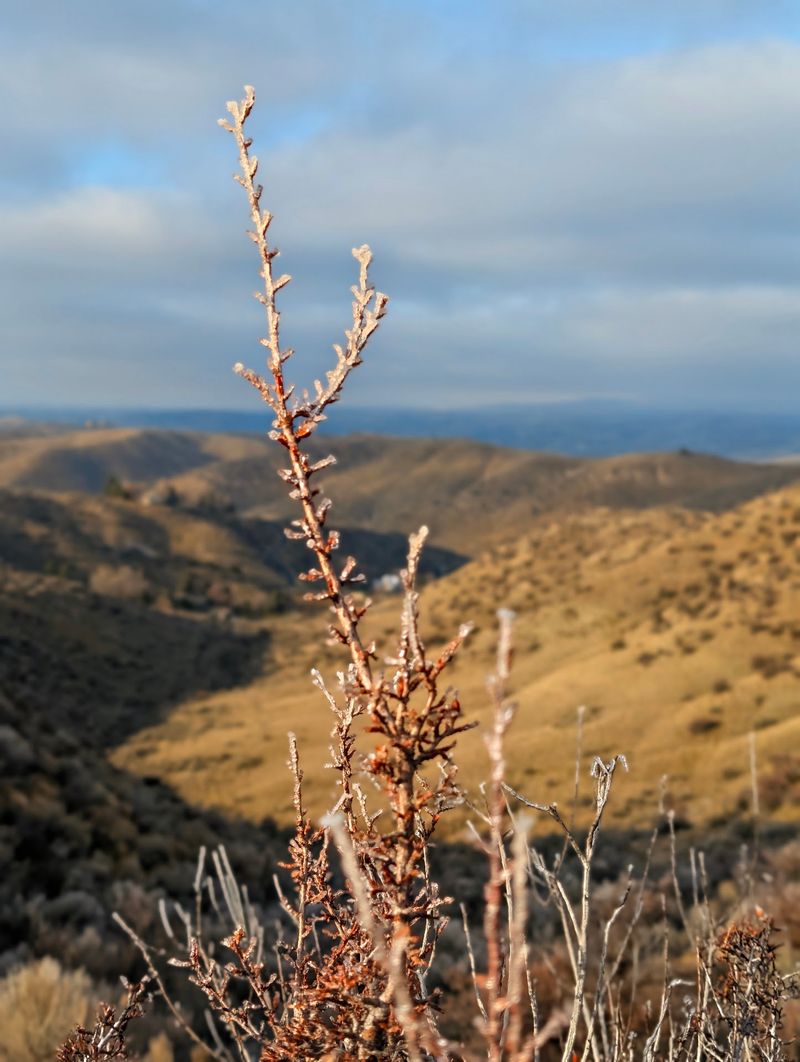
There is something quietly thrilling about rounding a bend and finding a mule deer watching you from twenty feet away.
At Polecat Gulch-Collister Trailhead and Parking, that kind of encounter is genuinely common. The reserve’s mature vegetation and relatively undisturbed terrain create a comfortable habitat for a surprising range of animals.
Coyotes move through the brush with casual confidence, and the skies above regularly host hawks, quail, and the occasional eagle drifting on a thermal.
Ground-nesting birds are present throughout the warmer months, which is one reason the on-leash rule for dogs carries real ecological weight here. A loose dog can disrupt nesting activity in ways that are hard to undo.
The botanical side of the wildlife story is equally compelling. The reserve protects populations of Aase’s Onion, a threatened plant species that grows nowhere else in the immediate region.
Hairy wild-cabbage also finds a home here, adding to a native plant community that includes seasonal wildflowers painting the hillsides in spring.
Idaho’s high desert ecosystem looks sparse at first glance, but this reserve proves how much life thrives beneath that surface.
Sweeping Treasure Valley Views
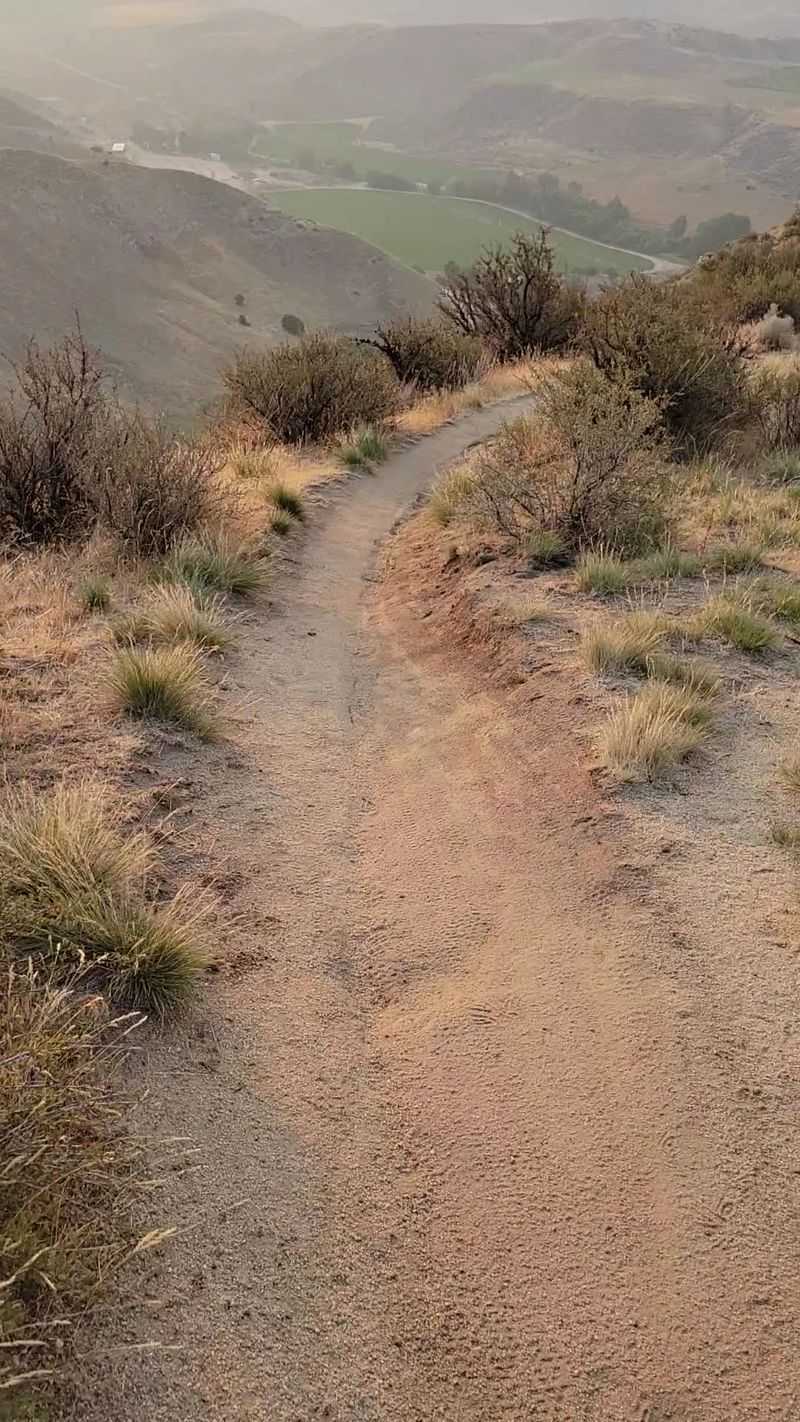
Altitude has a way of reframing everything, and the views from the upper sections of this trail system do exactly that.
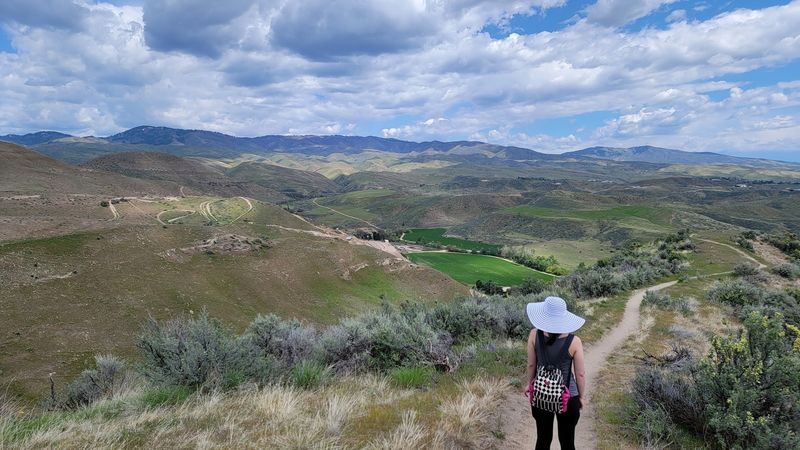
As the path climbs through the foothills, the Treasure Valley begins to open up below in a way that feels almost theatrical.
The city of Boise appears nestled between the ridge and the flat valley floor, looking surprisingly small against the scale of the surrounding terrain.
The Boise ridgeline provides a dramatic backdrop to the north, its rugged profile shifting in character depending on the light and season.
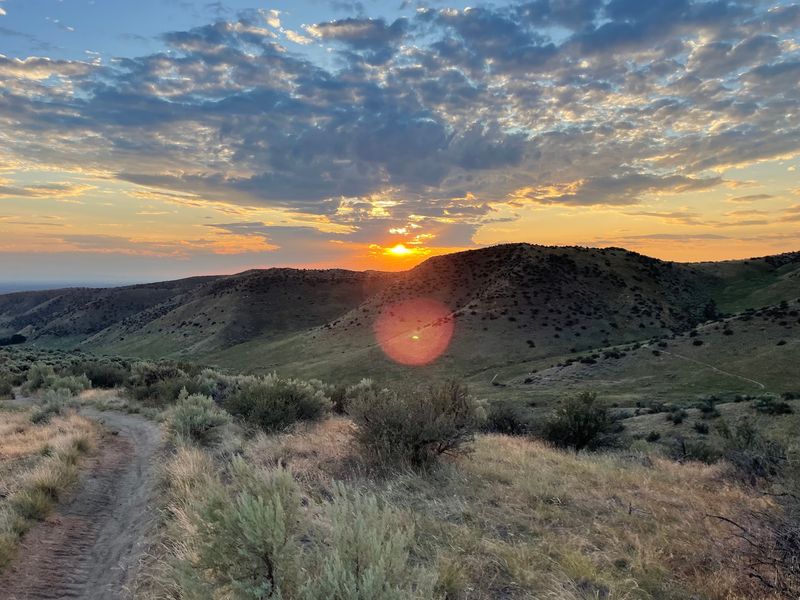
Clear mornings offer the sharpest definition, with distant peaks holding snow well into spring. Late afternoon visits come with their own reward, as the low sun casts long shadows across the rolling hills and turns the valley haze into something almost golden.
Photography enthusiasts consistently find strong compositions here without needing to hike to extreme elevations. The vantage points are accessible relatively early in the loop, meaning even shorter visits produce memorable images.
Seasonal Changes Worth Tracking
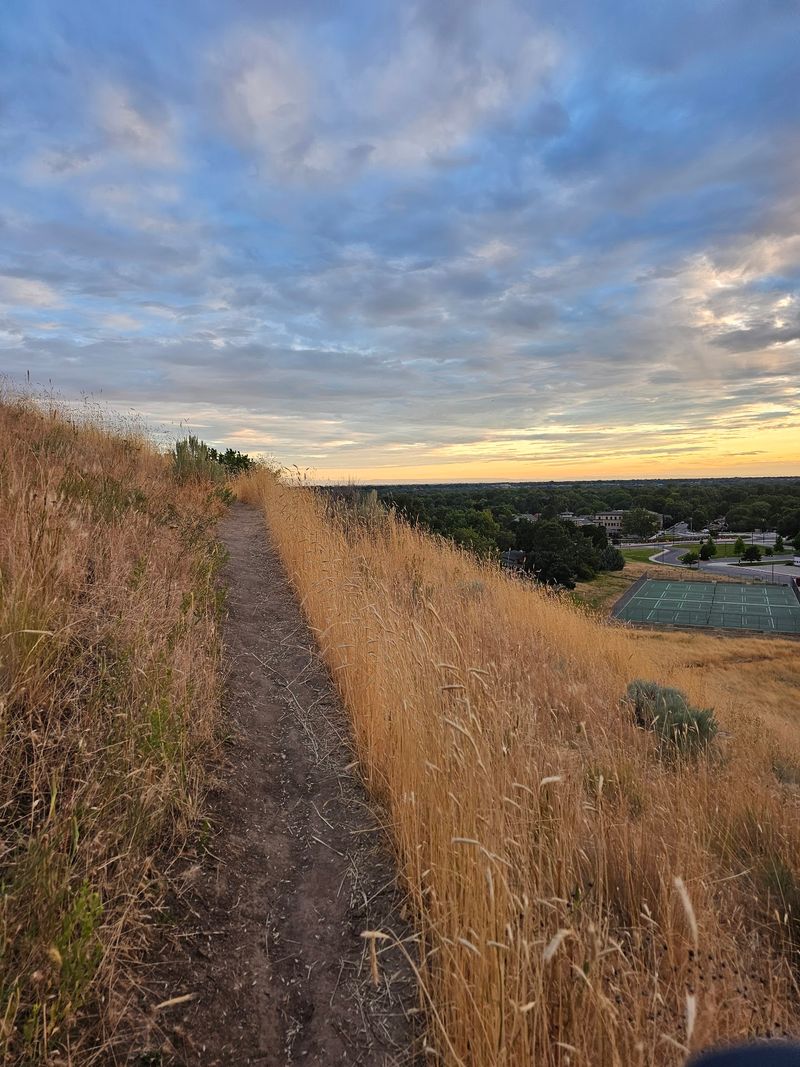
Spring is arguably the most rewarding season to visit the foothills around this trailhead.
The hillsides shift from winter brown to a vivid green almost overnight, and wildflowers appear in clusters along the trail edges. That brief window, usually mid-March through May, offers the most visually striking version of the landscape.
Summer requires a different approach entirely. Shade is essentially nonexistent on most sections of the trail, and midday temperatures in Idaho’s high desert can climb quickly.
Early morning starts and a well-stocked water bottle are not optional suggestions during July and August, they are practical necessities for a comfortable outing.
Fall brings crisp air and dramatically improved hiking conditions, with lower temperatures making longer loops far more enjoyable.
The sunsets during autumn cast the Treasure Valley in shades that are difficult to describe without sounding like an overenthusiastic travel brochure.
Winter visits are quieter and more solitary, with snow-dusted hills offering a serene atmosphere that feels completely different from any other season.
Trail Etiquette That Actually Matters
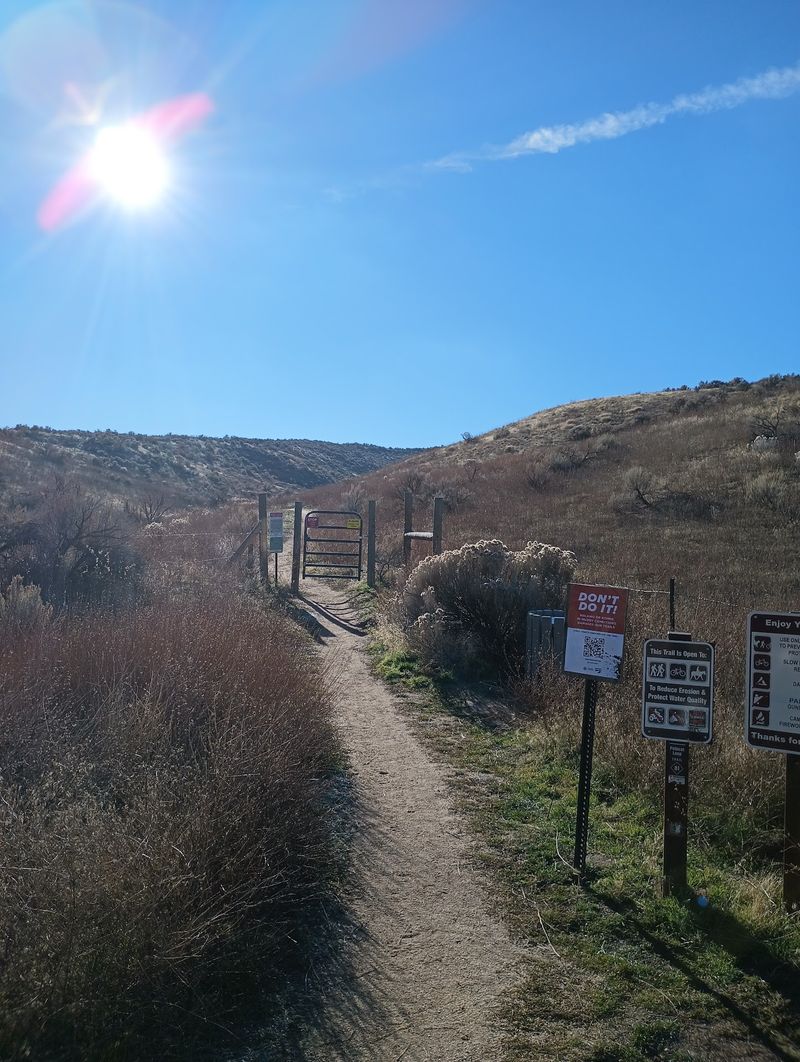
Shared-use trails come with a social contract, and at Polecat Gulch-Collister Trailhead and Parking, a few specific rules make the difference between a smooth visit and an avoidable conflict.
The Polecat Loop Trail currently operates as a designated directional route, requiring all users to travel counter-clockwise through the end of 2025.
This direction has periodically flipped in past years, so checking current trailhead signage is always worthwhile.
Understanding this system matters more than it might seem. Mountain bikers can move quickly on the singletrack, and knowing which direction traffic flows lets hikers anticipate rather than react.
Blind corners exist on several sections, so maintaining awareness and a reasonable pace keeps everyone safer regardless of how they arrived at the trailhead.
Dogs must stay on a leash throughout the reserve, full stop. This protects the rare Aase’s Onion plant, shields ground-nesting birds, and prevents unnecessary stress for resident wildlife including mule deer.
Staying on marked trails is equally important, since even well-intentioned off-trail wandering contributes to erosion and habitat disruption.
Getting There And Parking Smart
Convenience is one of this trailhead’s strongest selling points.
Sitting just 15 minutes from Boise’s North End, the location means a spontaneous weekday morning hike is entirely realistic without rearranging your schedule.
The drive takes you through a residential neighborhood before the road opens up at the trailhead, which can catch first-time visitors slightly off guard.
The gravel parking area holds roughly 15 vehicles, which sounds modest until you arrive on a Saturday morning in late spring and realize every spot is taken.
Arriving early is not just polite advice, it is genuinely practical strategy. Carpooling is a smart move on high-traffic days, and some visitors park further down the road when the lot fills, though that adds a small walk to the start of the trail.
A vault toilet restroom is available right at the trailhead, which is a detail that matters more than it sounds when you are about to tackle a 6-mile loop in Idaho’s summer heat.
Trail markers throughout the reserve are well-placed and clear, reducing the chance of an unplanned detour on your first visit.
A Mountain Biker’s Natural Playground
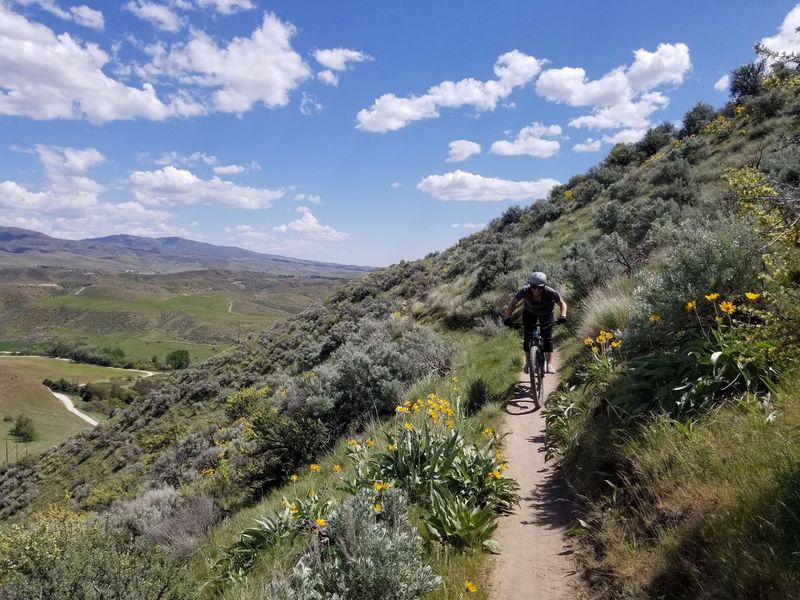
Cycling culture runs deep in Boise, and the trails at this reserve reflect that.
The singletrack here has a rhythm to it that experienced riders describe as flow, meaning the terrain guides the bike rather than fighting it.
Gentle rollers, wide sweeping turns on certain sections, and predictable surfaces make the Polecat Loop a favorite warm-up ride for locals who use it as a launching point for longer routes deeper into the foothills.
Beginner mountain bikers find the overall grade encouraging rather than intimidating. The climbs are steady but not punishing, and the descents offer enough momentum to feel rewarding without demanding technical precision.
The clockwise directional rule for the main loop streamlines traffic flow and reduces the surprise factor on narrow sections. Riders coming through fast on a blind corner is a real consideration, and the directional system manages that risk effectively.
For anyone curious about mountain biking but not yet committed, this is one of the most approachable places in Idaho to find out if two wheels suit them.
Conservation Behind The Scenery
The trails at Polecat Gulch-Collister Trailhead and Parking exist because of deliberate, sustained conservation effort.
The reserve was established in 2003 following initial land purchases from the Blessinger family, and it now totals 322 acres, including Bureau of Land Management parcels.
The presence of the threatened Aase’s Onion plant within the reserve adds a layer of ecological responsibility to every visit.
This species requires specific soil and climate conditions, and the Boise Foothills provide a rare combination that supports its survival.
Hairy wild-cabbage and other native plants round out a botanical community that would disappear quickly under unmanaged recreational pressure.
Ridge to Rivers, working alongside the Bureau of Land Management and the City of Boise, manages the balance between public access and habitat protection with visible effectiveness.
Well-placed signage, maintained surfaces, and enforced leash rules all reflect a management philosophy that takes the long view seriously.
Idaho has a strong tradition of protecting its public lands, and this reserve is a local expression of that broader commitment.