If You Only Hike One Trail In Indiana This Year, Make It This Scenic Path To A Hidden Waterfall
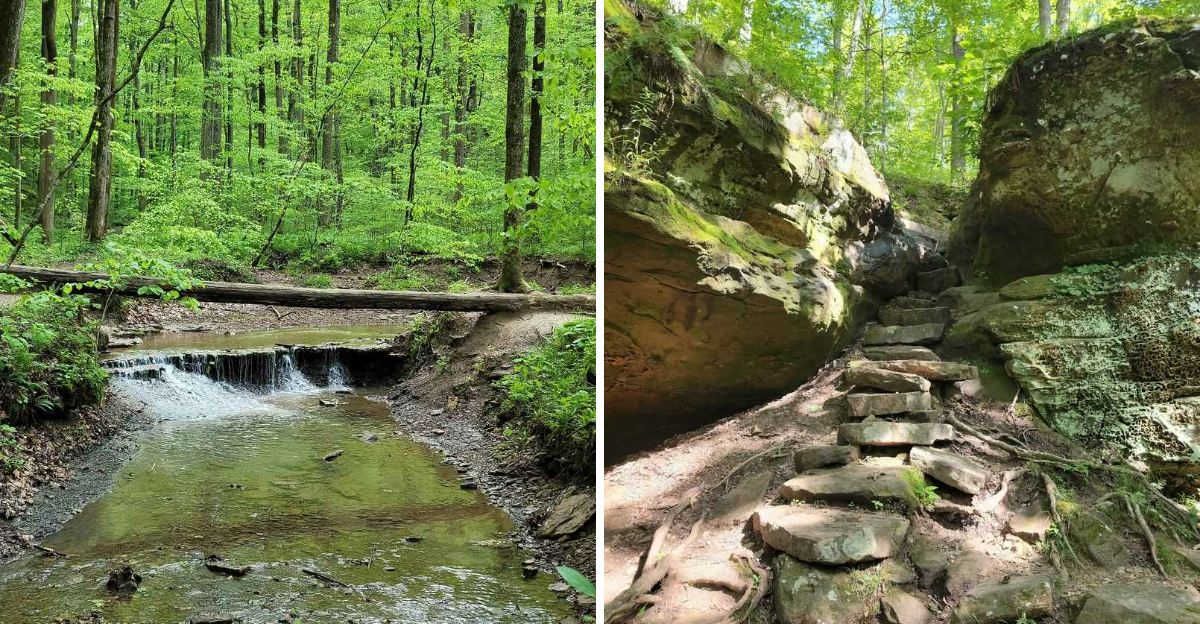
My boots hit the trail expecting a normal walk and got something else entirely. The path dropped into a canyon I did not know existed, with sandstone walls rising higher than I expected on both sides.
Indiana keeps a few tricks up its sleeve, and this trail is clearly one of them. Moss clung to every rock face, and water trickled down in thin ribbons that caught the light just right.
I kept stopping to look up, feeling small in the best possible way. The air turned cooler as I went deeper, and the noise of the outside world just faded away completely.
Indiana forests hide more drama than people give them credit for. I rounded one final bend and the waterfall stopped me completely in my tracks.
If you only hike one trail this year, let it be this one.
The Box Canyon That Rewrites Everything You Thought About Indiana
Flat cornfields and endless highways are not the whole Indiana story. Deep in the Hoosier National Forest, a box canyon waits quietly, and it is genuinely jaw-dropping.
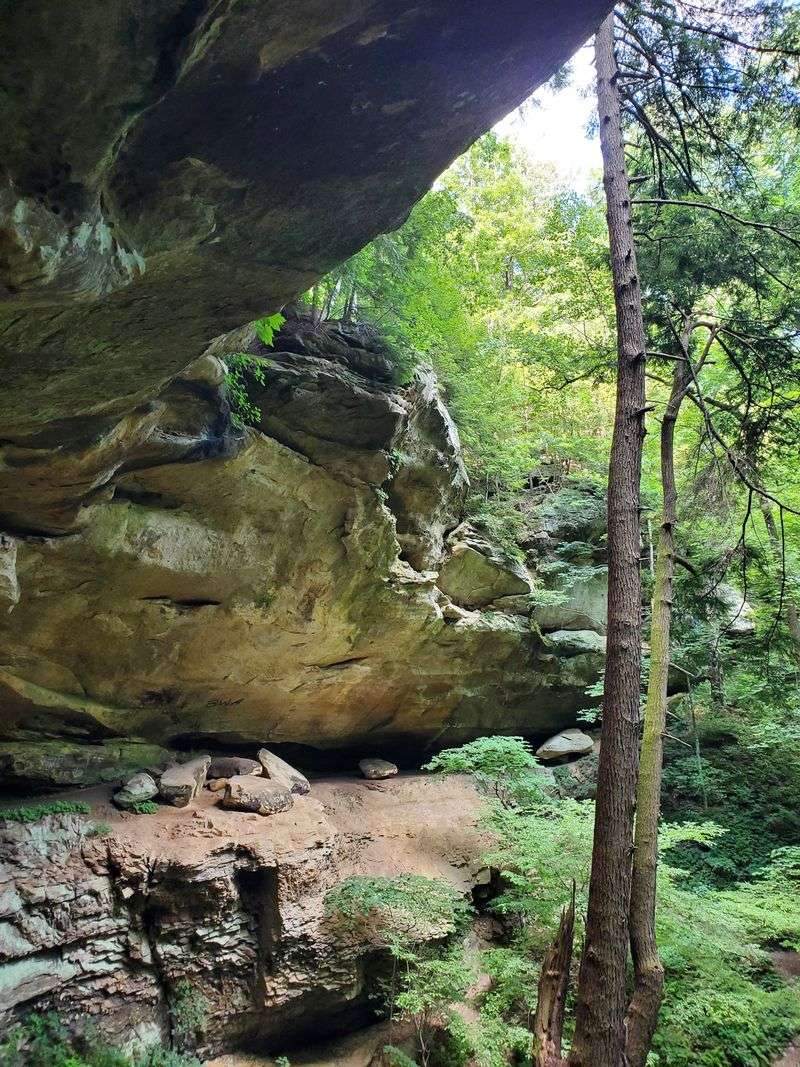
The canyon walls rise sharply on all sides, creating a natural amphitheater of sandstone and shadow. You feel enclosed in the best possible way, like the forest is sharing a secret just with you.
The scale surprises everyone who visits for the first time. These are not gentle slopes or modest hills.
These are sheer, dramatic cliffs carved by thousands of years of water and wind.
Erosion shaped the sandstone into wild, sculptural forms that look almost deliberate. The canyon floor stays noticeably cooler than the surrounding forest, even on warm days.
That cool air hits you the moment you descend, and it feels like stepping into a completely different world.
The loop trail that guides you through this canyon sits at Hemlock Cliffs National Forest Rd, English, IN 47118. Plan your visit, lace up your boots, and prepare to have your assumptions about Indiana permanently rearranged.
A Trail That Earns Its Reputation One Step At A Time
Short trails sometimes pack the biggest punch. The Hemlock Cliffs Trail runs roughly 1 to 1.4 miles as a loop, which sounds almost too quick to bother with.
Do not let that fool you. Every single step of this trail delivers something worth seeing.
The path winds through the canyon, dips along creek beds, and climbs back up through shaded forest.
Some hikers prefer completing the loop counter-clockwise, descending into the canyon before following the creek and climbing back toward the trailhead. You descend first into the canyon’s dramatic heart, then follow the creek before climbing back to the trailhead.
That sequence makes the whole loop feel intentional and satisfying.
The trail is rated easy to moderate in difficulty. Some sections get steep, and wet conditions make certain spots genuinely slippery.
Good grip on your shoes is not optional here, it is essential.
Completing the full loop at a relaxed pace takes around two hours. Rushing would be a mistake.
The bridges along the trail are well-maintained, and the path is clearly marked. First-timers will feel comfortable navigating it without any special gear beyond solid footwear and a sense of curiosity.
Waterfalls That Reward Patience And Perfect Timing
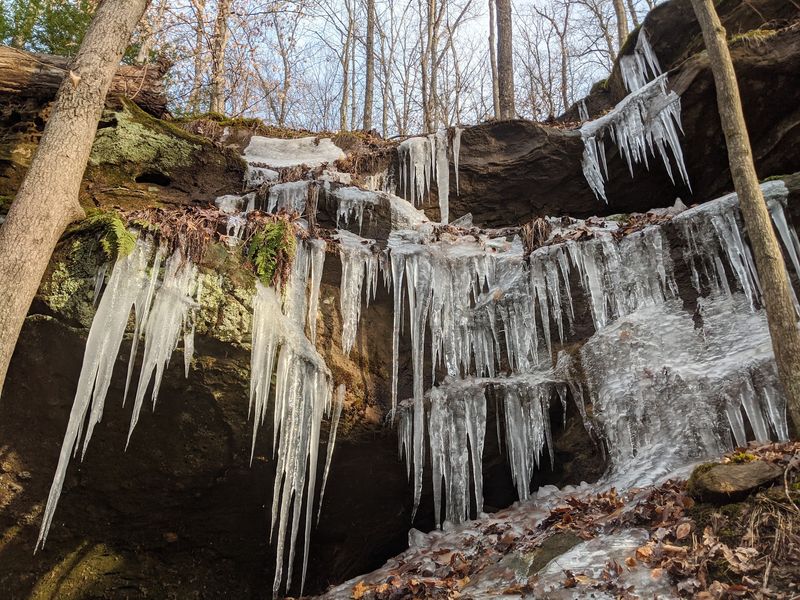
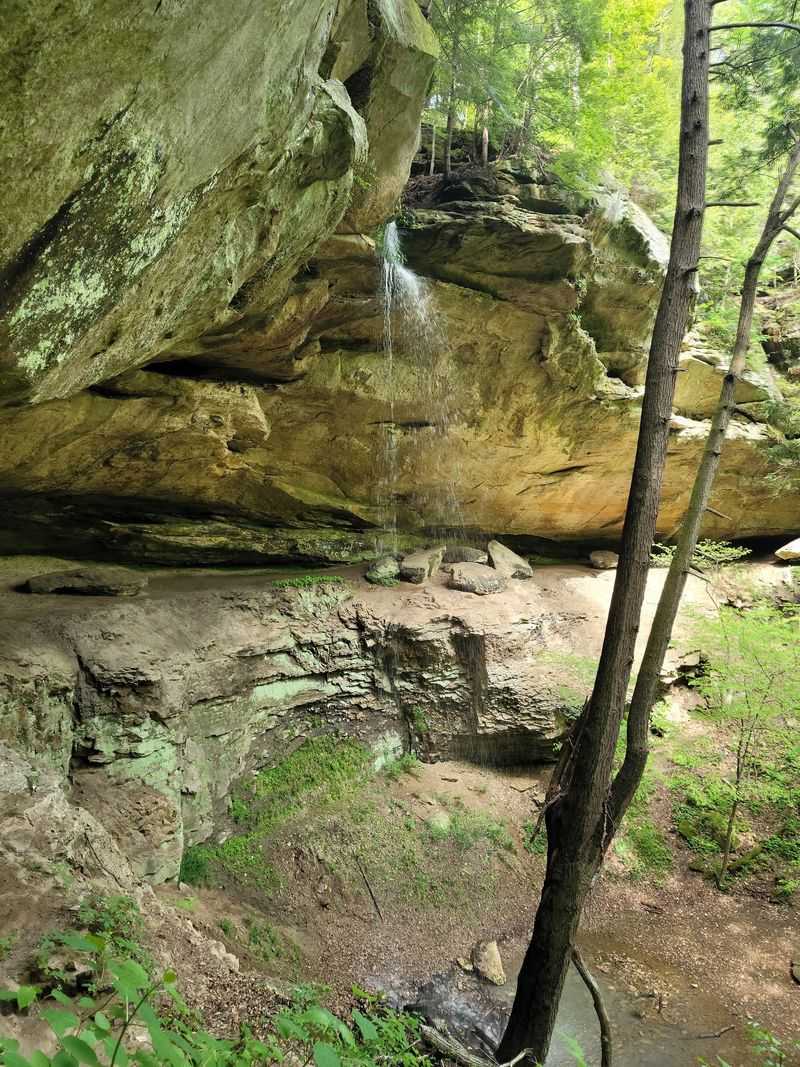
Timing is everything with these waterfalls. They are seasonal, which means rainfall and snowmelt determine how dramatic your visit gets.
Spring is arguably the prime window for witnessing the falls in full force. Snowmelt feeds the streams generously, and the water rushes down the cliffs with real power.
Late fall after heavy rain produces a similarly impressive show.
Seasonal waterfalls appear along the trail, with their flow varying significantly depending on recent rainfall and weather conditions. Both are worth every muddy step it takes to reach them.
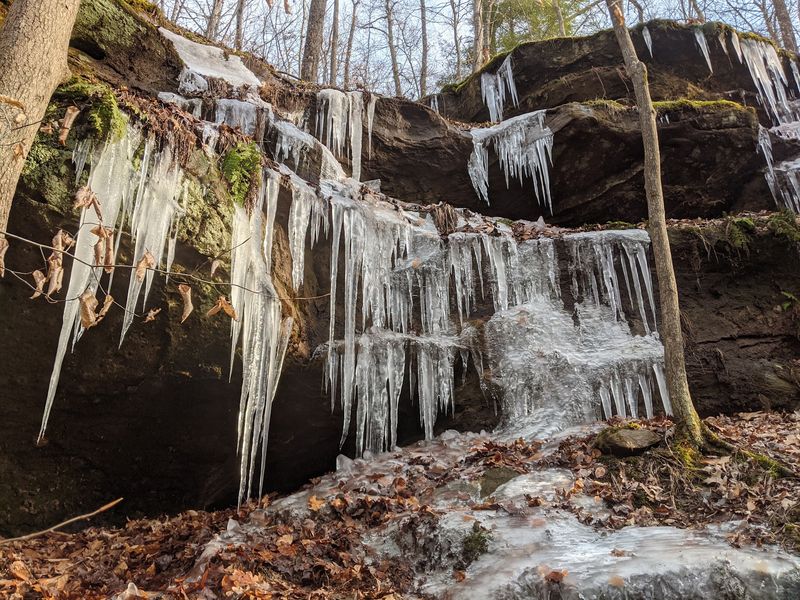
Winter visits offer a completely different kind of magic. Freezing temperatures turn the cascading water into elaborate ice formations draped across the cliff walls.
Visiting in January, the cliffs covered in icicles, feels genuinely otherworldly.
On drier days, the falls slow to a trickle or disappear entirely. Even then, the canyon itself remains stunning.
The creek beds, rock shelters, and sandstone formations carry the experience beautifully when the water is not cooperating. Check recent rainfall before you go, and you will dramatically improve your chances of catching the falls at their best.
Sandstone Walls Shaped By Thousands Of Years Of Erosion
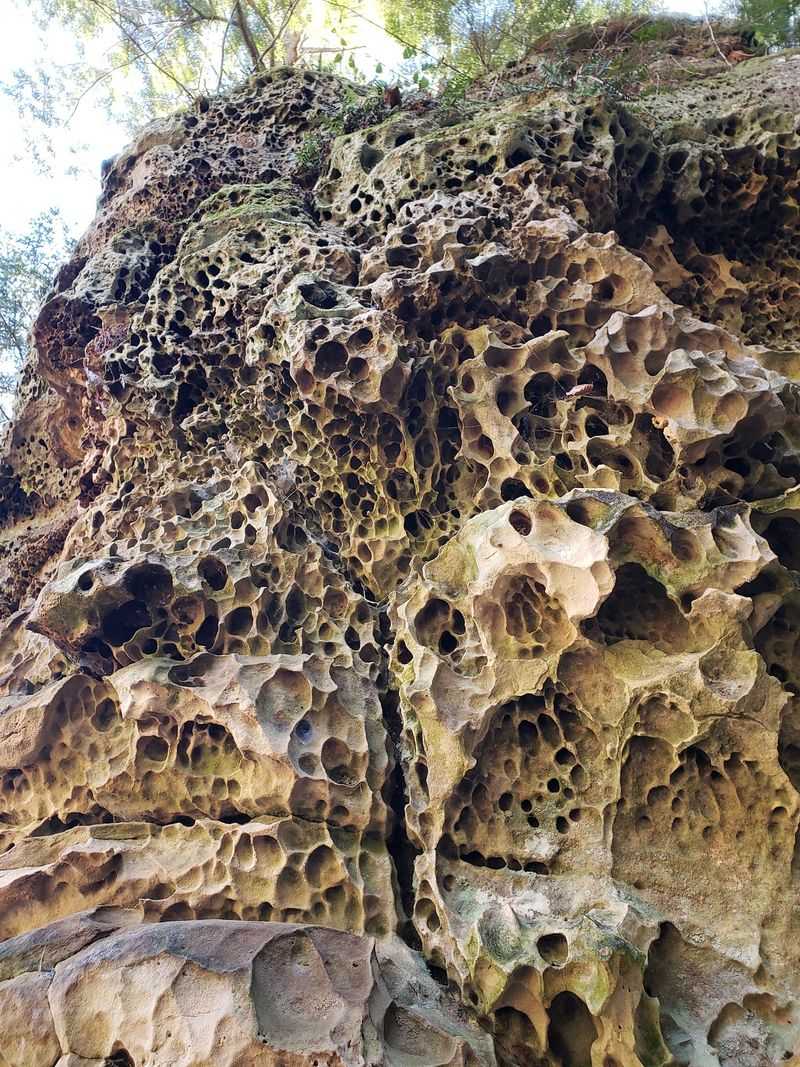
Geology rarely shows off this boldly. The sandstone at this canyon comes from the Tar Springs Formation, a geological layer shaped over an almost incomprehensible span of time.
Water and wind worked together to carve the walls into dramatic overhangs and sheer vertical faces. Many surfaces display a distinctive honeycombed texture, where natural weathering has pitted and sculpted the rock into intricate patterns.
Running your hand along those walls feels like touching something genuinely ancient. The stone is rough, layered, and surprisingly varied in color.
Rust, cream, and grey tones shift depending on moisture and light.
Large, semi-circular rock shelters are among the most striking features. These natural alcoves create dramatic frames for views across the canyon floor.
Some are large enough to stand inside comfortably, which adds a fun, exploratory element to the hike.
Springs emerge from the limestone beneath the sandstone in certain spots. Small caves and crevices dot the canyon walls, inviting careful exploration.
The geological variety packed into such a short trail is genuinely remarkable. This place earns its reputation through pure, unfiltered natural drama that no photograph fully captures.
Rock Shelters With A History That Stretches Back 10,000 Years
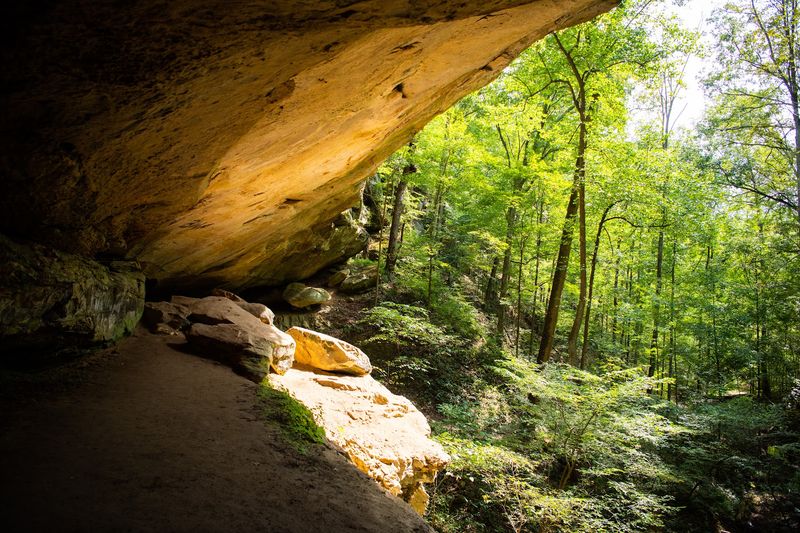
Standing inside one of these rock shelters changes the feeling of the whole hike. You stop thinking about trail markers and start wondering about the people who stood in this exact spot thousands of years ago.
Archaeological evidence shows Native American occupation of these shelters dating back roughly 10,000 years. That number is genuinely staggering to sit with.
These overhangs provided cover, protection, and a defensible position in the landscape.
The shelters are large and structurally impressive. The curved sandstone ceilings arch overhead in ways that feel almost architectural.
Early inhabitants clearly recognized quality real estate when they saw it.
Respecting this heritage matters. The Hoosier National Forest actively protects these formations, and visitors are expected to treat them accordingly.
Do not disturb the rock surfaces or remove anything from the area.
The USDA Forest Service acquired this particular area in 1963, adding it to the protected lands of the Hoosier National Forest. Decades of stewardship have kept the shelters accessible and largely intact.
Spending a few quiet minutes inside one of these alcoves, just listening to the canyon sounds, is one of the more unexpectedly moving experiences this trail offers.
Eastern Hemlock Trees And The Rare Plants That Call This Canyon Home
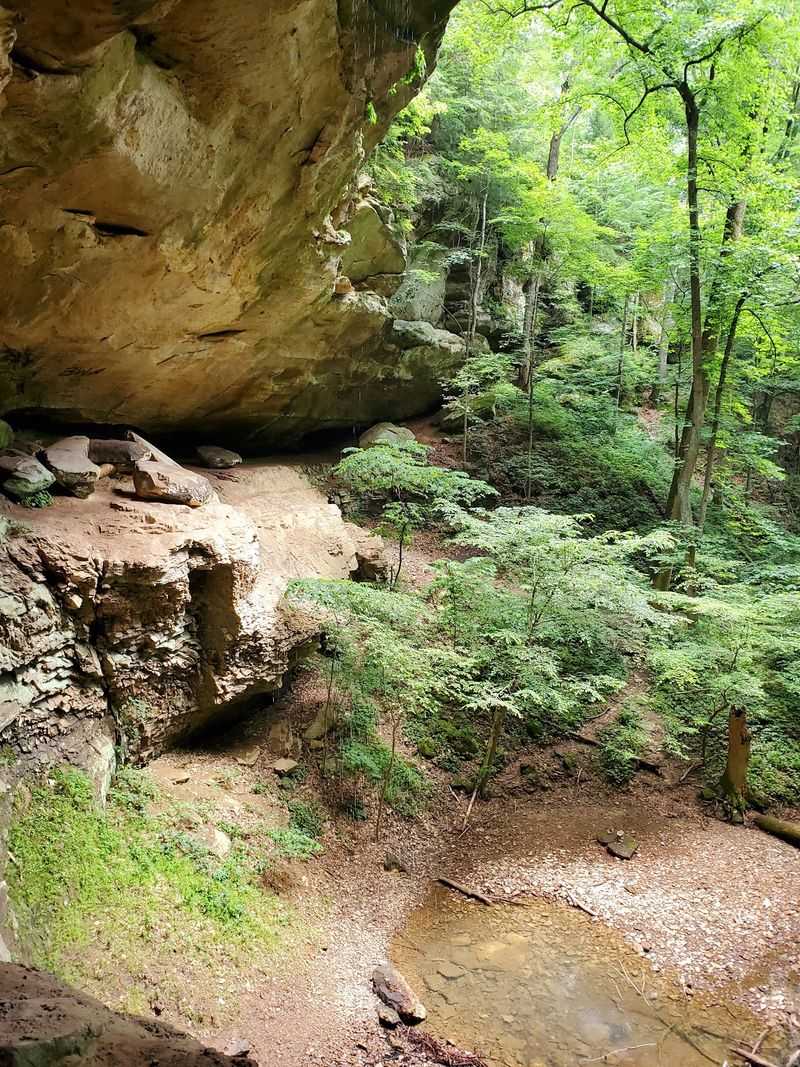
Most Indiana forests feel familiar. This canyon feels like something borrowed from the Appalachians, and the plant life is a big reason why.
Eastern hemlock trees thrive here because the canyon stays cool and shaded throughout the year. These tall evergreens are not common across Indiana, making their presence at this spot genuinely special.
Their dark green canopy creates a moody, cathedral-like atmosphere along the trail.
Wintergreen also grows here, a protected and rare plant species within Indiana. Spotting it requires slowing down and paying attention to the forest floor.
That kind of quiet observation is exactly what this trail rewards.
Wildflowers add seasonal color throughout the canyon. Wild geranium, French’s shooting star, and mountain laurel all appear at different times of year.
Ferns and liverwort carpet the shadier sections with lush green textures.
The cool microclimate is the real driver behind this biodiversity. The canyon walls block direct sunlight and trap moisture, creating conditions that support plants rarely found elsewhere in the state.
Botanists apparently love this place for good reason. Even casual hikers notice that the vegetation feels different here, denser, greener, and somehow more alive than the surrounding forest.
The Creek That Runs Through The Heart Of The Canyon
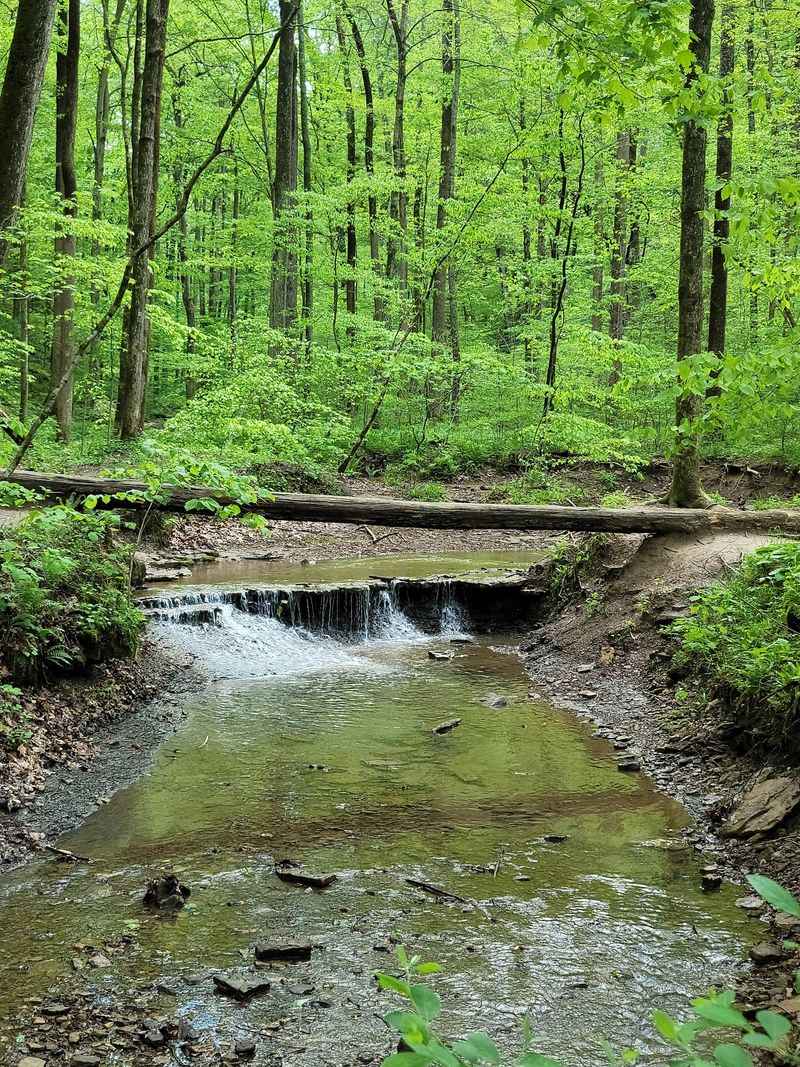
Water defines this place in more ways than one. Beyond the waterfalls, a creek winds along the canyon floor for much of the trail’s middle section.
The sound of rushing water accompanies you almost constantly during the hike. That steady background noise does something interesting to your mood.
Stress quietly dissolves somewhere between the trailhead and the first creek crossing.
The water itself is remarkably clear. Small fish are visible in the deeper pools when water levels allow.
On a warm day in late March, wading through the creek feels like a genuine reward for showing up.
Fallen leaves collect along the creek bed in autumn, shifting and moving slowly with the current. After a good rain, the water moves faster and the whole canyon comes alive with sound.
The creek and the cliffs work together to create an experience that feels layered and richly textured.
Kids absolutely love the creek section. The shallow water, smooth stones, and small pools make it irresistible for anyone under twelve.
Adults tend to linger here too, watching the water and forgetting briefly that they had other plans for the afternoon. This is genuinely one of those spots that earns its own unhurried pace.
What To Wear And Bring Before You Hit The Trail
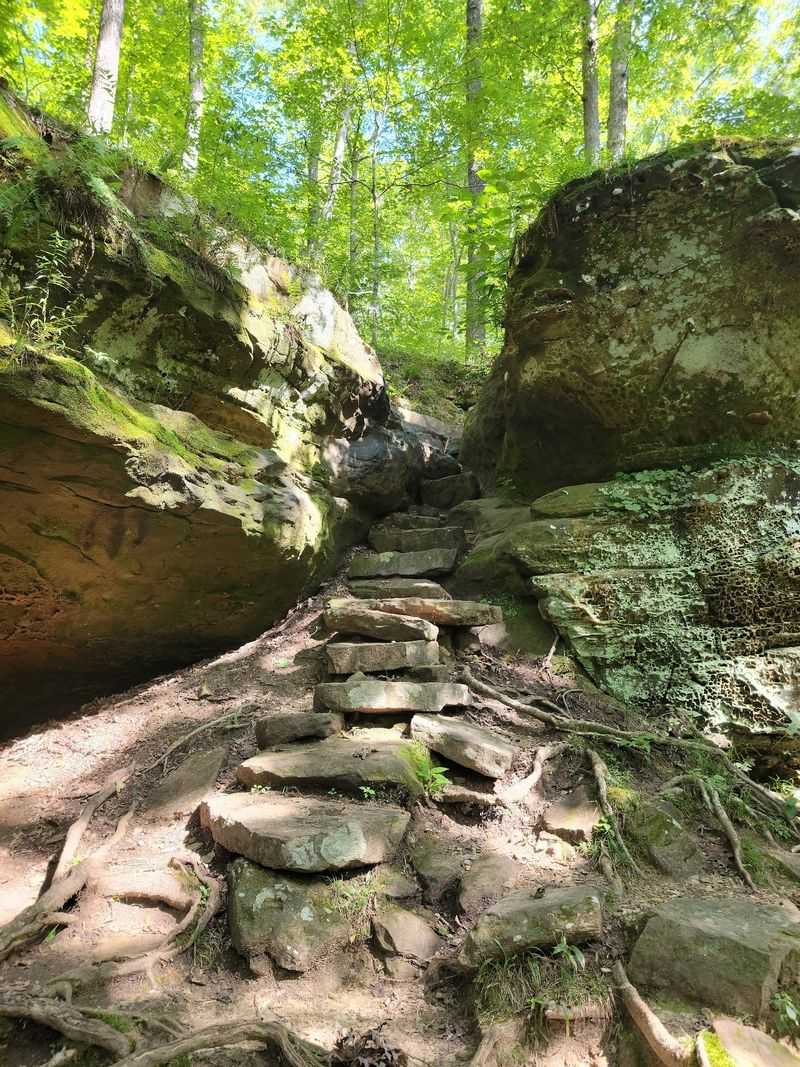
Preparation makes or breaks a visit here. This is not a casual stroll in sneakers kind of trail, at least not safely.
Sturdy hiking shoes with solid grip are the single most important thing to bring. The trail gets slippery when wet, and certain sections involve descending over exposed rock.
A boot with ankle support and a grippy sole handles the terrain confidently.
Water is worth carrying even though the hike is short. The canyon air is cool, but physical exertion on uneven ground adds up quickly.
A simple daypack with a water bottle and a light snack covers the basics comfortably.
There are no restrooms at the trailhead, so plan accordingly before leaving the car. This is a consistent piece of advice from experienced visitors, and ignoring it leads to regrettable decisions mid-trail.
Ticks are present, particularly in warmer months. Checking yourself after the hike is a smart habit.
Wearing long socks and applying insect repellent beforehand reduces the risk significantly.
Leave No Trace principles apply here without exception. Pack out everything you bring in.
There are no trash cans at the trailhead, and the beauty of this place depends entirely on visitors treating it with genuine respect every single time.
The Best Seasons To Visit And Why Timing Changes Everything
Every season at this canyon offers something completely different. Choosing when to visit depends entirely on what experience you are chasing.
Spring delivers the full waterfall spectacle. Snowmelt and April rains push water over the cliffs in dramatic fashion.
The vegetation is fresh and intensely green, and the canyon feels energized in a way that is hard to describe without sounding dramatic.
Summer visits are quieter in terms of water flow. The falls often reduce to a trickle by July.
The shade inside the canyon makes summer hiking more comfortable than the surrounding forest, and early morning arrivals mean fewer crowds at the small parking area.
Fall transforms the trail into a riot of color. Leaves collect on the canyon floor and drift along the creek.
The light through the turning canopy creates a warm, golden atmosphere that photographers particularly love.
Winter is arguably the most underrated season here. Ice formations build up across the cliff faces and waterfall edges, creating frozen structures that look almost sculptural.
A January visit in peaceful, near-empty conditions produces memories that are genuinely hard to shake. Whatever season pulls you in, this trail delivers something worth the drive every single time.