This Alaska Ice Museum Lets You Wander Inside A World Made Of Ice
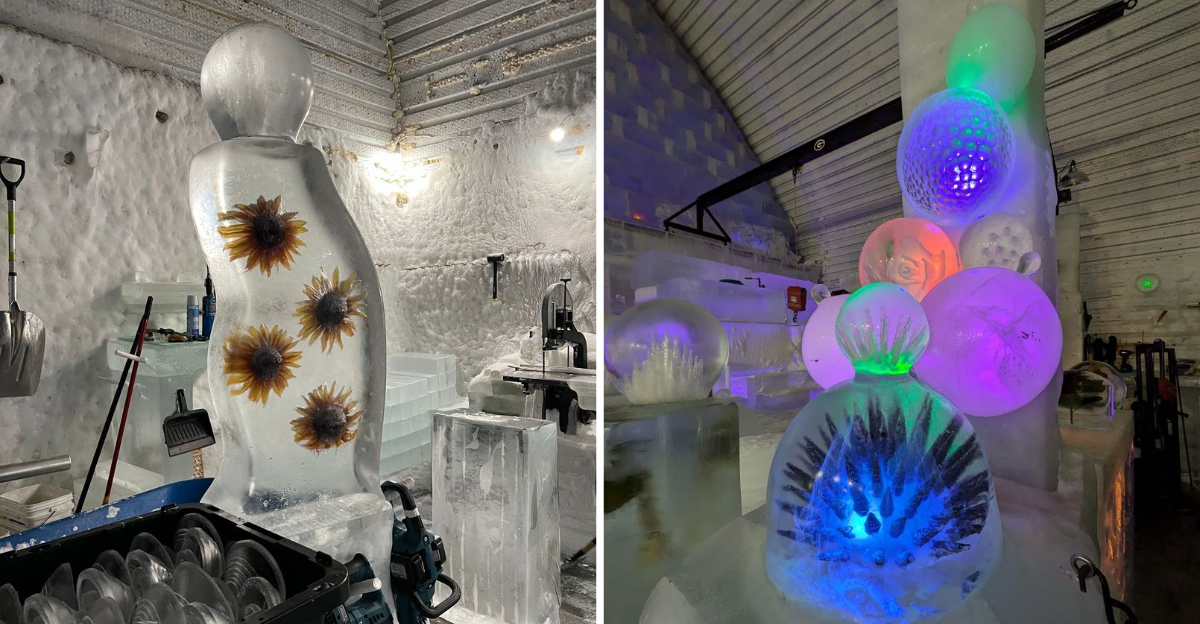
Who needs another ordinary museum visit when you can spend an afternoon surrounded by actual ice?
Alaska has an ice museum where summer visitors can walk straight into a world that refuses to thaw.
Inside, enormous sculptures, glowing chandeliers, frozen furniture, and playful displays create the strangest kind of indoor adventure.
Temperatures stay below freezing, so the experience feels wonderfully ridiculous when sunshine is waiting outside.
You can wander around bundled up while admiring details that would seem impossible anywhere else. I would absolutely borrow the warmest coat available and explore every corner.
A Frozen Palace Near Fairbanks
Sixty miles northeast of town, the pavement narrows and the spruce trees crowd closer. That drive took me about an hour and fifteen minutes, and I loved every mile of it.
Moose wander near the shoulder here, so I kept my camera ready and my speed slow. The road ends at Chena Hot Springs Resort, where the Aurora Ice Museum sits like a quiet surprise.
From outside, the structure looks modest and almost plain. Nothing hints at the glittering rooms hiding behind those insulated doors.
Entry works in stages, which I found clever. Everyone gathers in a small entryway, the outer door shuts, then the inner door swings open together.
That system protects the cold air inside from warm gusts. It also builds a little suspense before the reveal. I visited in the afternoon and the timing worked perfectly with a soak afterward.
Tours run at set times, so checking the schedule ahead saved me from waiting around. You will find this frosty landmark at 17600 Chena Hot Springs Rd in Fairbanks, open every day of the year for curious visitors.
From Ice Hotel Dream To Museum
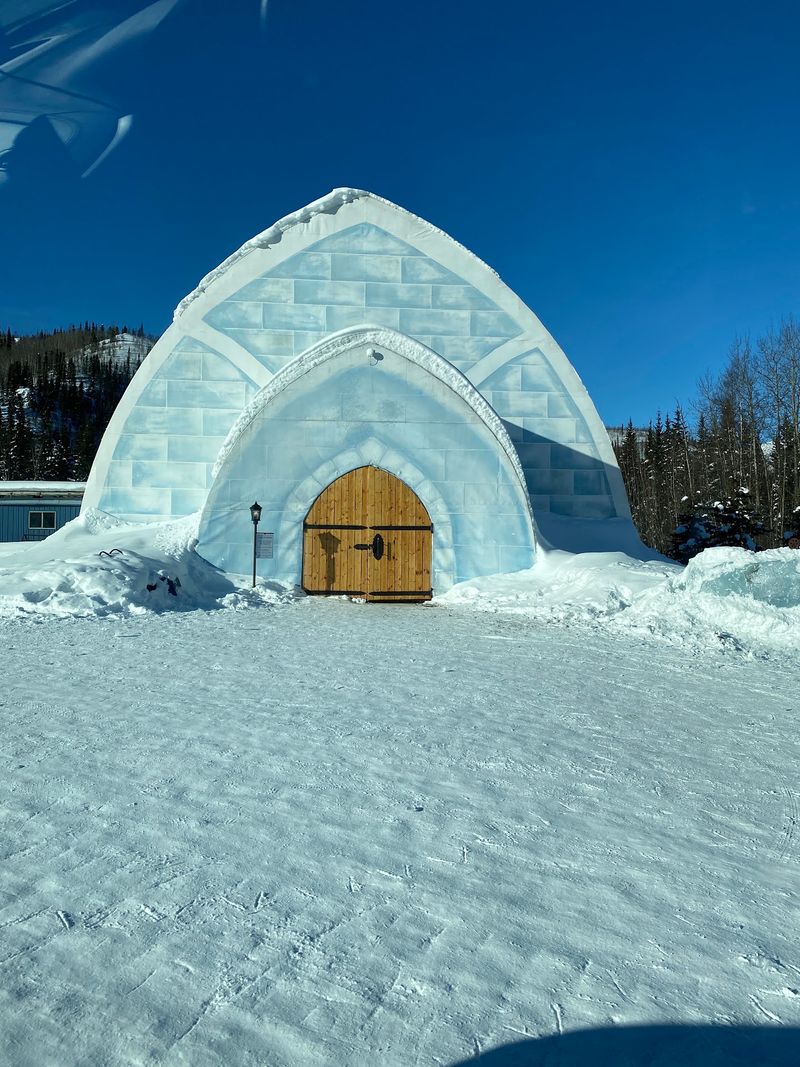
Big ideas sometimes shrink into better ones. The original plan here was a full ice hotel where guests would sleep on frozen beds.
Building codes had other thoughts. Hotels require sprinkler systems, and sprinklers plus ice walls make an awkward pairing.
So the dream shifted shape. The team redesigned the project as a permanent museum, which opened in 2005 after a rocky start.
An earlier version stood in 2003 and could not survive an unusually hot summer. The rebuild added a steel framework for real structural strength.
More than one thousand tons of ice and snow went into the finished space. All of it came straight from the surrounding resort property. I like that detail because it ties the art to this exact patch of Alaska. Nothing was shipped in from far away.
World champion carvers Steve and Heather Brice shaped the interior into something far beyond a novelty. Their skill turned engineering into artwork.
Each winter the whole place gets refreshed with new ice and snow. That yearly renewal keeps the Aurora Ice Museum looking crisp instead of tired.
Knights, Igloos And Ice Chess
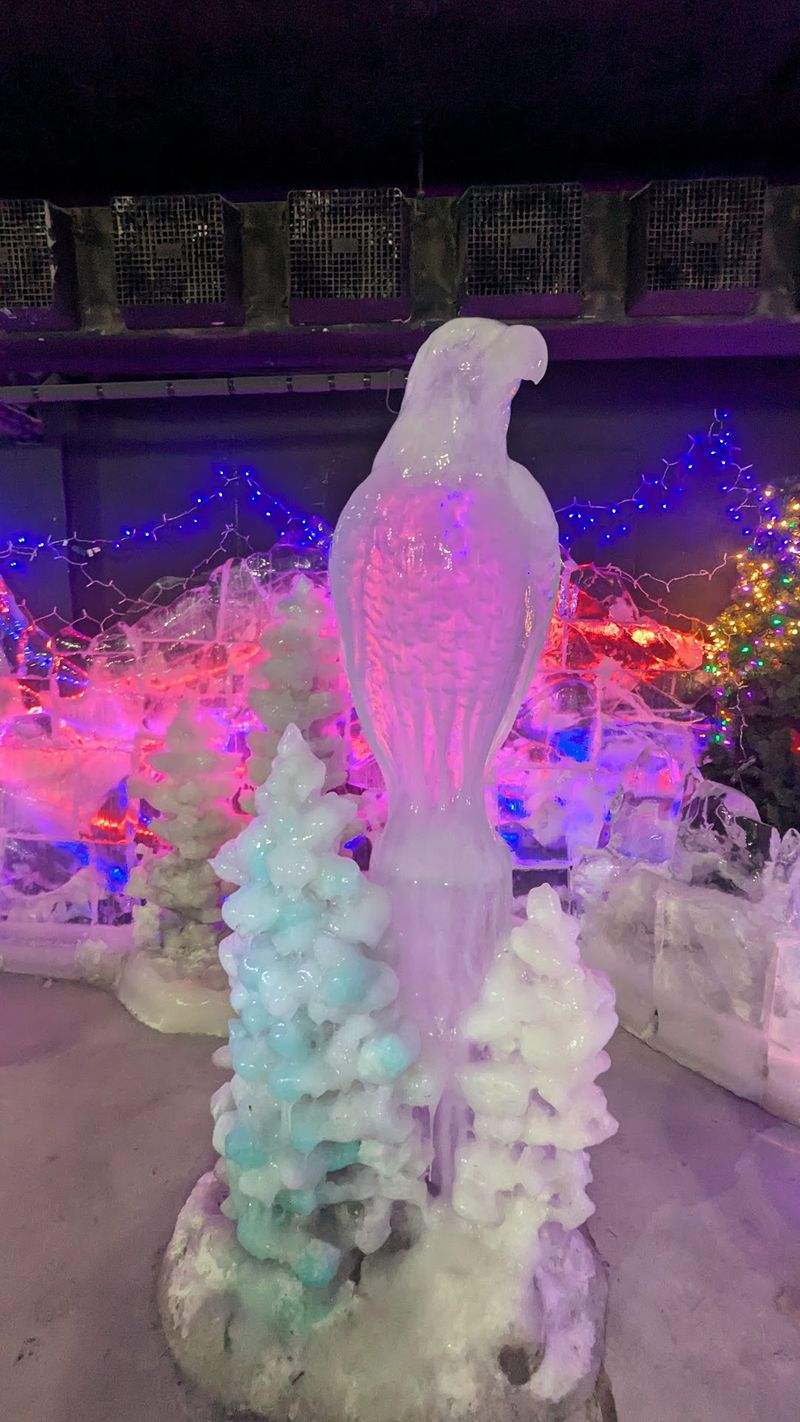
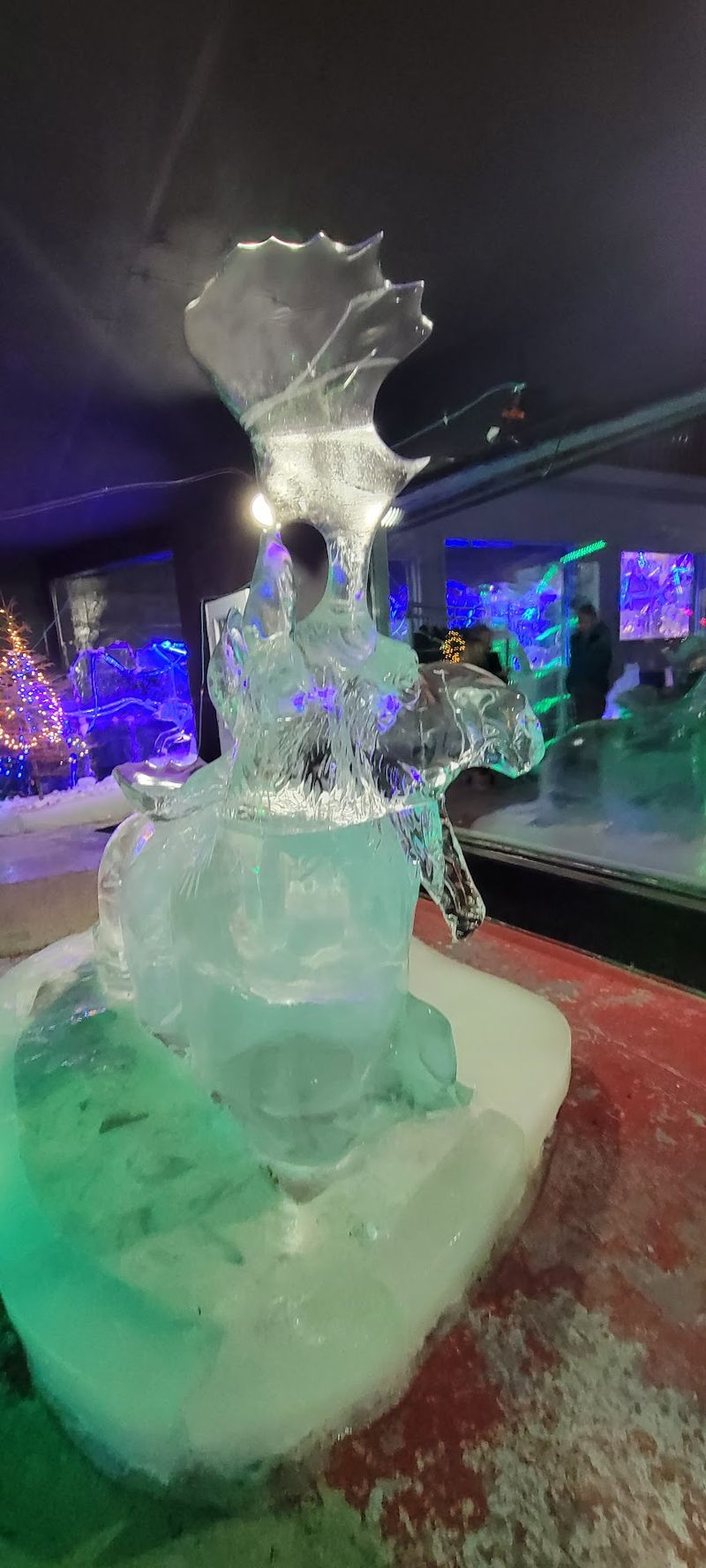
Two knights on horseback greeted me first, lances raised in a permanent standoff. Carved from clear ice, they somehow look ready to charge.
The detail on the armor stopped me cold, and I mean that literally. I circled the sculpture three times before moving on.
Farther in, a polar bear bedroom adds a playful note to the collection. There is even an ice outhouse, built purely for laughs and photos. A grand chess set waits with every piece hand carved. Nobody plays, but I wanted to.
Climbing the two-story observation tower gave me the best angle on the whole hall. From up there, the sculptures glow like a frozen village.
Igloos invite you to step inside, and ice snowmobiles make for silly group pictures. A small slide adds a bit of childish fun.
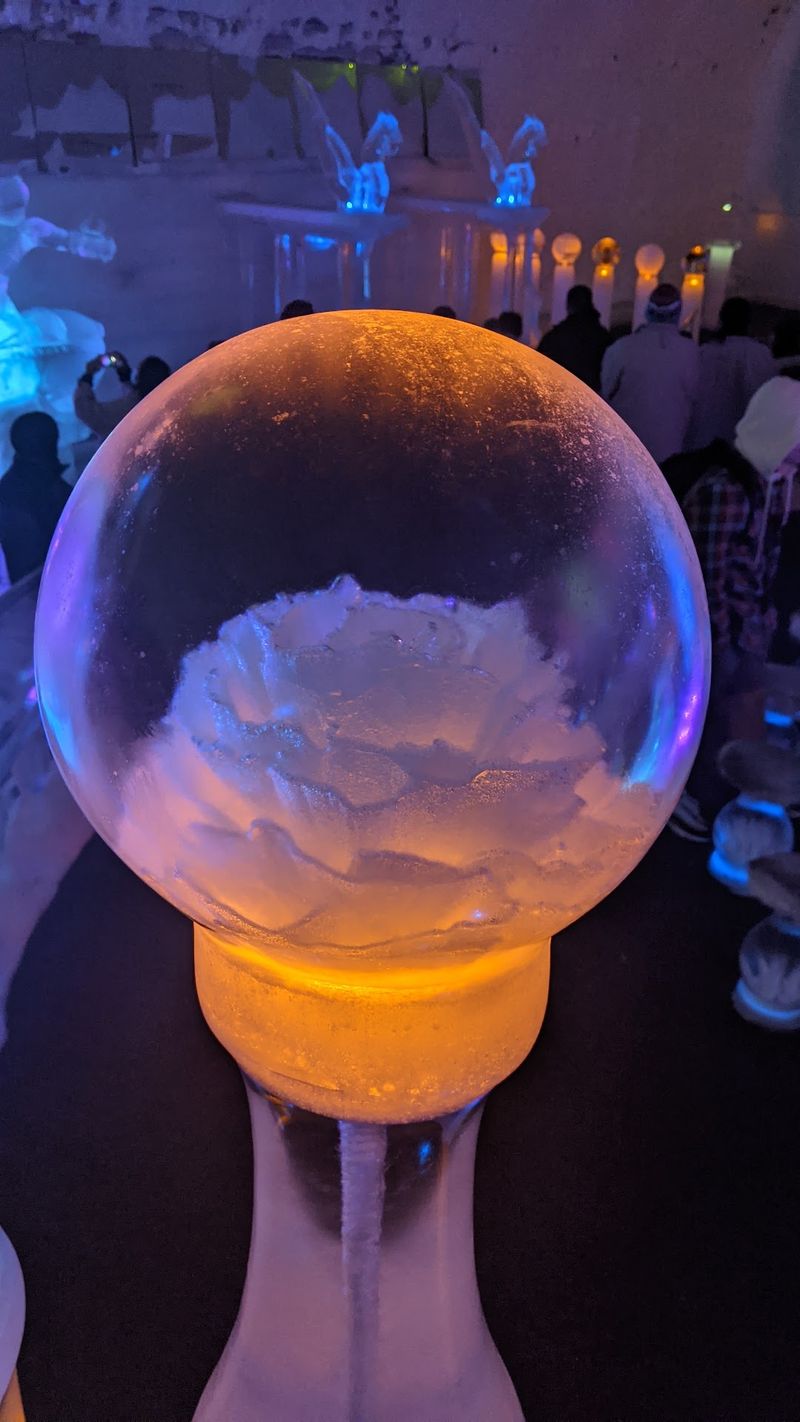
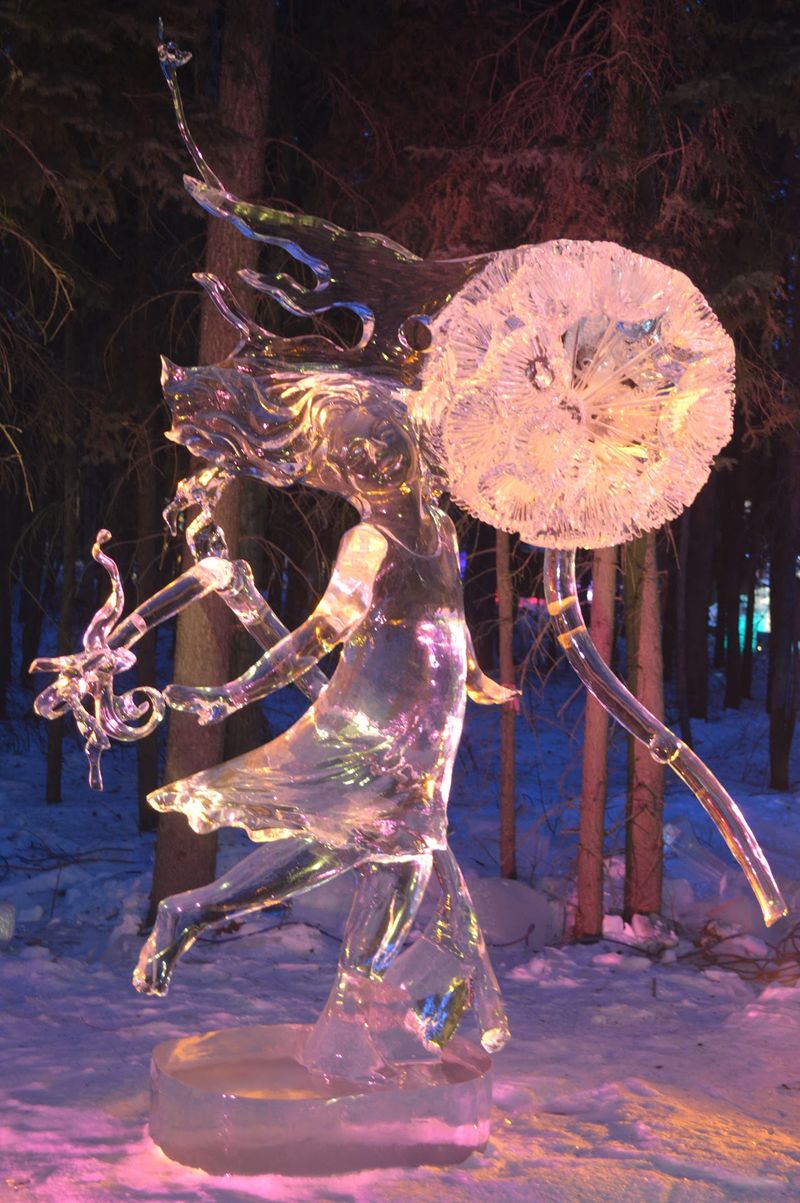
The carvers work with a crystal-clear material locally nicknamed Alaska Diamond ice. Some call it Alaska Marble instead. Its clarity lets light pass right through, which makes fine details pop. Cloudy ice would hide all that craftsmanship.
Chandeliers That Mimic The Northern Lights
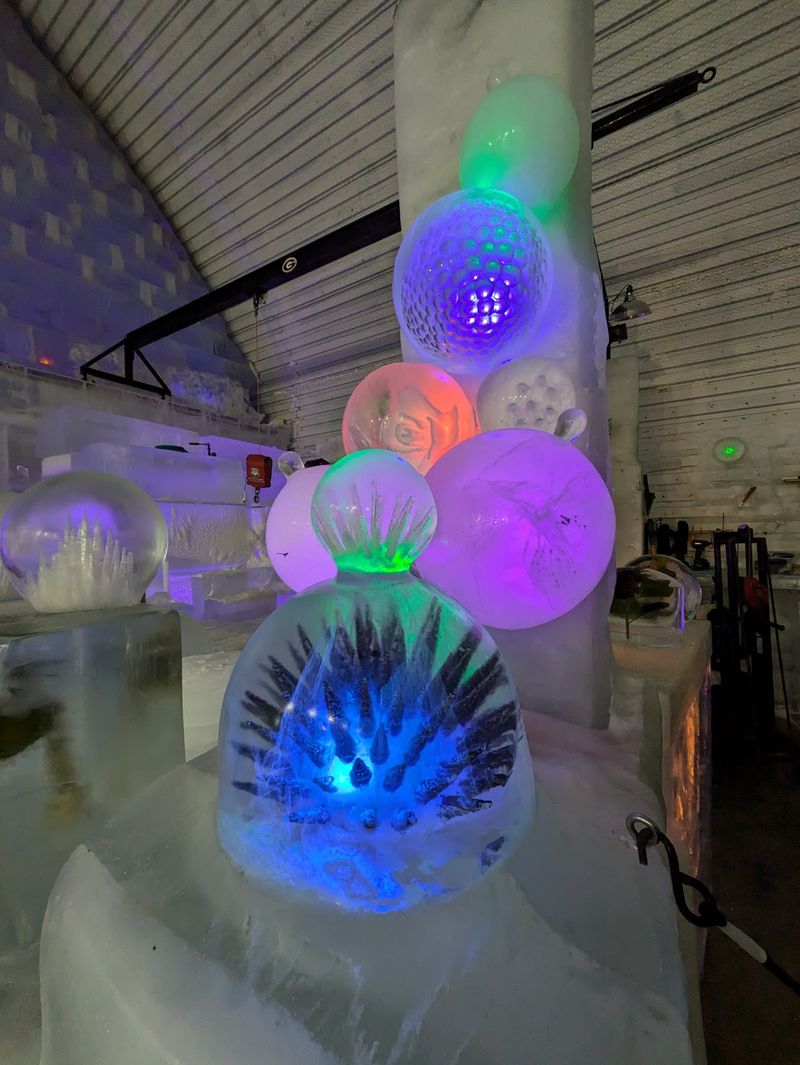
Lighting does the heavy lifting in this space. Fiber-optic strands run inside the ice itself, so the sculptures seem lit from within.
LED fixtures wash the room in shifting greens, purples and blues. The programming imitates the aurora borealis overhead.
Chandeliers made entirely of ice hang from the ceiling and change color slowly. Watching them cycle felt oddly calming.
Reflections bounce off every polished surface, so the room never looks the same twice. I kept noticing new shadows in corners I had already photographed.
Somewhere behind me, a soft drip echoed through the hall. That tiny sound reminded me the whole place is alive and shifting.
Summer visitors get an unexpected bonus here. When Alaska skies stay bright at midnight, real aurora viewing becomes impossible.
The museum offers a dark room with a simulated version instead. It is not the real sky, but it scratches the itch nicely.
A few travelers wish the interior were brighter for photos. I found the dim glow more atmospheric, though a steady hand helps.
Sipping From A Carved Ice Glass
Novelty wins here, and everyone knows it. The carved ice bar comes with matching stools and glasses shaped entirely from frozen blocks.
Guests can order a chilled apple-flavored drink served in a hand-carved martini glass. Holding it requires a light touch and warm gloves.
Portions are small and premade, so the appeal is the vessel rather than the volume. I still thought it was worth doing once.
Some visitors keep the glass as a souvenir, which only works with freezer access. Mine did not survive the drive back.
Glass supplies can run short when large groups arrive together. Booking ahead and asking about availability saves disappointment. The bar area is compact and popular, so patience helps during busy hours. I waited a few minutes and had the counter to myself.
Photos here turn out beautifully because the ice catches every color from the lights above. Steady hands and a quick shutter do the trick.
Kids can still pose at the counter without ordering anything. My favorite moment was simply resting my palm on the frozen bar top.
Geothermal Magic Keeps It Frozen
Here is the part that genuinely impressed me. Hot water from the ground keeps this building cold, which sounds impossible until you learn how.
A patented absorption chiller runs on geothermal energy from the springs nearby. It converts heat into cooling power.
That system holds the interior steady at around 20 to 25 degrees Fahrenheit, roughly negative 4 to negative 7 Celsius, depending on the season. Outside, summer temperatures can climb past 90.
It was the first setup of its kind used this way anywhere. The design earned a geothermal innovation award back in 2005.
Dry air matters just as much as temperature. The staff keep humidity low so the cold feels less biting on exposed skin. I noticed the difference immediately. Twenty-five degrees felt manageable rather than harsh, and my fingers stayed comfortable.
Dry conditions also protect the sculptures from frost buildup. Clear ice stays clear instead of turning fuzzy and white.
Try Carving Your Own Sculpture
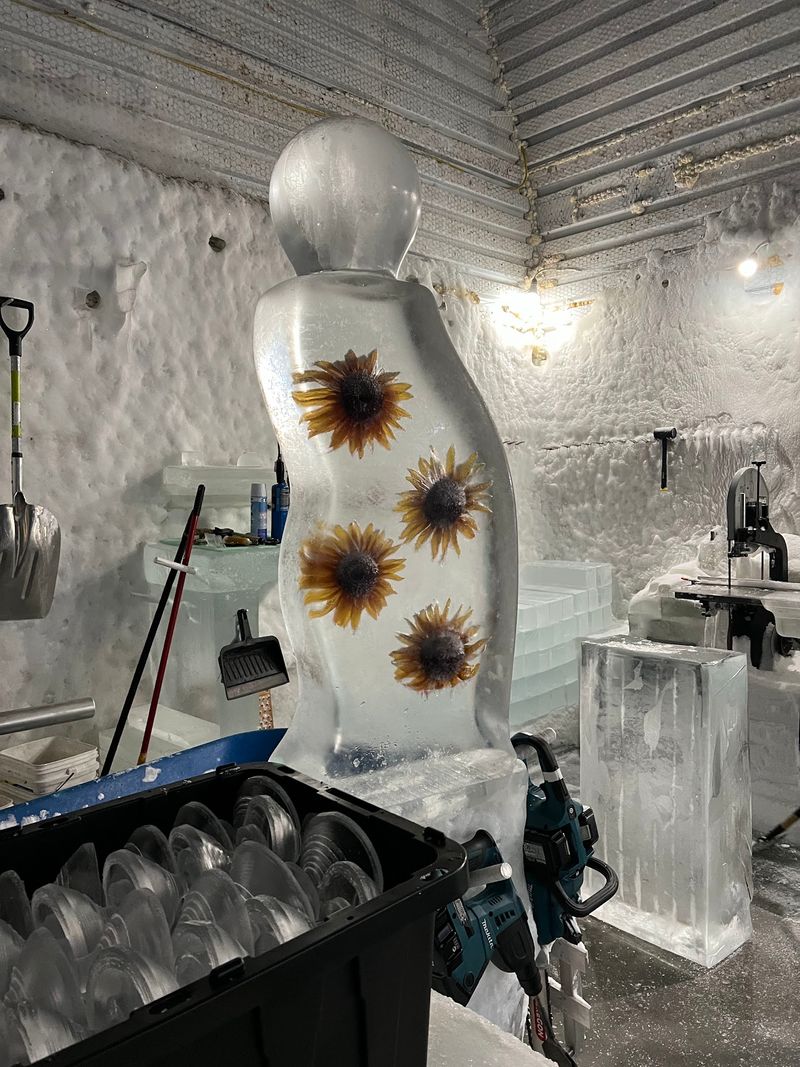
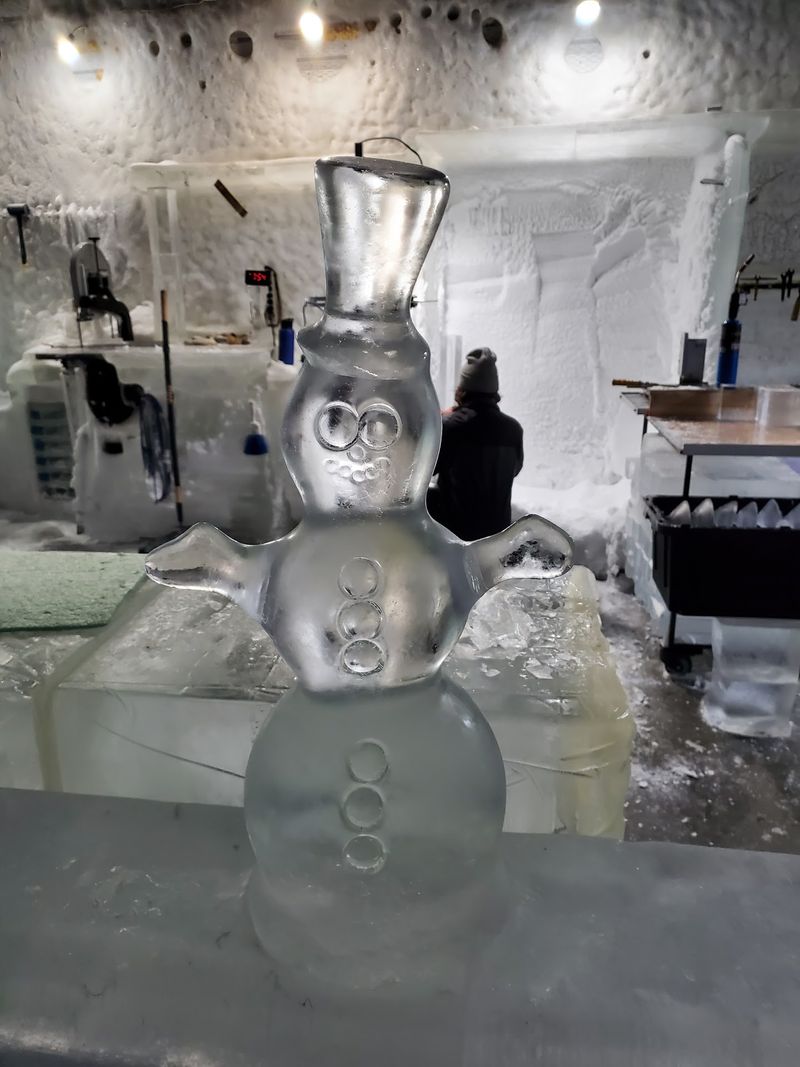
Watching an expert shape ice with a power saw made my hands itch to try. Luckily, that option exists here.
Two-hour carving classes teach the basics of shaping frozen blocks. Skilled instructors guide each step from rough cuts to finishing touches.
Group sizes stay small, so you actually get attention rather than a crowd demonstration. I appreciated the hands-on pace.
Beginners are welcome, and nobody expects a masterpiece. My swan looked more like a duck, and that was fine.
The class taught me why clarity matters so much in this craft. Air bubbles and cracks change every decision a carver makes. Tools range from chisels to chainsaws, handled with careful supervision. Safety instructions come first, which reassured me.
Dress warmer than you think you need for this activity. Standing still while working makes cold settle into your feet.
Booking in advance is smart since spots fill quickly during busy travel seasons. A quick phone call sorted mine out.
Guided museum tours run separately and last about 45 minutes with independent exploring afterward. Guides share history, then let you roam and photograph freely.
Pack Smart, Then Warm Up After
Parkas come free with admission, which sounds like enough. It is not.
Warm layers underneath make a real difference during a 45-minute visit. I wore thermal leggings and never regretted it.
Bring your own hat and gloves, since those items are not always supplied. Cold ears ruin sightseeing faster than anything. Closed shoes with thick socks beat sneakers on that frozen floor. My toes thanked me.
Tickets are purchased at the Adventure Center before the tour, and reservations are recommended. Entry happens only at scheduled times.
Groups sometimes merge, which can make photography trickier. Arriving for an earlier slot helped me dodge the crowds.
Afterward, the natural mineral hot springs sit just steps away. That contrast between frozen art and steaming water is the whole point of coming here.
People have soaked in these waters since gold miners found them in 1905. Hiking and ski trails wind through the surrounding woods too.
Remote skies mean strong aurora viewing chances in winter months. Alaska delivers that show best far from city lights.