10 Quiet North Carolina Hikes To Escape The August Crowds In 2026
A summer hike should not feel like waiting in line with trees.
Yet August can do exactly that to North Carolina’s most famous trails. You pull into the lot, spot the crowd, and immediately realize half the state had the same brilliant outdoor idea.
Thankfully, quieter paths still exist.
The kind where footsteps replace chatter and the trail feels like somewhere you can actually disappear for a while. No shoulder-to-shoulder hiking.
No accidental participation in somebody else’s family outing.
Just space. That can make a huge difference when the heat already has everyone slightly less patient than usual.
These ten trails offer a calmer way to spend a summer day in 2026, with enough variety to keep the scenery interesting without dragging you straight into the busiest corners of the map.
So skip the trail that needs traffic control.
North Carolina has better places to lose an afternoon.
1. Bluff Mountain Trail, Doughton Park, Laurel Springs
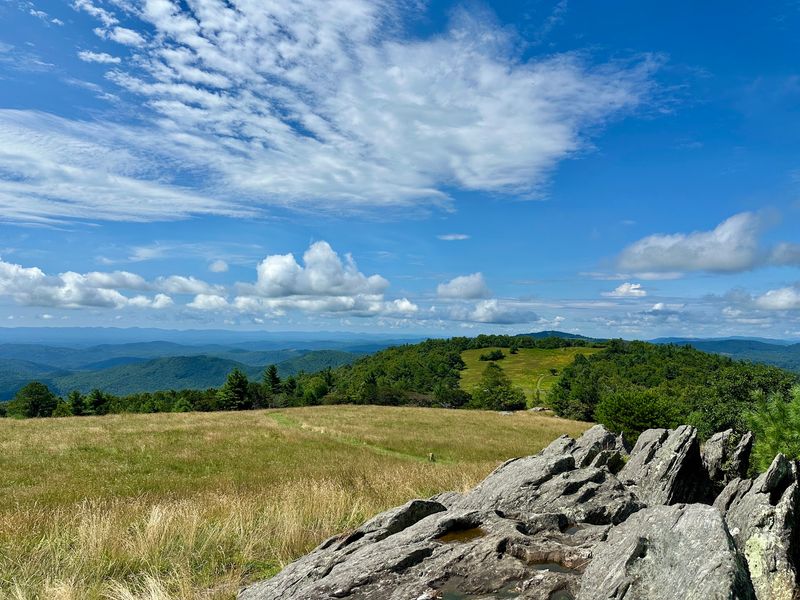
Few Blue Ridge Parkway spots give you this much open sky without the shoulder-to-shoulder feeling of the big overlooks. The Bluff Mountain Trail stretches roughly 7.5 miles along a ridge at Doughton Park, mixing shady woods with grassy meadows that seem to roll forever.
What makes it so friendly for a hot August day is the flexibility. Multiple access points, including Basin Cove, Alligator Back, and the Bluffs Picnic Area overlook, let you hike a short mile or two and turn around whenever you like.
Nobody says you have to finish the whole thing.
Elevation near 3,700 feet keeps temperatures cooler than the valleys below, though the meadow sections offer almost no shade by midday. Start early, bring a hat, and carry more water than you think you need.
Deer graze the fields at dawn and dusk, and the wide grassy stretches make excellent picnic spots. Cell service is patchy along the Parkway, so download your map before leaving the car.
2. Summit Trail, Elk Knob State Park, Todd
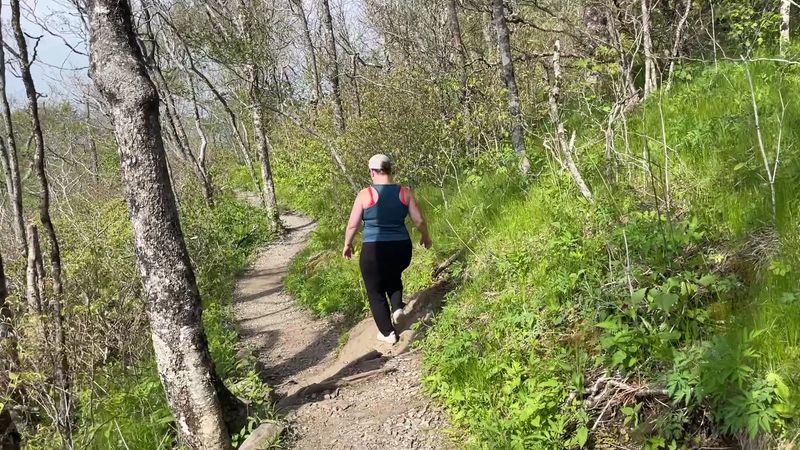
Standing at 5,520 feet, Elk Knob is one of the highest summits in the North Carolina High Country, yet it stays surprisingly calm compared with the famous overlooks around Boone.
The Summit Trail runs 1.9 miles one way, making it about 3.8 miles round trip. Well-built switchbacks climb steadily through northern hardwood forest, which means shade nearly the whole way and air that feels ten degrees cooler than town.
Your reward at the top is a wide view stretching into Tennessee and Virginia, with Grandfather Mountain, Mount Mitchell, and the Iron Mountains all visible on clear days. Two viewing areas sit near the summit, so groups can spread out.
Come on a weekday morning if you can. The parking area is small, and August weekends fill up faster than most people expect.
Fun bit of history: this mountain was protected largely through community fundraising, which explains why the trail feels so lovingly maintained. Pack a light jacket, since summit breezes can surprise you even in summer.
3. Chestnut Knob Trail, South Mountains State Park, Connelly Springs
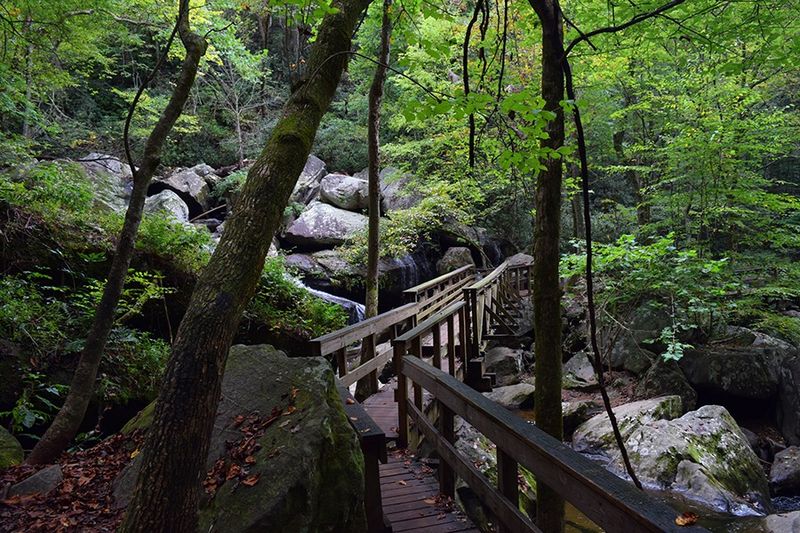
Almost everyone who parks at South Mountains heads straight for High Shoals Falls, which is exactly why the trail heading uphill stays peaceful.
Chestnut Knob Trail branches north off the falls loop and climbs roughly 900 feet over about two miles each way. It is a genuine workout, with rocky footing and steady grades that will get your heart pounding.
The payoff is a rocky overlook with a huge sweep across the Jacob Fork River Gorge. On clear days you can pick out distant High Shoals Falls, Ravens Rock, and Benn Knob rising above the foothills.
Ambitious hikers can link it into a 6-mile loop, but the out-and-back version works fine for a half day. Either way, the crowd thins dramatically once you leave the paved section behind.
Heat is the real challenge here since the foothills run warmer than the mountains. Aim for an early start, carry at least two liters of water per person, and wear shoes with solid tread for the descent.
4. Holly Road Trail, Weymouth Woods, Southern Pines
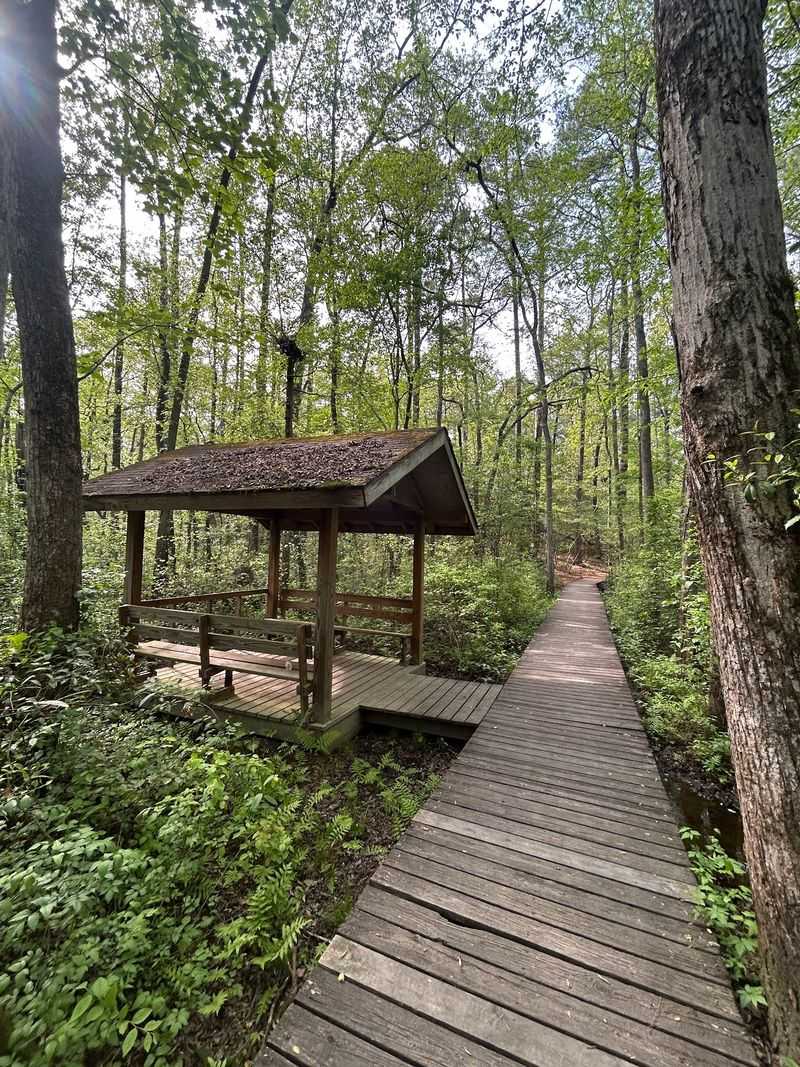
Sandhills country offers a completely different kind of walk, and Weymouth Woods proves it within about 1.8 easy miles.
Holly Road Trail loops beneath towering longleaf pines, some of the oldest in the world, growing above open stretches of wiregrass. The ground is sandy and soft, the grade barely noticeable, and the whole route works well for families or anyone easing back into hiking.
Listen for red-cockaded woodpeckers, an endangered bird that nests in these pines. Trees marked with white bands show where biologists monitor active cavity nests, which turns the hike into a small nature lesson.
Shade is decent but not total, so plan for morning or the last two hours before closing. The visitor center has water, restrooms, and staff happy to point out what is blooming.
Because Southern Pines sits between Raleigh and Charlotte, this preserve rarely fills up even on summer weekends. Bring bug spray for the low, damp sections near the creek and enjoy the stillness.
5. Bull Boulevard, Dismal Swamp State Park, South Mills
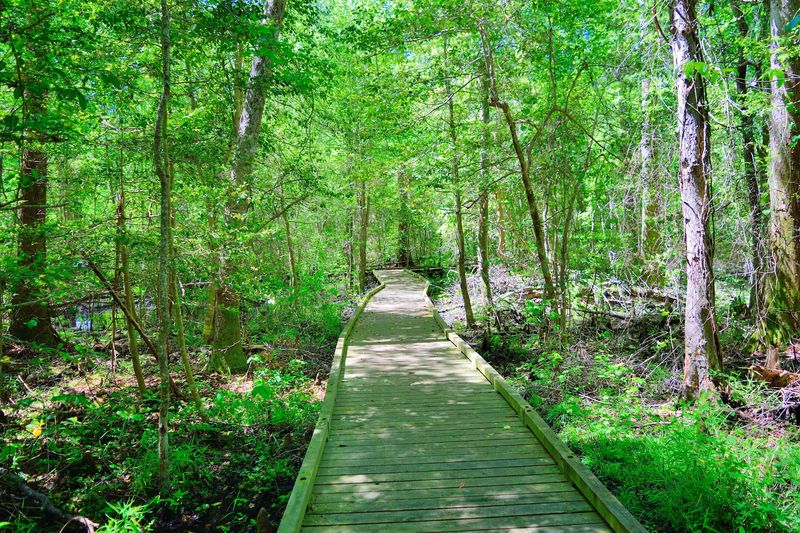
The name sounds gloomy, but the Great Dismal Swamp is one of the most alive places in North Carolina.
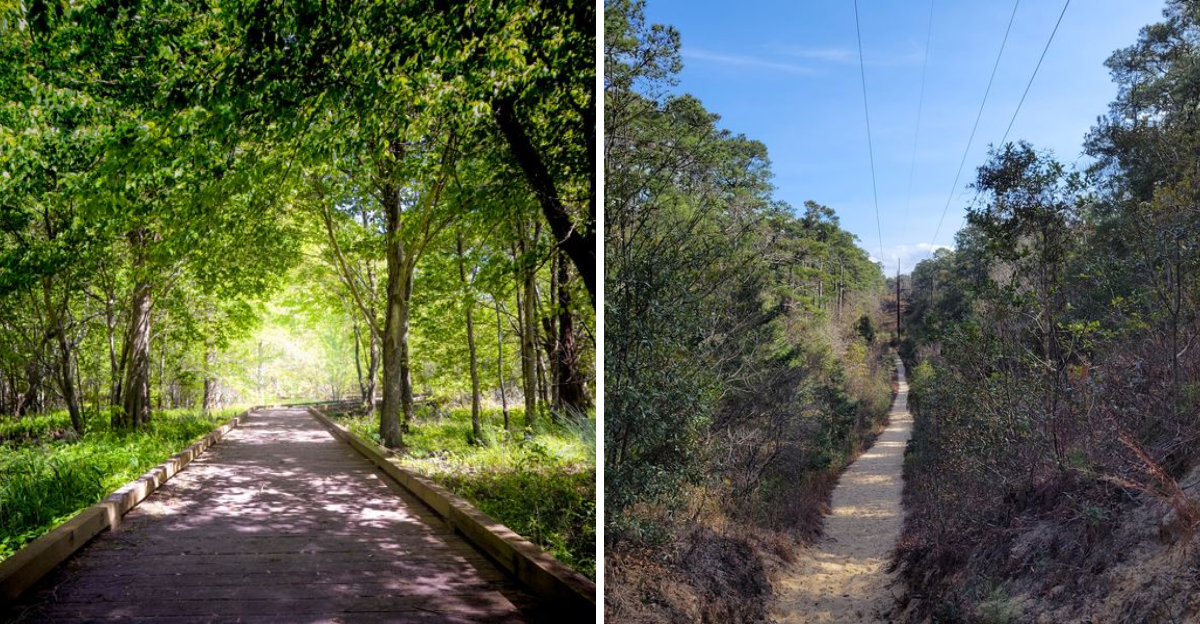
Bull Boulevard runs about 2.25 miles one way, a wide grassy corridor pushing deep into the swamp beneath cypress and Atlantic white cedar. Flat and straight, it feels more like a long green hallway than a mountain climb.
Wildlife is the main event. The park protects 47 mammal species, around 200 kinds of birds, and 96 butterfly species, so keep an eye out for otter slides along the ditches, wading egrets, woodpeckers hammering overhead, and deer slipping into the brush.
Bicycles are allowed on many park roads, which is a smart way to cover more ground on a humid afternoon. A footbridge over the historic Dismal Swamp Canal gets you started.
Realistically, mosquitoes and ticks rule August here, so long sleeves and strong repellent matter more than fancy gear. Visit soon after sunrise for the coolest air and the best animal sightings.
6. Moccasin Trail, Pettigrew State Park, Creswell
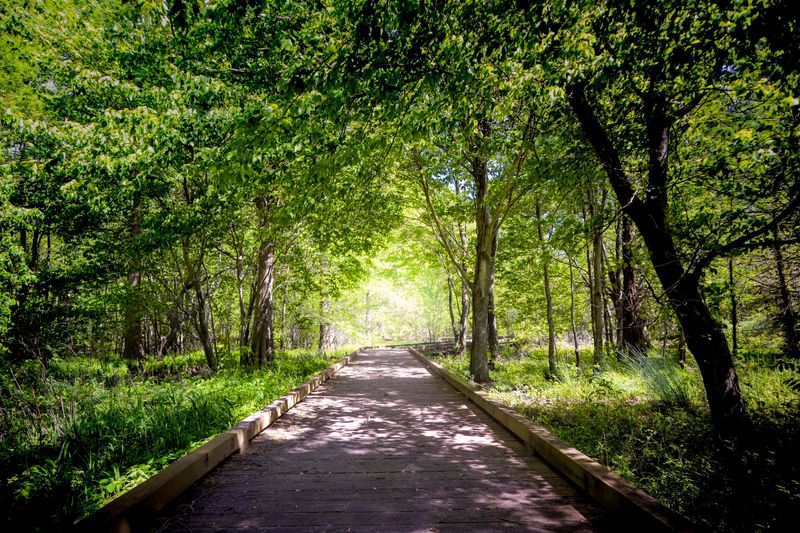
Out in eastern North Carolina, Pettigrew State Park feels wonderfully far from everything, which is half its charm.
Moccasin Trail covers about 2.8 easy miles one way through hardwood and cypress forest along the northern shore of Lake Phelps. The path is flat and wide, with plenty of elbow room even when other visitors show up.
Dense summer foliage hides the lake for long stretches, though gaps near the park office give you glimpses of open water. At the far end, a 350-foot boardwalk carries you through cypress swamp to Moccasin Overlook, easily the best view of the day.
Lake Phelps is roughly 16,000 acres and only a few feet deep in most spots, a natural Carolina bay lake shaped thousands of years ago. Ancient dugout canoes have been discovered in its waters.
Renovation work is scheduled during 2026, but day-use access continues, so call ahead to confirm trail and restroom availability before making the drive.
7. CCC Loop Trail, Singletary Lake State Park, Kelly
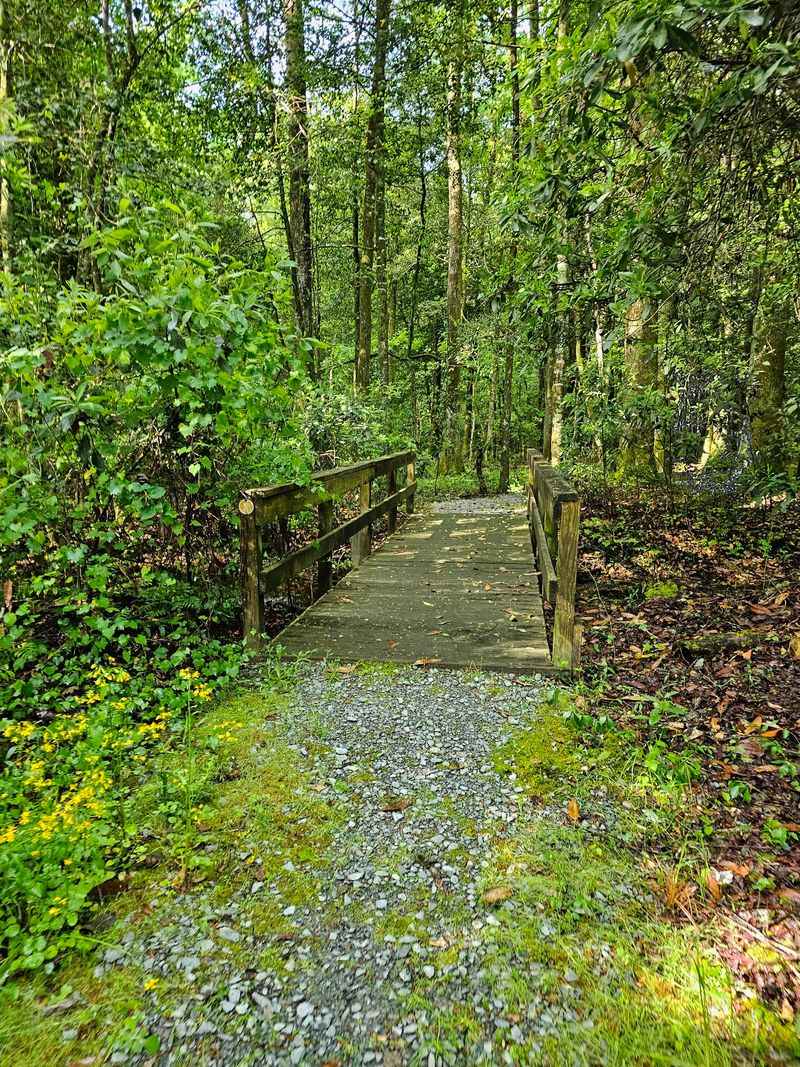
Singletary Lake mostly hosts nonprofit group camps, which means the day-use trail often belongs to whoever shows up that morning.
The CCC Loop Trail runs an easy one mile through an unusual Carolina bay environment. You will pass bay shrubs, cedar, cypress, gum, and poplar before the route swings back through longleaf pine and low bay vegetation.
A short walk out on the park pier gives you the widest view across the dark, tea-colored lake, where cypress trees wear thick beards of Spanish moss. It is a great spot for photos in soft morning light.
Interpretive signs explain how Carolina bays formed, those mysterious oval depressions scattered across the coastal plain that scientists still debate. The trail name honors the Civilian Conservation Corps crews who built much of the park in the 1930s.
Since the loop is short, pair it with a nearby stop at Jones Lake or Lake Waccamaw. Sturdy sneakers work fine, but bug spray is genuinely necessary in August.
8. Bay Trail, Jones Lake State Park, Elizabethtown
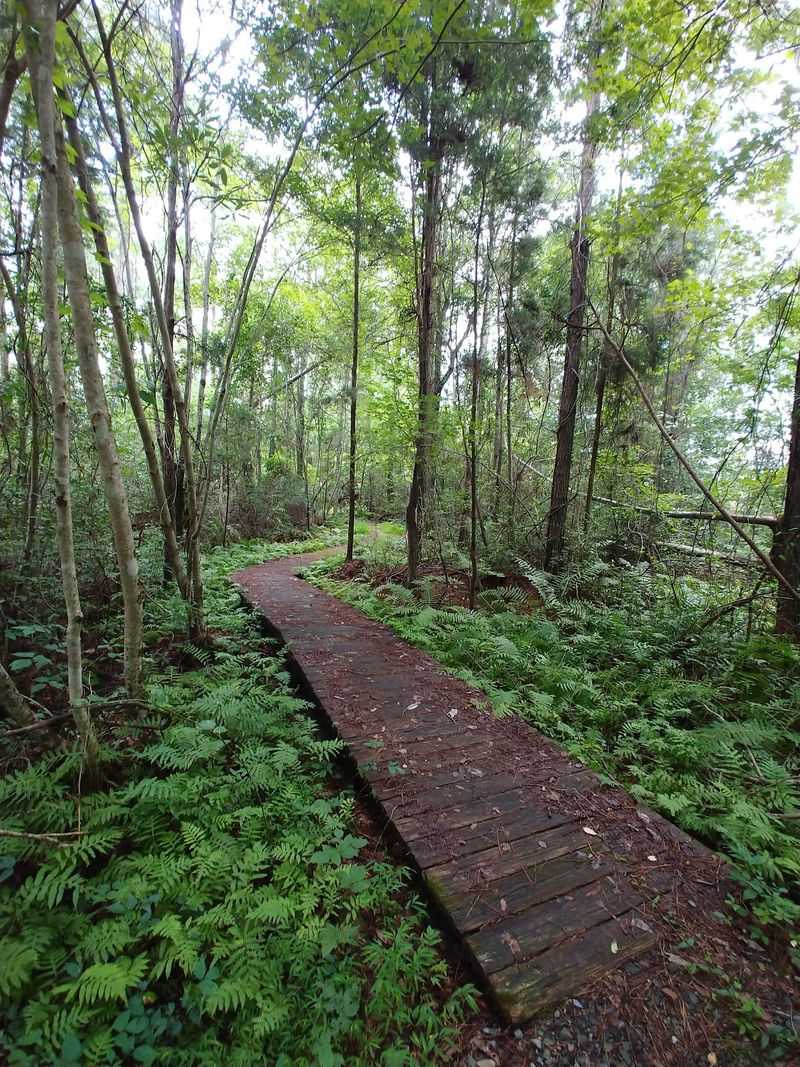
Beach traffic in August can feel merciless, and Jones Lake is the calm antidote about two hours inland.
Bay Trail forms roughly a 4-mile loop around the lake, threading through bay forest and longleaf pine habitat. Expect boggy soil in places, dense shrubs pressing close to the path, pond cypress draped in Spanish moss, and thickets of swamp cyrilla.
Combined with the park’s other paths, you get about six miles of hiking, enough to fill a morning without repeating yourself. The park earns a reputation for small crowds and a slow, unhurried pace.
Swimming in the tannin-stained water is one of the state’s quietest swims, so pack a towel and cool off after your loop. From June through August, the park stays open until 9 p.m., which opens up evening hiking when temperatures finally drop.
Wear shoes you do not mind getting muddy, and check trail conditions after heavy summer rain since low sections hold water for days.
9. Sweet Gum Swamp Trail, Nags Head Woods Preserve, Nags Head
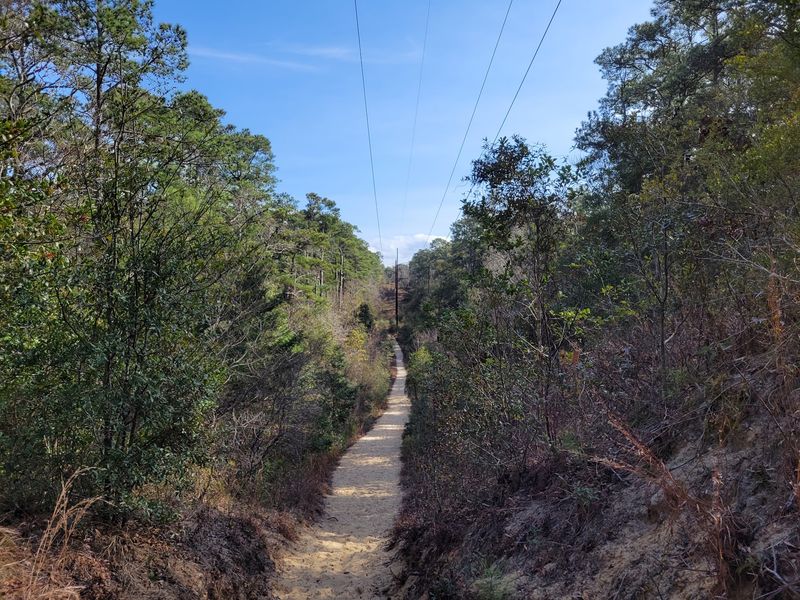
Two miles from crowded Outer Banks beaches sits a forest most vacationers never notice.
Sweet Gum Swamp Trail winds 2.25 miles across ancient dune ridges inside Nags Head Woods Preserve, and it is more demanding than it sounds. The path climbs and drops repeatedly over sandy hills, earning it a strenuous rating despite the modest distance.
Between the ridges lie freshwater ponds and wetlands surrounded by gnarled oaks, beech, and hickory that have survived centuries of salt wind. Wildlife thrives here, from box turtles to more than 50 species of nesting birds.
Link it with the Blueberry Ridge Trail for a 3.75-mile outing. Trails here are often nearly empty, giving you an experience that feels miles removed from the boardwalk and beach umbrellas.
The Nature Conservancy manages the preserve, and the parking lot is small, so arrive early. Shade helps with the heat, but humidity and mosquitoes are serious in August, so bring water and repellent.
10. Densons Creek Nature Trail, Uwharrie National Forest, Troy
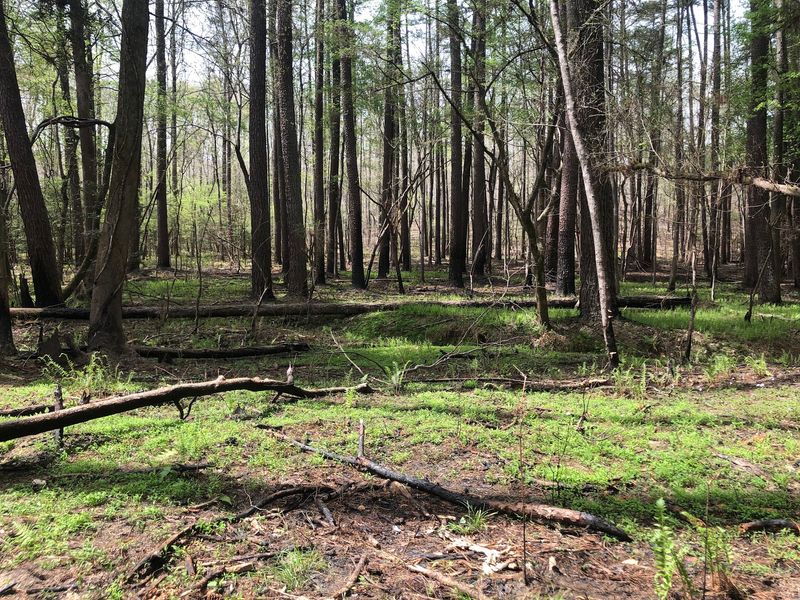
The Uwharrie Mountains were once as tall as the Rockies, worn down over hundreds of millions of years into the gentle hills you see today.
Densons Creek Nature Trail explores that ancient landscape with a 1-mile inner loop and a 2.2-mile outer loop, so you can choose based on how hot the afternoon feels. Youth Conservation Corps crews built the route, adding interpretive stops along the way.
Signs point out former farmland, an old homestead site, and a sawmill clearing that now serves as a wildlife opening. Mixed pine and hardwood forest shades most of the walk, and small creek crossings add interest.
Based near Troy, this trail sits within easy reach of Charlotte, Greensboro, and the Triad, yet it draws a fraction of the visitors that mountain trailheads pull in.
Deer, wild turkey, and songbirds are common sightings. Watch for roots and rocky sections, and consider pairing your hike with a stop at nearby Badin Lake to cool off.
Disclaimer: Trail conditions, park access, operating hours, parking, and facilities can change without notice. Summer storms, maintenance, flooding, and other conditions may also affect individual trails.
The information in this article is intended as a general planning guide for August 2026. Always check official park or land-management websites before traveling.
Current notices may include closures, construction, swimming restrictions, damaged trails, or limited facilities.
Descriptions such as “quiet,” “peaceful,” and “less crowded” are relative. No trail can be guaranteed to remain uncrowded.
Visitor numbers often change by weekday, weather, time of day, holidays, and special events.
August hiking conditions can include heat, humidity, thunderstorms, insects, mud, and slippery surfaces. Some locations may also have limited or unreliable cell service.
Carry enough water and wear suitable shoes for the terrain.
Sun protection and insect repellent are also recommended during warmer months. Download maps ahead of time when cell coverage may be limited.
Follow all posted park rules and stay on designated trails. Give wildlife plenty of space and avoid disturbing plants or natural features.
Turn around if weather or trail conditions become unsafe. Preparation can make a summer hike safer, easier, and far more enjoyable.