10 Arizona Towns Where The Old Wild West Still Feels Alive In 2026
Cowboy boots suddenly make perfect sense when the streets around you still carry reminders of frontier days.
Arizona keeps the Old West surprisingly close, with historic towns where yesterday refuses to completely ride away.
Former mining communities, preserved buildings, territorial history, and longstanding traditions give these stops plenty more than movie-set appeal.
Some celebrate their past through events and attractions, while quieter places let surviving landmarks tell much of the story. That variety makes exploring them especially fun.
You might arrive curious about cowboys and leave fascinated by mining, railroads, or pioneer life instead.
Grab the keys and follow the history, because these towns make the past considerably harder to ignore.
1. Tombstone
Just imagine for a second the sound of boots hitting wooden planks at high noon. Thirty seconds of chaos in 1881 turned a mining camp into the most famous frontier name in America.
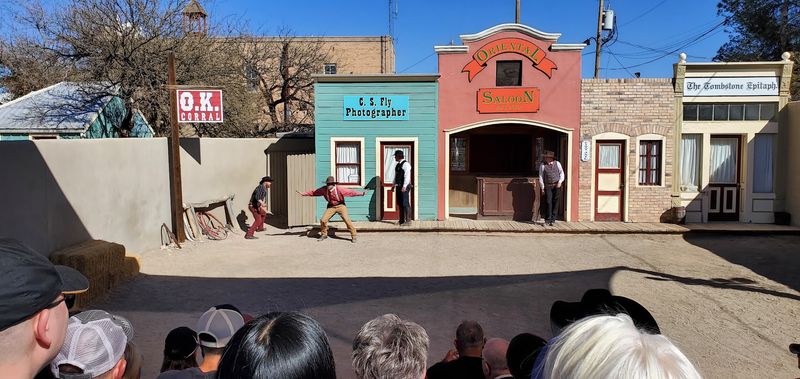
Tombstone leans hard into that legend, and honestly, it does the job beautifully. Daily gunfight reenactments play out for crowds who gather along Allen Street.
The O.K. Corral Historic Complex marks the exact ground where the showdown happened. Life-sized figures stand in position while a narration walks you through the fight.
Inside the same complex sits an 1880s stable with period buggies and old fire equipment. C.S. Fly’s Photo Gallery holds more than a hundred historical photographs, including images of the Apache leader Geronimo.
Wooden boardwalks connect the shops, museums, and saloons that line the main drag. The Tombstone Epitaph Museum covers Arizona’s oldest newspaper and sells reprints of the 1881 edition describing the famous fight.
Plan for a full day, since the reenactments run on a schedule and museums close earlier than you expect. Comfortable shoes matter more than a cowboy costume, though plenty of folks wear both.
Mornings stay cooler and quieter, which makes photographing the storefronts far easier. You will find the O.K. Corral Historic Complex at 326 E Allen St, Tombstone.
Few towns wear their history this loudly, and none do it with more swagger.
2. Bisbee
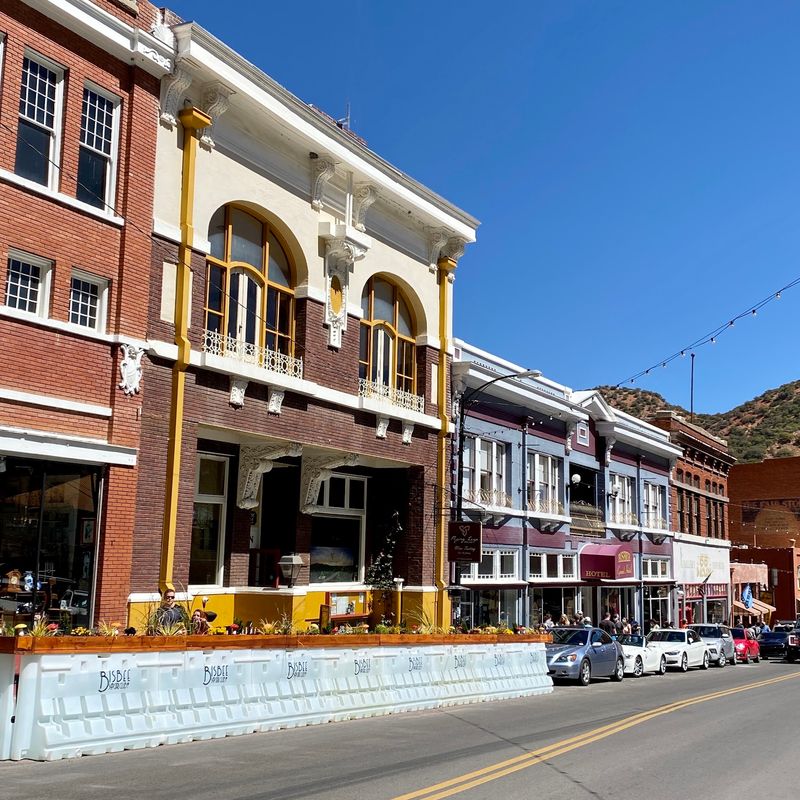
My jaw literally dropped when copper history and paint-splattered art studios showed up on the same steep staircase.
Once ranked among the biggest cities between St. Louis and San Francisco, this canyon town refused to fade quietly.
Bisbee sits tucked into the Mule Mountains, where narrow streets climb the slopes at angles that will test your calves. Victorian, Art Deco, and Mission Revival buildings stack up along those hillsides in unbroken rows.
The Copper Queen Mine funded all of it. Billions of pounds of copper came out of the ground here, plus heavy amounts of silver and gold.
Underground tours take you into the shafts with retired miners leading the way. You ride in on a mine train, wear a hard hat, and listen to stories nobody wrote down.
Above ground, Main Street runs thick with independent galleries and working studios. Contemporary paintings hang a few doors from quirky folk art and handmade jewelry.
Murals and street art fill walls, stairways, and alley corners throughout the old district. Bring layers, because mile-high elevation keeps evenings cooler than the desert floor below.
Weekends bring the most activity, though weekdays give you empty sidewalks for photos. Old bones and fresh creativity share every block here, and the mix works better than it has any right to.
3. Jerome
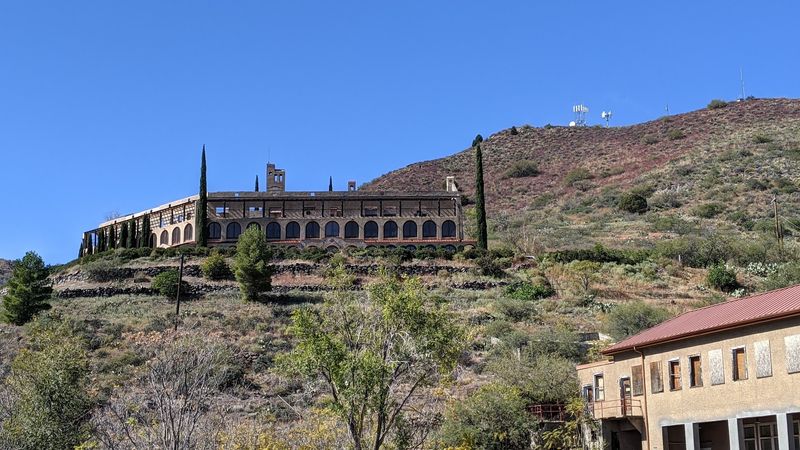
Are you seeing what I’m seeing, a whole town hanging off the side of a mountain? Newspapers once called it the wickedest town in the West, and the reputation stuck for decades.
Jerome grew from a scatter of tents into a full city after incorporation in 1899. By the 1920s more than 10,000 people lived on these switchback streets, making it one of Arizona’s largest communities.
Copper drove the boom. Tunnels run beneath the pavement, and shifting ground has cracked buildings and moved sidewalks over the years.
When the mines shut down in the 1950s, the population collapsed to almost nothing. Artists and free spirits eventually moved in, drawn by cheap buildings and enormous views.
Former bordellos now hold art galleries. Old opium dens serve dinner to guests who probably have no idea what once happened in those rooms.
Jerome State Historic Park preserves the early chapters at the Douglas Mansion, where mining equipment and artifacts fill the exhibits. The Jerome Arts Center occupies the old high school and houses many working artist studios.
Parking is tight, so arrive early and expect to walk uphill. Views across the Verde Valley stretch for miles, especially near sunset.
Perched on Cleopatra Hill roughly 100 miles north of Phoenix on State Route 89A, this hillside survivor rewards every steep step.
4. Prescott
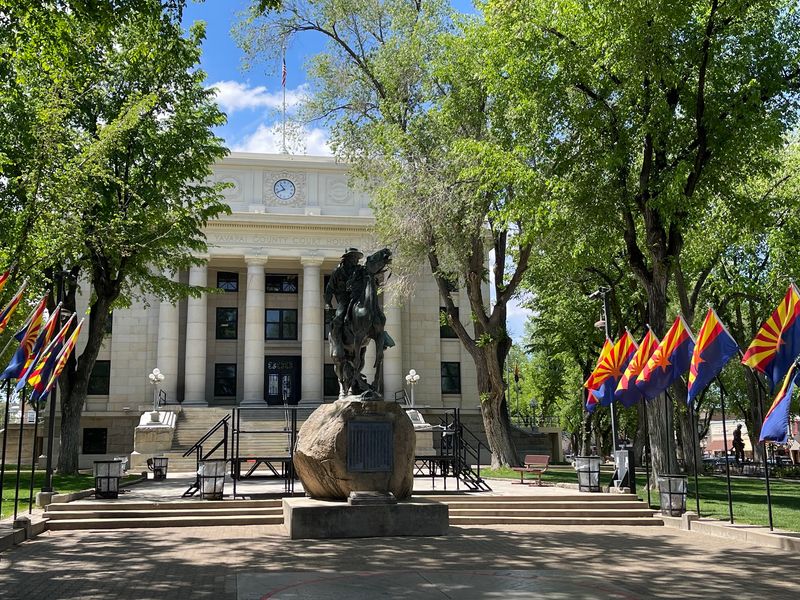
You could have knocked me over with a feather at the thought of one city block holding over 40 saloons. Gold turned up nearby in 1864, and the crowd that followed needed somewhere to spend it.
Prescott built Whiskey Row along Montezuma Street, directly across from the Yavapai County Courthouse Plaza. Miners, gamblers, and outlaws packed those doorways nightly.
The Palace Restaurant & Saloon dates to 1877 and stands as Arizona’s oldest continuously operating frontier saloon. Local legend says patrons hauled its heavy Brunswick bar out to the plaza to save it during the Great Fire of 1900.
That fire wiped out most of the Row. Residents rebuilt fast, using brick this time, which is why the facades look so uniform today.
Live music still fills the block on weekends. Matt’s Saloon and the Jersey Lilly Saloon each carry their own character and long histories.
The courthouse plaza across the street hosts festivals, art shows, and shaded benches under enormous trees. Summer stays mild here thanks to the mile-high elevation, making July far friendlier than in Phoenix.
Give yourself an afternoon to wander the plaza, then stay for the evening music. The Palace Restaurant & Saloon sits at 120 S Montezuma St, Prescott. History and good times share the same sidewalk here, and neither shows signs of quitting.
5. Yuma
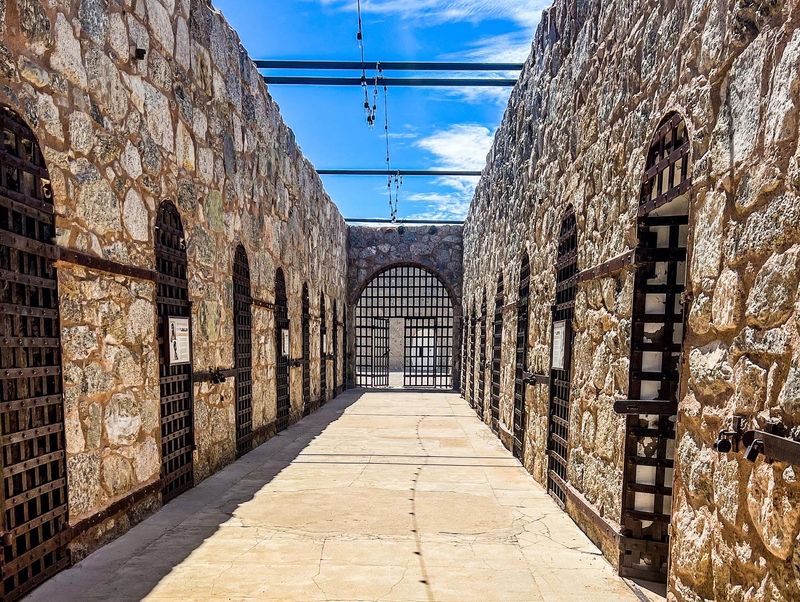
Let’s be real for a second, an 1876 frontier lockup makes for one unforgettable stop. Iron bars, stone walls, and desert heat earned it the nickname Hellhole of the West.
Yuma keeps that history open to the public through a state historic park and museum. The prison operated for 33 years and held more than 3,000 inmates before closing.
You can step inside original cells and walk through the pitch-black Dark Cell used for punishment. Exhibits lay out inmate stories, escape attempts, and daily routines behind those walls.
Events fill the calendar, including Nights at the Museum programs after dark. Wild West Days each January brings stunt shows, music, and costumed performers onto the grounds.
Storyteller-led tours add detail that plaques cannot cover. From the hilltop you get clear views of the historic Ocean to Ocean highway bridge and the river below.
Winter months bring comfortable temperatures, which explains why January events draw such crowds. Summer visits work best right at opening, since shade is limited and the stone holds heat.
Kids tend to love the guard tower and the cell blocks, making this an easy family outing. Find the Yuma Territorial Prison State Historic Park at 220 Prison Hill Road, Yuma. Grim beginnings, fascinating afternoon, and a story that sticks with you.
6. Pearce
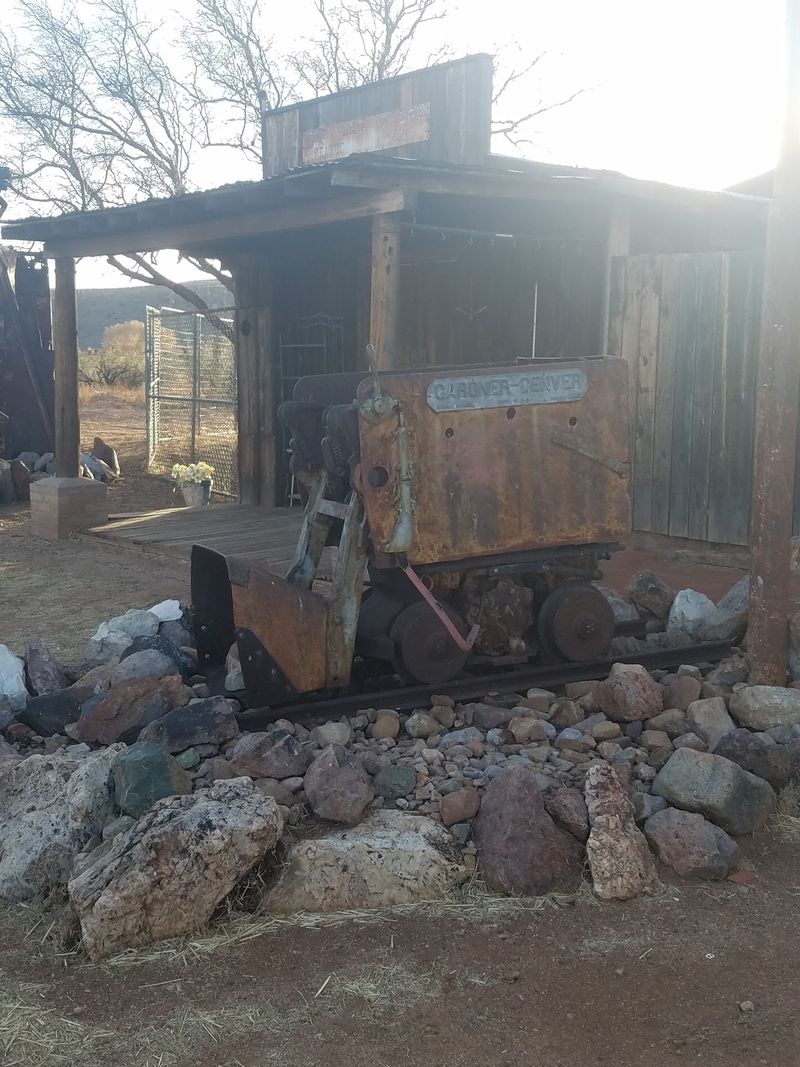
It makes you wonder, doesn’t it, how a town can nearly vanish yet still leave such clear fingerprints? Gold in 1894 built this one, and the mine’s decline emptied it decades later.
Pearce grew around the Commonwealth Mine, founded by James Pearce. The operation became one of Arizona’s wealthiest, pulling out major amounts of gold and silver.
The old general store from 1896 remains the standout building. That adobe structure once served as mercantile, banking hub, and post office all at once.
Careful restoration preserved its 1890s fixtures and exterior look. The building now appears on the National Register of Historic Places.
Nearby stand the 1915 Sheriff’s Office and remnants of an old jail. The Pearce Cemetery, established in 1916, sits quietly at the edge of town for anyone who wants a slow walk.
Mining played out by the 1930s and residents drifted away. What remains tells Arizona’s boom-and-bust story without any staged performances or ticket booths.
Bring water and a full tank, since services out here are thin. Dirt roads lead to some structures, so a vehicle with decent clearance helps after rain.
Cooler months make wandering far more comfortable in this open grassland country. The Pearce General Store stands at Ghost Town Trail and Pearce Road, Pearce. Quiet, honest, and worth the detour for anyone chasing real frontier remains.
7. Fairbank
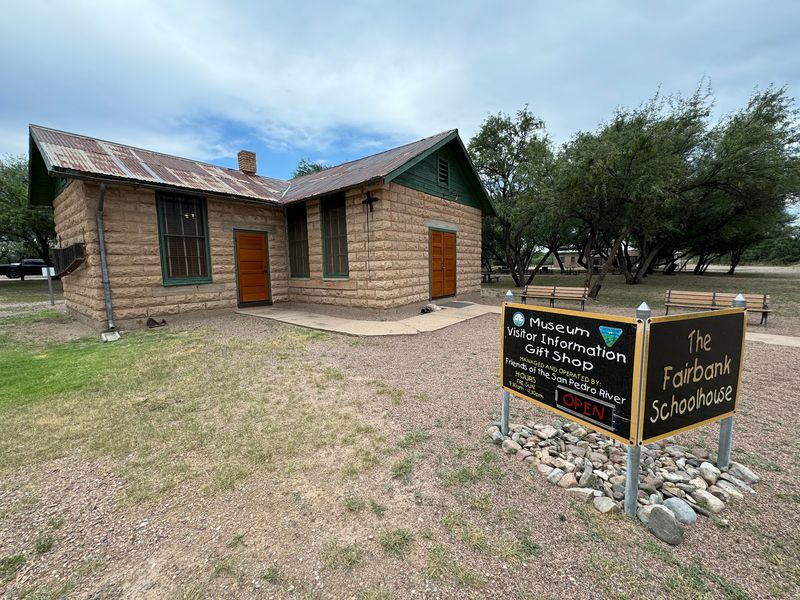
Call me crazy, but a railroad town without trains or people is oddly wonderful. Founded in 1882, it served as the shipping hub for nearby Tombstone.
Fairbank sits along the San Pedro River where cottonwoods shade the old townsite. Silver ore and supplies moved through here by rail, making it essential to the whole region.
The Adobe Commercial Building from 1883 anchors the site. Inside its walls once operated a general store, a post office, and a saloon.
The Bureau of Land Management stabilized and restored several structures across the grounds. A 1920 schoolhouse now works as a visitor center and small museum.
Historical photos and artifacts inside explain how the community functioned. Interpretive signs guide a self-guided walk past foundations, homes, and the old commercial block.
A short trail climbs to the Fairbank Cemetery with wide views over the river valley. Birdwatchers do very well here, since the riparian corridor attracts hundreds of species.
Come in the morning for cooler air and better bird activity. The schoolhouse keeps limited hours, so check ahead if the museum matters to your plans.
Sturdy shoes handle the sandy paths best, and shade is plentiful near the water. The Fairbank Historic Townsite lies roughly 10 miles west of Tombstone, off State Highway 82. Silence does the storytelling here, and it does it well.
8. Payson
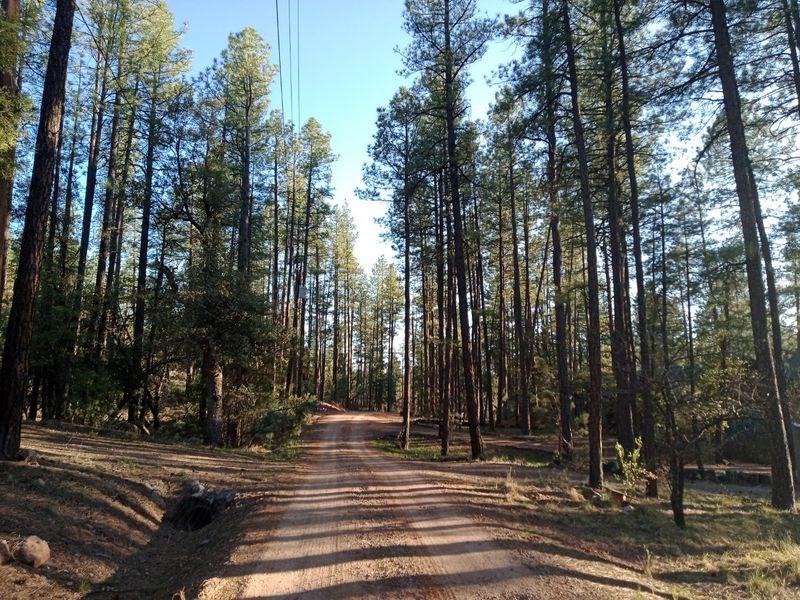
If we’re being completely transparent, 140 years of nonstop rodeo is a serious bragging right. Every August the arena fills again, keeping the world’s oldest continuous rodeo streak alive.
Payson hosts the Payson Pro Rodeo, sanctioned by the PRCA. Professional cowboys and cowgirls compete in bull riding, steer wrestling, and barrel racing.
Grandstands pack out over a long weekend of events. An old-fashioned parade rolls down Historic Main Street, drawing families along the curbs early in the morning.
Live music and rodeo dances follow the evening performances. The whole town leans into its cowboy roots during those days.
Buy tickets ahead, because the August dates draw crowds from across the state. Hats and sunscreen help, since afternoon sun hits the seating hard.
Beyond the arena, the surrounding Mogollon Rim country delivers pine forests, creeks, and cool mountain air. Elevation here keeps summer temperatures far gentler than the desert valleys below.
Hiking trails and fishing lakes sit within short drives, making the rodeo weekend an easy anchor for a longer trip. Fall brings changing leaves along the Rim roads for anyone who prefers quieter timing.
The World’s Oldest Continuous Rodeo takes place at 1400 S Beeline Hwy, Payson. Dirt, dust, and cheering crowds prove the frontier spirit never actually retired.
9. Wickenburg
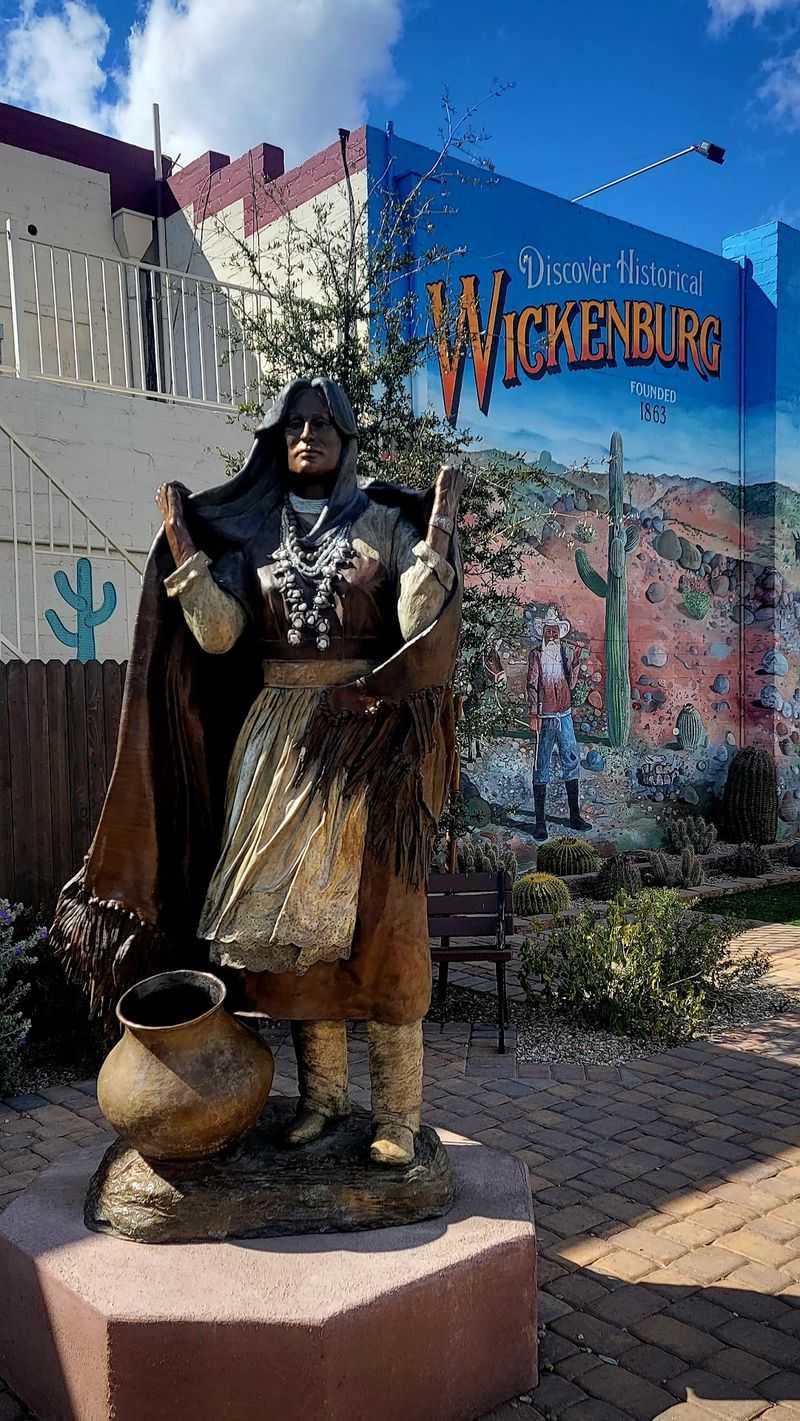
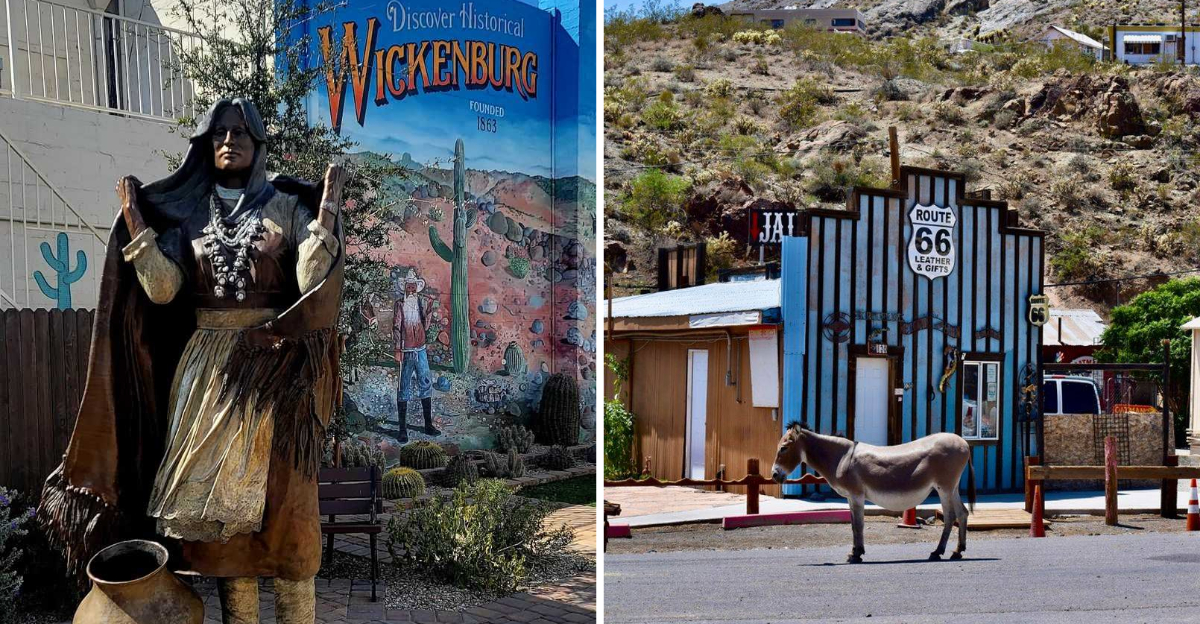
Nothing says cowboy country like a hitching post still bolted to the sidewalk. Gold started the whole story in 1863 when Henry Wickenburg discovered the Vulture Mine.
That mine became Arizona’s most productive gold producer and shaped the entire region. The town it fed calls itself the Dude Ranch Capital of the World.
Wickenburg keeps its Old West downtown intact, with historic storefronts lining the main streets. Those hitching posts remain from days when horses handled the parking situation.
Guest ranches carry the tradition forward. Kay El Bar Guest Ranch opened in 1918 and appears on the National Register of Historic Places.
Horseback rides there head straight into the Sonoran Desert among saguaros and dry washes. Rancho de los Caballeros spreads across 20,000 acres and mixes comfort with a long list of western activities.
The 1895 railroad depot now serves as the Chamber of Commerce building, a good first stop for maps and event schedules. Cooler months from October through April bring the best riding weather and the busiest ranch season.
Book ranch stays well ahead, since rooms fill fast during winter. Kay El Bar Guest Ranch sits at 2655 South Kay El Bar Road, Wickenburg. Saddle up, because few towns let you live the cowboy routine this completely.
10. Oatman
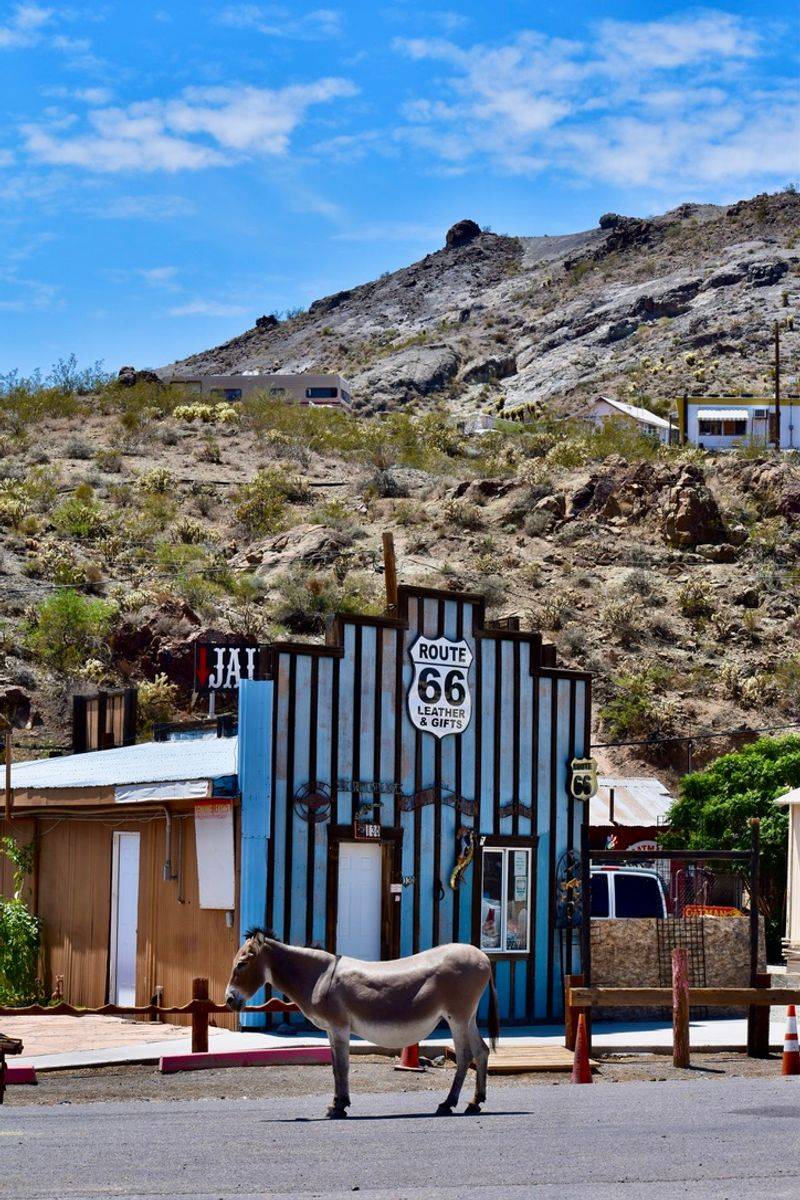
Wild burros have the right of way on this main street. They wander in from the hills each morning, descendants of pack animals miners once turned loose.
Oatman sits right on historic Route 66 with unpaved streets and rustic wooden buildings in 1880s style. The burros nose around for treats and pose for photos without any shyness.
Gunfight reenactments run daily on the main street, usually near noon and again mid-afternoon. Groups such as the Oatman Outlaws stage the shows with plenty of humor mixed into the shooting.
Gold mining ran here from 1863 until 1942, pulling more than 1.8 million ounces from the ground. World War II ended the operations, and tourism eventually brought the town back from near silence.
Shops sell rock candy, leather goods, and souvenirs you will not find in a mall. The drive in along the old highway includes tight switchbacks through the Black Mountains, so take it slow.
Arrive before lunch to catch the first show and the friendliest burro crowd. Feed only the approved pellets sold in local stores, since human snacks upset the animals.
Summer heat gets serious out here, making spring and fall far more pleasant. Between the four-legged locals and the staged shootouts, this Route 66 stop stays wonderfully strange.