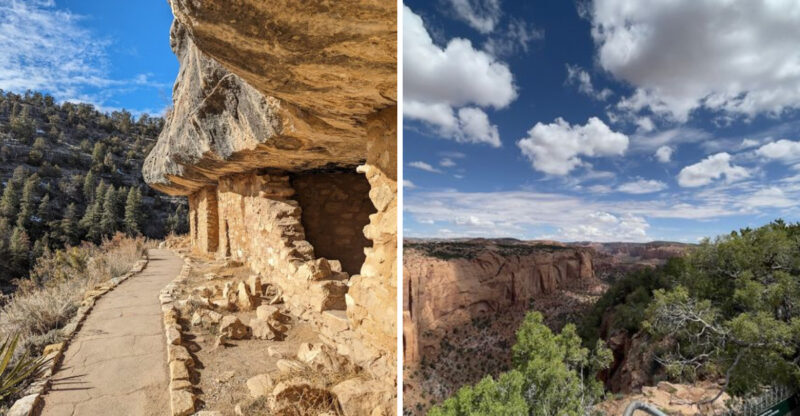
This Hidden Arizona Arboretum Packs 323 Acres With Desert Trails And Incredible Scenery
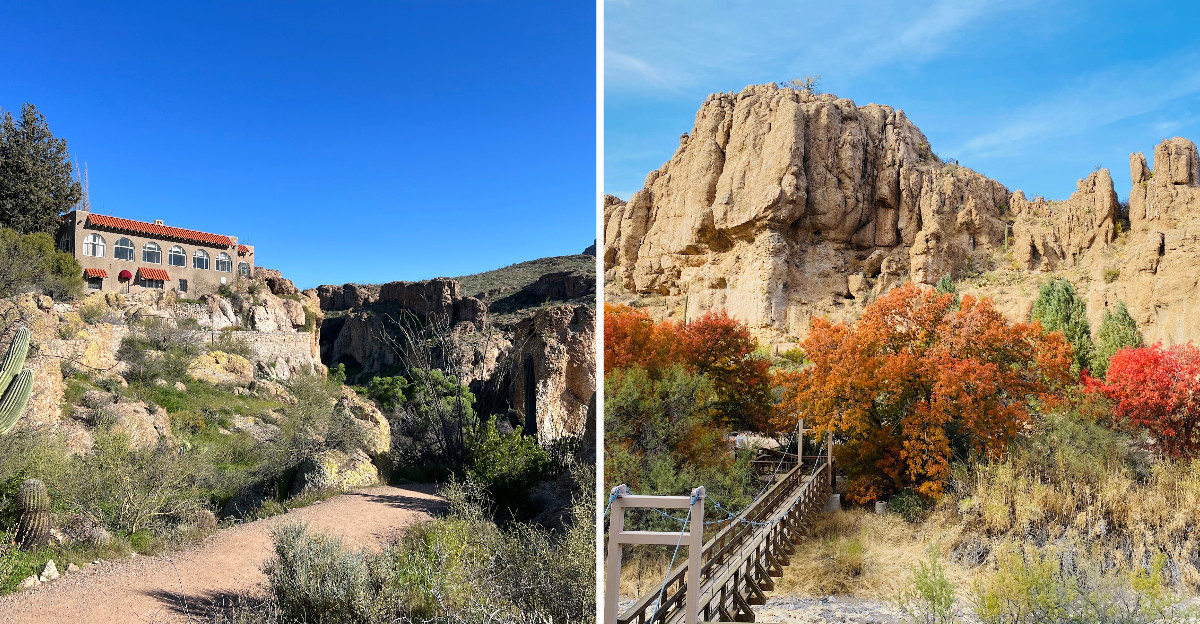
This is supposed to be an arboretum? It feels more like somebody dropped several different deserts into one giant outdoor maze.
Arizona spreads this hidden escape across hundreds of acres, with rocky trails, shady creekside stretches, towering plants, and scenery that changes constantly.
One minute feels rugged and sun-baked. The next gives you greenery, birds, and a pocket of cool shade that feels almost suspiciously nice. That variety keeps the walk exciting without making it frantic.
You start following one path, spot another, and suddenly the original plan is gone. Honestly, that is probably the best way to explore it.
A Mining Magnate’s Desert Dream
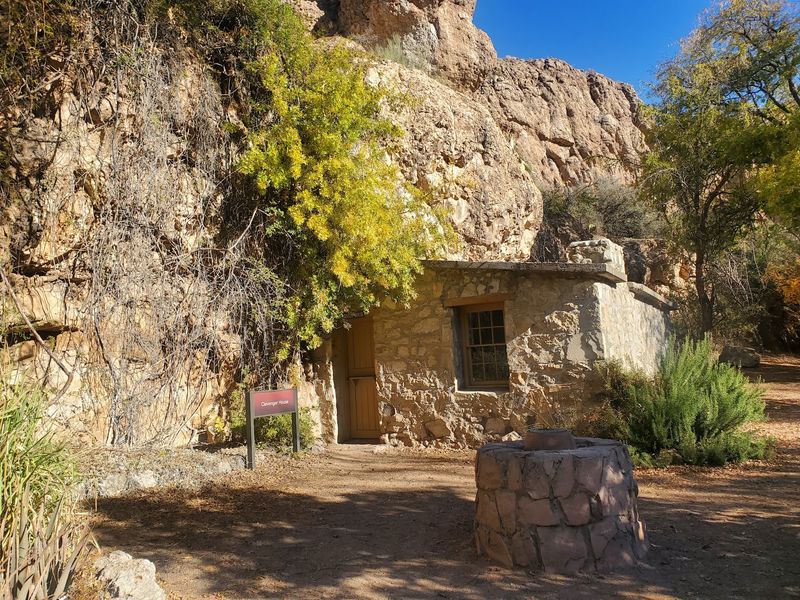
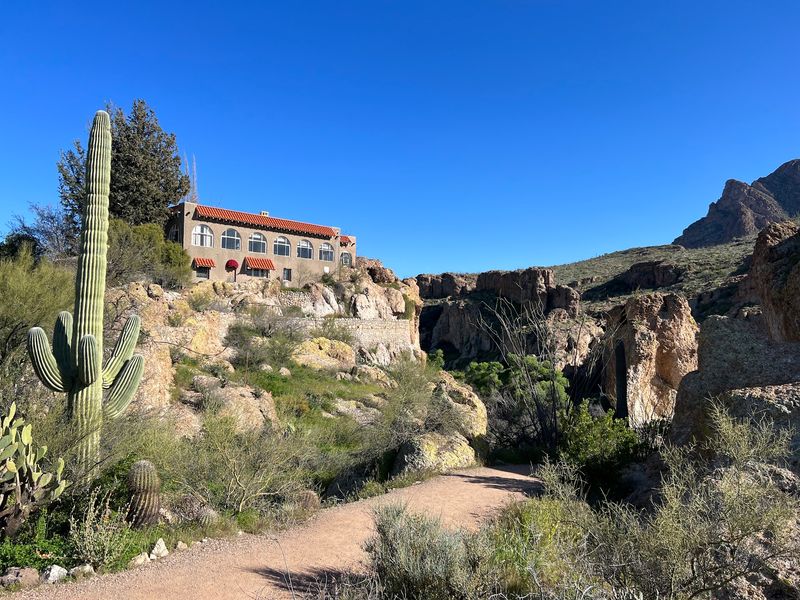
Mining magnate William Boyce Thompson began building his 7,000-square-foot Picket Post House above Queen Creek in 1918 and spent his first night there in 1923.
By then, his experiences abroad had already convinced him that plant science, food supply, and human well-being were closely connected.
In 1924, Thompson founded Boyce Thompson Arboretum on roughly 400 acres surrounding the winter home.
His goal was to grow and study plants from arid and semi-arid regions and share useful knowledge with the public. Research scientists soon arrived, and the first administration building and greenhouses were completed in 1926.
The institution reached another milestone in 1927, when the Boyce Thompson Southwestern Arboretum was incorporated and became Arizona’s first nonprofit institution established for scientific purposes.
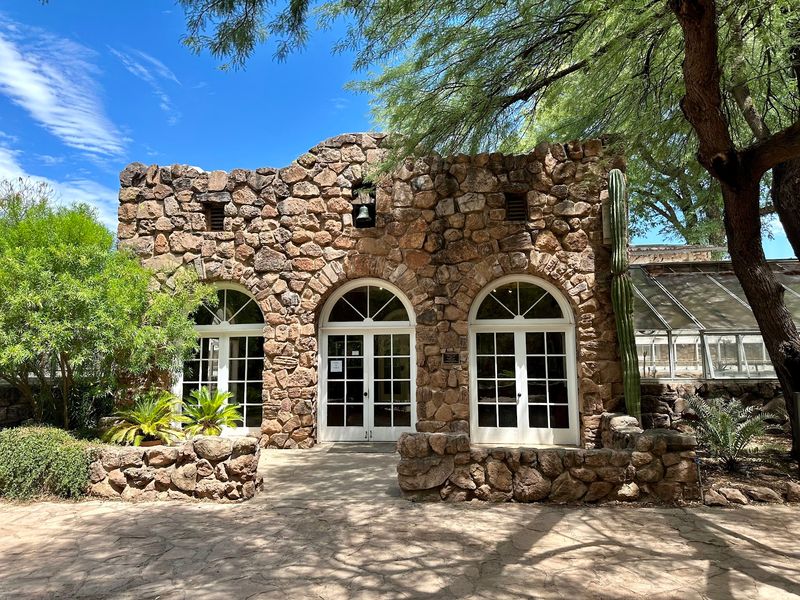
The Smith Building and historic greenhouses still connect the modern gardens to that research mission.
Picket Post House remains part of the site’s larger history, although the arboretum itself now operates as an independent nonprofit.
Arizona State Parks, the University of Arizona, and the arboretum once shared management responsibilities, but that agreement ended in 2019.
Admission and donations now support conservation, research, education, historic preservation, and the living collections. The entrance is at 37615 E Arboretum Way in Superior.
Trails, Peaks, And 323 Acres
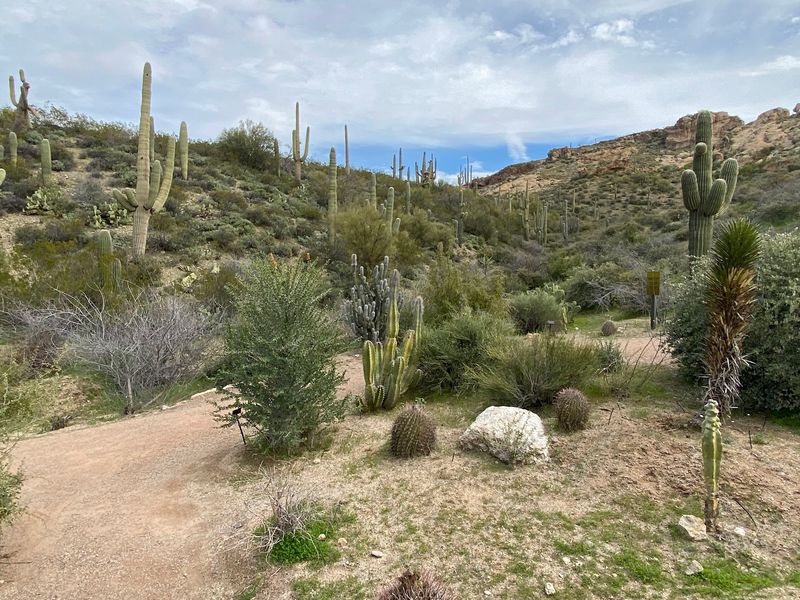
The arboretum now covers 372 acres, including 135 acres of cultivated gardens and 4.7 miles of trails.
Picketpost Mountain rises beside the property, giving many paths a rugged backdrop.
Thompson’s Trail is the easiest main route, and most of it is wheelchair accessible.
Several shorter garden loops branch away from it, while the High Trail provides a steeper and more strenuous option with rougher footing and broader views.
Queen Creek and nearby Arnett Creek create valuable riparian habitat within the Sonoran Desert. Their intermittent water supports greener canyon pockets that contrast with exposed slopes.
The Curandero Trail focuses on medicinal plants used by Sonoran Desert peoples, although some steep sections are unsuitable for wheelchairs, walkers, and strollers.
Ayer Lake adds another change of scenery; the small reservoir was created in the 1920s and now supports cattails, birds, insects, and amphibians.
The arboretum recommends at least two hours, while side loops, birding stops, or the High Trail can easily stretch a visit to half a day.
Cacti, Aloes, And Towering Eucalyptus
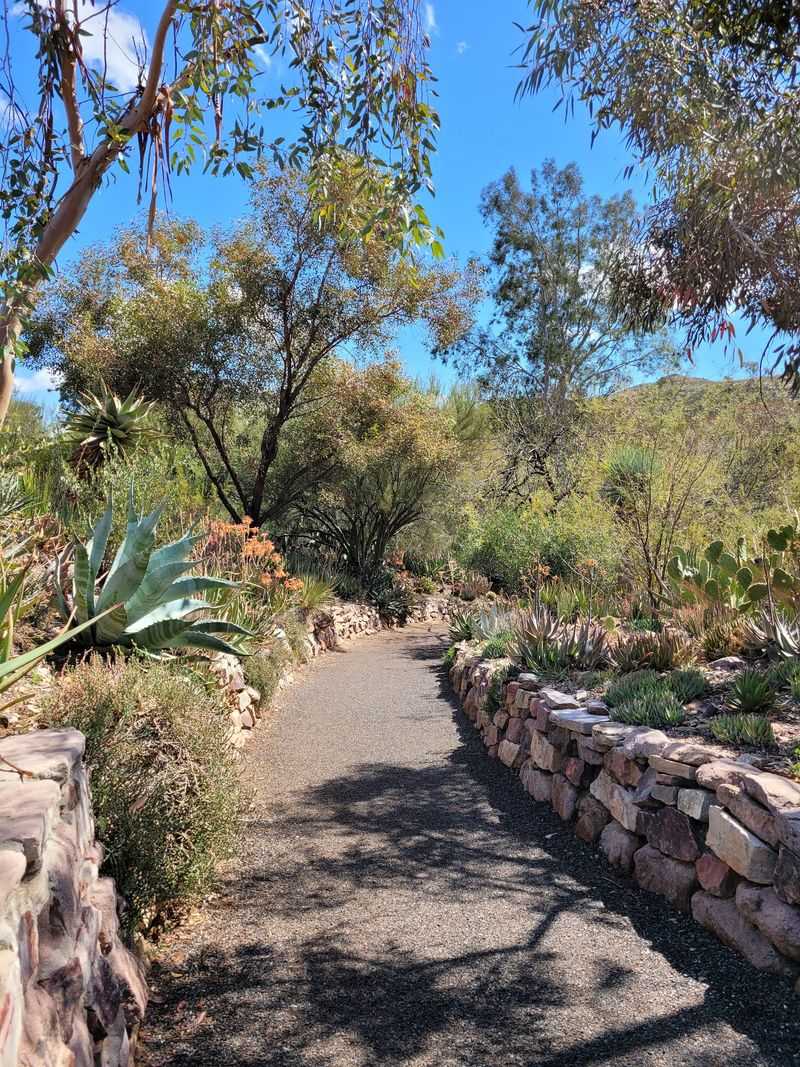
More than 20,000 arid-adapted plants grow within the collections, representing more than 4,000 taxa.
Mapped gardens represent 11 world regions, with plants from the Americas, Australia, Africa, Asia, the Middle East, Madagascar, and the Mediterranean.
The newer Wallace Desert Garden adds another 13 acres, 1.5 miles of trails, and roughly 5,000 plantings transferred from a major private collection.
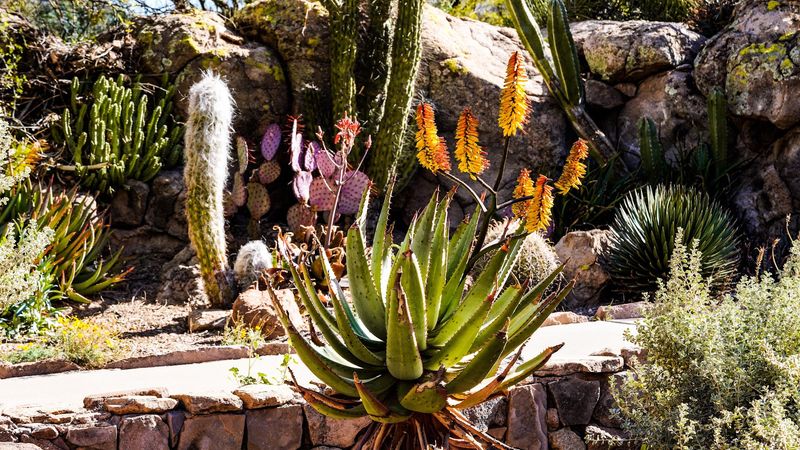
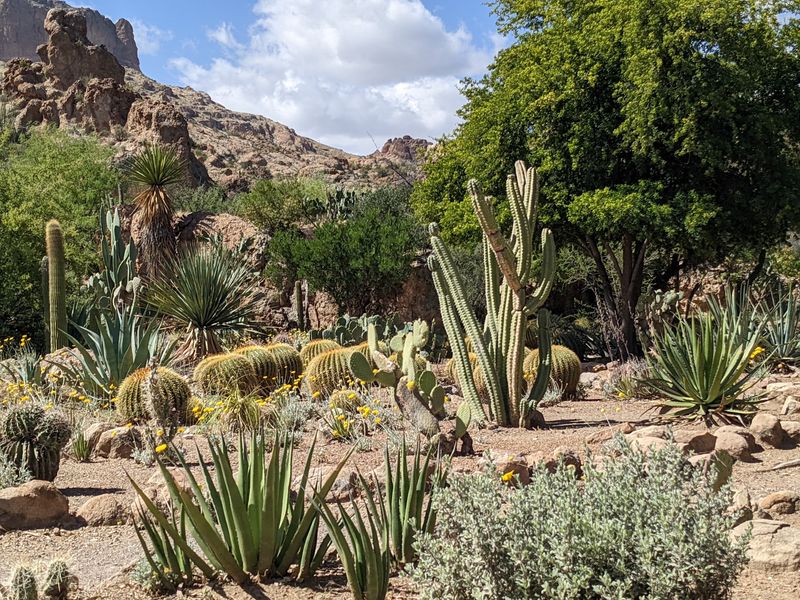
The six-acre Cactus and Succulent Garden contains about 1,500 plants. More than 200 cactus species are represented, along with roughly 130 succulent or semi-succulent species.
Saguaros, barrel cacti, prickly pears, agaves, yuccas, and other columnar species create dramatic changes in scale.
Aloes are another major strength. In 2026, the arboretum highlighted 218 aloe species, with many producing colorful winter flower spikes. That is a major collection, but not nearly half of all known aloe species.
The Australian Deserts Exhibit covers about 10 acres and contains 1,280 native Australian plants representing 321 species. Its eucalyptus collection includes 93 taxa and ranks among the largest in the United States.
One famous specimen is Mr. Big, a River Red Gum recognized as an Arizona Champion Tree. Many eucalyptus specimens date to the arboretum’s earliest decades, giving parts of the Australian exhibit an unexpectedly mature woodland feel.
Eucalyptus, desert legumes, and southwest oaks are also maintained as nationally accredited plant collections.
Birds, Butterflies, And Curious Coatis
About 275 bird species have been recorded in the Boyce Thompson Arboretum and Arnett-Queen Creeks Important Bird Area. That includes dozens of species of special conservation status in Arizona.
Riparian habitat, desert slopes, gardens, and migration routes support hummingbirds, flycatchers, warblers, tanagers, woodpeckers, raptors, and winter visitors.
Guided bird walks are offered seasonally, with the current 2026-27 schedule beginning in October. The walks are beginner-friendly, limited in size, and loaner binoculars are available at admissions when needed.
Butterflies also gather around seasonal flowers and the Pollinator Garden. Coatis are occasionally seen on the grounds, and the arboretum has highlighted recent sightings of these long-tailed relatives of raccoons.
Gila woodpeckers provide another example of how wildlife uses desert plants. They excavate cavities while searching for insects in trunks, shrubs, and cacti, and those openings can later provide shelter for smaller birds.
Wildlife sightings are never guaranteed. Staying on designated trails and keeping distance from animals protects both visitors and habitat.
Family Programs And Guided Tours
The Children’s Garden gives younger visitors a section designed specifically for hands-on discovery.
It includes three sensory gardens, a human sundial, a maze, and the Gloria Wing-Ong Children’s Learning Center.
Guided experiences vary by season. Discovery Tours, bird walks, specialty programs, and private tours appear throughout the cooler months, so check the current calendar before visiting.
Golf cart tours offer another option for less walking. They last about an hour, are limited to five guests, cost extra, and strongly favor advance registration.
Classes and workshops range from photography and gardening to yoga, watercolor, forest bathing, and family nature programs.
The 2026 calendar also includes workshops on Sonoran Desert animals, bats, nature journaling, fall color, and trees.
A shaded picnic area makes it easy to bring lunch. There is no full restaurant, although snacks and water are sold onsite, and Superior has dining options a few miles away.
Seasons That Paint The Desert
Spring color depends heavily on winter rain and temperature.
Native wildflowers often peak from mid-March to late April, while prickly pears, palo verdes, cacti, and roses continue the display into May.
Late spring adds red Karoo Boer-bean flowers, antique roses, and dramatic cactus blooms.
The timing shifts from year to year, which makes the garden noticeably different even between visits only a few weeks apart.
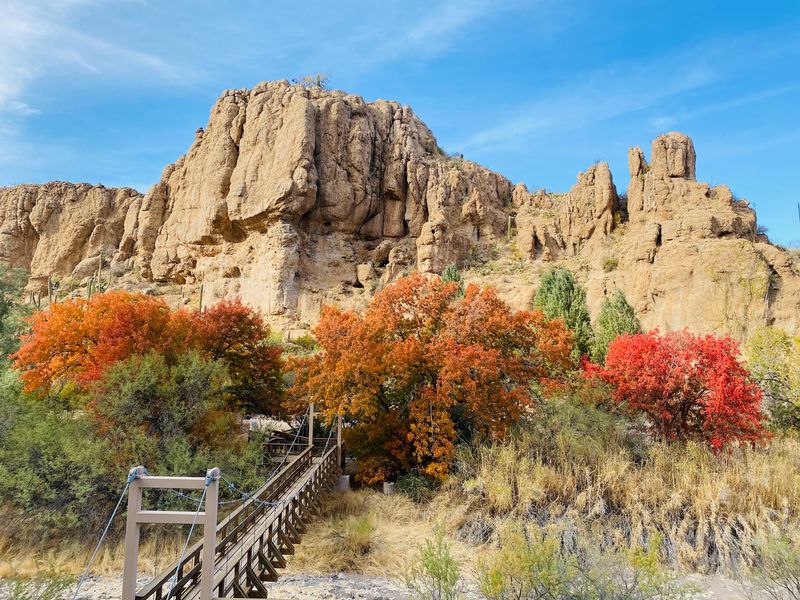
Autumn offers a completely different show. Peak foliage usually falls within a three-week period between mid-November and early December, with late November often providing the most reliable color.
Jujube, pecan, willow, cottonwood, and other deciduous trees contribute yellow tones, while lemonade berry and Chinese pistache can shift into orange and red. The mix looks especially unusual against cactus gardens and canyon rock.
Cooler months are easiest for long walks. The arboretum says its Superior setting can run about 5 to 10 degrees cooler than Phoenix and the Valley, but summer heat still demands an early start.
From June through August, it opens at 6 a.m., closes at noon, and is closed on Tuesdays.
Protecting Plants For The Future
Conservation, research, education, seed banking, and long-term plant care remain central to the arboretum’s mission.
Its collections include many species of conservation concern, particularly among cacti, aloes, agaves, cycads, eucalyptus, euphorbias, and ocotillos.
The Desert Legume Program also maintains an internationally recognized seed collection that supports research and preservation.
The Chihuahuan Desert Exhibit uses agaves, yuccas, mescal bean trees, and other plants to interpret North America’s largest desert and its biodiversity.
The Demonstration Garden shows how native and drought-tolerant plants can create attractive water-efficient landscapes with hardscape, seating, and water features.
Water conservation has become an even larger priority through the Water Wise Arboretum initiative, which includes irrigation improvements, riparian restoration, rainwater capture, and work around Ayer Lake.
For the centennial, the arboretum also launched its 100 Tree Spree, partnering with community groups to plant native trees beyond the property.
That project extends the institution’s original mission into neighborhoods across the region.
Smart Tips Before You Go
Boyce Thompson Arboretum sits along U.S. Highway 60, about an hour from central Phoenix and three miles west of Superior.
Seasonal hours change substantially, so check the current schedule.
From October through March, the arboretum is open daily from 8 a.m. to 5 p.m.
April shifts to 7 a.m. to 5 p.m., May opens earlier, and September currently runs from 6 a.m. to 3 p.m. Summer has the shortest hours because of the heat.
Closed-toe shoes, sun protection, and plenty of water are sensible. The High Trail and Curandero Trail require extra care, while Thompson’s Trail offers the easiest route.
Well-behaved pets are welcome at no additional charge but must stay on a leash no longer than six feet.
Owners are responsible for cleanup and keeping animals under physical control.
Because the site has no full restaurant and summer conditions can be intense, carrying enough drinking water remains more important than relying on amenities along the trail.
Visitors must remain on designated trails, supervise children closely, avoid open flames, and leave flowers, fruit, rocks, feathers, and other natural material where they are. Drones are also prohibited.
Scientific collections, historic structures, wildlife habitat, and Sonoran Desert scenery overlap throughout the property.