This Unexpected Nebraska Spot Feels Straight Out Of Germany And Serves Hearty Schnitzel
You do not expect a little slice of Germany to appear in the middle of Omaha.
Then the schnitzel arrives. Crisp, golden, and properly hearty, it lands in a setting shaped by German-American traditions rather than some restaurant theme dreamed up last year.
The atmosphere feels communal and pleasantly removed from the usual dinner routine.
This Nebraska gathering place gives curious diners a chance to experience German food alongside the culture that keeps it meaningful.
Take the slower approach here. Try the classic dish first. Notice the details around the room.
Let the history of the organization add something to the meal instead of treating dinner like a quick stop. The result feels different from visiting a standard restaurant.
You are stepping into a local community space where food, heritage, and tradition have been sharing the same table for generations.
Walk Into One Of Omaha’s Longest-Running German Cultural Institutions
Few gathering places in the city can trace a continuous story back to the 1880s, yet this one does.
The German-American Society grew out of a group of immigrants who came together in the fall of 1883, and the organization was formally established the following year.
Since then it has stayed focused on keeping German heritage active rather than tucked away in a display case.
Early growth pushed the group from Germania Hall to Washington Hall by 1901, and a permanent clubhouse followed in 1908 on South 13th Street. A move to the current west Omaha property came in 1969 when more room was needed.
Visitors will notice that the building functions as a club with multiple halls instead of a single dining room.
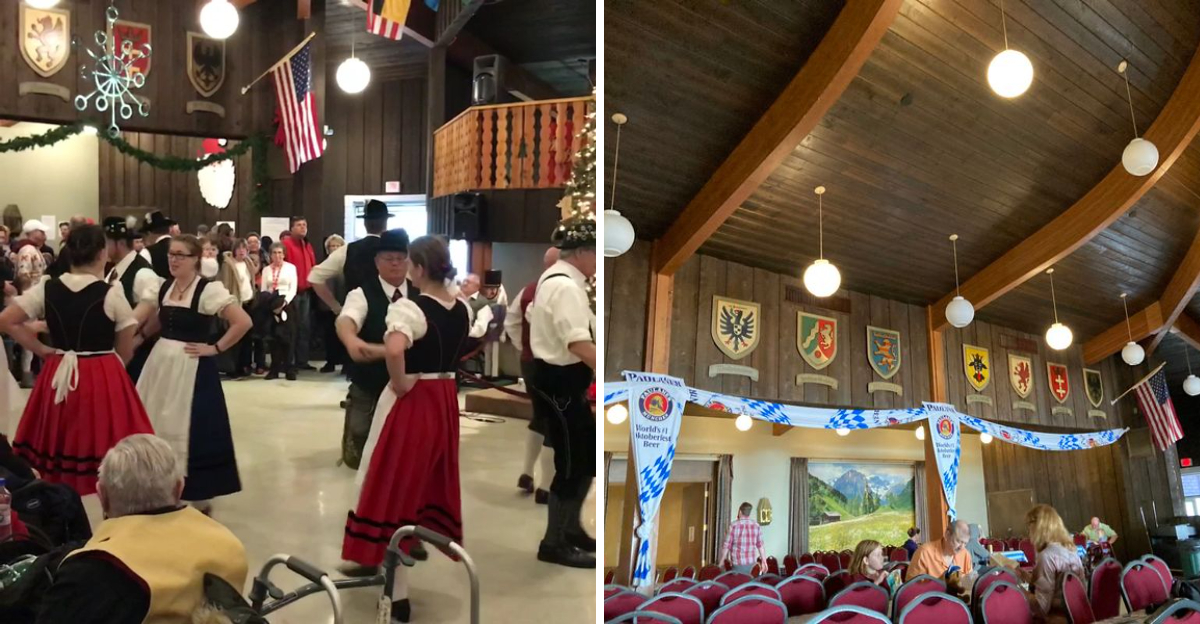
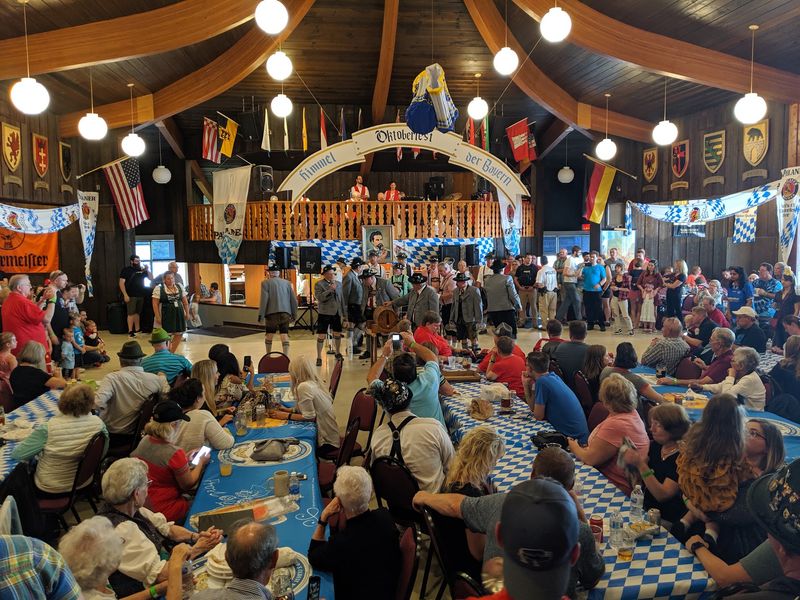
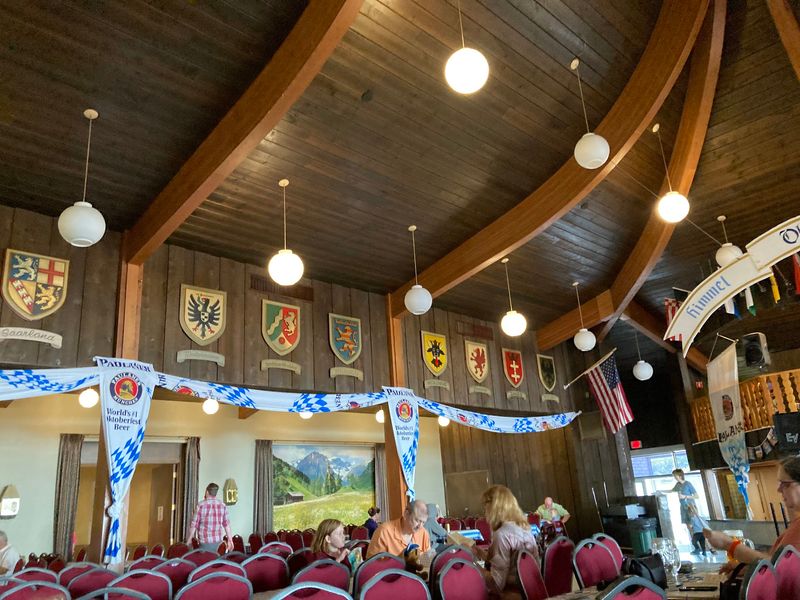
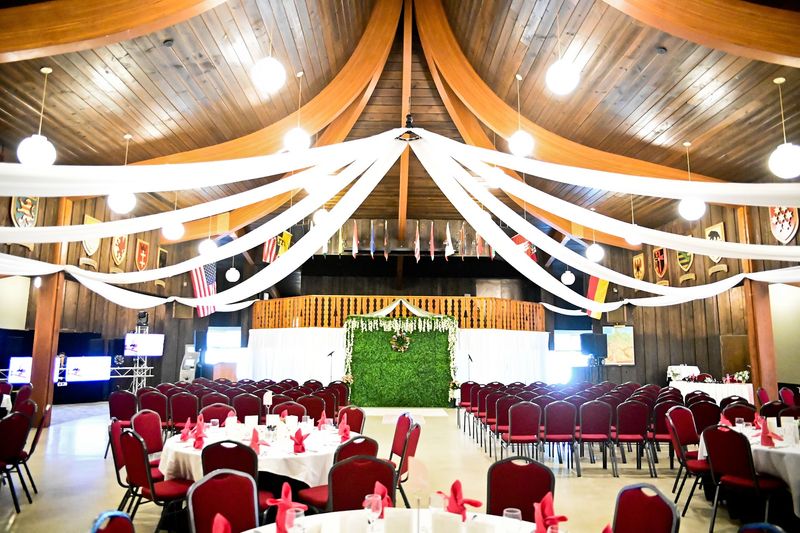
The main hall carries authentic German styling with flags, crests, and a large fireplace set into rock walls, and the acoustics suit live music well.
Membership brings access to interest groups, classes, and regular social nights, while the public festivals open the doors to everyone else.
Because the schedule drives everything, checking event listings first saves disappointment.
Longevity like this is uncommon in food and culture spaces anywhere, and it gives the place a lived-in warmth that newer venues rarely match.
Come Hungry When Schnitzel Is On The Festival Menu
Breaded, pan-fried, and satisfying in the plainest sense, schnitzel is the dish that draws first-timers through the door.
Festival food service here leans hearty, and schnitzel sandwiches are planned for the Society’s 2026 German Day-Oktoberfest.
Portions at community celebrations are built for people who will be standing, walking between halls, and listening to music rather than lingering over a formal three-course meal.
Ordering works more like a fest line than table service, so having cash or a card ready and knowing what is wanted before reaching the counter keeps things moving.
Lines usually run longest right after music sets begin and again in the early evening.
Arriving closer to opening gives a calmer pace, more seating choice, and a better shot at the full range of items before anything sells out.
Because menus are set per event, the exact offerings can shift from year to year. Anyone with dietary restrictions should ask at the serving window instead of assuming, since fried and pork-based dishes feature heavily.
Pairing a sandwich with a soft pretzel makes for a filling combination without much effort. The food is straightforward comfort cooking, and that honesty is the appeal.
Look Beyond The Schnitzel For More Traditional German Food
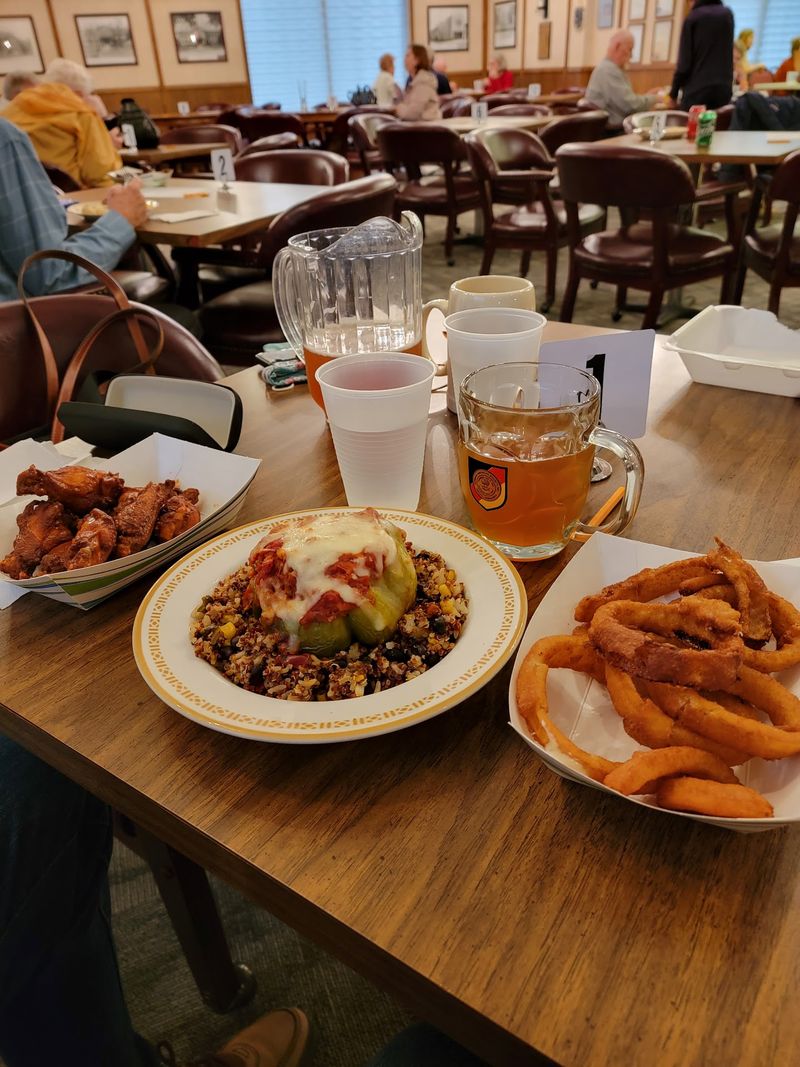
Bratwurst, sauerkraut, and warm German potato salad round out a lineup that goes well past a single fried cutlet.
Festival menus at the Society have included roast pork, homemade tortes, and soft pretzels alongside the sausages.
Sauerkraut here has drawn praise for a balance between tart and savory, and the pretzels come salted without being drowned in butter.
Warm potato salad deserves a mention on its own, since the vinegar-based northern German style differs sharply from the cold, mayonnaise-heavy version most Americans expect. Tasting the two side by side is a small education.
Desserts lean toward homemade tortes rather than mass-produced sheet cake, which fits the volunteer-driven spirit of the events.
A practical tip: share plates when visiting with others so several dishes can be sampled without overcommitting. Fest portions are generous, and the food is rich enough that pacing helps.
Because dishes are prepared for large crowds, availability changes as the day goes on, and popular items can run out later in the evening.
Simple, filling, and rooted in family recipes, the spread rewards curiosity more than caution.
See Why The Setting Feels So Different From An Ordinary Omaha Restaurant
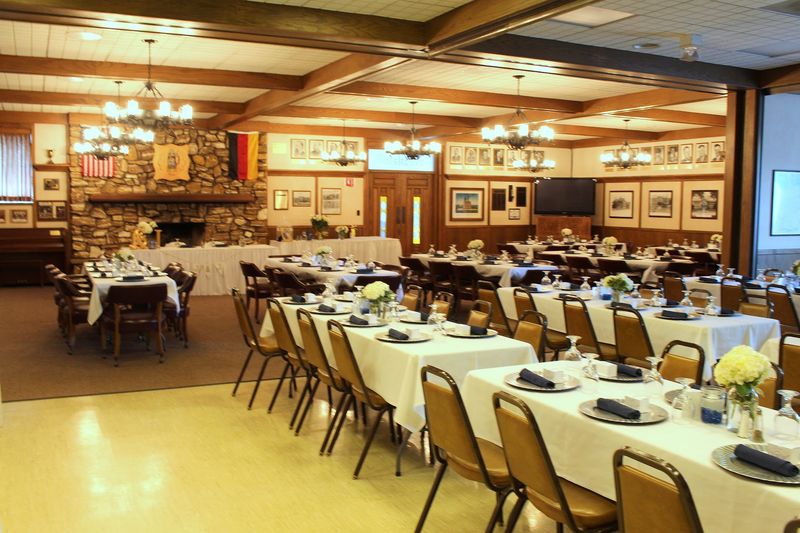
Anyone expecting hostess stands and printed dinner menus will need to adjust expectations, and that adjustment is part of the fun.
Operating as a cultural club rather than a restaurant, the German-American Society sits at 3717 S 120th St, Omaha, NE 68144, with halls designed for gatherings instead of nightly dining service.
The property includes the North Hall at roughly 4,900 square feet, the South Hall at about 3,100 square feet, and the lower-level Rathskeller at around 2,400 square feet.
Seating tends toward long tables and banquet chairs, which encourages conversation with strangers rather than quiet privacy.
Sound levels rise quickly once live music starts, so anyone sensitive to noise may prefer the edges of a room or an earlier arrival.
Lighting is practical hall lighting rather than dim mood lighting, and the stone fireplace in the main hall gives the space a solid, grounded feel.
Because rooms are also rented for private events including weddings and receptions, the building may not be open for casual walk-ins. Calling ahead at 402-333-6615 or checking the official site prevents a wasted trip.
Time A Visit Around Nebraska’s Long-Running German Day Celebration
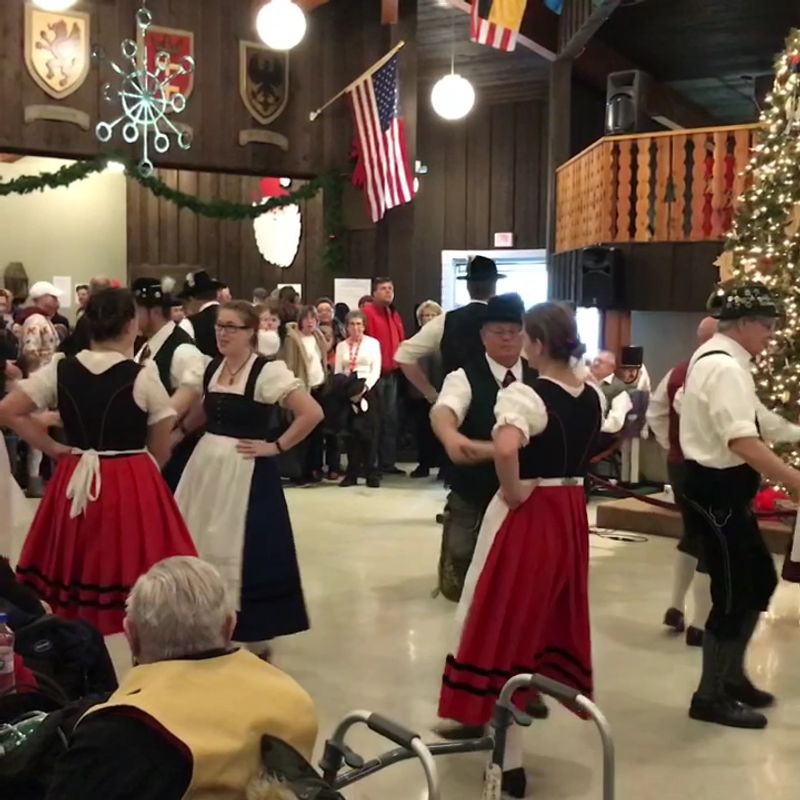
Mark the calendar for Friday, September 18, and Saturday, September 19, 2026, when the 142nd German Day-Oktoberfest takes place.
German Day itself began in 1884, the same year the organization was founded, while the public Oktoberfest celebration in its current form has run annually since 1998.
Activity spreads across multiple locations on the grounds, with food and music running in more than one space at a time. Walking between them is easy, though comfortable shoes help on a long evening.
Friday evenings usually feel a bit more relaxed than Saturday, which draws the heaviest crowds and the fullest slate of entertainment. Families with young children often do better earlier in the day.
Parking fills as the evening goes on, so arriving before peak hours reduces the walk from the lot.
Weather in mid-September can swing between warm afternoons and cool nights, making a light jacket a sensible addition.
Ticket details, hours, and menu specifics are published closer to the event, and confirming them through official channels beats relying on secondhand information.
Watch Traditional Music And Dancing Bring The Hall To Life
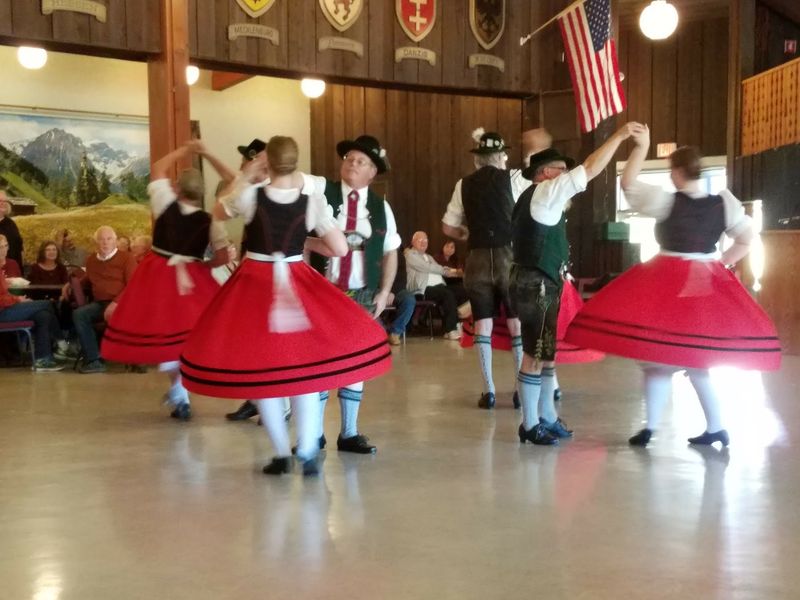
Accordion, brass, and the shuffle of feet on a wooden floor set the soundtrack for the biggest nights of the year.
Music and dancing sit at the center of major celebrations such as Maifest and Oktoberfest.
Groups that have performed at Society festivals include the Ken Janak Orchestra, the Barry Boyce Band, and the Polka Police, while the Sängerchor and the Festhaus-Musikanten Brass Band add traditional singing and horns.
The main hall’s rock walls and high ceiling carry live sound well, which is one reason polka bands sound so full inside.
Dancing is welcoming rather than performance-oriented, and plenty of first-timers join in without knowing the steps. Watching a few couples for a minute is usually enough to catch the basic pattern.
Conversation gets harder once a band is in full swing, so anyone hoping to catch up with friends should plan for the quieter stretches between sets.
Seating near the dance floor offers the best view but the loudest volume, while tables toward the back trade sightlines for easier talking.
Performers and schedules vary by event, so checking the lineup ahead of time helps match a visit to a preferred style of music.
Find German Traditions That Go Far Beyond Food
Language lessons, choir practice, and gymnastics fill the calendar between the big festival weekends.
German classes are offered for a range of ages and skill levels, with children’s sessions held on Saturday mornings and adult classes on Monday evenings.
Lessons cover more than vocabulary, since cultural context comes along with the grammar.
Cultural groups handle singing, dancing, and gymnastics, keeping traditions in active practice rather than on display behind glass.
For families, the Saturday morning schedule fits neatly into a weekend routine and gives kids exposure to a second language in a social setting.
Adults returning to a language studied years ago often find a group class easier to stick with than solo apps, mostly because the people around the table become a reason to show up.
Participation levels vary, and beginners are common, so nervousness about pronunciation should not be a barrier.
Details such as session start dates, fees, and registration are handled through the Society’s official channels, and calling 402-333-6615 clears up questions quickly.
Choosing an activity rather than only attending a festival changes the experience entirely, turning a one-time visit into an ongoing connection with a community that has been doing this for generations.
Know The Address Before Planning Your Visit
Showing up unannounced on a random weekday is the one mistake most likely to end in a locked door.
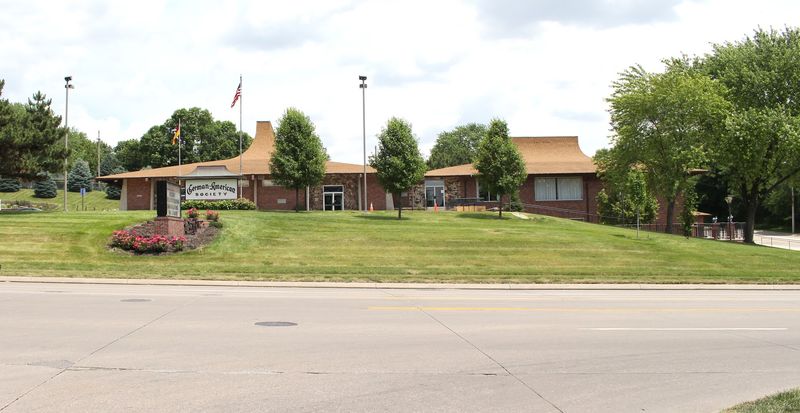
The German-American Society sits at 3717 S 120th St, Omaha, NE 68144, on the western side of the city with its own parking lot.
Office hours run Monday through Thursday from 8 AM to 6 PM, with Friday evenings from 5 to 10 PM, and the building is generally closed Saturday and Sunday outside of scheduled events.
Friday Keller nights in the lower-level Rathskeller offer a casual way to see the space and meet people without waiting for a major festival.
Calling 402-333-6615 or checking germanamericansociety.org confirms whether a hall is hosting a private event, since weddings and receptions book the rooms regularly.
The location is easy to reach by car, and the flat, single-level parking area keeps the walk to the entrance short.
Public access works best around published festivals and events, so building a visit around the calendar produces a far better experience than hoping for walk-in dining.
Positive reviews from festival-goers and event hosts are common, and the fair expectation is a friendly community hall rather than a restaurant.