A Forgotten California Desert Outpost Helped Bring Apollo 13 Home From 200,000 Miles Away
Most people picture Houston when they think of Apollo 13. Almost nobody pictures the Mojave Desert.
Yet during one of NASA’s most famous emergencies, a remote California outpost became part of the effort to keep contact with a damaged spacecraft more than 200,000 miles away.
That alone is enough to make the place worth a second look.
Out among the desert ridges, enormous antennas were quietly doing work that mattered far beyond the empty landscape around them.
No crowds gathered here. No dramatic launch unfolded nearby. The story was happening overhead, and the people on the ground had one job: keep listening.
Today, the site still feels strangely removed from the history attached to it.
Drive through this part of California and you would never guess such a crucial space-age story unfolded here.
The desert looks silent. The history definitely is not.
Apollo 13 Depended On A Faint Signal From The Mojave
April 1970 turned into one of the tensest weeks in spaceflight history after an oxygen tank ruptured on the way to the Moon.
The crew shut down almost everything aboard the command module to save power for re-entry, which meant the radio signal coming back to Earth grew extremely weak.
Ground stations with the biggest dishes and the most sensitive receivers became the lifeline, and the Deep Space Network complex in the Mojave Desert was one of them.
Tracking a spacecraft that has been deliberately powered down is nothing like tracking a healthy one. Engineers needed steady contact to pass along navigation data and re-entry procedures, and a dropped link at the wrong moment carried real consequences.
Nobody was cheering at the antennas during those days, because the work was quiet, technical, and relentless.
Operators simply kept the dish locked onto a moving target roughly 200,000 miles away while the world watched the news.
Visitors sometimes assume mission control in Houston did everything, and that picture leaves out the ground stations entirely.
Without antennas in California, Australia, and Spain, the voices from the spacecraft would never have reached anyone.
Standing in the Mojave today, the connection between empty desert and human survival in space feels surprisingly direct.
Radio Quiet Was The Reason For Picking Such An Empty Place
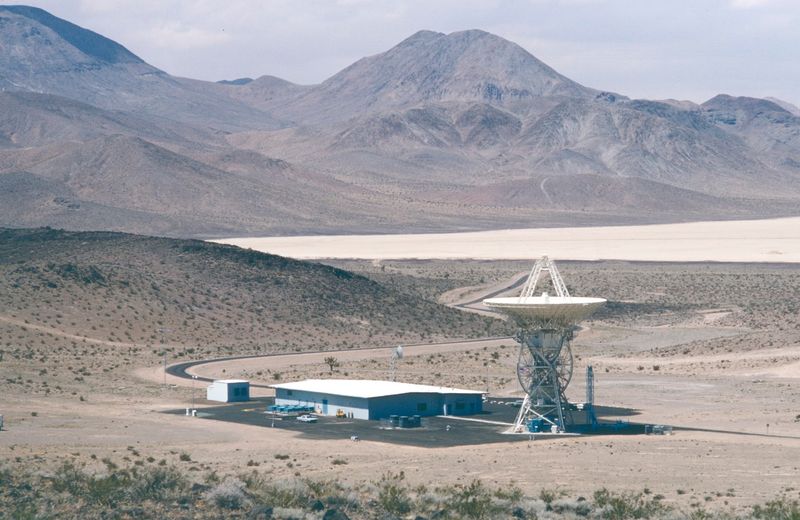
Choosing a spot for a deep space antenna has less to do with scenery and more to do with silence. Not the kind of silence ears can hear, though.
Engineers needed a place free of radio noise, since television broadcasts, commercial radio towers, and even humming power lines can smother the incredibly faint signals arriving from spacecraft.
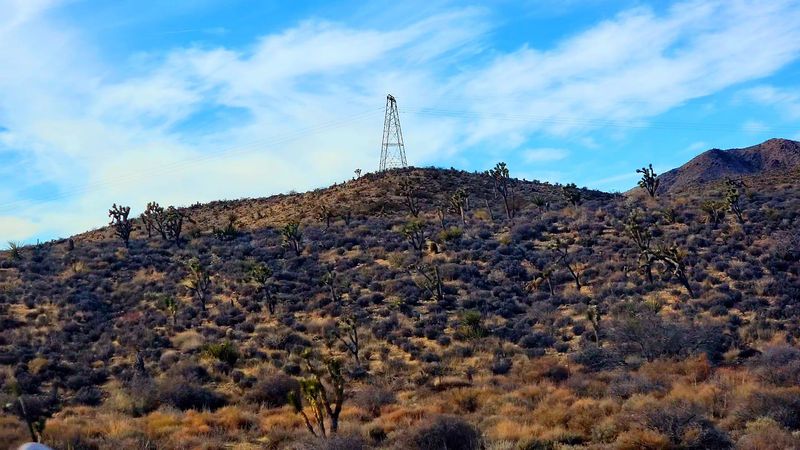
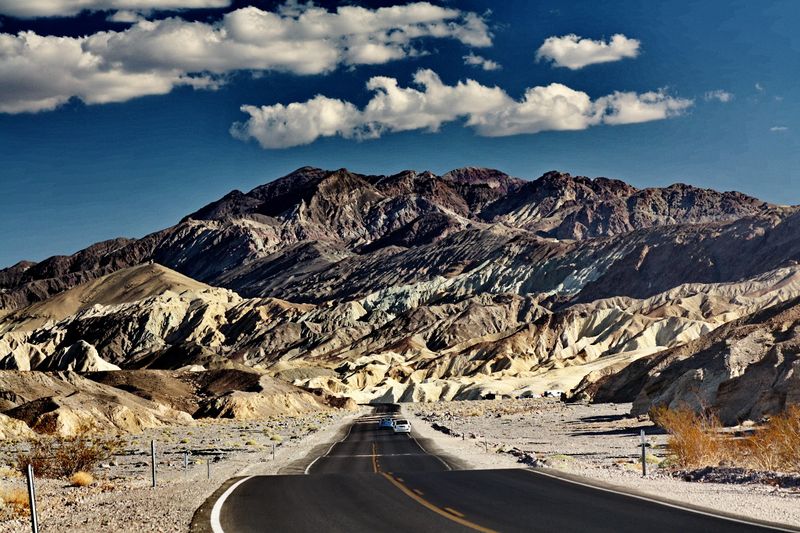
The Mojave Desert offered exactly that combination of emptiness and isolation. Mountains ring the site and help block stray signals from populated areas, acting like natural walls around a very sensitive listening post.
Location inside the Fort Irwin Military Reservation added another layer of protection, because access to the surrounding land stays controlled. Development cannot creep in the way it does around most American cities.
Anyone who has tried to tune an old radio in a busy neighborhood understands the basic problem on a small scale.
Interference drowns out whatever a person actually wants to hear, and space communication faces the same challenge multiplied enormously.
Dry desert air helps as well, since moisture in the atmosphere can interfere with certain radio frequencies. The Mojave delivers clear skies for most of the year.
Emptiness, it turns out, can be a genuine scientific resource rather than just a gap on the map.
Tracking Began Here Back In 1958 With Pioneer 3
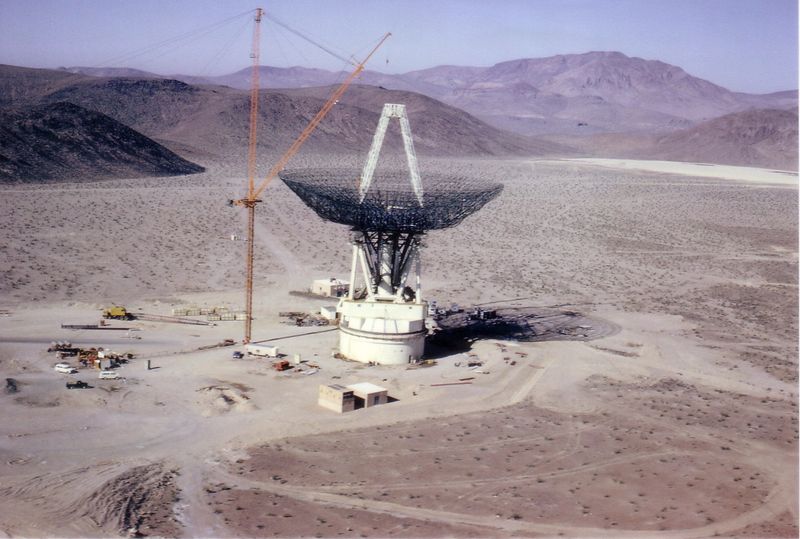
Construction crews broke ground in the desert in 1958, back when the space age was barely a year old.
The first antenna built here was a 26-meter dish known as the Pioneer Deep Space Station, or DSS 11, put together by the Jet Propulsion Laboratory. It was finished in time to support Pioneer 3, which launched in December.
Rockets were still failing regularly in those days, and nobody knew how far radio contact could realistically stretch. Every mission doubled as an experiment in communication as much as an experiment in flight.
Out of that first station grew what became NASA’s Deep Space Network, the global system that still handles interplanetary communication today. The Mojave site holds the distinction of being the very first piece of it.
The original Pioneer antenna is now recognized as a historic landmark, a physical reminder of how modest the beginning really was. Compared with the giant dishes that came later, it looks almost small.
History buffs often find that detail more moving than the technical specifications.
A single dish in the sand, built by people working without any guarantee of success, opened the door to everything that followed in deep space exploration.
An Old Gold Mining Camp Gave The Complex Its Name
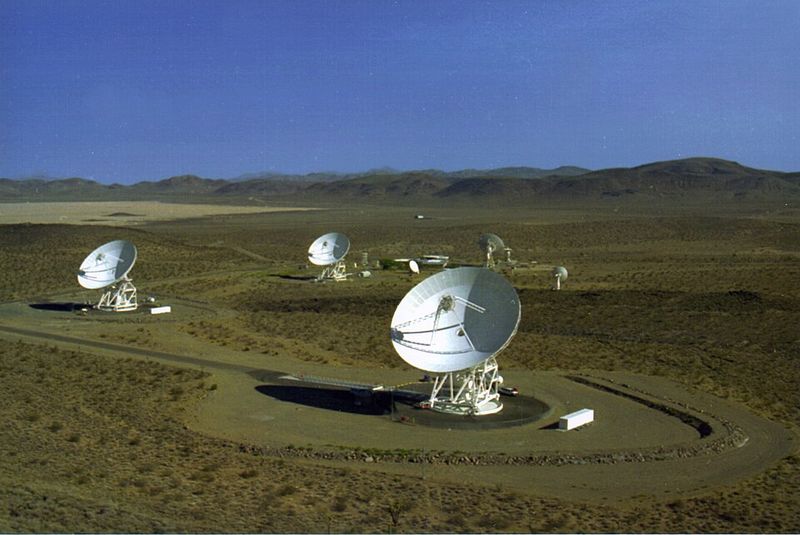
Space-age hardware and Old West prospecting rarely share a name, yet that is exactly what happened here.
The complex takes its name from a historic mining settlement nearby called Goldstone, which in turn borrowed the name from Goldstone Springs in the surrounding hills.
Gold was reportedly found in the area as early as the 1880s.
Miners chased ore across these hills long before anyone imagined talking to a spacecraft. Their camps came and went with the luck of the diggings, leaving scattered traces across the desert floor.
Something about that layered history makes the place feel richer. One generation searched the ground for metal, and a later generation aimed enormous dishes at the sky searching for signals.
Desert towns across California carry similar stories of boom and disappearance, though few of them ended up hosting NASA equipment. The name stuck even after the mining faded.
Travelers driving through the Mojave often notice how many places carry names tied to water sources or mineral finds. Springs meant survival, and gold meant a reason to stay.
Knowing the origin adds a small but satisfying twist to any visit. The most advanced communication site in the country wears a name handed down from people working with picks and pans.
The Mars Antenna Carried Words From The First Moon Landing
July 1969 brought a moment that people still describe in hushed tones, and part of it traveled through this desert.
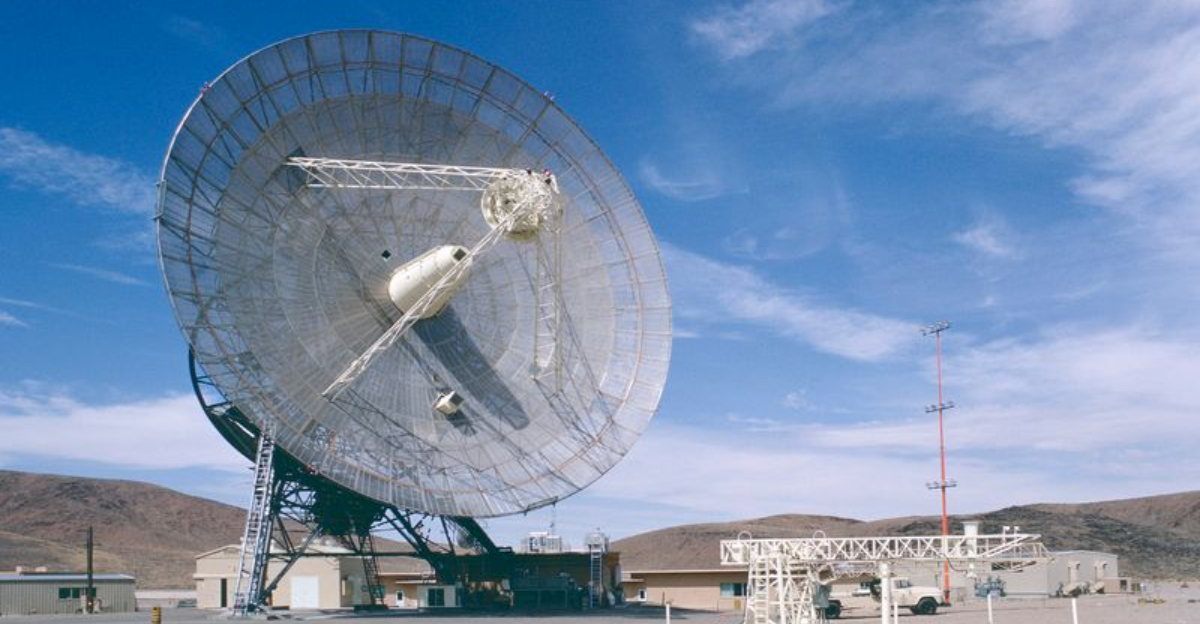
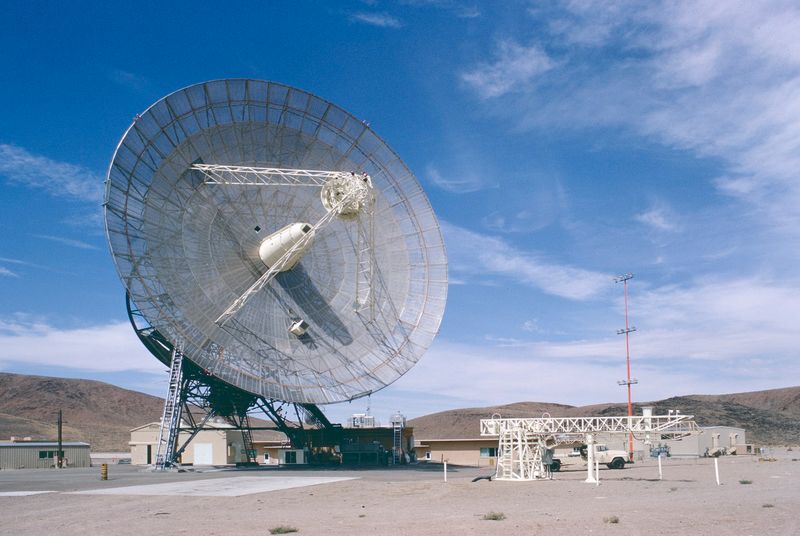
Deep Space Station 14, nicknamed the Mars antenna, supported American lunar missions and received communications from Apollo 11 during the first Moon landing.
The historic words spoken from the lunar surface passed through equipment sitting in the Mojave.
During key Apollo flights the Mars antenna was folded into a supporting arrangement called the wing station, adding its size and sensitivity to the network handling crewed missions.
Big dishes were valuable precisely because lunar signals were weak.
Most people picture Houston or Cape Canaveral when they think of Apollo. Ground stations rarely make the highlight reels, even though the whole enterprise would have been mute without them.
Worth noting for anyone planning a trip: DSS-14 sustained damage in September 2025 from an over-rotation incident while tracking the Juno spacecraft.
Repairs and previously planned upgrades are expected to keep it out of service until 2028.
The antenna still stands, still enormous, still part of the landscape. Its record of service stretches from the Moon landings through decades of planetary exploration, which is a remarkable run for any piece of machinery.
One Dish Rises Roughly As High As A 24-Story Building
Numbers help, but they only go so far until a person stands underneath the thing.
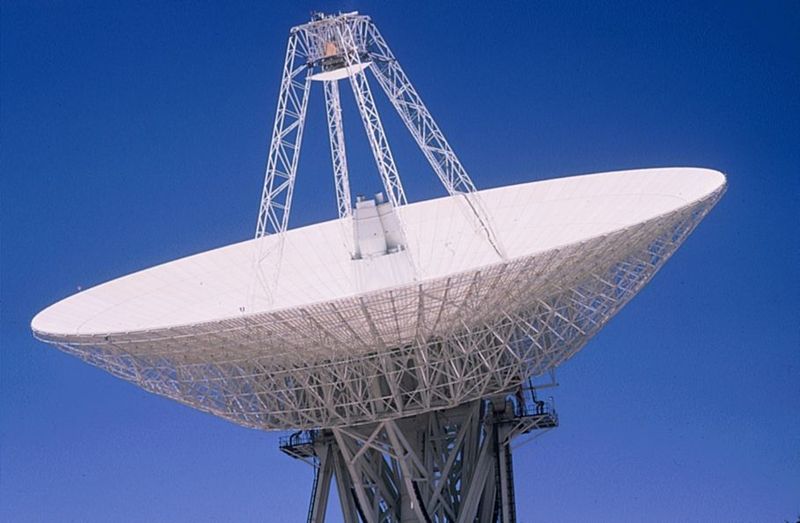
DSS-14 measures 70 meters across, which works out to 230 feet, and rises about 24 stories from the desert floor. The whole structure weighs somewhere around 16 million pounds.
Steel beams crisscross beneath the dish surface like the bones of a bridge turned upward. Wind, heat, and decades of desert sun all put stress on a frame that size.
The antenna started out smaller at 64 meters when it became operational in 1966. Engineers enlarged it to the current 70 meters in 1988, boosting its sensitivity in time to follow Voyager 2 during the Neptune encounter.
That upgrade says a lot about how these facilities evolve. Rather than building something new, crews rebuilt what already worked and pushed its capabilities further.
Scale like that plays tricks on the eye in open desert country. Without trees or buildings nearby for comparison, the dish can look closer or smaller than it actually is until a vehicle drives past its base.
Photographs genuinely struggle to capture the presence of a structure this large sitting alone among the hills, which is a common observation from people who have seen it.
Receivers Here Detect Power Measured In Billionths Of Billionths
Sensitivity is the quiet superpower of the whole operation.
Antennas at this complex are built to pick up signals as small as roughly one billionth of one billionth of a watt arriving from spacecraft billions of kilometers away. Writing that number out takes a lot of zeros.
A typical household light bulb burns 60 watts, which makes the comparison almost absurd. Signals that weak get swamped by the smallest amount of stray electrical noise.
That is why the desert location matters so much, and why nearby development stays limited. Every bit of radio chatter in the neighborhood competes with the whisper coming from Jupiter or beyond.
Cooled receivers, careful shielding, and enormous collecting surfaces all combine to pull those signals out of the background hiss.
The dish itself acts like a giant funnel gathering energy from a broad area and concentrating it into a single point.
Anyone who has strained to hear a friend across a noisy cafeteria understands the challenge instinctively. Quiet the room, cup a hand behind the ear, and suddenly the words come through.
Space communication uses the same logic, scaled up with steel, cryogenics, and a stretch of California desert deliberately kept free of interference for more than six decades.
A Free Visitor Center In Barstow Opens The Story To Everyone
Getting close to the antennas themselves is not possible for casual visitors, since the complex sits on the Fort Irwin Military Reservation and public tours have been suspended.
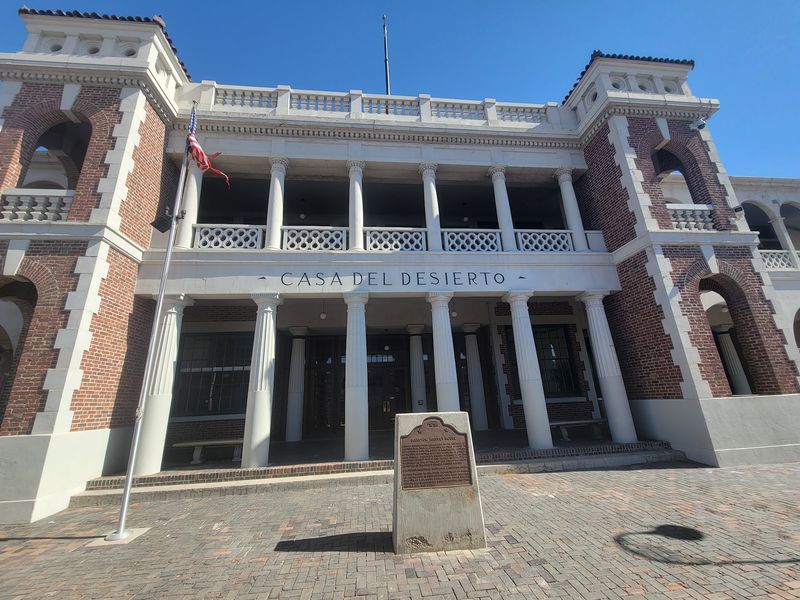
The NASA Goldstone Visitor Center inside the historic Harvey House, also called Casa Del Desierto, fills that gap at 681 North First Avenue, Barstow, CA 92311.
Exhibits explain how the antennas work and what missions they have supported. Current listings show the center open Mondays, Thursdays, Fridays, and Saturdays from 9 a.m. to 3 p.m.
Admission is free and reservations are not needed for individual visits, though school and public groups are asked to schedule ahead.
The building itself deserves a look. Built as a railroad depot and hotel, its arched walkways and thick walls hold in cool air even on warm afternoons.
Hours and availability can change, so checking before driving out is a sensible step. The actual communications complex lies roughly 45 miles northeast of town.
Barstow makes a practical stop for anyone traveling between Los Angeles and Las Vegas. Pairing an hour at the visitor center with a walk around the depot grounds turns a routine fuel stop into something considerably more memorable.