8 Famous Movie Locations In North Carolina You Can Actually Visit
Hollywood may have packed up years ago, but several North Carolina locations never quite lost their star power.
A familiar street can suddenly feel cinematic once you realize actors stood on that exact pavement while cameras rolled nearby. Even an ordinary bend in the road gets a little more swagger when it has appeared on the big screen.
That is the fun of visiting real filming locations.
There are no studio gates separating the scenery from everyday life. These places kept moving long after the director called cut, and now movie fans can step straight into settings they already know by heart.
Expect a few double takes. That quiet corner may look suspiciously familiar. A building can trigger an instant flashback to a favorite scene.
Suddenly, taking far too many photos feels completely justified.
North Carolina has played supporting actor to Hollywood more often than many travelers realize.
These eight locations prove the scenery was ready for its close-up all along.
8. Historic Durham Athletic Park, Durham
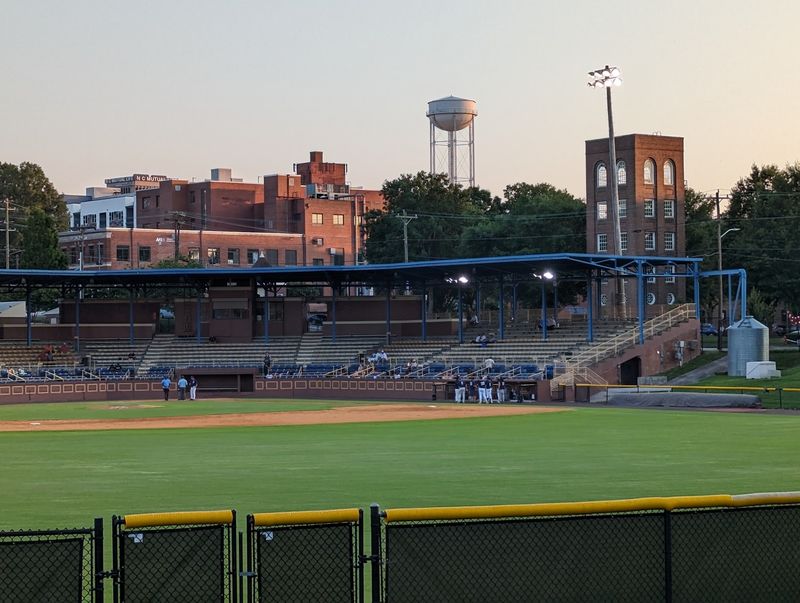
Crack of the bat, dust on the infield, and a grandstand that has watched decades of baseball go by: that is the feeling waiting at the ballpark fans affectionately call The DAP. You will find it at 500 West Corporation Street in Durham, a short walk from downtown restaurants and coffee shops.
The historic ballpark starred as the home field in the 1988 film Bull Durham, and its silhouette has barely changed.
Real players still take the field here.
Green paint, hand-lettered signage, and an old-fashioned scoreboard give the place a scrapbook quality. The grass is kept trim and bright, and from the seats behind home plate you can hear infield chatter clearly.
Sunlight slides across the seats in late afternoon, ideal for photos.
Visiting costs little. College games are inexpensive, parking nearby is straightforward, and even on quiet afternoons you can walk the perimeter and photograph the entrance sign.
Pair your stop with a snack and a cold lemonade from one of the food halls a few blocks south, then circle back for a photo beneath the ballpark’s arched lettering.
Fun bit of trivia: the Durham Bulls, a real team long before Hollywood arrived, moved to a larger stadium in 1995, leaving this one to age gracefully as both a working field and a movie landmark.
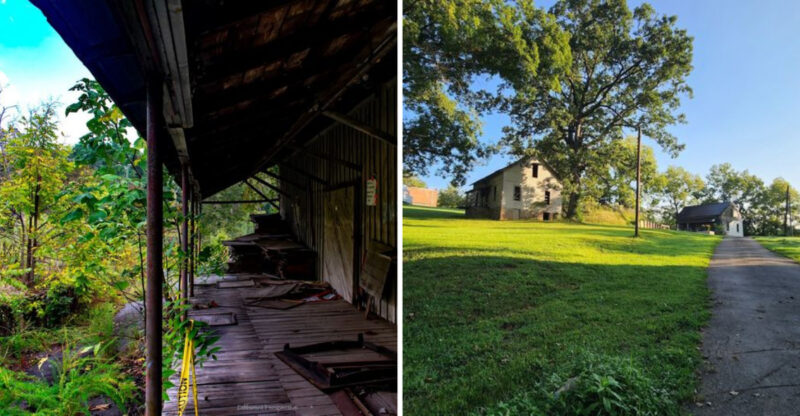
7. Henry River Mill Village, Hildebran
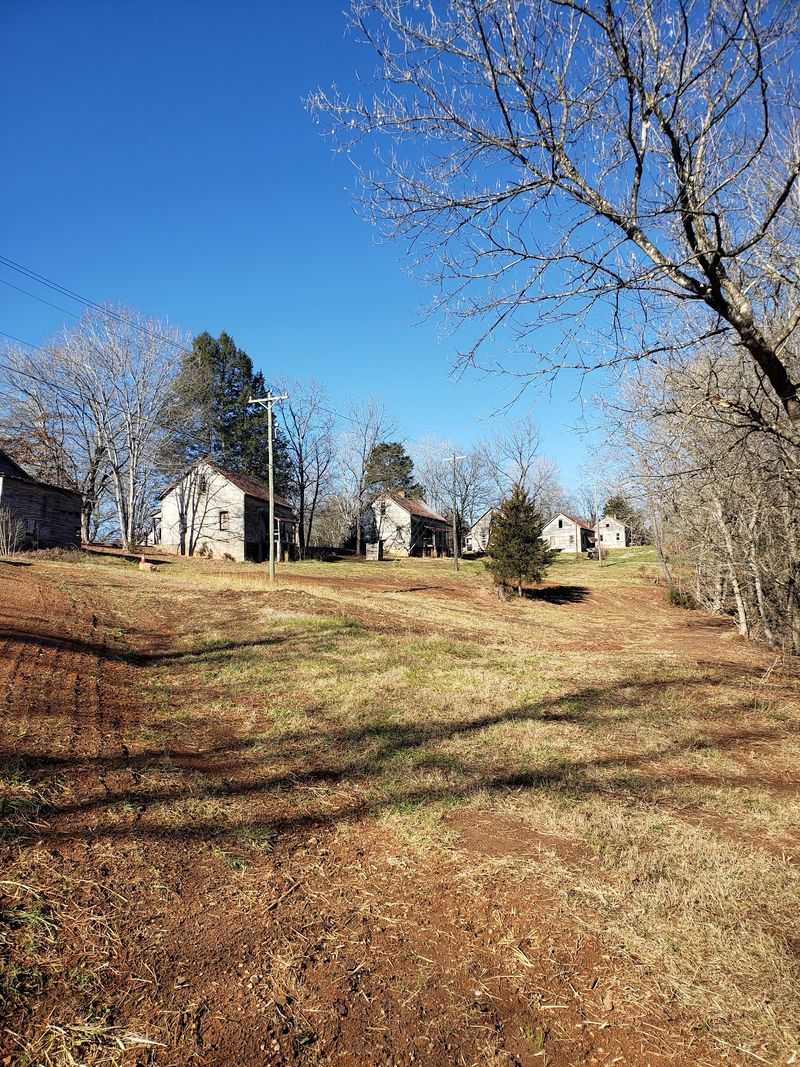
Weathered clapboard houses line a quiet hillside where a cotton mill once hummed from first light until dark. Founded in 1905, the village sheltered workers and their families for generations before the mill fell silent and the homes emptied.
Guided tours begin near the old company store at 4255 Henry River Road, a short drive from Hickory.
Movie fans recognize the setting immediately. The company store played Mellark’s Bakery, and one of the small mill houses stood in as Katniss Everdeen’s home in The Hunger Games.
House 16, the Everdeen home, now holds a small museum with objects found around the property, from bottles to tools left behind by mill families.
Guides explain how the mill operated and what daily life looked like for the people who lived here.
Wear sturdy shoes. The lanes are gravel and grass, and the ground slopes toward the Henry River, where remnants of the old dam still break the current.
Summer brings tall weeds and buzzing insects.
Overnight stays are possible in restored cottages, giving guests the rare thrill of sleeping inside a film set after the tour groups head home. Evenings bring frogs, crickets, and a wide dark sky above the rooftops.
Bring water, a camera, and patience for stories. The village rewards anyone willing to slow down and listen.
Tours run seasonally, so check ahead before making the drive.
Curious detail: the mill once issued its own currency for workers to spend at the company store, a practice common in southern textile towns during the early twentieth century.
6. Triple Falls, DuPont State Recreational Forest
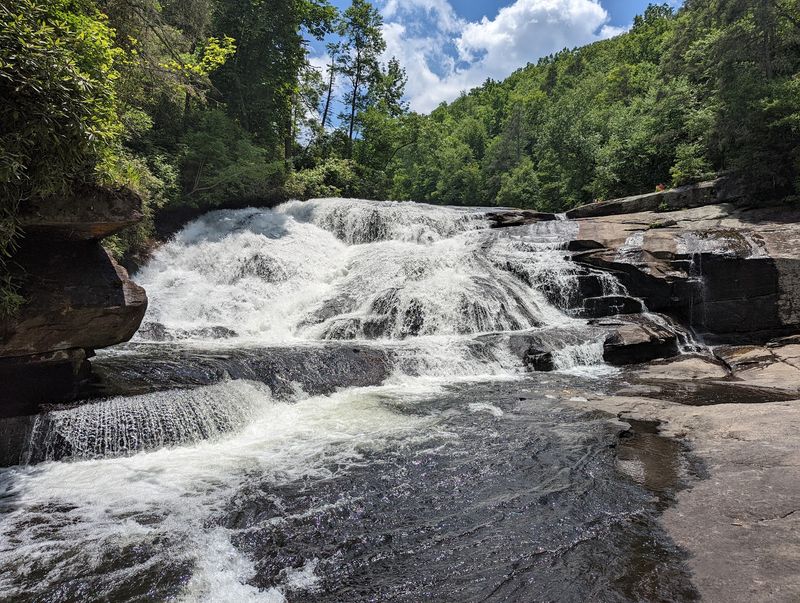
Three broad rock ledges send the Little River tumbling in white sheets, one drop after another, for roughly 125 feet. Filmmakers used the setting for The Hunger Games, staging the scene where Katniss finds Peeta camouflaged among the rocks.
Mist drifts up from the lower tier on warm mornings and cools the air by several degrees.
The trail starts at the Hooker Falls parking area in DuPont State Recreational Forest, southeast of Brevard.
Sturdy shoes matter more than anything else. Wet stone near the water turns slick, and the safest views come from the marked overlooks rather than the edges.
Arrive early on weekends. Parking lots fill quickly from late spring through October, when mountain laurel and rhododendron bloom along the banks and the forest smells green and damp.
Pack a picnic. Flat boulders make natural benches, and the roar of falling water drowns out nearly everything else, which is part of the appeal for hikers who come here to unplug.
Photographers favor overcast days, when soft light keeps the white water from washing out. Autumn adds gold and rust to the canopy above the ledges, and winter sometimes edges the rocks with ice.
Continue upstream and you reach High Falls within about a mile, doubling the payoff for one parking spot. Few places in North Carolina put two waterfalls of this size so close together.
5. Chimney Rock State Park, Chimney Rock
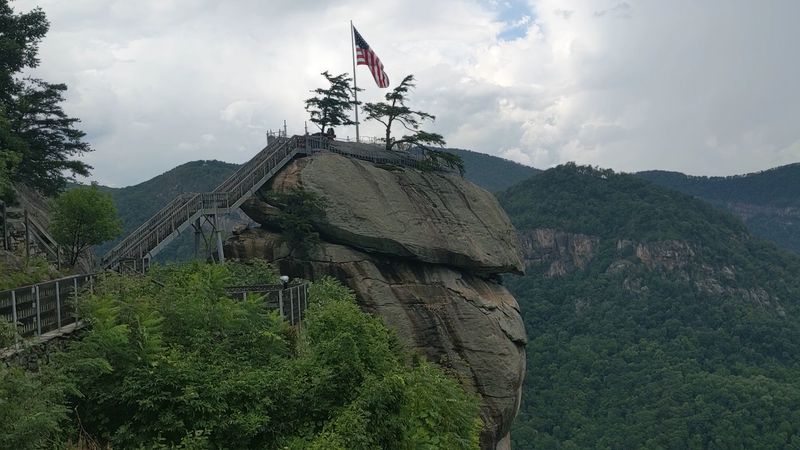
A stone tower stands at the edge of Hickory Nut Gorge like a natural lookout post, and reaching the top delivers views stretching about 75 miles on clear days. The park entrance sits at 174 Chimney Rock Park Road in Chimney Rock, along the road that follows the Rocky Broad River.
Crews filmed climactic scenes from The Last of the Mohicans here in 1992, using the cliffs and the tall cascade of Hickory Nut Falls as a backdrop.
Two ways lead to the top. An elevator carved through the rock rises 26 stories in about half a minute, while the Outcroppings Trail climbs roughly 500 steps for anyone who prefers to earn the view.
The Hickory Nut Falls Trail runs mostly level for about three quarters of a mile through hardwoods and boulders. At the end, water drops 404 feet down a dark rock face, close enough that spray reaches the viewing area on breezy days.
The monolith itself is ancient, formed from stone estimated at around 500 million years old. Standing on the upper deck, with wind pushing across the platform, gives a real sense of that scale.
A few practical notes: the access road is narrow with tight turns, crowds peak during fall color season, and checking current park conditions and hours before setting out saves disappointment.
Down in the small village below, sidewalk shops sell fudge, kettle corn, and ice cream, an easy reward after the climb. Lake Lure shimmers in the distance, close enough to visit the same afternoon.
4. Forrest Gump Curve, Grandfather Mountain, Linville
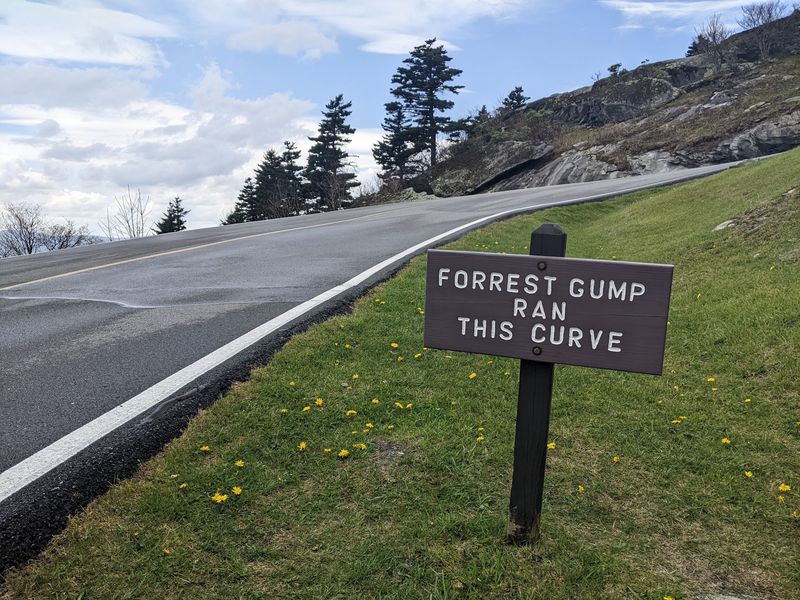
Some movie spots require imagination. Not this one: the switchback where Forrest Gump jogs past the camera looks much as it did on screen, with blue ridges folding into the distance behind the guardrail.
The curve sits on the entrance road that winds toward the summit of Grandfather Mountain in Linville. A marked sign identifies it, and a small pull-off with parking and a picnic area waits just before the bend.
Traffic makes running the pavement unsafe, so plan on photos from the pull-off instead. Even so, steering through the bend with the windows down and cool mountain air rushing in comes close to the feeling of the scene.
Timing matters here. Early morning light throws long shadows across the road, and autumn turns the surrounding slopes into patches of gold, copper, and deep red.
Higher up, the mountain rewards the extra miles. The Mile High Swinging Bridge sways above a rocky notch, and wildlife habitats shelter otters, black bears, cougars, and eagles.
Bring a jacket. Summit temperatures often run well below those in the valley, and wind gusts can be strong even on bright afternoons.
Admission is charged at the park gate, which covers the bridge, museum, and nature trails, so build in a few hours rather than treating the curve as a quick stop. Staff at the entrance can point you toward the sign.
Fun detail: the running sequence was filmed across several states, but this curve in North Carolina became the image most people remember.
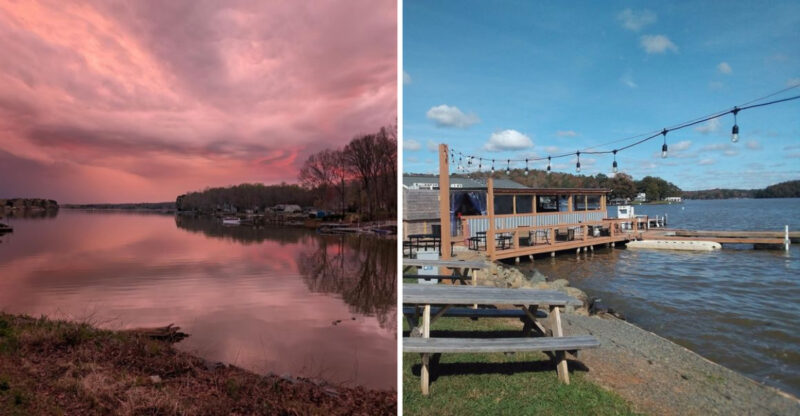
3. Lake Lure, Lake Lure
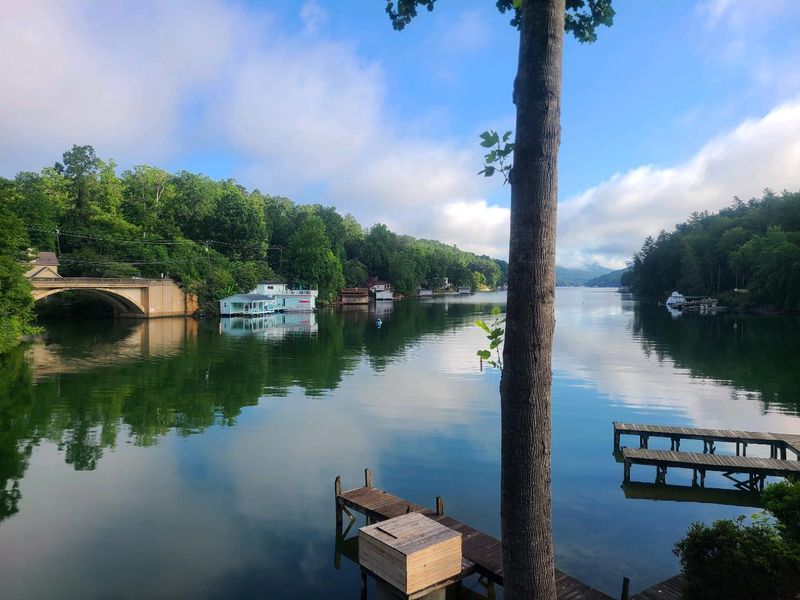
Green mountains ring a lake so still in the morning that the reflections look painted on. Baby practiced her steps along these shores in Dirty Dancing, carried that famous watermelon, and rehearsed the lift in the shallow water.
The lake sits about 28 miles from Asheville, cradled by the walls of Hickory Nut Gorge. Narrated pontoon tours with Lake Lure Tours glide past the filming spots, and guides point out details easy to miss from shore.
The 1927 Lake Lure Inn and Spa leans into the connection with themed cabins named for the film. A short drive away, The Esmeralda Inn, Restaurant and Spa displays salvaged flooring from the movie’s final dance scene inside its lobby.
Swimming, paddling, and lakeside picnics fill summer afternoons. A public beach area and marina rentals make the water easy to reach even without your own boat.
Come hungry. Small cafes near the marina serve burgers, fish sandwiches, and homemade ice cream, and eating at a picnic table with the gorge rising behind you beats any indoor dining room.
Autumn is the showstopper. Ridges turn scarlet and amber above the water, and the reflection doubles the color, which is why lodging books up months ahead for October weekends.
An annual festival celebrating the film has long drawn fans to town, so the local events calendar is worth a look.
Here is something surprising: the lake is not natural at all. Workers created it in 1927 by damming the Rocky Broad River, flooding a valley and shaping the shoreline filmmakers later fell for.
2. Downtown Southport, Southport
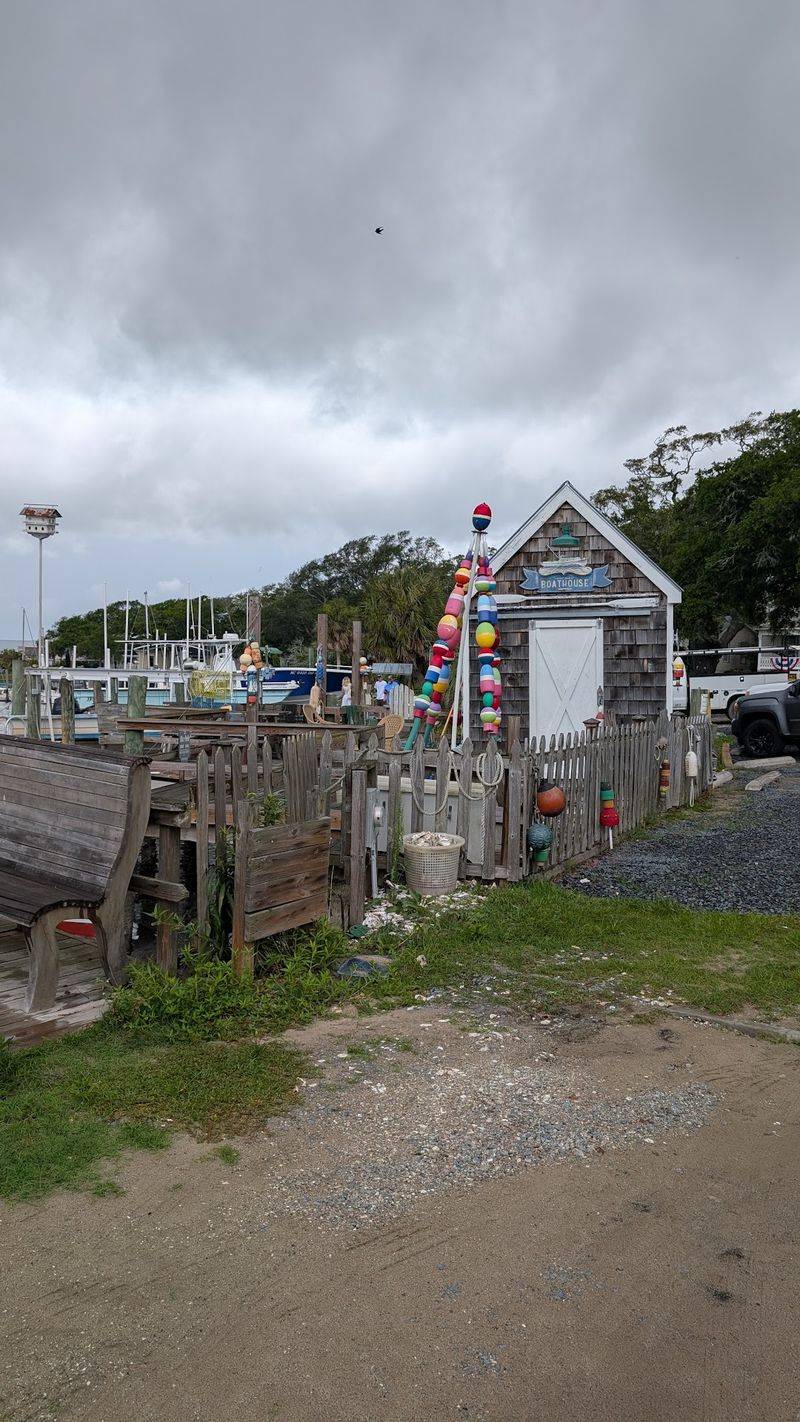
Live oaks draped in Spanish moss lean over sidewalks in this old fishing town near the mouth of the Cape Fear River. Screenwriters have borrowed the streets often, and Safe Haven used the storefronts, porches, and waterfront as its backdrop.
Pick up a self-guided map at the Fort Johnston Southport Museum and Visitor Center, 203 East Bay Street, before you start walking.
The old Moore Street Market, now Southport Coffee Co., served as a neighborhood gathering spot in the film. Order something warm at the counter, then carry it outside and watch the town wake up.
Waterfront boardwalks trace the harbor, with benches facing shrimp boats, sailboats, and the distant Oak Island Lighthouse. Pelicans coast overhead in slow, steady lines.
A ferry to Fort Fisher departs nearby, an easy add-on for a longer day.
Seafood anchors most menus here. Fried flounder, shrimp baskets, and hushpuppies arrive hot from the kitchen, and the salt breeze off the water makes everything taste sharper.
Small boutiques, antique dealers, and gift shops line Howe Street inside cottages more than a century old. Wide porches, tin roofs, and picket fences give the walk a storybook rhythm.
Come during shoulder season if you can. Spring and early fall bring mild weather, easier parking, and quieter streets for photographs.
Mornings are calm and golden along the harbor.
History runs deep here. The town began in 1792 as Smithville, took the name Southport in 1887, and its harbor pilots have guided ships across the river bar for generations.
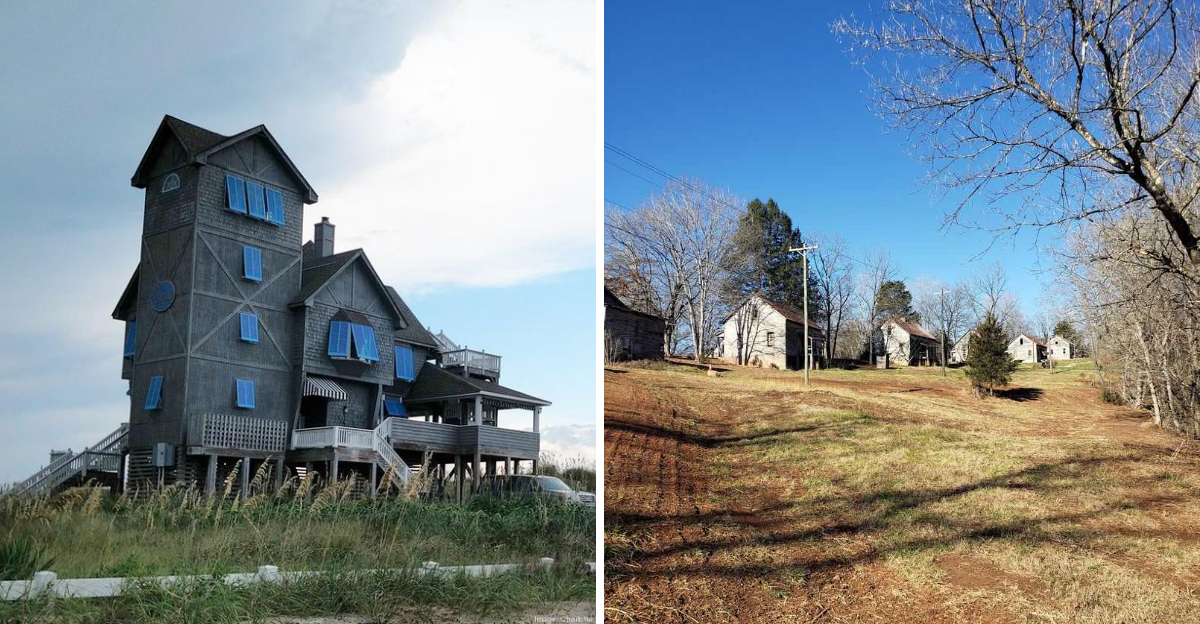
1. The Inn At Rodanthe, Rodanthe
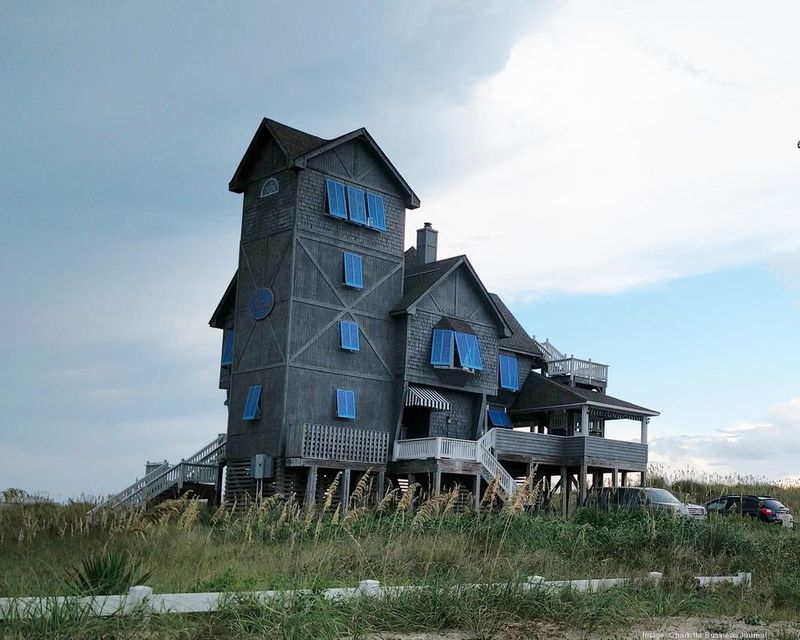
Salt air, sea oats, and a weathered house with blue shutters: the setting of Nights in Rodanthe still stands on Hatteras Island. Once called Serendipity, the home supplied the exterior shots that gave the film its windswept mood.
You will find it along Beacon Road East in Rodanthe, a short walk from the surf.
Erosion nearly claimed the house, so crews moved it back from the shoreline to steadier ground. The relocation saved the porches, railings, and shutters that fans recognize instantly.
These days the property works as a vacation rental. Guests wake to waves outside the window and can watch sunrise spread across the Atlantic from the deck.
Not staying overnight? Driving past works fine.
Park at marked public beach accesses, respect private driveways, and photograph the house from the road or the sand.
Rodanthe itself is a narrow ribbon of sand with fishing piers, kite shops, and long quiet stretches of shoreline. Anglers cast at dawn, surfers chase the swell, and wild grasses hiss in the wind.
Seafood shacks nearby fry the day’s catch and serve steamed shrimp by the pound, and a cone of soft serve tastes better with sand still on your feet. Storm season runs late summer into fall, so check ferry and road conditions before traveling.
Allow extra time for the drive down Highway 12. The road threads between dunes and water, with Pamlico Sound on one side and the ocean on the other, easily one of the most scenic routes in North Carolina.