12 Small California Towns With Historic Main Streets You Need To Walk
Skip the scenic overlook for a minute. The better view may be at sidewalk level.
Old brick facades, faded signs, narrow storefronts, courthouse squares, century-old hotels, and tiny shops can turn a short walk into a surprisingly revealing look at how a town grew up.
No hiking boots required. Just park once and start wandering.
California’s smaller communities still preserve historic main streets where the past feels woven into everyday life instead of sealed behind museum glass.
One block may smell like fresh bread. The next might hold an antique shop or a building that has survived more reinventions than anyone can count.
Do not rush toward the “must-see” stop. The interesting bit may be the doorway or odd little business you almost walked past.
1. Ferndale, Victorian Storefronts On Main Street
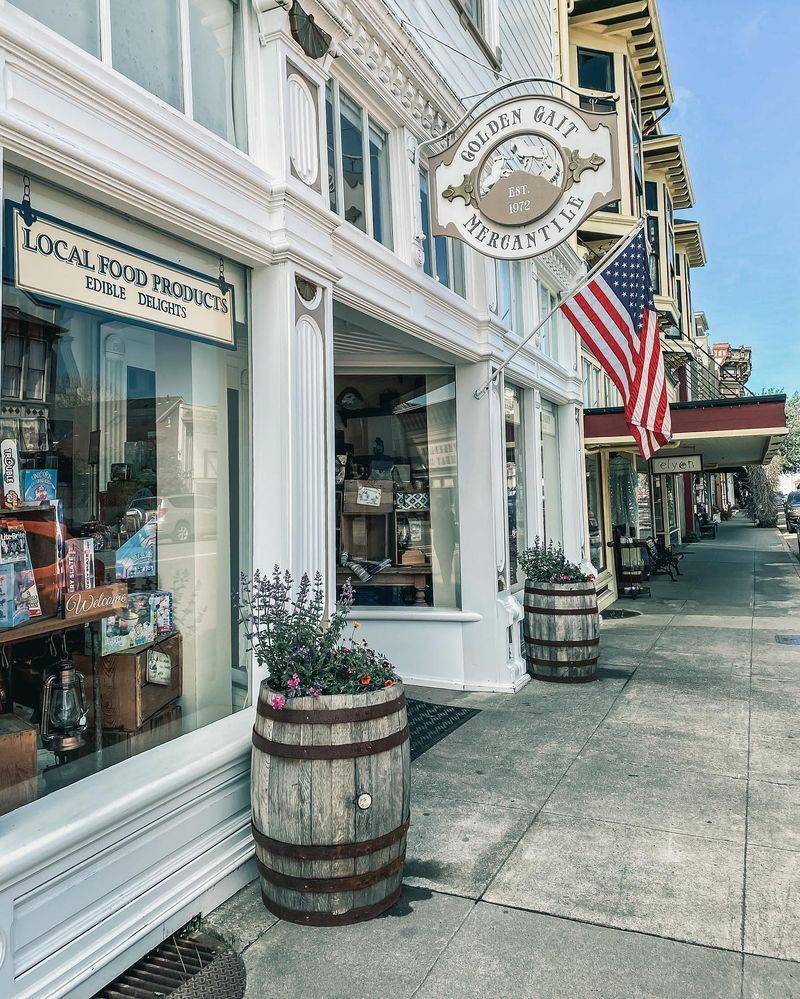
Locals call Ferndale the Victorian Village, and one glance down Main Street explains why.
Ornate wooden trim, Italianate storefronts, and grand Queen Anne homes sit shoulder to shoulder, painted in colors that look almost too cheerful to be real.
Dairy money built this place in the late 1800s, and because the town never got swallowed by growth, the architecture survived nearly untouched.
The whole village carries California Historical Landmark No. 883 status, and the Main Street Historic District is listed on the National Register. Walking here works best slowly.
Independent shops fill the old buildings, from a blacksmith shop to bookstores and candy counters, and architectural walking tours led by local historians raise money for the Ferndale Museum.
Park once and leave the car alone. The commercial stretch runs only a few blocks, so you can cover it twice and still notice details you missed the first time, like carved brackets above doorways or original glass transoms.
Fog rolls in off the Eel River valley most mornings, which gives the street a hushed, old-photograph feeling. Afternoons warm up, and the sidewalks fill with people carrying coffee.
Filmmakers have used Ferndale as a stand-in for small-town America more than once because the streetscape needs almost no set dressing.
Bring a jacket, comfortable shoes, and some patience for browsing. Rushing through would waste the best-preserved Victorian main street on the entire California coast.
2. Nevada City, The Curve Of Broad Street
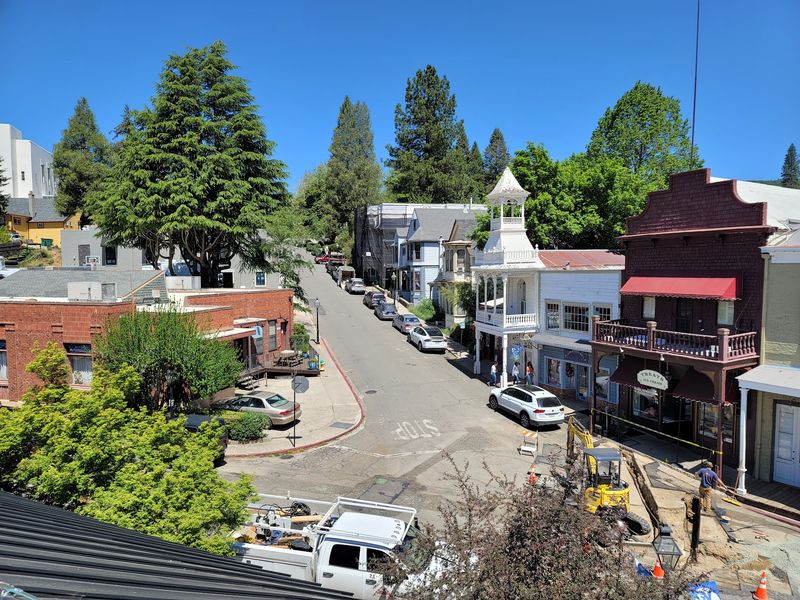
Broad Street climbs a hill, bends where it feels like it, and refuses to follow any grid. That stubborn old layout is exactly what makes Nevada City such a rewarding walk.
Fires in the 1850s and 1860s wiped out much of the original downtown, so what stands today was rebuilt in brick with iron shutters, wooden balconies, and thick walls meant to survive the next disaster. The strategy worked.
The Nevada City Downtown Historic District covers roughly 16 acres and includes about 70 contributing buildings on the National Register.
Among them sits the National Exchange Hotel, built in 1856 and considered the oldest continuously operating hotel in California.
A self-guided smartphone tour points out landmarks along the way, including the Nevada Theatre from 1865 and the Firehouse No. 1 Museum with its distinctive bell tower and gingerbread trim.
Expect hills. Sidewalks tilt, staircases connect one level to another, and side alleys hide bookshops, bars, and galleries that most visitors walk right past.
Evening is the sweet spot. Old-style lamps flicker on, restaurant windows glow, and live music drifts out of doorways that have been serving customers since miners walked in muddy boots.
Stop by in winter and the Victorian Christmas street festival transforms the district into something out of a storybook, with vendors and carolers filling the closed-off pavement.
3. Sutter Creek, Gold Country’s Most Walkable Stretch
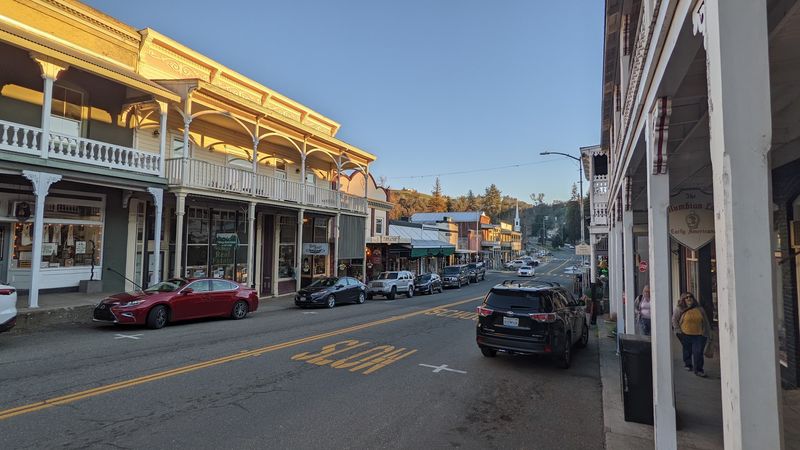
Amador County boosters describe Sutter Creek as the most walkable town in Gold Country, and the claim holds up the moment you step onto Main Street. Nearly everything worth seeing lines a handful of blocks.
Those white-railed balconies cantilevered over the sidewalk are the signature look here. Built in the 1800s, they shade shoppers below and give the street a layered, almost theatrical appearance.
Behind the storefronts sit inns, bed-and-breakfasts, antique dealers, and small restaurants. Many operate out of buildings that once served miners hauling ore out of nearby quartz mines.
Grab the historical walking map before you start. It highlights around 20 notable landmarks, including the Knight Foundry, a water-powered foundry dating to 1873 and recognized as a national historic landmark.
Because the terrain stays mostly flat along the commercial core, this walk suits families, grandparents, and anyone who would rather browse than climb. Benches show up often enough for resting.
Try a weekday morning if crowds bother you. Shopkeepers have time to talk, and plenty of them know exactly which mining family built the wall you happen to be leaning against.
The creek that gave the town its name was reportedly named for John Sutter himself, whose sawmill discovery in Coloma set the whole Gold Rush in motion.
4. Murphys, Its Shady Main Street
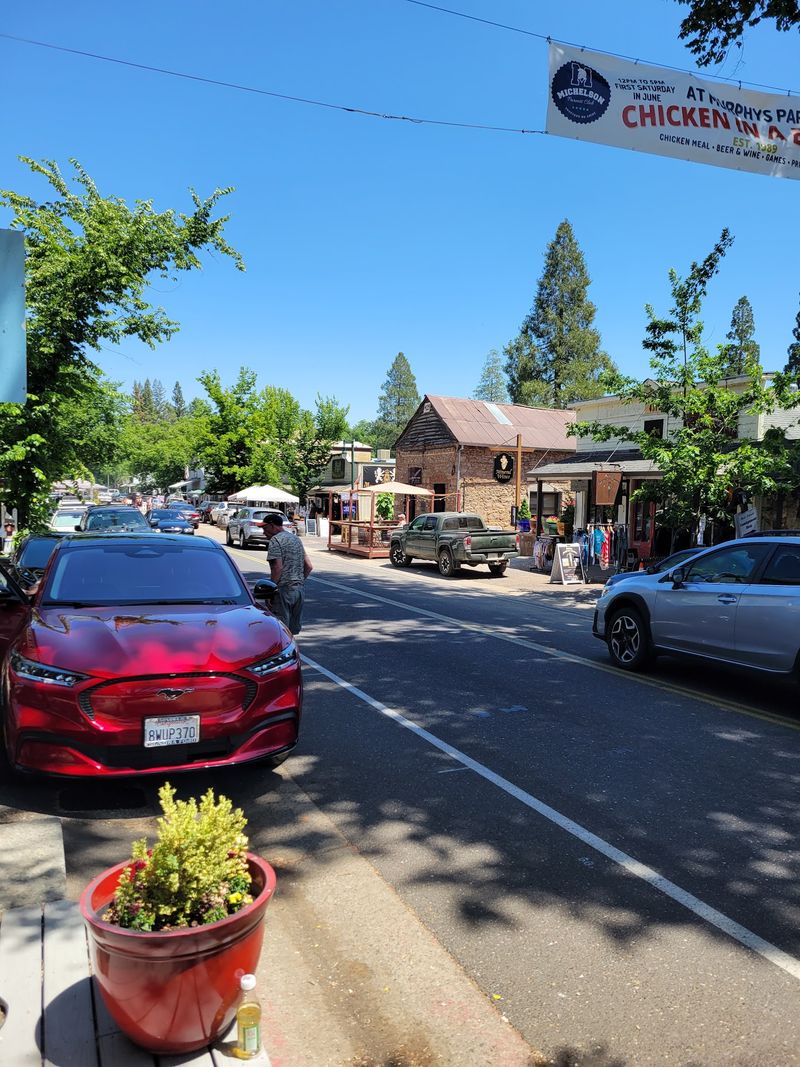
Shade makes all the difference in the Sierra foothills, and Murphys has plenty of it. Tall trees arch over Main Street, turning a summer stroll into something genuinely comfortable.
Gold Rush builders here favored thick stone walls and heavy iron shutters, both meant to slow fires. Several of those buildings still stand, now filled with tasting rooms, ice cream shops, art galleries, and bakeries.
The Murphys Hotel anchors the block. Opened in 1856 and listed on the National Register, it counts as one of California’s oldest continuously operating hotels, and its guest register has held names like Mark Twain, Ulysses S.
Grant, and Susan B. Anthony.
Gardens and small courtyards tuck in between storefronts, so the walk keeps changing character every few steps. Murphys Creek runs alongside part of town, adding the sound of water to the mix.
Wine lovers will find dozens of tasting rooms within easy walking distance, which is part of why the town gets busy on weekends. Arrive early if parking stress ruins your mood.
Save energy for the small side streets. Historic cottages and old schoolhouse buildings sit just off the main drag, and they rarely draw crowds.
An afternoon here works best with no schedule at all. Sit on a bench, watch the street, and let the town set the pace for you.
5. Julian, Apple Pie And 1870s Buildings
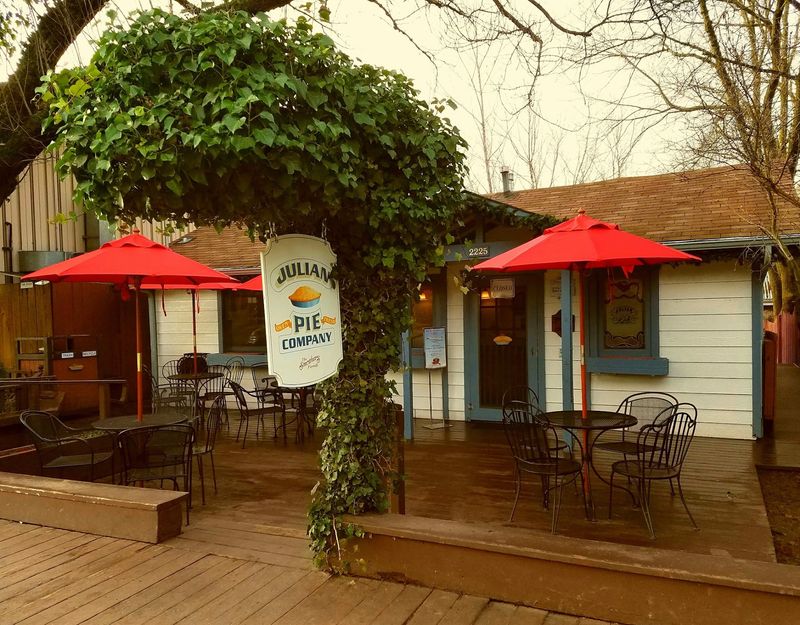
Four thousand feet up in the mountains east of San Diego, Julian smells like cinnamon almost year-round. Apple pie built the town’s modern reputation, but gold built the town itself.
Prospectors struck gold here in 1869, and several buildings from the 1870s still line the downtown area. False-front wooden facades, covered walkways, and hitching-post details survive along the short main stretch.
A self-guided historical walk leads visitors directly through town, pointing out the old jail, hotel, and other structures that outlasted the mining boom by a century and a half.
Autumn brings the heaviest crowds, when apple harvest season pulls in visitors from across Southern California. Spring wildflowers and quiet winter snow days offer a calmer version of the same walk.
Distances are short, but the elevation catches some people off guard. Take breaks, drink water, and treat the hill grades with respect.
Beyond pie, the street holds a hard cider tasting room, a mining museum, an old-fashioned soda fountain, and small shops selling everything from honey to handmade soap.
Come hungry, leave with crumbs on your shirt, and count that as a successful visit.
6. San Juan Bautista, Third Street’s Early California Look
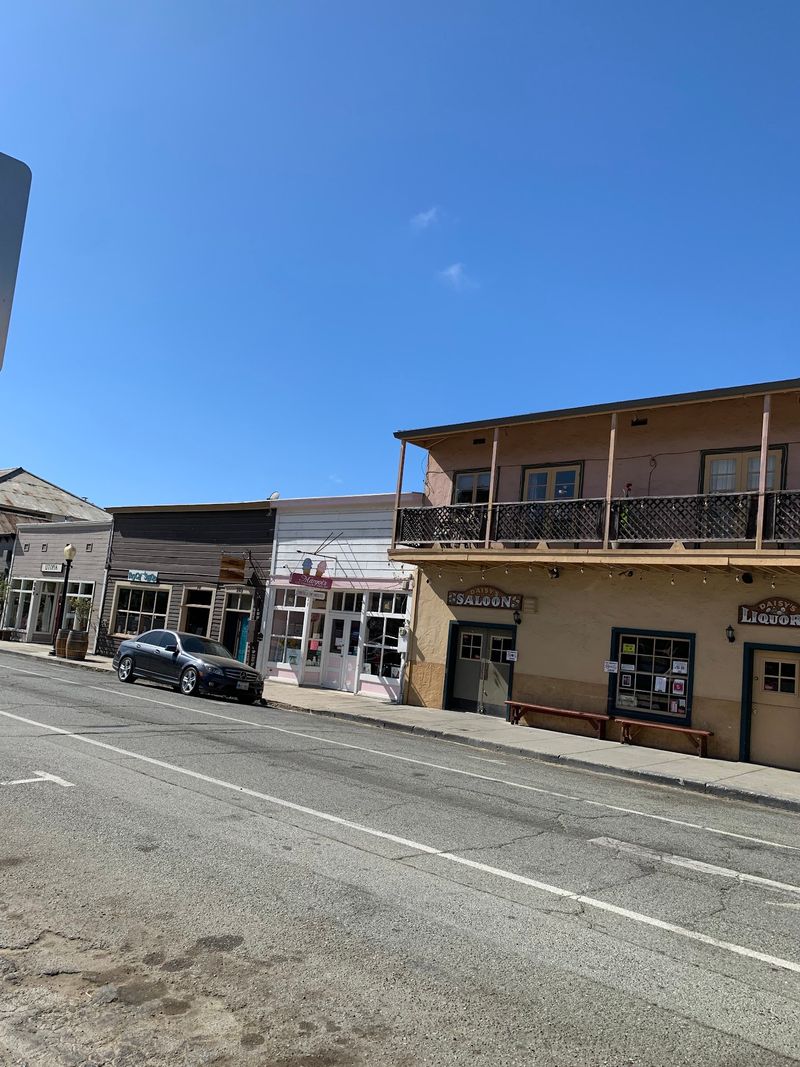
A railroad decision in 1876 accidentally preserved this town. When the Southern Pacific bypassed San Juan Bautista, growth stalled, and the 1800s architecture simply stayed put.
Third Street forms the heart of a nationally registered historic district. Preserved commercial buildings, adobe walls, and wooden porches give the street an early-California look you rarely see anywhere else in the state.
Mission San Juan Bautista sits a short walk away, facing the only original Spanish plaza still surrounded by historic buildings in California. Standing in that open square feels like stepping back two full centuries.
Nicknamed the City of History, the town offers a walking tour covering close to 50 points of interest. Old stables, a former hotel, and a historic jail all make appearances.
Shops and restaurants along Third Street lean toward Mexican food, antiques, and small galleries. Prices tend to run friendlier than in nearby coastal towns.
Film buffs may recognize the mission from Alfred Hitchcock’s Vertigo, though the bell tower shown in the movie was created with special effects.
The San Andreas Fault runs right at the edge of town, and a marked trail behind the mission lets you look out over the fault line itself.
Plan two or three hours. Between the plaza, the street, and the state historic park buildings, there is more here than the small size suggests.
7. Sonora, Washington Street Through The Queen Of The Southern Mines
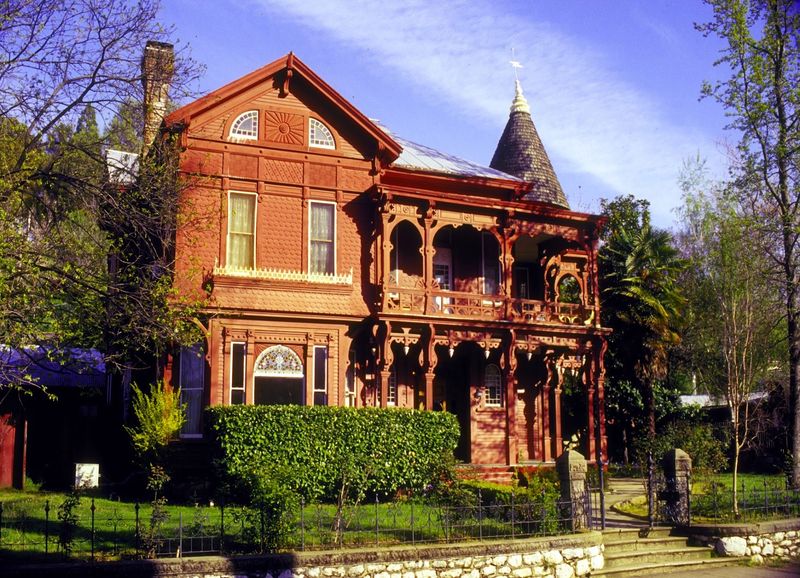
Mexican miners from the state of Sonora founded this town in 1848, and the name stuck. Washington Street still runs through the center as the main artery of Historic Downtown Sonora.
Boutiques, galleries, coffee shops, and restaurants now fill buildings that once held saloons and assay offices. Brick fronts, tall windows, and painted signs keep the older character intact.
The city publishes a Historic Downtown Walking Tour covering 21 landmarks along a one-mile route. Courthouse Square and the 1885 Sonora Opera Hall rank among the highlights.
St. James Episcopal Church, the striking red building at the north end, has become the most photographed structure in Tuolumne County. Its steeple shows up in postcards everywhere.
Sonora earned the nickname Queen of the Southern Mines during the Gold Rush, when it was among the richest and rowdiest camps in the region.
Traffic can be busy on Washington Street, so use crosswalks and stay alert. Side streets offer quieter photo angles anyway.
The walk includes some gentle hills, but nothing punishing. Cafes appear often enough that stopping for a drink never requires much detour.
Weekend mornings bring a farmers market atmosphere in warmer months, adding produce stands and live music to the historic backdrop.
That combination of everyday life and preserved architecture is what keeps the downtown feeling alive rather than staged.
8. Cambria, Sea Air And The East Village
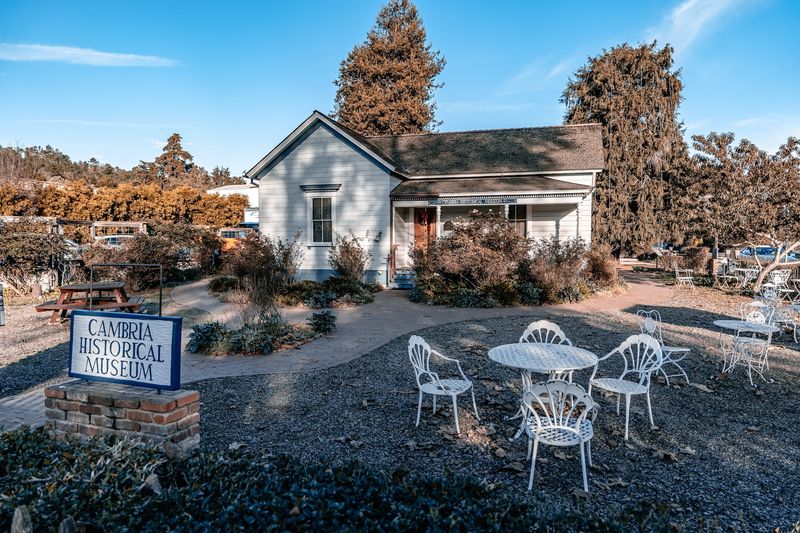
Not every historic main street in California smells like pine dust and gold. Cambria’s smells like ocean fog and Monterey pines, which makes it a welcome break from the foothill towns.
The East Village holds the older half of the community, with buildings stretching back to the 1800s. Wooden structures, small storefronts, and narrow sidewalks line Main Street as it curves along Santa Rosa Creek.
The Cambria Historical Society runs a self-guided walking tour through the district. Stops include the Kaetzel/Williams House and the Music House, both dating to 1865.
Housed inside the Guthrie-Bianchini House from 1870, the Cambria Historical Museum makes a solid first stop. Volunteers there love answering questions about the town’s mercury mining and shipping past.
Antique shops dominate the retail scene, alongside bakeries, wine tasting rooms, and restaurants serving whatever came off the boats nearby. Browsing here can eat an entire afternoon.
Weather runs cool and often gray, even in July, so a sweater beats sunscreen most days.
Hearst Castle sits just up the road, which means many travelers treat Cambria as a quick lunch stop. Staying overnight rewards you with empty morning sidewalks and better light for photographs.
Walk the boardwalk at Moonstone Beach afterward for a completely different kind of stroll, then circle back for dinner in the village.
9. Angels Camp, Where Mark Twain Found A Frog Story
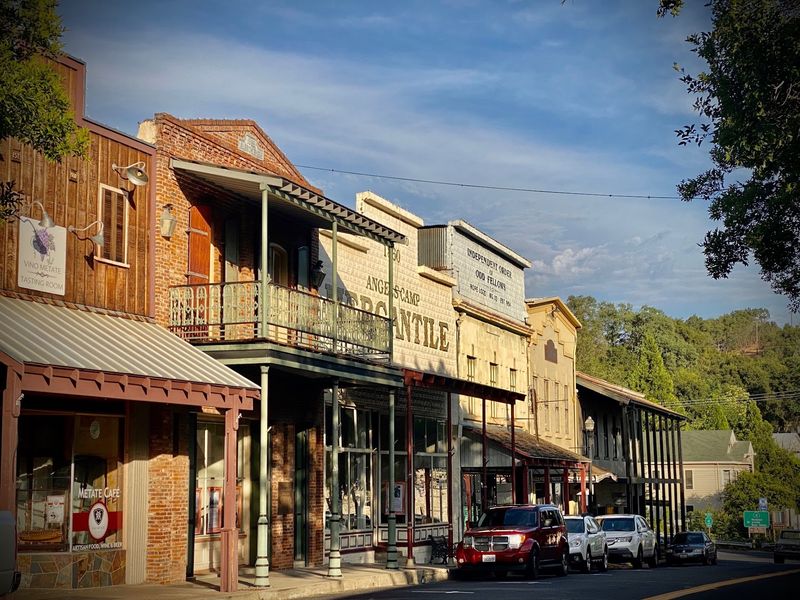
Look down while walking Angels Camp and you will spot bronze frogs set into the sidewalk. Each one honors a winner of the jumping frog contest inspired by Mark Twain’s famous short story.
Historic Main Street carries clear Gold Rush character, with old Western-style architecture and stone buildings that survived the mining boom.
The city describes its downtown as one of the most picturesque historic districts in California Gold Country.
Deep quartz mines once operated right beneath the town, and remnants of that industry still show up in the surrounding hills. Interpretive signs connect the walkable downtown to that underground history.
Shops, cafes, and small museums fill the storefronts today. The Angels Camp Museum on the edge of town displays wagons, mining equipment, and carriages if you want more depth after your walk.
May brings the Calaveras County Fair and Jumping Frog Jubilee, when the whole area fills with visitors and, yes, competitive frogs.
Main Street sits on a slope, so start at the upper end and let gravity help on the return trip.
Parking is generally easier here than in Murphys or Columbia, making Angels Camp a smart base for exploring Calaveras County.
Twain reportedly heard the frog tale in a local hotel bar in 1865, and that single story launched his national career.
10. Columbia, A Gold Rush Town Frozen In Place
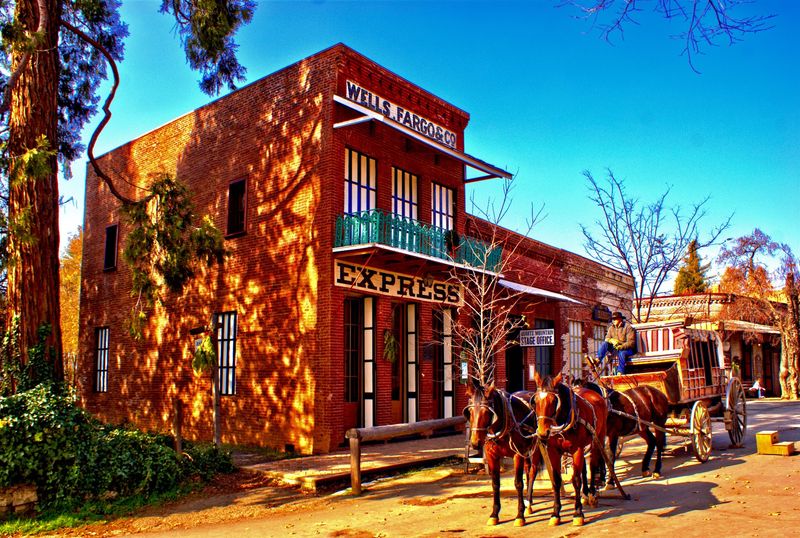
Dirt underfoot instead of asphalt. Stagecoaches rolling past.
Columbia is less a preserved main street and more a living Gold Rush town that never quite modernized.
Much of the old townsite is protected as Columbia State Historic Park, which keeps the 1850s brick buildings, iron shutters, and wooden boardwalks in working order.
The historic business district still holds active merchants. You can buy hand-dipped candles, watch a blacksmith work, order sarsaparilla at a saloon, or pan for gold in a trough of water.
Once the second largest city in California, Columbia produced enormous amounts of gold before the diggings played out.
Around 30 original buildings remain, one of the largest collections of Gold Rush structures anywhere.
Admission to the park costs nothing, which makes it one of the best free outings in the Sierra foothills for families.
Costumed docents appear on many weekends, explaining daily life in the 1850s without turning the visit into a lecture.
Comfortable shoes matter here more than anywhere else on this list, since the streets are packed earth and can get dusty or muddy depending on the season.
Stay for a meal at the City Hotel or Fallon Hotel, both restored and operating. Eating dinner inside a building from the 1850s adds a nice finish to the walk.
11. Placerville, Pony Express Stops And Old Hangtown
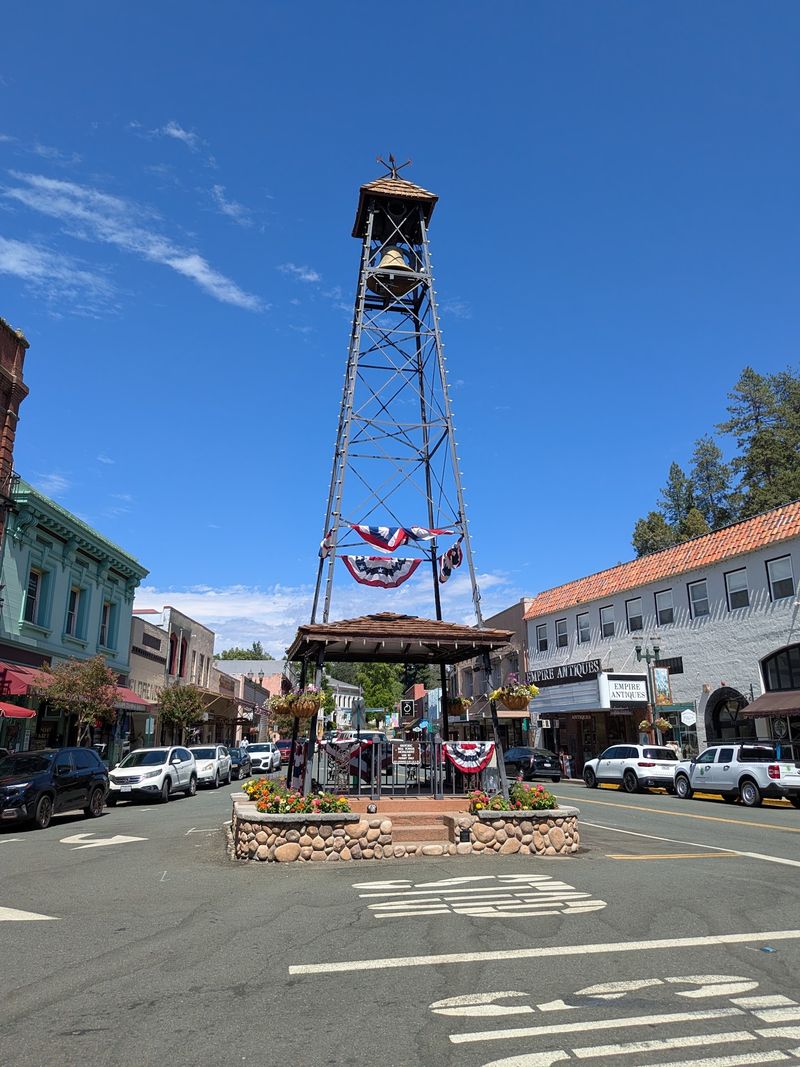
Old Hangtown earned a rough nickname during the Gold Rush, and Placerville has never entirely shaken it. The name came from swift frontier justice carried out downtown in 1849.
Most buildings along Main Street date to the 1800s, forming a dense corridor of brick storefronts, restaurants, bookstores, and bars. The bell tower in the middle of the street once summoned volunteer firefighters.
Pony Express riders passed through here on the route between Missouri and Sacramento, and markers along the walk trace that connection.
A scavenger hunt called Miners on Main hides tributes to 10 influential Gold Rush figures throughout the downtown corridor. Kids tend to love hunting them down.
Placerville runs a bit larger than others on this list, which means more dining choices and a busier feel. That trade-off suits travelers who want variety after browsing.
Three business giants got their start nearby: John Studebaker built wheelbarrows for miners, Mark Hopkins sold groceries, and Philip Armour ran a butcher shop.
Parking garages sit just off Main Street, so skip circling the block and use them.
Come on a Saturday and the sidewalks buzz with locals, which gives the historic district a lived-in energy that some quieter towns cannot match.
12. St. Helena, Stone Buildings In The Heart Of Napa Valley
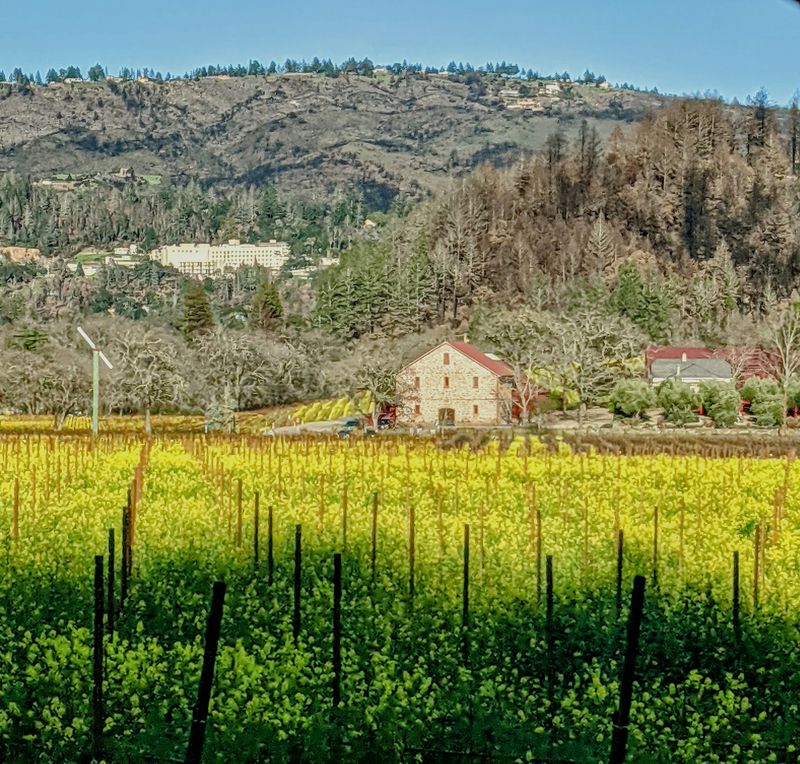
St. Helena grew up around vineyards and orchards, and its Main Street reflects that steadier, more prosperous past.
Stone, masonry, and wood-frame buildings line the center of town, many built in the late 1800s by Italian and German stonemasons who also constructed the valley’s wineries.
Iron awnings stretch over portions of the sidewalk, offering shade during the valley’s genuinely hot summers. Under them sit bookshops, olive oil stores, clothing boutiques, and bakeries.
Prices skew higher than in Gold Country, no surprise given the neighbors. Window shopping still costs nothing, and the architecture rewards a slow pace regardless of your budget.
The Napa Valley Wine Train and countless tasting rooms sit nearby, but the walkable downtown works fine on its own for a couple of hours.
Robert Louis Stevenson spent his honeymoon just north of town in 1880, and a small museum on Library Lane holds one of the world’s largest collections of his belongings.
Summer afternoons get warm, so morning or early evening makes for a more pleasant walk. Trees along the sidewalk help.
Watch for original stonework details on building corners and above doorways. Those hand-cut blocks came from local quarries, tying the street directly to the ground it stands on.