The North Carolina Lake With 76 Miles Of Mostly Undeveloped Shoreline And Barely Any Crowds
I have a weakness for lakes that look like somebody forgot to develop them.
This one barely seems interested in civilization.
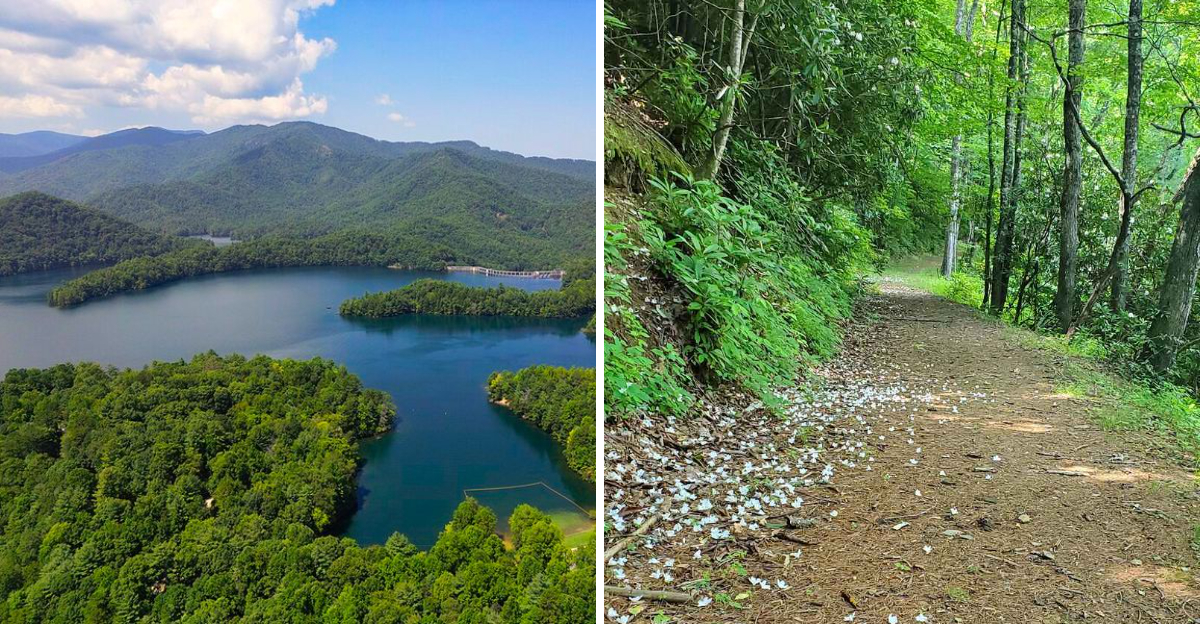
Nearly 3,000 acres of water stretch through the North Carolina mountains, while roughly three-quarters of the shoreline remains protected by national forest. From a boat, the view is refreshingly uncomplicated.
Trees dominate. Houses mostly do not. That feels almost rebellious in 2026.
The lake itself dates to 1928, when a dam changed the river valley forever, but nearly a century later, the place still knows how to keep its voice down.
I would happily spend an afternoon paddling here with absolutely nowhere important to be. Fishing works too, assuming the fish are feeling more cooperative than usual.
With 76 miles of shoreline, finding a quiet corner is hardly a heroic expedition.
My biggest problem would be deciding when to leave.
Spoiler: probably after sunset, and only under protest.
Find A Quiet Cove And Realize You Might Have It Almost To Yourself
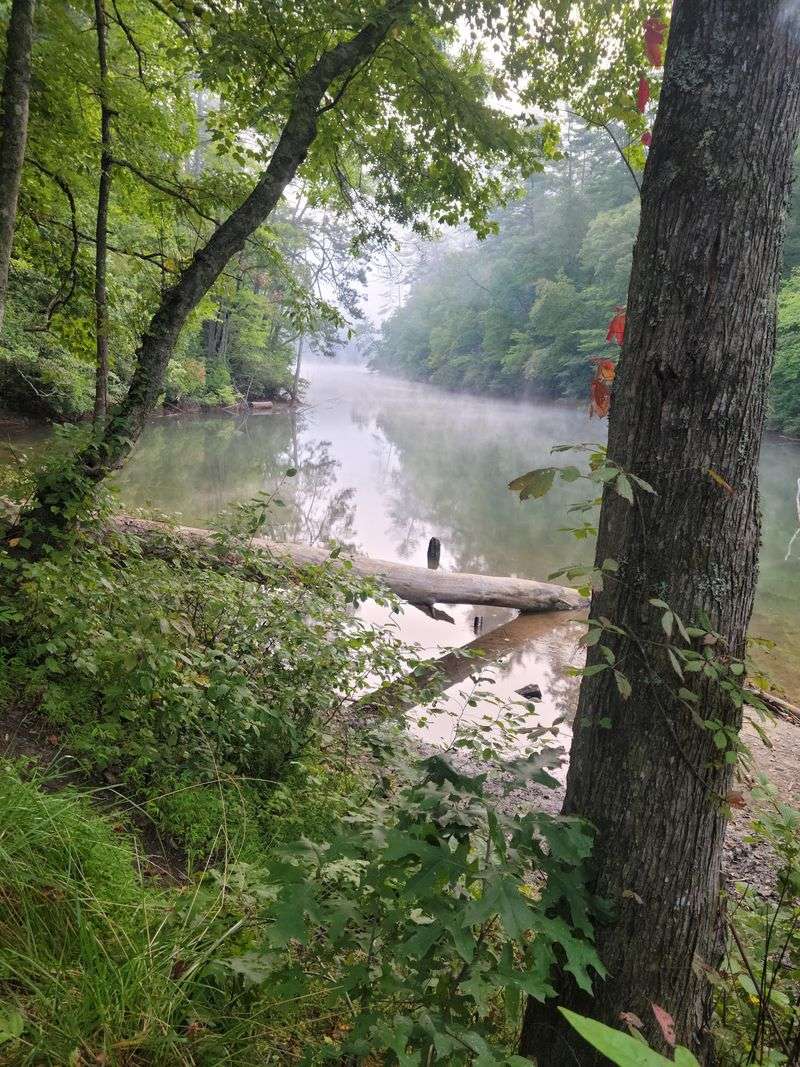
Slip around a wooded point on a weekday morning and the engine noise of the world simply stops. The water goes flat as glass, a kingfisher rattles somewhere in the branches, and the nearest person may be a mile of shoreline away.
Coves like these are everywhere on this lake because the Nantahala National Forest owns most of the bank. There are no lawns to mow, no boat lifts, no radios.
Just rocky outcrops warmed by the sun and patches of sand barely big enough for two chairs.
Early hours are the sweet spot. Fog often sits low in the inlets until mid morning, and deer come down to drink while the light is still soft.
Wildlife sightings genuinely outnumber boat sightings for much of the season.
A small practical note: cell service is spotty across Graham County, so tell someone your plan and carry a paper map or a downloaded one. Bring a snack, a hat, and something to sit on.
Finding a cove that feels like yours alone is the everyday magic here, and it costs nothing but patience and a little curiosity.
You Can Paddle Past Miles Of Forest Instead Of Lakefront Houses
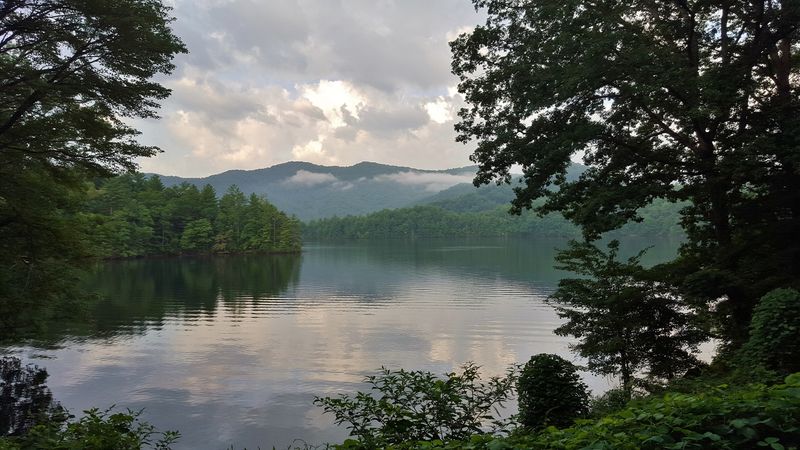
Most lakes hand you a parade of decks and boathouses. Here the view is hardwoods and hemlocks marching right down to the waterline, mile after mile after mile.
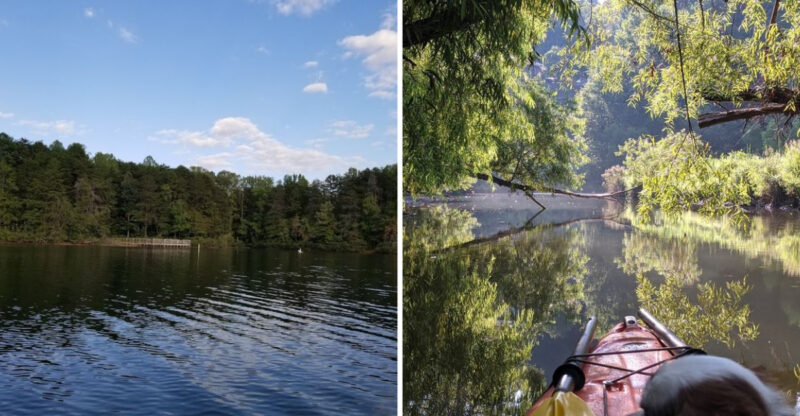
Kayaks, canoes, and stand-up paddleboards all work beautifully on Santeetlah because the water is generally calm and the coves break up any wind that kicks up. Look down and you can often see rocks and fallen limbs several feet below the surface, the clarity is that good.
Santeetlah Marina makes getting started easy. Rentals for kayaks, canoes, and paddleboards are available there, which saves you from strapping a boat to the roof for a mountain drive.
Plan your route with the shape of the lake in mind. Long fingers of water reach back into the hills, and a two-hour paddle can feel like a full expedition when every bend opens onto another wall of green.
Morning paddlers get the smoothest water. Afternoons bring a light chop and more sun, so sunscreen and a dry bag for your phone are worth packing.
Go slowly. The forest scenery deserves it.
Pull Up To A Primitive Campsite That Costs Absolutely Nothing
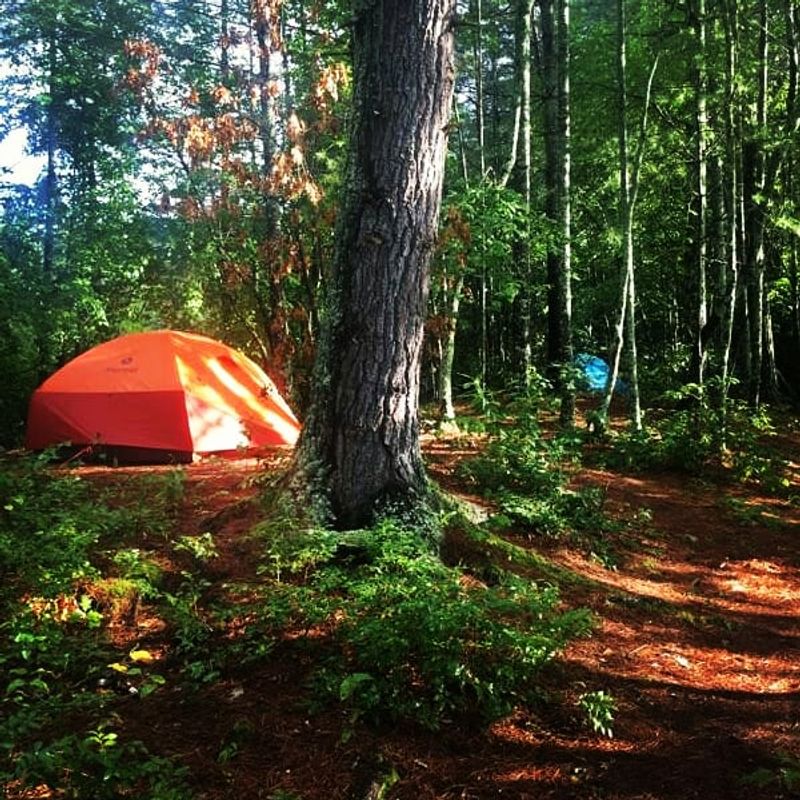
Free camping sounds too good to be true, yet more than 50 primitive, dispersed campsites ring this lake and none of them charge a cent.
Most sit along Joyce Kilmer Road and Pine Ridge Road, also signed as NCSR 1147, and they operate first come, first served. Each one typically comes with a fire ring, a picnic table, and a leveled tent pad, which is more than many free sites offer anywhere.
Set expectations correctly and you will love it. Potable water and restrooms are usually absent, though a few spots near boat launches have basic facilities or vault toilets.
Bring your own water, a way to filter more, and a plan for packing out every scrap of trash.
Arriving Thursday or early Friday improves your odds on summer weekends. Holiday stretches fill fastest, and midweek in spring or fall can feel almost private.
Nights here are dark in the best sense. Stars stack up over the ridgelines, the water gives off a faint slapping rhythm against the bank, and campfire smoke drifts through the trees while the mountains cool down.
Swim From A Sandy Beach Surrounded By Mountain Forest
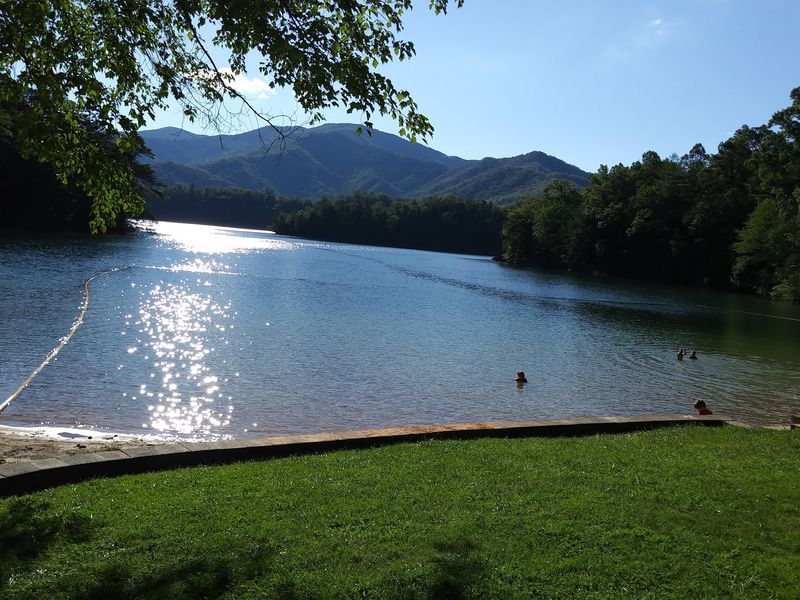
Cheoah Point Recreation Area holds the lake’s friendliest swimming spot, a sandy stretch set apart from motorized boat traffic so families can wade in without watching for wakes.
Mountain water stays brisk well into June, which is exactly the point on a hot afternoon. Pine scent drifts across the sand, the air feels cooler than the parking lot, and the ridgeline stands over everything like a green wall.
The recreation area, including its campground, welcomes visitors from April through October. Pack towels, water shoes for the rocky edges, and a cooler, because there is no snack bar waiting at the shoreline.
Want something different? Yellow Creek Falls sits roughly 12 miles from the lake along Tapoco Road, where a waterfall spills into a refreshing pool that makes an easy add-on to a swimming day.
Midweek visits in June and September tend to be the calmest. Weekends bring more families, though even then the beach rarely feels packed by the standards of larger lakes.
Dry off on the warm sand, watch the light shift across the water, and let the mountain quiet do its work.
Take A Boat Out And Explore Cove After Cove
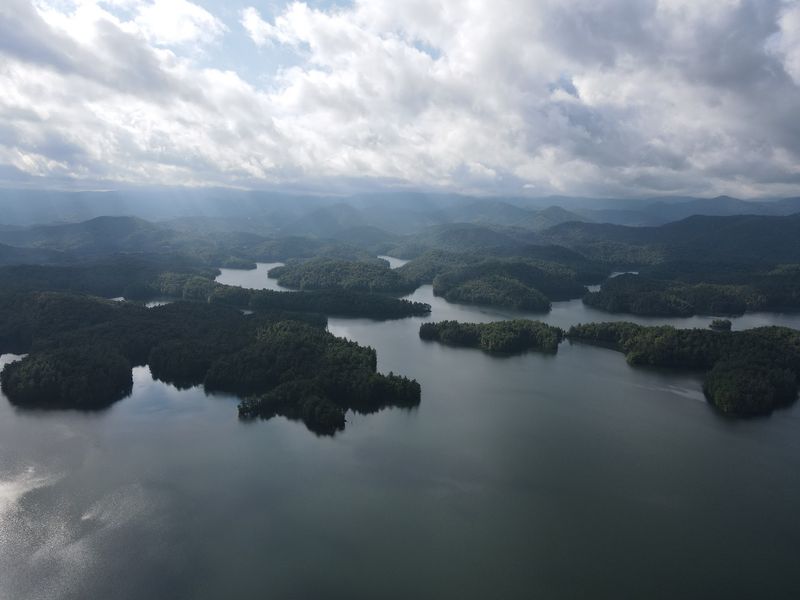
Nearly 3,000 acres of water with a wandering, hilly outline means a boat here is less about speed and more about discovery. Every curve hides another inlet.
Pontoons suit lazy family days, letting everyone spread out with sandwiches while the shoreline slides past. Ski boats find open stretches where the lake widens, and the mountain backdrop makes even a short run feel scenic.
Santeetlah Marina serves as the lake’s only full-service marina. You will find it along 1 Marina Drive in Robbinsville, and it handles boat rentals, docking, and fuel, which simplifies planning enormously.
A little strategy helps. Head out early for smooth water, then duck into a shaded cove during the hottest part of the afternoon.
Keep an eye on floating wood after heavy rain, since the surrounding forest sheds plenty of it.
Fun detail worth knowing: the lake dates to 1928, when the Cheoah River was dammed, so those steep banks you cruise beside were once river valley slopes.
Pack a cooler, a good playlist at reasonable volume, and let the coves set your itinerary.
Cast For Walleye Bass And Trout Far From Busy Resort Marinas
Anglers talk about Santeetlah the way hikers talk about a favorite ridge. The clear, deep water holds walleye, largemouth and smallmouth bass, and trout including rainbow, brown, and lake trout.
Its reputation is earned. State record catches for both largemouth bass and walleye once came out of this lake, which says plenty about the quality of the habitat down below.
What really changes the experience is the lack of crowded resort marinas. Instead of jockeying for space, you can work a shaded bank at dawn with nothing but bird calls and the tick of your reel for company.
Practical matters first: a valid fishing license is required before you make a single cast. Rules for trout waters can differ from general regulations, so check current state guidelines before your trip.
Deep, cool sections tend to fish best in high summer, while spring and fall bring fish closer to shallower structure near rocky points and submerged timber.
Bring layers. Mornings on this western North Carolina water run cool even in July, and patience pays better here than horsepower ever will.
Hike From The Water Toward The Appalachian Trail
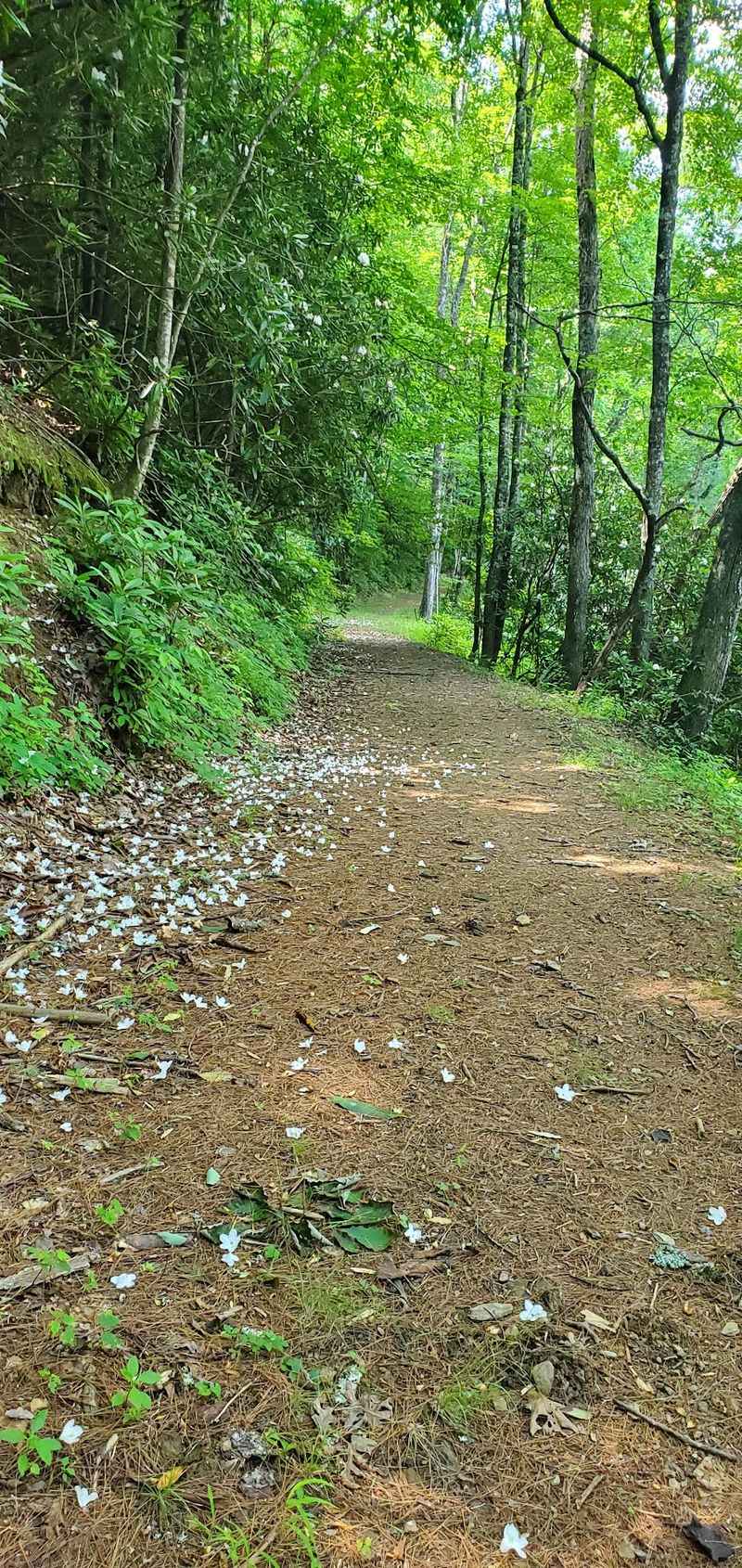
Leave the shoreline behind and the trail network opens up fast. The Cheoah District of the Nantahala National Forest wraps around this lake and offers more than 250 miles of pathways.
Ambitious walkers can aim high. An eight-mile hike from the lake’s shores reaches an access point for the Appalachian Trail, linking a quiet mountain lake to one of the most famous footpaths in the country.
Prefer something gentler? The Santeetlah Lake Trail runs an easy 9.3 miles along the water, built from a 3.5-mile Long Hungry Loop plus a 5.8-mile extension, so you can choose a short stroll or a longer push.
Nearby Joyce Kilmer Memorial Forest deserves its own morning. Old-growth hardwoods tower overhead, some with trunks wider than a car, and the shaded paths stay cool while the air smells of damp moss and leaf litter.
For trail conditions and maps, the Cheoah Ranger District manages these lands. Its office stands at 1070 Massey Branch Road in Robbinsville, an easy stop before you head into the woods.
Wear real hiking shoes and carry water.
Watch The Mountains Reflect Across Water With Almost Nothing Built In The Way
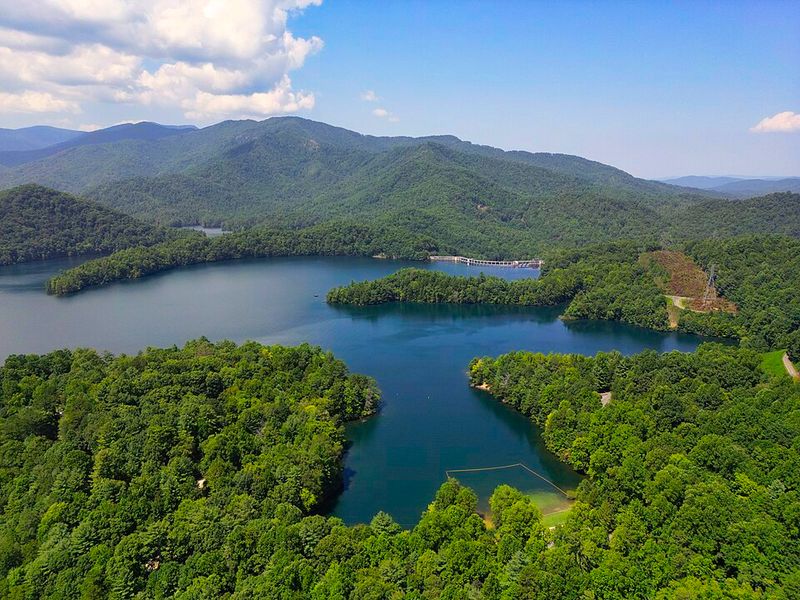
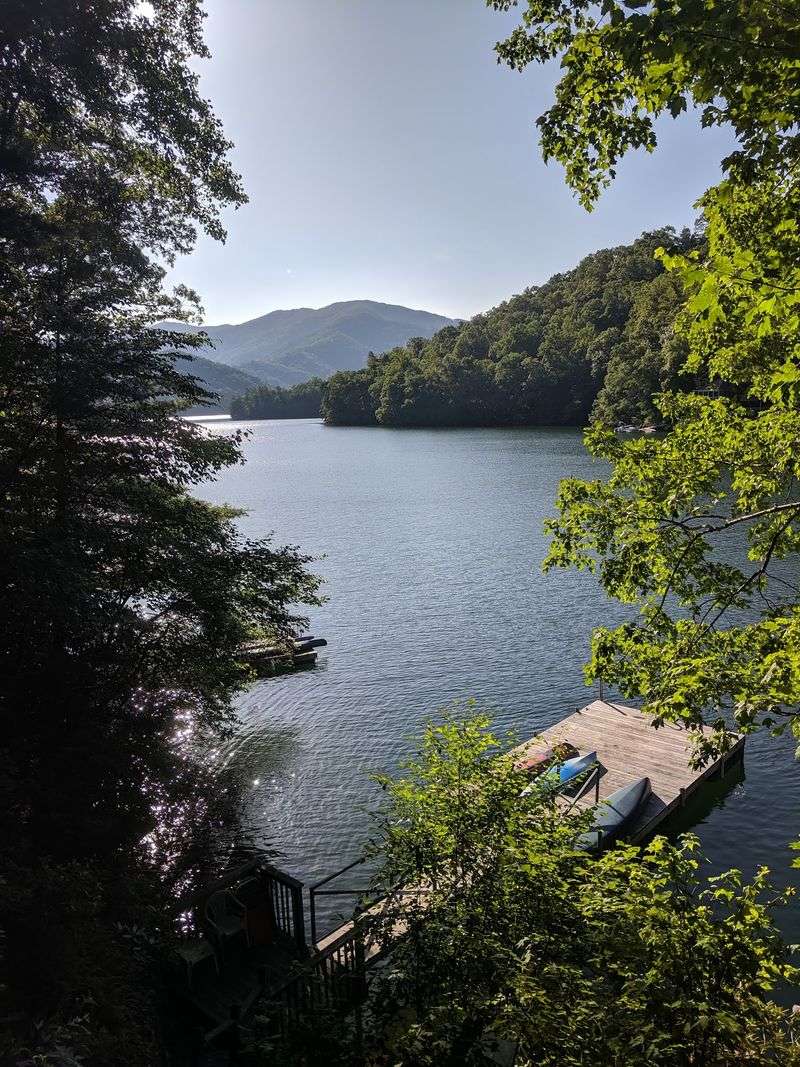
Stand at the water’s edge on a windless evening and the lake turns into a mirror. Ridge after ridge doubles itself, the sky folds over, and the whole scene holds perfectly still.
That effect depends on something rare. Because the U.S.
Forest Service protects the overwhelming majority of the 76-mile shoreline, there are almost no rooftops or commercial buildings to break the reflection.
Autumn is the showstopper. Gold, rust, and deep red spill down the slopes and repeat themselves upside down in the water, and photographers plan whole trips around those few October weeks.
Other seasons deliver too. Spring brings a hundred shades of new green, summer stacks white clouds over the peaks, and winter strips the trees to reveal the bones of the ridges.
For the best conditions, come out just after sunrise or in the last hour before dusk, when wind usually dies down. A shoreline pull-off, a dock at the marina, or the quiet end of a cove all work.
Few places in North Carolina hand you a view this uncluttered, and it stays with you long after the drive home.