This Whimsical Virginia Farm Offers Llama Hikes Unlike Anything Else
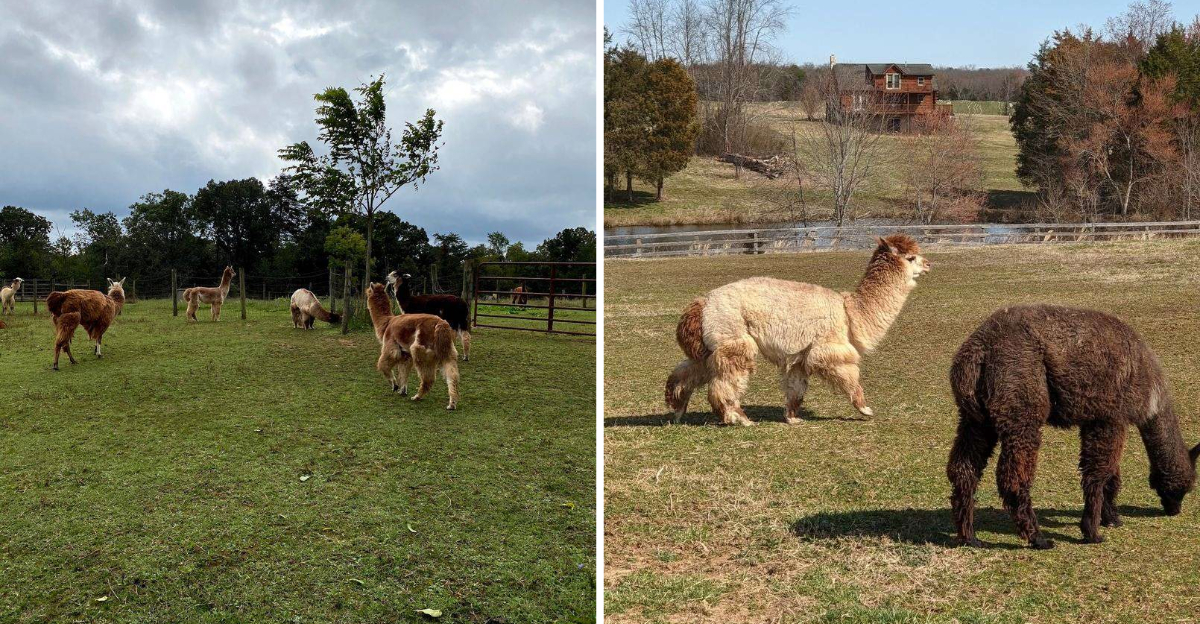
I would agree to a hike much faster if somebody casually mentioned my trail buddy would be a llama.
Virginia makes that wonderfully specific dream possible with guided farm walks alongside some seriously charming four-legged companions.
The llamas bring personality to the outing, but the experience goes beyond getting a funny photo. Trails cross the property while visitors learn about the animals they are walking beside.
Other farm residents add even more life to the visit, including alpacas, goats, and horses.
Suddenly, an ordinary walk has become something you will probably mention at dinner for weeks.
Hiking boots and a llama named Teriyaki? That is a story practically begging to happen.
A Family Legacy Since 1986
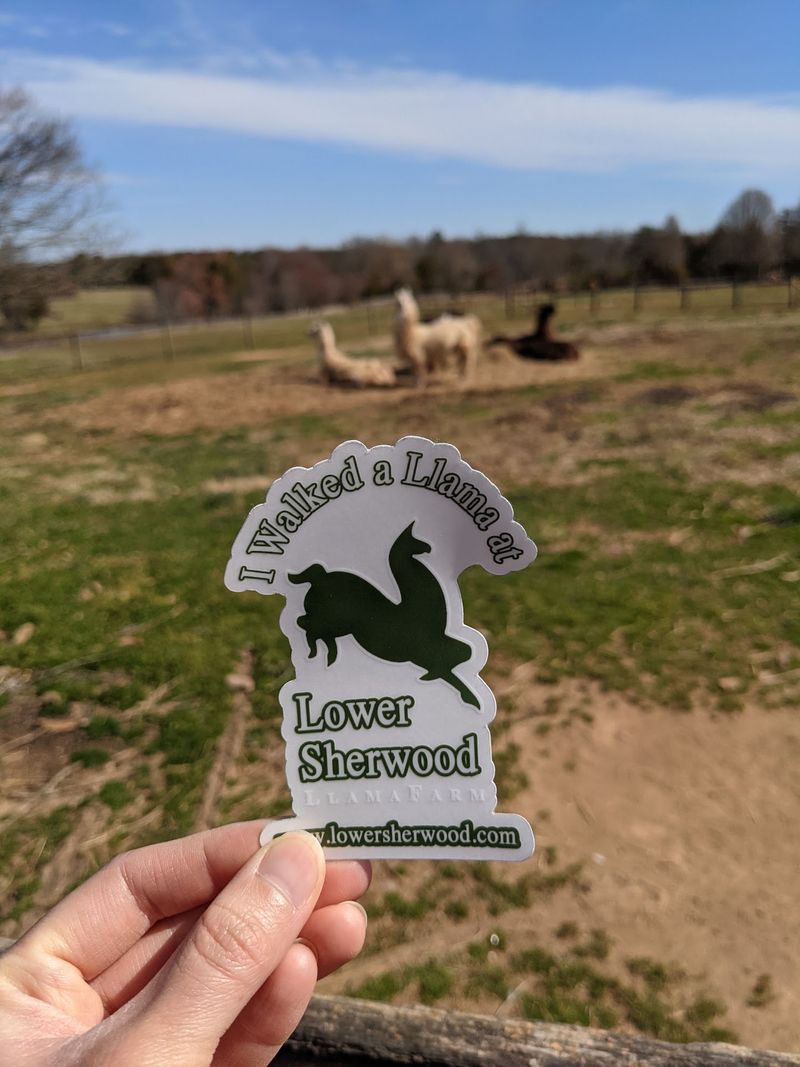
Long before llama trekking became a bucket list activity, and long before the McGraths ever arrived, this land was already active.
Activity on the site dates back to before the American Revolution. Since 1986, the McGrath family has raised llamas here in Albemarle County, choosing animals that would never be raised for meat.
That choice built the compassionate backbone of the whole operation. Decades later, Lower Sherwood Farm has produced some of the country’s most respected show and breeding llamas.
Standards for care here run high, and you notice it within minutes of arriving. Coats are clean, hooves are trimmed, and every animal responds to its name.
During my visit, I heard family lineages recited the way some people recite baseball statistics. Each llama has a history, a personality, and a spot in the herd’s pecking order.
Paved roads lead right to the entrance, then a well maintained gravel drive climbs toward the barn. Take it slow and enjoy the approach. You will find this remarkable place at 291 Llama Farm Rd, Charlottesville.
Choosing Your Hiking Partner
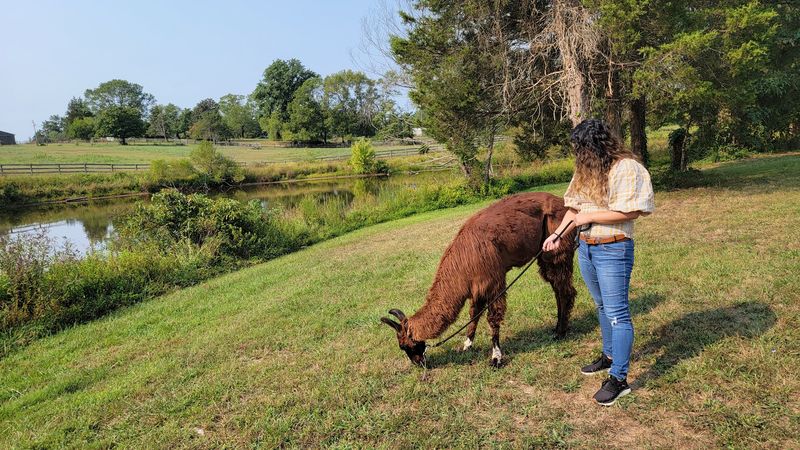
Picking your llama feels a bit like a schoolyard team draft, except everyone wins. Guides walk you through the lineup, explaining who is bold, who is shy, and who tends to daydream.
My llama had wildly curly wool and a wandering attention span. Another in our group marched ahead like he had somewhere important to be.
Before anyone touches a lead rope, there is a short safety and handling briefing. You learn how to hold the rope, how much slack to give, and how to read llama body language.
Nobody rushes this part, which makes first timers feel steady right away. Handling turns out to be far easier than expected.
Llamas walk at a comfortable human pace and rarely pull. Mine paused occasionally to sniff a branch, then carried on without complaint.
Guided treks generally cover one to two miles and last up to two hours. Groups stay small, so questions get real answers rather than rehearsed lines.
Kids as young as five manage the walk beautifully, and older teens seem equally hooked. By the halfway point, most people are talking to their llama like an old friend.
Ninety-Five Acres of Scenery
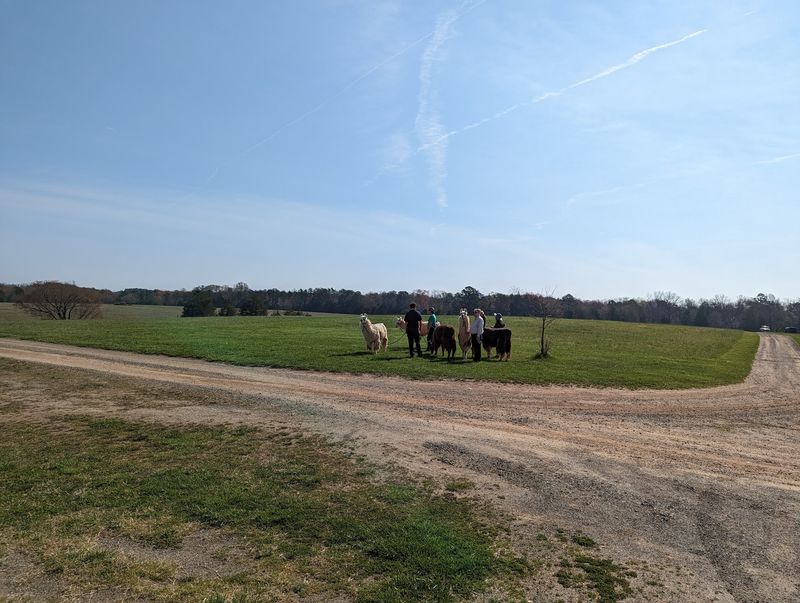
Ninety-five acres sounds abstract until you are standing in the middle of them. Trails here move through thick woodland, then open suddenly into wide hayfields.
Sunlight filters through the tree canopy in patches, keeping the forest sections cool even in July. The shift between shade and open sky happens over and over.
Views of the Blue Ridge Mountains appear on the horizon at certain bends in the trail. I stopped more than once just to look, including at the trail’s sixth-largest willow oak in the state, a genuine giant among the pasture edges.
Terrain varies more than I anticipated. Some routes stay gentle and flat, rolling through pasture, while others climb modest hills or cross small creeks.
Watching a llama hop gracefully over a water break is oddly satisfying. They handle uneven ground far better than most hikers.
Footwear matters here. Waterproof boots you do not mind muddying are the smart choice, plus a spare pair of shoes for the drive home.
Photographers will burn through storage space quickly. Between wooly profiles, mountain backdrops, and golden fields, nearly every angle works.
Central Virginia scenery rarely gets showcased this intimately, since most of it sits behind fences. Walking through it changes the whole feeling.
Inside A Real Working Farm
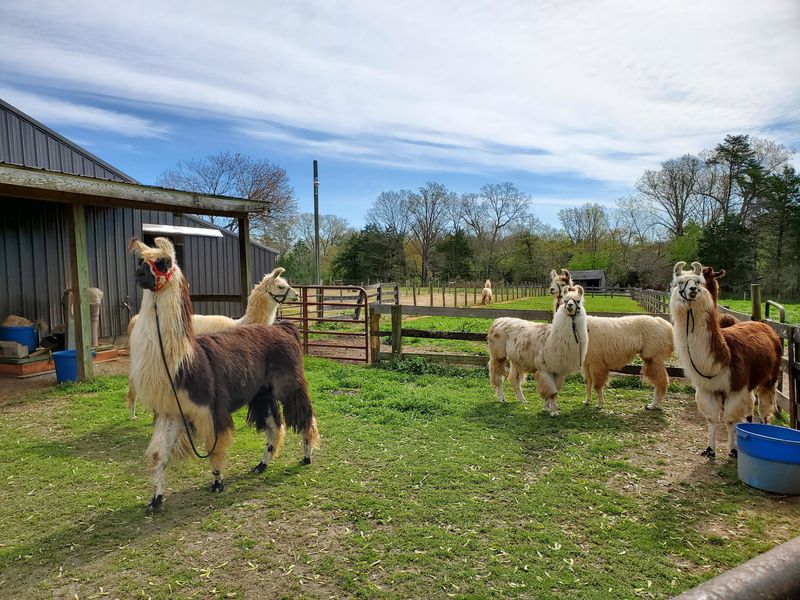
Tourist attractions polish everything. Working farms have hay in odd places, tools leaning against posts, and animals with opinions about your schedule.
What happens at 291 Llama Farm Rd falls firmly into the second category. Daily chores continue whether visitors show up or not.
Breeding programs run year round, aimed at strengthening champion bloodlines. Guides explain how genetics, temperament, and conformation all factor into their decisions.
Summer brings shearing season, which keeps the herd comfortable through humid Virginia heat. Removing that heavy fleece is a health measure, not a beauty treatment.
The wool does not go to waste either. Fleece gets processed into yarn and handcrafted goods, closing a tidy loop between animal care and craft.
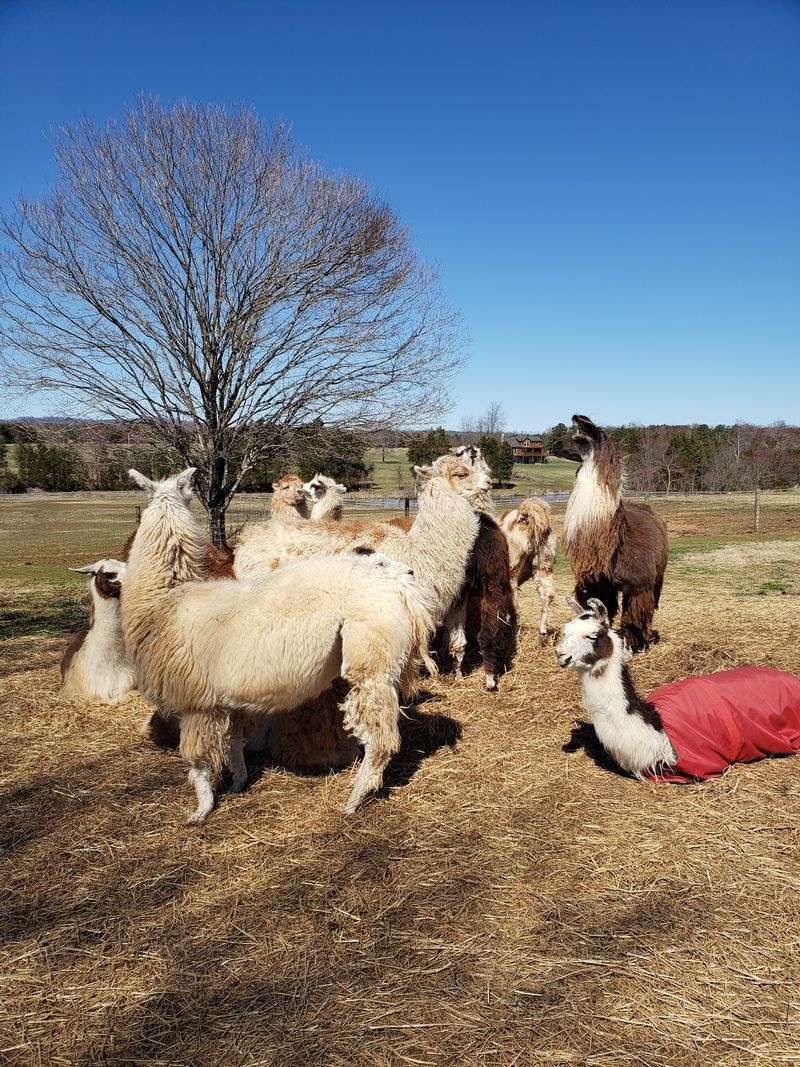
Learning about pecking order was an unexpected highlight for me. Llama social structures are surprisingly detailed, with clear leaders and negotiators.
Lifespan, diet, and guardian instincts all come up naturally during the walk. Nothing feels like a scripted lecture.
Every Season Brings Something New
Timing your visit changes the experience more than you might expect. Spring is when baby llamas appear, wobbling around pastures on impossibly long legs.
Wildflowers bloom across the fields, and the herd sheds winter wool with visible relief. Energy levels run high.
Summer trades openness for shade. Forest sections of the trail stay noticeably cooler, and the greenery gets thick and dense.
On the hottest stretches, hikes pause entirely so the animals can rest. Animal comfort outranks bookings here, which says plenty about the place.
Autumn might be the sweet spot. Crisp air, changing leaves, and clear views toward the mountains make October walks especially memorable.
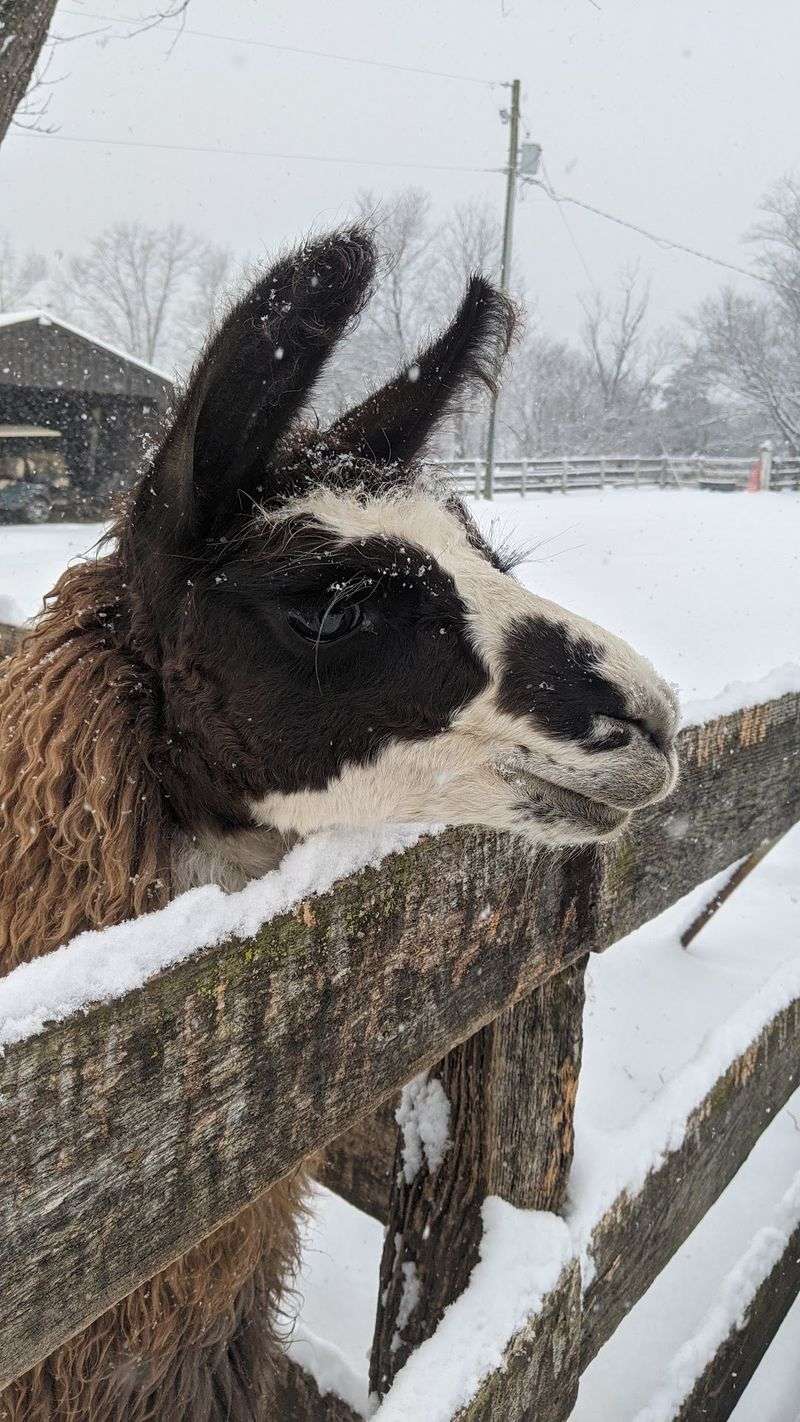
Winter surprised me most. A family I met booked their hike during Christmas break and called it the best part of their holiday.
Quiet fields, bare branches, and llamas in full woolly coats create a peaceful mood. Crowds thin out considerably.
Weather flexibility is part of the operation. Rescheduling around heavy rain happens graciously, so book without stressing over the forecast.
Llamas At Weddings And Sherwoodstock
Imagine walking down the aisle and spotting two llamas in the receiving line. Couples across central Virginia have done exactly that.
Trained llamas and alpacas travel out for weddings and celebrations, greeting guests with unbothered composure. One even wore a small top hat carrying wedding rings.
Calmness is the whole trick. These animals stand patiently through music, applause, and cameras without fussing.
Photographers adore them, since llamas hold a pose better than most humans. Guests talk about them long after the cake is gone.
Back on home ground, the farm hosts Sherwoodstock, an annual llama show that draws the wider llama community. Performance classes and agility competitions fill the schedule.
Watching a llama navigate an obstacle course is genuinely entertaining. They are quicker and more coordinated than their casual walking pace suggests.
Educational outreach happens too. Virtual farm visits have connected classrooms with the herd, letting students ask whether llamas really spit.
The honest answer involves mostly other llamas and occasional dramatic evidence. Kids love that part.
Camping Under Wide Open Skies
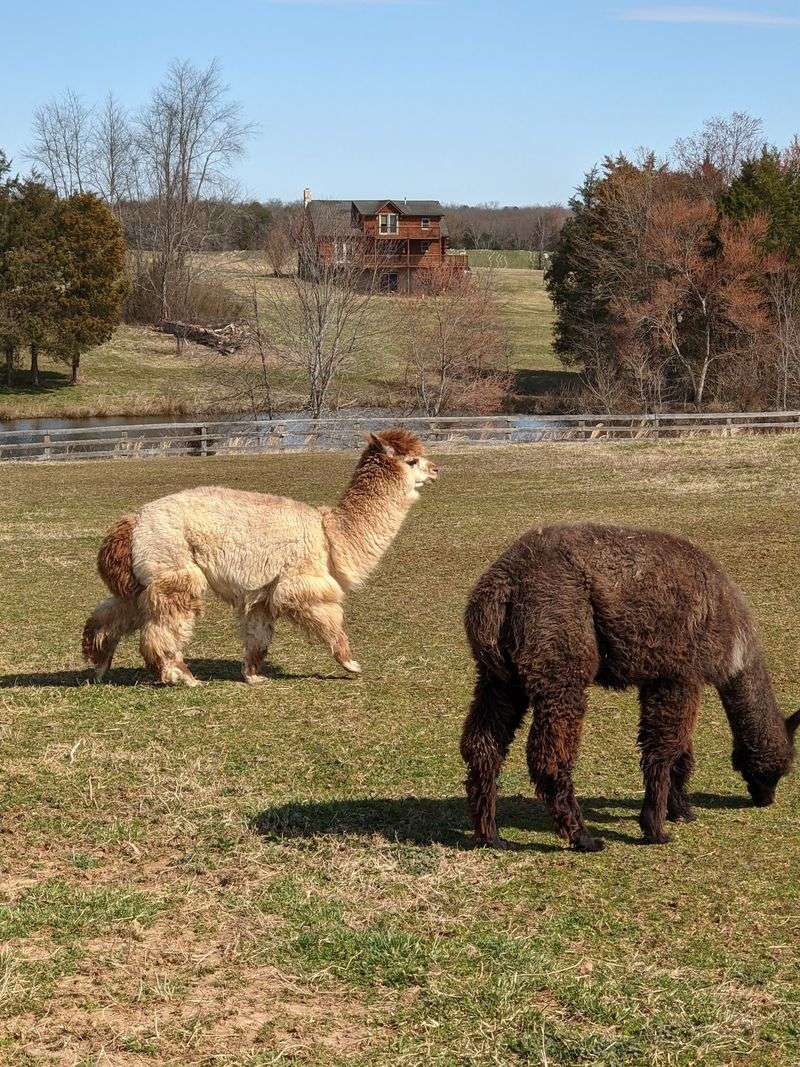
Two hours with llamas may not be enough. Several campsites sit tucked around the property for guests who want a longer stay.
Tents go up in quiet hayfields and pastures, well away from any road noise. Bathroom facilities are available, which campers appreciate.
Nights out here deliver serious stargazing. Light pollution barely registers this far from town, so the sky fills in properly after dark.
Morning brings pasture views and the sound of animals starting their day. It beats an alarm clock.
Volunteering is another way in. Helping with animal care, training, groundskeeping, or event support gives people hands on time with the herd.
Those hours teach far more than a single visit could. You start recognizing individual llamas by their walk.
Practical notes worth remembering: the address leads to a house first, so follow the gravel drive up toward the barn. A quick call clears up any confusion.
Booking ahead is essential, and small groups sometimes end up with private walks. That happened to visitors I spoke with, and they raved about it.
What Llamas Quietly Teach You
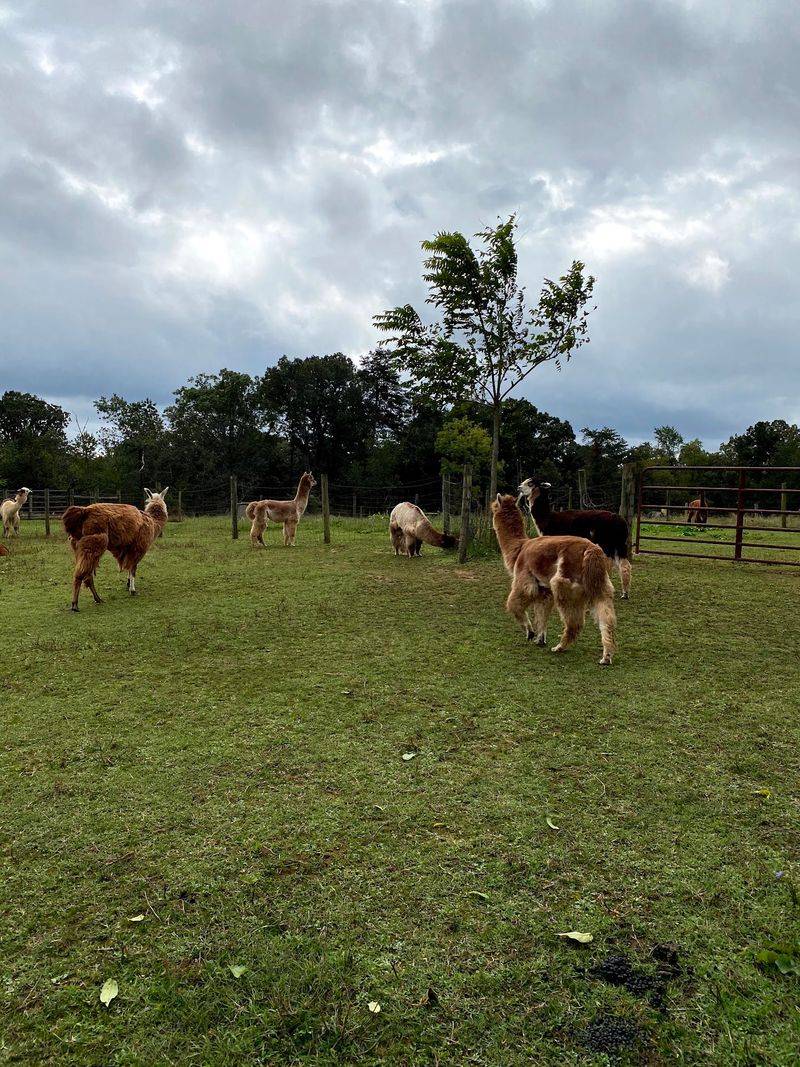
Roughly 330 degrees of vision. That is what those wide set eyes give a llama, letting it catch movement almost all the way around its body.
Prey animals need that awareness, and it also makes llamas excellent guardians for sheep and goats. Their instincts run sharp.
Intelligence shows up in small ways. Mine noticed a shifting branch long before I did, then decided it was nothing worth worrying about.
They read human moods too, adjusting their pace when someone in the group slows down. That awareness surprised me most.
Something about walking beside them settles your nervous system. Several hikers describe finishing the trek feeling the way they do after a long stretch session.
Phones stay in pockets, conversation slows, and the whole outing turns unexpectedly meditative. Two miles pass without anyone checking the time.
Children who normally complain about hiking somehow forget to. A llama on a rope is powerful motivation.
Lower Sherwood Farm sends you home with more than photographs. You leave knowing how a herd organizes itself and why these animals matter.