This Georgia Farm Village Has 35 Historic Buildings And Its Own Steam Train
I heard the whistle before I saw anything at all. A long, low sound drifting across an open field, the kind that stops you mid-step and pulls your attention somewhere unexpected.
I followed it past a fence line and found an entire world I never knew existed. Wooden buildings stretched in every direction, dozens of them, each holding pieces of a life long gone but somehow still breathing.
Chickens wandered near a blacksmith shop. Smoke curled from a chimney that looked centuries old.
Georgia holds places like this scattered quietly across its landscape, waiting for someone curious enough to notice them. I planned on an hour.
I stayed for the entire afternoon, chasing that whistle from building to building. Georgia has a way of turning ordinary Saturdays into something you remember for years.
A Village Of More Than 35 Historic Buildings
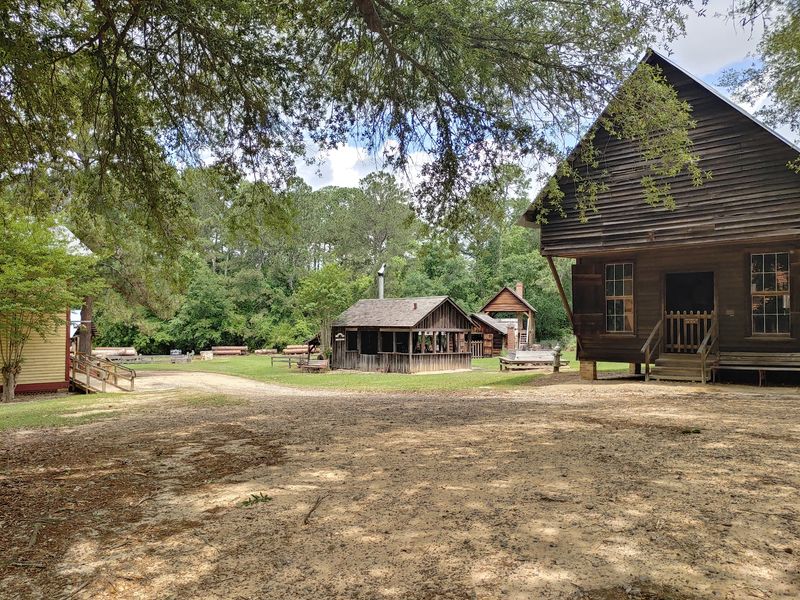
Most museums fit inside one roof. Here, the museum is an entire village of more than 35 restored or reconstructed structures.
The buildings sit across 95 acres of pine trees, open fields, and dirt paths. Walking between them feels like flipping through pages of the 1800s South.
The village is split into five areas, each with its own personality. There is an 1870s traditional farm community and an 1890s progressive farmstead.
You also get an industrial sites complex, a rural town with a main street, and a national peanut complex. Each zone shows a different slice of Southern rural life.
Comfortable shoes matter more than you think. Visitors often spend three hours here and still miss a few corners.
Costumed interpreters work inside many of the buildings. They explain tools, answer questions, and show how daily chores actually got done.
The whole place opened in 1976 under the name Agrirama. Plenty of Georgia families grew up visiting it on school trips.
Today it operates as a facility of Abraham Baldwin Agricultural College. You will find it at ABAC’s Georgia Museum of Agriculture in Tifton.
The address is 1392 Whiddon Mill Rd, Tifton, GA 31793.
Riding Behind Vulcan Steam Locomotive Number 5
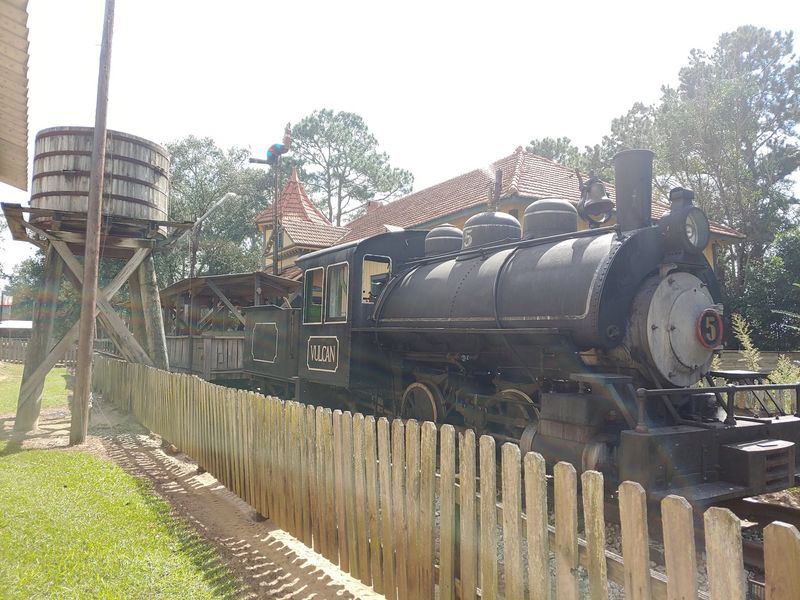
Steam engines are rare birds in Georgia. The museum preserves Vulcan steam locomotive number 5, although it is currently unavailable while repairs are underway.
Vulcan steam locomotive number 5 was built by Vulcan Iron Works in 1917. It was delivered in 1923 to the Hardaway Contracting Company.
The engine pulls open-air wooden rail cars along a 3-foot narrow gauge track. Breeze, whistle, and coal smoke included at no extra charge.
A full loop runs about 20 minutes and covers nearly one mile. The route passes the village, a forested stretch, and Agrirama Lake.
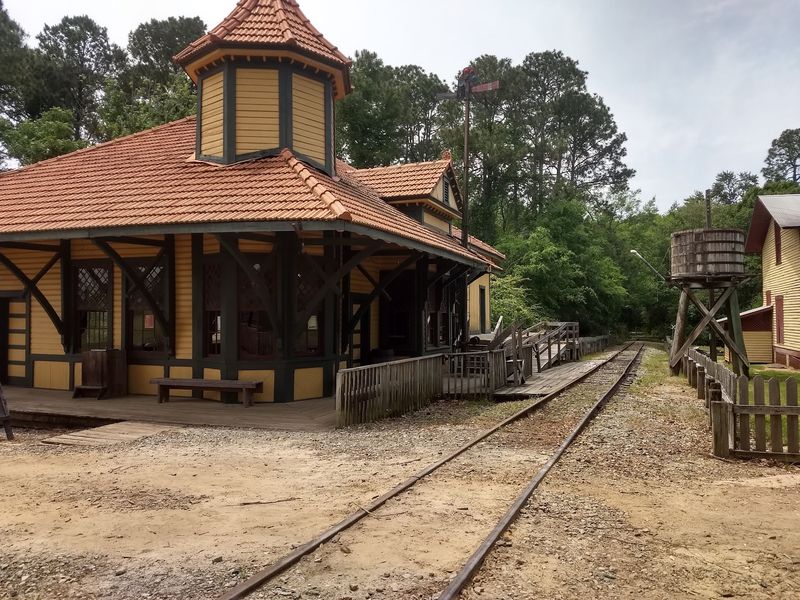
Boarding happens at the Country Store Train Depot or the Main Street Train Depot. Riders can hop off and explore, then catch it again later.
When running, the train typically operates on Saturdays only. Plan your visit accordingly if the ride is your main goal.
One heads-up worth knowing: the locomotive is currently unavailable while repairs and maintenance are underway.
Even parked, the engine draws a crowd. Train fans love studying the rods, boiler, and brass fittings up close.
The 1870s Traditional Farmstead And Wesley Chapel
Six historic buildings dating from the mid-to-late 1800s form the traditional farmstead area. They show how a modest farm family actually lived.
The Clark Cabin anchors the area with simple rooms and hand-hewn logs. Nothing here was built for comfort, and that is the point.
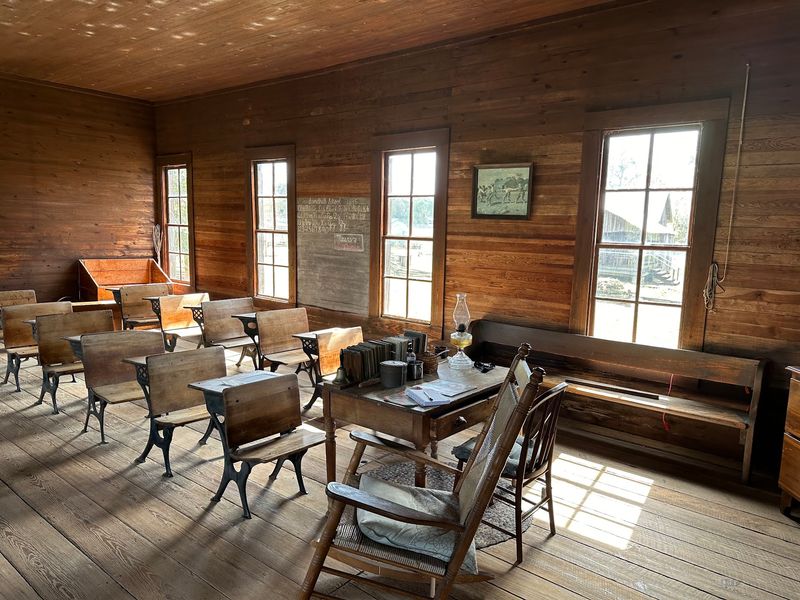
A one-room schoolhouse sits nearby. Kids visiting on field trips often go quiet when they see the tiny desks.
Wesley Chapel, built around 1882, completes the picture. Small country churches like this one doubled as community meeting spots.
Interpreters here demonstrate everyday skills that used to be survival basics. Think wool spinning, doll making from rags, and open-hearth cooking.
The details are what stick with you. Worn floorboards, low doorways, and hand tools tell stories no plaque can match.
Ask questions while you walk through. Staff know the history well and enjoy explaining why things were built a certain way.
Families with young children usually linger longest in this section. It is quiet, shaded, and easy to imagine yourself living there.
Bring a camera. Morning light on the cabin porch is genuinely beautiful.
The 1890s Progressive Farmstead And Davis Grist Mill
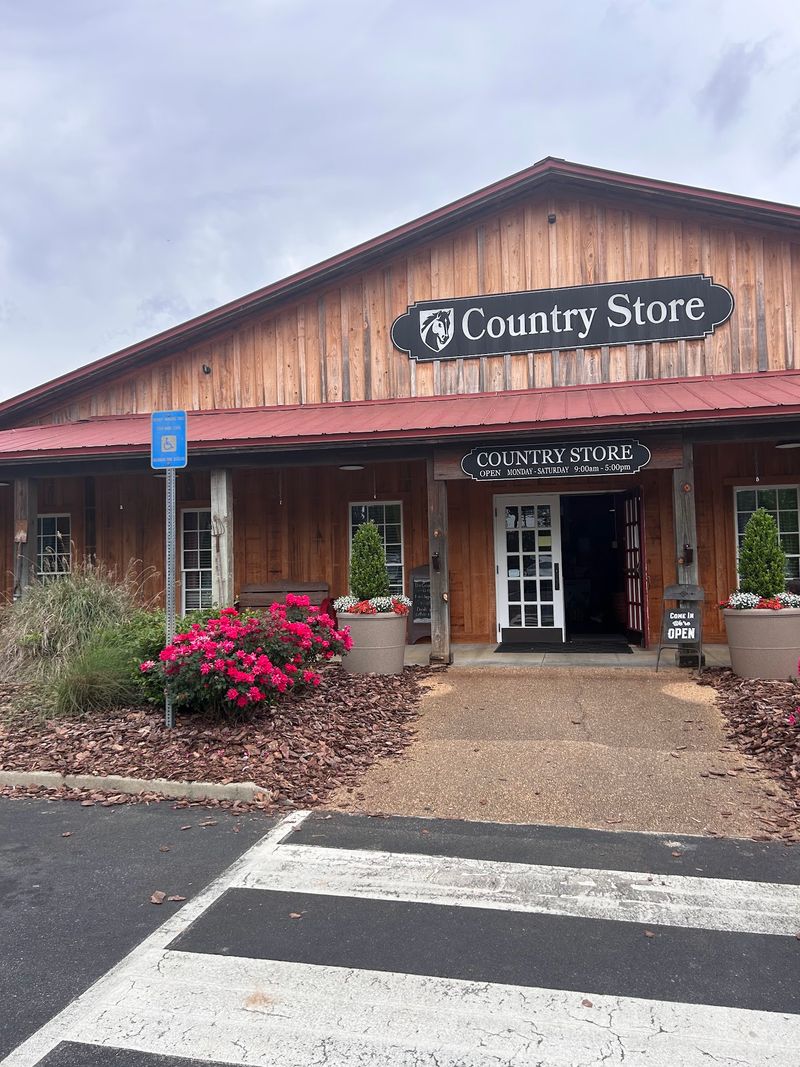
Twenty years changed farming more than most people realize. The 1890s section makes that leap obvious.
The Gibbs family farm shows a wealthier, more modern operation. Bigger house, better tools, and a clear step up in daily comfort.
The Cravey House sits in the same area with its own period furnishings. Compare it to the 1870s cabin and the difference is striking.
Davis Grist Mill is the crowd favorite here. Corn goes in, and cornmeal or grits come out while you watch.
The grinding stones make a low rumble you feel in your feet. It smells warm and nutty, like breakfast about to happen.
Freshly ground products are often sold on site. Buying a bag is a nice way to take the visit home with you.
Watching the mill run explains why communities were built around water and grain. Food processing was local by necessity.
Interpreters explain the mechanics in plain language. Even kids who ignore history exhibits pay attention to spinning stones.
Give yourself a few extra minutes here. The process is oddly relaxing to watch.
Sawmill Blacksmith Shop And Turpentine Still
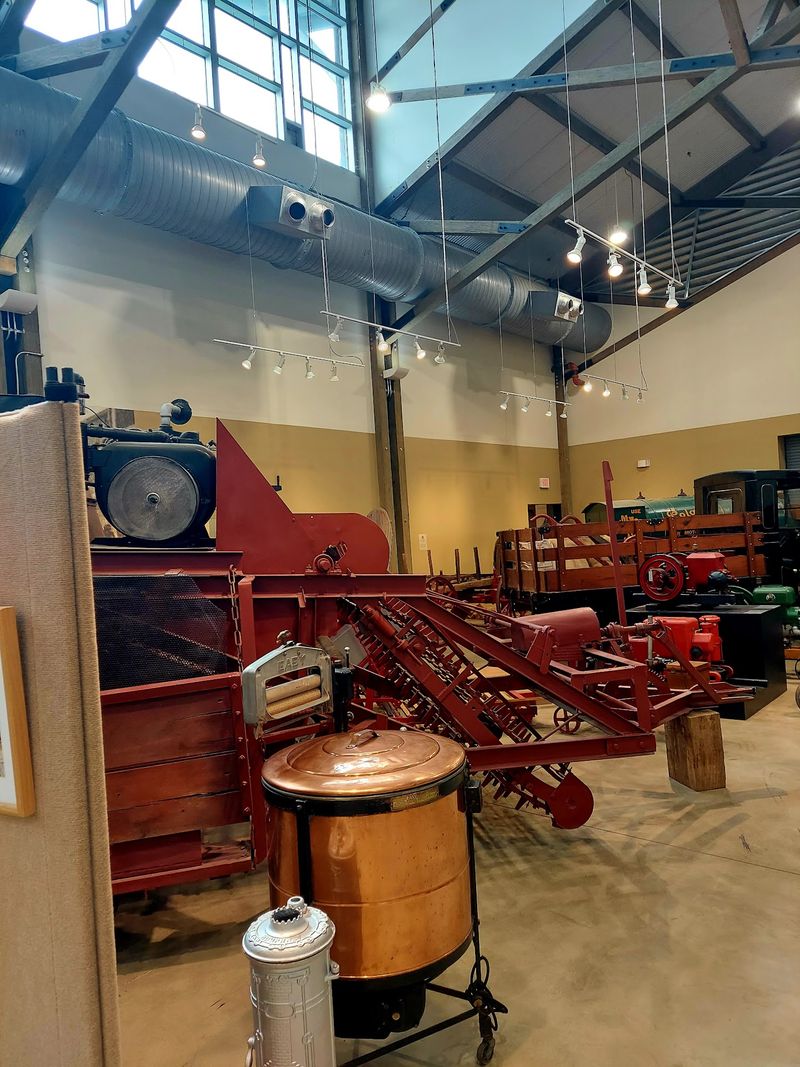
Noise is part of the experience in the industrial sites complex. Belts slap, saws whine, and hammers ring on iron.
The sawmill turns logs into lumber during scheduled demonstrations. Sawdust flies, and the smell of cut pine fills the air.
A blacksmith shop sits close by with a glowing forge. Watching hot metal bend under a hammer never gets old.
The turpentine still is the sleeper hit of the whole property. Georgia’s turpentine industry shaped the pine belt for generations.
The exhibit covers that history better than most people expect. Barrels, tools, and process displays lay it all out clearly.
A Cooper Shed shows how those barrels were built by hand. Coopering was a serious trade before factories took over.
The woodworking shop runs on belt-driven machinery powered the old way. Staff there often build small items while visitors watch.
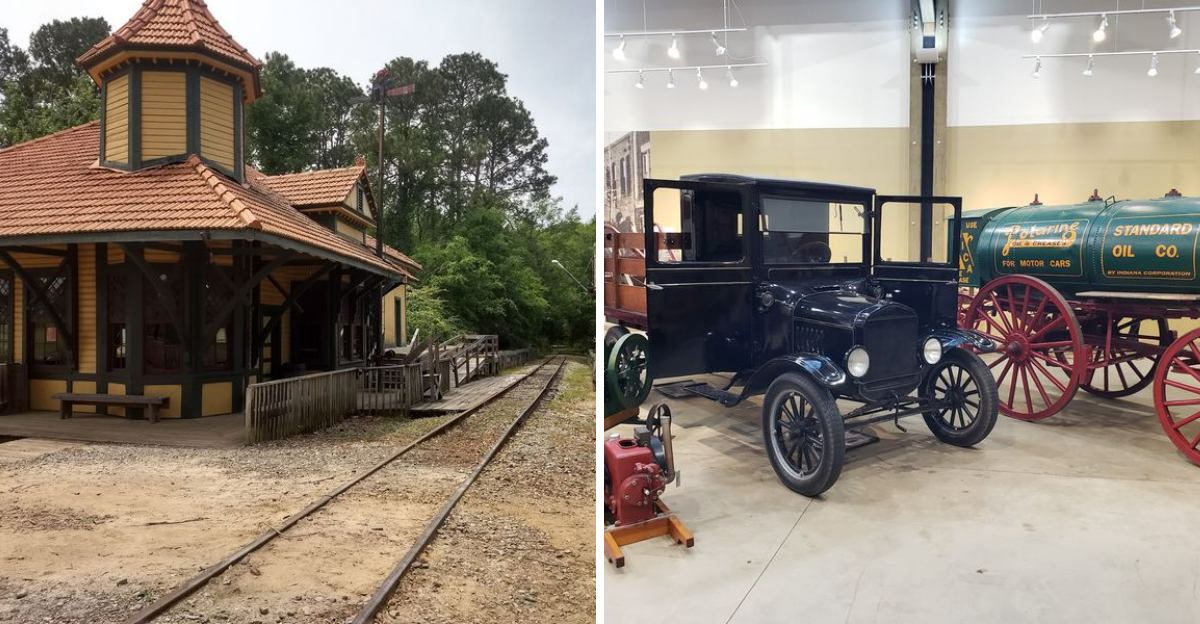
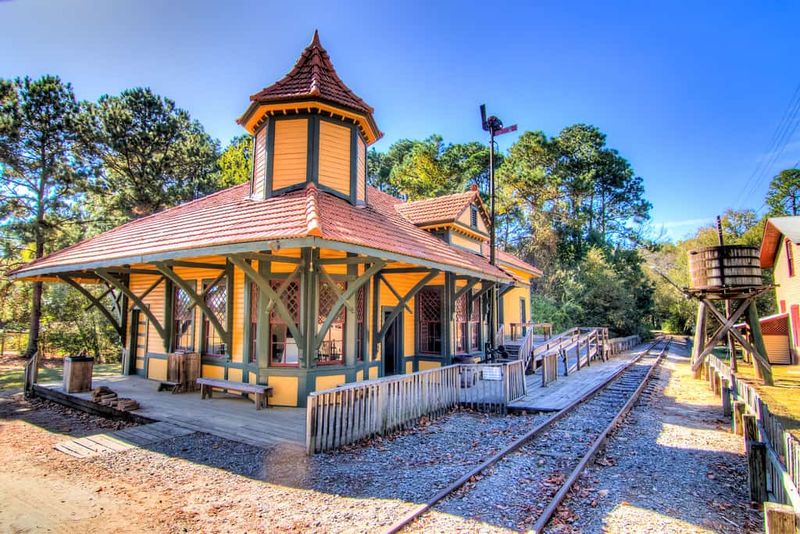
A train station also sits within this complex. It ties the industrial work to the rail lines that hauled goods out.
Plan this section for mid-morning. Demonstrations tend to be most active then.
Main Street The Tift House And Cotton Gin
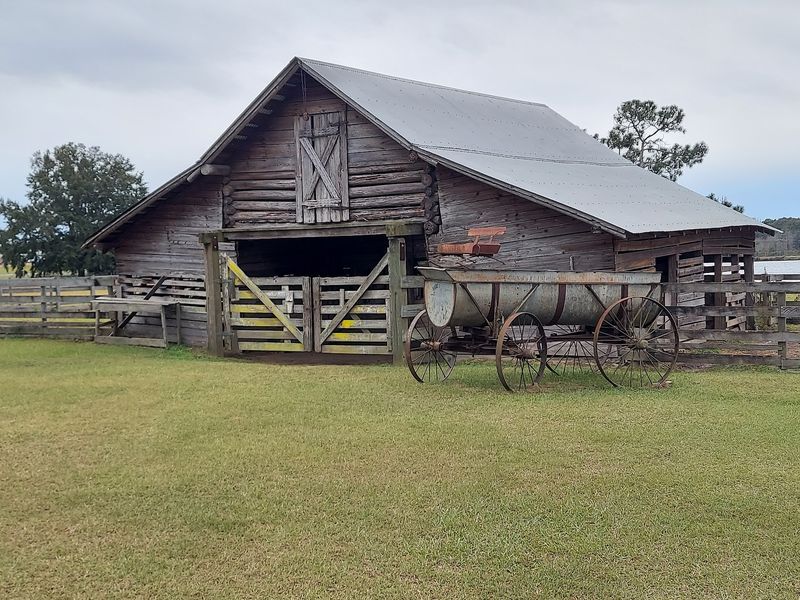
Rural towns had their own rhythm, and Main Street here captures it. Storefronts line up just like they did over a century ago.
A Feed and Seed store represents the independent shops farmers depended on. Seeds, tools, and gossip all moved through places like it.
The Tift House is the grandest building on the property. Built in 1887 in Victorian style, it belonged to the founder of the town.
Its detailed trim and tall windows stand out against the simpler farm buildings. Locals sometimes call it the mansion.
Old Abba Lodge Number 550, a Masonic lodge established in 1909, also stands along this stretch. Fraternal groups were a big part of small-town life.
A doctor’s office from the 1870s shows medicine at its most basic. The instruments alone are worth a look.
The 1896 Lummus cotton gin still operates during demonstrations. It runs on a Frick 110 horsepower steam engine.
Seeing raw cotton separated from seed explains a lot about Southern economics. Machines like this changed everything.
Ford B. Spinks Exhibit Hall And 22,000 Artifacts
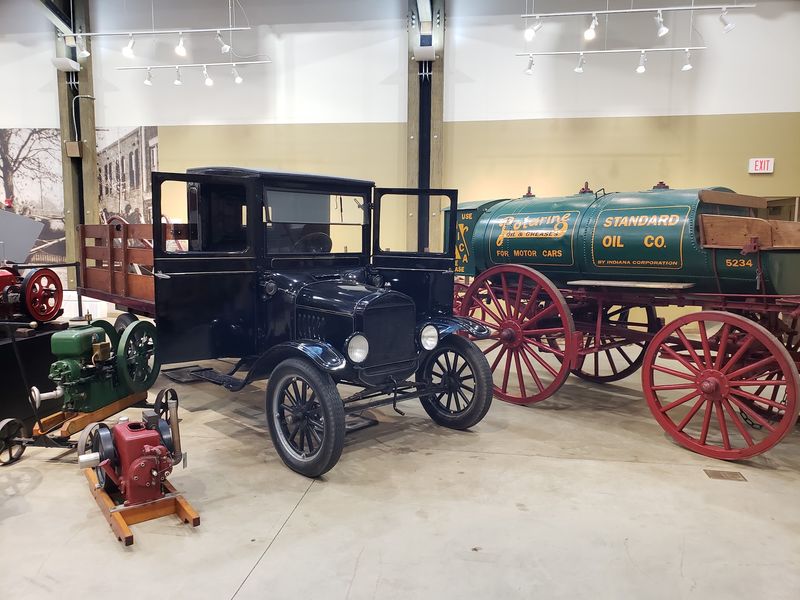
Air conditioning has never felt so historic. The Ford B.
Spinks Exhibit Hall gives you a break from the sun and a lot to read.
Inside, exhibits cover Georgia’s agricultural history and major commodities. Cultural pieces round out the story beyond crops and machinery.
The museum’s collection holds more than 22,000 artifacts overall. Only part of that is displayed at any one time.
Farm equipment, household objects, and tools fill the space. Each one connects back to something you saw outside in the village.
The hall works well as a starting point for your visit. Context first, then the buildings make more sense.
An art gallery on site rotates works by local artists and craftspeople. It changes often, so repeat visitors get something new.
The gallery is also a cool, quiet stop on hot spring days. Bring the kids in for a reset.
Reading every panel would take hours. Pick the topics that interest you most and move at your own pace.
Photography fans will find good subjects in both rooms.
The Country Store And Georgia Grown Goods
Shopping is usually the boring part of a museum visit. Not here, because the Country Store is a destination on its own.
Shelves hold Southern gifts, local preserves, and American-made toys. Georgia Grown products fill out the selection nicely.
An ice cream counter operates inside the store. On a warm South Georgia afternoon, that scoop earns its price.
Admission tickets are also sold here, so most visits start at this building. The Country Store Train Depot sits right outside.
Old-fashioned candy, games, and sundries make it fun for kids. Grandparents tend to recognize half the items on the shelves.
Fresh cornmeal and grits from the mill often show up for sale. That connection between demonstration and product is satisfying.
Pound cake has a loyal following among regulars. Grab a slice if it is available.
Another gift shop with snacks sits near the Feed and Seed area. Handy if you are deep in the village and need a break.
Budget a little time and money for this stop.
What To Know Before You Visit
Learning stations here beat any textbook chapter. Destination Ag uses hands-on displays to explain where food, fiber, and shelter come from.
Kids push, pull, and touch their way through the concepts. Adults usually end up learning something too.
Langdale Nature Center focuses on local plants and animals. Live tanks let visitors see South Georgia wildlife up close.
Two playgrounds and a small petting farm round out the family-friendly options. Picnics on the grounds are popular and easy.
Hours run Wednesday through Friday from 9 AM to 3 PM. Saturday extends to 4 PM, and the site is closed Sunday through Tuesday.
Most visitors need about three hours minimum. History lovers could easily fill two days.
Shade exists, but South Georgia heat is real. Water, hats, and sunscreen are smart additions to your bag.
Check the calendar for festivals like Folklife before you go.