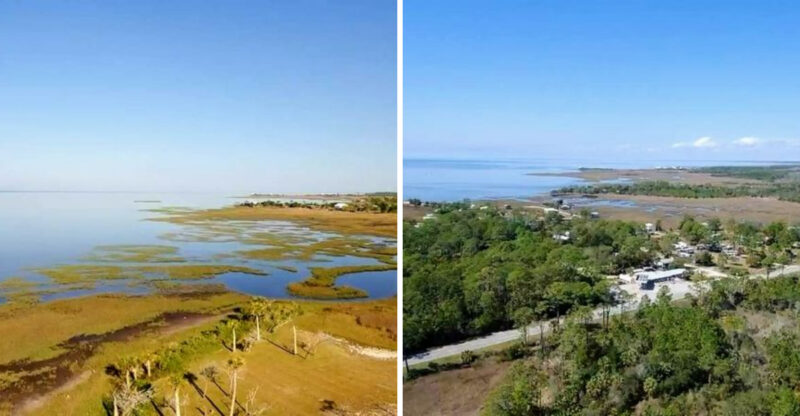
8 Shady Florida Trails Perfect For Escaping The Summer Sun
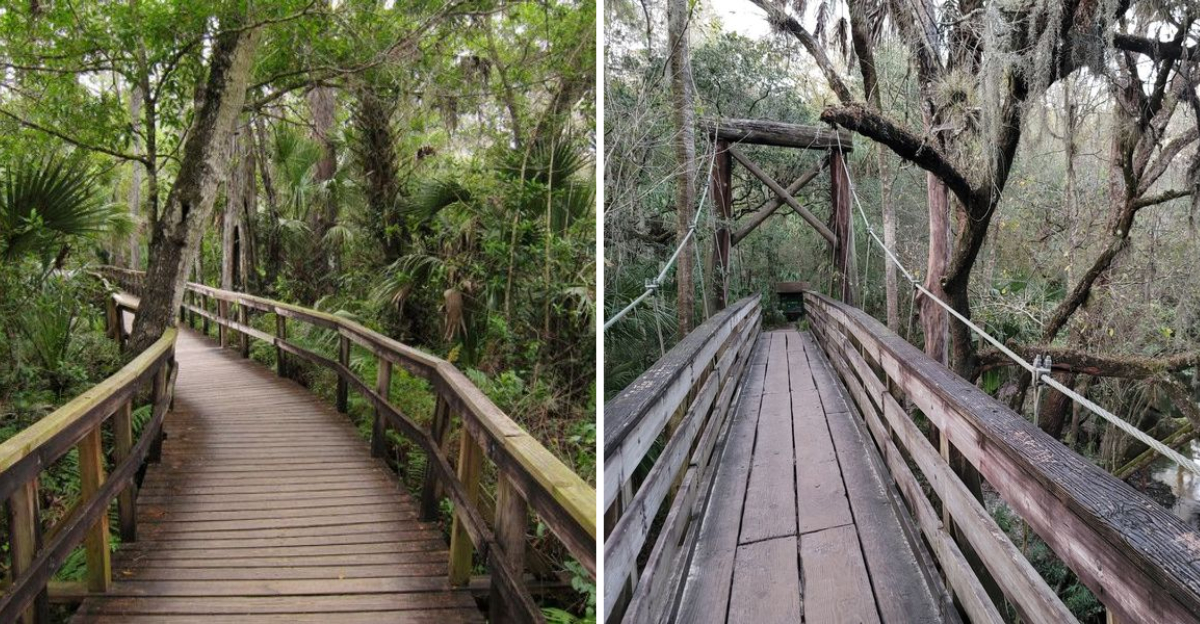
I love summer, but I love it considerably more when somebody provides a canopy of giant trees.
Florida has shaded trails where oaks, palms, ravines, and spring-fed water make warm-weather hiking far more inviting.
Some routes follow cool waterways, while others lead beneath thick forest cover that changes the whole feel of the walk.
Wildlife adds another reason to slow down and pay attention.
You might spot birds, turtles, or something moving near the water while the shade keeps the outing comfortable.
These trails make an excellent argument for leaving the air conditioning behind for a few hours.
Comfortable shoes, cold water, and a little curiosity should handle the rest.
1. Gumbo Limbo Trail, Homestead
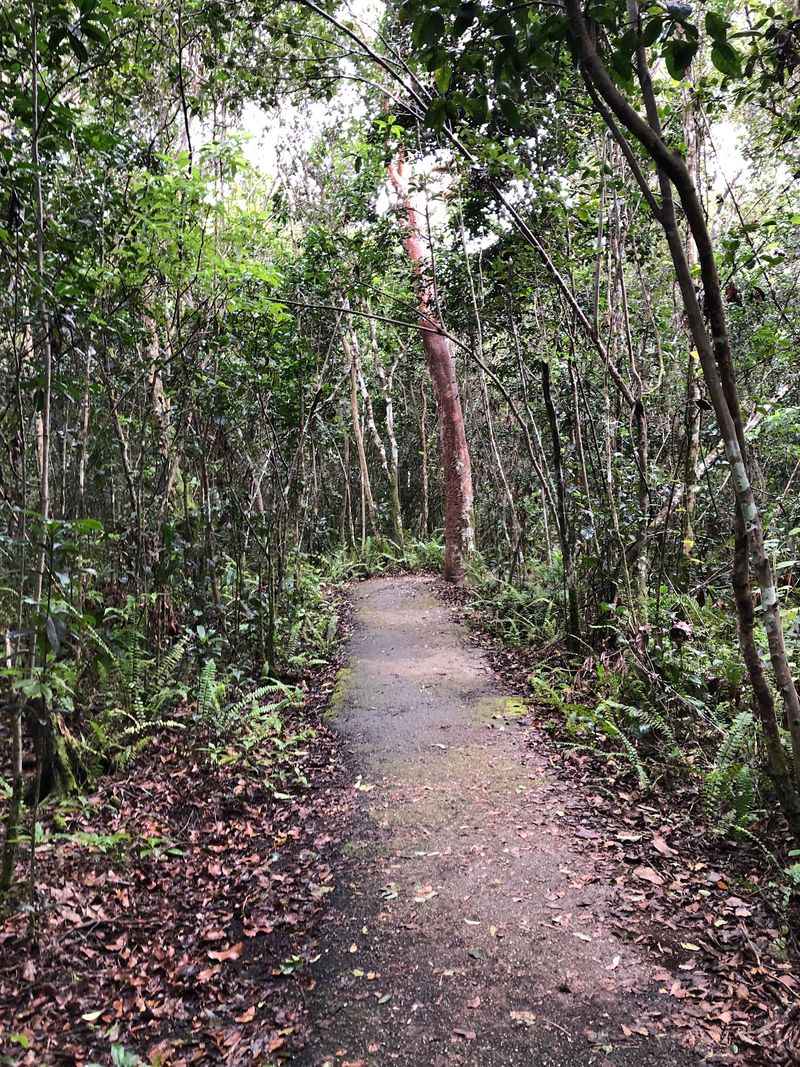
Just imagine for a second a tropical jungle you can roll a stroller through. Thick hardwood hammock swallows the sunlight before it ever reaches your shoulders.
The Gumbo Limbo Trail sits inside Everglades National Park near Homestead, starting at the Royal Palm Visitor Center. It is paved, wheelchair friendly, and completely self guided.
Its name comes from the gumbo limbo trees lining the path. Their peeling red bark earned them the nickname tourist trees, which never stops being funny.
Royal palms tower overhead while ferns and air plants crowd the understory. The greenery is so dense that shade feels almost guaranteed on a July afternoon.
Birders have plenty to watch for, including warblers, barred owls, catbirds and other species moving through the hammock.
Look lower and you may spot colorful insects moving through the dense vegetation. Colorful tree snails cling to trunks if you slow down and scan carefully.
Water edges deserve a careful glance too. The trail passes a pond where alligators may sometimes be spotted among the vegetation, so keep a safe distance.
The loop measures only 0.4 miles, which suits families with small legs. You can finish it before anyone starts complaining about the heat.
Better yet, it starts from the same Royal Palm visitor area as the popular Anhinga Trail. Two short walks stacked together make a satisfying morning without any real effort.
Early mornings bring the best light and the busiest wildlife activity. Mosquito pressure rises in wet months, so pack repellent and long sleeves.
The trailhead address is 40001 State Road 9336, Homestead. Few short walks pack this much green into so little distance.
2. Bolen Bluff Trail, Micanopy
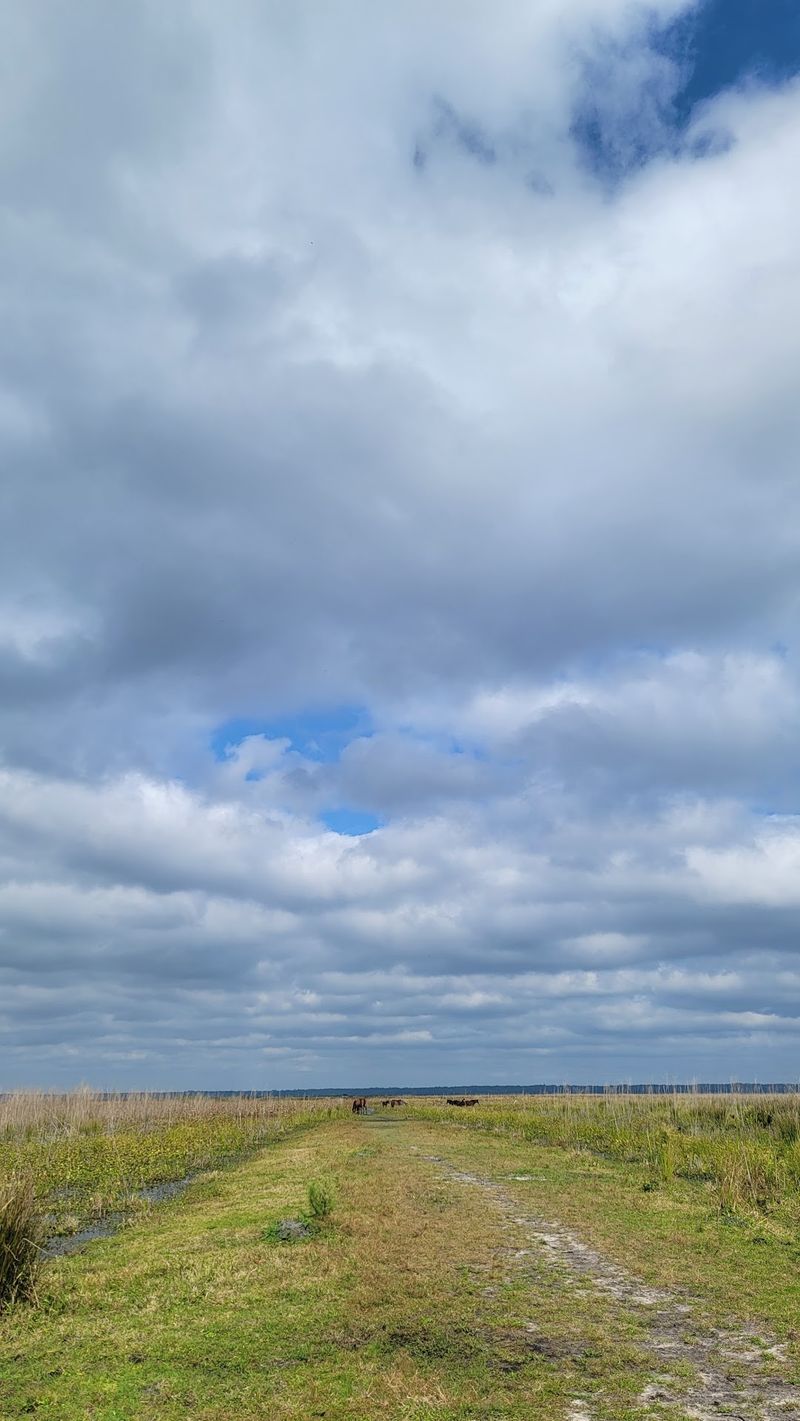
One minute you are under heavy oak shade, the next you see for miles.
Bolen Bluff Trail runs through Paynes Prairie Preserve State Park, just outside the small town of Micanopy. Southern live oaks draped in Spanish moss build the tunnel that keeps hikers cool.
The path climbs gently to a bluff with wide open views. Below you sit freshwater marsh, wet prairie, and the shallow spread of Alachua Lake.
Wildlife here has real star power. Wild horses and American bison roam Paynes Prairie, while white-tailed deer and other wildlife inhabit the surrounding hammock.
Alligators also live in the wetter sections. Keep a respectful distance from every animal, no matter how calm it appears.
An observation platform near the prairie edge helps with photos and long distance scanning. Binoculars turn distant shapes into recognizable creatures.
The 2.6-mile round-trip trail passes through shaded hammock before reaching Bolen Bluff and a prairie overlook. Shade dominates the forested section, while the prairie stretch bakes, so time your walk early.
Water is essential because there is nothing to buy along the way. A wide hat helps during the exposed portion.
The trailhead sits right off US 441, which makes finding it refreshingly simple. Look for signage marking the entrance rather than relying on landmarks.
Few Florida walks deliver mossy forest and open savanna in one short loop like this one does.
3. Azalea Trail At Ravine Gardens State Park, Palatka
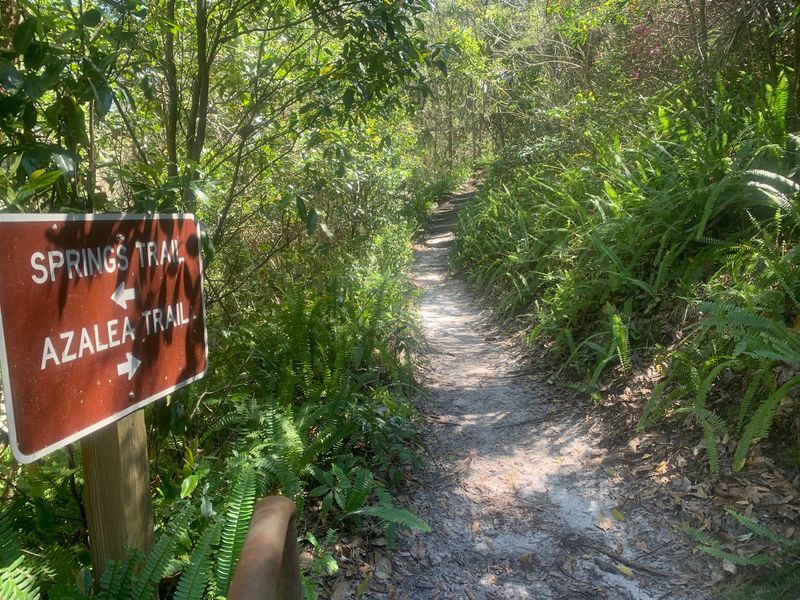
My jaw literally dropped when the ground fell away into a deep green ravine. Florida is famous for being flat, so this landscape rewrites expectations fast.
Ravine Gardens State Park in Palatka developed during the New Deal era around a dramatic system of natural steephead ravines. The Azalea Trail is the star attraction winding through it all.
Historic suspension bridges sway lightly as you cross. Stone staircases handle the steepest drops with old fashioned craftsmanship.
Azaleas put on the park’s signature flower show, with the main bloom season generally running from late December into early March.
Bay trees, magnolias, and towering oaks handle shade duty year round. Even in August, the canopy keeps the lower paths noticeably cooler.
Whitewater Branch, a spring-fed stream, runs through the bottom of the ravine system. The sound of moving water follows you along much of the route.
The 2.5-mile Azalea Trail is rated strenuous. Steep, narrow stretches and plenty of stairs will get your heart rate up.
Sturdy shoes matter more here than on most Florida trails. Take your time on descents after rain, since stone can turn slick.
Interpretive information around the park helps explain its historic gardens, stonework and New Deal-era development. Learning the backstory makes the bridges far more interesting.
Shaded picnic areas under ancient oaks are ideal for a packed lunch. Pick a bench, unwrap a sandwich, and let the breeze do its work.
Find the floral wonderland at 1600 Twigg St, Palatka, where flat Florida quietly breaks its own rules.
4. Hiram Faver Trail At Faver-Dykes State Park, St Augustine
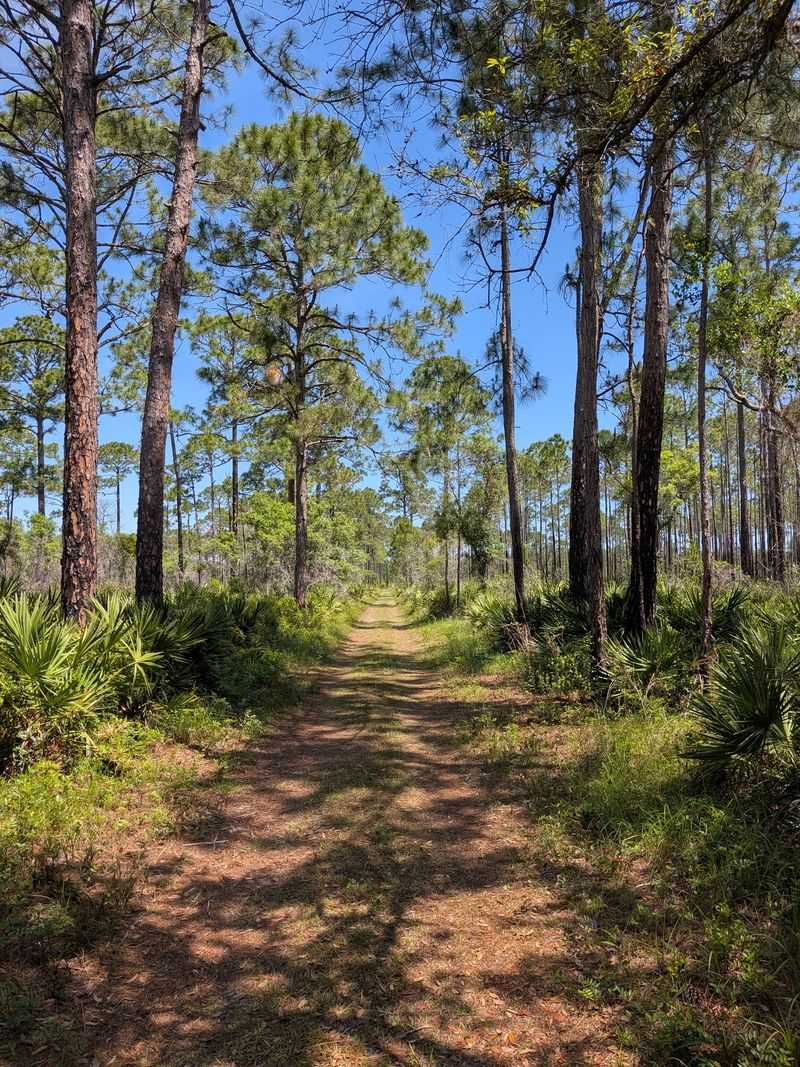
Let me be real for a second, quiet trails are getting harder to find. Protected land on all sides keeps this one blissfully undisturbed.
The Hiram Faver Trail sits inside Faver-Dykes State Park near St Augustine, a peaceful pocket buffered by surrounding conservation property. Shade arrives early and stays with you.
The trail moves through mostly shaded forest before ending at an overlook of the Pellicer Flats. Each habitat shift changes the plants underfoot.
Longleaf pines, saw palmettos, native blueberries, grasses and wildflowers grow across portions of the park’s trail system.
The trail finishes at an overlook above Pellicer Flats and Pellicer Creek. Nearby Pellicer Creek is an estuarine waterway where fresh and salt water mix, supporting rich plant and animal life.
More than 100 bird species may be seen during spring and fall migration periods. Bald eagles, herons, and wading birds headline the list.
Mammals make appearances too. White-tailed deer, bobcats and river otters live in the park, while occasional manatees may be seen in Pellicer Creek.
The 2.6-mile trail is mostly shaded and ends at an overlook of the Pellicer Flats. That shade makes summer hiking genuinely pleasant instead of punishing.
Picnic tables near the water invite a slow lunch afterward. Bring binoculars, because the marsh overlook rewards patience.
Morning light is best for photography and bird activity. Insect repellent belongs in your bag from May through October.
Paddlers can launch onto Pellicer Creek for a completely different view. Combining a hike with a float makes for a full, unhurried day.
The park entrance sits at 1000 Faver-Dykes Rd, St Augustine, close to the highway yet remarkably far from the noise.
5. Troy Spring Nature Trail, Branford
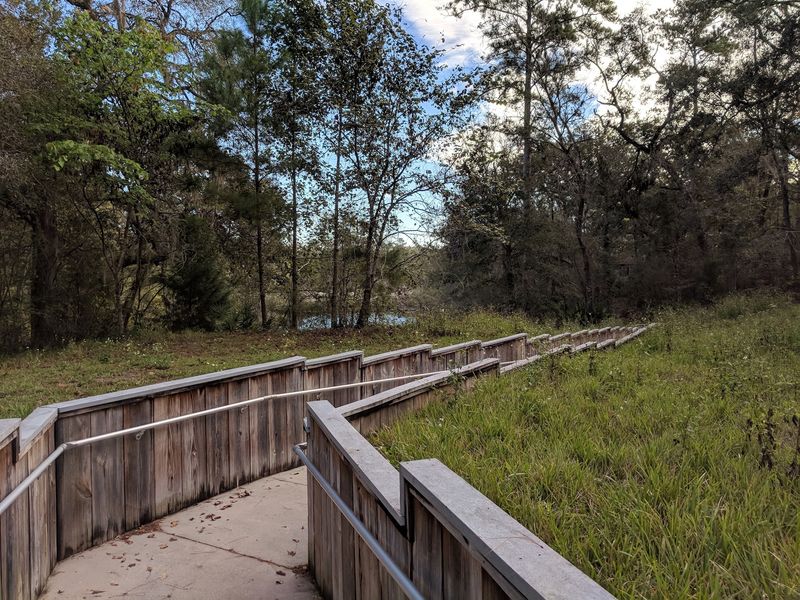
Are you seeing what I’m seeing? Water so blue green it barely looks real, tucked at the end of a shady walk.
Troy Spring State Park in Branford sits along the Suwannee River, and its nature trail rolls gently through hardwood hammock. Tall trees filter the sunlight into soft patches.
At the center of everything is a first magnitude spring basin. The depth and clarity make the water look almost lit from below.
History hides in the spring run. Visible remains of the Civil War era steamboat Madison rest beneath the surface.
Swimming is one of the park’s most popular warm-weather activities. The water holds a steady 72 degrees, which resets your body temperature instantly.
Snorkelers get a clear look at the limestone walls. Certified divers may explore the deeper spring, but only open-water scuba diving is permitted and solo diving is prohibited.
Shaded picnic tables sit within easy reach of the parking area. Anglers can also cast from the river dock for a change of pace.
Bring water shoes because limestone edges can be sharp. A towel and dry clothes make the drive home much happier.
Arriving earlier can make it easier to enjoy the spring before busier parts of the day.
The park sits at 674 NE Troy Springs Rd, Branford, pairing shaded woods with a natural cold plunge. Hiking and swimming rarely stack this conveniently in one stop.
6. Alexander Blair Big Oak Trail At Highlands Hammock State Park, Sebring
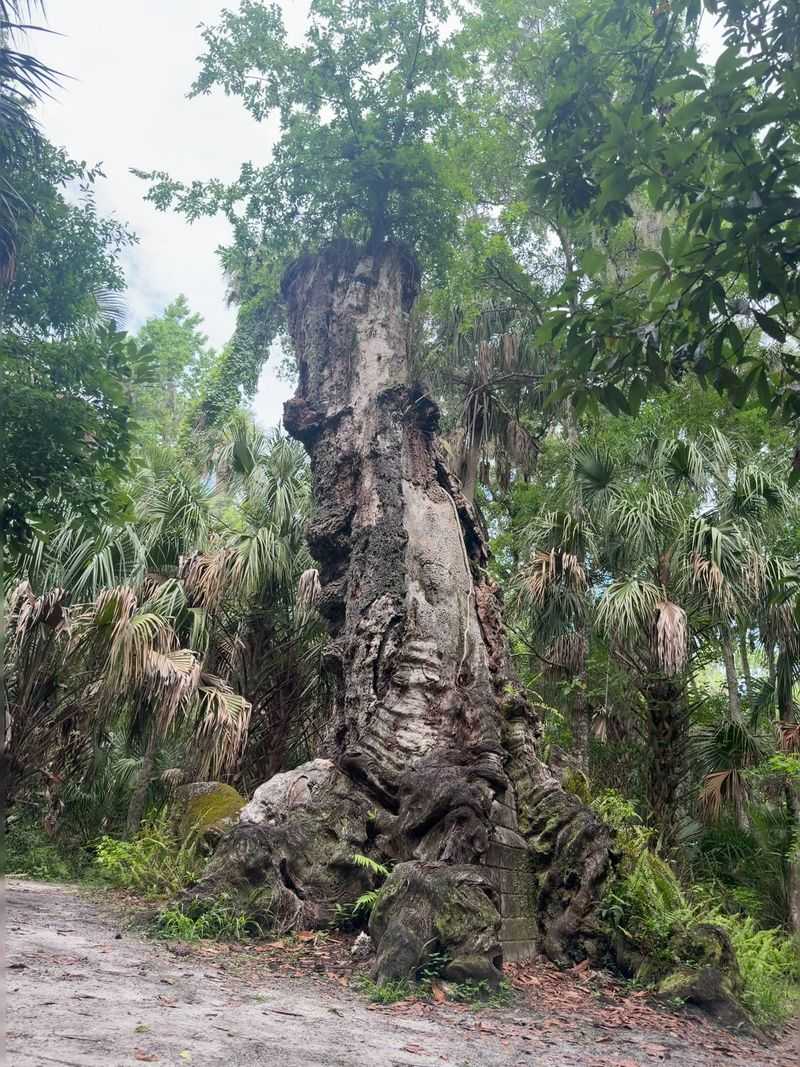
The Alexander Blair Big Oak Trail runs through Highlands Hammock State Park in Sebring, a preserve known for its mature hardwood hammock and enormous old oaks.
Dark floodplain forest surrounds the route, and the canopy stays thick overhead. Direct sun rarely touches the path.
The trail leads to the remains of the famous Big Oak, a giant live oak whose gnarled lower trunk still measures about 36 feet around.
Civilian Conservation Corps crews shaped parts of this park in the 1930s. Their handiwork still supports boardwalks and features across the property.
Beyond this trail, a three mile paved loop road circles the hammock. Cyclists use it to reach other trailheads and scenic pull offs.
Narrated tram tours offer another way to explore the park and look for wildlife such as alligators, turtles and wading birds.
A narrow catwalk beyond the Big Oak connects toward the Hickory Trail. Look down and you may spot fish, frogs, or a sunning turtle.
Footing can be damp in the rainy season, so choose shoes accordingly. Bug spray earns its keep in the shadier corners.
Combine the oak trail with a boardwalk walk for a full morning. The variety keeps everyone entertained, including reluctant hikers.
Head to 5931 Hammock Rd, Sebring, and spend some time beneath one of Florida’s most impressive old hardwood hammocks.
7. Hugh Taylor Birch State Park Trails, Fort Lauderdale
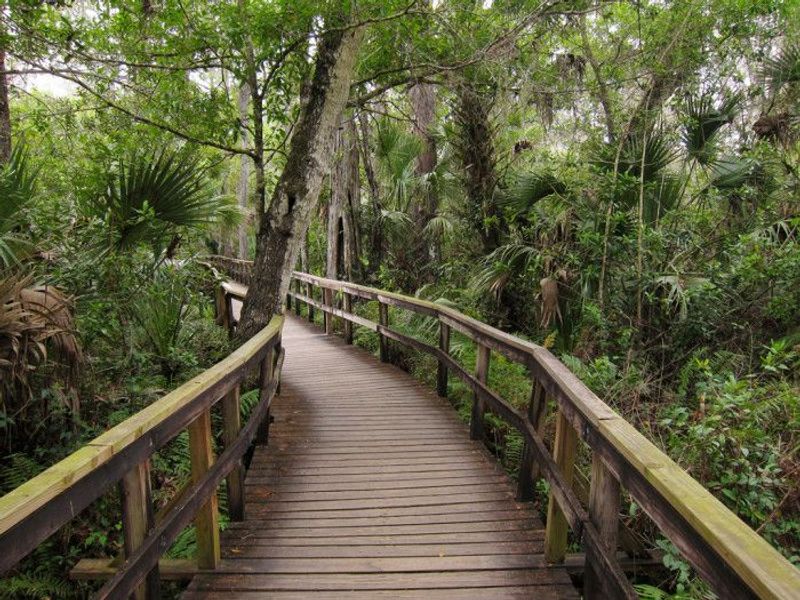
There is a native hammock forest hiding beside a busy beach strip. City noise fades within a few dozen steps.
Hugh Taylor Birch State Park in Fort Lauderdale protects a rare ribbon of coastal hammock. Florida State Parks describes it as Fort Lauderdale’s ‘Central Park,’ an urban oasis between the Atlantic and Intracoastal.
Shaded walking paths weave beneath the tree cover. The Atlantic sits on one side, the Intracoastal Waterway on the other.
A 1.9-mile paved park drive passes through the property and is popular with cyclists and inline skaters. Views alternate between dense hammock and low mangrove swamp.
Cyclists, walkers, and inline skaters all share that loop. The paved drive provides an easy way to move between different areas of the park.
Canoe and kayak rentals provide access to the park’s largest coastal dune lake.
Picnic areas dot the grounds, several with water views. Bring a cooler and claim a table under the trees.
The park is a recognized birding destination with more than 250 species on its bird list, including migrants and occasional Caribbean species.
A pedestrian tunnel runs under the road to Fort Lauderdale Beach. That means shade in the morning and sand in the afternoon.
Weekday mornings feel noticeably quieter than weekends. Parking fills fastest during holidays and spring break weeks.
Interpretive signs explain how this land survived decades of coastal development. The story adds weight to every shady step.
The entrance is at 3109 E Sunrise Blvd, Fort Lauderdale, minutes from hotels and traffic. Rarely does a forest walk end this close to an ocean swim.
8. Hillsborough River State Park Trails, Thonotosassa
Correct me if I’m wrong, but rapids are not what most people expect in this state. The rush of moving water proves otherwise.
Hillsborough River State Park in Thonotosassa protects one of Florida’s few Class II rapids. Cypress and oak hammocks shade the banks above them.
Trails and boardwalks bring you right up to riverine habitat. Water gurgles over limestone while the canopy blocks the worst of the heat.
Several hiking trails cross the park, ranging from short riverside walks to longer routes through wetlands and forest. That variety suits both quick strolls and longer hikes.
The 1.2-mile River Rapids Trail provides one of the easiest routes to the park’s Class II rapids. Wetlands Restoration Trail and the scenic Baynard Trail add more mileage.
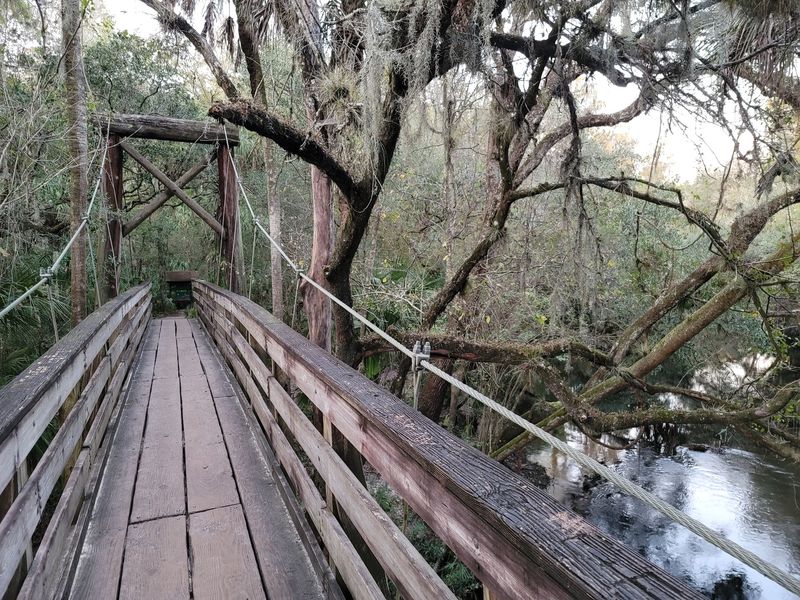
A suspension bridge crosses the river and provides another vantage point over the water. Standing mid span, you can watch the current slide beneath your feet.
Paddling is popular when water levels cooperate. From a canoe, wildlife sightings multiply quickly.
Turtles line fallen logs, and alligators rest along quieter banks. Bird species range from woodpeckers to wading herons.
Fort Foster, a reconstructed Second Seminole War-era fort, is part of the park’s historic attractions. Guided programs explain its role in Florida history.
Shaded campsites and a swimming pool give families extra reasons to linger. Weekend mornings are the coolest window for hiking.
Insect repellent is not optional during warm months. Long socks help along the wetter boardwalk sections.
Set your directions to 15402 US-301, Thonotosassa, and let river sounds replace your usual soundtrack for a few hours.