This Free Florida Snorkel Trail Offers An Unforgettable Underwater Adventure
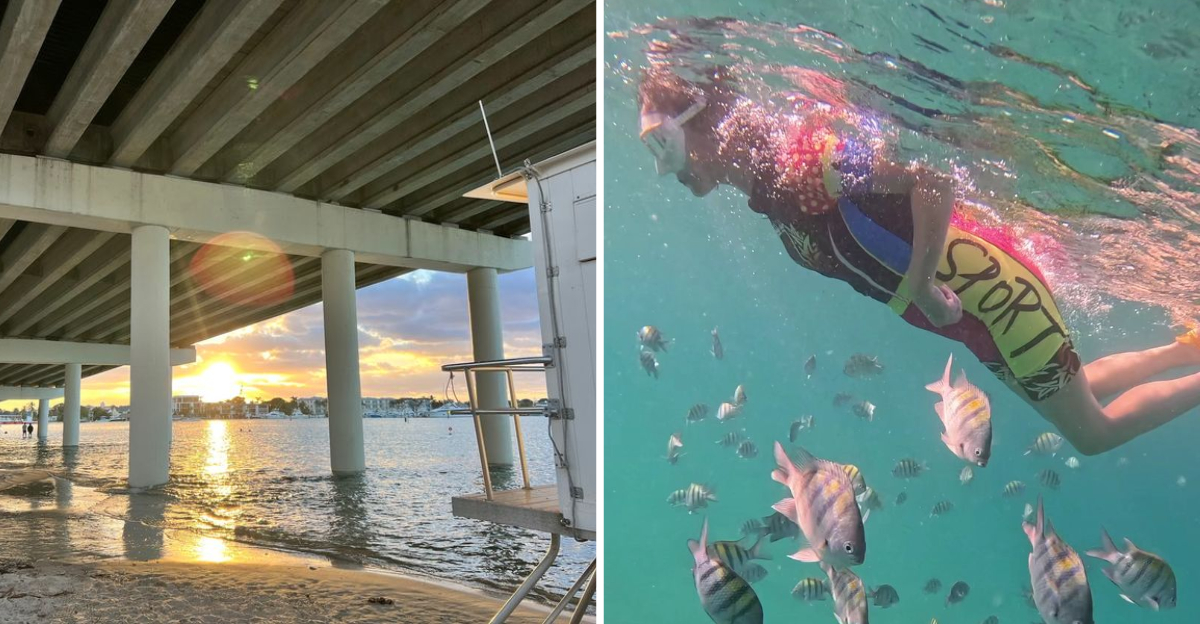
Forget paying for an expensive snorkeling excursion. This free underwater trail in Florida delivers the kind of encounter people usually book a boat tour to find.
Slip beneath the surface and suddenly you are swimming alongside rays, seahorses, moray eels, and maybe even a sea turtle.
The reef sits in surprisingly shallow water, making the whole experience feel wonderfully approachable. Clear incoming tides can make the underwater world even easier to spot.
First-timers can enjoy it without feeling overwhelmed, while experienced snorkelers have plenty to investigate.
Honestly, getting this much marine-life excitement without opening your wallet feels almost too good to be true.
The Trail’s Underwater Origin Story
Not every great underwater destination is born from nature alone.
The Phil Foster Snorkel Trail in Riviera Beach is a remarkable example of human creativity shaping a thriving marine ecosystem. This 800-foot-long artificial reef was carefully planned and built starting in 2012.
Palm Beach County’s Environmental Resources Management and Parks and Recreation Department joined forces to bring this vision to life.
Over 600 tons of Anastasia rock boulders were strategically placed to form the reef’s foundation. These massive stones create intricate crevices, ledges, and hiding spots for a remarkable range of sea creatures.
Six concrete reef modules, each weighing two tons, were also added to the structure. These modules feature tunnels, half-bowls, and interior cavities that boost habitat diversity considerably.
Their sculpted shapes mimic natural sponges and corals, blending surprisingly well with the surrounding seafloor.
The original goal was to expand recreational opportunities while also supporting environmental education in the community. What started as a construction project transformed an already popular diving area into a biodiverse underwater sanctuary.
Marine Life You Will Actually See
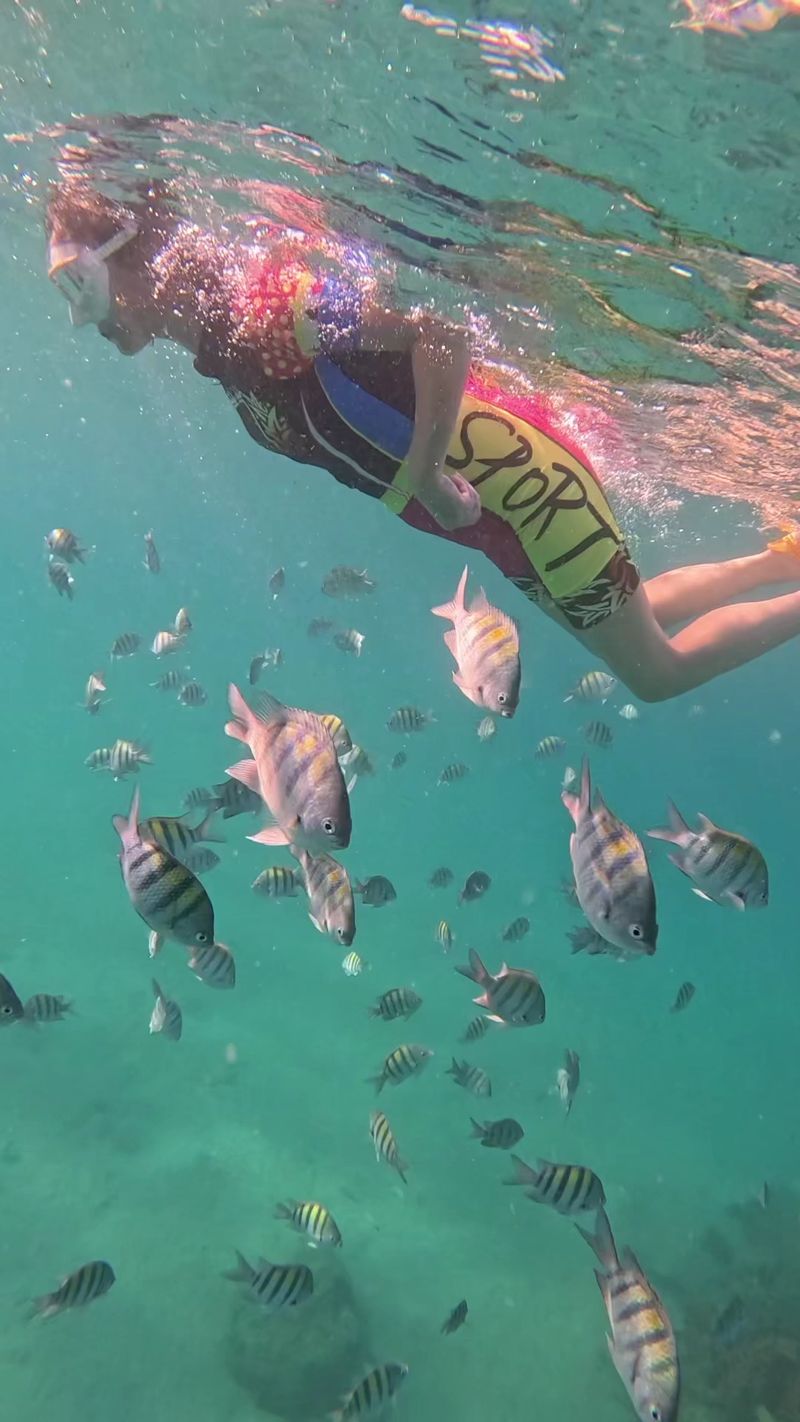
Gliding through the shallow, sun-lit water here feels like floating through a living aquarium.
The variety of marine life at the Phil Foster Snorkel Trail is genuinely staggering, and spotting new creatures on every visit keeps regulars coming back again and again.
Seahorses cling delicately to seagrass, while spotted rays glide silently across the sandy bottom.
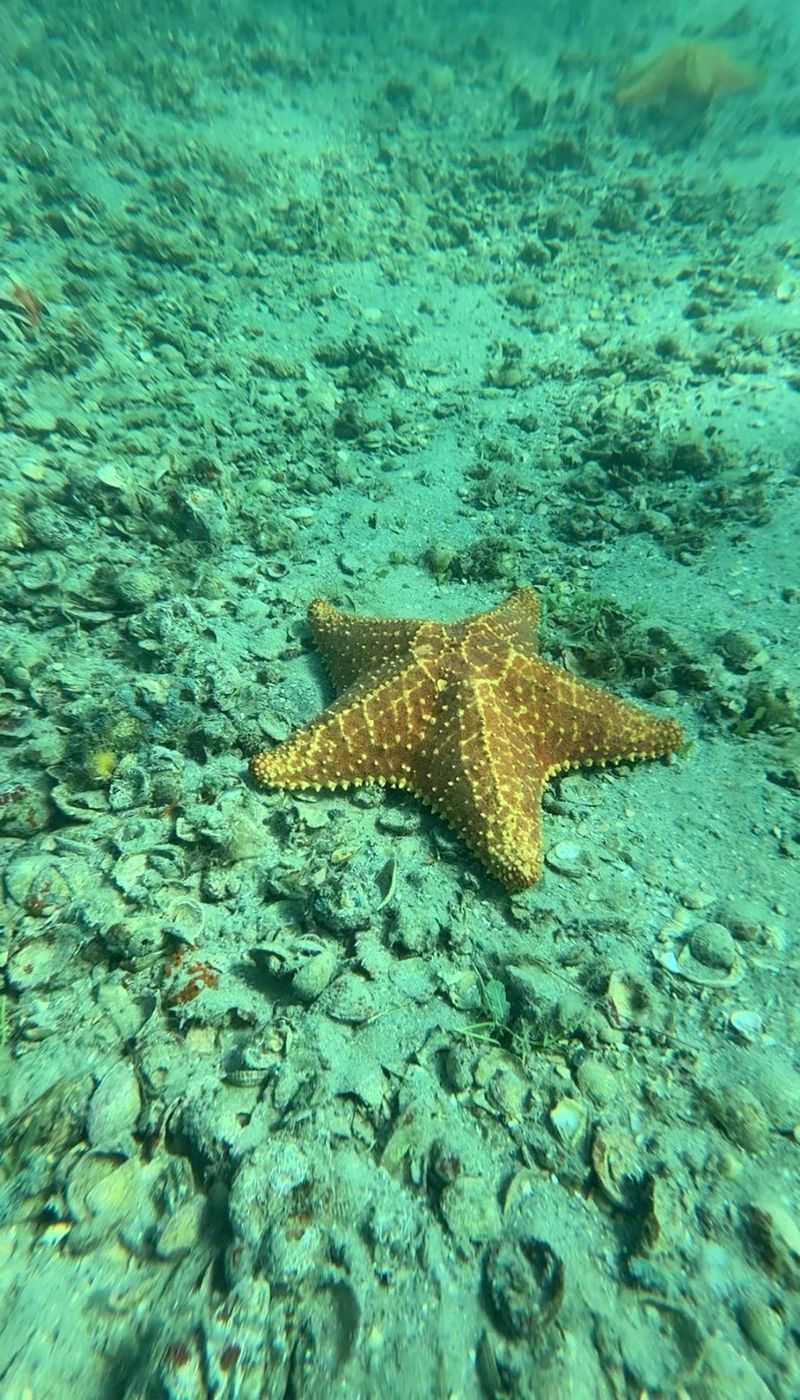
Starfish in vivid shades of orange and red rest on the seafloor like scattered ornaments. Moray eels peer cautiously from rocky gaps, their curious eyes tracking your every move.
Colorful angelfish, parrotfish, juvenile snapper, grunts, and grouper weave between the reef structures in a constant, colorful parade.
More unusual sightings include trumpetfish hovering vertically near the reef, and flying gurnard using their fin-like wings to move along the sandy bottom.
Barracuda sometimes patrol the deeper sections, observing the scene with calm authority. Pipefish, banded coral shrimp, and even frogfish have also been spotted here by patient observers.
Sea turtles make occasional appearances too, drifting past with an effortless grace that always stops snorkelers in their tracks.
Sunken Sculptures Beneath The Surface
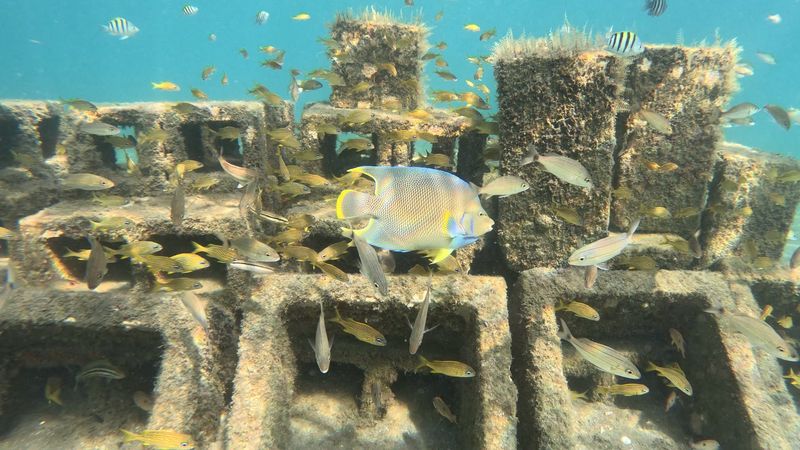
There is something undeniably thrilling about rounding a corner underwater and coming face-to-face with a hammerhead shark.
At the Phil Foster Snorkel Trail, that experience is both safe and entirely intentional. Three concrete hammerhead shark statues, each around five feet long, were donated by artist Tom McDonald in 2015 and placed near the west end of the trail.
Locally nicknamed the “McSharks,” these sculptures have become beloved landmarks for snorkelers seeking a fun photo opportunity.
Their realistic forms add a playful sense of drama to an already exciting underwater environment. Children and adults alike tend to react with a mix of surprise and delight when they first spot them resting on the seafloor.
Beyond the shark statues, the reef modules themselves have an artistic quality worth appreciating. Sculpted to resemble natural sponges and corals, these two-ton concrete structures blend into the environment with quiet elegance.
Some snorkelers have also reported spotting other submerged objects woven into the habitat, including old structures that have become unintentional homes for fish and invertebrates.
Why Tides Make Or Break Your Visit
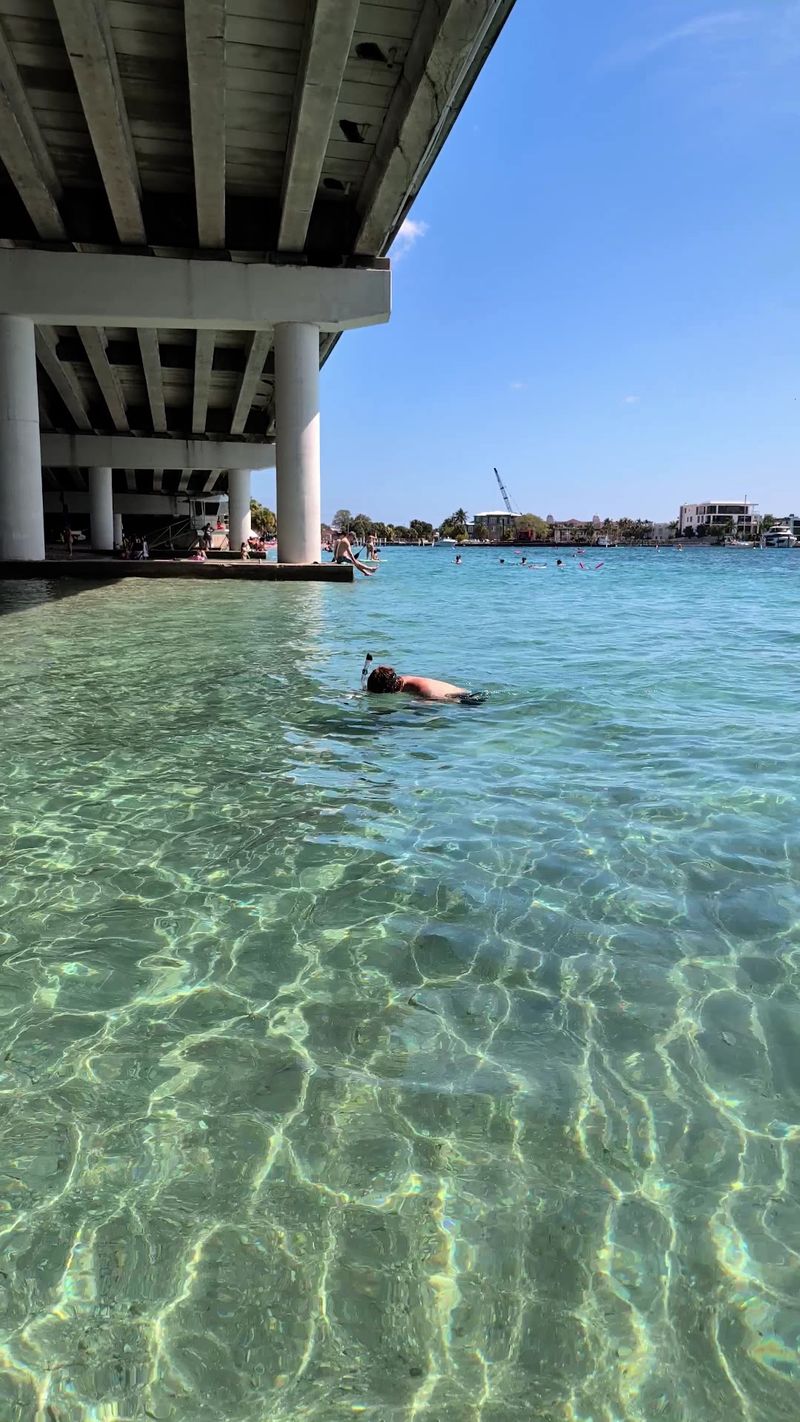
Timing is everything at this particular spot, and getting it right can mean the difference between a crystal-clear underwater adventure and a murky, frustrating swim.
The Phil Foster Snorkel Trail sits within the Lake Worth Lagoon, and its water clarity is directly tied to tidal flow from the nearby Lake Worth Inlet. When the tide rises, fresh Atlantic Ocean water flushes the lagoon and transforms visibility dramatically.
The sweet spot for visiting is roughly 30 minutes to two hours before high tide. During this window, the incoming water is at its clearest and most inviting.
Low tide brings a very different experience. Currents can pick up speed unexpectedly, making swimming harder and less enjoyable.
Visibility drops as stirred-up sediment clouds the water, reducing the chance of spotting the smaller, more delicate creatures that make this trail so special.
Checking a local tide chart before heading out is one of the most practical things any visitor can do. Many online resources and local dive shops in Florida provide daily tide schedules that are easy to access.
Park Amenities Worth Knowing About
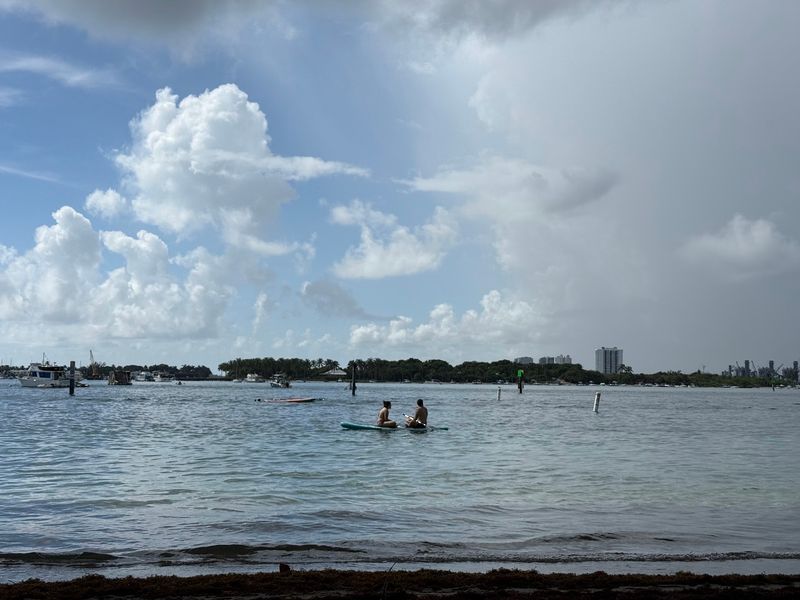
A great snorkeling destination is made even better when the surrounding park takes care of its visitors.
Phil Foster Park wraps around the snorkel trail with a solid set of amenities that make a full day here genuinely comfortable.
Clean restrooms and outdoor showers are conveniently located near the water, making post-snorkel rinse-offs quick and easy. A guarded swimming area provides a safe zone for families with younger children who may not be ready to venture out to the reef.
Picnic tables and grills are scattered throughout the park, turning a snorkeling trip into a full afternoon outing.
Packing a lunch to enjoy after a long swim is one of the best ways to spend a Florida afternoon. A shaded playground gives kids another outlet for energy between water sessions.
A fishing pier extends into the water for those who prefer to keep their feet dry. Boat ramps are also available for visitors arriving by water.
A Location That Works In Your Favor
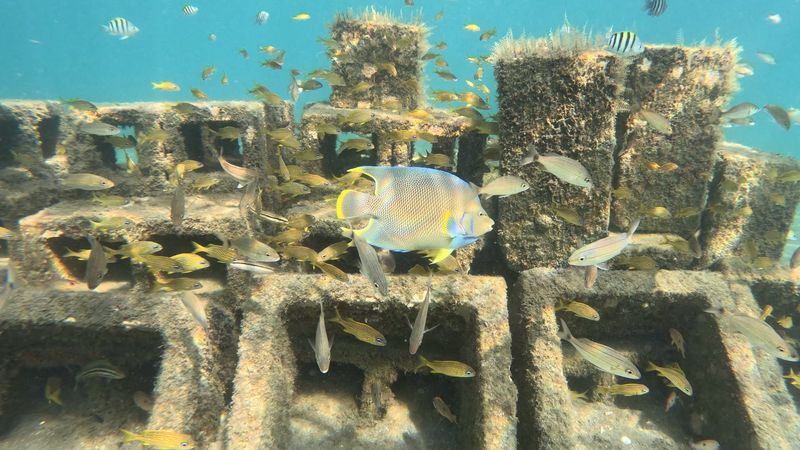
Geography plays a starring role in what makes this spot so consistently rewarding.
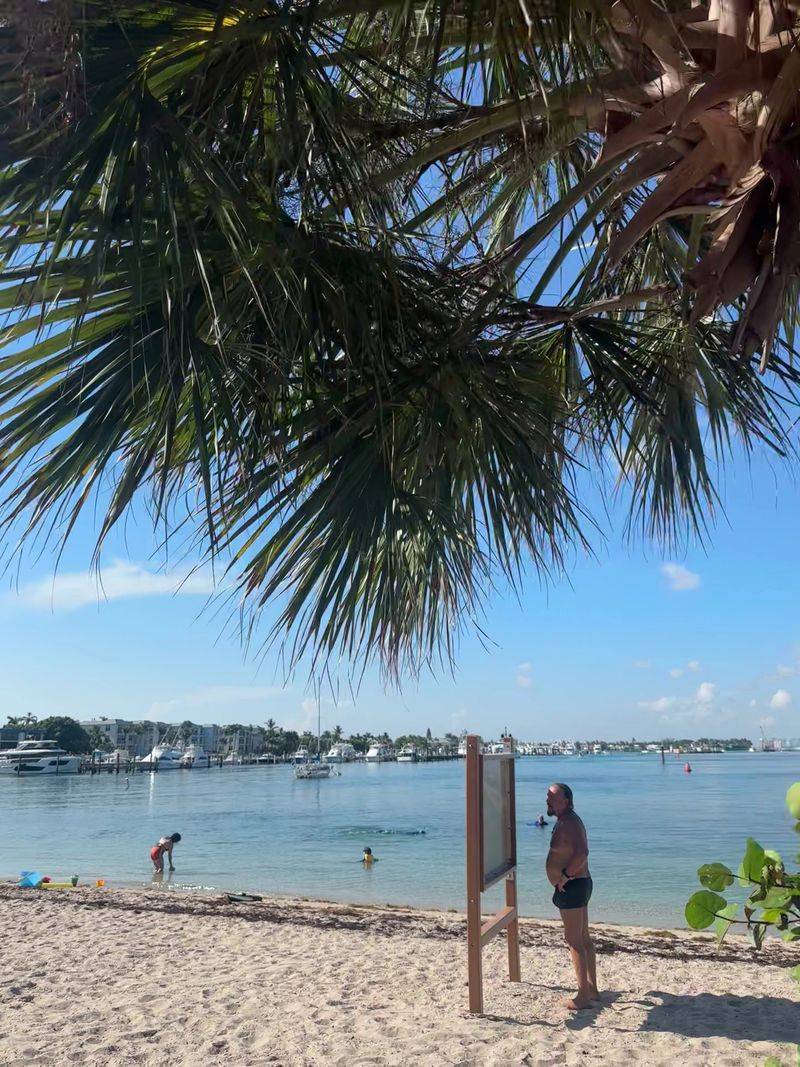
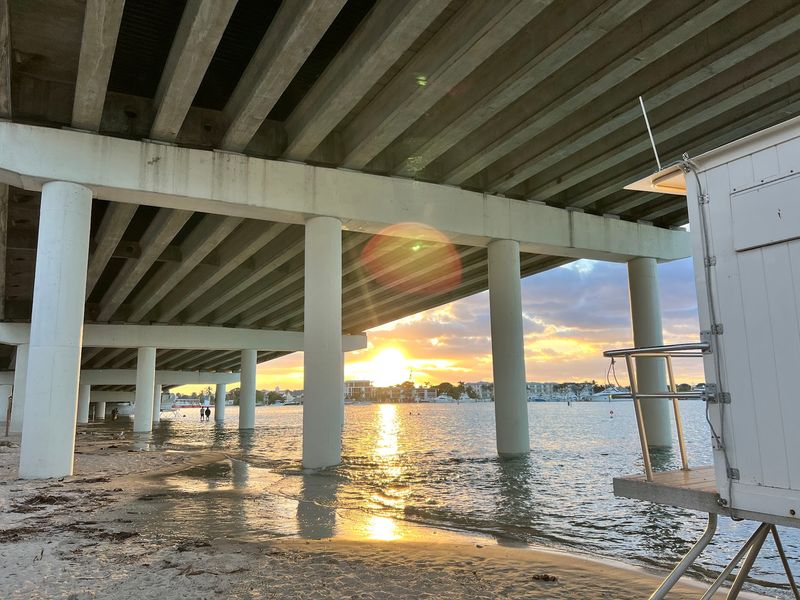
Within the Lake Worth Lagoon just south of the Blue Heron Bridge, the trail benefits from one of the most advantageous positions on Florida’s entire coastline.
The Lake Worth Inlet sits nearby, acting as a direct pipeline between the Atlantic Ocean and the lagoon.
Every incoming high tide pushes clean, nutrient-rich ocean water through that inlet and directly across the snorkel trail. The Gulf Stream runs just four nautical miles offshore, adding another layer of richness to the water that flows through here.
That proximity to the Gulf Stream means the trail sits at a natural crossroads for Atlantic marine life. Species traveling along the great ocean current often pause here, making it a dynamic and ever-changing environment.
The bridge pilings on either side of the trail have long attracted sea creatures on their own, and the added reef structures simply enhanced that magnetic effect.
The combination of tidal flushing, Gulf Stream proximity, and the sheltered lagoon setting creates conditions that rival some of the most celebrated snorkel destinations in the Caribbean.
Conservation Rules That Protect the Reef
Protecting what lies beneath the surface here is taken seriously, and for good reason.
The Phil Foster Snorkel Trail is part of Palm Beach County’s Artificial Reef Program, which exists specifically to enhance and preserve marine habitat along Florida’s coastline.
Harvesting or possessing tropical fish and ornamental marine plants within the park’s waters is strictly prohibited.
This rule ensures that the colorful residents of the reef remain undisturbed and continue to thrive for future visitors.
Knives and spearguns are also not permitted for capturing fish in county park waters, keeping the ecosystem safe from unnecessary interference.
Informational kiosks positioned along the shoreline help visitors identify the sea life they are likely to encounter.
These educational displays turn a fun outing into a genuine learning experience, especially for younger visitors who are seeing many of these species for the first time.
Manatees are also protected in this area, with designated boating speed zones in place to reduce the risk of injury to these gentle marine mammals. Respecting these boundaries is not just a legal obligation but a meaningful act of stewardship.
The Man Behind The Park’s Name
Every great place carries a story, and the park surrounding this snorkel trail is no different.
Phil Foster was a pioneering figure in Riviera Beach, whose passion for community development left a lasting mark on the city he called home.
Born in New York in 1914, he relocated to Riviera Beach in the 1950s and quickly became a central figure in local civic life.
Foster owned one of the area’s earliest tourist courts, giving him a front-row seat to the region’s growth and potential.
His involvement in local politics deepened over time, eventually leading him to serve as city councilman and later as mayor in 1971. During his time in office, he championed the development of public parks and recreational spaces with real determination.
His efforts helped secure the funding and resources needed to establish the park, which was developed in the early 1980s during and after his time in office.
A statue called “The Ancient Mariner” stands within the park as another quiet nod to its rich local heritage.
The name Phil Foster represents a commitment to giving a community open, beautiful access to the natural world, a legacy that still pays off with every snorkeler who enters the water today.