This Connecticut Chapel Might Be One Of The Most Magical Places In The State
Some buildings make you lower your voice without anyone asking.
This Connecticut chapel has that effect almost immediately, with soaring stonework and a sense of quiet that feels unexpectedly transportive.
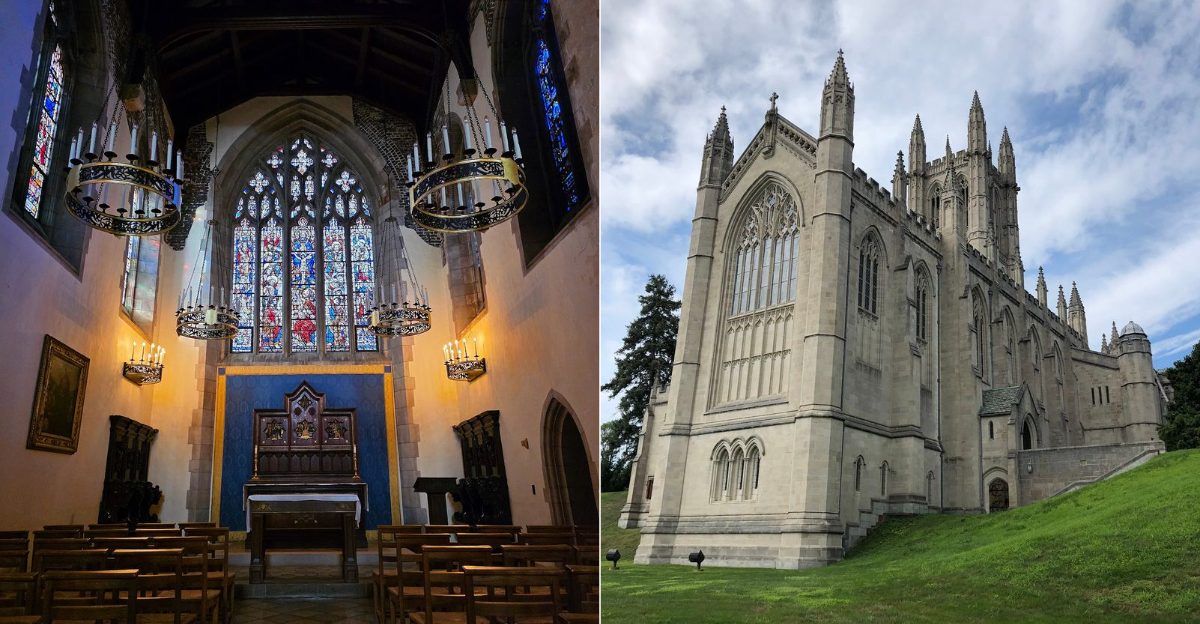
Light filters through stained glass while the high ceiling pulls your eyes upward. The space feels grand, but not showy.
A few minutes inside can stretch longer because every carved detail seems to reward a closer look. Even from outside, the Gothic design gives the building a storybook silhouette that feels almost too dramatic for an ordinary campus walk.
Step inside and the mood shifts again. The city outside suddenly seems farther away than it really is.
The chapel was designed by the same architect behind another famous American cathedral, which helps explain the scale and ambition.
Still, the magic is easier to feel than explain.
You walk out remembering the atmosphere long after the architectural details start blurring together.
1. Soaring Gothic Beauty At The Center Of Campus
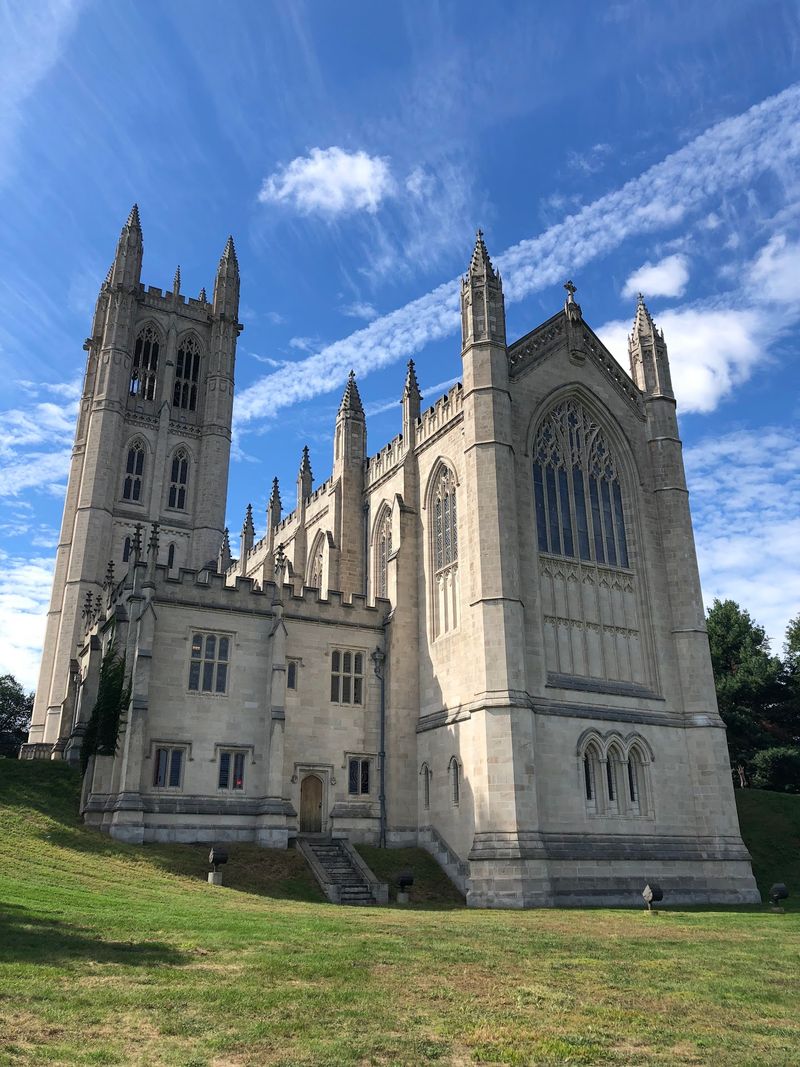
Look up. Seriously, that is where the real show begins.
Trinity College Chapel rises over the main quadrangle with the kind of Gothic drama that makes the surrounding campus suddenly feel much older.
Its cornerstone was laid in 1928, and the chapel was consecrated four years later, with architect Philip Hubert Frohman drawing inspiration from centuries of European church design.
Indiana limestone covers the exterior, while brick forms the structural core beneath it. Inside, limestone and plaster meet heavy timber construction, creating a space that feels remarkably handcrafted despite its enormous scale.
The tower climbs 163 feet above the campus, making it visible well beyond the quadrangle.
Then the details start competing for attention. Stained glass throws color across the interior, intricate wood carvings decorate the pews, and the soaring ceiling naturally pulls your eyes upward.
The chapel deliberately blends Gothic styles from different medieval periods rather than copying one particular building.
Some decorative work was never completed after the Great Depression interrupted the original plans, which is why Trinity itself calls the chapel an unfinished masterpiece.
Give yourself a minute to sit quietly. This is one campus building that becomes more impressive the longer you look.
2. An American Gothic Landmark From 1932
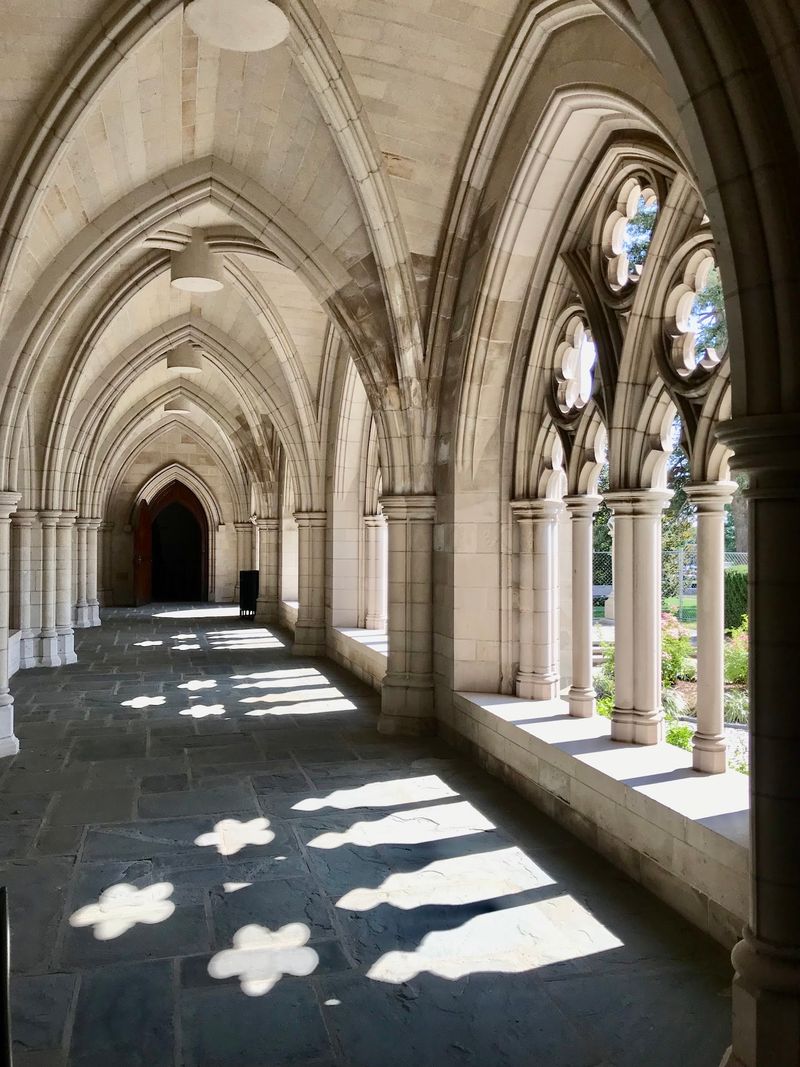
June 19, 1932 marked the chapel’s consecration, and the building has been a Hartford landmark ever since. Completion came during the Great Depression, which shaped how much of the original decorative plan could actually be finished.
The design came from the firm Frohman, Robb and Little, the same architectural office responsible for the National Cathedral in Washington, D.C. That connection helps explain the confidence of the detailing, from the proportions of the nave to the way stone and wood play against each other.
What sets the chapel apart is that it never settles for copying old European churches. The design pulls historical elements together into something original, which is why it is often described as a final flowering of the American Gothic Revival movement.
For anyone who enjoys architecture, the near-century-old building offers a rare chance to see craftsmanship that would be extremely difficult and costly to reproduce today. Hand-cut limestone, carved timber, and leaded glass all came together through skilled labor rather than machines.
Photographers tend to love the exterior, especially where buttresses and pointed arches cast strong shadows. Come with curiosity about the details, because the building rewards slow looking far more than a quick pass-through.
3. A 163-Foot Tower Above The Quad
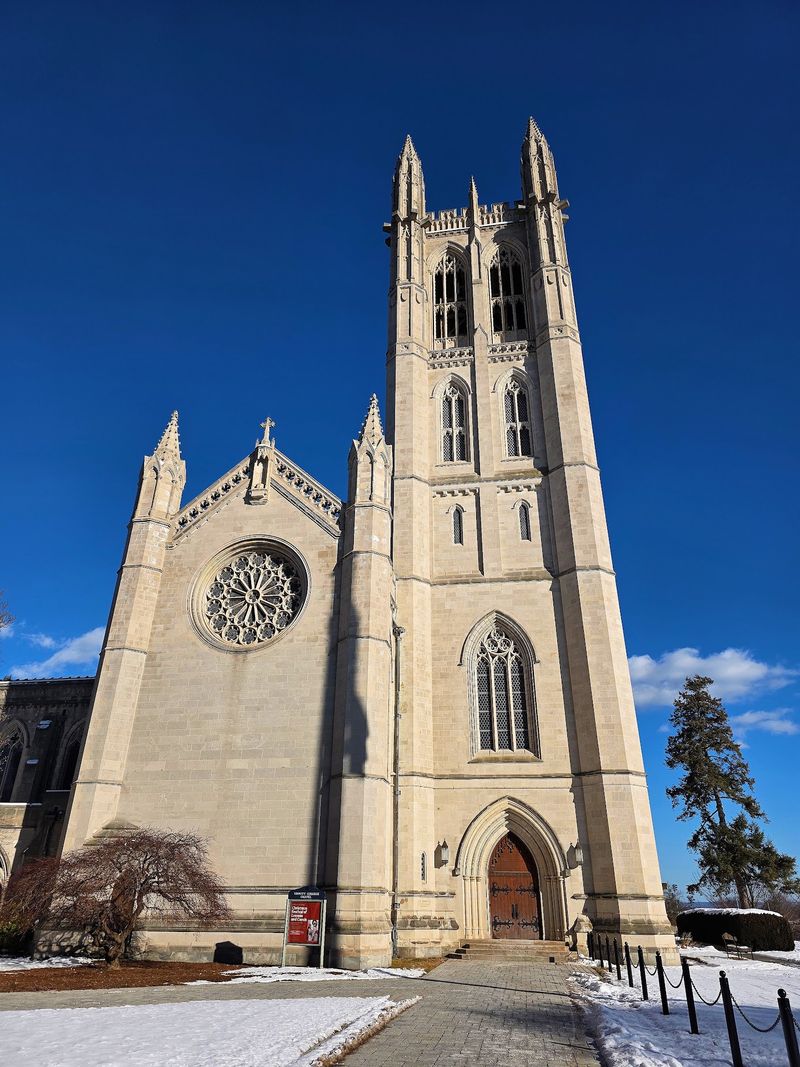
Then the bells begin. Everything on the quad suddenly feels different.
High inside Trinity College Chapel, 49 bronze bells make up the Plumb Memorial Carillon, sending music across the Main Quad from a tower that rises 163 feet above campus.
The sound is impossible to experience quite the same way through a recording because it travels through open air, reaches you from overhead, and seems to linger above the lawn.
The instrument originally had 30 bells when it was installed in 1931. Nineteen more were added in 1978, bringing the total to the 49 heard today.
The bells are played from a keyboard inside the chapel tower, and the carillon has become such a familiar part of campus life that Trinity describes it as part of the college’s soundtrack.
Summer offers one of the easiest chances to hear it properly. Trinity’s long-running Summer Music Series includes carillon recitals on the Main Quad after concerts inside the chapel, and the 2026 series continues that tradition.
The lawn is the place to settle in when the music starts. Bring a blanket, look up at the tower, and let nearly a century of campus tradition ring out above you.
4. High On Trinity’s Hilltop Campus
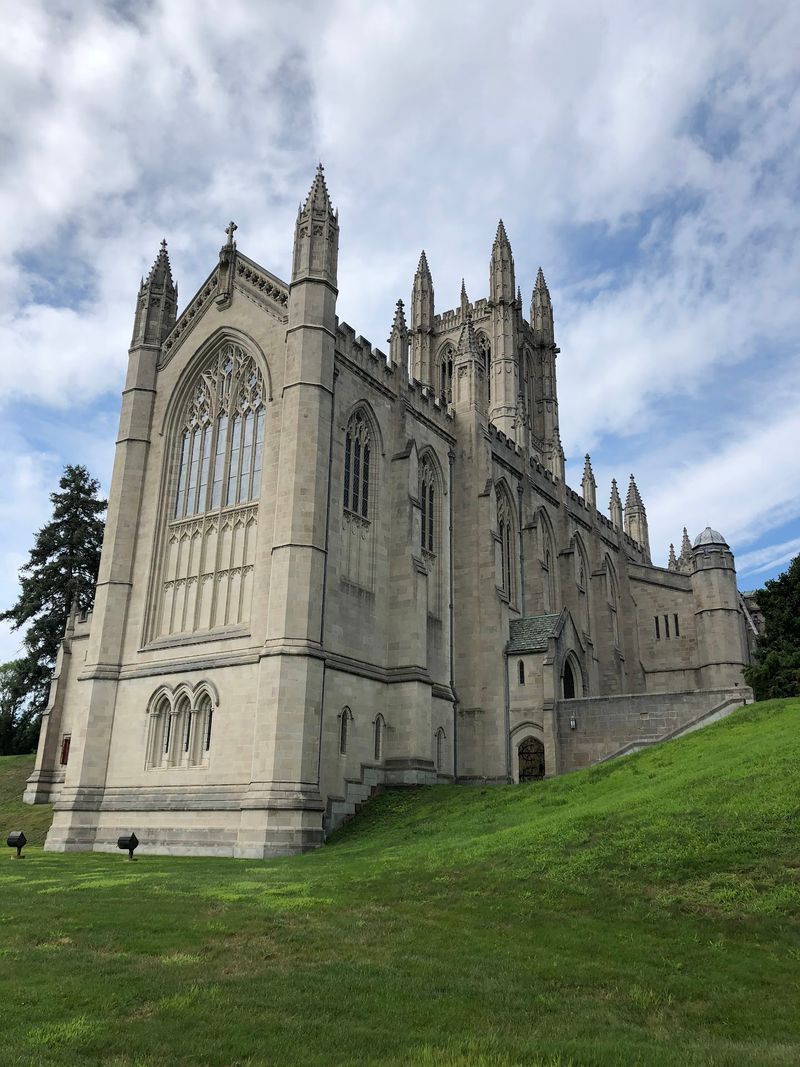
Elevation is part of the magic here. The chapel sits high on Trinity College’s hilltop campus, and on a clear day the tower is visible for miles across Hartford and the surrounding Connecticut landscape.
Trinity has been a hilltop school since it moved to its Summit Street campus in 1878, and even its original site occupied high ground. That tradition of building upward and outward gives the chapel an unusual sense of presence for a city campus.
The building also anchors the Trinity College Long Walk Historic District, an 11.4-acre area listed on the National Register of Historic Places for its importance in American history and architecture.
Standing on the lawn, you can see how the chapel and the long row of stone buildings work together as one composition.
Plan for a walkable visit. The quad is flat and open once you reach it, with paved paths and grass that make it easy to circle the chapel and study the exterior carvings from different angles.
Mornings tend to feel calm, while late afternoon light warms the limestone into a soft honey color. Bring comfortable shoes, since the surrounding campus invites more wandering than you might expect.
5. Stained Glass Filled With Hidden Stories
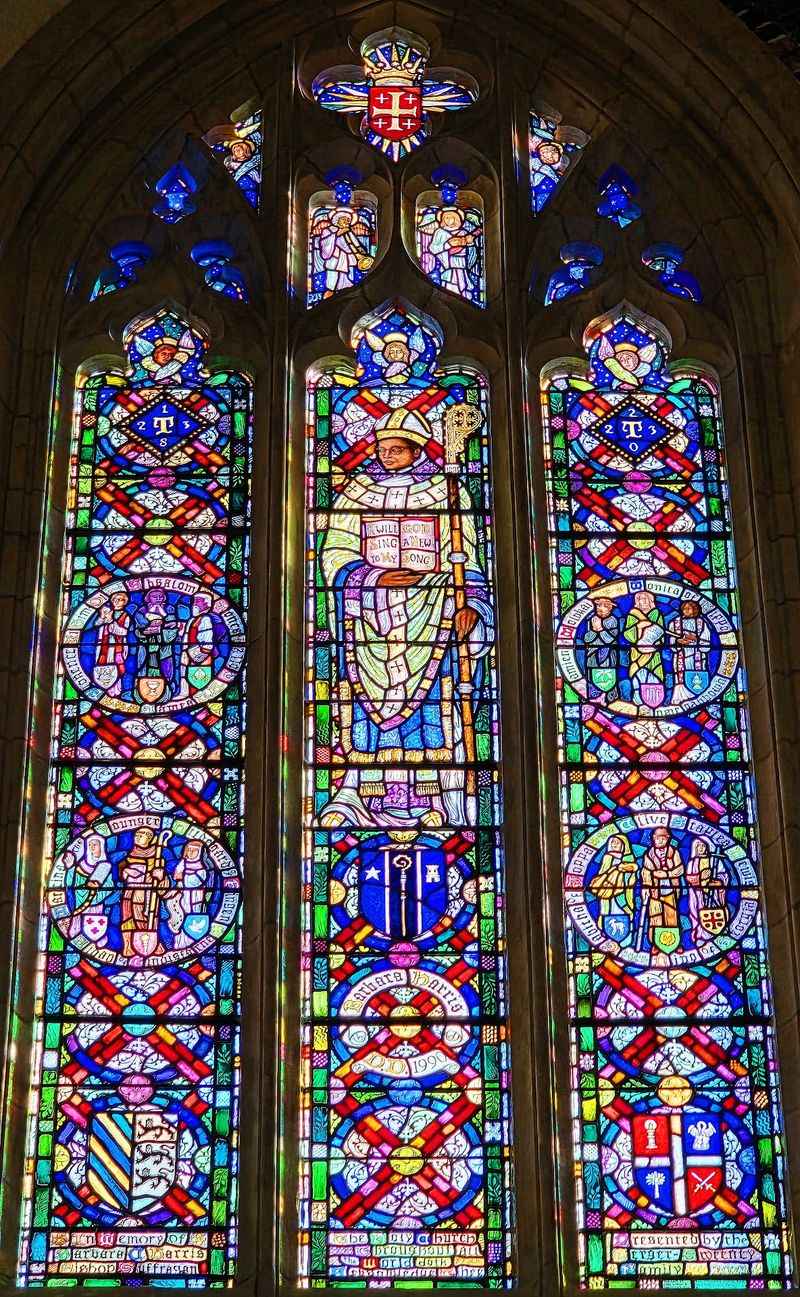
Look closely at the windows and you start noticing faces you did not expect in a chapel. Alongside biblical history, the glass honors figures such as the transcendentalist writers Emerson and Thoreau, plus leaders of the college and the nation, including President Abraham Lincoln.
The original stained glasswork was designed and made by a craftsman who also contributed glass to the Washington National Cathedral. Symbols tied to Trinity itself appear too, including the college’s Bantam mascot.
Different windows use different centuries as their guide. The Rose Window above the nave follows a 13th-century approach with dark, saturated colors, while other windows borrow from 14th and 15th-century styles that let more light through.
One window depicting The Last Supper was given in memory of a former Hartford mayor and includes the city seal along with a family coat of arms. A newer major window honors Bishop Barbara Clementine Harris, designed in the style of late 14th and early 15th-century glass.
Depression-era budgets left some decorative work unfinished, though original blueprints still exist for future completion. The pictorial windows have also gone through an eight-month restoration, so the colors read beautifully on a bright day.
Visit when the sun is out for the fullest effect.
6. More Than 4,400 Organ Pipes Inside
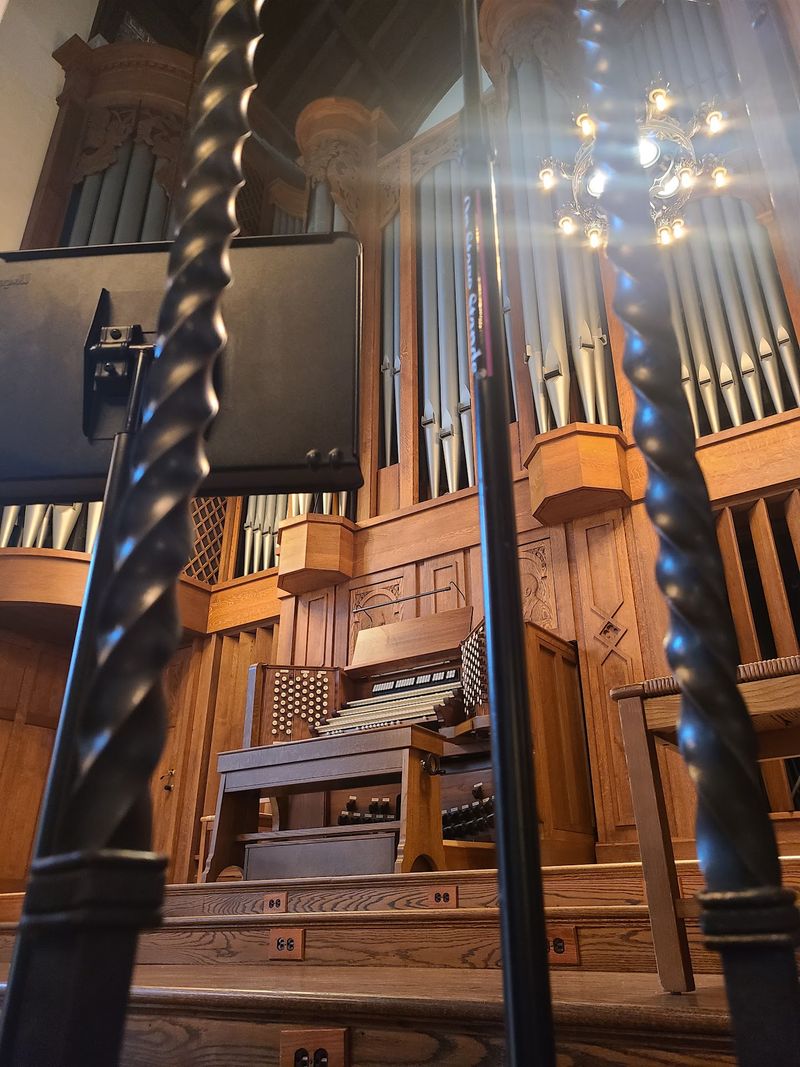
Four thousand four hundred sixteen pipes. That is the count inside the chapel’s main organ, built by the Austin Organ Company of Hartford and installed in 1971, with the console updated in 2013.
The pipes range wildly in size. Some stand as tall as trees while others are no bigger than a pencil, and the largest, a low CCCC, measures 32 feet long and nearly two feet square.
When an instrument that size plays, you feel it as much as hear it. The lowest notes move through the flagstone floor and the wooden pews, which is part of why the chapel has such a reputation among music lovers.
The four-manual organ sits behind casework fabricated in 1986, shaped to fit the instrument and inspired by classical French organ cases. A second, much smaller organ also lives in the building, a five-stop mechanical-action instrument by Nicholson and Company in the crypt chapel.
If you want to hear the main organ rather than only look at it, check whether a service or concert falls during your visit. The chapel keeps an active organ program, and hearing the instrument in the room it was voiced for beats any recording.
7. Carved Creatures Hiding Around The Organ
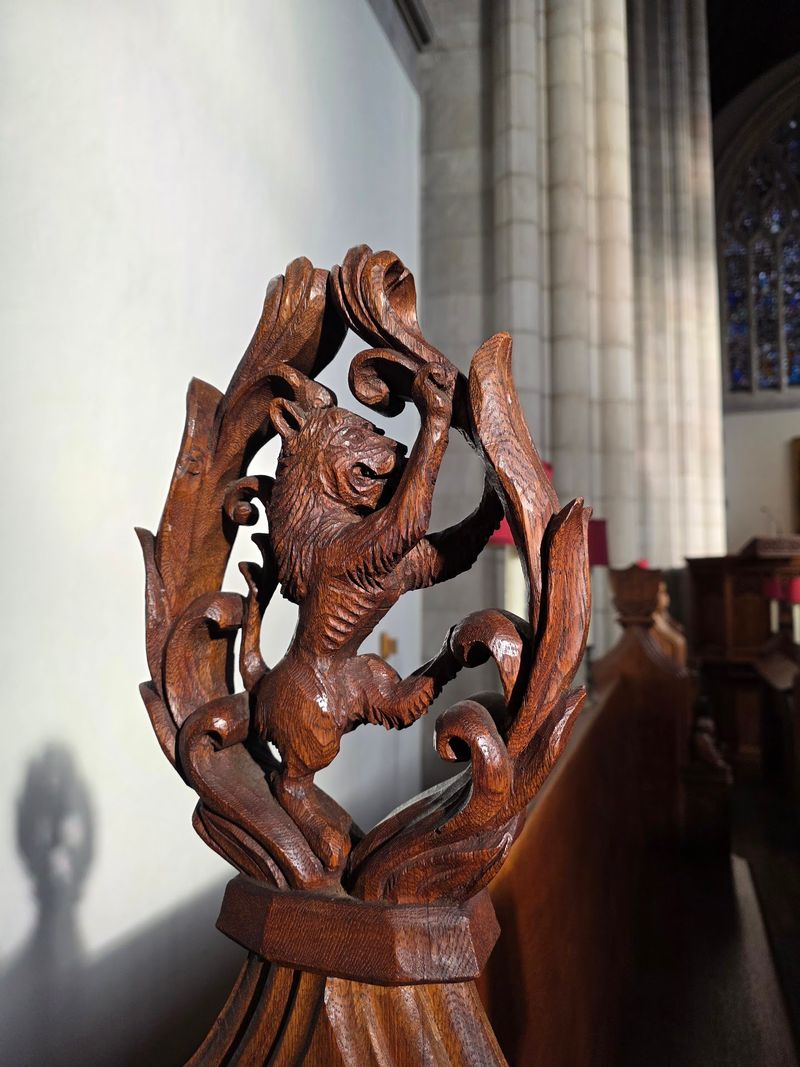
Unicorns, griffins, swallows, angels with trumpets and lyres, and a few cheerful grotesques all hide in the woodwork around the organ. The Trinity Bantam makes an appearance too, blending right in with the mythical figures.
Once the first carving catches your eye, spotting the rest becomes part of the fun. Over the doorways, lintels are carved with images of the workmen who actually built the chapel, a quiet tribute that most visitors walk past without noticing.
The pew and kneeler ends may be the most beloved detail in the whole building. Carved throughout the chapel, they commemorate college traditions, past presidents, and scenes drawn from scripture, and many visitors mention wishing they had stayed longer to examine them.
Other carvings tell stories of pilgrimage, including scenes connected to Chaucer’s The Canterbury Tales. It is a mix of the sacred, the scholarly, and the slightly mischievous, all rendered by hand in wood.
Practical tip for anyone who loves detail: walk one side aisle slowly, then the other, and check the ends of every row. Natural light helps, so a daytime visit works best.
Kids often get more excited about the animals here than anything else in the building, which makes this a surprisingly good stop for families.
8. Nearly A Century Of Music And Ceremony
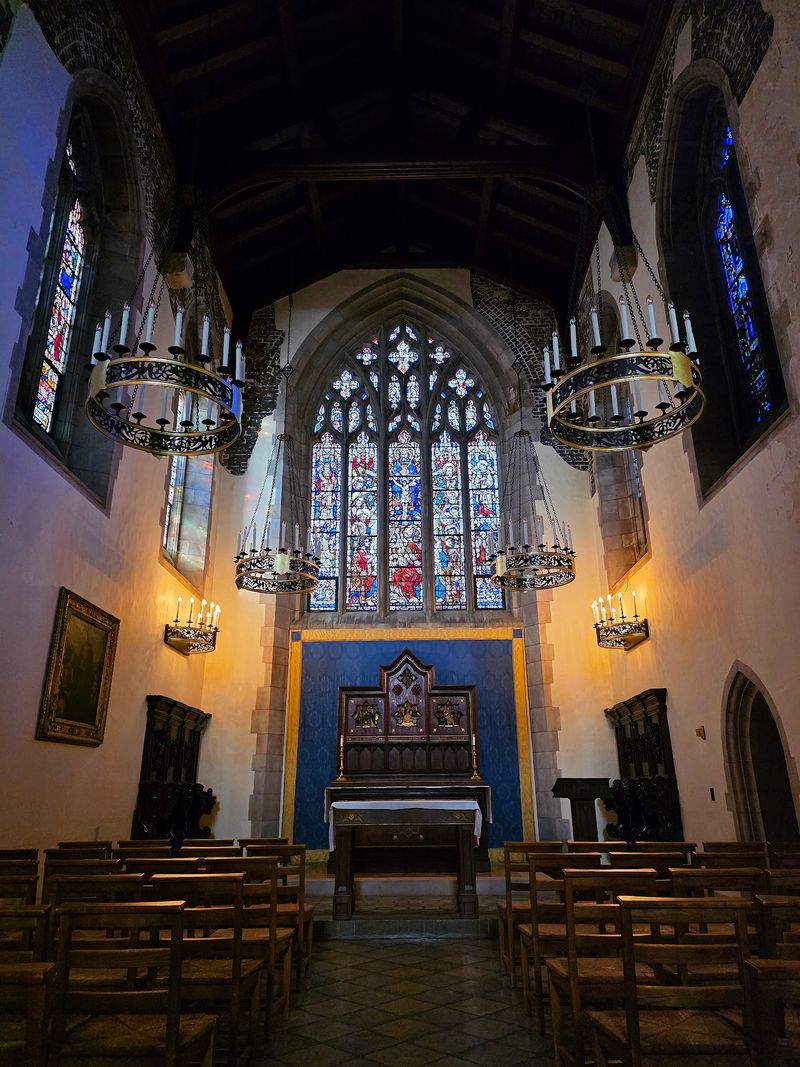
Some buildings feel quiet. This one seems to collect the life of an entire campus.
Trinity College Chapel has served as both a place of worship and a gathering space since its consecration in 1932. Weekly services continue during the academic term, but the chapel also becomes a backdrop for major college traditions, including Baccalaureate and Honors Day.
Generations of students have crossed the same threshold for moments that mark the beginning or end of an important chapter.
Music gives the space another personality. Its soaring interior hosts organ recitals and choral performances, while the long-running Summer Music Series pairs concerts inside with carillon music drifting across the Main Quad afterward.
In December, the Festival of Lessons and Carols fills the chapel with one of Trinity’s most enduring seasonal traditions.
The building also welcomes weddings for couples connected to the college and serves as a setting for memorial gatherings. On quieter days, visitors can simply experience the architecture without a ceremony underway.
That variety is what makes the chapel feel alive rather than preserved. One visit may bring music, another reflection.
Either way, the building remains woven into everyday campus life. Its role keeps changing with the rhythm of campus.