Washington Has A Historic Cathedral That Feels Straight Out Of Old Europe
I once spent a week wandering cathedrals across old European cities. I never expected to find something similar without leaving the country.
Curiosity pulled me through a set of heavy wooden doors on an ordinary afternoon. Everything about the outside world disappeared the moment I stepped past the entrance.
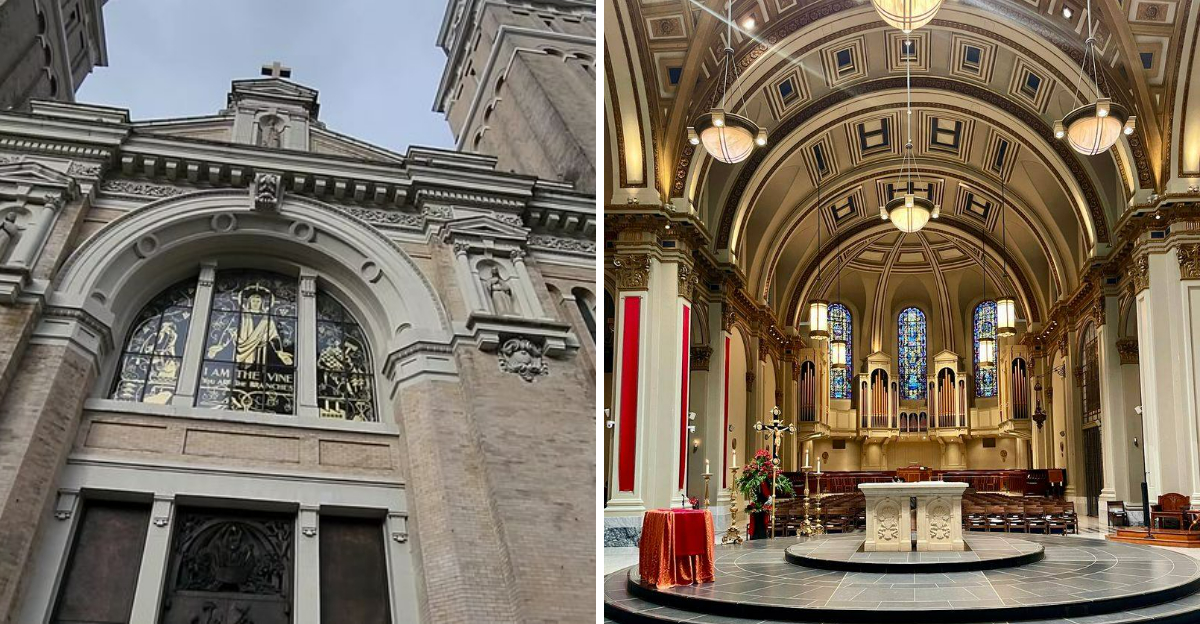
Stone arches stretched high overhead, catching light through stained glass in ways that stopped me mid step. Candles flickered near quiet corners where a handful of visitors sat in complete silence.
Organ music drifted faintly from somewhere I could not immediately locate. I ran my hand along a cold stone wall, half expecting to hear Italian or French spoken nearby.
Washington holds this kind of grandeur in a spot most travelers completely overlook. I stayed far longer than planned, unwilling to break the spell.
Washington clearly borrowed a page from old Europe and made it entirely its own.
Twin Towers That Rise 167 Feet Above First Hill
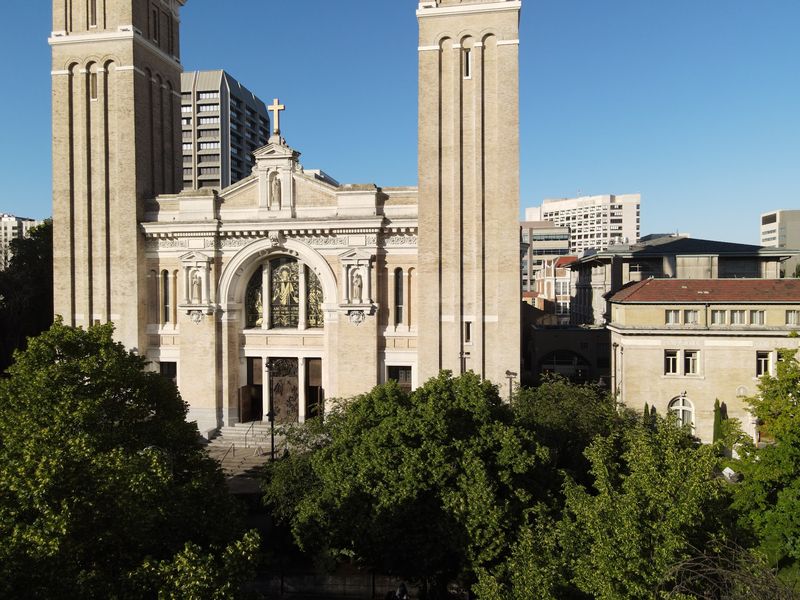
Two stone towers punch straight into the Seattle sky, and they have been doing it since 1907. At 167 feet each, they once towered over everything around them.
Architects Heins and LaFarge skipped the Gothic trend that everyone else adored. They chose a 14th-century Italian Renaissance look instead, aiming for solidity, strength, and permanence.
The building follows a cruciform plan, meaning it is shaped like a cross from above. Red interlocking clay tiles cover the roof, giving the whole thing a Mediterranean glow on sunny afternoons.
Early on, people claimed it looked nearly identical to a church in Belgium, minus the spires.
Modern glass office towers now crowd the neighborhood and rise much higher. Somehow the stone still wins the staring contest, thanks to sheer craftsmanship.
The hilltop site was chosen on purpose, so the building would be seen from far away. It works best at dusk, when the towers catch the last light.
You will find it at 804 9th Ave in Seattle, on First Hill, at St. James Cathedral.
Steps And Brass Doors Borrowed From A Spanish Pilgrimage
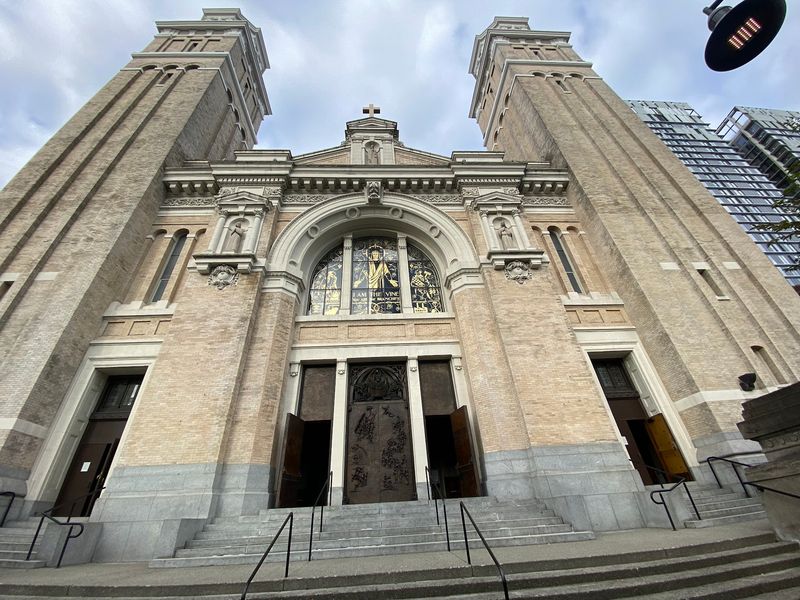
The front steps are a quiet nod to Spain. They echo the famous stairs at the Cathedral of Santiago de Compostela, endpoint of the Camino de Santiago pilgrimage.
That link is not accidental. Saint James is the patron of both cathedrals, and the design leans into the connection with real intention.
An award-winning renovation, fittingly named Portico, reworked this entrance. The name points to the Portico de la Gloria, the main gate at Santiago de Compostela.
New brass doors carry a scallop shell pattern. Pilgrims have used that shell as their symbol for centuries, and it appears here in polished metal.
Look up inside the vestibule and you will spot a thirty-foot light monitor. During the day it floods the space with daylight from above.
After dark, the same feature glows outward like a lantern for the street. It is a clever piece of engineering dressed up as poetry.
Take a slow minute on those steps before heading in. The pause makes the entrance feel earned, which is exactly the point of a pilgrimage door.
A Dome That Vanished In A 1916 Snowstorm
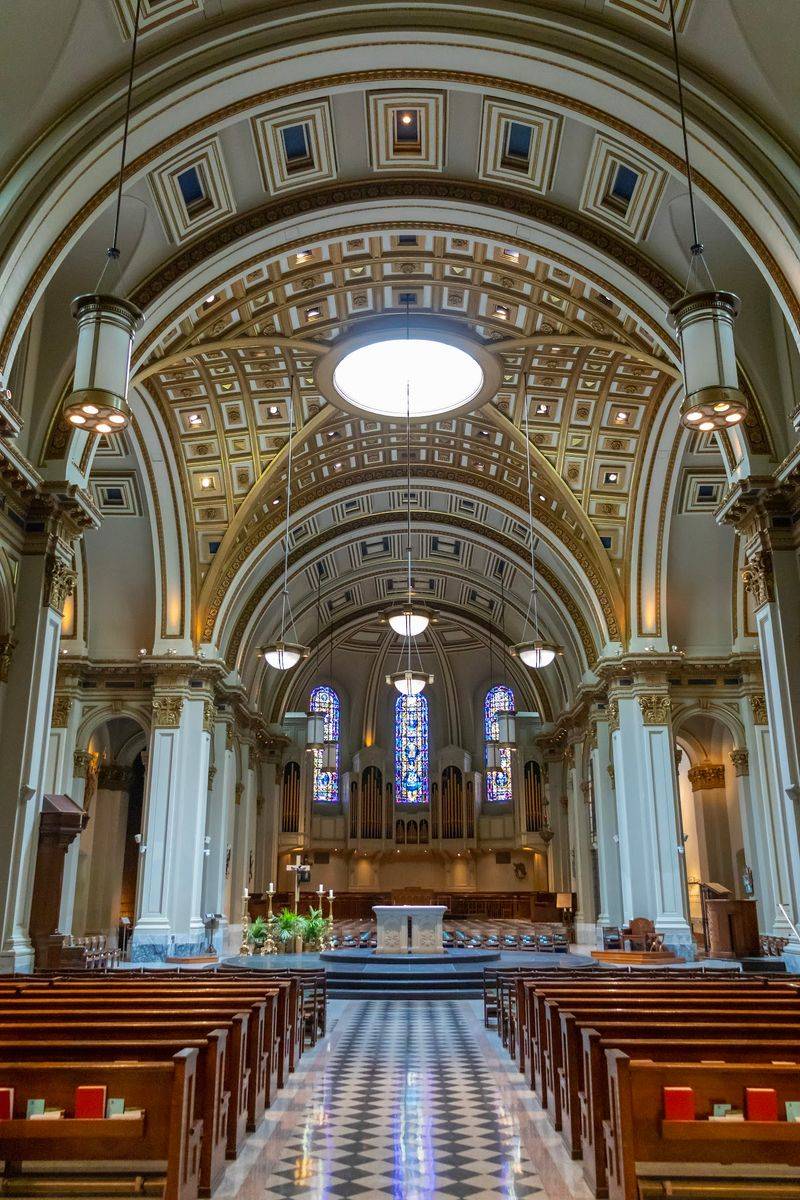
Here is the plot twist nobody expects. A 60-foot dome once crowned this building, and heavy snow brought it down in 1916.
Construction had started back in 1905. The cornerstone ceremony drew more than five thousand curious onlookers, which was a huge crowd for a young city.
Dedication day arrived on December 22, 1907. For nine years, the dome defined the skyline of First Hill.
The collapse forced a total rethink of the interior. The cathedral reopened in 1917 with a dramatically different look inside.
The dome was never rebuilt. In its place came a flat roof with a skylight, which changed the mood of the entire room.
The collapse ultimately led to a redesigned interior centered around natural light. Natural light now falls straight down onto the center of the space in a way no dome could match.
Two more major redesigns followed, in 1950 and again in 1994. Each layer added something without erasing what came before.
In 1984 the Seattle City Council named the building, rectory, and grounds a city landmark. That protection keeps the story intact for the next century.
Stained Glass That Turns Sunlight Into Storytelling
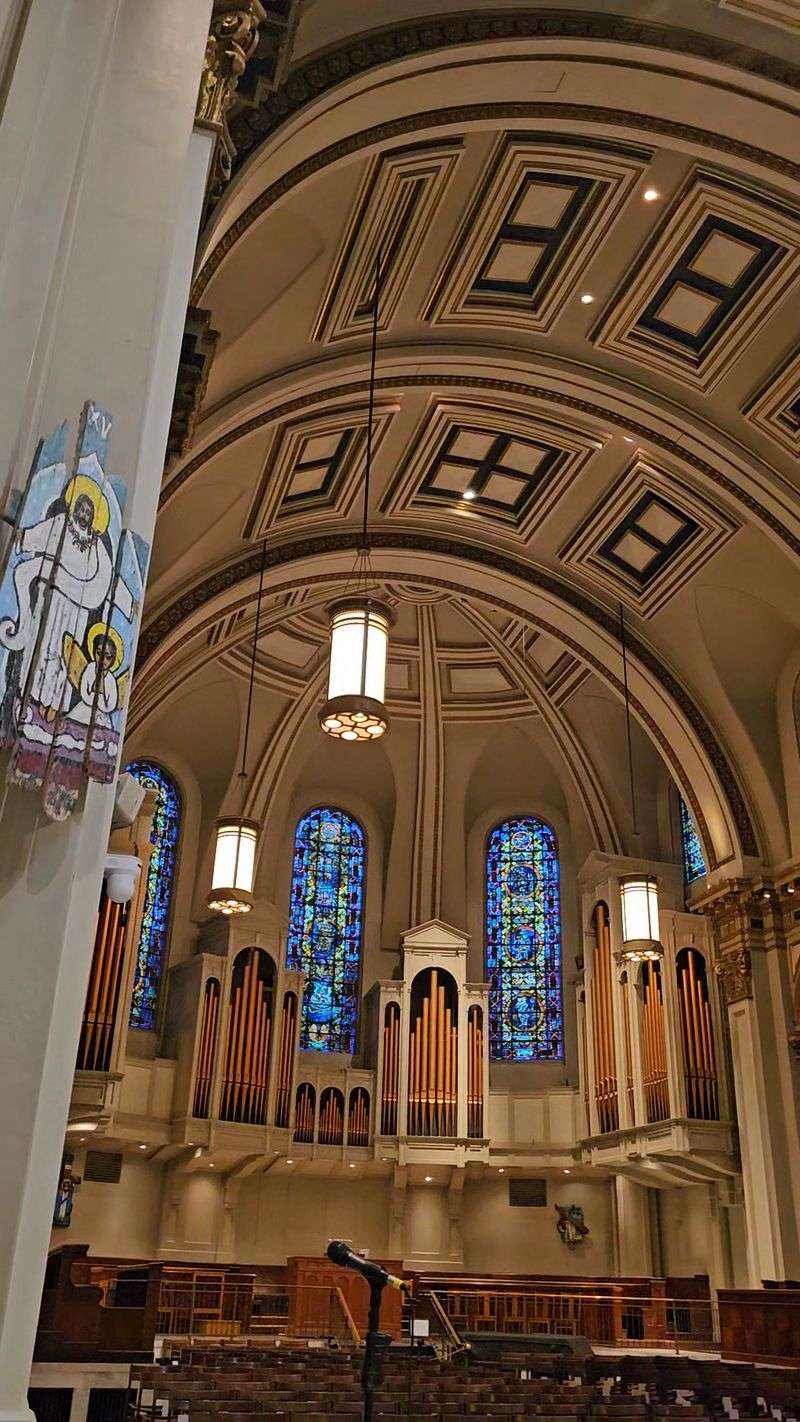
Color does the heavy lifting in here. Rows of stained glass windows wrap the interior and change character with every passing cloud.
Charles Connick created many of them between 1917 and 1920. His panels show the Ten Commandments plus figures of saints and evangelists.
Connick was a master of deep blues, and the effect is unmistakable. Old accounts described the result as a dim religious light, which is a perfect phrase.
In 1994 the German artist Hans Gottfried von Stockhausen added three more windows. They sit in the East Apse and feel noticeably more modern.
Those newer panels show scenes from the life of Jesus. Acts of kindness and the story of baptism take center stage.
Morning and late afternoon give completely different shows. Same glass, different mood, which makes a second visit genuinely worthwhile.
Bring patience rather than a camera flash. Sitting still for ten minutes reveals details you would sprint right past otherwise.
Kids tend to love hunting for animals and small symbols hidden in the panels. It turns art appreciation into a treasure hunt.
Bronze Doors Weighing More Than A Ton
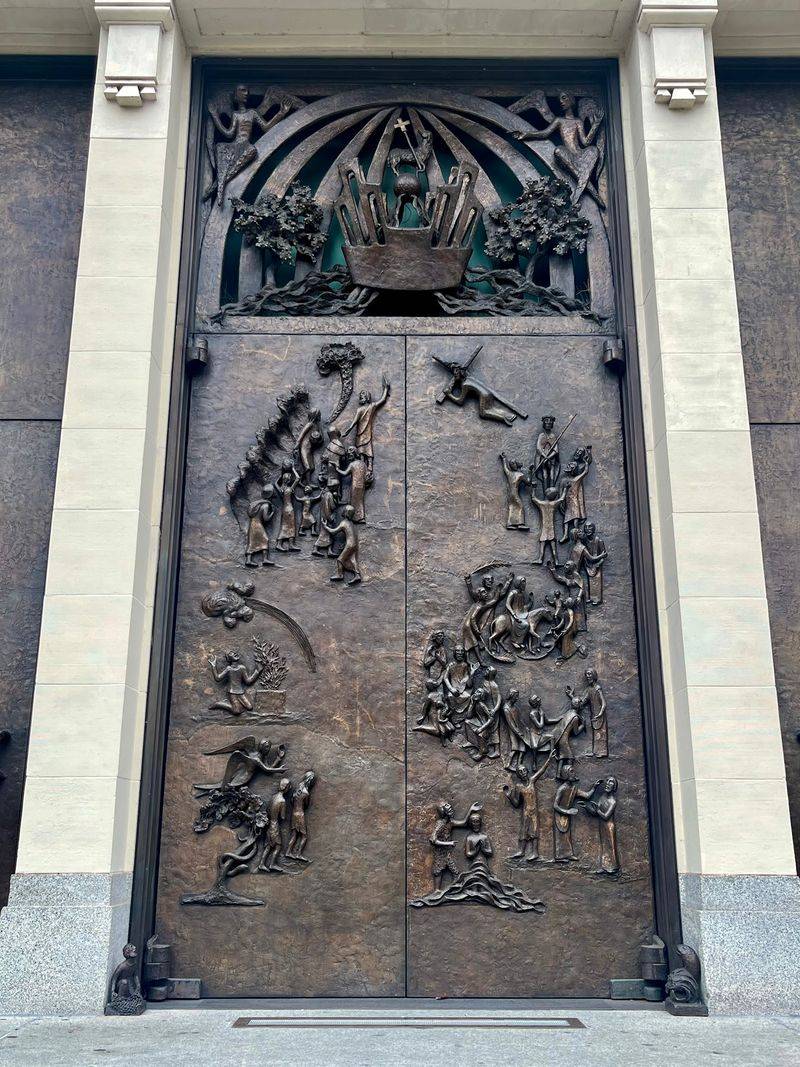
Some doors are just doors. These weigh over a ton and tell an entire story in metal.
German sculptor Ulrich Henn created the ceremonial bronze doors, installed in 1999. The theme is humanity’s pilgrimage toward the heavenly Jerusalem.
Scenes from the Old and New Testaments crowd the panels. Faces, hands, and animals emerge from the surface in surprising depth.
My favorite detail is the smallest one. Henn also made four whimsical bronze doorstops dedicated to the children of the cathedral.
Those doorstops feature saints alongside animals. They sit near the floor, so plenty of adults miss them completely.
Just past the doors, white marble tablets honor parishes and individuals who supported the 1994 renovation. It is a quiet thank-you carved in stone.
Corinthian plaster detailing runs through the interior, added during the 1916 to 1917 rebuild. Those classical columns and curls scream old Europe.
Run your eyes across the bronze from top to bottom before entering. The doors are an artwork, not just a way inside.
The Marble Altar Beneath The Eye Of God
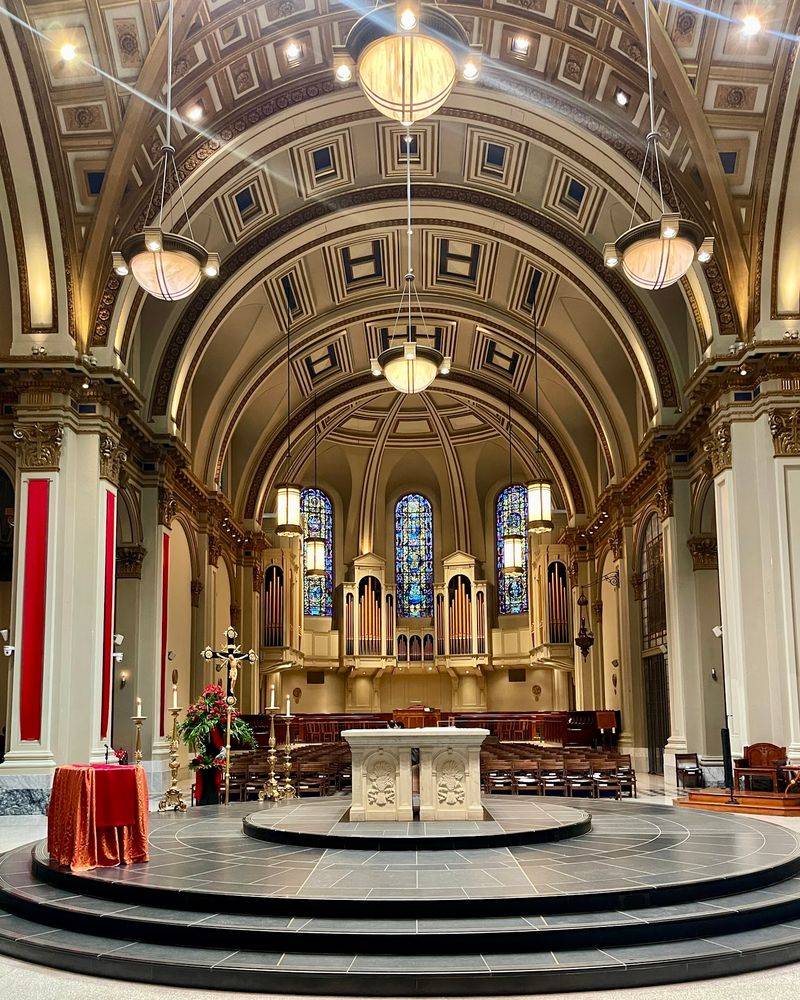
Walk to the middle of the room and look up. A circular skylight sits directly above the altar, and it has a name: oculus Dei, the eye of God.
The white marble altar dates from 1994. It sits at the center of the space, not against a far wall, so seating wraps around it.
Sunlight drops through the oculus and lands on the marble. On a clear Seattle afternoon, the beam looks almost staged.
Panels from the original 1907 high altar were saved and worked into the new one. They carry carvings of wheat and grapes, symbols of the Eucharist.
Beneath the altar rest relics of saints, following an ancient Church tradition. Saints Adeodatus, Fortunata, and Boniface are included.
A relic of St. Frances Xavier Cabrini joined them in 1994. She was the first American citizen to be canonized.
The in-the-round seating changes how the room feels. Instead of watching from behind rows, you are part of a circle.
Stand there quietly for a moment. The light does more explaining than any guidebook could.
A Candlelit Marian Chapel Built For Stillness
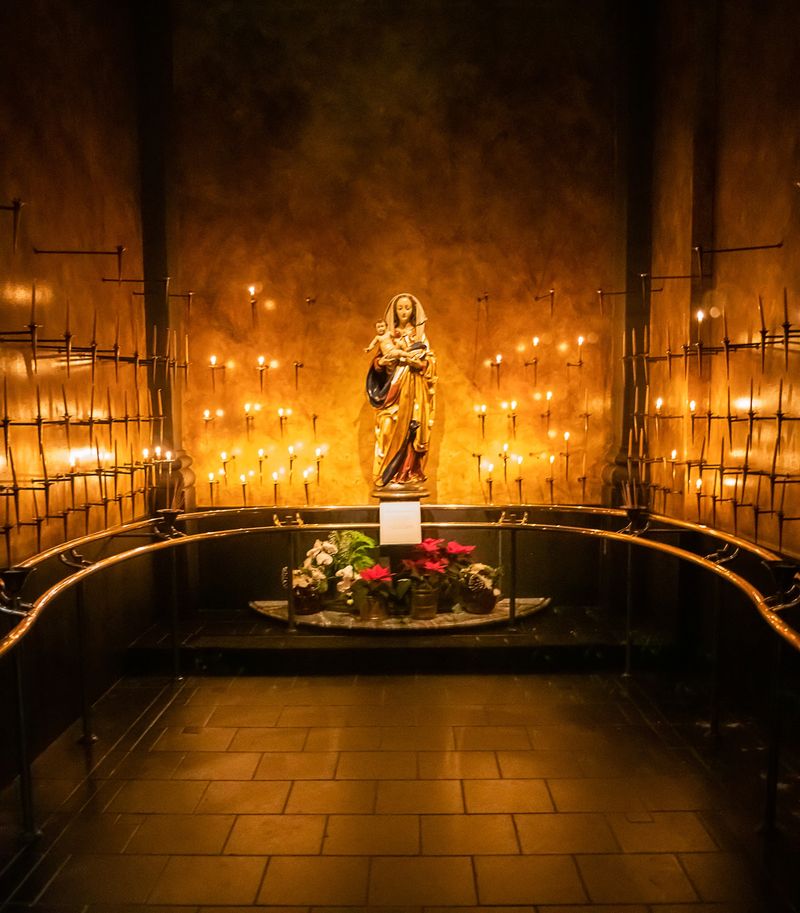
Off to one side sits the softest room in the whole building. The Marian Chapel was designed for solitude, and it delivers.
One hundred eighty beeswax candles line the walls in bronze votive holders. The glow is warm, steady, and honestly hard to walk away from.
Beeswax has a faint sweet scent that fills the small space. Combined with the flicker, it feels centuries older than it is.
People come here to light a candle and sit for a while. Some pray, some just breathe, and nobody rushes anyone.
The chapel proves that grand buildings need small rooms too. Scale can inspire awe, but intimacy is what makes people return.
Compared to the bright main space, this corner feels like a whispered conversation. The contrast between the two is part of the experience.
Photographers love the golden light, though a phone rarely captures it well. Trust your eyes on this one.
Give yourself five unhurried minutes. It is the part of the visit most people remember weeks later.
Two Pipe Organs And Bells Cast In Holland
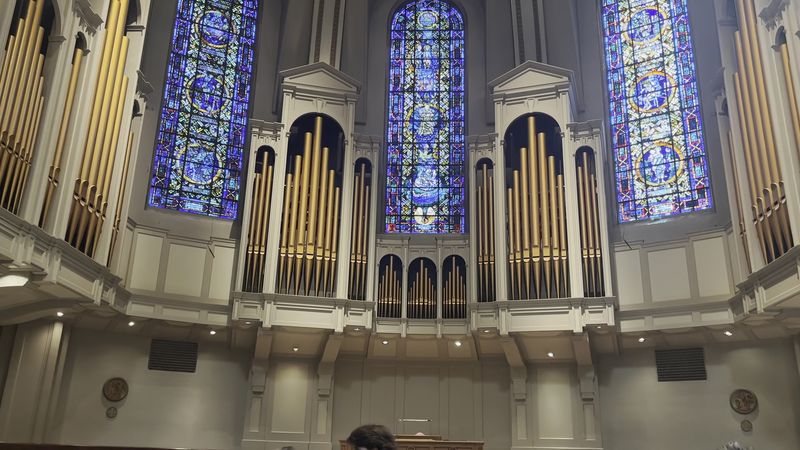
Sound is the sneaky highlight here. Two enormous pipe organs share the building, and together they form the largest instrument in Seattle.
The older one is a Hutchings-Votey from 1907 with more than 3,000 pipes. It has been working since the year of dedication.
In 2000, a new Rosales organ was installed to complement the cathedral’s original instrument. Rather than replacing the original, it partners with it.
Having two instruments opens up a huge range of music. Everything from thundering chords to delicate melodies fits the room.
Acoustics do the rest. Music, including medieval French harmonies, fills the space and lingers without any amplification.
The building was shaped for voices long before speakers existed. Choir music floats up and seems to arrive from everywhere at once.
Bronze bells cast in Holland in 1994 hang in the towers. Each one is named after a saint, and they call the community to services.
Timing a visit near a scheduled service or concert is smart. Hearing the organ live transforms the entire building.
Limestone Saints Guarding The West Facade
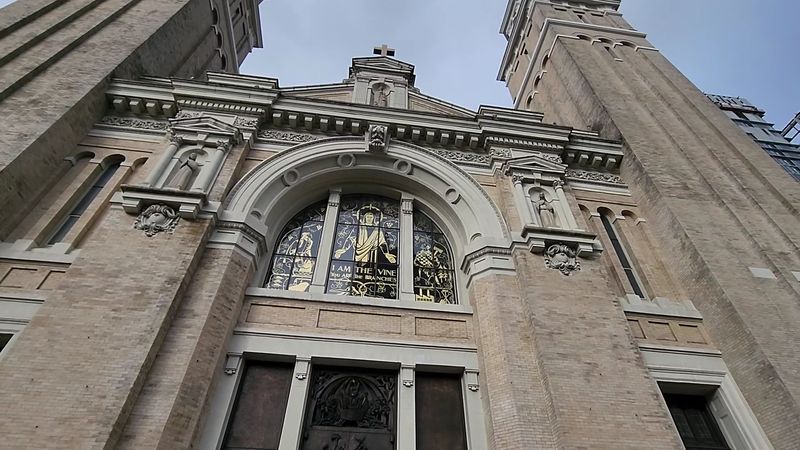
Before stepping inside, give the west facade a proper look. Three niches hold limestone statues, and each one carries real meaning.
At the top stands St. James the Greater. He is patron of both the cathedral and the Archdiocese of Seattle.
Below him is St. John Vianney, a French priest known as the patron saint of parish priests. His presence ties the building to European tradition.
Beside him stands St. Frances Xavier Cabrini, the first American citizen to be canonized. She worked in Seattle, so the local connection is genuine.
All three statues were added during the 1950 renovation. They fill spaces that had waited decades for the right figures.
Practical notes help here. Entry is free, doors open at 7:30 AM daily, and there is no public access to the towers.
Paid parking sits nearby, and the walk from downtown transit takes about ten minutes. A small bookshop off the courtyard is worth a peek.
Come on a weekday for the quietest visit. Then look up one more time on your way out.