8 Historic Connecticut Beach Towns That Haven’t Lost Their Charm
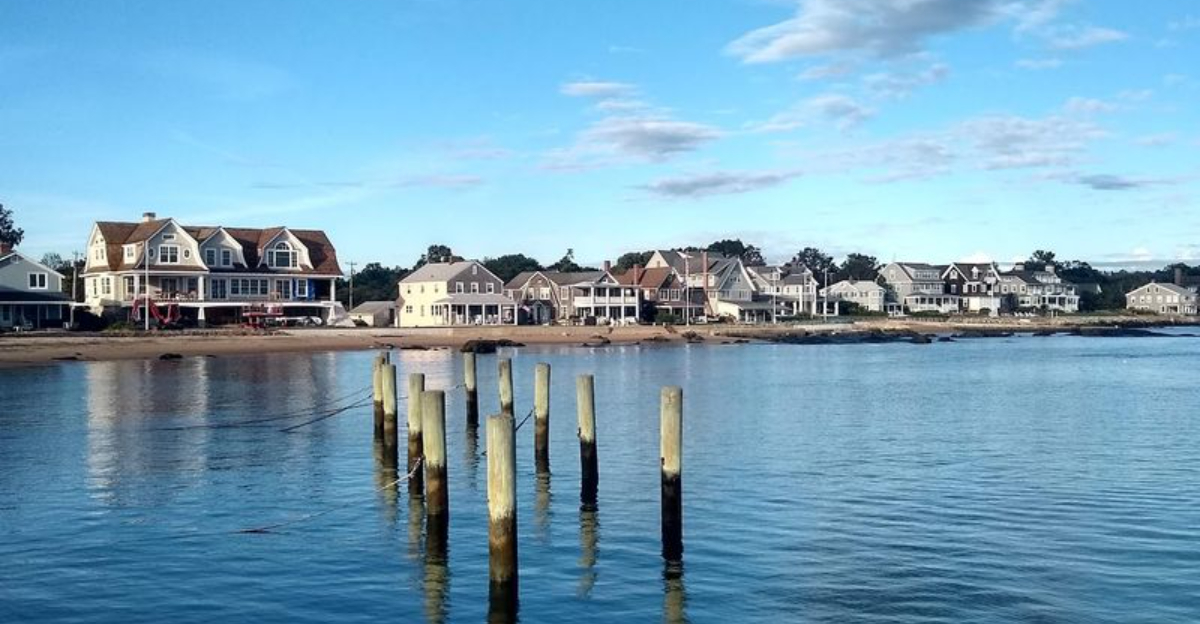
Seaside towns can change quickly once everyone discovers them. These places somehow kept the parts that made people fall for them in the first place.
Historic streets still carry traces of earlier eras, while the shoreline gives each town its own easygoing rhythm. Connecticut has several beach communities where old character still feels like part of everyday life rather than decoration.
That balance is what makes them worth lingering over. You can spend part of the day near the water, then turn inland and find architecture that gives the town a completely different mood.
Nothing feels frozen in time. People live here, shops evolve, and summer still brings plenty of energy.
Yet the past never disappears behind all of that activity. The result feels wonderfully natural.
These beach towns have changed just enough to stay lively without sanding away the personality that made them memorable in the first place.
1. Fairfield, Connecticut

History feels surprisingly close here. So does the shoreline.
Fairfield was settled in 1639, and traces of its long past remain easy to spot around town even today. A smart first stop is the Fairfield Museum and History Center, where changing exhibits and local stories give useful context before exploring farther.
The museum stands at 370 Beach Road and also anchors the historic Museum Commons near the Town Green.
Older homes add another layer to the visit. The Burr Mansion, rebuilt after the Revolutionary War, remains part of the town’s historic landscape.
Farther out, the circa-1750 Ogden House at 1520 Bronson Road offers a look at colonial family life inside a classic saltbox home. It opens on Sunday afternoons from June through September, while its outdoor garden remains accessible year-round.
The coast gives the day a completely different feel. Fairfield maintains five public beaches on Long Island Sound, including Jennings Beach and Penfield Beach.
Jennings is the larger, busier option, with accessible facilities and a playground nearby. Penfield has its own family-friendly setup and plenty of room for a relaxed waterfront break.
Beach parking rules change with the season, so current sticker requirements and daily fees are worth checking before heading out. That mix makes it easy to shift from old buildings to salt air without turning the outing into an itinerary.
Getting here without a car is practical, too. Metro-North’s New Haven Line serves three stations in town, giving visitors several convenient arrival points for a history-and-shoreline day trip.
2. Milford, Connecticut
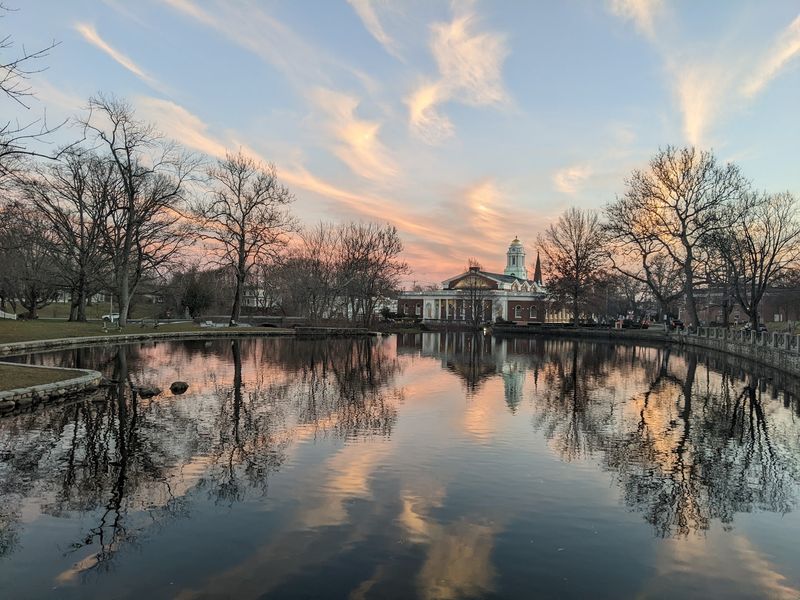
History and beach time make an unusually good pair here. The best part is how easily you can enjoy both.
Milford was settled in 1639 and has more than 17 miles of shoreline, the longest coastline in the state. Its historic center grew around the green and Wepawaug River, and the area remains easy to explore on foot today.
The long downtown green gives the city an old-fashioned center, while footbridges and small local businesses make wandering feel effortless. The harbor is close enough to reach without turning the outing into a drive-heavy day.
Silver Sands State Park brings the biggest change of scenery. Its boardwalk passes coastal marshland before reaching a wide beach with views toward Charles Island.
At low tide, a sandbar appears between the shore and island, but crossing it can be dangerous as tides change. Seasonal wildlife restrictions may also limit access.
Nearby Walnut Beach has a more neighborhood-like atmosphere, making it an easy second waterfront stop. Local history gets another spotlight at the Milford Historical Society, where three historic houses share one property and open seasonally.
For the main beach stop, head to 1 Silver Sands Parkway, Milford, CT 06460. Downtown dining is casual and varied, with plenty within walking distance of the green.
Summer evenings can get busy, so an earlier arrival makes the experience more relaxed. Metro-North’s New Haven Line stops in central Milford, making a car-free visit realistic.
The mix of shoreline and history works especially well for a simple day trip.
3. Guilford, Connecticut
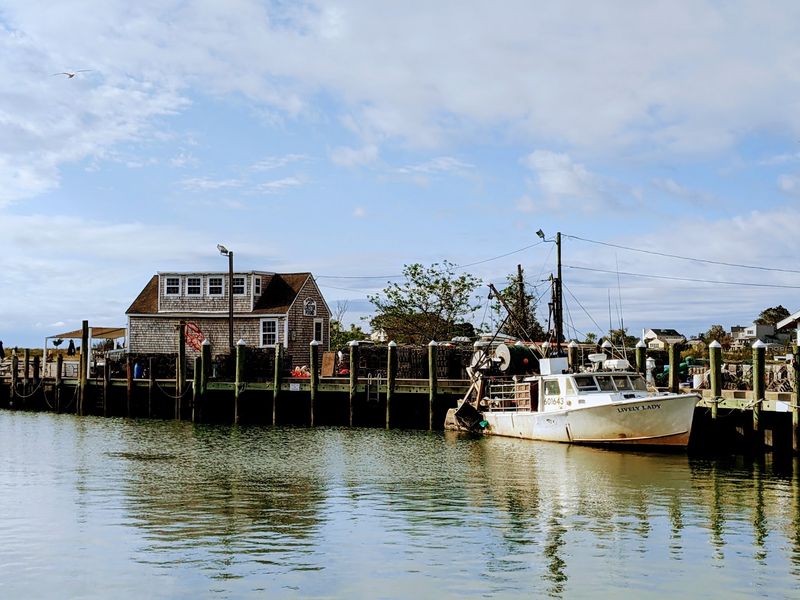
Guilford’s town green is one of the largest in New England, and it has been the center of town since 1639. The green features open lawns, shade trees, and walking paths surrounded by historic buildings and small shops.
The town’s biggest claim to fame is older still. The Henry Whitfield State Museum, at 248 Old Whitfield Street, Guilford, CT 06437, occupies a stone house built in 1639, widely recognized as the oldest house in the state and the oldest stone house in New England.
Thick walls, a steep roof, and small leaded windows give a real sense of how early settlers built for survival.
Two other 18th-century homes, the Hyland House and the Thomas Griswold House, are also open seasonally and sit within a short drive or a long walk of the green.
Water access comes at Jacobs Beach, a modest town beach with a playground and picnic tables that suits families with young kids more than sunbathers looking for miles of sand. Chaffinch Island Park offers rocky shoreline, sunset views, and quiet picnic spots.
The marina district along Whitfield Street leads down to the water and makes a pleasant walking route from the green.
Guilford is a Shore Line East and Amtrak stop, and Exit 58 off I-95 puts you close to the center. Plan a visit around the town’s long-running arts and crafts events in summer if you like a livelier atmosphere, or come midweek in early fall when the green is quiet and the light is best.
4. Westbrook, Connecticut
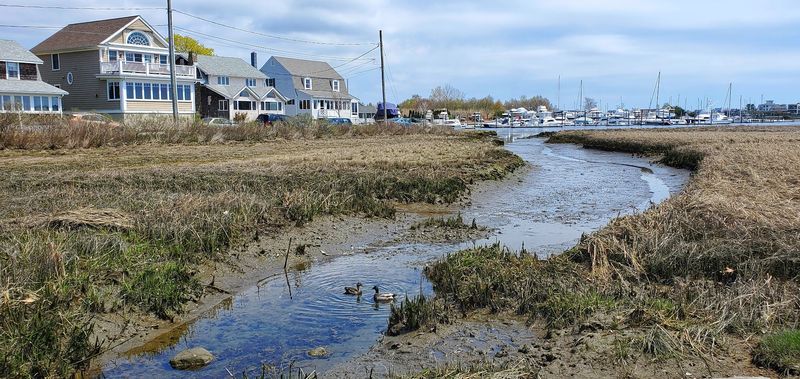
Quiet is the right word for Westbrook. This small shoreline town of roughly 6,700 residents keeps a slower pace than its better-known neighbors, and that is exactly the appeal for people who want salt air without crowds.
Salt marsh, tidal rivers, and narrow beaches define the coast here. The Menunkatuck and Patchogue Rivers empty into the Sound, and marinas along them fill with small boats through the warm months.
Town Beach is on Seaside Avenue, and during the 2026 season residents enter free while non-residents can purchase daily or seasonal passes. What is easy to enjoy freely is the drive and walk along the shore roads, where cottages, marsh views, and osprey nests appear one after another.
Westbrook’s history stretches back to the 1600s as part of Saybrook Colony, and it became its own town in 1840. Shipbuilding once shaped the local economy, and the boat traffic along the rivers still nods to that past.
Shoppers know Westbrook for its large outlet center along the highway corridor, which gives the town a practical side that pairs oddly but pleasantly with its marsh landscapes.
Dining leans toward seafood shacks and family restaurants, with picnic tables and paper baskets more common than tablecloths. Service moves quickly, portions run generous, and lines at midday can be long in July.
Shore Line East stops in town, and Exit 65 off I-95 brings you in. Bring bug spray if you plan to walk near the marshes at dusk.
5. Madison, Connecticut
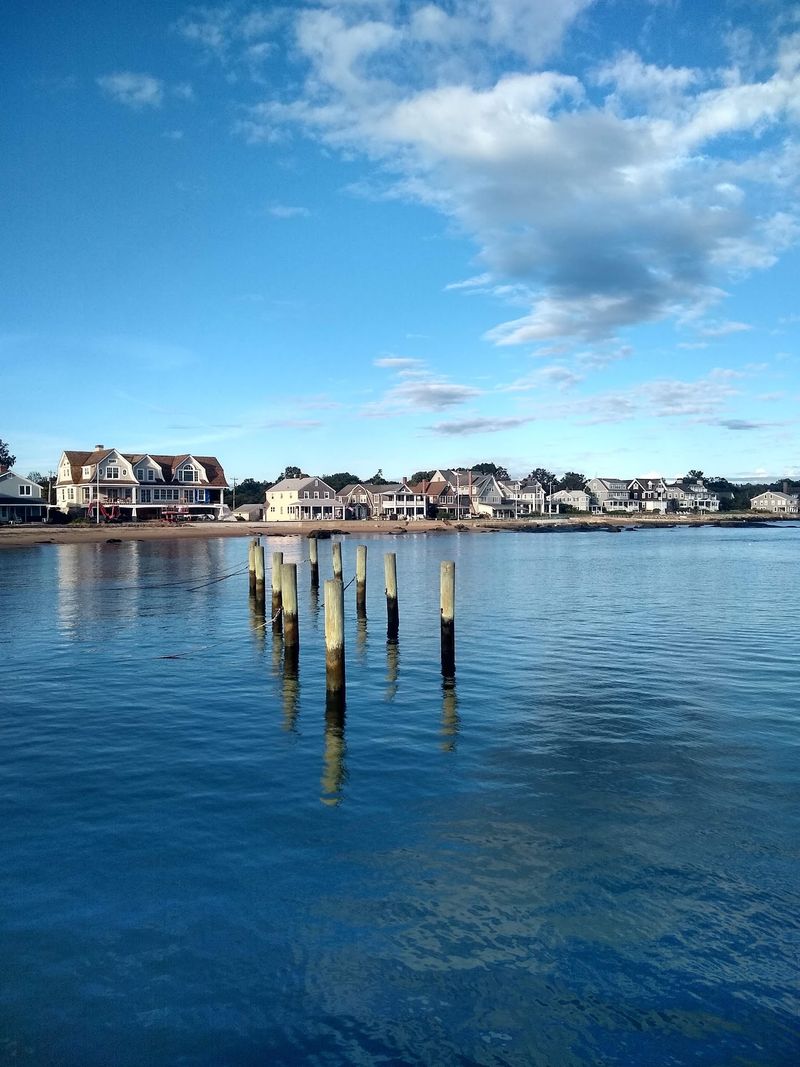
Beach days can take over quickly here. The shoreline makes that hard to resist.
Hammonasset Beach State Park is the big draw, with more than two miles of sandy beach and the distinction of being the state’s largest shoreline park. Boardwalks carry visitors above fragile coastal areas, while the Meigs Point Nature Center adds an educational stop away from the sand.
Paths offer another way to explore, and a large seasonal campground makes overnight stays possible.
Hot summer weekends can bring heavy crowds, so arriving earlier can make the day easier. Connecticut-registered vehicles enter without a parking fee, while nonresident vehicles are charged seasonally.
The main park entrance is at 1288 Boston Post Road, Madison, CT 06443.
Town feels much quieter once you leave the beach behind. Boston Post Road forms the center of a compact shopping district where an independent bookstore and small businesses give visitors a reason to linger.
The green and its traditional New England architecture create a completely different mood from the waterfront.
History appears here, too. The Deacon John Grave House dates to the late 1600s and remains one of the town’s oldest surviving homes.
Its address is 581 Boston Post Road, Madison, CT 06443, with visits offered on a limited schedule.
The town also maintains municipal beaches, though seasonal parking rules apply. Shore Line East stops in town, making a car-free arrival possible.
It feels wonderfully simple. Late September brings a calmer version of the coast, after the busiest stretch of summer has passed.
6. Old Saybrook, Connecticut
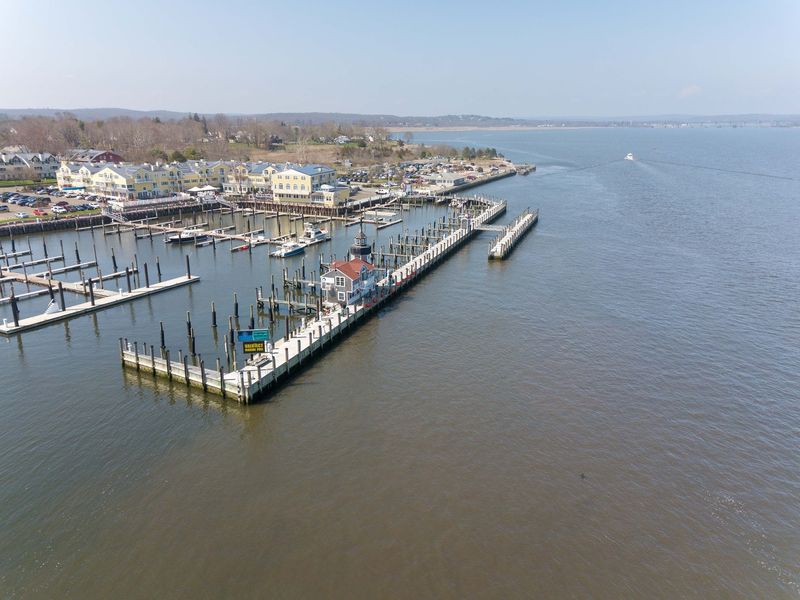
The Connecticut River meets Long Island Sound at Old Saybrook, and that meeting point shaped everything about the town.
English settlers arrived in 1635, making this one of the earliest permanent settlements in the state, and it was briefly the original home of what became Yale University.
Saybrook Point is where the geography really shows itself. A walkway along the water gives long views toward two lighthouses, Lynde Point and Saybrook Breakwater, and a mini-golf course and marina keep the area busy in summer.
Main Street runs from the town green down toward the water and holds a mix of shops, bakeries, and restaurants inside older buildings. Walking the length is comfortable, and side streets lead to residential blocks with 18th and 19th-century homes.
Music history fans should note the Katharine Hepburn Cultural Arts Center at 300 Main Street, Old Saybrook, CT 06475, a restored 1911 town hall theater that hosts concerts, films, and live performances year-round.
Harvey’s Beach, at 29 Plum Bank Road, Old Saybrook, CT 06475, is the town’s public beach, with a gentle slope, calm water, and seasonal parking fees for non-residents. Low tide exposes a wide flat expanse that kids tend to love.
Fort Saybrook Monument Park at the point interprets the 1636 fort site with markers and open lawn, and it doubles as a good spot for a picnic.
Amtrak and Shore Line East both stop here, and the station sits close enough to the center to make arriving by rail practical for a day trip.
7. East Lyme, Connecticut

The water steals the show here. Better yet, it comes with room to explore.
A good day can begin beside Niantic Bay, where the 1.1-mile boardwalk stretches between Cini Memorial Park and Hole-in-the-Wall Beach. The route stays close to the water and offers views across the bay, with benches along the way for an easy pause.
Main Street sits just inland, so it does not take long to trade the shoreline for a browse through local shops or a stop at the village’s used bookstore.
The town’s story reaches much farther back than its coastal vacation feel suggests. Settlers arrived in the area during the 1600s, while East Lyme officially became its own town in 1839 after land was separated from Lyme and Waterford.
For a bigger beach day, Rocky Neck State Park changes the scenery again. Its broad stretch of sand faces Long Island Sound, while paths lead toward salt marsh views and quieter corners of the park.
Camping is available seasonally, making it possible to turn a quick visit into an overnight escape.
One of the park’s most memorable features is the Ellie Mitchell Pavilion. Built in the 1930s by Works Progress Administration crews, the massive cobblestone structure rises above the shoreline and remains a landmark in its own right.
The park entrance is at 244 West Main Street, Niantic, CT 06357. Weekdays are a smart choice when you want a calmer beach experience.
Comfortable shoes make it easier to combine the boardwalk with the park trails. Stay toward evening, and the bay can deliver a beautiful finish.
8. Stonington, Connecticut
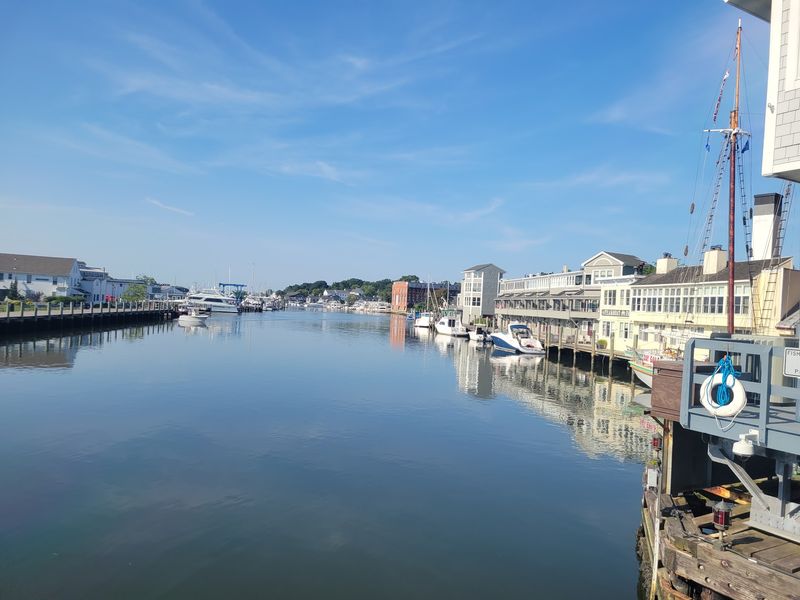
Stonington Borough may be the most complete historic seaside village in the state. A narrow peninsula holds street after street of colonial, Federal, and Greek Revival houses, and the whole borough is small enough to explore entirely on foot.
Working boats still tie up here. Stonington is home to state’s last commercial fishing fleet, and the docks give the village a practical, salt-stained character that no amount of tourism has smoothed away.
At the tip of the point stands the Old Lighthouse Museum, at 7 Water Street, Stonington, CT 06378. Built in 1840 from stone, it was the first government-operated lighthouse in the state, and climbing to the top rewards you with views of three states on a clear day.
The museum operates seasonally, so check hours before making the trip.
DuBois Beach sits right beside the lighthouse, a small pocket of sand with a modest admission fee and a very short walk from parking. It will not remind anyone of Hammonasset, but the setting, with boats passing and stone breakwaters framing the water, is hard to beat.
Water Street forms the commercial spine, lined with galleries, bookshops, bakeries, and restaurants inside old storefronts. Sidewalks are narrow and streets are tight, so parking takes patience on summer weekends.
Founded in 1649, the town also holds a genuine military footnote. Residents successfully repelled a British naval attack in August 1814, an event the borough still commemorates.
Neighboring Mystic sits just a few minutes west, which makes it simple to combine a quiet village morning with a busier afternoon.