10 North Carolina Nature Playgrounds With Treehouses, Trails And Endless Adventure
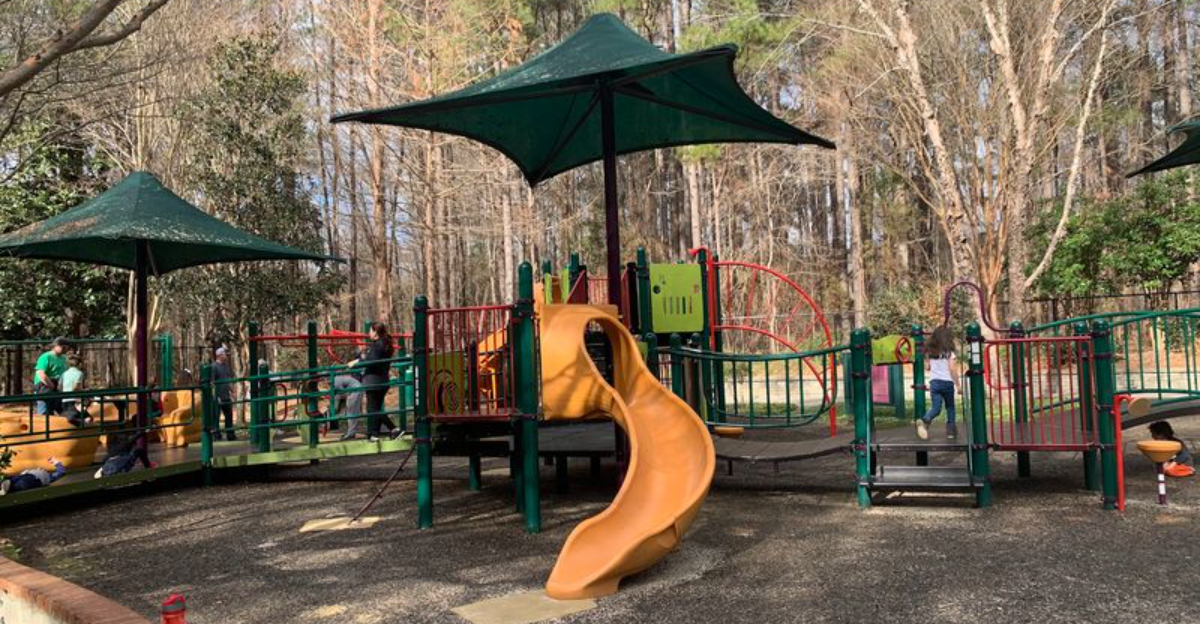
Calling these places “playgrounds” feels a little dishonest.
A playground is where you push a swing for ten minutes and start thinking about snacks. These North Carolina spots can turn a simple family outing into something much closer to an outdoor mission.
Kids disappear into the experience almost immediately.
The landscape matters as much as anything built on it, which means the fun keeps moving instead of staying fenced inside one small patch of equipment. A path can become part of the game.
The woods can steal the show. Suddenly, the grown-ups who expected a quick stop are checking the time and wondering how the afternoon vanished.
That is exactly why these places stand out.
They give children room to explore without making everything feel preplanned or overly polished.
All are operating in 2026, though weather and seasonal schedules can affect access.
So yes, technically you are taking the kids to a playground.
Just do not promise anyone you will be home soon.
10. Hideaway Woods, Durham
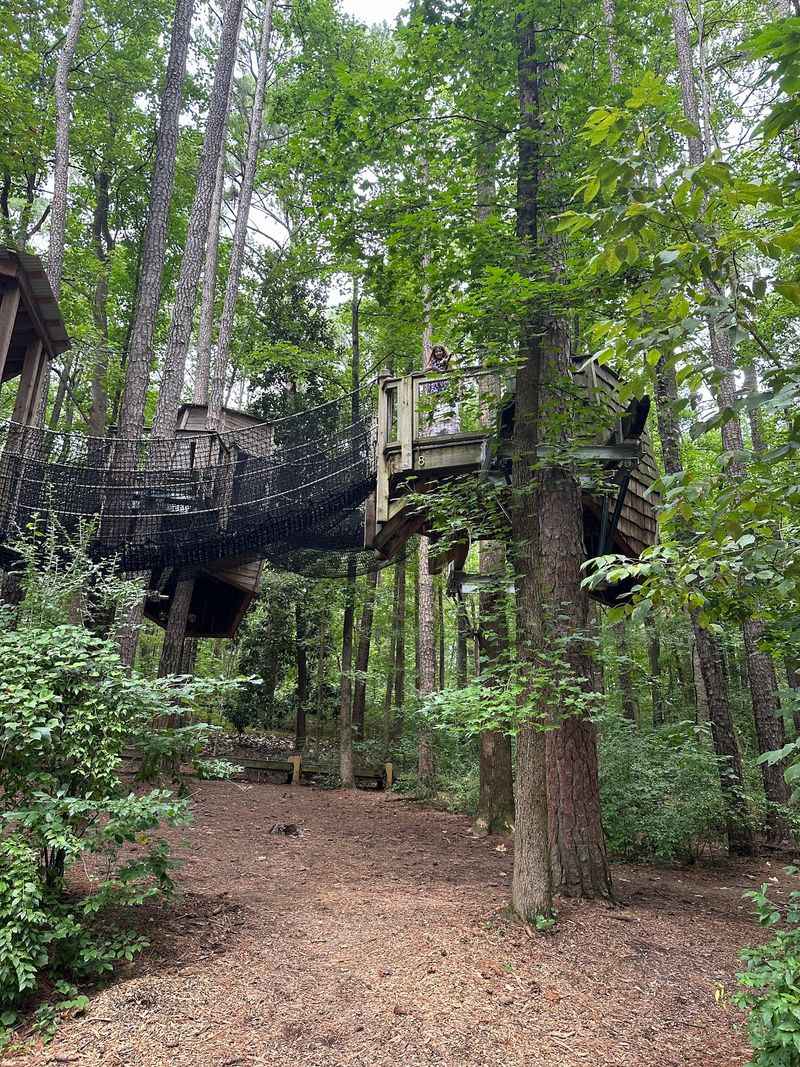
Eight handcrafted treehouses make Hideaway Woods one of the strongest matches on this list.
The two-acre outdoor exhibit at Durham’s Museum of Life and Science features elevated structures connected by bridges, nets, ladders, and stairways. Some viewpoints rise about 20 feet above the ground, with an accessible gangway also available.
Two slides offer a faster route back down. Below the treehouses, an accessible recirculating freshwater stream gives children a place to wade and experiment with moving water, while a nearby changing area makes damp clothes easier to handle.
Younger visitors have their own fenced Young Explorers section with scaled-down treehouses, a hillside slide, seating, and space designed for ages six and under.
Hideaway Woods is included with museum admission at 433 W. Murray Avenue and currently follows the museum’s daily 10 a.m. to 5 p.m. schedule, with members admitted at 9 a.m.
Between the treehouses and stream, this is one place where packing spare socks remains a very sensible idea.
9. Treehouse Trek at the North Carolina Zoo, Asheboro
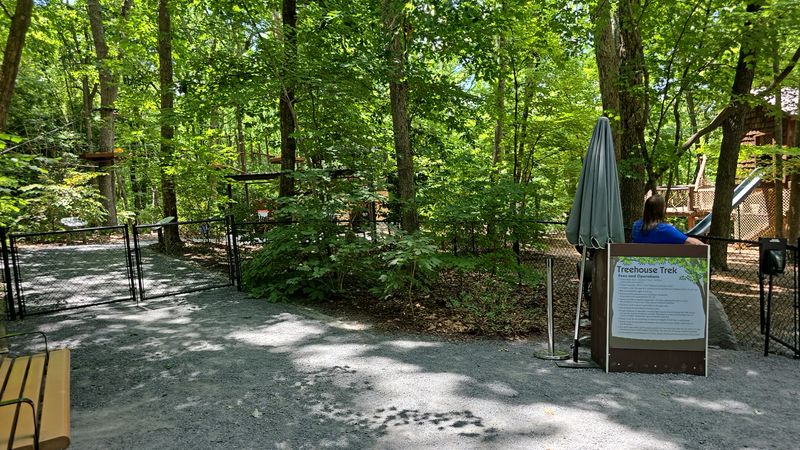
Whimsical treehouses, rope bridges, and an oversized play nest give Treehouse Trek a completely different rhythm from walking between animal habitats.
The attraction sits in the Africa region of the North Carolina Zoo at 4401 Zoo Parkway and is included with regular zoo admission rather than requiring a separate attraction ticket.
Portions are wheelchair accessible, and the play area was designed to offer activities for visitors with different abilities. Treehouse Trek is recommended for children ages three and older, while children younger than six must be accompanied by a ticketed adult who is at least 16.
Climbing elements and slides carry a 250-pound maximum weight, and secure footwear is required, with closed-toe sneakers listed as the best choice. Strollers and wagons stay outside the playground in a designated parking area.
The 2026 operating season runs from March 15 through November 15, with Treehouse Trek scheduled from 10 a.m. to 3:30 p.m. The zoo itself opens earlier, so the treehouses work nicely as a movement break once everyone has already covered some ground.
8. Mountain Creek Park Adventure Playground, Sherrills Ford
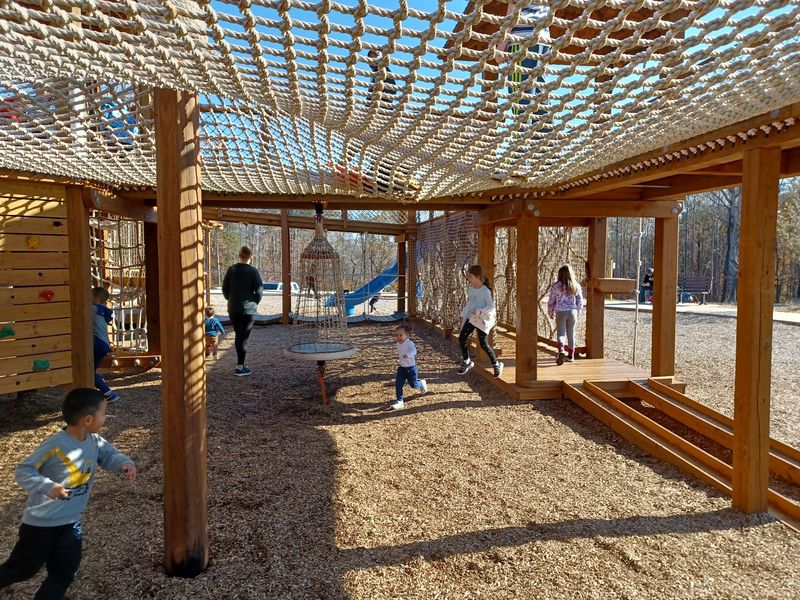
Nearly an acre of treehouse-style play equipment gives Mountain Creek Park a centerpiece big enough to compete with the surrounding trail system.
The adventure playground includes three slides, several rope bridges and skywalks, a climbing wall, a vine climb, a rope swing, a sky hammock, and an ADA-accessible Mountain Laurel tunnel.
A paved loop circles the playground, with benches positioned around it for adults who would rather watch than climb.
The wider park covers 606 acres on the northwestern edge of Lake Norman and contains 19.52 miles of trails, including hiking routes, bike-only sections, and a paved ADA-accessible path leading toward lakeside amenities.
A fishing pier, paddle launch, observation platform, pump track, picnic shelters, and outdoor classroom give families plenty of ways to extend the visit beyond the playground.
Mountain Creek Park is at 6554 Little Mountain Road in Sherrills Ford and opens daily, with seasonal closing times.
During April through September, current park hours run from 8 a.m. to 8 p.m. Admission to the park itself is free.
7. Playing Woods at The North Carolina Arboretum, Asheville
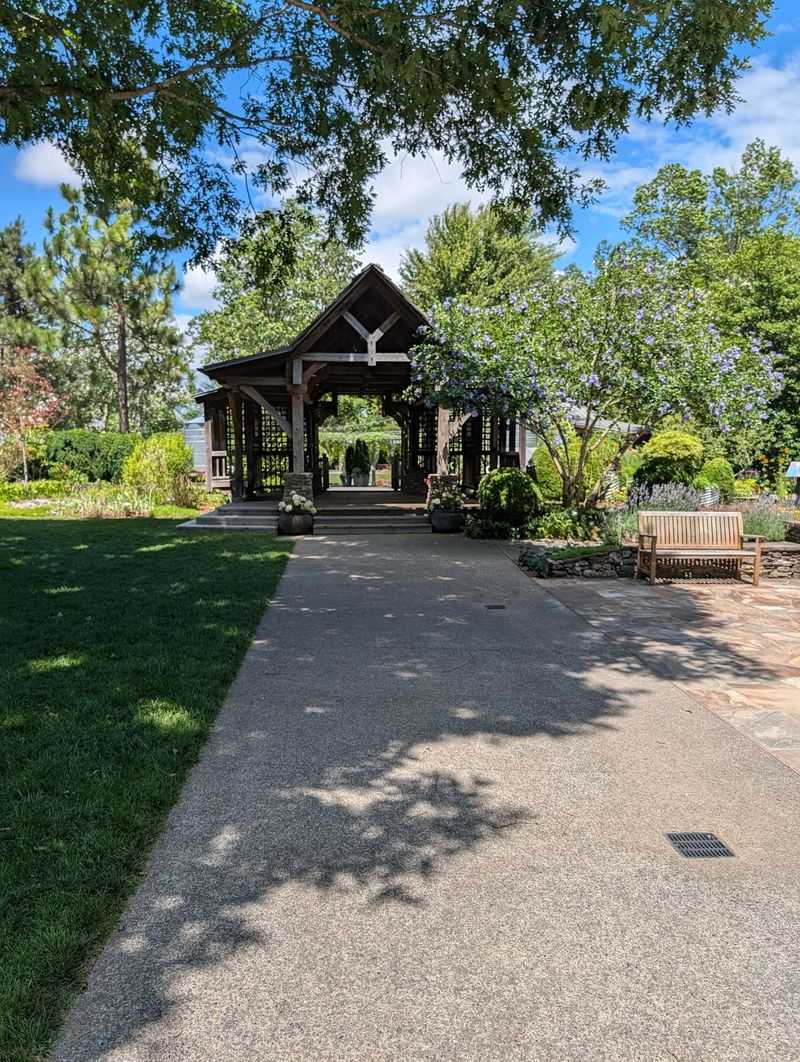
Playing Woods removes most of the instructions and lets children decide what the materials become.
Opened in spring 2025 near the Education Center at The North Carolina Arboretum, the nature-play area uses a wooded setting for open-ended exploration.
Activities include shelter building, stump hopping, and balance-beam walking instead of traditional playground equipment.
That simplicity is deliberate. A branch can become part of a shelter, a stump can become the next step in a balancing route, and the same corner of the woods can support a completely different game on the next visit.
Access follows a special schedule because camps and educational programming sometimes reserve the area. For fall 2026, Playing Woods is available all day Sunday and Monday, after 1:30 p.m.
Tuesday and Thursday, after 6 p.m. Wednesday and Friday, and all day Saturday when no conflicting Arboretum program is scheduled.
The North Carolina Arboretum is based at 20 Frederick Law Olmsted Way in Asheville, so checking the day’s Playing Woods availability before driving over is more useful than assuming the area stays open throughout every general garden hour.
6. Sugg Farm Nature Play Area, Holly Springs

Sensory play shapes this Holly Springs destination from the ground up. The Sugg Farm Nature Play Area is designed for children ages two through ten and divides the experience into several kinds of outdoor play without turning them into rigid stations.
A tactile sand area supports digging and hands-on exploration, while the active-play space focuses on movement and imaginative play. A labyrinth adds a quieter place for concentration before families continue onto the quarter-mile sensory trail.
Along that path, children are encouraged to notice the environment through touch, smell, sound, and observation, including flowers, pinecones, birds, and wildlife moving through the surrounding landscape.
The design specifically emphasizes children of different abilities playing together, making inclusion part of the layout rather than a separate feature added afterward.
Sugg Farm at Bass Lake Park is found at 2401 Grigsby Avenue in Holly Springs, and the current park schedule runs from 7 a.m. until sunset throughout the year.
The larger property also connects naturally with Bass Lake-area recreation, so the nature play area can be the beginning of the outing rather than the entire plan.
5. Chestnut Mountain Nature Park, Canton
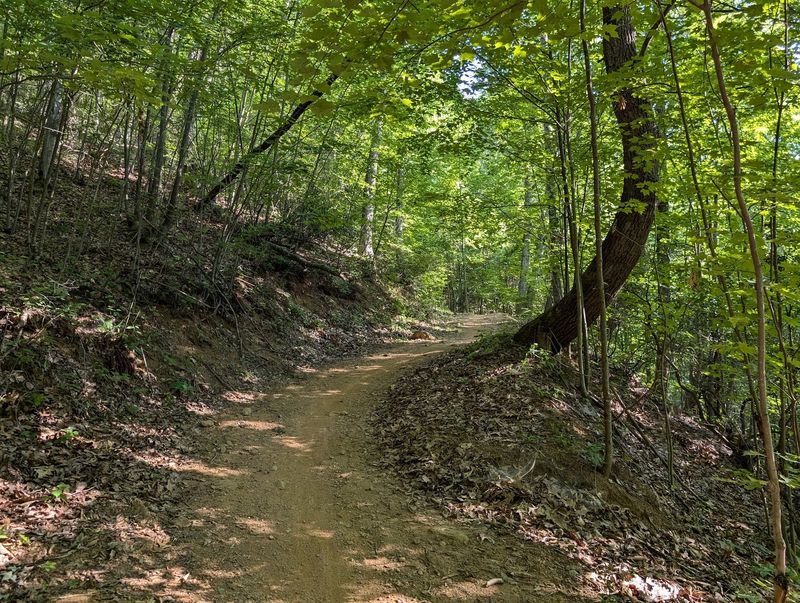
Two actual treehouses wait along the Turnpike trail at Chestnut Mountain Nature Park, giving families a destination partway through the walk instead of putting all the play equipment beside the parking lot.
Turnpike is a beginner-friendly, 0.55-mile out-and-back multi-use trail with a loop at its far end.
Inside that loop, some of the park’s largest oak trees surround the pair of treehouses, along with tree swings and picnic tables. The park extends far beyond that short family route.
More than 15 miles of trails now cross the roughly 450-acre property, including hiking-only and mountain-bike routes with considerably more elevation and difficulty for anyone ready to explore farther.
Chestnut Mountain Nature Park is currently open and lists its address as 2153 Asheville Highway in Canton.
Gates open daily at 7:30 a.m. and close at dusk, although wet weather or poor trail conditions can temporarily shut the property to protect the trails.
Checking the park’s current status before leaving is worthwhile, especially after heavy rain.
For families wanting treehouses to feel earned by a short woodland walk, Turnpike delivers exactly that combination.
4. Annie Louise Wilkerson, MD Nature Preserve, Raleigh
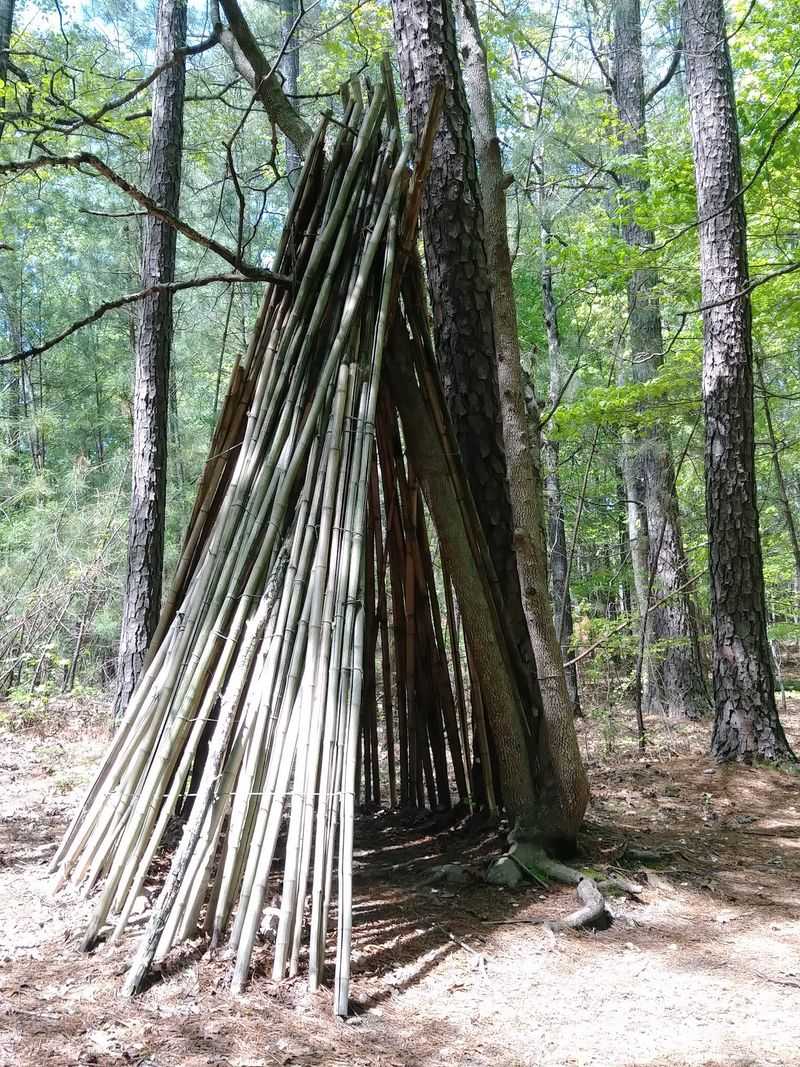
Fort building is officially encouraged at Annie Louise Wilkerson, MD Nature Preserve Park. Designated nature-play areas let children arrange branches into forts, make fairy houses, explore a native-grass maze, dig for rocks in a sandpit, and use a teepee-style play space.
The Welcome Center adds free loaner explorer backpacks, binoculars, kites, sandbox kits, and other materials available on a first-come basis. The 157.6-acre preserve gained an especially useful upgrade in 2026 with five new loop trails.
Distances remain approachable for families, ranging from the 0.31-mile Prairie Loop to the 0.81-mile Hidden Rocks Loop, while a connector reaches the Mountains-to-Sea Trail for anyone wanting a much longer walk.
The five new loop trails are natural-surface routes with gentle to moderate hills, and most include some stairs.
Annie Louise Wilkerson, MD Nature Preserve Park sits at 5229 Awls Haven Drive in Raleigh. It opens at 10 a.m.
Tuesday through Saturday and 1 p.m. Sunday, closes at dusk, and remains closed Mondays.
September closing time is currently 7:30 p.m.
3. Children’s Secret Garden at Wilson Botanical Gardens, Wilson
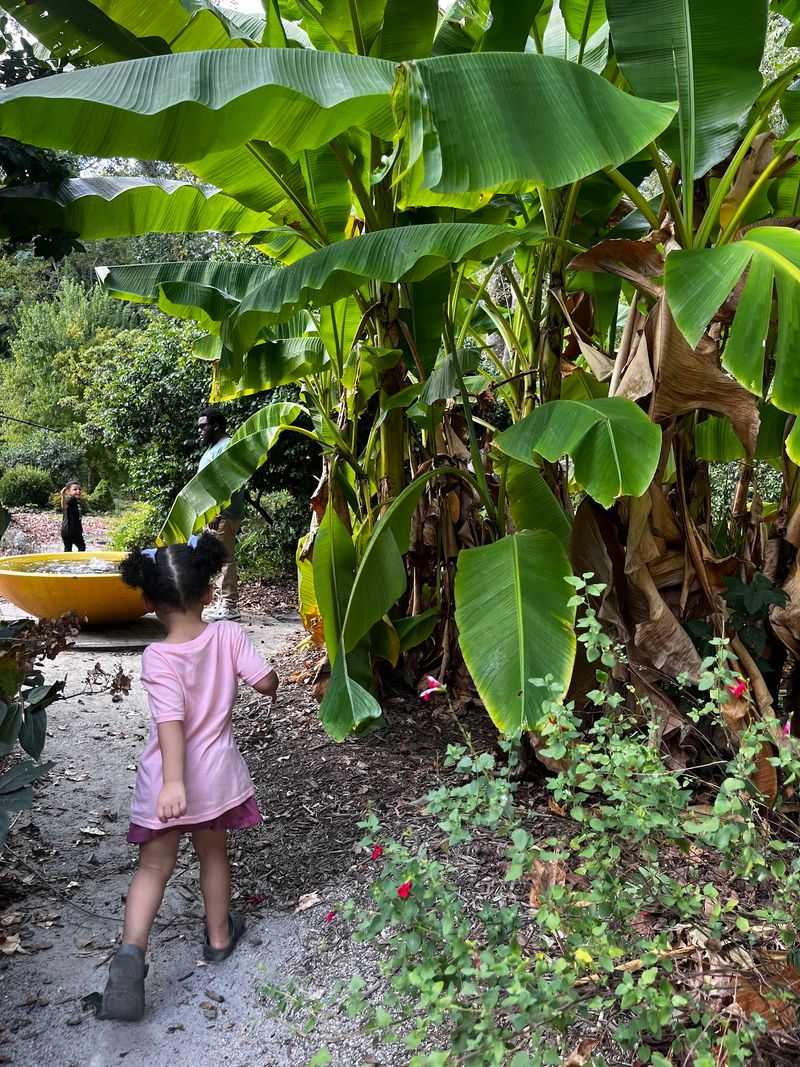
A treehouse is only one piece of the one-acre Children’s Secret Garden at Wilson Botanical Gardens.
The play-focused landscape also includes a garden tunnel, sand area, dino dig, musical features, swings, a slide, a labyrinth, and a central fountain, all surrounded by plantings meant to encourage children to notice the garden itself.
The treehouse functions as an outdoor learning space rather than simply an elevated climbing structure, and the garden’s water-oriented features have historically included a rain wall and playful raining sunflowers.
The dino dig adds another hands-on element, while the music area gives energetic visitors something completely different to explore without leaving the garden.
Wilson Botanical Gardens dedicated the Children’s Secret Garden in 2012 after years of fundraising, and it remains one of the property’s best-known family areas.
The gardens are at 1806 Goldsboro Street South in Wilson and are open to the public 365 days a year from dawn to dusk.
Restrooms inside the associated building are available on weekdays from 8 a.m. to 5 p.m. Admission to the outdoor gardens is free, making this one particularly easy to add to a day in eastern North Carolina.
2. Kids Together Playground, Cary
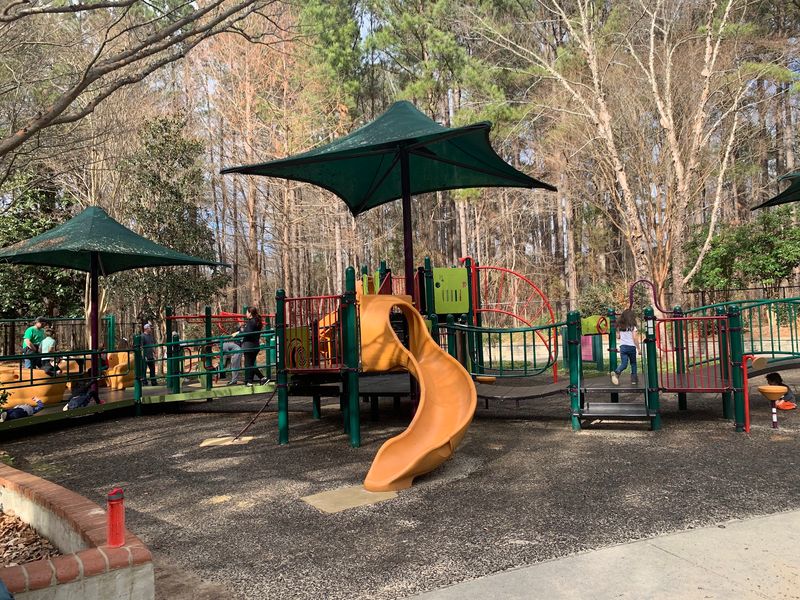
Universal design has shaped Kids Together Playground since it opened in 2000, allowing children with different physical and developmental abilities to use the same play environment together.
Five distinct play zones sit among mature trees and landscaping at Marla Dorrel Park, with accessible ramps, play structures, a wheelchair-accessible sand table, swings, and the much-loved Katal dragon climbing feature.
Warm-weather visits add the seasonal Misting Garden, which operates from May through September and uses interactive sprayers beneath purple arches.
A fenced toddler area gives younger children a more contained section, while the wider playground relies partly on vegetation and natural boundaries rather than enclosing every zone with hard fencing.
Kids Together Playground is located at 111 Thurston Drive in Cary and is currently open following a temporary summer 2026 closure for repaving and accessibility improvements.
The surrounding Marla Dorrel Park operates daily from sunrise to sunset and includes picnic areas, restrooms, public art, and connections toward nearby greenway routes.
Shade is one of the playground’s biggest practical advantages, allowing the landscaped setting to do more than simply decorate the edges of the play space.
1. Harold D. Ritter Park, Cary
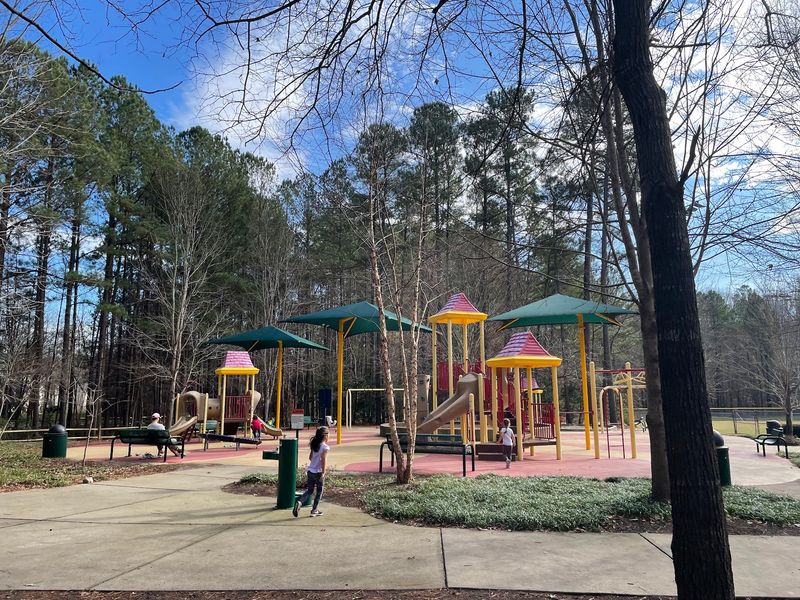
Harold D. Ritter Park brings conventional playground energy and nearby nature trails together without pretending the two are the same thing.
The Cary park’s current playground includes multiple slides, a sky-wheel climber, climbing wall, sand area, small playhouse, sand diggers, spring riders, and a scrambler whirl.
Sports fields, a basketball area, restrooms, picnic tables, and a reservable shelter sit nearby, so families can comfortably stay longer than one trip through the play structure.
The nature portion comes just beyond the park itself. Cary specifically highlights the hiking trails of Hemlock Bluffs Nature Preserve and nearby greenway routes as being within easy walking distance, giving families the option to pair active playground time with a woodland walk.
Harold D. Ritter Park is at 301 Lochmere Drive West and currently operates from sunrise to sunset, with its playground, climbing wall, and sand area all listed as open.
This stop works best for families who want an easy transition rather than a full wilderness outing: plenty of climbing first, followed by a trail when everyone is ready for the pace to slow down.