This Missouri Park Assembled An Entire 19th-Century Village From Relocated Buildings
Most historic sites wait patiently for you to come to them. This one did the opposite and went out shopping for a town.
Somebody looked at old buildings scattered across Missouri farmland and made a plan. Cabins, a church, a general store, and barns were carefully taken apart.
Each one traveled to a single patch of ground and got put back together. The result is a village that never existed and yet is entirely real.
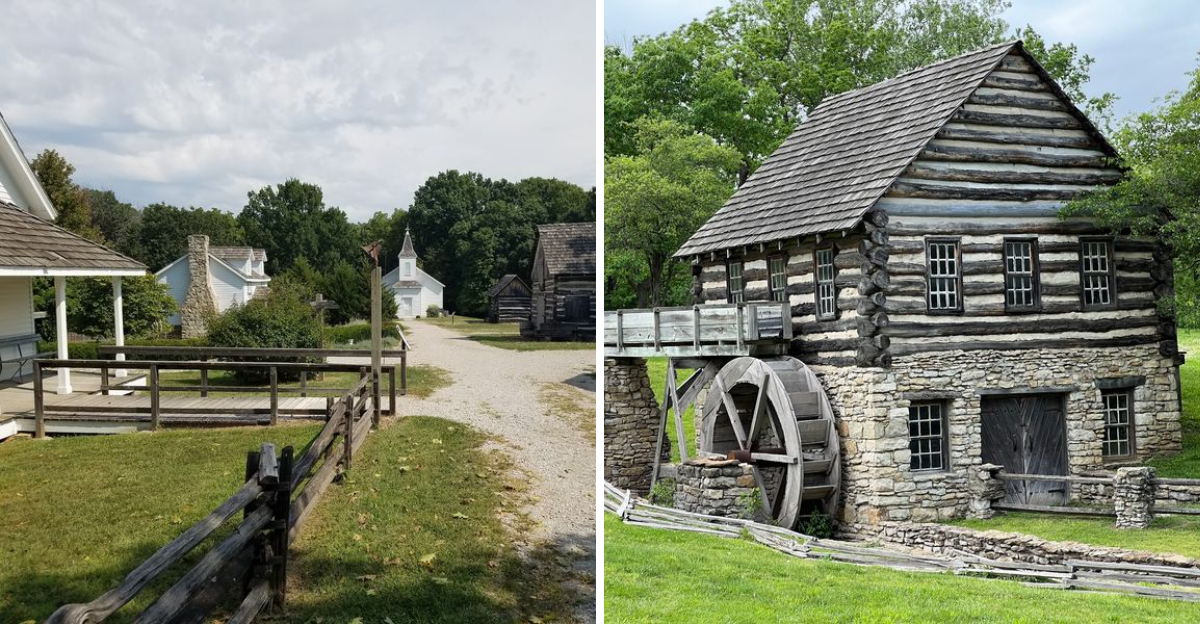
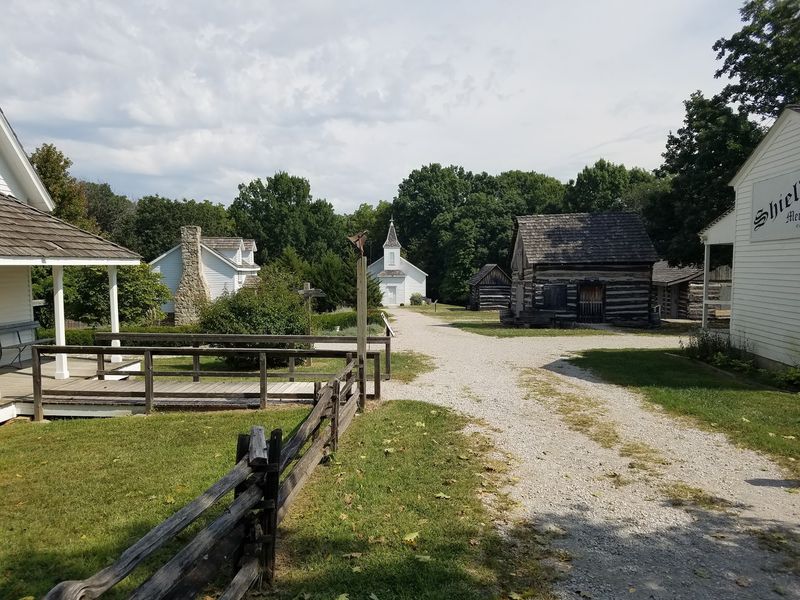
Every log and beam came from the eighteen hundreds. You walk a dirt lane past homes that once stood counties apart.
Chickens wander around like they own the deed to the place. Somebody in period clothing is probably tending a fire right now.
The whole place smells like woodsmoke and cut grass. History usually asks you to imagine the missing parts.
Here the parts were hauled in by truck and nailed back down for you.
A Village That Traveled To Get Here
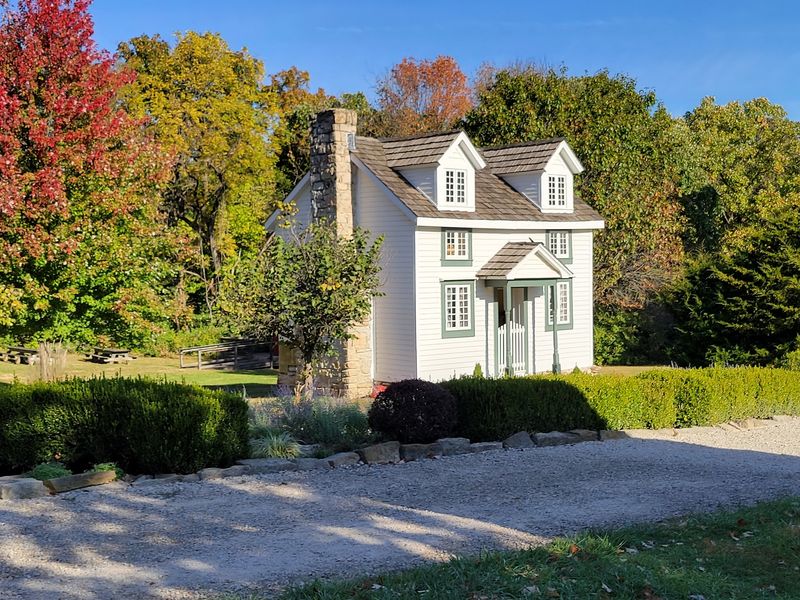
Most towns grow in one spot. Shoal Creek Living History Museum was gathered piece by piece from across the region.
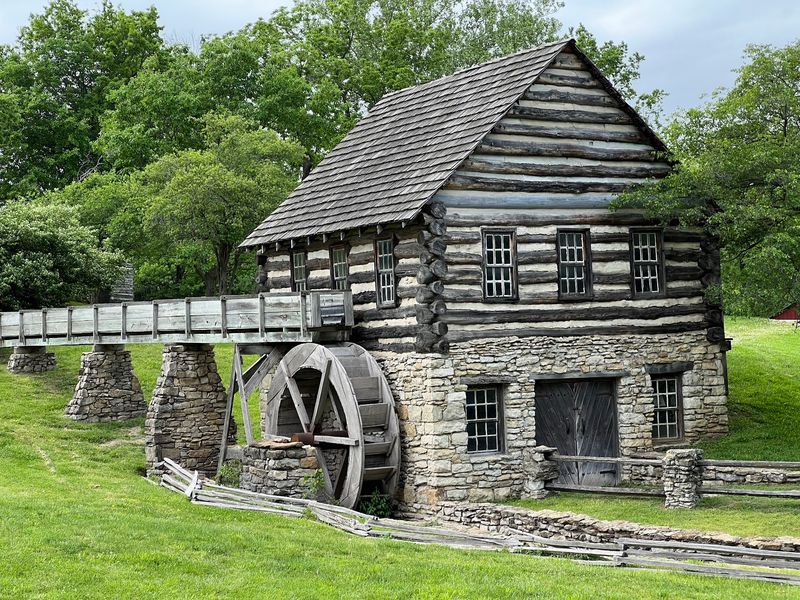
The site holds a collection of authentic 19th-century structures that were moved here and rebuilt. Instead of replicas, you get real buildings with real wear on the wood.
The setting is grassy, open, and easy to wander.
Relocating a log cabin sounds simple until you think about the details. Each log gets numbered, hauled, and stacked again in order.
That effort explains why the village feels stitched together yet honest. Buildings from different places now share the same dirt lanes.
Walking the grounds gives you a sense of scale that photos flatten. Homes sit near shops, and the church anchors one end.
Bring comfortable shoes because the paths are uneven in spots. Grass, gravel, and packed earth make up most of the walking surface.
Plan for a slow visit rather than a quick loop. The interest is in details like door hardware, chimney stones, and hand-cut beams.
Check the seasonal schedule before driving out. Hours shift through the year, and events change what is open.
You will find it inside Hodge Park in the northland, at 7000 NE Barry Rd, Kansas City, Missouri.
Log Cabins With Stories In Their Timbers
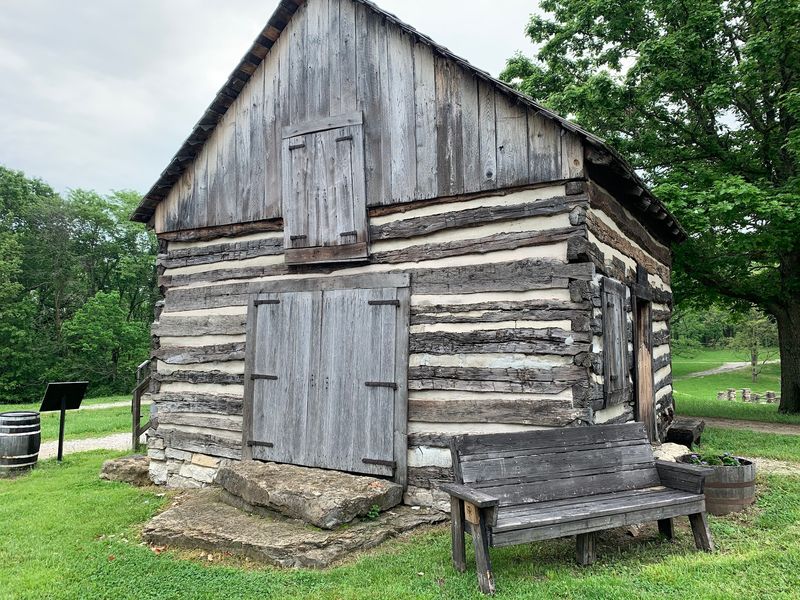
Run your eyes along a cabin wall and you can count the axe marks. Those cuts were made by hand, long before power tools existed.
Several log homes stand within the village, each showing a slightly different building method. Some use square-notched corners, others show tighter chinking between logs.
Interiors tend to be small and dim by modern standards. Windows were expensive, so light came mostly through doorways and fireplaces.
Notice how low some doorframes sit. People were often shorter, and heat escapes less through smaller openings.
Furnishings inside reflect frontier life rather than luxury. Rope beds, simple tables, and iron cookware fill the rooms.
Kids usually react to the size first. A whole family living in one room lands harder in person than in a textbook.
Ask a costumed interpreter about daily chores if one is stationed nearby. Their answers make the space feel occupied instead of empty.
Photography works best in the morning when sunlight angles through the doorways. Flash rarely helps in these dark interiors.
Pay attention to the floorboards too. Wide planks with visible wear tell you plenty about foot traffic across generations.
Leave time to simply stand still inside one. The quiet does something a placard cannot.
The Blacksmith Shop And Its Glowing Iron
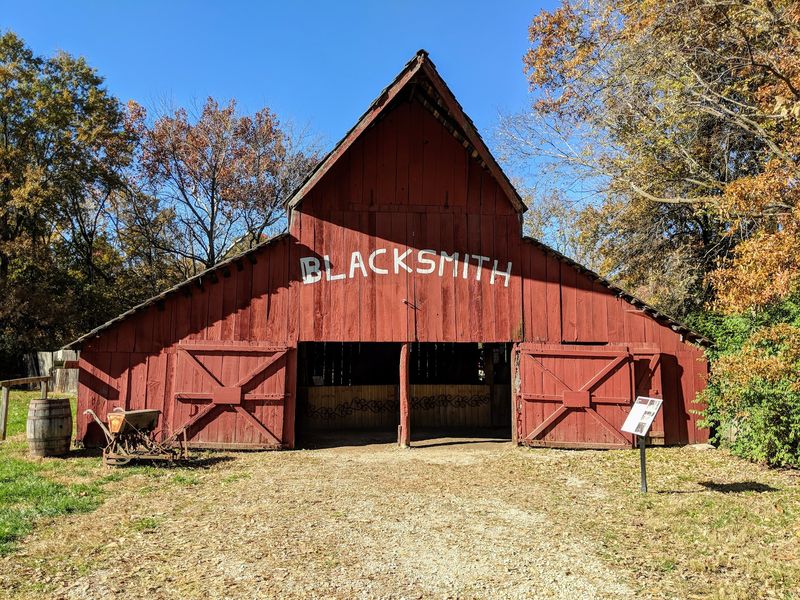
Heat, hammering, and a shower of sparks pull crowds faster than any sign. The blacksmith shop is often the loudest building on the grounds.
Smiths shaped nearly everything a settlement needed. Hinges, nails, horseshoes, chain links, and tools all started as raw bar stock.
Demonstrations usually happen during scheduled events rather than every day. Checking the museum calendar saves you a wasted trip.
Watch how quickly hot iron changes color. Orange means workable, and dull red means back into the fire.
The anvil ring carries across the village. That sound was once the heartbeat of small towns everywhere.
Stand where you are told and keep kids close. Sparks travel farther than people expect.
Interpreters often explain why blacksmiths were community anchors. A town without one struggled to repair anything.
You may notice tools hanging in rows along the walls. Each has a narrow purpose, from punches to tongs of different jaw shapes.
Questions are welcome and usually get detailed answers. Smiths tend to enjoy explaining their craft while they work.
Bring a bit of patience for the process. Shaping one small hook can take several heats and dozens of strikes.
Inside The One-Room Schoolhouse
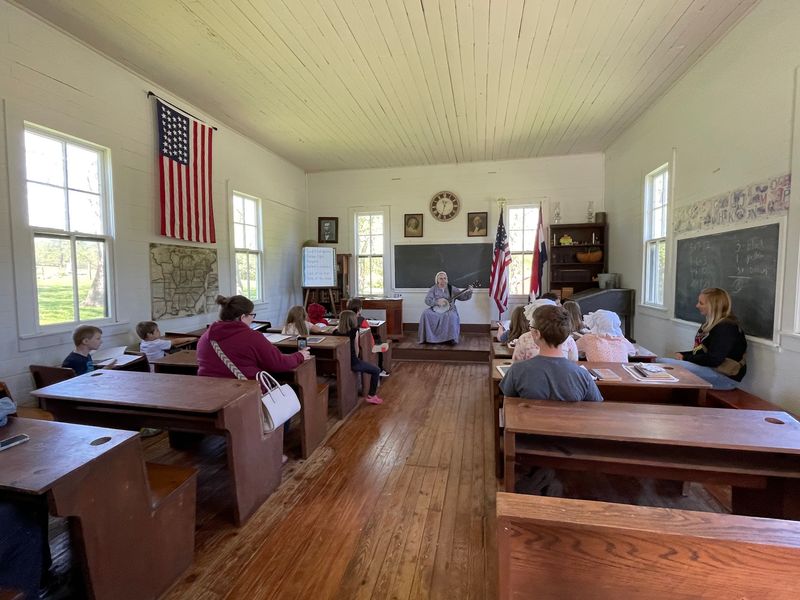
Eight grades, one teacher, one room, zero escape from the front row. The schoolhouse makes modern classrooms look enormous.
Rows of wooden desks face a chalkboard and a small teaching platform. Older students often helped younger ones with lessons.
A stove sat near the center for warmth during cold months. Students seated closest roasted while those by the windows shivered.
Slates replaced paper for daily work because paper cost money. Chalk dust was part of everyday life.
Look for the recitation bench near the front. Children walked up in small groups to read aloud.
Discipline rules from the era often get mentioned by interpreters. Expectations were strict and schedules were rigid.
Kids visiting today usually test the desk seats immediately. The narrow benches surprise them.
School terms were shorter and tied to farm work. Planting and harvest pulled students out of class for weeks.
Consider it a great teaching stop for families. The comparison between then and now practically writes itself.
Photos of the chalkboard and desk rows turn out well with natural window light. Keep the doorway open for extra brightness.
Spend a few minutes reading any posted lesson examples. The handwriting standards alone are impressive.
The White Church On The Green
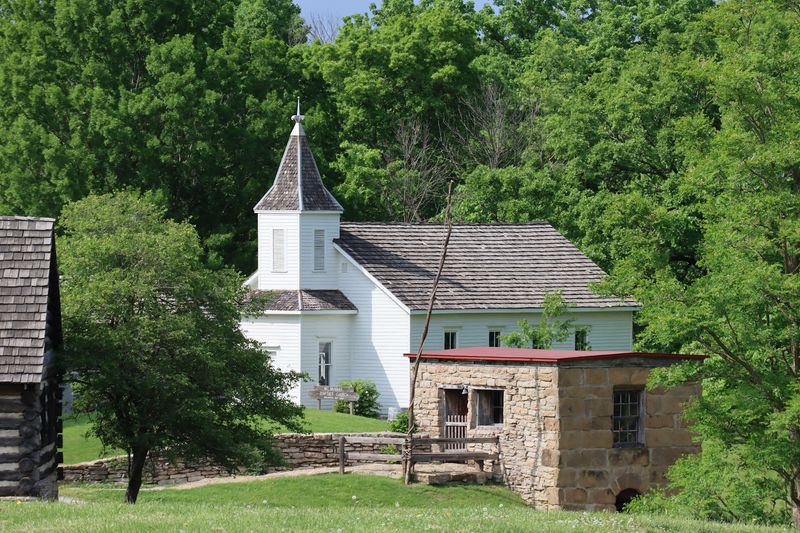
A steeple against open sky changes the mood of a whole field. The church gives the village its visual anchor.
Simple white siding, tall windows, and wooden pews define the design. Nothing about it is ornate, which matches the period.
Sound behaves differently inside a small wooden sanctuary. Footsteps echo more than you expect.
Churches served as more than places of worship in the 1800s. Meetings, weddings, and community gatherings all happened under the same roof.
The building draws photographers year-round. Autumn light and fresh snow both flatter the white exterior.
Look at the window placement from inside. Natural light was the only option before electricity reached rural areas.
Benches are hard and upright by design. Comfort was not the goal.
Events at the museum sometimes use the church as a backdrop. Check whether it is open before planning to step inside.
Its relocation to this site required careful structural work. Moving a steepled building is no small job.
Take a slow walk around the exterior too. The foundation and siding joints reveal how the reassembly was handled.
Quiet moments here land differently than in the noisier shop buildings. It is the calmest corner of the village.
Costumed Interpreters Who Bring The Place Alive
Buildings are interesting. People in period clothing explaining them is what makes the visit stick.
During special events, interpreters staff many of the structures. They demonstrate cooking, sewing, woodworking, and other daily tasks.
Ask about clothing construction if you get a chance. The layers, fabrics, and fasteners tell their own story.
Many interpreters are volunteers with deep knowledge of the era. Their enthusiasm shows in how much detail they share.
Children often get invited to try small hands-on tasks. Grinding, carding wool, or hauling a bucket makes history physical.
Open-hearth cooking demonstrations draw steady crowds. The smell of a wood fire carries across the grounds.
Questions about food storage usually spark good conversation. Salt, smoke, and root cellars replaced refrigerators.
Interpreters typically appear on event days rather than every open hour. Timing your visit matters if this is your priority.
Photography is generally welcome, but asking first is simple courtesy. Most are happy to pose beside their work.
Conversations tend to run long once you show interest. Budget more time than you think you need.
Their storytelling turns a collection of old buildings into an actual community. That shift is the whole point.
Hodge Park Trails Right Outside The Gates
The village sits inside a much larger park, which doubles your reasons to visit. Hodge Park surrounds the historic buildings with woods and open space.
Trails wind through wooded sections and grassy stretches nearby. Walkers, runners, and cyclists all use them.
Combining a museum walk with a trail loop makes a full morning. Pack water since shade varies along the route.
Wildlife sightings are common in quieter areas. Deer, birds, and small mammals move through the tree lines.
Seasons change the experience significantly. Spring greenery and fall color both draw regular visitors.
Parking areas serve both the park and the museum. Arriving early helps on busy event weekends.
Picnic spots are scattered around the larger park. Bringing lunch beats hunting for food nearby.
Weather matters more here than at indoor attractions. Muddy paths after rain slow everything down.
Families often split the day between history and open-air play. Kids burn energy outside before touring buildings.
Trail maps and park information are posted at entrances. A quick look prevents wrong turns.
The combination of nature and preserved history is what keeps locals returning. One visit rarely covers everything.
Planning A Visit That Actually Works
Showing up unannounced is the fastest way to find locked doors. Schedules here follow seasons and special events.
Grounds and buildings have different access rules. Some structures open only during festivals and living history days.
Checking the official Kansas City parks calendar first saves frustration. Event listings note times and any admission details.
Signature events tend to fill the village with activity. Those days offer the best chance to see demonstrations.
Dress for the weather because most of the visit happens outdoors. Layers work well in spring and fall.
Strollers can handle the main paths, though grass sections get bumpy. Carriers may be easier for infants.
Restrooms and parking are available within the park. Confirm locations when you arrive.
Photographers should aim for early or late light. Midday sun washes out the white church and pale siding.
Two hours covers a relaxed walk through the village. Add more if events are running.
Groups and school visits often require advance arrangements. A phone call clears that up quickly.
Give yourself a full afternoon and enjoy it.