Half the Cats at This Key West House Have an Extra Toe, and Florida Loves Them for It
I walked through a garden gate in southern Florida expecting old furniture and a plaque or two. Instead, a chunky tabby stretched across the walkway, lifted a front paw, and revealed a paw that looked more like a catcher’s mitt than anything a cat should own.
Around sixty felines live on the property, and roughly half of them carry visible extra toes. What started as a quick stop turned into the part of the day I kept talking about for a week.
A Limestone House on Whitehead Street
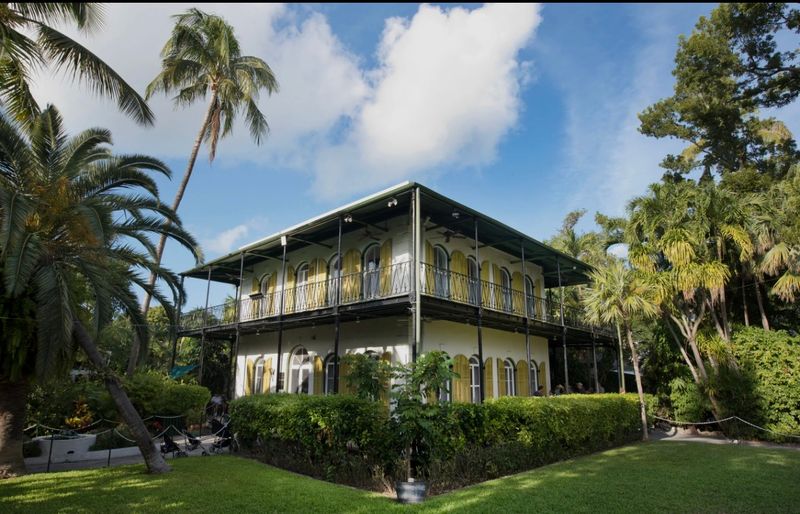
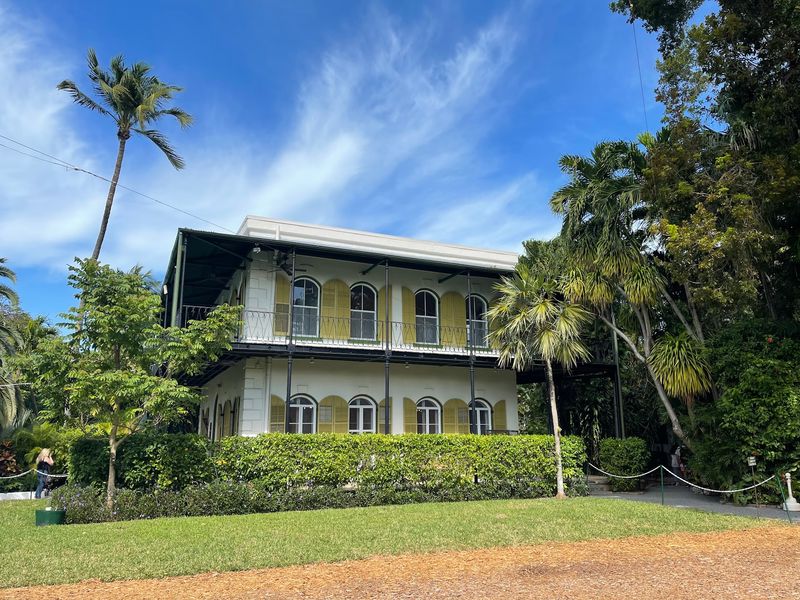
At 907 Whitehead Street in Old Town Key West sits a two-story house built in 1851 from native limestone cut right out of the surrounding ground. Green shutters, wrap-around balconies, and a thick screen of tropical plants make it stand apart from the wooden conch cottages nearby.
Ernest Hemingway and his second wife, Pauline, bought the property in 1931, and he lived and wrote there until 1939. During those years he produced work including A Farewell to Arms, To Have and Have Not, and The Snows of Kilimanjaro.
Today the place operates as The Hemingway Home and Museum, a private museum that opens its doors daily. It sits on what the tour describes as the largest house on the largest lot on the island, which is a bold claim in a town where nearly every block holds something historic.
The address matters less than the walk-up moment. You approach a brick wall, pay at a small window, step through, and the noise of Duval Street a block over simply stops mattering.
Cats notice you before the architecture does.
Snow White and the Sailor Who Started It All
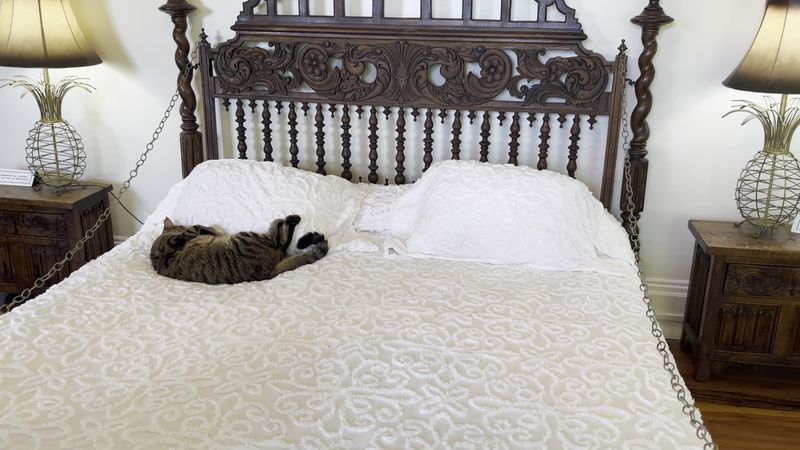
Sailors once treated polydactyl cats as good luck charms. Extra toes were thought to give better balance on a pitching deck and a stronger grip on mice in the hold, so ship captains held onto them.
One of those captains handed Hemingway a white six-toed cat in the 1930s. Her name was Snow White, and she became the ancestor of much of the colony that patrols the grounds today.
Because polydactyly follows an autosomal dominant pattern, a single carrier parent can pass the trait along to a good share of its kittens. That explains why the trait never faded out over the decades.
Every cat currently living on the property carries the dominant gene, even the ones whose paws look perfectly ordinary.
So the split is roughly half and half. Some cats show the extra digits plainly, spreading out paws that look like they came with built-in thumbs.
Others hide the gene entirely and pass it on to the next generation instead. A single gift from a sailor turned into a multi-generational feature of a literary landmark, which is a strange and wonderful way for history to work.
What Polydactyly Means for a Paw
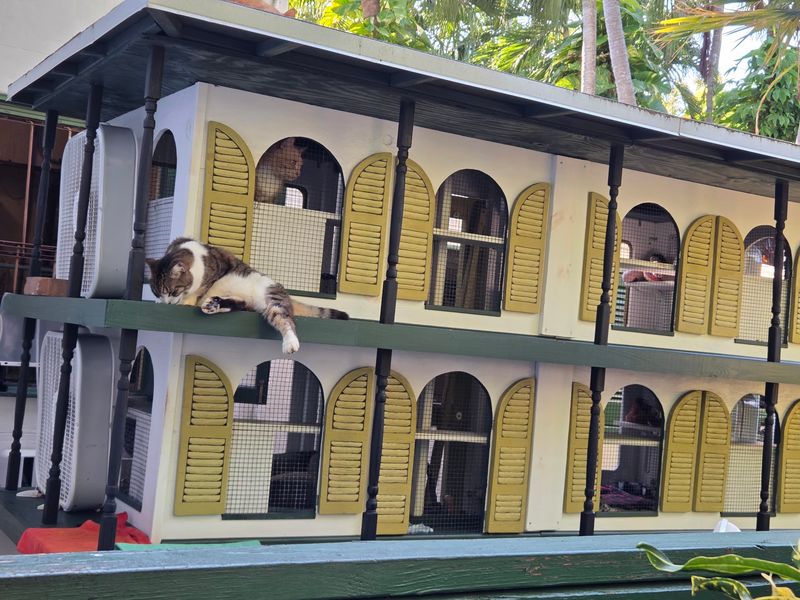
Count the toes on an average cat and you land on eighteen: five on each front paw, four on each back paw. Polydactyl cats break that math.
The condition is a congenital anomaly caused by a genetic mutation, and it can push the total as high as twenty-eight toes. Front paws show it most often, which produces the mitten look people talk about, complete with what appears to be a stubby thumb tucked along the side.
Health-wise, the extra digits cause no real trouble. Polydactyly does not shorten a cat’s life or limit what it can do, and these cats climb, nap, and beg for attention exactly like any other.
The one practical wrinkle involves claws. Extra claws often sit at an angle where they never scrape against the ground, so they skip the natural wear that keeps normal claws in check.
Left alone, they overgrow. Regular trimming solves it.
Learning that detail changes how you look at the cats stretched out on the porch railings. Those oversized paws are not a quirk of the photos.
They are a working piece of genetics you can watch flex in real time.
Sixty Residents, All Named After Someone Famous
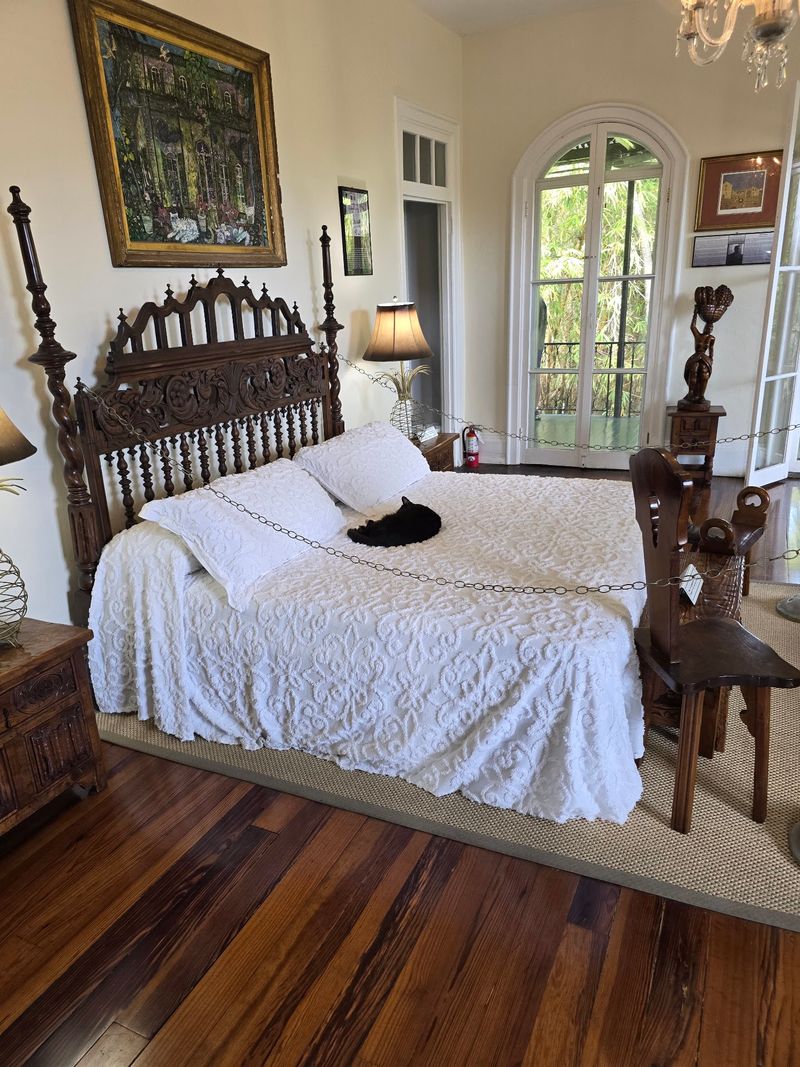
Roughly fifty to sixty cats live on the grounds at any given time, and staff keep track of every single one. Recent counts have landed around fifty-nine.
Hemingway named his cats after famous people, and the museum kept the tradition going. Wander the property and you will meet felines carrying the names of actors, writers, and public figures, printed on small markers so you can match a name to the animal snoozing in front of you.
They behave like landlords. Cats sprawl on chairs inside the house, drape themselves over garden walls, and cross walkways at their own pace with the confidence of creatures who have never been told no.
Petting is allowed when a cat consents, and plenty of them do not. Some will roll over for a scratch behind the ears, while others make it clear they would rather be admired from three feet away.
Pulling a tail or bothering a sleeping cat is off limits, and the colony is protected under federal oversight.
The honest result is a museum where the permanent collection walks around and occasionally sits on your shoe.
The Care Team Behind Those Extra Claws
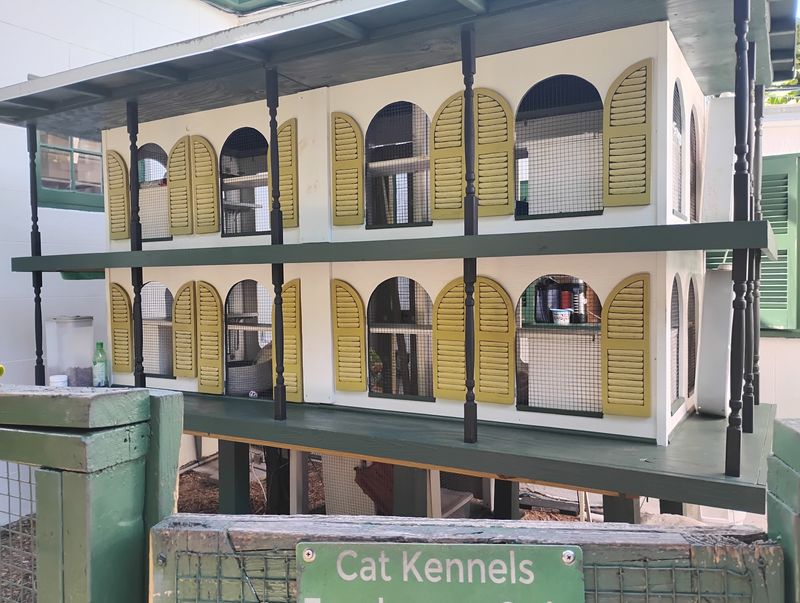
Keeping sixty cats healthy on a single property takes more than food bowls and shade. A dedicated veterinary team oversees the colony, handling routine vaccinations, deworming, and ear treatments.
Claw maintenance sits high on the list. Because polydactyl claws can grow past the point where walking would file them down, trimming becomes part of the regular schedule rather than an occasional chore.
Commitment shows up most clearly during bad weather. When Hurricane Irma bore down on the Keys, staff members stayed on the premises rather than leaving the animals behind, riding out the storm inside the limestone walls with the cats they look after.
You can see the results without knowing any of the backstory. The cats are well fed, unbothered, and glossy, which is not the usual look for animals living outdoors in a subtropical climate.
There is something quietly impressive about a museum whose job description includes both preserving a writer’s desk and clipping several hundred toenails. Most historic homes worry about humidity and foot traffic.
This one also worries about whether a cat named after a movie star has been to the vet lately.
Inside the Writing Loft Above the Carriage House
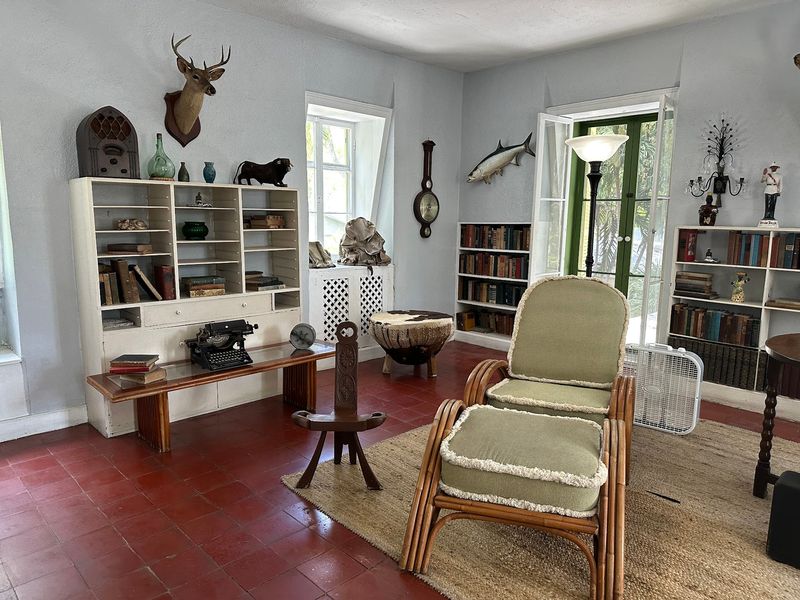
Up a set of stairs behind the main house, past the gift shop, sits the room where a large chunk of American literature got typed out. Hemingway converted a second-story loft in the old carriage house into a private writing studio, once connected to the main house by a second-floor catwalk.
The space is small. A round table, a typewriter, bookshelves, and light coming through the windows.
Nothing about it suggests grandeur, which is exactly what makes standing in the doorway hit harder than expected.
Plenty of people walk right past it on the way to the cats, and that is a mistake. The studio is the reason the house exists as a museum in the first place, and seeing the working corner of a writer’s life offers a different kind of satisfaction than looking at furniture behind a rope.
Guides tend to build the story toward this room, explaining the routine that filled those productive 1930s years. The interpretive signs cover it too if you are exploring solo.
Give it a minute before you head back down. A cat will probably be waiting on the stairs anyway.
Florida’s First In-Ground Pool and a Famous Penny
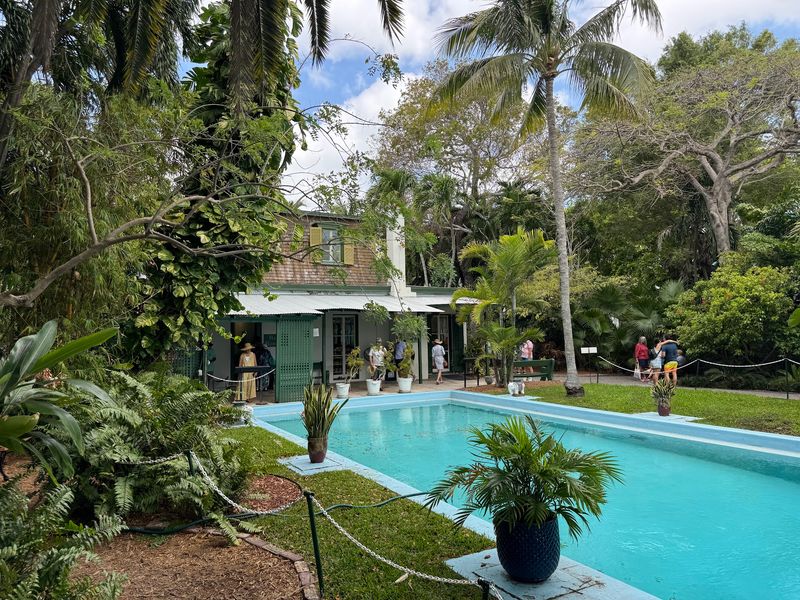
Twenty thousand dollars in 1937 bought something outrageous: the first in-ground swimming pool in Key West. Built between 1937 and 1938, it cost more than the house itself and remains the largest pool on the island.
Legend attaches a small object to that enormous bill. As the story goes, Hemingway pulled a penny from his pocket, pressed it into the wet concrete of the patio, and joked, “Here, take my last penny!” The coin is still embedded there, and finding it has become part of the walk around the water.
Standing beside the pool, the scale registers immediately. It stretches across the yard in a way no other Key West property could match at the time, framed by tile, palms, and the salt-and-green smell of the garden.
The pool also anchors one of the better tour segments, since the numbers involved sound absurd even by modern standards. Digging that hole through solid limestone in the 1930s was an engineering project, not a home improvement.
Cats drink from the edges and nap on the warm tile, entirely unimpressed by the price tag.
Gardens That Feel Like a Rainforest
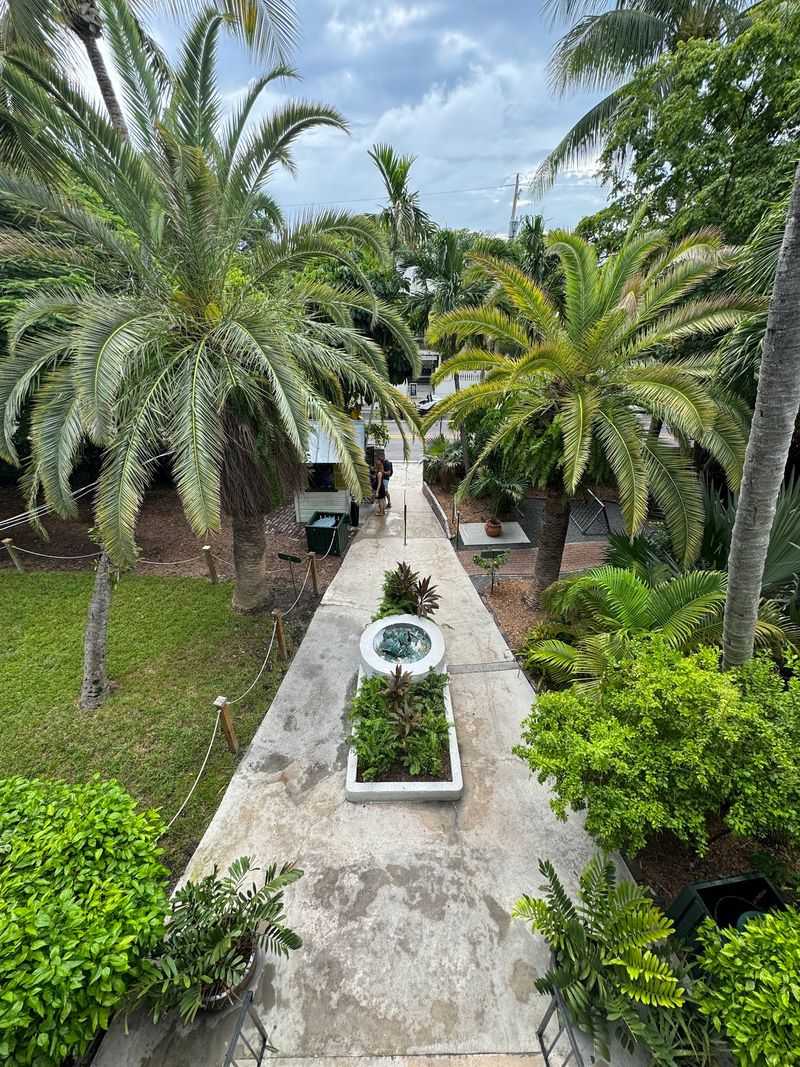
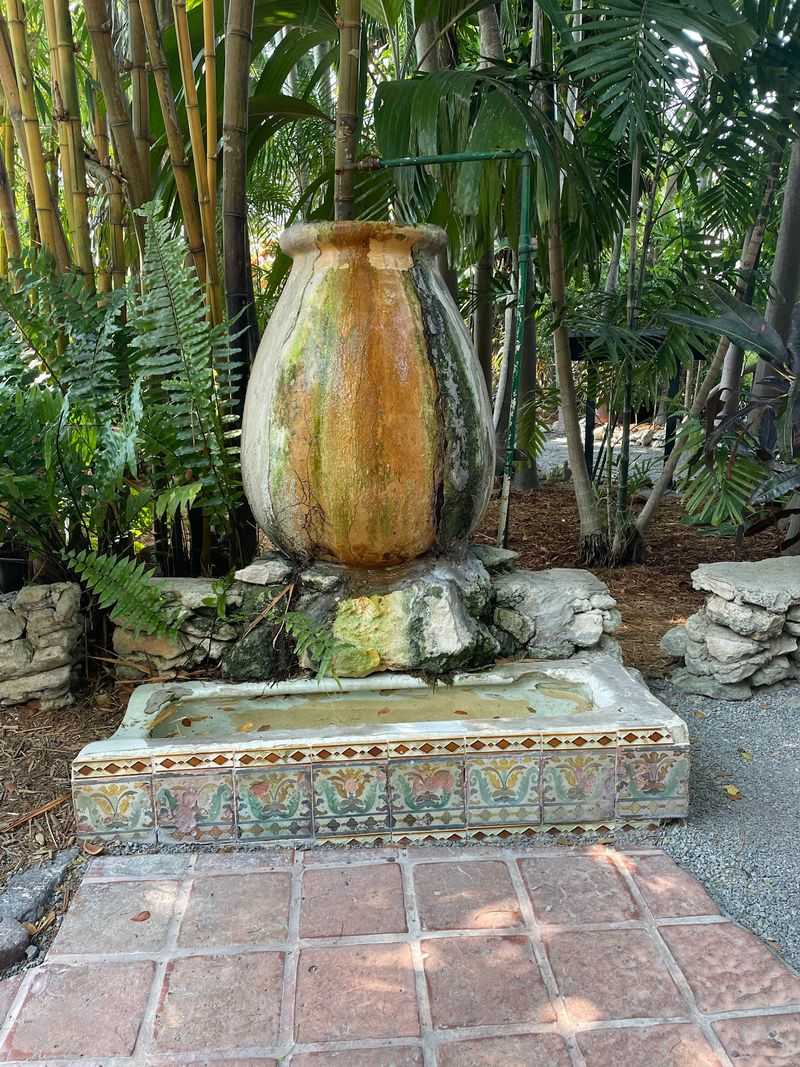
Dense green closes in the moment you leave the front walk. Palms, broad-leafed philodendrons, flowering vines, and brick paths turn the grounds into something closer to a tropical rainforest than a museum lawn.
Gardens are one of the most talked-about features of the property, and they do double duty. They soften the heat, they give the cats endless places to disappear into, and they make wandering the outbuildings feel like exploring rather than shuffling through exhibits.
Interpretive signs are placed throughout, so a self-guided loop still delivers the story of what you are looking at. That flexibility matters on a hot afternoon when you want to pause under shade instead of keeping pace with a group.
Key West humidity is no joke, and the outdoor portions can feel heavy in summer. The main house is air conditioned, which makes for a welcome reset partway through.
Photographers do well here. Dappled light, bright flowers, weathered limestone, and a six-toed cat asleep on a wall add up to the kind of picture that explains the whole visit without a caption.
Practical Notes: Tickets, Tours, and Parking
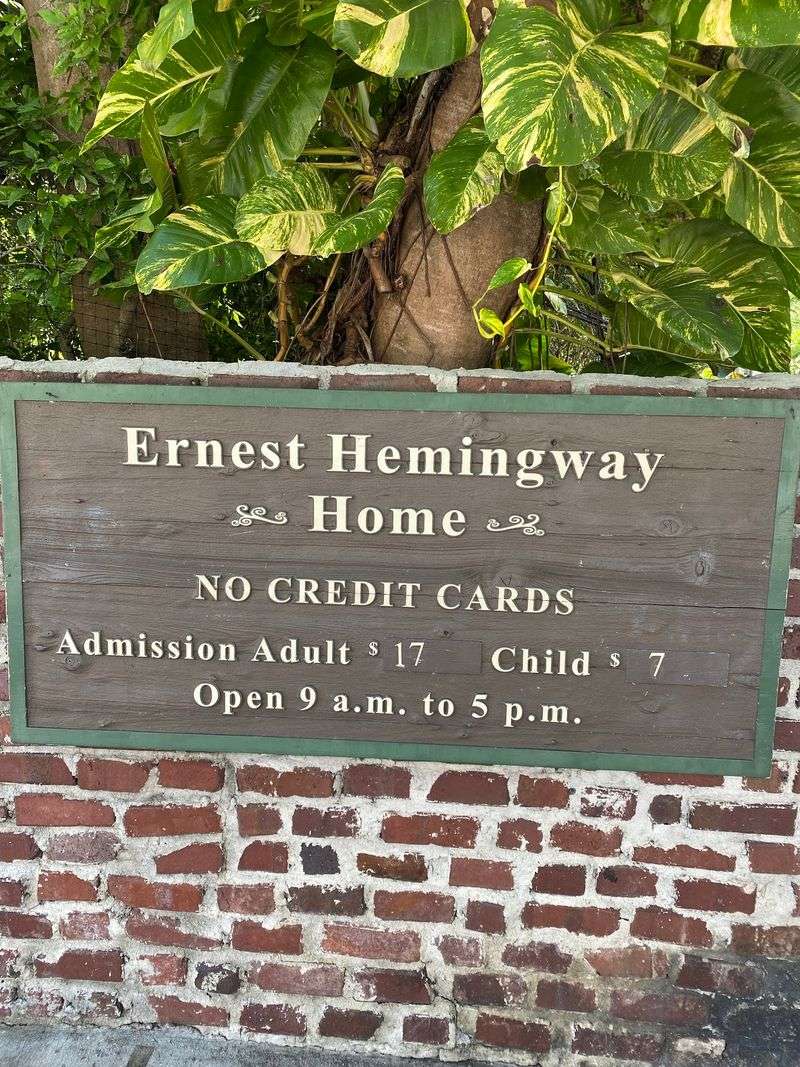
Doors open at 9 AM and close at 5 PM, every day of the week. Adult admission runs $19, and the museum operates on a cash-only basis, so hit an ATM before you arrive.
Guided tours run about 30 minutes and are included with admission. Guides bring literary background, the house history, the story of the four marriages, and the cat lineage, and the difference between a guided walk and a solo one is substantial.
Self-guided exploring works fine thanks to the signage, and you can wander the grounds after your tour ends.
Arriving early pays off. As one of the most popular attractions in Old Town, the ticket line and the walkways both fill up as the day warms, though lines tend to move quickly.
Parking is the real headache. Sort out where you are leaving the car before you get close, and plan on walking the last few blocks.
Parking costs in Key West can easily exceed the admission price.
Phone: +1 305-294-1136. Details and current information are posted at hemingwayhome.com.
Who Gets the Most out of a Visit
Cat people will lose their minds here, in the best way. Sixty felines, half of them sporting mitten paws, roaming a historic estate with total authority is not an experience available in many places.
Readers get something else entirely: the desk, the loft, the years that produced several major books, and a fuller picture of a complicated life. You may walk out with a changed opinion of the man and a deeper respect for the work.
Couples, families, and day-trippers with a few free hours all fit comfortably into the visit, which runs long enough to feel substantial and short enough to leave room for the rest of the island. Kids frequently rank the cats above the history, and nobody should be surprised by that.
If cats make you nervous, this is the wrong stop. They are everywhere, indoors and out, and avoiding them is impossible.
Everyone else gets a rare combination: real literary history, a garden that feels like another country, the island’s first swimming pool, and a colony of many-toed cats who own the place and know it. Nineteen dollars buys a lot of story.