In St. Petersburg, Florida, You Watch Glassblowers Shape A Vase From A Molten Blob
In Florida there is a plain warehouse with a metal roof and a modest front door, and behind it sits a room full of glass that catches light like water. You walk in expecting a quiet showroom and instead find a furnace glowing, an artist rolling a glowing lump on a steel pipe, and a garden out back where sculptures sit among fruit trees.
Nobody asks you for money at the door. That combination of heat, color, and open invitation is what makes this stop stick in your memory long after you leave.
A Warehouse District Address That Hides Something Bright
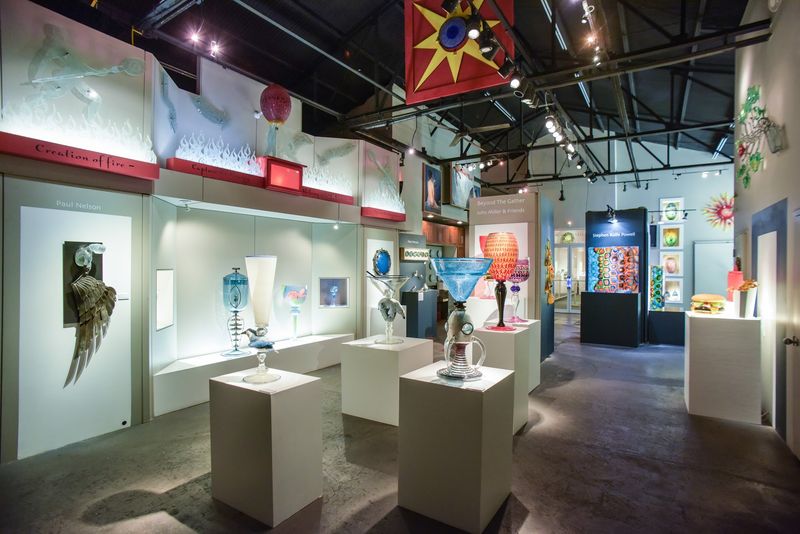
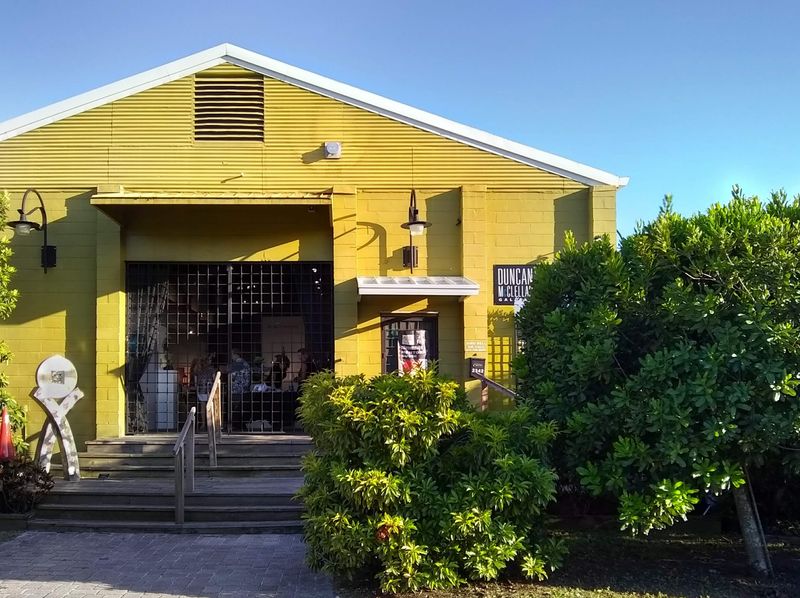
Emerson Avenue South does not look like an art destination. Duncan McClellan Gallery sits at 2342 Emerson Ave S in St. Petersburg’s Warehouse Arts District, surrounded by low industrial buildings, loading bays, and the kind of streetscape you drive past without slowing down.
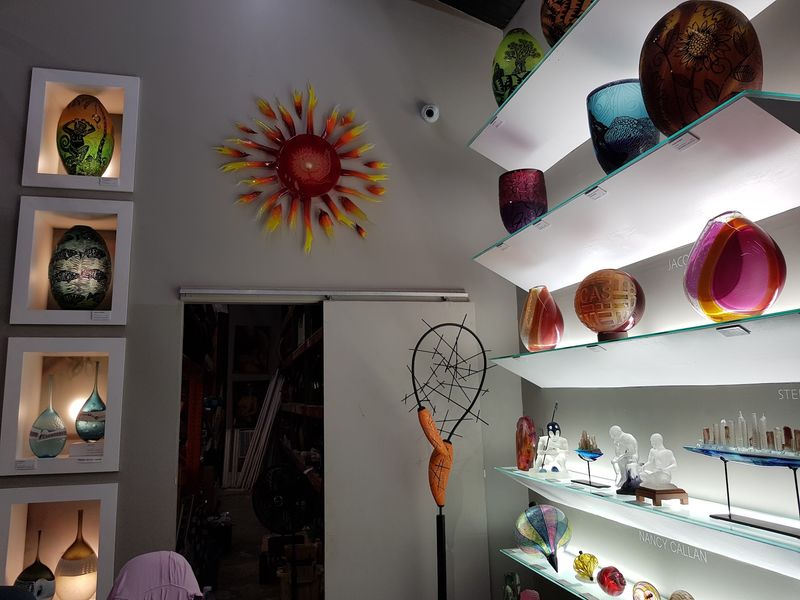
Then the door opens. Inside is a contemporary glass gallery filled with blown, sculpted, and sandblasted work by artists from across the United States and abroad, arranged with the care of a museum installation.
The building once served as Duncan McClellan’s home, which explains its odd, appealing layout. Rooms open into other rooms.
A shower stall survives as a photo backdrop that regulars still point out to first-timers.
Beyond the interior galleries, a sculpture garden stretches out under the Florida sun, planted with dozens of varieties of tropical fruit trees. Glass pieces sit among the leaves, catching daylight in ways that indoor lighting can never quite copy.
The contrast between the plain exterior and everything behind it is the whole charm of the place. You arrive skeptical and leave describing it to strangers.
The Hot Shop and the Blob That Becomes a Vase
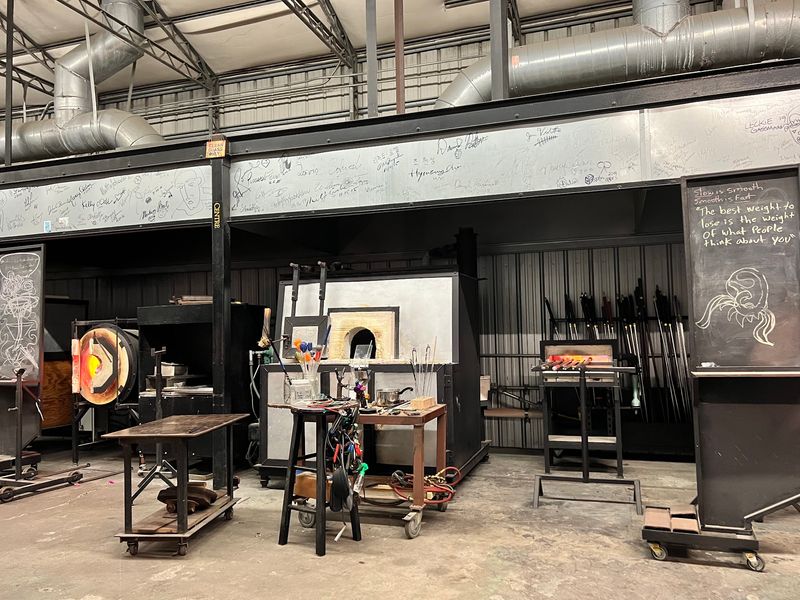
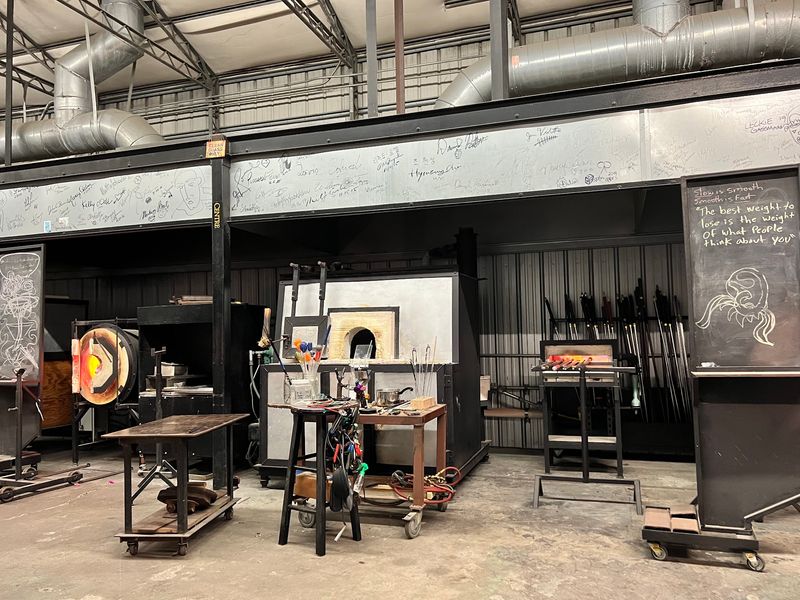
Heat hits you before anything else. Standing near the hot shop, you feel the furnace on your face from several feet away, and the air carries that dry metallic smell of hot steel and glowing silica.
The process starts with a gather, a glowing orange lump of molten glass collected on the end of a blowpipe. It looks like honey misbehaving, sagging and stretching with gravity while the artist keeps the pipe turning to hold its shape.
From there comes shaping. Wet wooden blocks, folded newspaper pads, steel jacks, and a puff of breath down the pipe turn that shapeless mass into a wall, a shoulder, a neck, a lip.
Reheating happens constantly. The piece goes back into the glory hole every minute or so, because glass stops cooperating the second it cools past a certain point.
When the form is finished, it goes into an annealing kiln to cool slowly over hours so internal stress does not crack it. Watching all this take roughly twenty minutes reframes what a vase on a shelf represents.
Artists Who Explain While Their Hands Keep Moving
Most craft demonstrations happen behind glass with a recorded soundtrack. Not here.
Artists in residence work in the open, and they talk while they work, answering questions about temperature, color rods, and why a particular curve refuses to behave.
Sometimes two artists work as a team, one on the pipe and one handling tools or the torch, moving around each other with the timing of people who have done it a thousand times.
Glassblower Pauli Maiville has worked in the studio, and Second Saturday sessions bring in respected glassblowers from around the country. One longtime glass artist compared the experience to attending glass school at a bargain price.
The explanations are not scripted marketing. Ask about annealing schedules or how a color overlay is applied, and you get a real answer, often mid-gather.
Duncan McClellan himself frequently greets people at the door and shares the stories behind individual pieces, which changes how a sculpture reads once you know what the maker was chasing.
Worth knowing: the furnace shuts down during the hottest stretch of summer, so demonstrations are seasonal rather than guaranteed.
Museum-Quality Glass Without the Museum Ticket
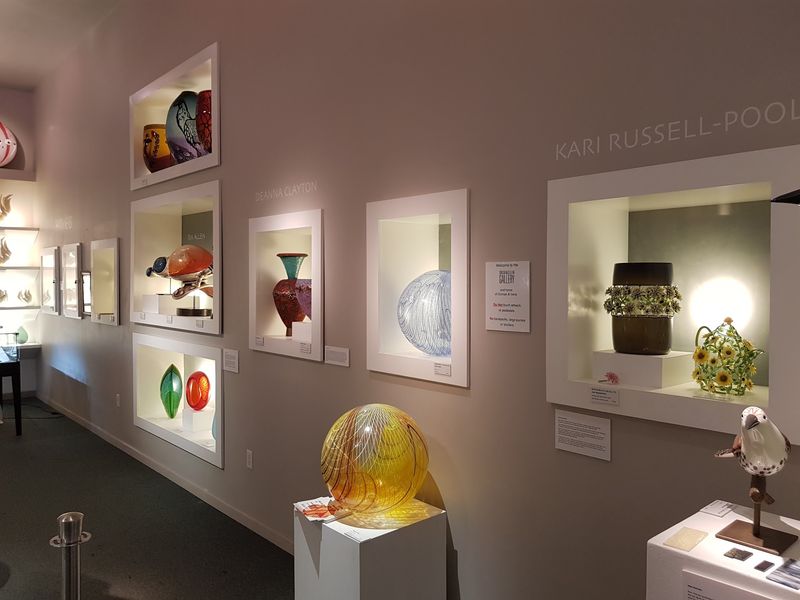
Free admission usually signals a small operation. That expectation collapses about four steps into the main room, where lit pedestals hold intricate contemporary glass from artists near and far, displayed with genuine curatorial attention.
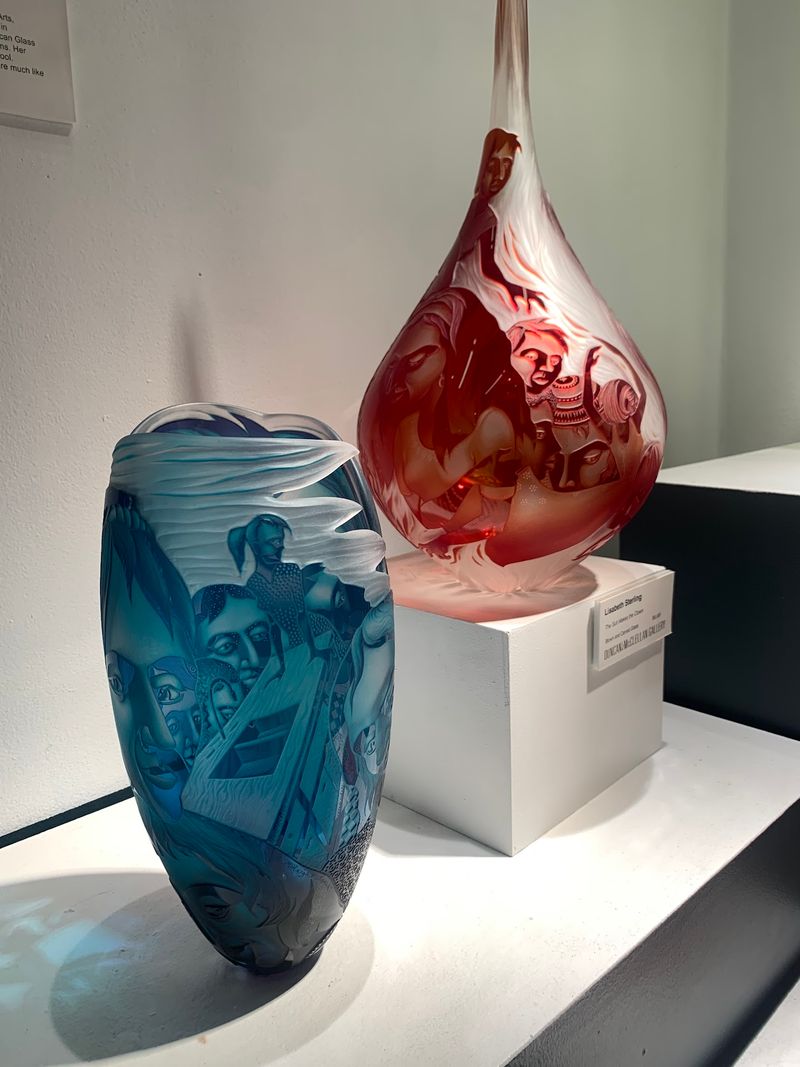
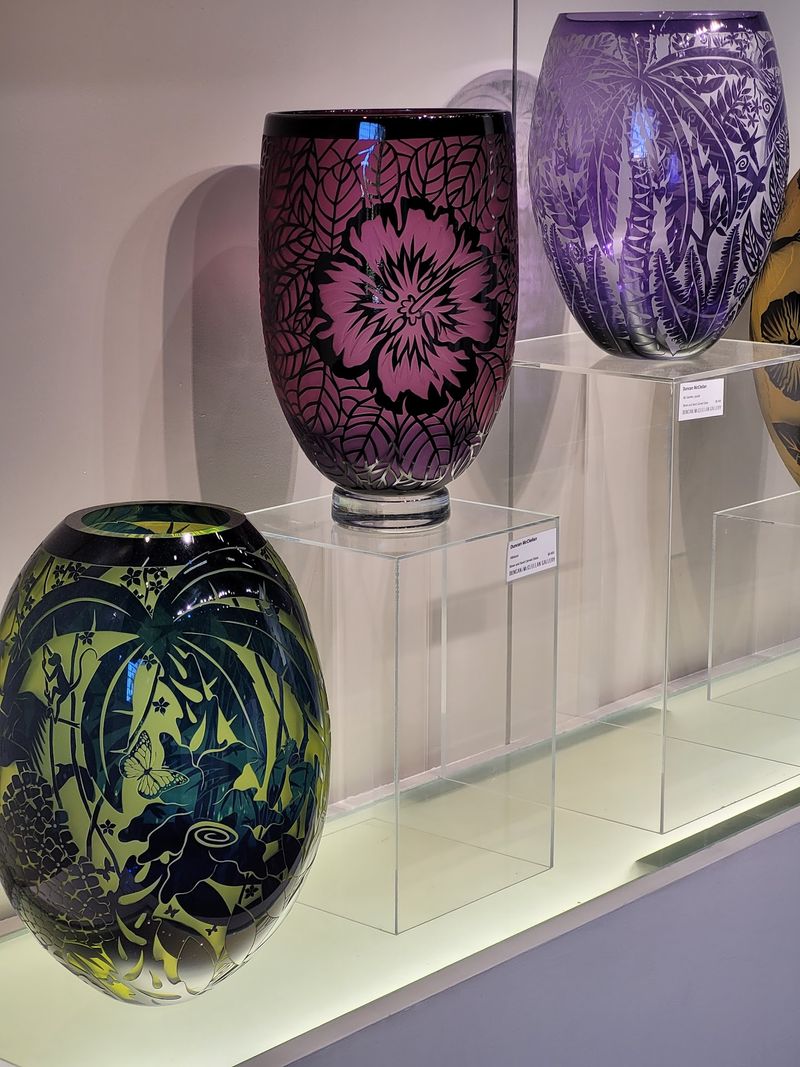
Forms range widely. Blown vessels sit near sculpted figures and sandblasted pieces with matte, frosted surfaces that look nothing like the shiny work beside them.
The collection rotates. New work arrives from around the globe throughout the year, so a return trip rarely shows the same lineup twice, and the Second Saturday ArtWalk brings featured artists on a monthly rhythm.
Lighting deserves a mention of its own. Each piece is lit to reveal interior color layers, bubbles, and optical distortions that flat overhead light would flatten into nothing.
There is no admission charge, though the gallery supports the DMG School Project, an educational charity that operates on donations and funds glass art education in local schools. A donation box sits where you can find it without being pushed toward it.
Comparisons to the Chihuly Collection and the Imagine Museum come up often, and this space holds its own in that company.
Florida Sunlight Doing Its Work in the Sculpture Garden
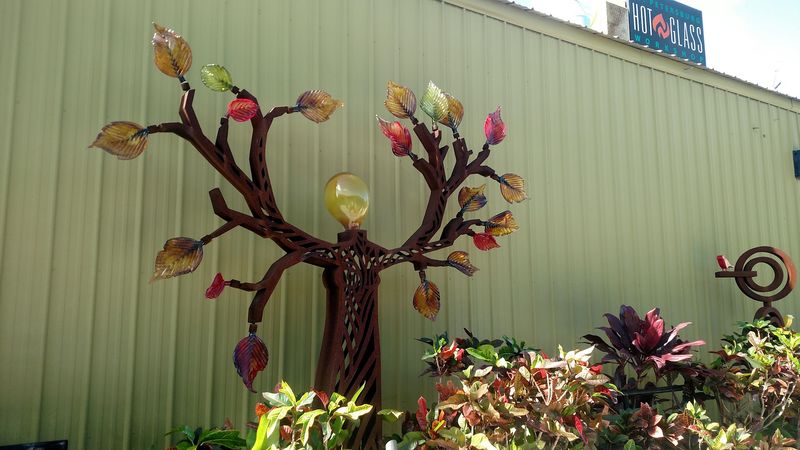
Out the back door, the mood shifts entirely. The sculpture garden is shaded, green, and planted with something like seventy varieties of tropical fruit trees, which is an unexpected credential for an art venue.
Glass installations stand among the foliage. Sunlight moves through them across the day, so a piece that reads deep blue at noon glows a different shade by late afternoon.
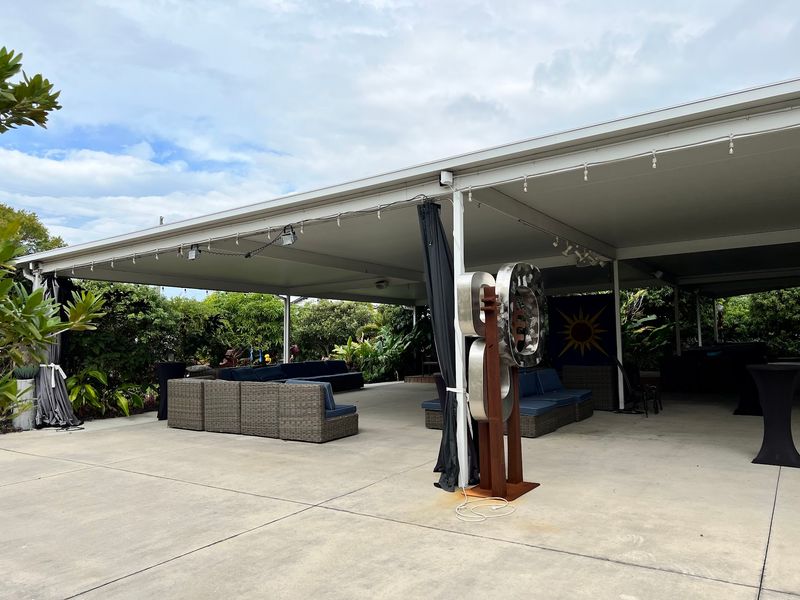
Benches and shaded corners make it easy to slow down. The space doubles as an event venue and has hosted private parties, group tours, and workshops.
Because much of the display area is open air, Florida weather is part of the deal. Midday in summer gets hot out there, so light clothing and a water bottle are practical choices, and cooler months make the whole garden far more comfortable.
Glass etching workshops have run in this setting, where people work on their own pieces surrounded by finished art and greenery. It is a strange, pleasant combination of botanical stroll and outdoor exhibition, and it turns a thirty-minute stop into an hour without effort.
Second Saturday ArtWalk and the Studio at Full Volume
Once a month the whole place changes gear. On the second Saturday, the gallery joins the St. Petersburg ArtWalk and extends hours from 11:00 AM until 9:00 PM, which means you can see the collection under daylight and again after dark.
Evening is when the hot shop looks its best. The furnace glow reads far brighter against a darkening sky, and the orange of a fresh gather practically vibrates.
Guest glassblowers from around the country often work these sessions, bringing techniques and styles that differ from the resident artists. New featured work appears each month, so the exhibit itself refreshes on that same schedule.
Volunteers help out during ArtWalk, and the atmosphere leans social rather than hushed. Conversation carries between the gallery rooms and the garden.
If your schedule is flexible, aiming for a second Saturday gives you the fullest version of what this address offers: more artists, longer hours, and the studio running at its most active. Any other day still delivers, just at a quieter tempo.
Everything on the Shelves Carries a Price Tag
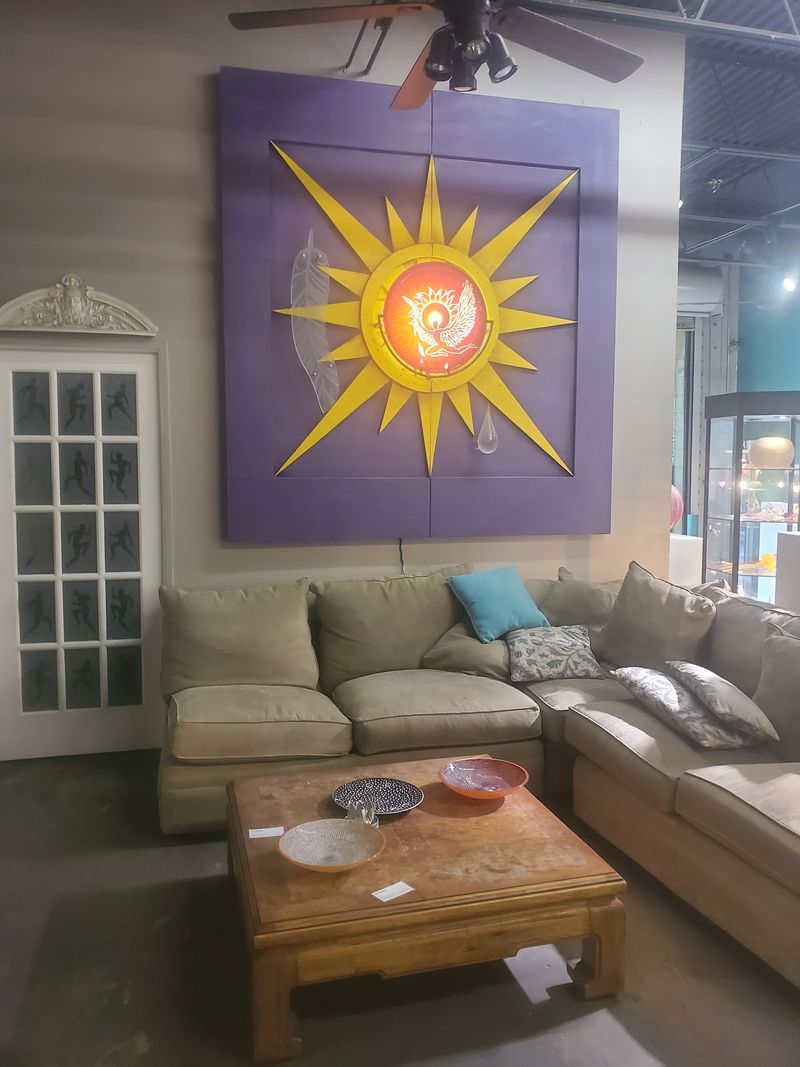
“Everything is for sale – even the cats!” is a line Duncan McClellan uses with people browsing the rooms, and the first half is literally true. Every piece on display can be purchased.
Price ranges spread wider than the museum-style presentation suggests. The gallery offers unique pieces starting around twenty dollars, alongside major sculptural works priced at collector levels.
Nobody hovers. There is no pressure to buy, and spending an hour looking without opening your wallet is entirely normal and expected.
Larger works reflect what they are: original, labor-intensive, one-of-a-kind objects made in a difficult medium by artists with decades of practice. Some shoppers arrive ready to buy and find the top-tier pricing beyond what they had budgeted, which is a fair reaction to original art anywhere.
The small items solve that. A modest ornament or pendant sends you home with something made by hand rather than a printed postcard.
Purchases sometimes require a return trip for pickup, especially with larger works, which gives you a built-in excuse to see whatever new shipment has arrived in the meantime.
The Welcome at the Door
Plenty of galleries treat browsing as an intrusion. Here the opposite happens: Duncan McClellan often greets people personally as they walk in, and staff members offer context rather than silence.
Gillian, the gallery’s young curator and one of the artists represented in the collection, knows the work in detail and explains techniques without turning the conversation into a lecture.
Friendly service comes up constantly in feedback about this place, and it shapes the visit more than you would expect. Knowing that a particular vessel took three attempts, or hearing where an artist trained, transforms a pretty object into a story.
Group tours are accommodated, including youth leadership organizations and corporate gatherings, and the staff clearly enjoy that educational role.
The gallery holds a 4.9-star rating across more than 650 reviews, and the warmth of the welcome is a recurring reason why.
There is also an unusual thread of generosity in the operation. Proceeds and donations support glass education in local schools, which means the hospitality is connected to something larger than a sales floor.
Hours, Parking, and How to Time Your Visit
Planning is simple. The gallery opens Monday through Saturday from 11:00 AM to 6:00 PM, and Sunday from noon to 4:00 PM, with those extended second Saturday hours running until 9:00 PM.
Admission costs nothing. Donations support the DMG School Project, the educational charity attached to the gallery, and the box is easy to find on your way out.
The address is 2342 Emerson Ave S, St. Petersburg, FL 33712, roughly ten minutes from downtown by car and easy to reach from Interstate 275. The Warehouse Arts District has room to park nearby without hunting.
Call ahead at 855-436-4527 if seeing a demonstration matters to you. The furnace goes cold during the peak of summer, and hot shop activity varies by day, so a quick phone check saves disappointment.
Give yourself an hour minimum. An hour covers the indoor galleries and the garden at a relaxed pace; a demonstration in progress easily pushes that to ninety minutes or more.
Dress for open air. Much of the experience happens outdoors under Florida conditions.
Why This Stop Outshines Its Plain Front Door
Four days of touring glass venues around the region and this one still lands as the standout for many who make the rounds. That says something about a free gallery in a warehouse district.
What separates it is access. Dale Chihuly’s work at the Chihuly Collection is spectacular behind its ropes, and the Imagine Museum offers scale and scholarship, but few places let you stand near a working furnace, ask a question, and get an answer from the person holding the pipe.
Add the garden, the rotating exhibits, the range of prices, and the fact that the whole operation funds glass education in local schools, and the value equation tilts sharply in your favor.
Bring curiosity more than a budget. You can arrive knowing nothing about annealing or gathers and leave able to explain both to someone else.
Time it for a cooler month or an evening ArtWalk if you can. Either way, the plain door on Emerson Avenue opens onto one of the more surprising hours you will spend in St. Petersburg.