This California Mountain Town Is Gorgeous, But Exploring After Dark Comes With A Warning
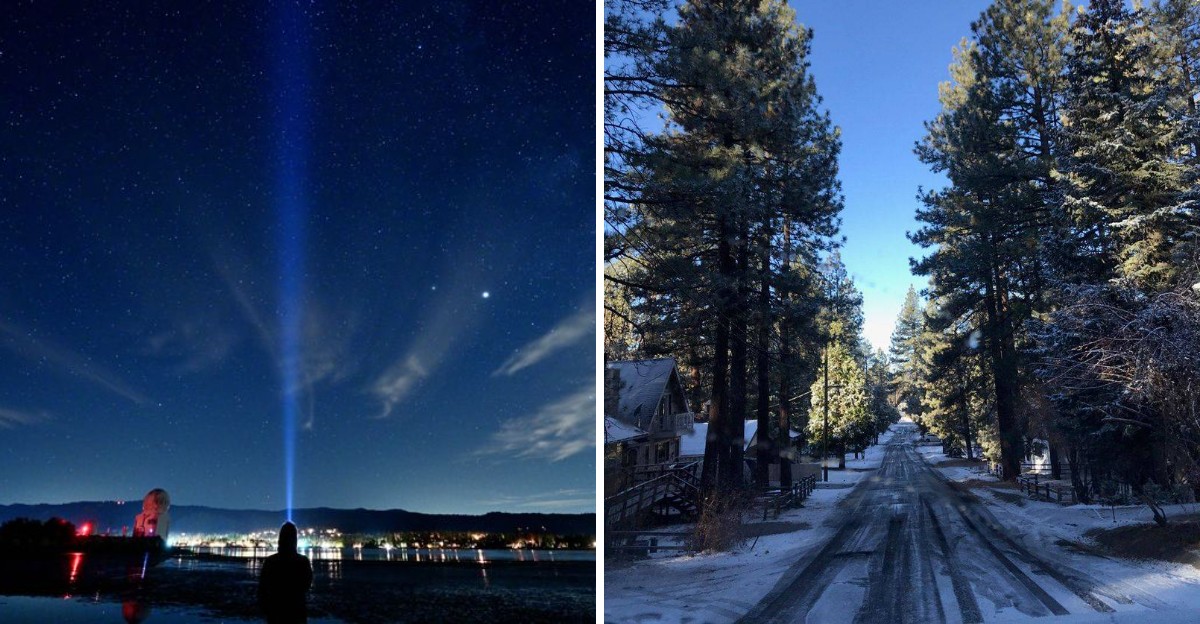
Daylight makes the mountains feel inviting. Darkness changes the rules.
Once the sun drops, quiet roads, forest edges, and trails take on a different character, especially in a place where wildlife is very much part of the landscape.
This California mountain town is beautiful after dark, but visitors are advised to stay aware of their surroundings and avoid wandering alone in wilderness areas at night.
Local safety guidance also notes that animals can move onto roads after sunset, making nighttime driving another reason to slow down.
None of that takes away from the appeal. It simply means the mountain setting deserves a little more respect once daylight disappears.
The stars may tempt you outside. Just make sure the scenery is not the only thing getting your attention.
Sunset Arrives Faster Than Expected at 6,750 Feet
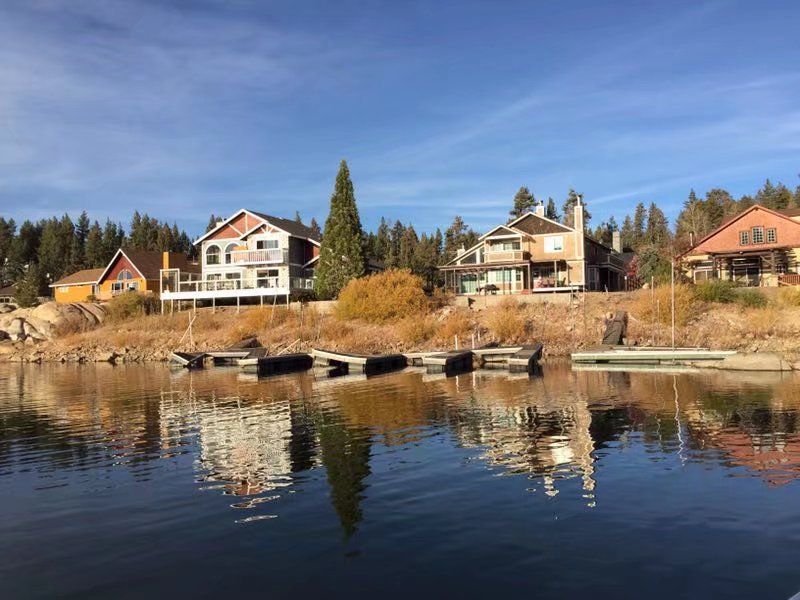
Mountains block the low sun long before the official sunset time, so daylight fades in a hurry once shadows stretch across the water.
Big Bear Lake sits at roughly 6,750 feet, and the thin, dry air holds very little warmth once the light goes. Temperatures can drop sharply within an hour, even after a warm afternoon in summer.
Visitors who packed only shorts and a T-shirt often end up cutting the evening short and heading back to their lodging.
Layering solves most of this. A fleece or light jacket, plus a hat, makes a big difference when sitting near the shoreline or walking through town after dinner.
Planning helps too. If the goal is a lakeside view at golden hour, arriving forty-five minutes early gives room to park, walk, and settle without rushing.
The upside of that quick darkness is the sky. Away from the brighter streets, stars come out with a clarity that surprises people used to city glow.
Bring a small light for the walk back to the car. Paths that looked obvious in daylight can blend into the trees once the sun is fully down, and a phone flashlight drains a battery faster than most expect on a cold night.
Winter Chain Rules Apply Whether Or Not It Is Snowing
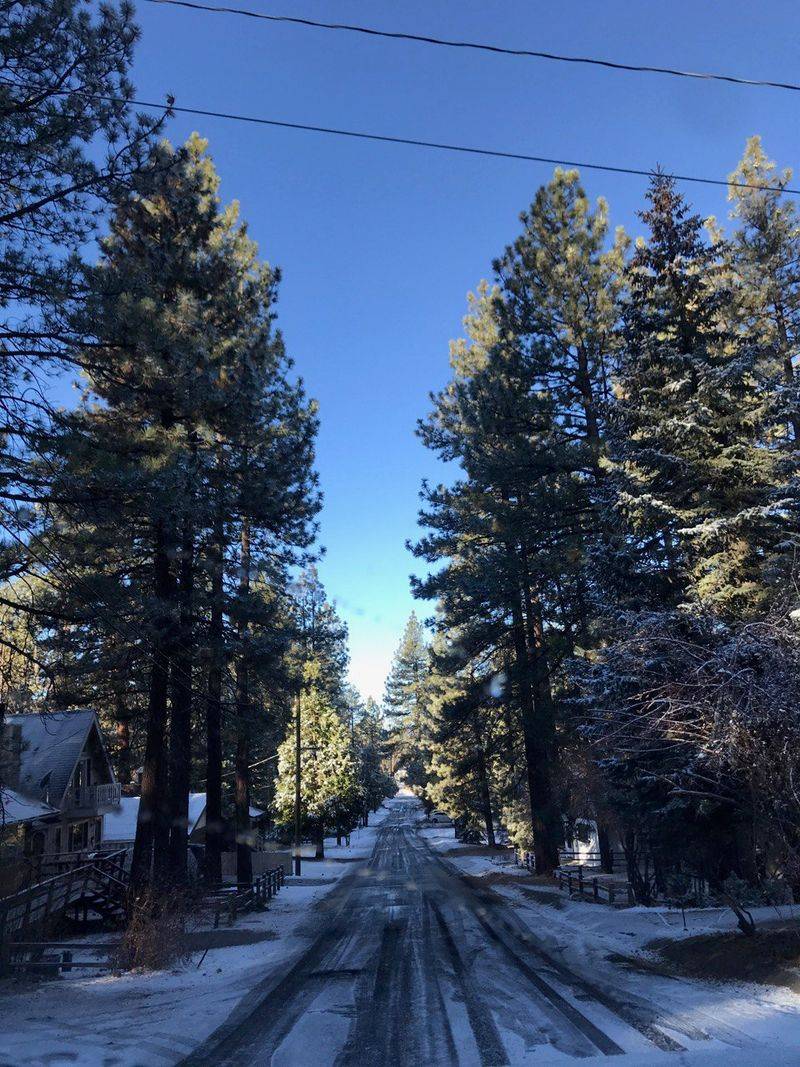
Here is a rule that catches plenty of first-time visitors off guard: tire chains must be carried in the vehicle from November 1 through April 30, even for four-wheel and all-wheel drive vehicles.
Carrying them is required regardless of the weather forecast that day.
Conditions on the mountain highways can change between the base of the hill and the top, and a clear valley morning says very little about what waits at higher elevation.
Nighttime driving raises the stakes. Blowing snow, fog, and ice patches reduce visibility quickly, and headlights reflecting off falling snow can make the road ahead harder to read rather than easier.
Falling rocks and debris on the roadway are also possible during storms, which is another reason to slow down on curves.
Checking road status before heading up or down is a simple habit worth keeping. Conditions posted in the morning may not match what is happening after dark.
For anyone uneasy about mountain driving at night, arriving before sunset and staying put until morning is a reasonable choice.
Restaurants, shops, and lodging are close enough together in town that a car is not always necessary once you have parked for the evening.
Wildlife Gets Busier Once the Sun Goes Down
Coyotes are a regular presence around this part of the San Bernardino Mountains, and they are most active in the early morning and after dark.
They generally keep their distance from people, but small pets are a real concern.
Keeping dogs leashed and close during evening walks is the simplest precaution, and leaving pets outside unattended overnight is not a good idea.
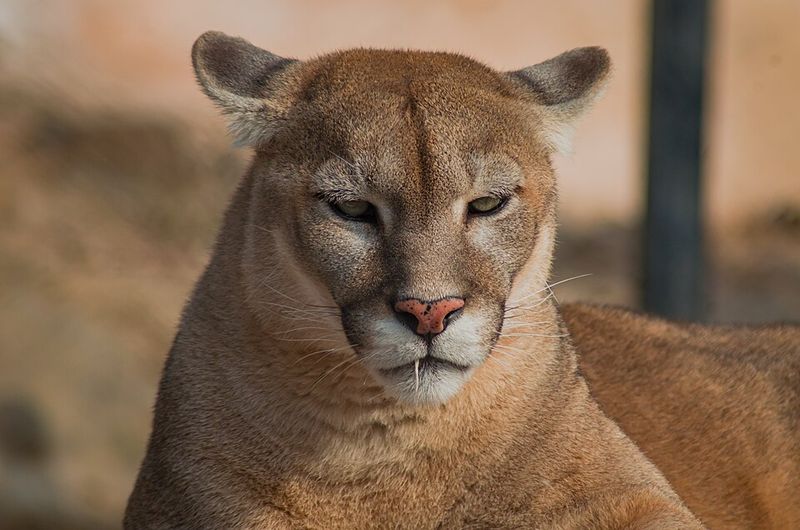
Mountain lions also live in the surrounding forest and hunt primarily at night.
Sightings are uncommon because these animals are shy and avoid people, though awareness still matters when walking near wooded edges.
Wild burros show up near roadways in some areas, including stretches along Highway 38 near Moonridge, Erwin Lake, and Baldwin Lake.
They can stand still in the road and are hard to spot at night, so easing off the accelerator through those areas is wise.
Feeding wildlife of any kind creates problems for everyone who comes later, and it is not permitted.
Securing trash and food in vehicles or indoors helps keep animals from lingering around cabins. Curious critters follow smells, and an unattended cooler on a porch is an open invitation for an unwelcome visit.
Trails Turn Unfamiliar Under a Headlamp
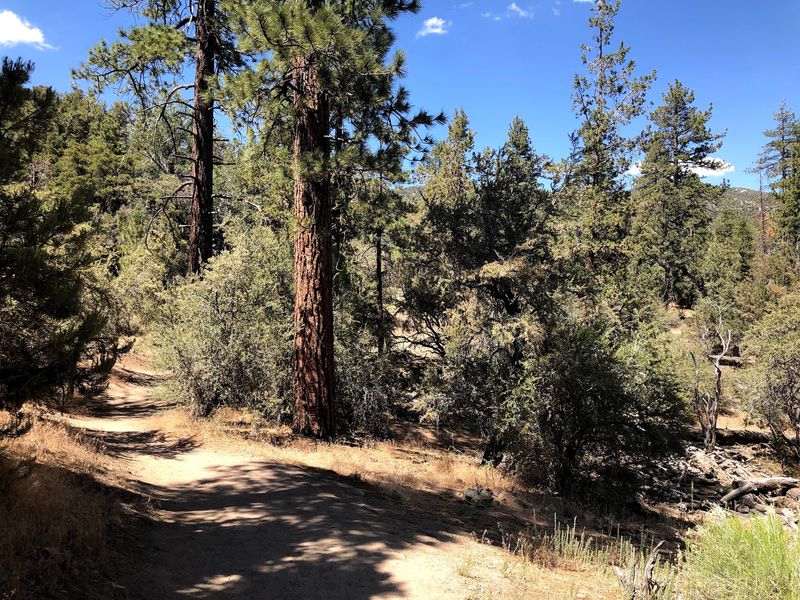
A path that felt straightforward at two in the afternoon can feel like a maze at nine at night.
Darkness flattens depth perception, and the small landmarks hikers rely on, like a bend in the creek or a distinctive boulder, disappear into shadow. Losing the trail is one of the most common problems people run into after sunset.
Footing is the other issue. Roots, loose rock, and uneven ground are far harder to read by lamplight, and a rolled ankle miles from the trailhead turns a short outing into a long night.
Cold builds up quickly once you stop moving, which is why hypothermia remains a risk even in summer at this elevation.
A few practical steps make a difference. Walk the route in daylight first, carry a headlamp with spare batteries plus a backup light, and download offline maps before losing signal.
Tell someone your plan and expected return time. Hiking with at least one other person is far safer than going solo.
Night hiking suits experienced hikers who know the terrain. For everyone else, an evening stroll on a lit sidewalk near town delivers the mountain air without the navigation puzzle.
The Village Keeps Its Lights On
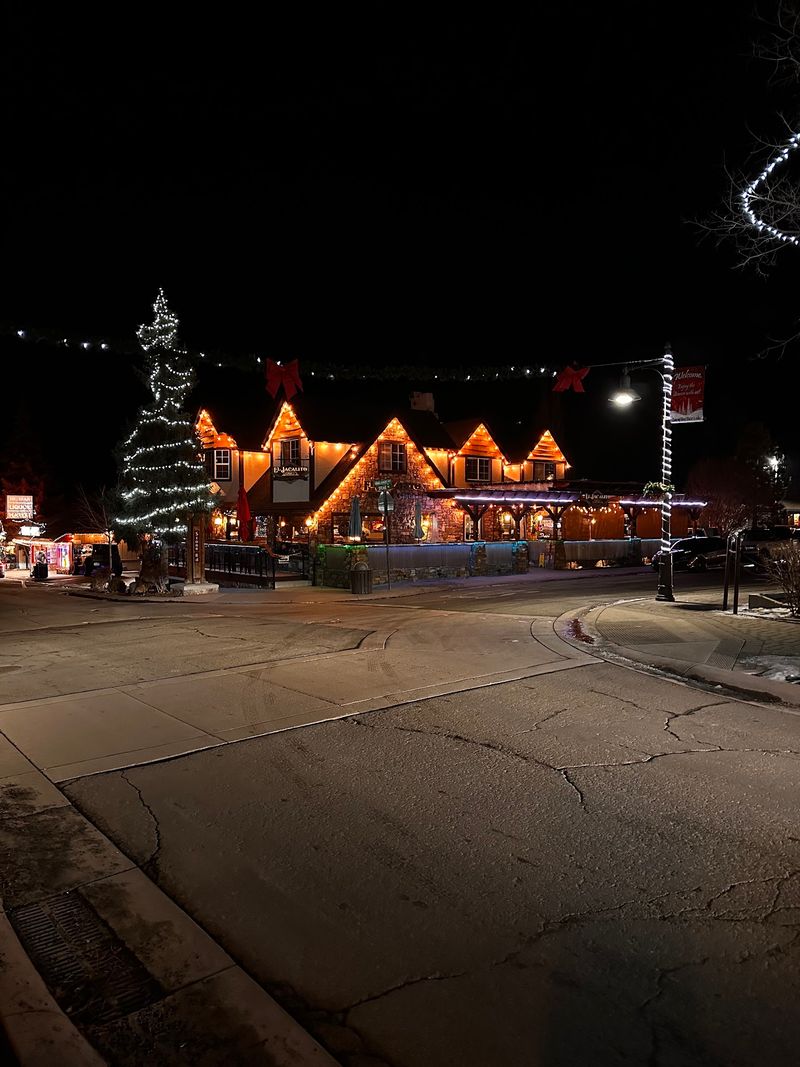
Most evening activity clusters in the Village, the walkable commercial heart of town lined with boutiques, gift shops, and restaurants.
Sidewalks are wide, blocks are short, and the whole area is compact enough to cover on foot without needing to move the car.
That makes it the easiest place to spend an evening for anyone who would rather not drive mountain roads in the dark.
Winter brings string lights through the trees and along storefronts, which softens the whole street and makes browsing pleasant even when it is cold.
For planning help, the Big Bear Lake Visitor Center sits right in the middle of it all at 40824 Big Bear Blvd, Big Bear Lake, CA 92315.
Staff there can point visitors toward current events and seasonal conditions during daytime hours.
Weekends draw noticeably bigger crowds than weekdays, especially during ski season and summer holidays. Arriving early in the evening usually means shorter waits and easier parking.
Foot traffic stays steady into the evening, which many people find reassuring compared to the quieter residential streets nearby.
Late Dinner And A Laid-Back Room At Murray’s Saloon & Eatery
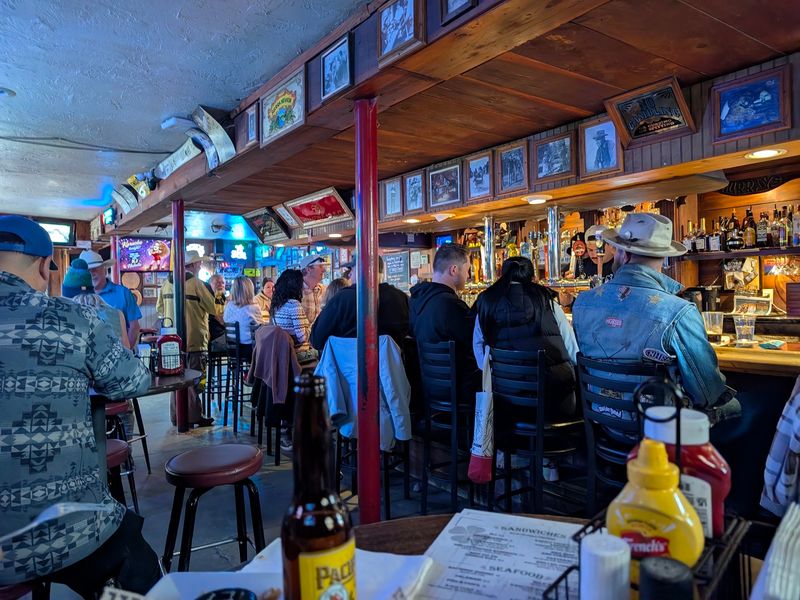
Some nights call for nothing fancier than a booth, a burger, and a room where nobody is rushing you out the door.
Murray’s Saloon & Eatery, a family-run spot serving American fare, is at 672 Cottage Ln, Big Bear Lake, CA 92315, and it stays open daily until 2 AM. Breakfast, lunch, dinner, and late-night snacks are all part of the rotation.
The atmosphere leans casual and unpolished in a good way, with a noise level that picks up as the evening goes on. Groups tend to be talkative, so it is better suited to conversation than quiet reflection.
Seating is straightforward, and turnover moves at a comfortable pace rather than a hurried one.
Because the kitchen runs so late, this becomes a useful backup when a day of skiing or hiking pushes dinner well past normal hours.
Arriving right at the dinner rush on a weekend often means a wait. Coming in a bit later, closer to nine, usually finds the room calmer and tables easier to come by.
Western Atmosphere And Live Music At Wyatt’s Grill & Saloon
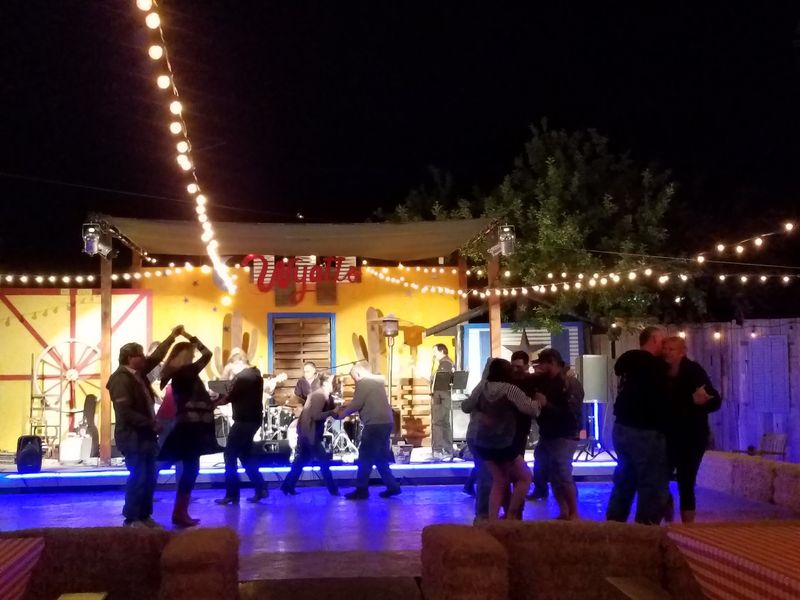
Grill favorites and a Western-style room make this a change of pace from the usual mountain cabin look.
Wyatt’s Grill & Saloon operates at the Big Bear Lake Convention Center, located at 42900 Big Bear Blvd, Big Bear Lake, CA 92315.
Hours generally run from 4 PM to 10 PM, and the doors stay closed on Sundays, Mondays, and Tuesdays, so checking before driving over saves a wasted trip.
Live music is part of the draw, which naturally raises the volume in the room. Anyone hoping for a hushed dinner may want a different night or an earlier seating.
The space itself is roomier than most restaurants in town, and larger parties tend to fit more comfortably here than in the smaller Village storefronts.
Early evening usually feels relaxed, with the energy building later as the music starts.
Its location along the main boulevard makes it an easy stop on the way back from the slopes, and there is more parking here than in the tighter Village blocks.
Stargazing Rewards Those Who Prepare
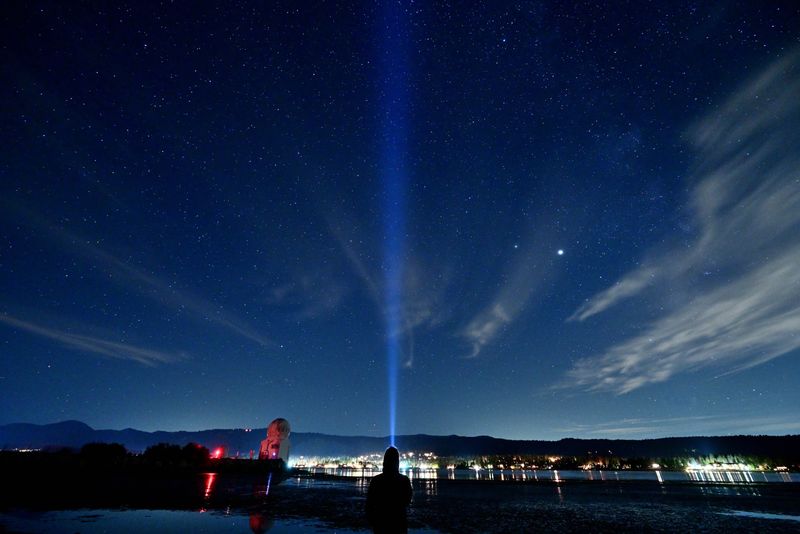
Clear mountain air and elevation combine to produce night skies that genuinely impress, even for people who have seen plenty of stars before.
Away from the brighter parts of town, the difference becomes obvious within a few minutes of the eyes adjusting. Give it fifteen or twenty minutes without looking at a phone screen for the best effect.
Cold is the main obstacle. Standing still outside at this elevation drains body heat fast, so a warm jacket, gloves, and a blanket turn a shivering ten minutes into a comfortable hour.
A thermos of something hot helps more than most people expect.
Choosing a safe, legal spot matters. Pulling off onto a dark shoulder of a mountain road is risky, and staying within well-known public areas or on the property where you are lodging avoids trouble.
New moon nights show the most stars, while a bright full moon washes out fainter detail but lights the ground nicely for walking.
Red-light flashlights preserve night vision better than white beams, which is a small trick that makes a noticeable difference when moving around in the dark.