Deep in the Florida Everglades, A Roadside Shack Tracks A Legend Nobody Has Proven
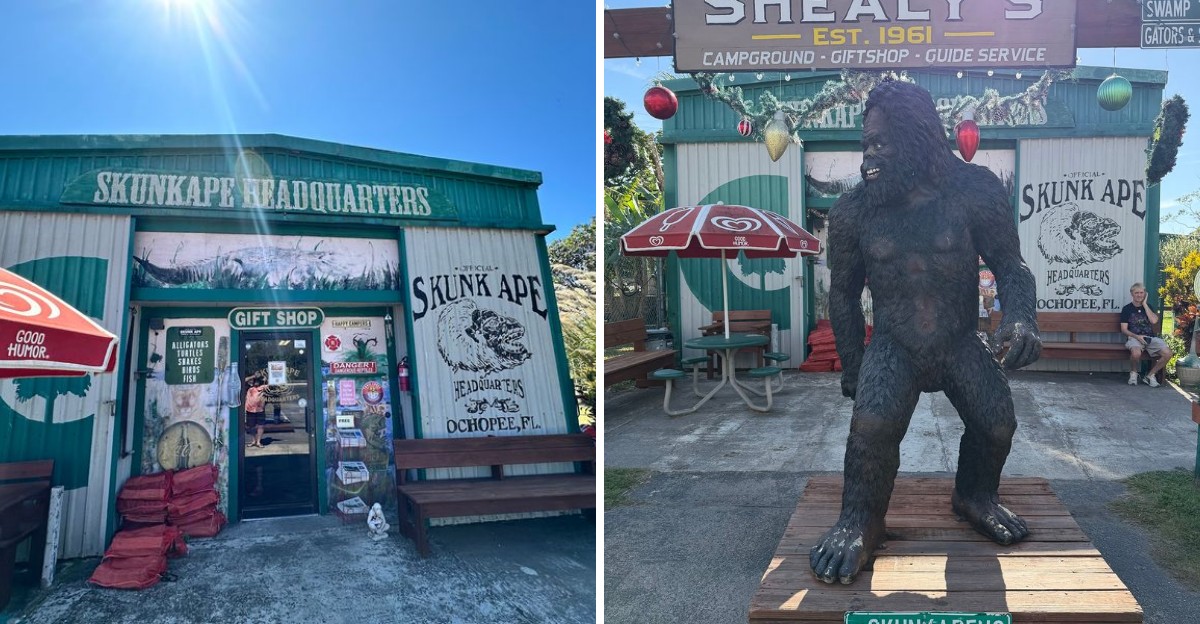
There is a stretch of road in southern Florida where the sawgrass runs flat to the horizon and the only thing breaking it up is a small wooden building with a hairy statue out front. I pulled over expecting a soda and a restroom, and left an hour later holding a sticker, a head full of swamp stories, and a plaster footprint image I still cannot explain.
Florida keeps a creature legend of its own, and one family has spent decades trying to prove it exists. That little building is where the whole strange, funny, oddly moving story lives.
A Wooden Building on the Tamiami Trail
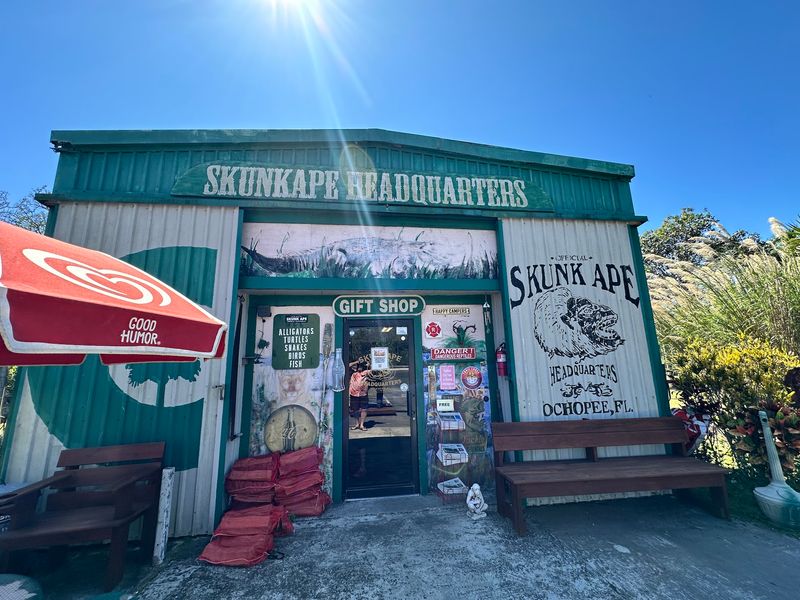
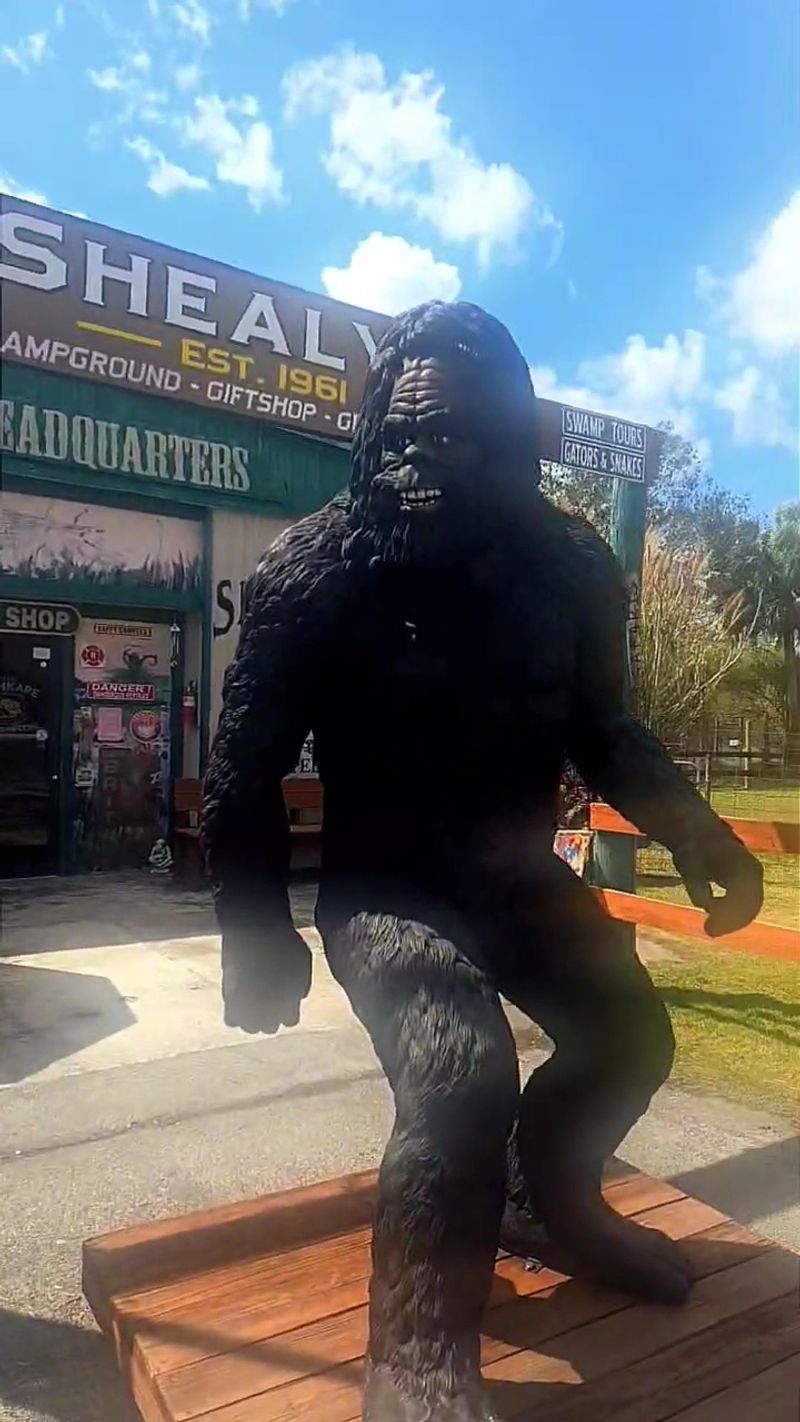
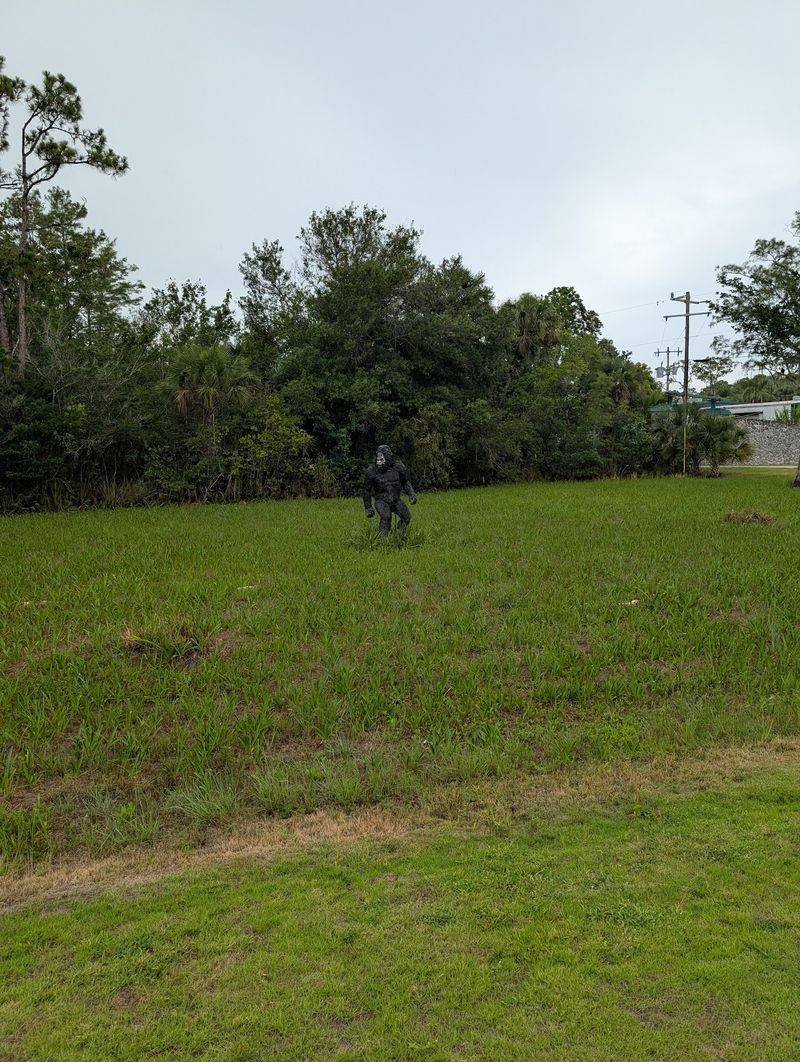
Drive the Tamiami Trail East between Naples and Miami and the scenery settles into a rhythm: canal, sawgrass, cypress dome, repeat. Then a low wooden structure appears on the south side of the highway, hand-painted signs stacked across the front, and a shaggy statue posed near the parking area like a greeter who forgot to shave.
The Skunk Ape Research Headquarter sits at 40904 Tamiami Trail East in Ochopee, Florida, a speck of a community better known for housing the smallest post office in the country. The building is part gift shop, part small museum, part booking desk for swamp tours, and it shares a property with Trail Lakes Campground.
Nothing about the exterior announces itself as an institution. There is gravel, there is shade, there is a screen door.
Inside, the shelves are crowded and the walls carry photographs and casts tied to a creature that mainstream science has never confirmed. That gap between the modest shell and the outsized subject is exactly what makes the stop stick in your memory long after you have merged back onto the highway.
Meet Florida’s Shaggy, Foul-Smelling Biped
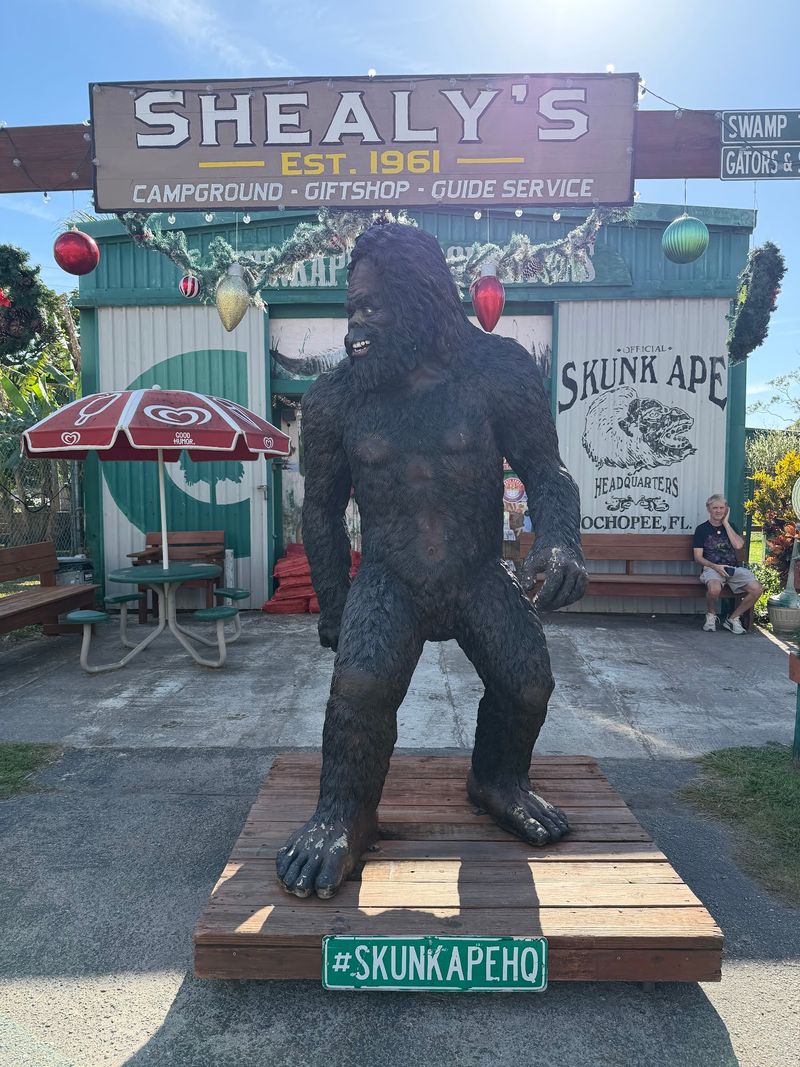
Picture something between a linebacker and an orangutan, walking upright through waist-deep water at dusk. Accounts of the Skunk Ape describe a bipedal, ape-like figure standing roughly five to seven feet tall, with some reports stretching the range far wider.
Shaggy fur in brown, reddish-brown, gray, or black. A heavy brow ridge.
A flat, wide nose.
The name comes from the smell. Reports describe a thick, clinging odor compared to rotten eggs, sulfur, and decaying vegetation, strong enough to turn a stomach.
It is the detail that makes the legend memorable, because a large hairy animal is one thing, but a large hairy animal you can smell before you see it belongs entirely to Florida.
Reported territory covers the Everglades, Big Cypress National Preserve, and Myakka River State Park, with a preference for thick vegetation close to water. Whether that describes a real animal or a very persistent piece of folklore is unsettled.
What is settled is that the creature has a permanent address on this highway, and a statue out front that has been photographed thousands of times.
Dave Shealy and a Search That Started in 1974
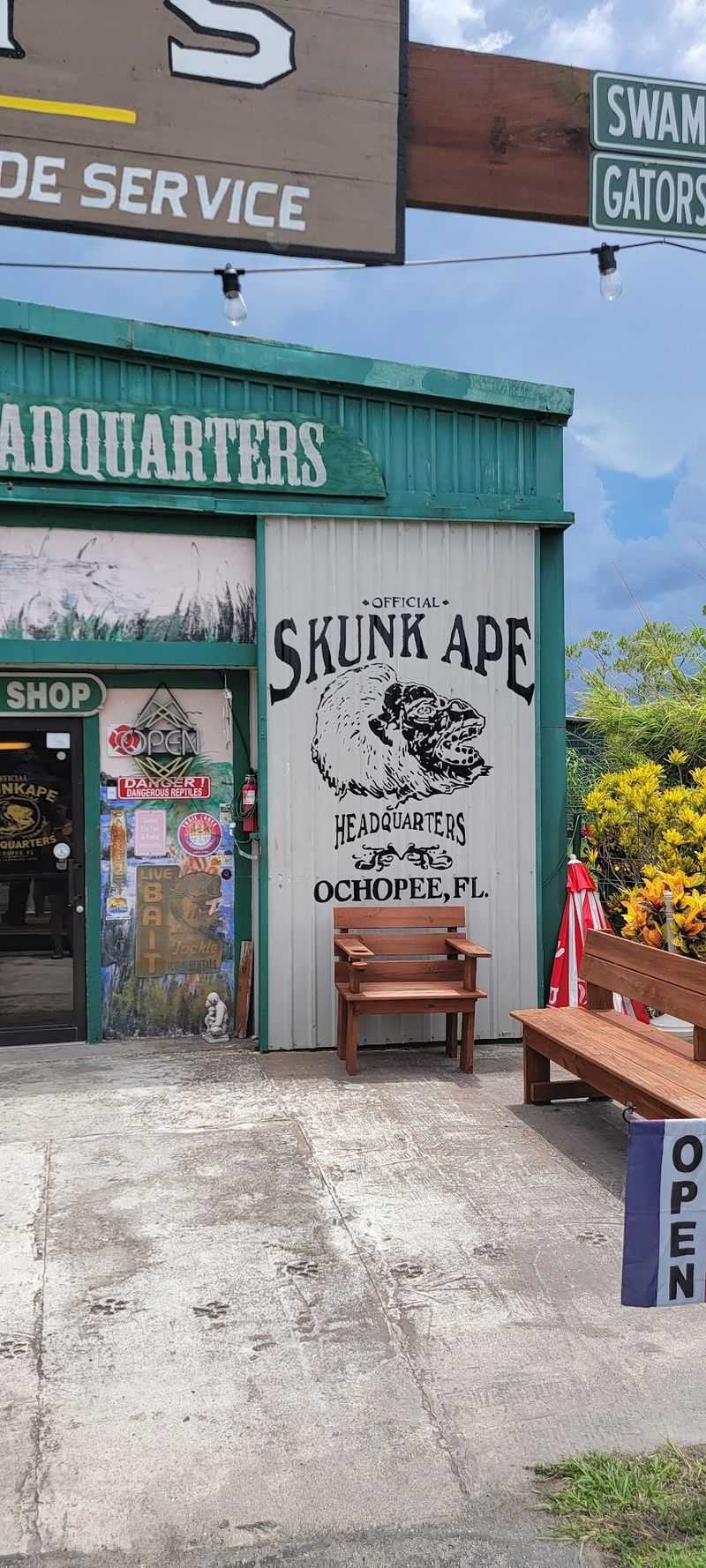
Dave Shealy has spent his whole life in the Everglades, which is a sentence very few people can say honestly. He says his first Skunk Ape encounter came in 1974, when he was ten years old, and that single afternoon set the course for everything after it.
Decades of tracking followed. Shealy investigates reported sightings, keeps records, promotes awareness of the creature he considers an undocumented hominid, and presents himself as the leading authority on the subject.
In 2000 he captured video footage in the swamp that he maintains shows the animal moving through tall grass. Critics have argued the figure looks like a person wearing a suit, and that debate has never resolved.
Here is what strikes me about the whole thing. Whether or not the footage holds up, the commitment behind it is real, and it built something tangible on a remote stretch of Florida highway.
A campground, a reptile exhibit, a tour operation, a gift shop that sends stickers home in glove compartments across the country. Legends usually fade.
This one got a headquarters, a mailing address, and business hours.
Plaster Footprints and Photographs on the Wall
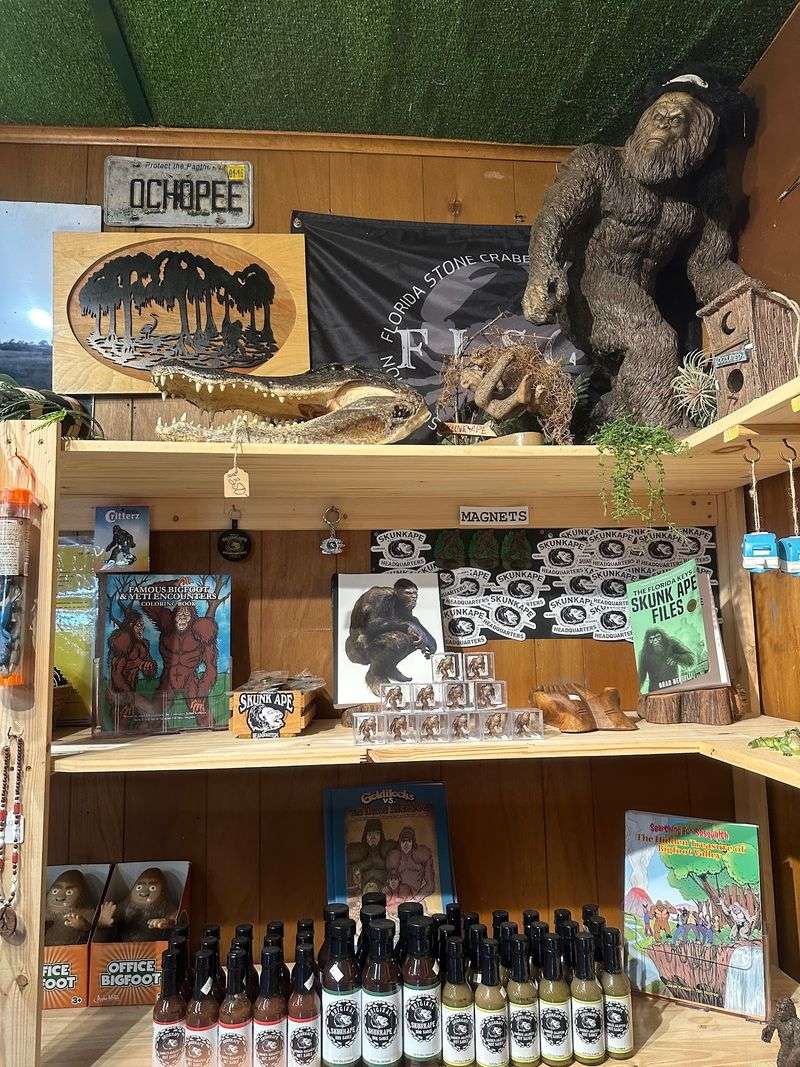
The evidence room, such as it is, doubles as the middle of the gift shop. Plaster casts of purported footprints sit on display where you can lean in close and study the toe splay and the depth of the heel.
Photographs hang nearby, some taken by Shealy himself, showing shapes in the sawgrass that your eye keeps trying to resolve into something familiar.
Nobody hands you a verdict. The casts sit there, unlabeled by any scientific body, and you make of them what you will.
That restraint is part of the charm, honestly. A slicker attraction would add dramatic lighting and a soundtrack.
The staff will talk you through the lore if you ask, and they enjoy the asking. Emily, who works the counter, has a reputation for pulling out stories that never make it onto a placard.
Some people arrive hoping for a full-scale museum with rooms of artifacts and come away wanting more depth. It is a compact display inside a shop, not a research institute with a curator.
Set expectations at roadside curiosity, and the footprints land beautifully.
A Gift Shop Built on Stickers and Souvenirs
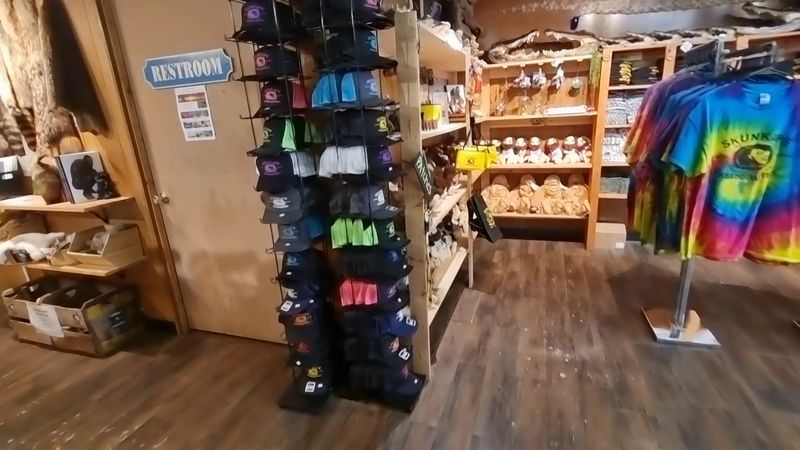
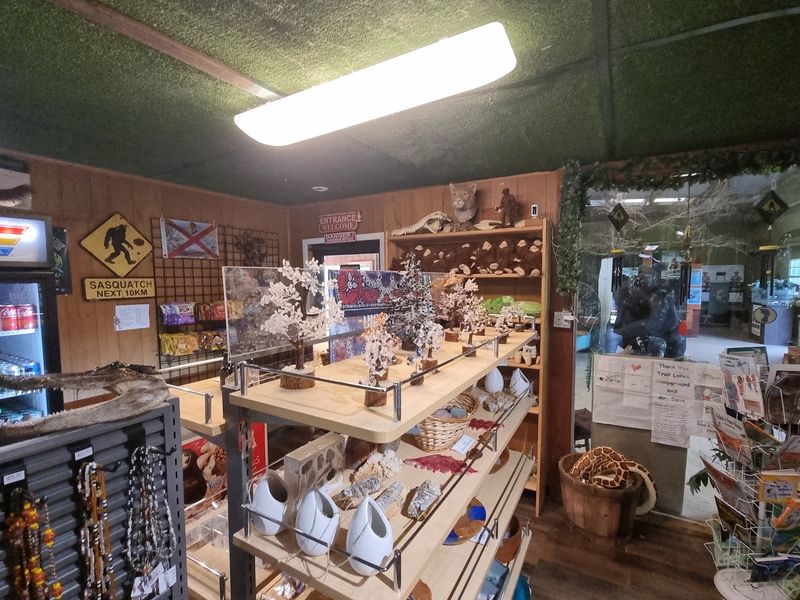
Shirts, hats, keychains, magnets, and a wall of stickers that people photograph before they buy. The retail side of the building is easily the busiest thing on the property, and it leans hard into Everglades and Skunk Ape imagery without tipping into generic tourist-trap merchandise.
Prices sit in reasonable territory, and the stock rotates enough that repeat stops turn up new designs. Original Everglades memorabilia shares shelf space with local products, so you can walk out with something specific to this stretch of Florida rather than something printed for every beach town in the state.
One fair criticism floats around: several of the shirt designs share a similar logo treatment, so the variety is broader in the small items than the apparel. Stickers are where the shop shines.
Snacks and cold drinks sit near the register, which matters more than it sounds. This is a long, remote run of highway with almost nothing between the towns, and a cooler full of cold bottles has rescued plenty of drives across Big Cypress.
Grab two. The second one always gets drunk before Miami.
Staying the Night at Trail Lakes Campground
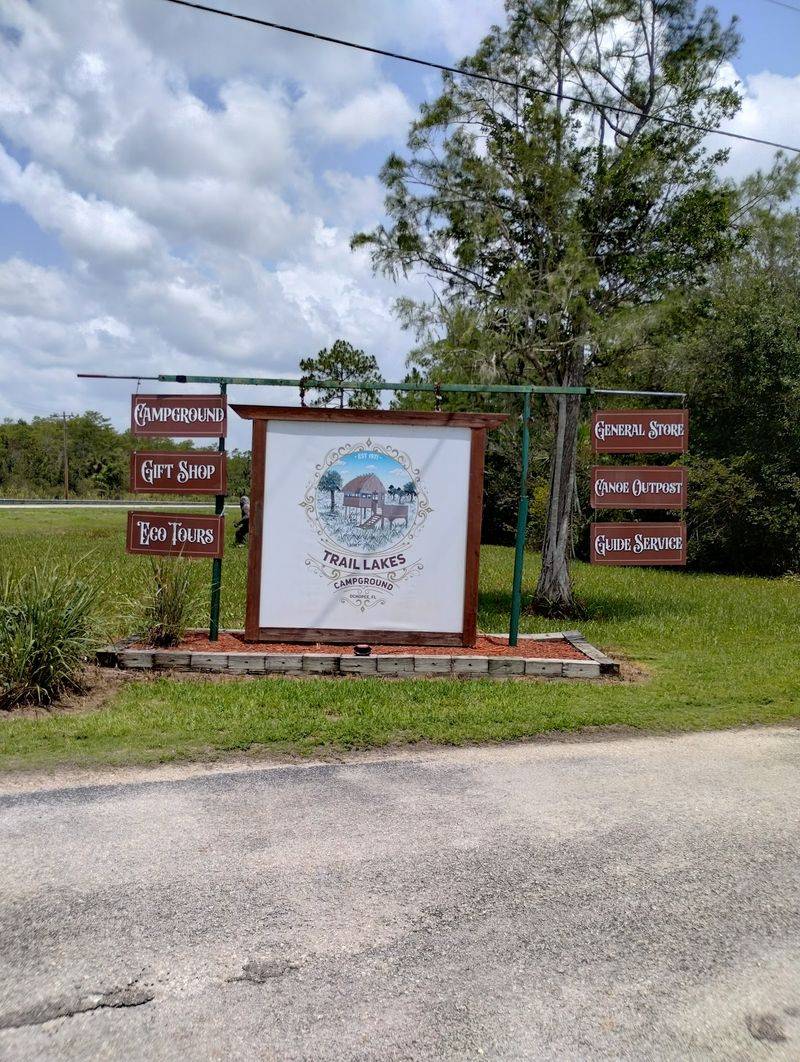
Sleeping out here is a different proposition from stopping for a sticker. Trail Lakes Campground occupies the land behind the shop, with pull-through RV sites on maintained grass, picnic tables, fire rings, and full hookups including 50-amp electric and water.
Tent spots, cabins, and traditional chickee huts round out the options. The chickees carry a higher price and deliver the kind of night people talk about for years, an open-sided thatched shelter with swamp sounds on every side.
Practical details make the stay workable. A small laundry building holds two washers and two dryers running on quarters, and the bath house is functional and honestly rustic, with sinks, toilets, and showers that could use modernizing.
Nobody is pretending otherwise.
The grounds are kept tidy and the setting is quiet, which is the whole point of choosing this over a resort closer to the coast. One couple liked it enough to hold their wedding on the property.
Music events pop up in the back community area now and then, and the crowd tends to be friendly to anyone who wanders over.
Why Science Keeps Filing It Under Folklore
No nonhuman primate species is native to the United States or Canada. That single fact does most of the heavy lifting in the scientific case against the Skunk Ape, and no physical or genetic evidence has ever closed the gap.
The National Park Service and researchers generally place the creature in the folklore column. The favored explanation for sightings is the Florida black bear, which can rise onto its hind legs, tops out at an impressive height, and produces a powerful musky scent of its own.
Escaped primates, including orangutans, have been floated as another possibility for particular reports.
Still, the stories are old and stubborn. Tales of a large hairy figure in the Florida wilderness trace back centuries through Native American narratives.
An 1823 account from a midshipman sits in the early American record, and reports climbed noticeably during the 1950s and again in the 1970s.
There was even a legislative moment. A 1977 bill in the Florida legislature sought protection for anthropoid or humanoid animals.
It did not pass, but the fact that it reached a chamber at all says something about how deep this legend runs.
Old-School Roadside Charm That Survived
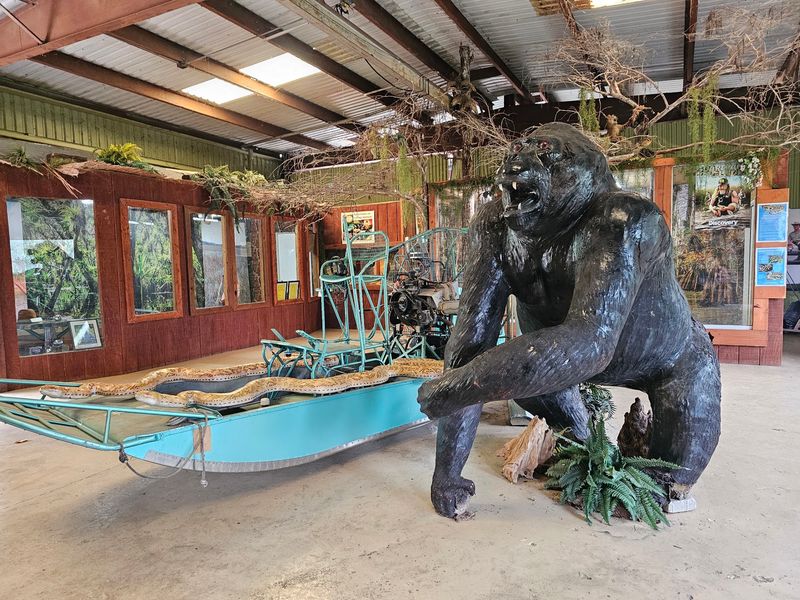
Remember when a Florida road trip meant pulling over every twenty miles for a snake show, an orange stand, or a shell shop with a plywood mermaid out front? Almost all of that is gone, paved over or bought out.
This place is a survivor from that era, and it has not sanded down its edges to fit modern taste.
Hand-painted signs. A gravel lot.
A statue you pose beside without irony. The whole operation runs on personality rather than polish, and the people working the counter are chatty in the way that vanished when attractions started hiring greeters instead of storytellers.
My favorite detail is how uncomplicated the pitch is. There is a legend, there are casts of footprints, there are alligators out back, and there is a cooler of cold drinks.
Nobody upsells you a photo package.
Florida has plenty of glossy attractions with ticket windows and turnstiles. Very few places left let you walk into a shack, hear a swamp story from someone who actually lives in the swamp, and drive off feeling like the state got a little stranger and a little better.
Hours, Donations, and What It Costs
Doors open at 9 AM and close at 5 PM, seven days a week, which makes planning easy on a highway where almost nothing keeps predictable hours. Arriving in the morning gives you cooler air and better odds of a relaxed conversation at the counter.
Cost structure is refreshingly simple. Browsing the shop and the indoor displays is free, and the reptile area out back runs on a modest donation dropped in a bin, a few dollars per person, with proceeds going to animal care.
Snacks and cold drinks are priced like a small-town store rather than a theme park.
Tours, kayak and canoe rentals, and campground stays are separate bookings with their own rates, and those are worth arranging ahead if you have a specific day in mind. Camping runs closer to full-service pricing given the hookups and the location.
Budget fifteen to twenty minutes for a straight roadside stop, an hour if you linger over the footprint casts and the reptiles, and a half day or more if a push-boat trip is on the schedule. Cash for the donation bin is a smart thing to have loose in the console.
Getting There Across Big Cypress
Set your navigation to 40904 Tamiami Trail East, Ochopee, Florida, and let the road do the rest. The stop sits on U.S. 41, the original Tamiami Trail, roughly midway on the crossing between Naples and Miami and right in the heart of Big Cypress National Preserve.
Fuel up before you commit to the drive. Services thin out dramatically once you are past the last suburb on either end, and cell coverage gets patchy in stretches.
Parking at the attraction is gravel and easy, with room for RVs and trailers.
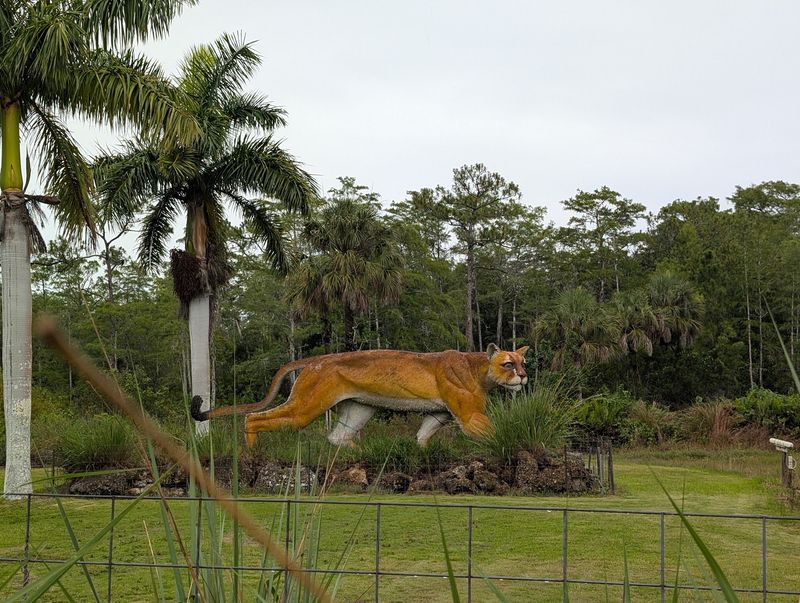
Watch your speed through here. Panther crossing zones are marked and enforced, alligators sun themselves along the canal banks, and wading birds stand right at the edge of the pavement.
The surrounding area rewards a slower pace. Ochopee’s tiny post office is a quick photo stop just up the road, the Big Cypress visitor center has boardwalks with reliable alligator viewing, and side roads lead toward Everglades City and the Ten Thousand Islands.
Chain the stops together and one afternoon on U.S. 41 turns into the best kind of Florida day.
A Legend That Earns the Pull-Over
So does the Skunk Ape exist? Nothing at this shack settles that, and the staff would probably tell you the question is more fun unanswered.
What sits on the property is real enough: casts of footprints, decades of one man’s field notes and footage, a reptile collection, a working campground, and a shop that hands out cold drinks in the middle of a swamp.
People looking for a polished museum with curated galleries will find something smaller than expected. That is worth knowing going in.
What you get instead is texture, the kind of roadside oddity Florida used to be full of and now protects in only a few places.
Fifteen minutes buys you a story to tell. A booked push-boat trip buys you an understanding of the Everglades that no overlook provides.
An overnight in a chickee buys you a night you will bring up at dinner parties for years.
Pull over. Leave something in the donation bin, buy a sticker for the cooler lid, and glance at the tree line on your way out.
Just in case.