The Remote Blue Ridge Town Is So Overlooked Many North Carolinians Have Never Heard Of It
Some mountain towns announce themselves with billboards.
This one seems perfectly happy if you miss the turn.
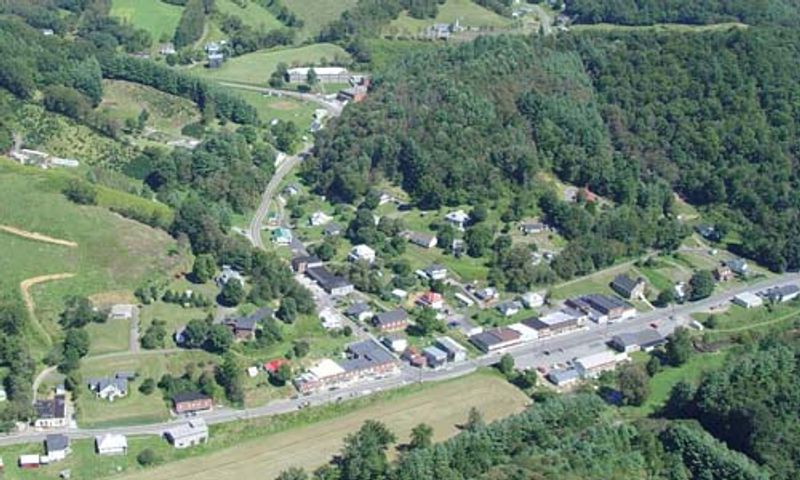
Near the Virginia line, a village of barely more than a hundred people sits beside a trout stream, one stop sign doing most of the traffic management.
That alone should tell you the pace.
North Carolina has plenty of mountain escapes, but this place feels like somebody turned the volume down on purpose.
An old stone schoolhouse now holds working artists, the roads curl through the hills, and lunch can easily become the main event because nobody is rushing you anywhere.
You come expecting a quick stop.
Then the creek, the quiet, and the general lack of urgency start making a very convincing argument for staying longer.
Honestly, the stop sign may be the busiest thing in town.
Find A Tiny Mountain Town Hiding Near The Virginia Line
Some towns announce themselves with billboards. This one lets the mountains do the talking, and the mountains are not in a hurry.
Lansing rests in the northern reaches of Ashe County, only a few miles from the Virginia border and near the corner where North Carolina, Tennessee, and Virginia come close together.
The 2020 Census counted 126 residents, and North Carolina’s 2024 municipal estimate put the population at about 125.
Small numbers like that shape the mood. Front porches outnumber traffic lights, neighbors wave from truck windows, and the pace feels closer to a Sunday afternoon than a workweek.
Its story reaches back to 1882, when a post office opened and the settlement grew into a trading center for the surrounding valleys.
The town motto, “Echoes of the Past, Whispers of Tomorrow,” fits a place that keeps one hand on its history while quietly welcoming visitors who find it by map, by accident, or by word of mouth.
Expect winding mountain roads on the approach, especially if you continue north along Big Horse Creek toward the Virginia line.
Take Your Time Wandering Lansing’s Little Historic Downtown
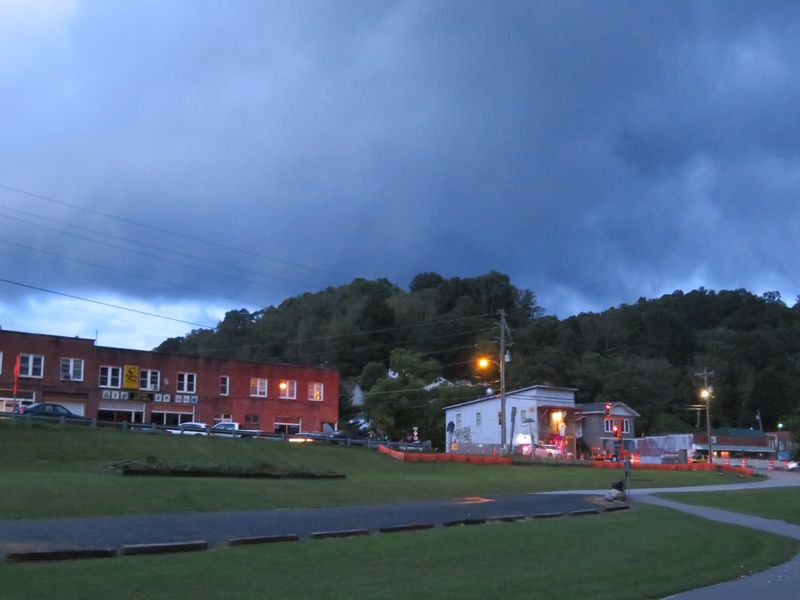
One stop sign runs the whole show here. It marks the three-way intersection of NC 194 and Big Horse Creek Road, and it may be the least stressful piece of traffic control in the mountains.
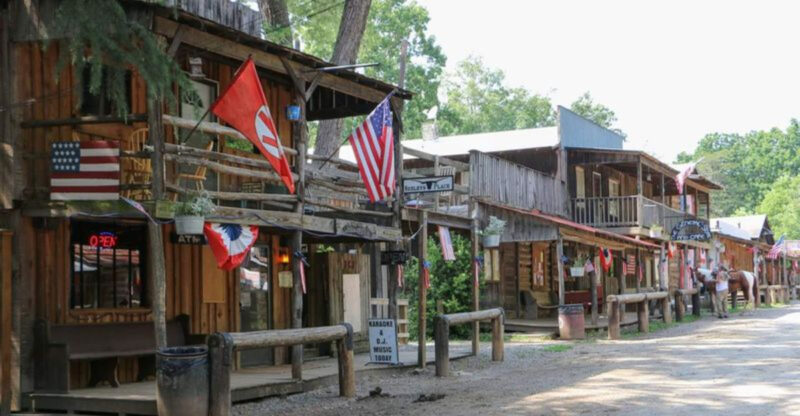
Walking the length of downtown Lansing takes only minutes, so slow steps are rewarded. Shop windows hold local pottery, quilts, antiques, and practical household goods, and the doors tend to be propped open in warm weather.
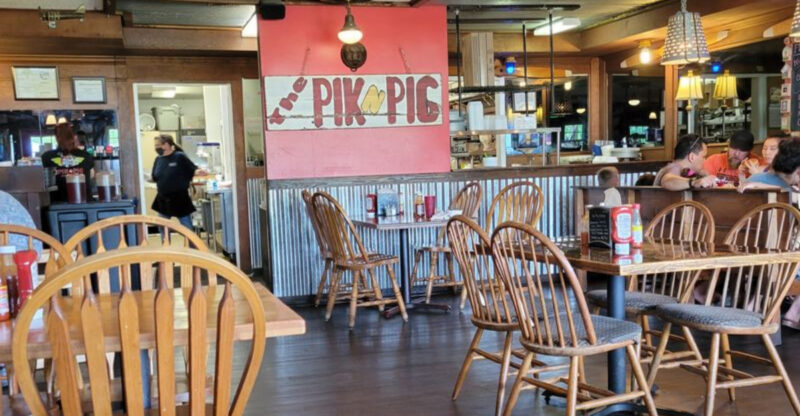
Start with coffee or tea at Lansing Café & General Store, where pastries share space with books, grocery provisions, and goods from local artisans.
A short stroll away, The Squirrel & Nut boutique mixes artisan work with vintage finds worth digging through.
Hungry? For another nearby meal, The Loghouse at Lansing serves burgers, sandwiches, and full dinner plates just south of downtown.
Anchoring it all is the two-story stone Lansing School, built in 1938 and still the tallest story on the block.
Today that building serves as the Lost Province Center for Appalachian Arts, so a wander through downtown often ends with music drifting from its windows or a gallery browse you did not plan on.
Follow Big Horse Creek Through Creeper Trail Park
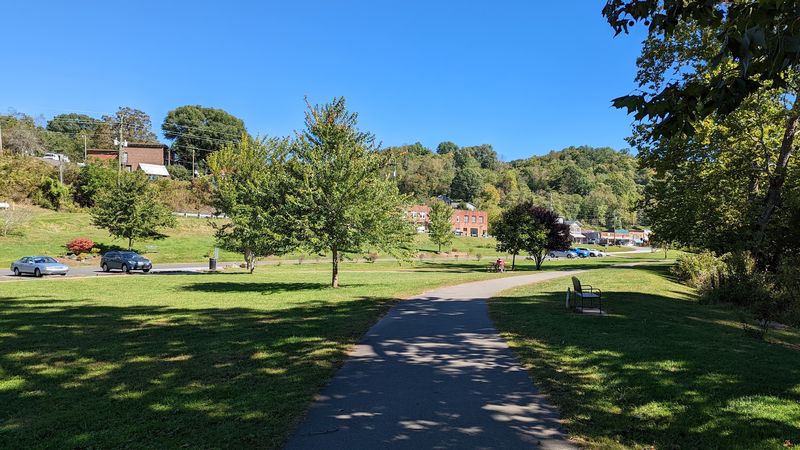
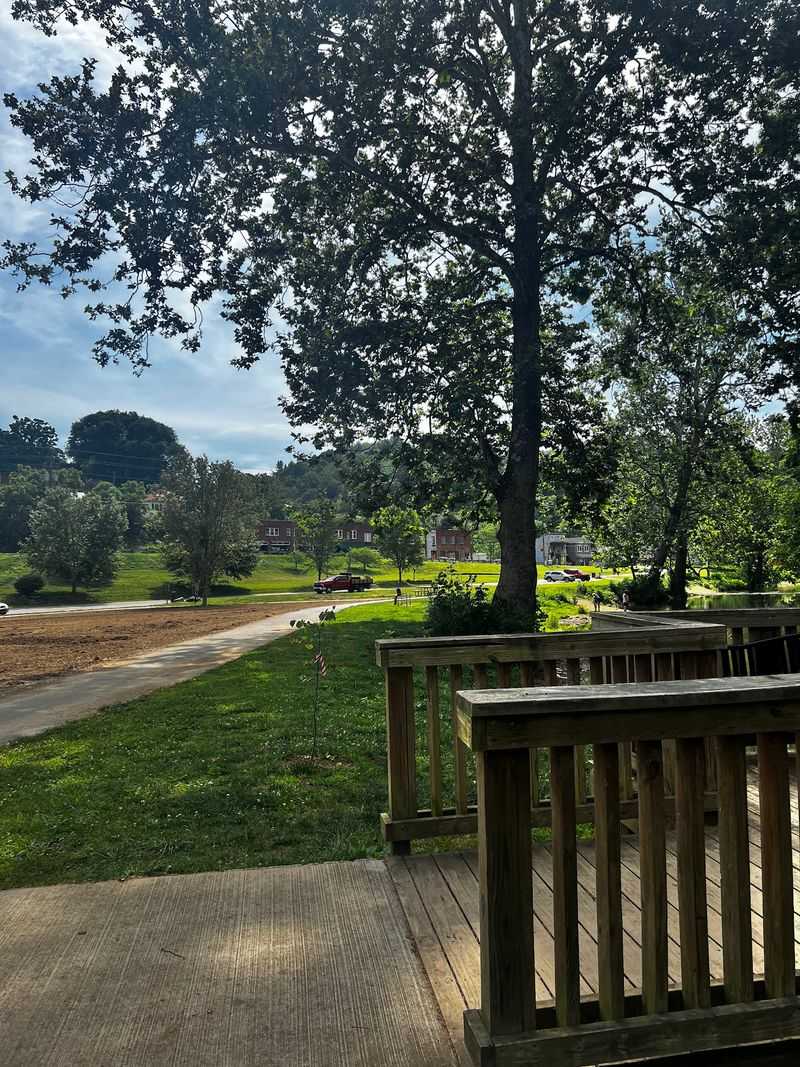
Water sets the soundtrack in this park. Big Horse Creek runs right through the middle of town, and the trail system follows its bends instead of fighting them.
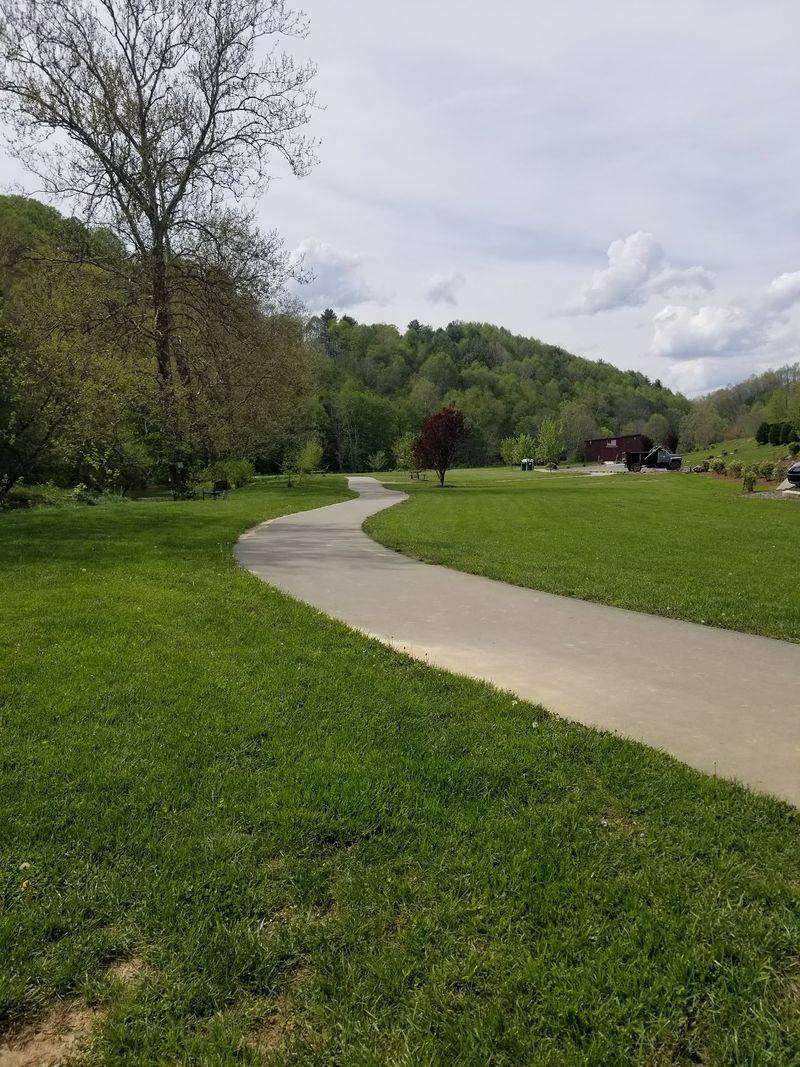
The paved path through Lansing Creeper Trail Park stretches about a mile, flat and smooth enough for strollers, wheelchairs, and beginner cyclists. Benches and picnic spots appear where the creek widens, which makes an easy afternoon out of very little planning.
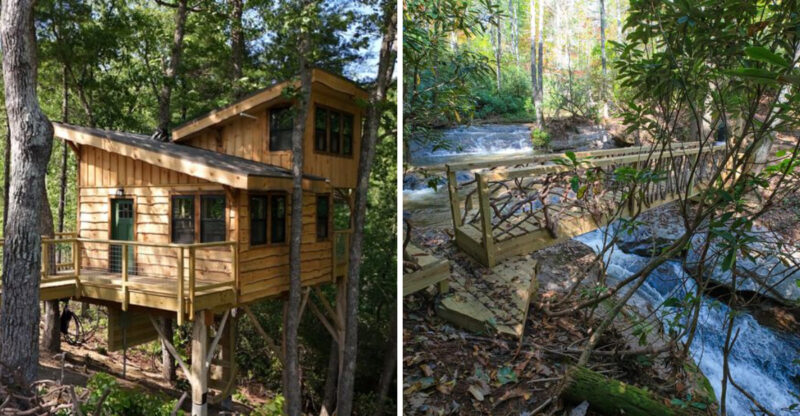
Prefer dirt underfoot? A 0.4-mile unpaved Creekside Walking Trail traces the western bank, brushing past rhododendron and mossy stones.
Cross the creek on the pedestrian or vehicle bridge near the Lansing Fire Department and the terrain changes character.
Roughly three miles of mountain biking trails climb into the hillsides, delivering overhead views of the water, the park, and the rooftops of town.
Extras round out the visit: primitive campsites, a community garden, and a fenced dog park. Concerts and community gatherings fill the park calendar through the warmer months, so check ahead if you’d like music with your picnic.
Families often make a loop of it, walking out along the pavement and back on the creekside path with wet shoes and happy kids.
Cast A Line In One Of The Town’s Favorite Trout Waters
Rainbow, brown, and brook trout all hold in these cold pockets of water. Fly casters come for the mix, and for pools shallow enough to read from the bank.
Lansing carries the designation of a Mountain Heritage Trout Water City, which makes fishing here unusually simple for visitors.
A three-day license for the Lansing Heritage Trout Waters costs a modest fee, and anglers who already hold a North Carolina inland waters fishing license are set.
A 2.5-mile stretch of Big Horse Creek, running from the SR 1324 bridge down to the North Fork New River confluence, follows Delayed-Harvest Trout Water rules. From October 1 until the first Saturday in June, it is catch-and-release only, with artificial lures and a single hook.
Outside that window, general regulations apply, including a daily creel limit of seven trout. Public access is easy inside Lansing Creeper Trail Park, which includes an ADA accessible fishing pier built right over the creek.
Early morning is the quietest hour, when mist sits on the surface and the only sound is line unspooling. Pack layers, since creek air stays cool even in July.
Walk The Old Virginia Creeper Railroad Route Through The Park
Trains once did the heavy lifting in these valleys. The Virginia-Carolina Railroad, nicknamed the Creeper for its unhurried climb, reached Ashe County between 1914 and 1916 and hauled timber and iron ore out toward wider markets.
That railway built much of early Lansing’s prosperity, bringing goods in and freight out until service ended in 1977. Its abandoned rail bed still shadows the Big Horse Creek Byway, a low green line you can pick out from the road once you know to look.
The park downtown carries the name Lansing Creeper Trail Park in tribute to that vanished line.
Walking the paved one-mile path is the easiest way to feel the connection. The grade stays gentle, the creek keeps close company, and it takes little imagination to hear a whistle echoing off the ridges.
The old railroad bed remains visible along portions of the Big Horse Creek corridor, while the park’s name keeps Lansing’s rail history tied to the landscape.
Railroad history sits lightly here, less museum than memory, and it explains why this corner of North Carolina once mattered far beyond its size.
Take The Big Horse Creek Scenic Byway Into The Mountains
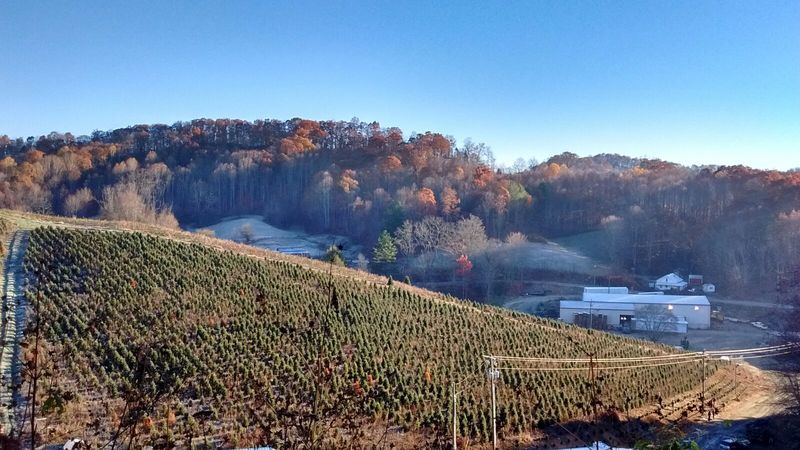
Set aside an hour and let the road do the work. The Big Horse Creek Scenic Byway starts where N.C. 194 meets N.C. 88 in Warrensville and unspools for 17.9 miles before reaching the Virginia state line.
Between there and Lansing, the valley narrows and widens like a breath. Farmhouses sit close to the pavement, cattle graze in tilted pastures, weathered barns lean into the hillsides, and small country churches appear at the bends.
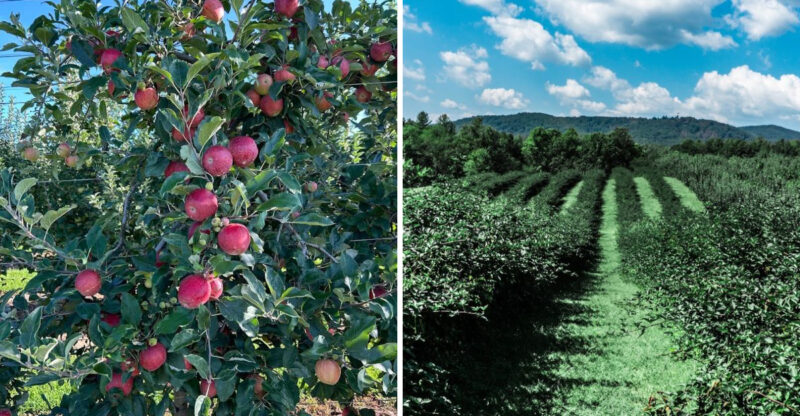
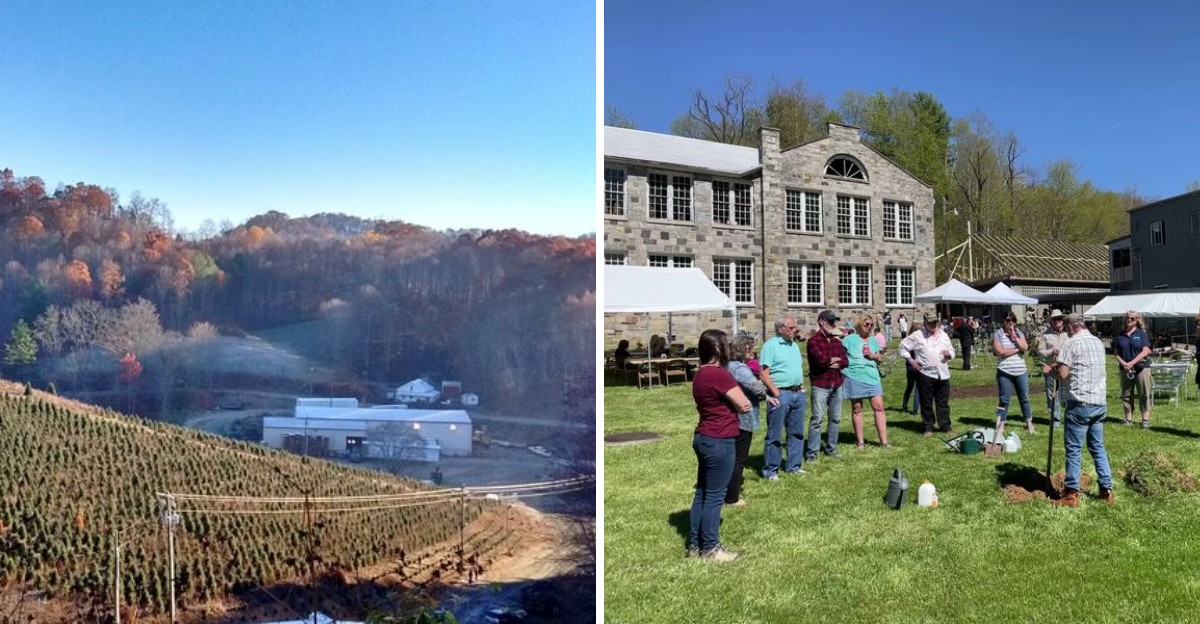
Christmas tree farms stripe the slopes in tidy rows of dark green, a signature crop of these mountains.
The route crosses Big Horse Creek again and again, so roll the windows down. Rushing water becomes the main sound, cool and steady, broken only by birdsong.
Higher stretches ride the ridges above the creek and open into long views. Watch for Phoenix Mountain at 4,710 feet and, farther off, Pond Mountain topping 5,000 feet beside the Pond Mountain Game Lands.
Pull-offs are informal, so choose a safe spot before stopping for photos.
Autumn brings the most color, though a clear morning in June feels just as generous, with mist rising off the fields.
Drop Into The Lost Province Center For Appalachian Arts
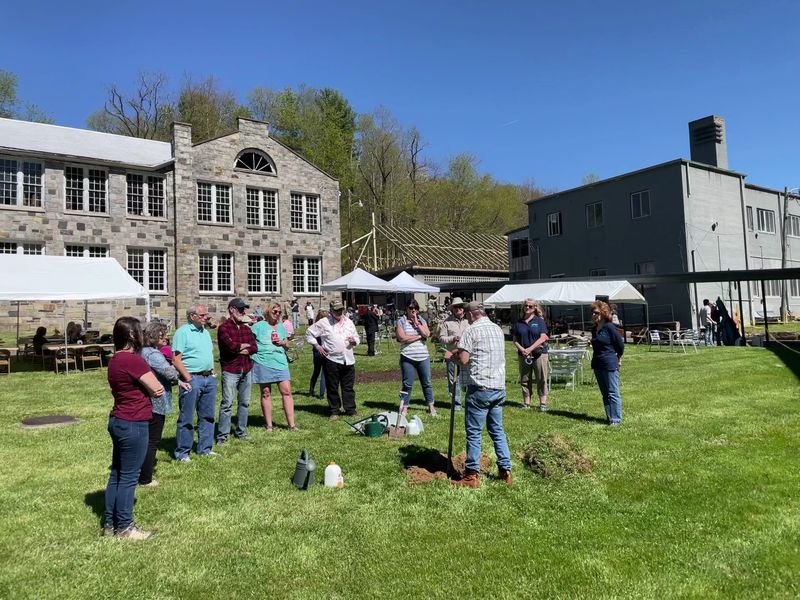
Thick stone walls keep the old schoolhouse cool on summer afternoons. Built in 1938 with Works Progress Administration labor, the two-story building is a registered historic place and still the sturdiest structure in sight.
Inside, the nonprofit Lost Province Center for the Cultural Arts keeps those classrooms busy. Teaching Southern Appalachian traditions and skills is the mission, and restoring the building is part of the work.
Visitors will find it at 9710 NC HWY 194 N, Lansing, NC 28643, a short walk from the town’s only stop sign.
Workshops welcome adults and children alike. Ceramics students shape pottery on the wheel and try slab building, while fiber arts classes cover spinning, weaving, quilting, and wet felting.
Thursday evenings belong to the LanSing Jams, when musicians gather and the room fills with fiddle and guitar. The campus also provides studio and gathering space for artists, makers, musicians, and other creative workers.
Check the schedule before you drive over, since class sessions and concerts change with the season. Handmade souvenirs from the shop tend to travel home better than anything bought online.
Spend A Day Here Before More Travelers Discover Lansing
Some trips are measured in miles, others in how slowly you breathe. A day here leans firmly toward the second kind.
Plan it loosely: coffee and a pastry downtown, an hour on the creek path in Lansing, lunch at a local table, then the byway winding north toward the state line as the light goes gold.
Trout water, a historic schoolhouse full of makers, and a park that doubles as a village green add up to more than the population suggests.
Timing helps. On Saturdays from April through October, the farmers market adds extra activity to Creeper Trail Park.
What lingers, though, is the friendliness of this North Carolina community, where shopkeepers ask where you are from and mean it.
Pack sturdy shoes, a light jacket, and cash for the smaller shops. Mountain weather shifts quickly, and a sunny morning can turn breezy by mid-afternoon.
Layers solve most of it.
Word travels, and mountain secrets rarely keep forever. Come while the parking is easy, the trails are quiet, and the creek still sounds louder than the traffic.