Nebraska Is Home To A 600-Pound Ball Rolled From More Than Four Million Canceled Stamps
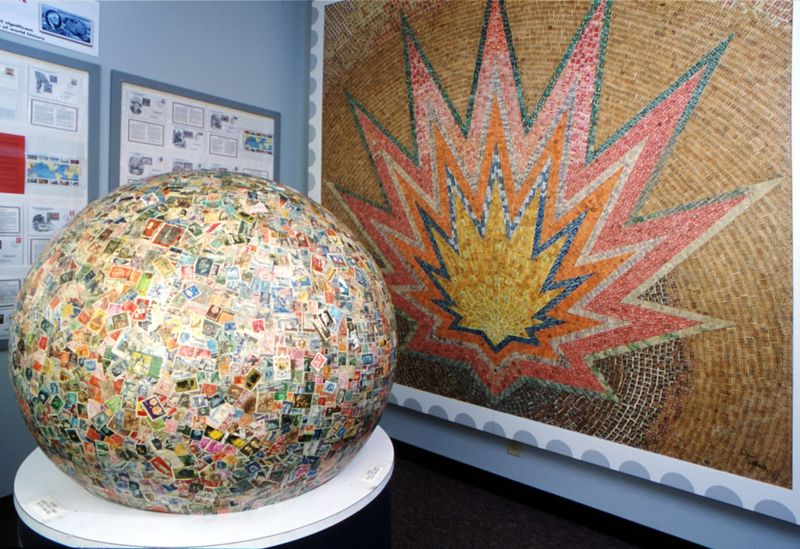
Some of the strangest things in Nebraska sit behind doors you would walk right past. I stopped at what looked like a small visitor center gift shop, expecting postcards and maybe a restroom, and instead found myself standing beside a sphere the size of a beach ball that weighs as much as a full-grown hog.
It is built entirely from used postage stamps, millions of them, licked and pressed on by teenage boys more than seventy years ago. You can put your hands on it, which is not something most world records allow.
A Record-Holding Sphere Inside a Douglas County Village
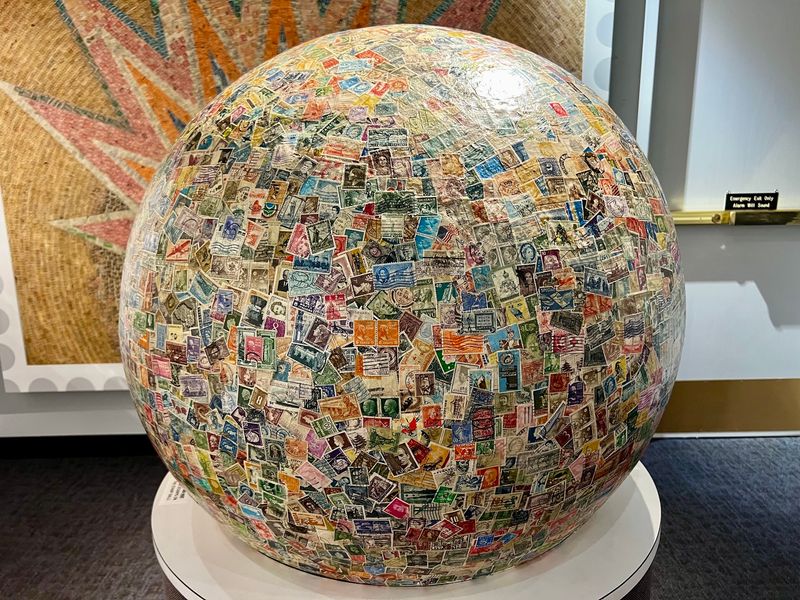
Twelve miles west of downtown Omaha, in the incorporated village of Boys Town, a 600-pound ball of canceled postage stamps sits at 13628 Flanagan Blvd. The display lives inside the Leon Myers Stamp Center, which occupies a room within the Boys Town Visitors Center.
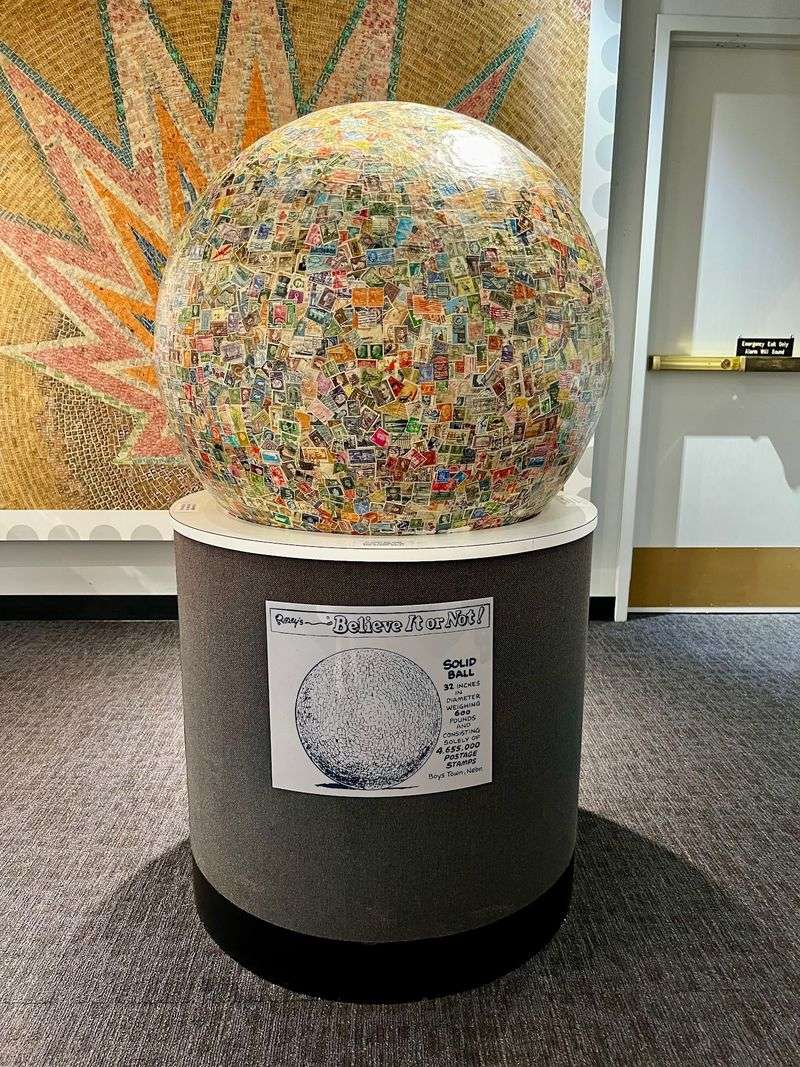
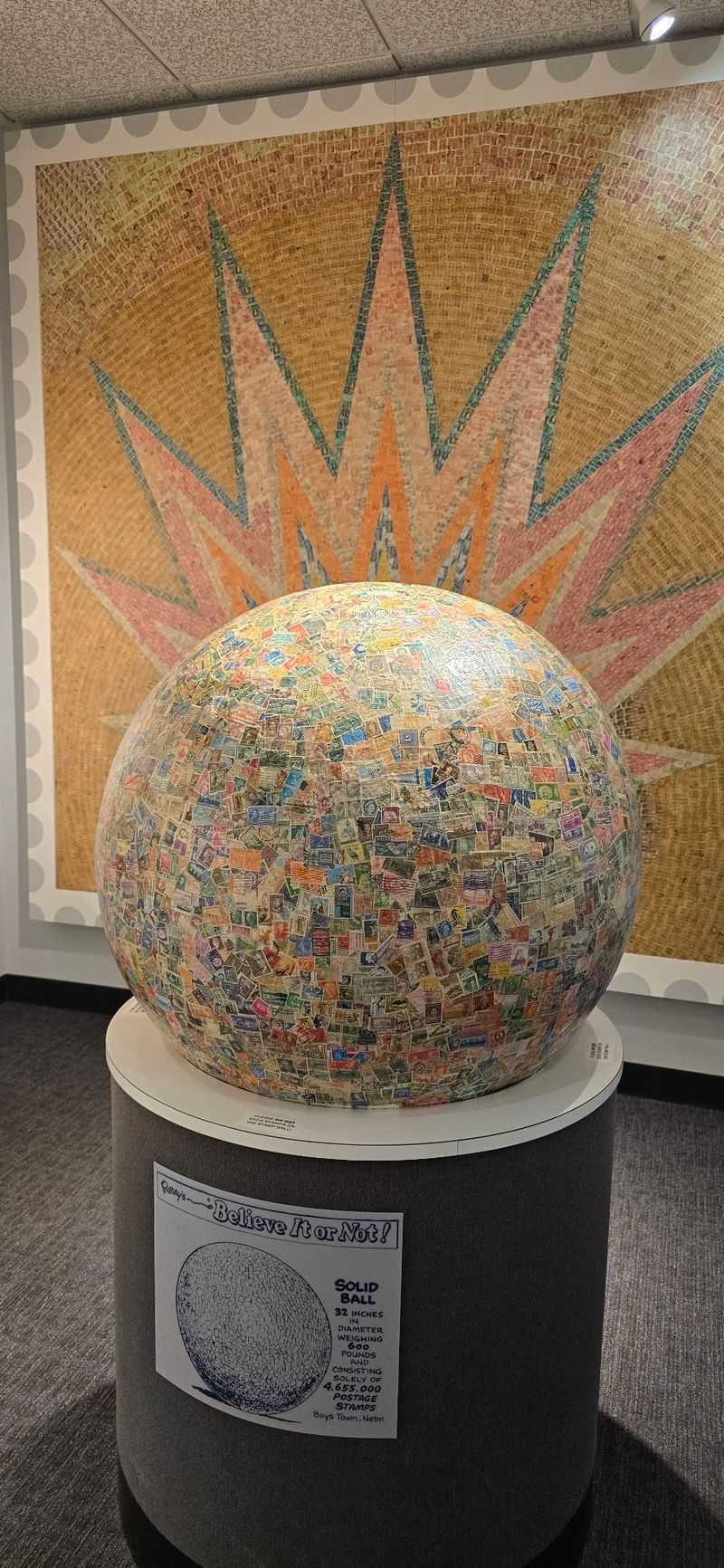
Measurements make it real: 32 inches across, roughly 600 pounds, and an estimated 4,655,000 stamps gathered from countries around the world. Getting your arms around it is not possible, which is exactly what people try first.
Douglas County holds plenty of well-marked attractions, and this one hides in plain sight. There is no towering sign out front announcing a world record.
You walk through a modest entrance, pass a small gift shop counter, and there it is on its stand, colors faded into a dense mosaic of perforated edges.
The WORLD RECORD ACADEMY recognizes it as the World’s Largest Ball of Stamps. Others have attempted the title over the decades and none have matched the size.
For a state better known for cranes, corn and college football, it is a wonderfully odd claim to hold.
How a Stamp Club Started Rolling in 1953
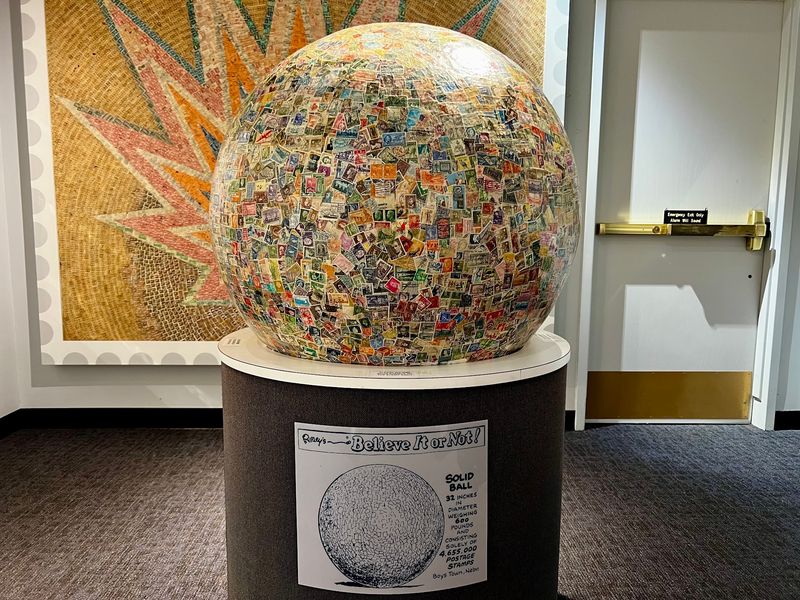
Back in 1953, members of the Boys Town Stamp Collecting Club began pressing canceled stamps onto a small core, and they kept going for about three years. D.O.
Barrett, the first curator of the Boys Town Stamp Center, launched the project alongside the club members.
Why they did it has never been fully settled. Mary Huard, manager of the Boys Town Visitor Center, has suggested the collectors may simply have been bored, or that a especially cold Nebraska winter gave them time on their hands.
What the boys had was raw material. Mail poured into Boys Town from donors all over the world, and canceled stamps came with it by the sackful, which meant an endless supply of small, sticky, colorful pieces.
By roughly 1955 the ball had reached the size it remains today. Adding more is now off-limits, since altering it would jeopardize the official record.
Three years of after-school layering, one stamp at a time, produced something that still stops people mid-sentence seven decades later.
The Mystery of What Sits at the Center
Nobody can open it up to check, and that is half the fun. Legend holds that the whole thing began around a golf ball, a tidy little origin story that fits the era.
Competing theories exist. Some accounts say the starting point was nothing more than a wad of stamps squeezed together in someone’s palm.
Another version claims a pencil stub is buried at the core.
Since cutting into a world record would end the record, the answer stays sealed under an estimated four and a half million layers. Guessing becomes part of the visit, and it is a decent conversation for the drive home.
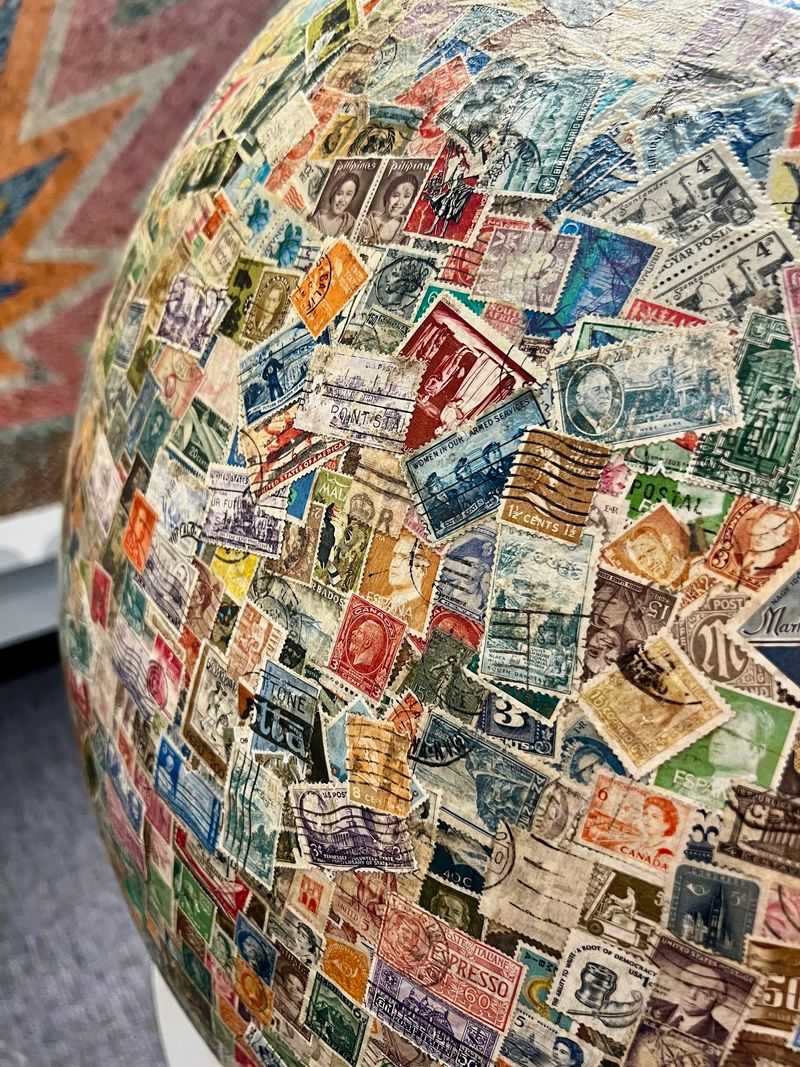
Consider the arithmetic for a moment. To reach 32 inches in diameter from something the size of a golf ball, the boys had to build outward through thousands of concentric layers, each one thinner than a fingernail.
Whatever hides in the middle, the outer surface tells its own story: cancellation marks, foreign scripts, and postal designs from countries that have since changed their names entirely.
Father Flanagan and the Case for Stamp Collecting
Father Edward Flanagan founded Boys Town in 1917, and he pushed stamp collecting hard as an activity for the boys in his care. Geography, history, languages and patience all arrived in one hobby that cost almost nothing.
Hunting stamps taught a kid where Ceylon was, what a franc bought, and how to handle something fragile without ruining it. For boys who had arrived with very little, a filled album was something entirely their own.
The stamp center honors that thread of the campus story. On display is a commemorative 4-cent Father Flanagan stamp, which puts the founder onto the very medium his boys spent their evenings sorting.
A large mural made completely from stamps hangs nearby as well, another product of the same philatelic tradition that gave the ball its purpose.
Seeing the ball without that background makes it a novelty. Seeing it as the byproduct of a program built to give displaced boys a curious mind changes the weight of the thing considerably.
Ripley’s, Records and the Long Reign of a Nebraska Oddity
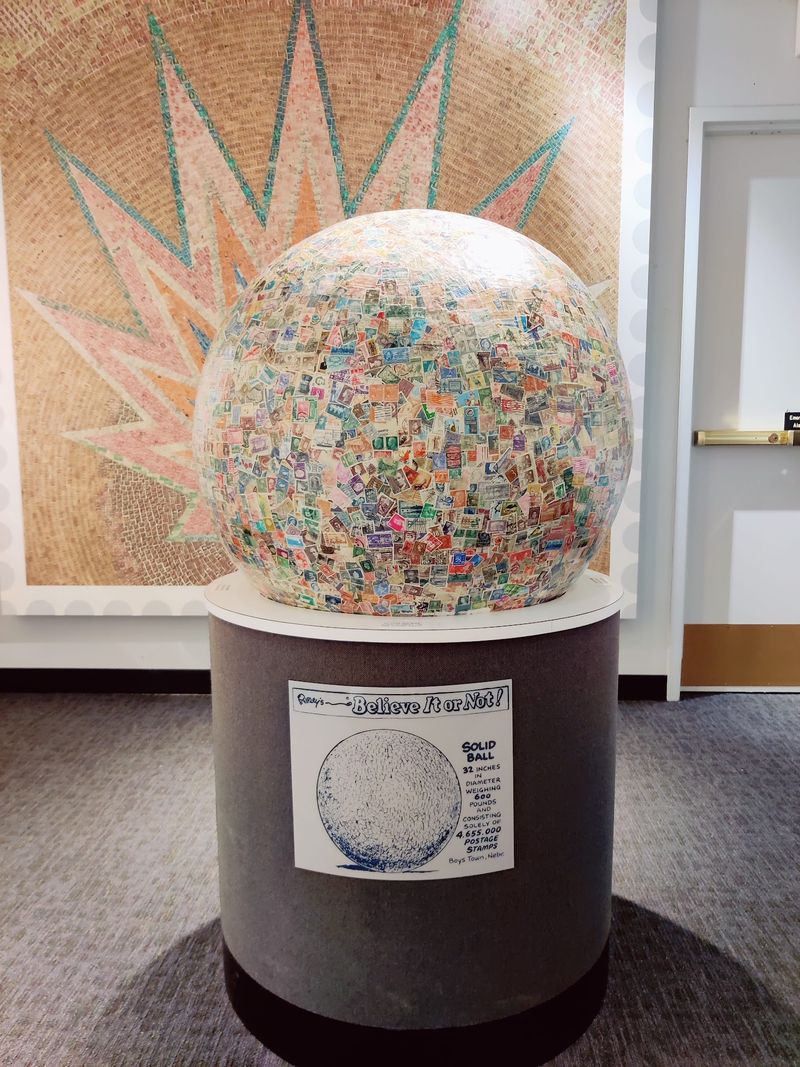
Recognition came fast. Not long after the ball reached full size in the mid-1950s, it landed a feature in Ripley’s Believe It or Not!, which sent its reputation well past Omaha.
Today the WORLD RECORD ACADEMY lists it as the World’s Largest Ball of Stamps. Challengers have surfaced over the years, and the Nebraska ball has kept the crown.
Part of that longevity comes from a rule that sounds counterintuitive: no new stamps allowed. Freezing the ball at its 1955 dimensions protects the record’s integrity, so the collection stays exactly as the club left it.
Compare that to other giant-ball records around the country, where owners keep adding layers year after year. Boys Town went the opposite direction and locked the door on growth.
Roadside attraction hunters know the address well, and it shows up on world’s-largest lists alongside far flashier stops. Anyone building a Nebraska oddity itinerary usually finds this one near the top, sitting quietly in a room the size of a classroom.
Touching a World Record With Your Bare Hands
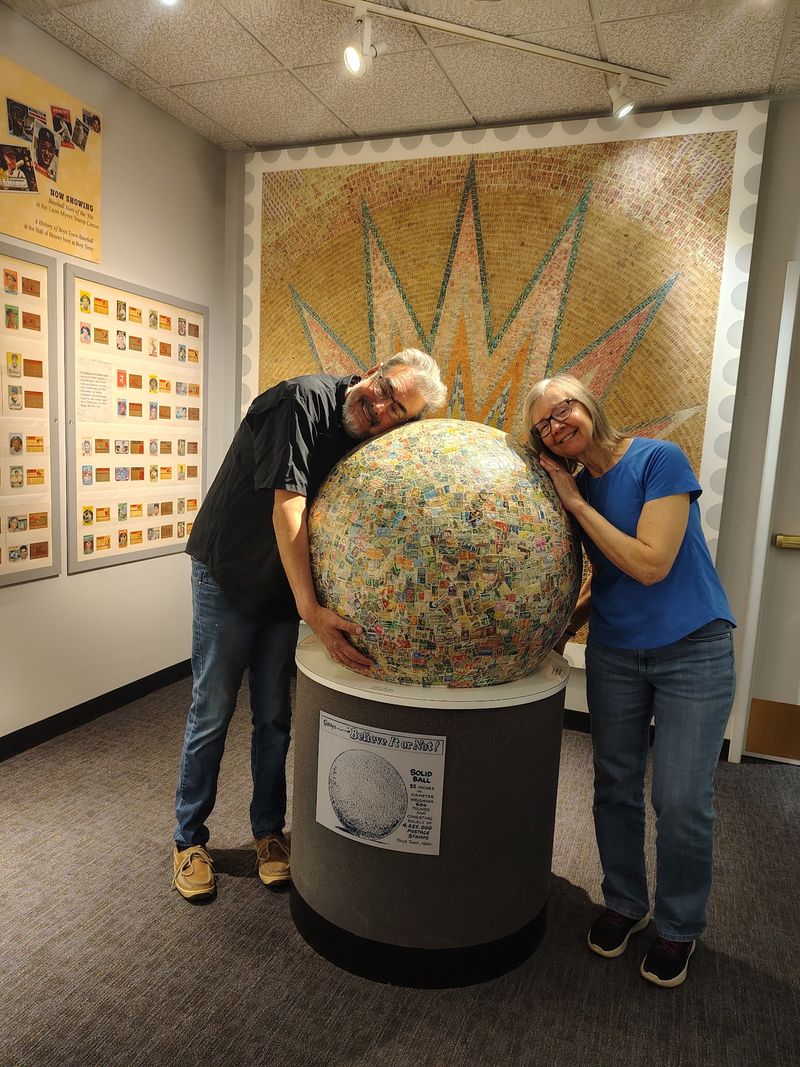
Museums usually say hands off. Here, you are allowed to lay a palm on the largest ball of stamps on the planet, which is a rare bit of permission for anything holding a title.
The surface feels stiffer than expected, more like pressed cardboard than paper, dense from decades of compacted layers. Reaching around it to touch your own fingertips is impossible for most adults, and people test that anyway.
What is off the table is adding anything. New stamps, tape, souvenirs of any kind, all forbidden, because a single modern addition would compromise the record.
Staff at the counter will walk you over and share details you would never guess, including the stamp count and the theories about the core. The whole exchange feels less like a tour and more like a neighbor showing you something in the garage.
For kids, the number does the work. Four and a half million of anything is hard to picture until it is sitting right there at chest height.
Penny Stamps, Postcards and a Small Gift Counter
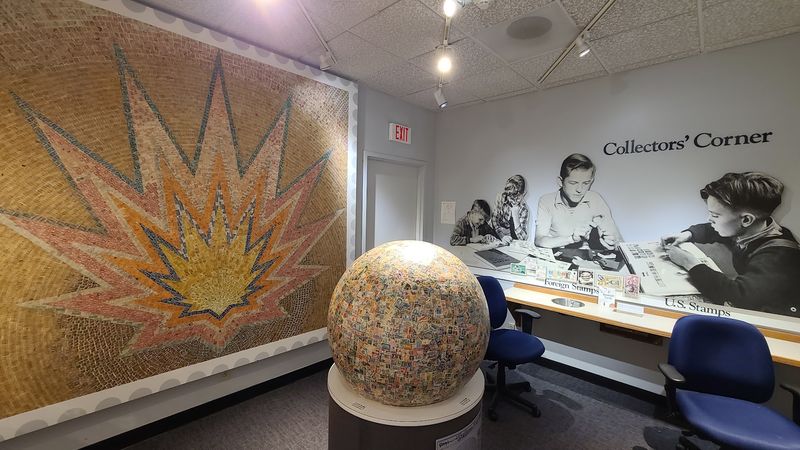
Fifty cents buys a postcard here. Vintage stamps sell for a penny apiece, which makes this one of the few places in Nebraska where a dollar still goes a genuinely long way.
The gift shop sits right in the same space as the ball, compact and stocked with magnets and Boys Town souvenirs. Kids with a few coins can walk out with a handful of stamps from countries they have never heard of.
Staff behind the counter handle the introductions, point out the mural, and answer the inevitable questions about weight and stamp count. Restrooms are clean and easy to find, which matters on a road trip.
Serious collectors will not mistake this for a dealer’s shop. It is a small retail corner attached to a display room, priced for families rather than the philatelic market.
Still, the penny stamp bin is a clever piece of continuity. Father Flanagan pitched collecting as a hobby any boy could afford, and seven decades later the price point holds.
The Baseball Card Collection Sharing the Room
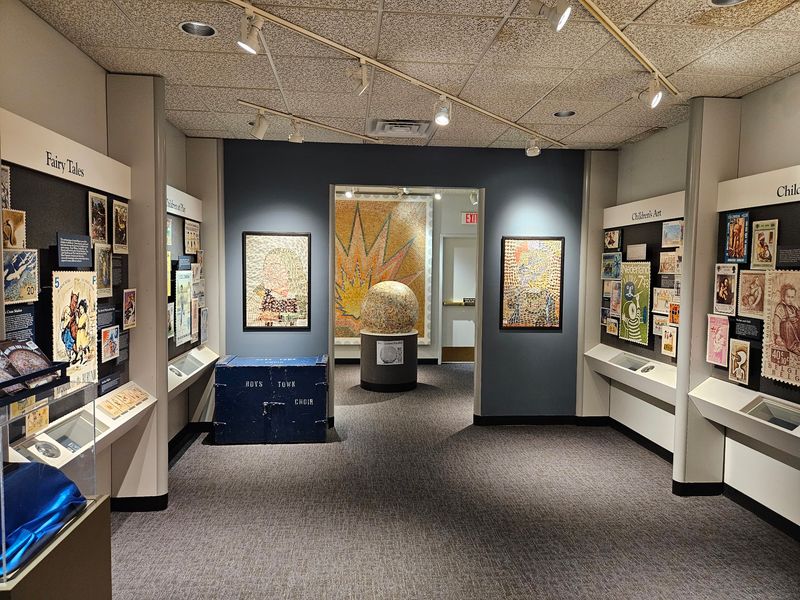
Plenty of people arrive for the stamp ball and leave talking about the baseball cards. A vintage collection shares the same room, displayed in cases just steps from the sphere.
Old cardboard has a pull that a ball of stamps cannot fully match for some folks. Familiar names, familiar poses, and the particular color palette of mid-century card printing tend to hold attention longer than expected.
Two collections in one small room means the stop delivers more than the headline promises. Half an hour covers both comfortably, less if you are moving quickly.
The pairing makes sense once you think about the campus history. Boys Town encouraged collecting of all kinds as a wholesome way to fill free hours, and cards fell squarely into that category alongside stamps.
Anyone who spent childhood afternoons sorting cards into shoeboxes will recognize the impulse instantly. It is the same instinct that built the ball, just with a different kind of paper.
Nebraska’s Campus Village Surrounding the Exhibit
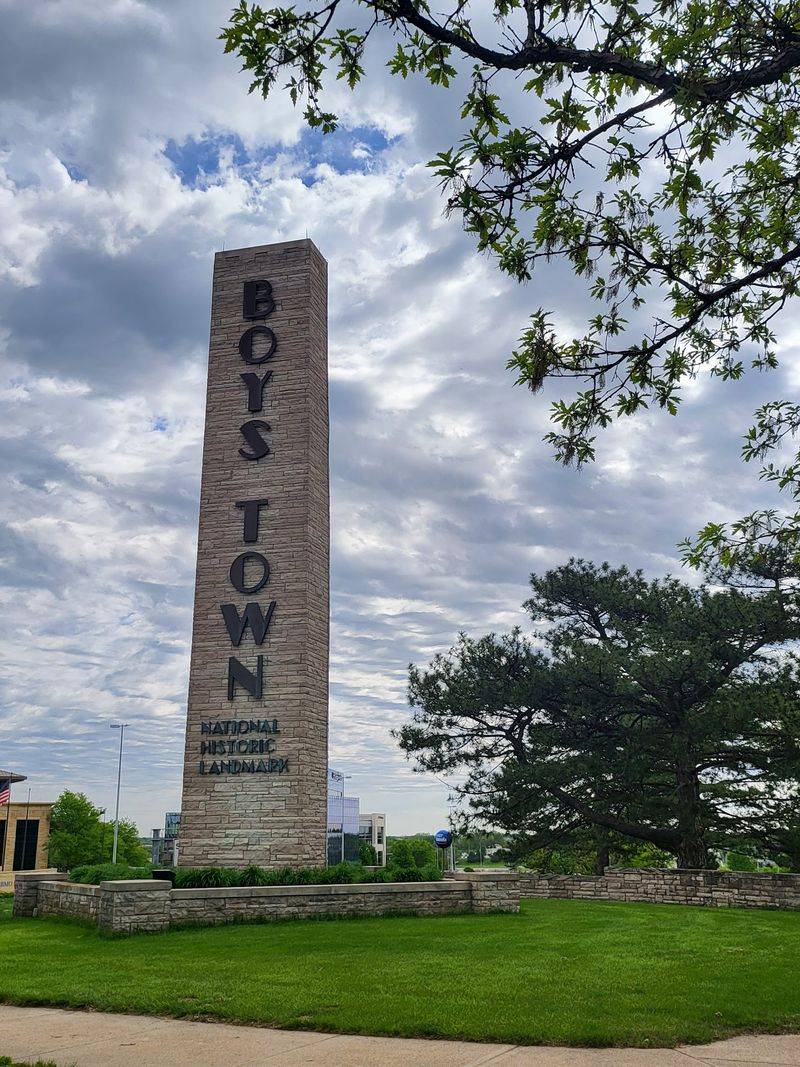
Brick buildings, mature trees and wide lawns fill the Boys Town campus, and the visitor center sits within all of it. The village is its own incorporated municipality inside Douglas County, complete with a ZIP code and its own streets.
Walking the grounds takes the stop from a fifteen-minute curiosity to a genuine afternoon. The setting is groomed and quiet, easy on the legs, and pleasant in every season but the worst of a Nebraska January.
Flanagan Boulevard, where the stamp center stands, is named for the founder whose vision built the place. Street names, chapels and residences all carry pieces of that story.
Anyone who has driven West Dodge Road has passed within a couple of minutes of the entrance without realizing what sits behind the trees.
Come with time and the campus rewards it. Come with fifteen minutes and the ball alone still justifies the exit ramp, which is the beauty of a stop this flexible.
Other Stops Within Walking Distance
Right nearby stands the Hall of History Museum, which lays out the Boys Town story from 1917 forward through photographs, artifacts and displays.
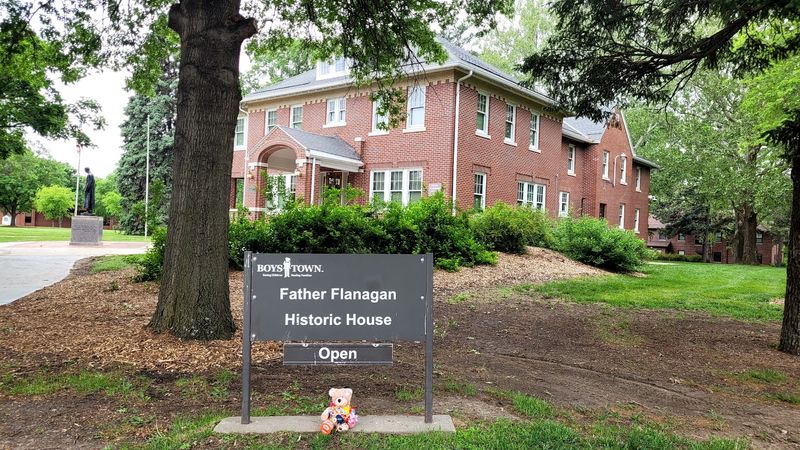
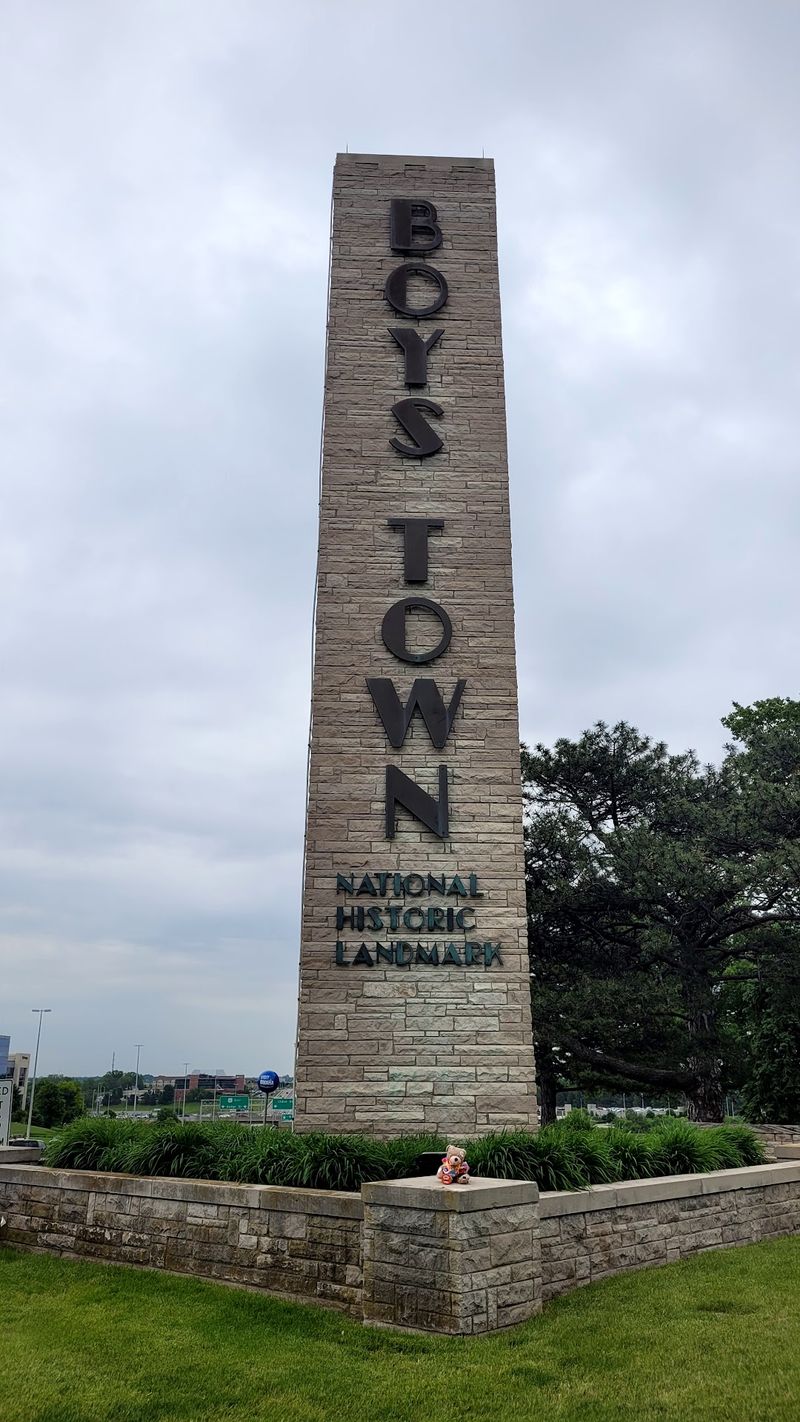
Father Flanagan’s Historic House is also close, preserved as the founder’s residence and open to walk through. Boys Town itself carries National Historic Landmark designation, which is unusual company for a giant ball of stamps.
Budgeting a couple of hours covers the museum, the house and the campus at a relaxed pace. The stamp center and baseball cards fit inside a half hour on their own.
Layering these stops turns a roadside novelty into a real outing, and it works well for multigenerational groups. Grandparents get history, kids get the record-holder they can touch.
Food and souvenirs are available on campus too, so the day does not require driving back into Omaha for lunch. That kind of convenience is what makes a stop repeatable rather than one-and-done.
Hours That Catch Weekend Drivers Off Guard
Here is the detail that trips people up: the stamp center is closed Saturday and Sunday. Weekend road trippers roll in, find locked doors, and drive away without seeing a thing.
Open hours run 8 AM to 4:30 PM Monday through Friday. Early risers do well here, since the doors open before most Omaha attractions are awake.
Planning around a weekday takes some effort for anyone working a standard schedule. A Friday afternoon detour or a stop during school break solves it neatly.
The weekday-only window also means the room is often quiet. Showing up midweek can mean having a world record entirely to yourself, with a staff member free to explain every detail.
Arriving with an hour of daylight left in the workday is fine. The ball takes minutes to appreciate, and the baseball cards add maybe fifteen more.
Double-check before you go if you are driving a long way, since hours at any small attraction can shift around holidays.
Getting There From Omaha and Lincoln
From downtown Omaha the drive runs about twenty minutes west, making this one of the easier day-outs in the metro. West Dodge Road and Interstate 680 both feed into the area without complication.
Lincoln families can reach it in roughly an hour on Interstate 80, which turns the stamp ball into a reasonable half-day loop with lunch attached.
Parking on campus is straightforward, with lots near the visitor center rather than street-side hunting. The buildings sit close enough together that one parking spot serves several stops.
Coordinates for the stamp center land at 41.2626871, -96.1267981 for anyone navigating by GPS. The Flanagan Boulevard address gets you within sight of the entrance.
Travelers crossing Nebraska on I-80 can slot this in as a quick break, since it sits close to the corridor and takes very little time.
Fall makes the campus drive especially pleasant, with the older trees turning along the interior streets. Spring works too, and pairs nicely with a crane-migration weekend farther west.
Why This Odd Little Room Sticks With You
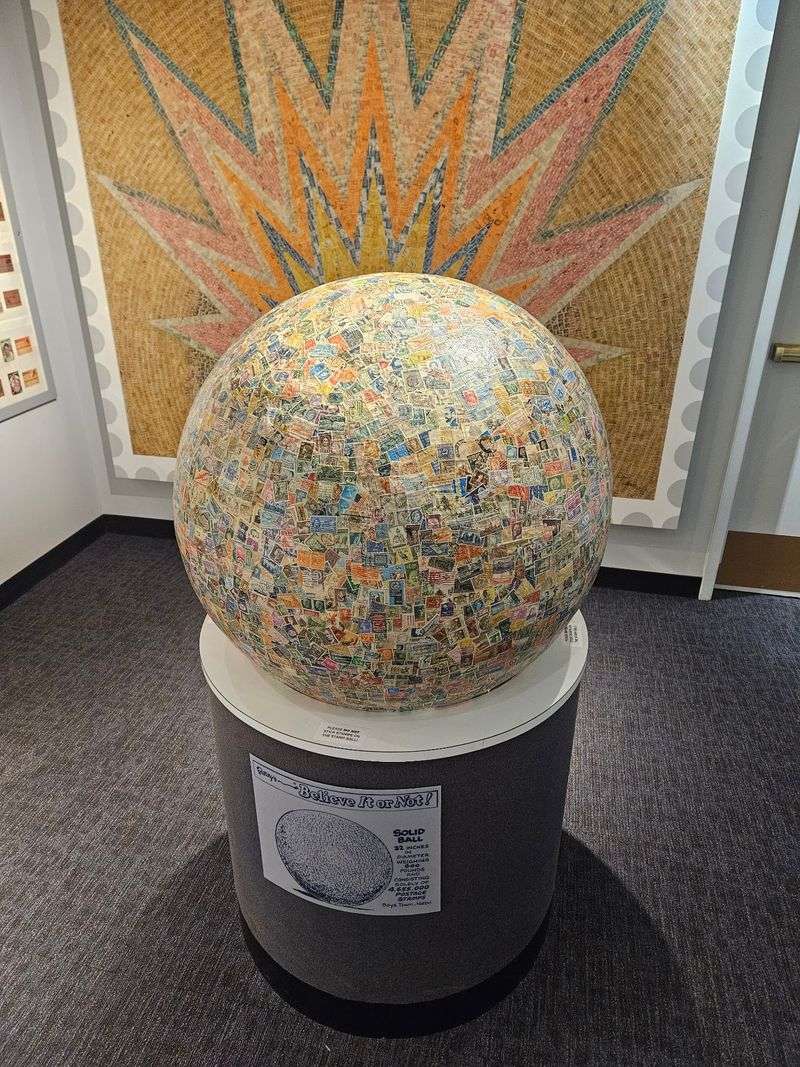
Four and a half million stamps, three years of after-school work, and one sphere nobody is allowed to add to again. Not many attractions carry that combination of scale and stubbornness.
What sells it is not the record. It is knowing that a group of boys in 1953 Nebraska decided to do something ridiculous and useless, stuck with it, and accidentally made an artifact that outlasted all of them.
Practical notes are simple. Free-standing half hour, weekday hours only, penny stamps at the counter, and a campus nearby if you want to stretch the visit into a full afternoon.
Anyone hauling kids through eastern Nebraska on a weekday should point the car this direction. The reaction to the stamp count is worth the detour on its own.
Collectors, history readers and roadside-oddity chasers all find something here, and so do people who just want an inexpensive outing with a story attached.
Small door, small room, enormous ball. That contrast is the whole appeal.