This North Carolina Railroad Winds Through The Mountains, But Most Travelers Don’t Know Its Name
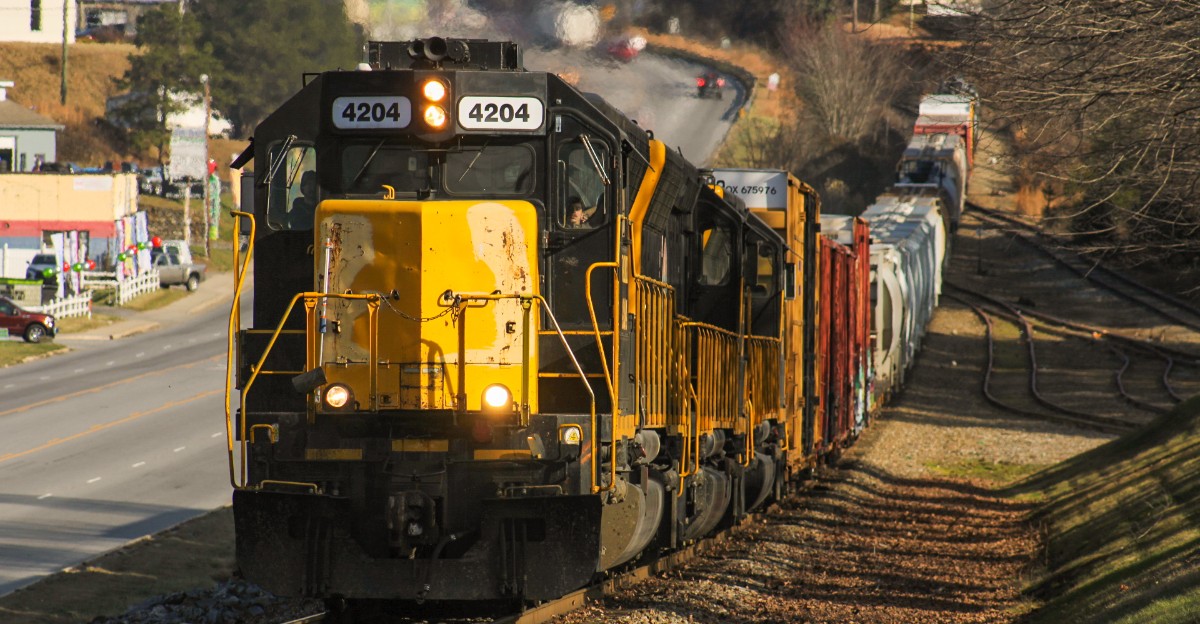
You could drive through western North Carolina for years and never realize a working freight line is threading through the valleys beside you.
That is what makes spotting one of these trains so much fun.
There are no souvenir shops, no scheduled departures, and no crowd waiting for a ride.
Instead, the reward comes unexpectedly when a black-and-yellow locomotive appears between the hills and rolls through a town that seemed still seconds earlier.
It feels more like stumbling onto a scene than visiting an attraction.
The railroad keeps doing its everyday job while the mountains quietly steal the backdrop.
For anyone who enjoys overlooked details, this is one of those discoveries that can make an ordinary drive feel suddenly memorable.
Follow The Tracks Through Some Of Western North Carolina’s Most Dramatic Mountain Country
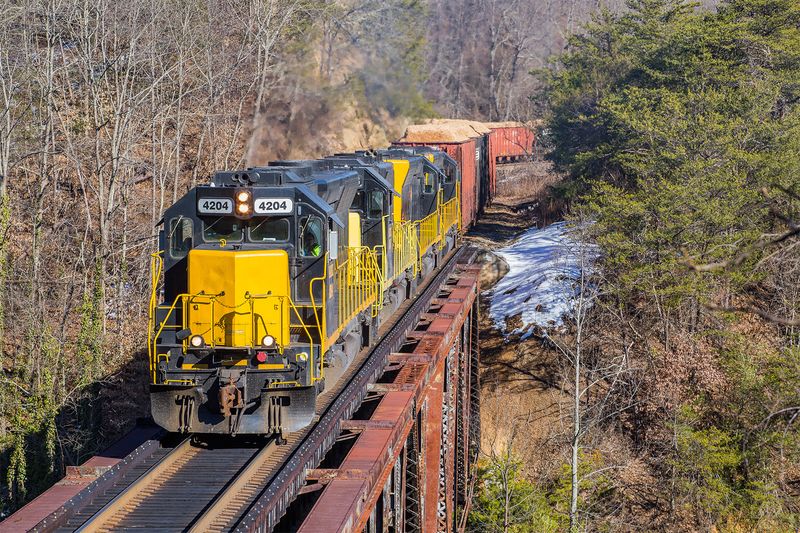
Pine-scented air, morning fog lifting off a creek, and then a low rumble rolling down the valley: that is how many people first notice freight moving through these hills.
The rails hug hillsides, slip past pastures, and curve beside the Pigeon River, giving anyone who pauses a front-row view of Appalachian ridgelines.
Watco Blue Ridge Southern Railroad keeps its operational base in Canton, a mill town wrapped in mountains roughly 20 miles west of Asheville.
Canton remains the railroad’s listed operations base, even after major changes to freight traffic in recent years. Pack a thermos, choose a public overlook, and give yourself time.
Freight schedules bend to weather, customers, and track work, so patience is part of the fun. Autumn adds fall color to the surrounding mountains, while bare winter trees can open longer views across parts of the corridor.
Between waits, you can grab biscuits or a burger in town and watch the ridges change color as the sun climbs.
Stay well back from the rails, and stick to public roads and sidewalks.
Watco lists its Blue Ridge Southern operations office at 18 Depot St in Canton, while sightseeing should remain on public streets and other legal viewing areas.
Find Out Where This Little-Known Railroad Actually Runs
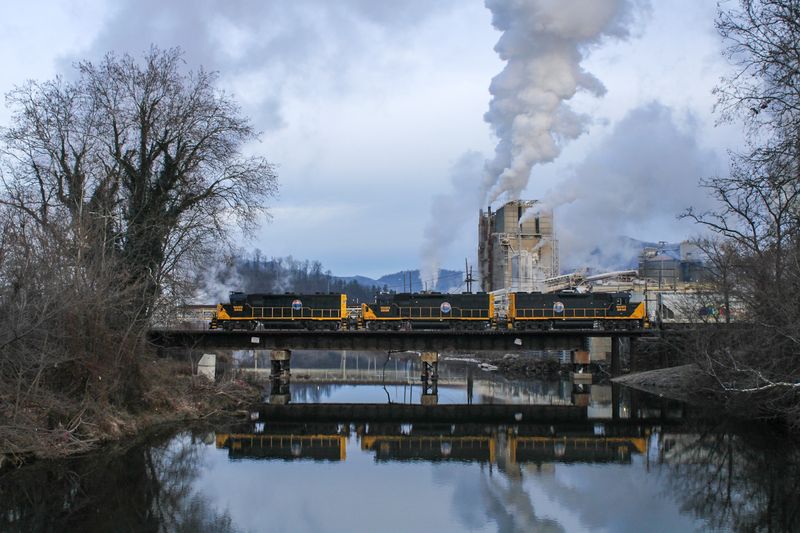
Blue Ridge Southern began with roughly 92 miles of former Norfolk Southern lines, while Watco currently lists 87.83 track miles.
The railroad began with three former Norfolk Southern lines, although its former route toward Pisgah Forest was later railbanked for the Ecusta Trail.
The T-line pushes west from Asheville toward Canton, Waynesville, and Sylva, crossing some of the steepest country in western North Carolina.
Historically, the TR Line branched toward Pisgah Forest, but most of that corridor was transferred for railbanking in 2021. Connections matter just as much as mileage.
Freight cars change hands with Norfolk Southern in Asheville and with the Great Smoky Mountains Railroad in Dillsboro, which means a load of wood chips gathered in a mountain valley can eventually travel far beyond the ridges.
For travelers, the map doubles as a road-trip guide. When following US 74 and US 23 west and you trace much of the same corridor, passing farm stands, pie counters, and small-town diners where hash browns arrive crisp at the edges.
Pull over where it is safe, and the rails are usually within sight.
Distances are short, so a single afternoon can cover a surprising amount of the route, with time left for a slice of cobbler.
Watch For Its Black-And-Yellow Locomotives Around Mountain Towns
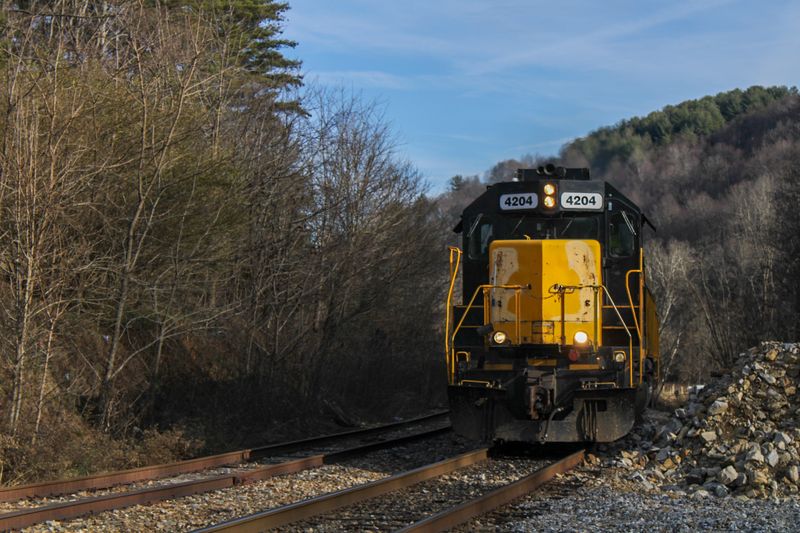
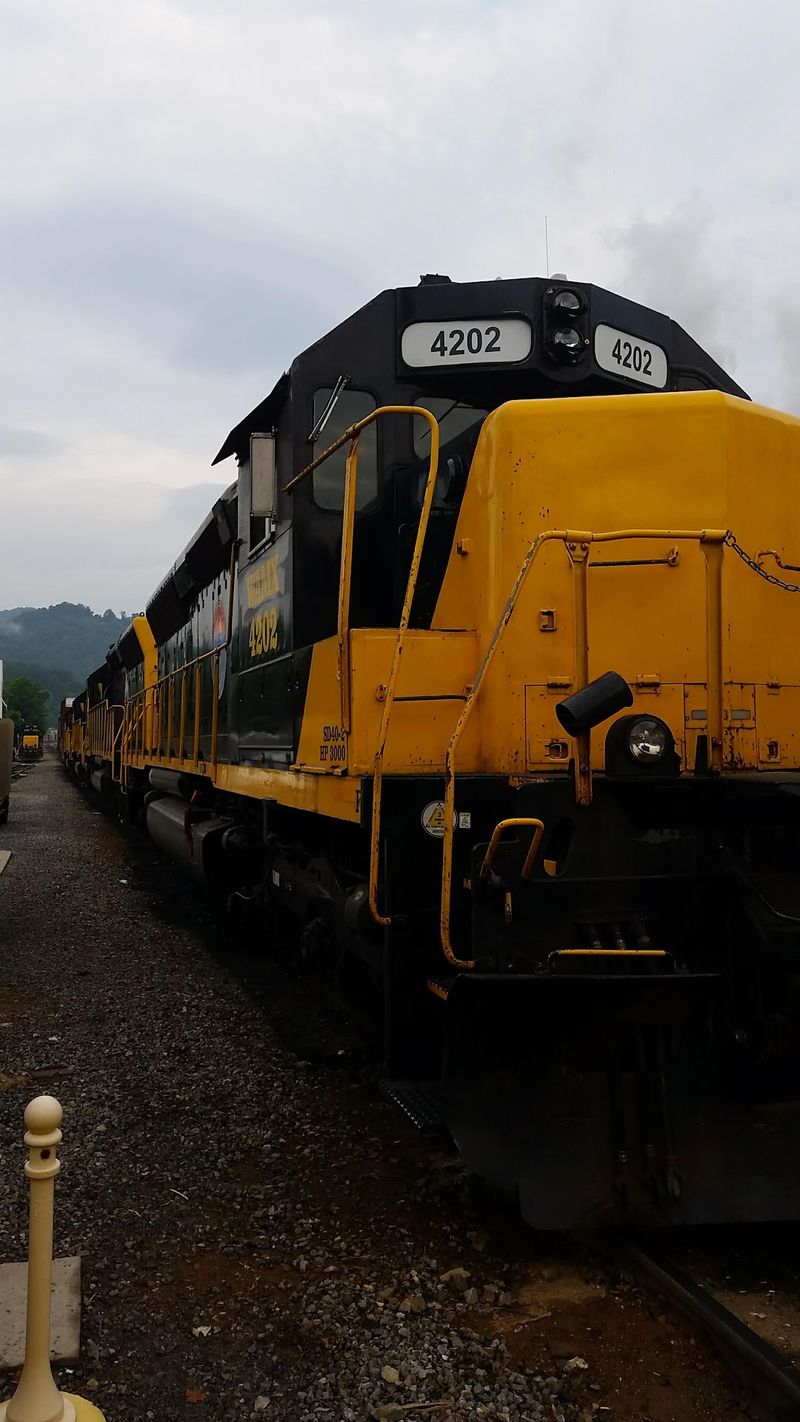
Yellow catches the eye first, then the deep black flanks and the low idle of a diesel waiting on a signal.
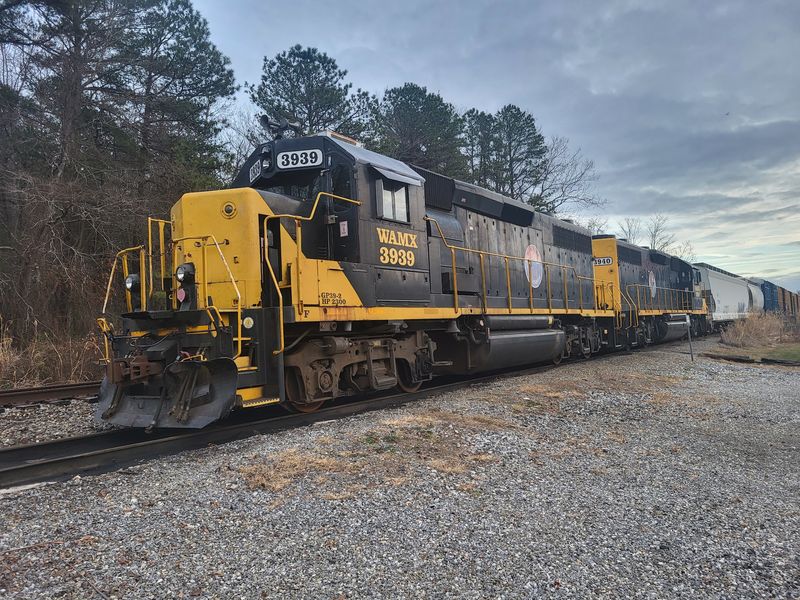
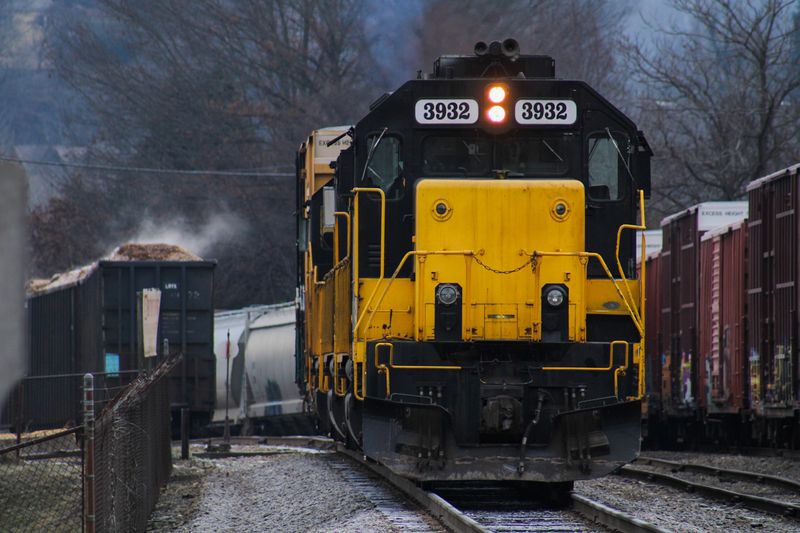
The company’s engines wear a bold black-and-yellow scheme that stands out against green hillsides and gray winter branches.
Roster watchers look for SD40-2s, rebuilt SD40M-2 units, and GP39-2s, all older models built for pulling hard on steep grades. On steeper sections, working diesels can become noticeably louder as they pull freight through the grades.
Switching and local freight movements remain part of the railroad’s work around its western North Carolina customers.
The safest photographs come from legal public locations well away from tracks, yards, bridges, and other railroad property.
East of Canton, the T Line passes through the Enka and Candler area on its way toward Asheville.
Bring binoculars if you like reading numbers on the cab, and dress in layers, since mountain mornings stay cool long after the valley warms up. Patience pays off more than luck here, and a quiet wait beside a country road often ends with a whistle and a long, slow curve of freight cars.
Discover The Industries That Still Depend On These Rails
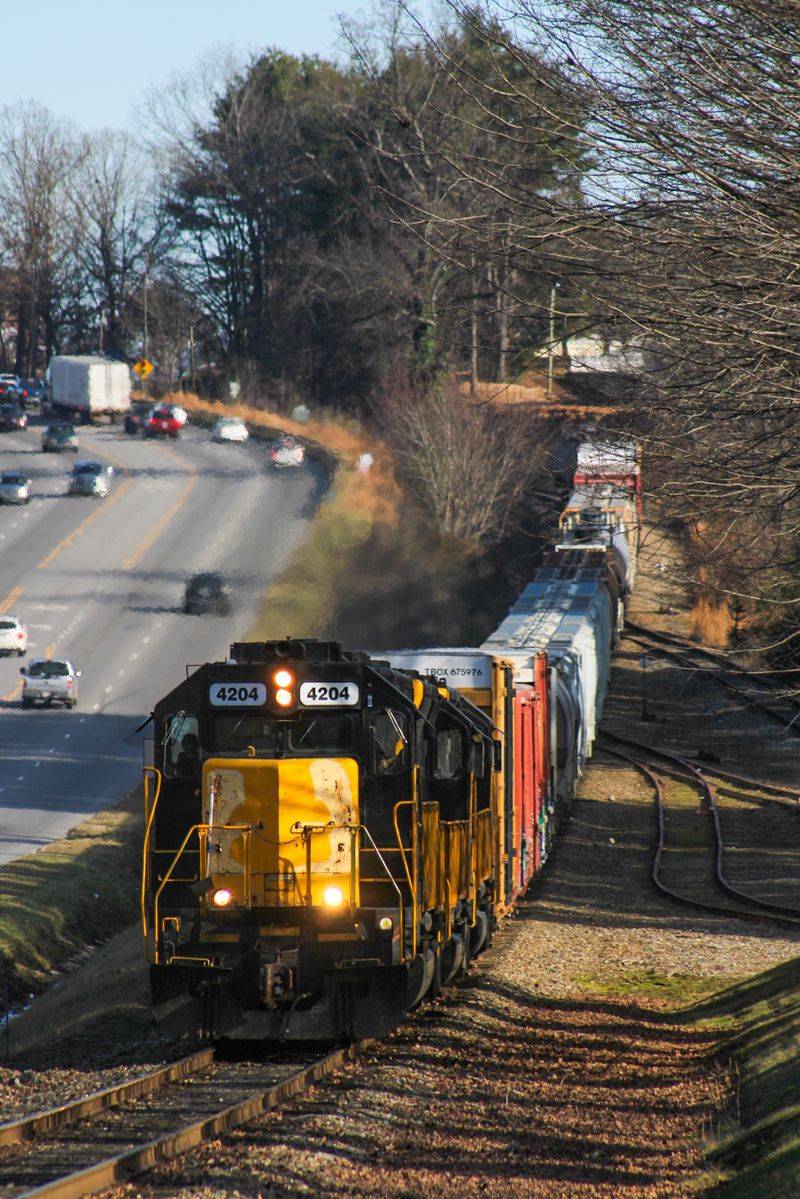
Freight lists read like a tour of mountain workshops and factories.
Cars on this line have carried wood chips, paper products, plastics, cement, and coal, plus materials used in making Epsom salt. The mill generated a major share of Blue Ridge Southern’s freight business before production ended in 2023.
Its absence changed traffic patterns across the whole system and showed how closely a town, a railroad, and a single employer can be tied together.
Other shippers still count on the rails.
Quarry products, building materials, and manufacturing supplies move in bulk because one rail car holds what several trucks would, which keeps mountain roads a little quieter.
Travelers feel the effect indirectly. Those freight movements connect western North Carolina manufacturers and suppliers with the wider national rail network.
Watching a loaded train pass gives that ordinary supply chain a face and a sound.
Stop at a Canton bakery afterward, order something warm, and the connection between industry and everyday comfort feels a lot less abstract than it did that morning.
See How Asheville Connects This Short Line To A Much Bigger Rail Network
Every short line needs a doorway to the rest of the country, and for this one the doorway is Asheville.
Cars handed over there join Norfolk Southern’s larger network, including the AS Line, and can continue toward ports, mills, and cities hundreds of miles away. Interchange work is unglamorous and vital.
Crews swap blocks of cars, paperwork moves, and the same load that started beside a quarry in the hills rolls onward without anyone unloading it in between.
In September 2024, Hurricane Helene caused extensive washouts and other damage across western North Carolina’s rail network, including Blue Ridge Southern.
With the Asheville connection broken, freight had nowhere to go, and repairs turned into a milestone for regional recovery rather than routine maintenance.
Visitors can see the geography that makes Asheville such a hinge point.
Rivers, gaps, and narrow valleys pushed builders toward a handful of practical routes, and the city sits where several of them meet.
Grab coffee downtown, then drive west and the corridor unfolds exactly as the terrain dictates. Trace it on a map first, and mountain railroading suddenly makes sense.
An offline or paper map is useful when tracing a freight route that passes through several mountain communities.
Learn How Former Norfolk Southern Tracks Became The Blue Ridge Southern
Railroading in these mountains goes back to the 1800s, but this particular name is young.
Watco, a transportation company with short lines across the country, reached a deal with Norfolk Southern in 2014 to take over roughly 92 miles of branch lines in the western part of the state.
The announcement came in June 2014, and operations under the Blue Ridge Southern banner began on July 26 of that year. The transition placed the routes under Watco operation and the BLU reporting mark while freight service continued across the former Norfolk Southern lines.
Much of the T-line west of Asheville belonged to the Southern Railway’s Murphy Branch, a route surveyed and built through steep terrain that made every mile expensive.
Stone culverts, cuts through rock, and old depot sites still mark that era.
History buffs traveling through North Carolina can pair a morning of train watching with small museums and restored depots in towns along the route.
Old names fade slowly in mountain country, and plenty of residents still call it the Murphy Branch.
Spot The Places Where Train Lovers Have The Best Chance Of Seeing It
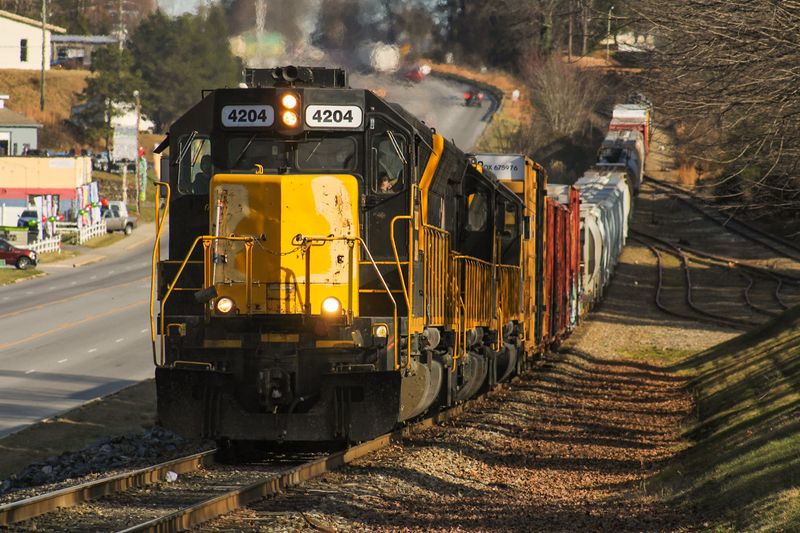
Freight activity here follows customer needs rather than a timetable designed for spectators.
Canton, the operating base, offers the steadiest action, with yard work, crews changing, and horns bouncing off the hills near the Pigeon River bridge.
East of town toward Asheville, the line tackles a real grade and crosses several handsome bridges, which makes for photographs with depth and drama.
The line between Asheville and Canton passes through Enka and Candler, but freight movements there depend on current customer traffic.
Operating patterns have shifted substantially since the Canton mill closed in 2023 and Hurricane Helene disrupted the railroad in 2024.
Nothing is guaranteed, since customers, weather, and repairs all shift the schedule. Safety first, always.
Stay on public property, keep off bridges and rail yards, and remember that tracks are private and trains are quieter than people expect. Park where you are not blocking a crossing or a driveway.
Make a day of it.
Waiting goes faster with a picnic of country ham biscuits, boiled peanuts, or a slab of cornbread from a nearby cafe, and the hills fill in with birdsong between trains.
By late afternoon, low light on the ridges rewards anyone still watching.
Know Why This Is A Working Railroad Rather Than A Tourist Train
A quick reality check saves disappointment: no tickets are sold, and no dome cars roll through these valleys.
The Blue Ridge Southern is a Class III short line whose job is freight, plain and simple. Names cause some of the confusion.
The Blue Ridge Scenic Railway in Georgia carries sightseers along a river, and its similar name leads travelers to expect excursions here too.
Visitors hoping to ride in the mountains usually head to the Great Smoky Mountains Railroad in Bryson City instead.
What you get in exchange is honesty. Working trains move on their own logic, and seeing cars of wood chips or cement climb a grade tells you something true about how mountain communities in North Carolina earn a living.
Treat the chase as a scenic drive with a chance of trains.
Follow the valleys, stop for pie in a small-town diner, watch fog slide off a ridge, and let a passing locomotive be the bonus rather than the whole plan.
That mindset turns an ordinary afternoon into a memorable one. Bring water, a full tank of gas, and curiosity; the mountains supply the rest.
The train, when it comes, sounds like it belongs.