This New California Tea House Serves Fresh Scones Inside A Charming Victorian Home
Tea tastes a little different when it arrives somewhere that already feels made for lingering.
Add fresh scones, delicate cups, and the character of an old Victorian home, and a simple afternoon drink suddenly has some serious personality.
One new tea house has embraced exactly that mood.
Rather than feeling stiff or overly formal, the experience has the cozy appeal of visiting someone who happens to take tea time very seriously.
California has plenty of coffee stops, but sipping tea and eating warm scones inside a Victorian home feels delightfully out of step with the usual routine.
There is something appealing about slowing down for a meal that refuses to be rushed.
You settle in, pour another cup, start eyeing whatever has just arrived at the table, and realize that checking the time suddenly feels unnecessary.
A September 2025 Opening Years In The Making
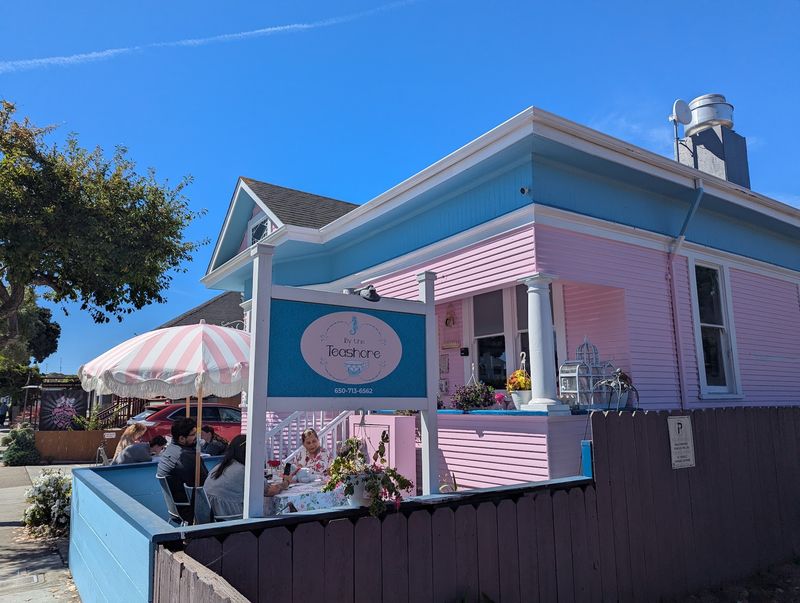
Few restaurants arrive fully formed, but the doors here opened on September 5, 2025, after a long stretch of planning and collecting.
The tea house sits at 724 Main Street, Half Moon Bay, CA 94019, a short walk from the busier stretch of downtown shops.
Because it is genuinely new, the space still has that freshly painted, carefully arranged feeling rather than the worn-in look of a decades-old cafe.
Opening weekend had a few rough edges, which is normal for a small business finding its rhythm. Since then the kitchen and floor staff have settled into a smoother pattern, and the tea house holds a strong rating across a growing number of reviews.
For anyone who enjoys watching a place grow, arriving fairly early in its life has a certain appeal.
Regulars have already started marking birthdays and celebrations here, and a few have decided to turn holiday visits into a yearly tradition.
Fun detail worth knowing: the owner developed the concept over several years before signing a lease, which explains why so many small touches feel intentional.
Tea Served Inside A 1903 Victorian House
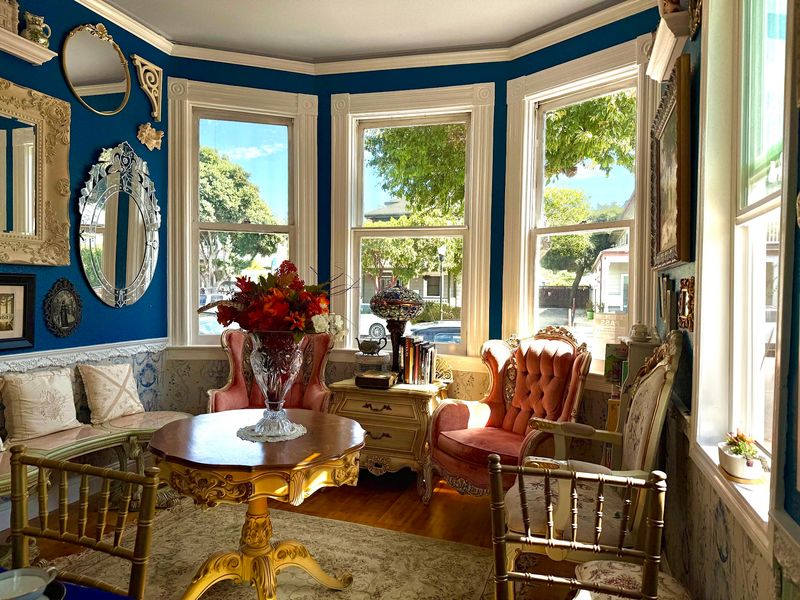
Most tea rooms rent a storefront and decorate around it, which makes the setting here unusual from the moment the front steps come into view.
The building dates to 1903 and still reads as a house, with separate parlor-style rooms rather than one open dining floor.
Detailed crown molding frames the ceilings, and large bay windows pull in plenty of soft coastal light during late morning hours.
Because the rooms are smaller and divided, conversations stay contained instead of bouncing across a big open space.
Noise levels generally stay moderate, which makes it easier to talk without raising a voice.
Seating includes parlor chairs and small tables, and the arrangement encourages lingering rather than quick turnover.
Guests who prefer a quieter corner may want to mention that preference when booking, though specific table requests cannot be guaranteed.
Walking between rooms feels a bit like touring someone’s carefully kept home. Even the restroom has been given attention, finished with a vintage look that visitors frequently point out.
Practical note for planning: the house layout means space is limited, so arriving with a large unannounced group is not realistic.
Vintage Layers From Two Different Decades
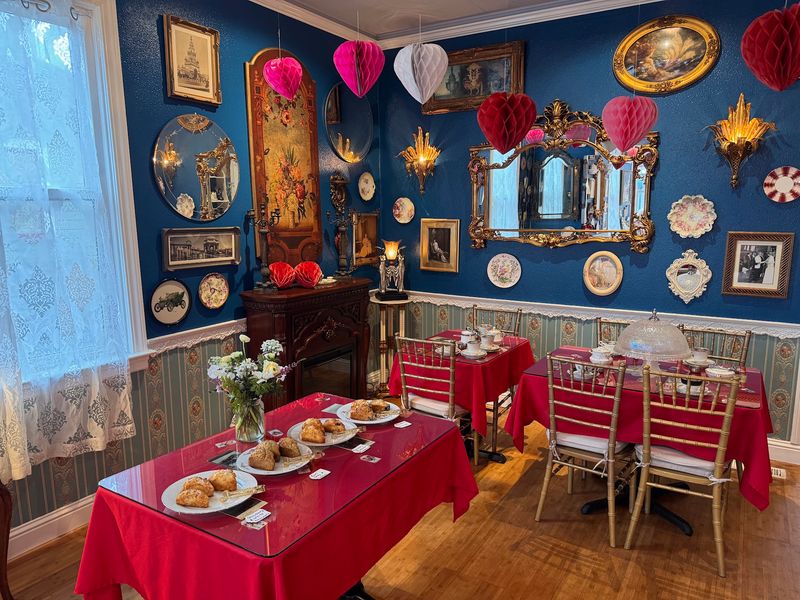
Walk in expecting strict Victorian formality and the decor will surprise you instead.
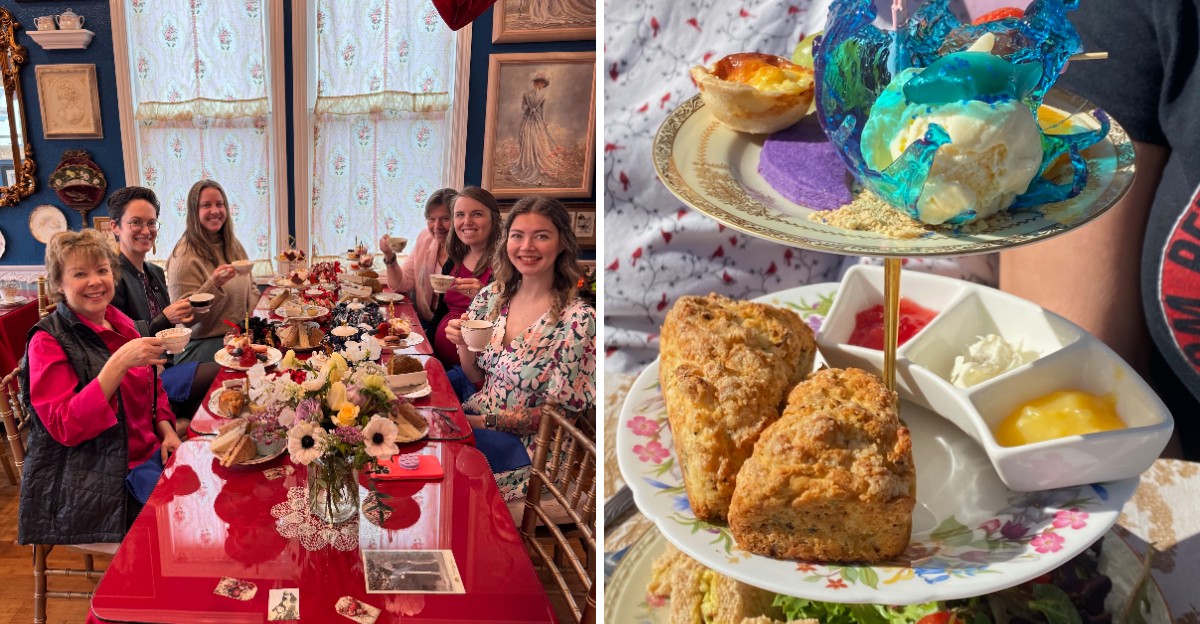
Furniture, chandeliers, mirrors, artwork and china were gathered piece by piece, and the result blends Victorian details with clear Art Deco influences.
Ornate gold-framed mirrors hang beside vintage wall art, and one display of antique hand-held mirrors has become something of a signature.
The walls are painted in bright blue and white tones, which keeps the collected objects from feeling heavy or dim. Crystal chandeliers add sparkle without overwhelming the small rooms.
What keeps the whole thing from looking cluttered is spacing and restraint in the arrangement. There is a lot to look at, yet the eye has places to rest between groupings.
A few shelves hold individual vintage teacup and saucer sets available for purchase, along with loose leaf tea. Retail stays limited so the rooms remain a dining space rather than a shop.
The restroom carries a distinctly 1920s feeling, which guests often mention as an unexpected highlight.
For photographers, late morning light through the bay windows tends to be the most flattering.
Scones Baked Fresh Every Single Morning
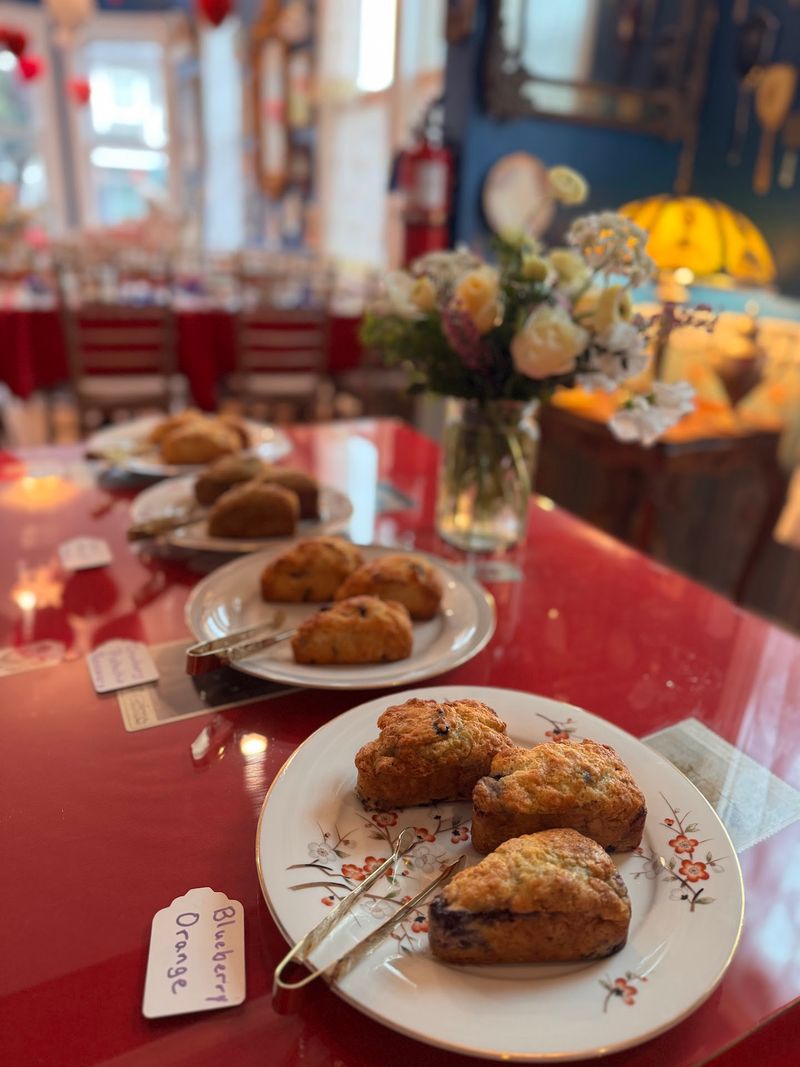
Dry, crumbly scones are the usual disappointment of afternoon tea, and that problem does not show up here.
Baking happens daily on site in small batches, which explains the tender centers and golden tops that regulars keep coming back for. Scones are easily the most talked-about item on the menu.
Flavors rotate, so the lineup changes over time.
Options have included blueberry and orange, Earl Grey and lemon, cranberry with pistachio and rosemary, strawberry and white chocolate, cardamom, French toast and a classic cream scone.
The French toast version has a personal story behind it, having started as a family recipe made on Christmas mornings before it reached the menu.
Since flavors shift week to week, asking what is available that day is a reasonable way to start ordering. Staff are used to the question and will explain the current choices.
Scones come with the afternoon tea services rather than only as standalone items, though ordering a la carte is possible too.
Sharing works well if a table wants to try more than one flavor. Splitting two different scones between two people is a common approach and gives a better sense of the range.
Clotted Cream That Takes Over 20 Hours
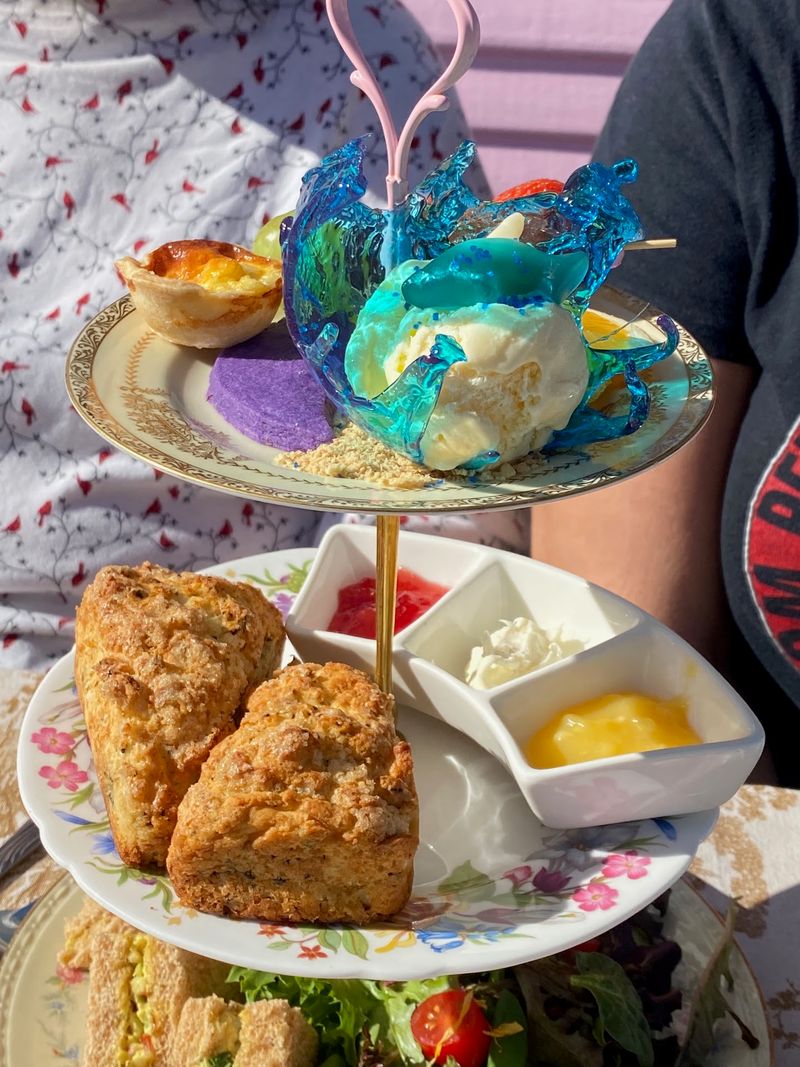
Plenty of tea rooms buy their clotted cream in tubs, so making it in-house is a real commitment of time and oven space.
The process here runs more than twenty hours from start to finish, producing a thick, spreadable cream with a slow-cooked richness.
Spread across a warm scone, it does most of the work that butter would, only softer and more luxurious.
Lemon curd is also made from scratch and brings a bright, tangy edge that cuts through the cream. Strawberry preserves round out the trio with straightforward fruit sweetness.
Olallieberry preserves have appeared with certain tea services as well, which feels fitting for a coastal California town where that berry shows up often.
Nearly everything on the menu is prepared on the premises, and the accompaniments are a good example of that approach.
Small details like this tend to separate a thoughtful tea service from a routine one.
Ordering etiquette is simple and worth knowing. Split the scone horizontally, add cream and curd or preserves to each half, and eat it in pieces rather than assembling a full sandwich.
No need to overthink the cream-before-jam debate here, since both arrive in their own dishes and the choice is entirely yours.
Four Tiers Of Afternoon Tea To Choose From
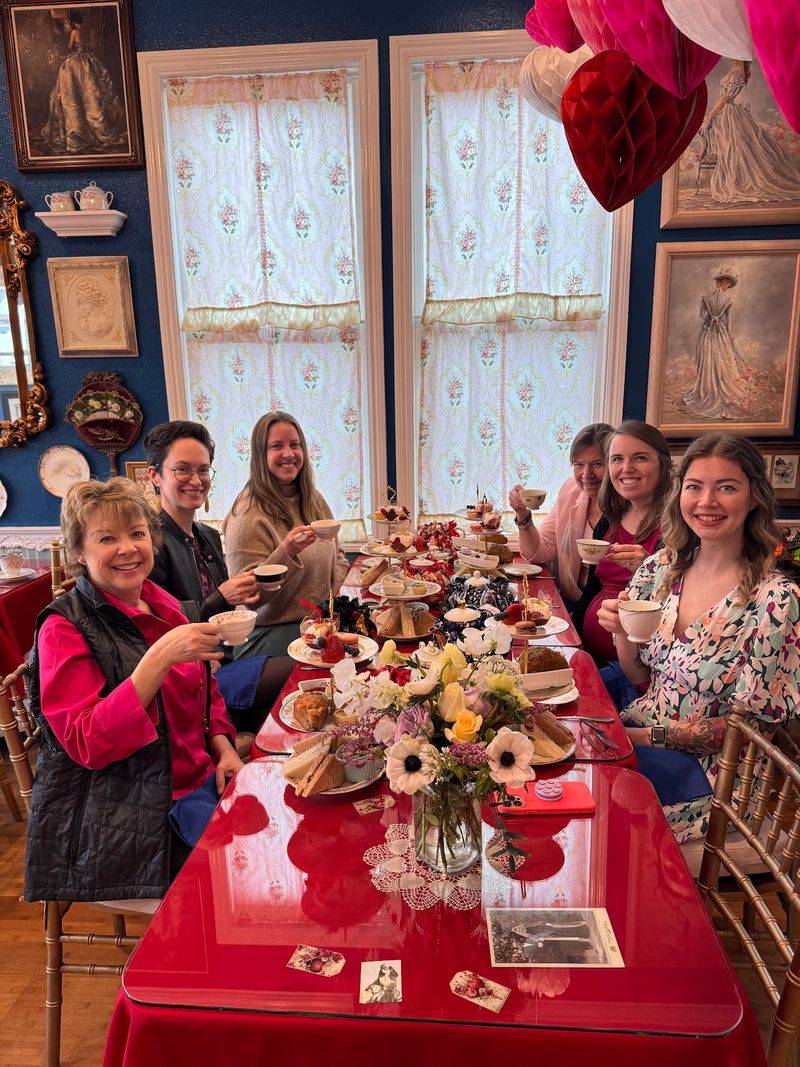
Appetites differ, and the menu is built around that reality rather than forcing one set portion on everyone.
Current choices are the Fog Tea, the Half Moon Tea, the Maverick Tea and a Tea for Two, each with different quantities of sandwiches, scones and sweets. Ordering a la carte is possible as well.
The Fog Tea is the lightest, generally including one sandwich, one scone with preserves, lemon curd and clotted cream, a spring mix salad, fresh fruit and a lemon lavender tea cookie.
Half Moon Tea steps things up with two sandwiches, a scone with the full set of spreads, a mini quiche, a side salad, fresh fruit, a macaron and a lemon lavender cookie.
Maverick Tea is the largest single service, and Tea for Two is designed to share across a table.
Portions run generous across the board, and finishing everything is not always realistic. Anyone unsure about quantity may find the middle option is plenty for a full afternoon meal.
Breakfast items are available too, including oatmeal and French toast, for guests arriving before tea service begins.
Worth checking when booking: tea service typically starts later than opening time, so confirming the schedule avoids an awkward wait.
Three Tiers, Bottomless Pots And Proper Cozies
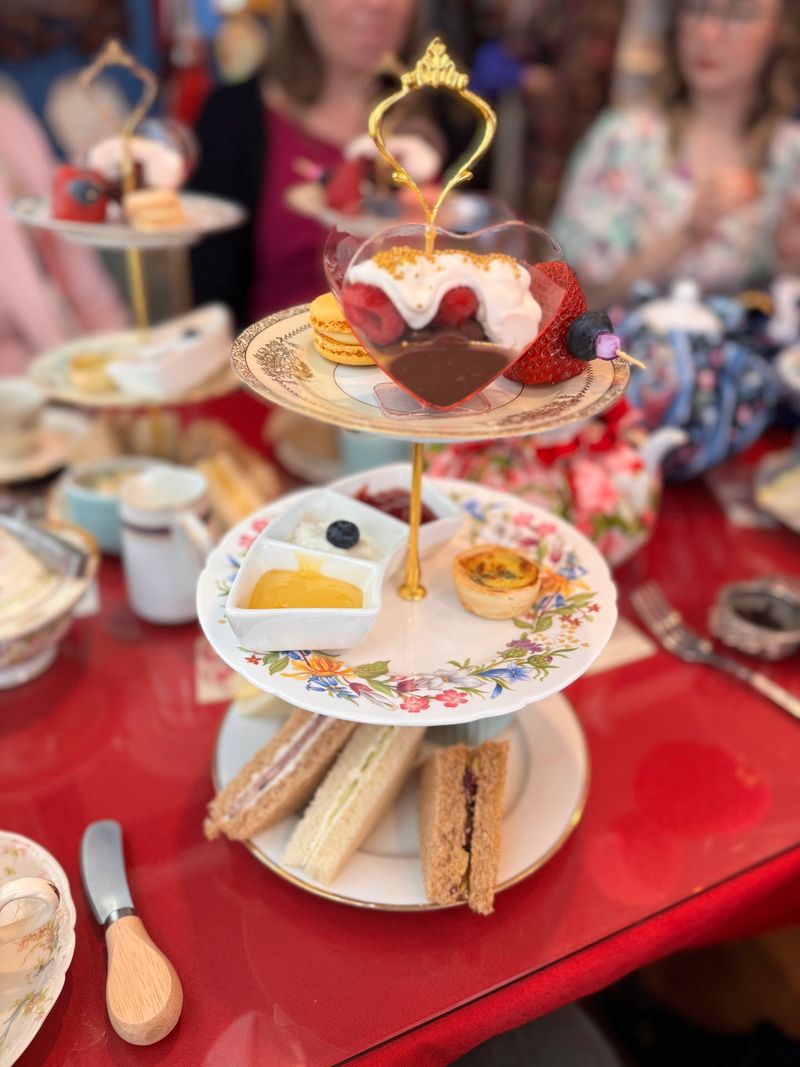
The tiered stand is the image most people carry in their heads about afternoon tea, and that expectation is met.
Services arrive on a homemade three-tiered platter, with savory items below and sweets stacked above.
The arrangement makes it easy for everyone at a table to reach across without shuffling plates.
Each tea service comes with a bottomless pot of tea, so refills continue through the meal without extra charges stacking up.
Tea is served in individual pots fitted with cozies, along with separate strainers and rests. Small touches like a strainer rest keep the table tidy instead of leaving a dripping mess.
Servers usually offer a suggested steeping time for the specific tea ordered, which helps anyone unfamiliar with loose leaf brewing.
Guests who prefer a lighter cup can simply remove the leaves earlier.
Pacing tends to be relaxed rather than rushed, and a full tea service often stretches past an hour. Planning a loose afternoon rather than a tight schedule makes the experience better.
Food arrives together on the tower rather than in courses, so there is no particular order required.
Starting savory and finishing sweet is traditional, though nobody will mind a different approach.
A Tea List That Runs Far Past English Breakfast
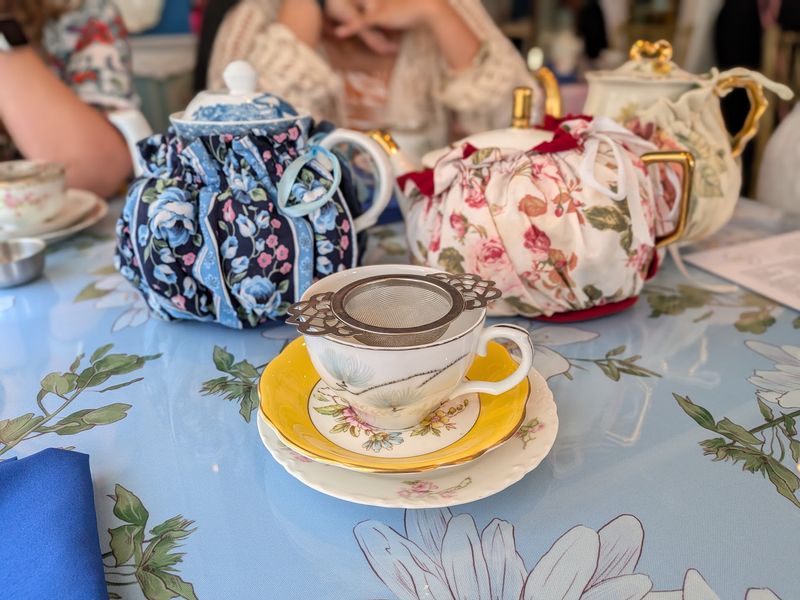
Ordering tea here takes a minute, because the list is genuinely long.
Classic black teas include English Breakfast, Earl Grey, Darjeeling, Lapsang Souchong and Keemun. Flavored black teas add lychee, mango, rose and vanilla to the mix.
Green tea drinkers can pick from Dragon Well, Mandarin, Moroccan Mint, Perfect Pomegranate, Sencha with a decaf version available, and Yun Wu, also called Cloud Mist. Oolong and a small leaf Pu-erh round out those categories.
Herbal options work well for anyone avoiding caffeine, with blends such as Fruit Blend Herbal, Licorice Spice, Honeybush, Vanilla Rooibos Red and a chamomile, lavender, rose hip and vanilla rooibos mixture.
House specialty blends give the list its personality.
Belle pairs green apple with oolong, In Your Eyes combines rose and cocoa nibs with Ceylon black, Lida Rose mixes vanilla rooibos and rose black, The Morning Room blends honeyroo and jasmine with lemon and lavender, and The Teashore joins Chinese and Sri Lankan teas.
Loose leaf bags are sold on site for anyone who wants to brew a favorite at home.
Asking for a recommendation is a reasonable shortcut. Staff can steer you toward something light, malty, floral or caffeine-free depending on what sounds good.
Patio Seating, Reservations And Finding A Parking Spot
Planning ahead turns out to be the single most useful thing a visitor can do here.
The tea house seats roughly 24 guests at a time, and reservations are strongly recommended for afternoon tea, particularly on weekends.
Bookings can be made online, and cancellations within 48 hours may carry a fee per person. Weekdays are quieter and walk-ins are sometimes possible, though nothing is guaranteed.
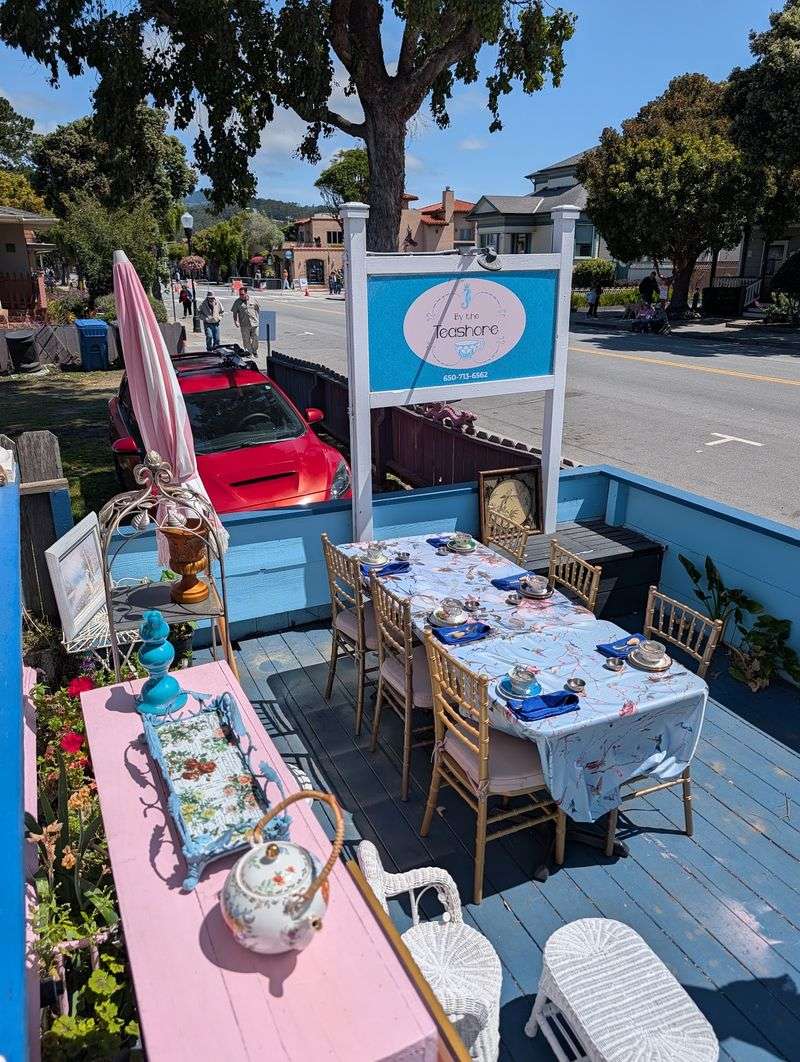
A seasonal patio sits outside the vintage rooms and welcomes dogs, with seating handled on a walk-in basis rather than by reservation.
Heaters are sometimes in use, which helps on foggy coastal afternoons.
Hours run 11 am to 3 pm Wednesday through Friday and 11 am to 4 pm on Saturday and Sunday, with Monday and Tuesday closed.
Parking is worth a thought. The small lot fills quickly, though the location near the end of the Main Street strip usually means street parking within a block or two.
Since it sits at 724 Main Street, an afternoon tea pairs naturally with browsing the shops and boutiques nearby.
Arriving at this California spot early in the service window tends to feel calmest, leaving the rest of the day free to wander downtown.