This Nebraska Deli Packs Its Shelves With Ukrainian Cheese, Smoked Fish And Russian Candy
A strip mall in Nebraska is not where most people expect to find braided Ukrainian cheese or a wall of candy wrapped in foil the color of stained glass. The parking lot gives away nothing.
Inside, though, the coolers are stacked with smoked fish, the deli case holds more sausage than one person could sample in a year, and somebody behind the counter will happily explain what every label says. It is the kind of small store that rearranges your idea of what a grocery run can be.
A Storefront on North 27th Street
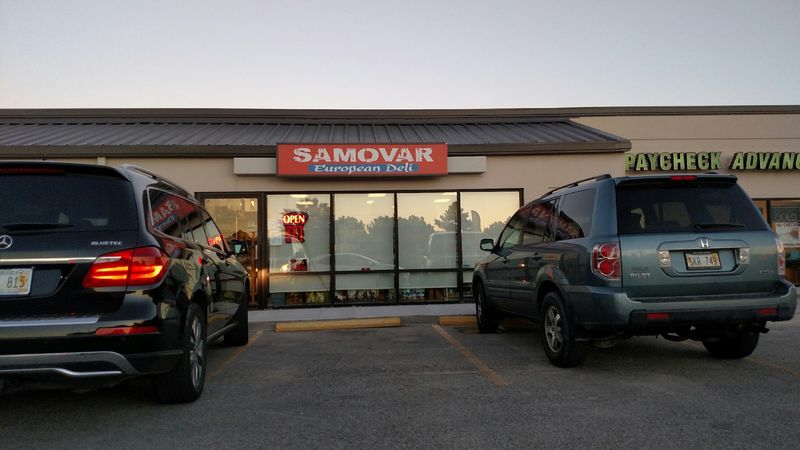
Strip mall suites rarely promise much. A row of glass doors, a shared sidewalk, a parking lot that fills and empties all day.
One of those suites on the north side of Lincoln holds a grocery store stocked almost entirely with food from Eastern Europe.
Samovar – European Deli occupies a modest footprint, and the size is part of the surprise. Aisles of pantry goods run front to back.
Coolers line the walls. A deli counter anchors one side with cured meats and cheeses waiting to be sliced to order.
Lancaster County shoppers drive past this stretch constantly on their way somewhere else. The building itself does nothing to advertise what is inside, which means plenty of people in Lincoln have lived a few miles away for years without ever walking in.
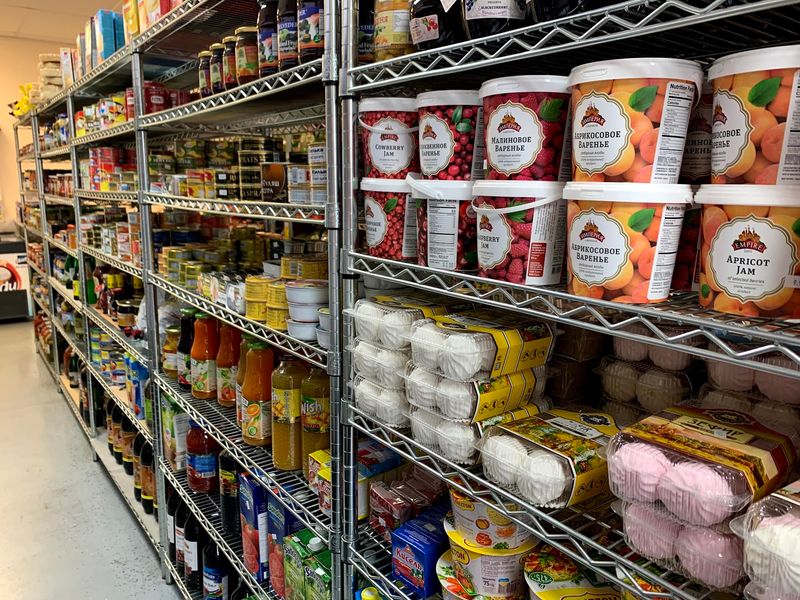
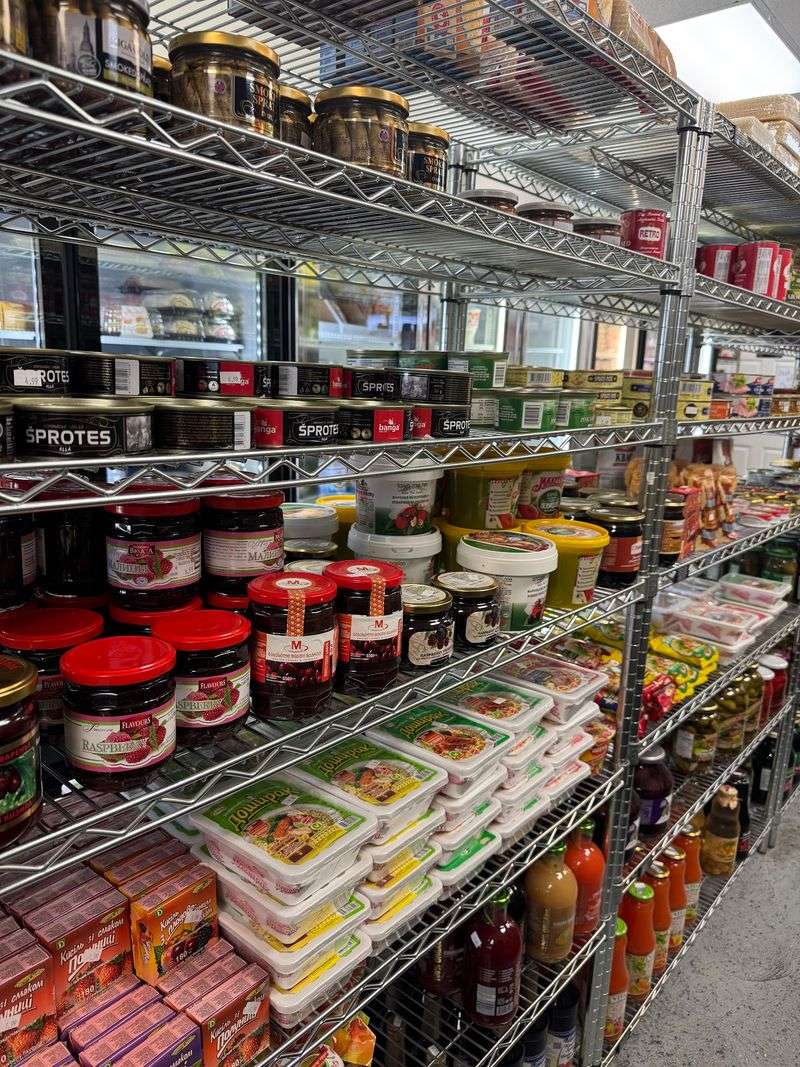
Once you do, the first thing that registers is language. Labels in Cyrillic, labels in Polish, labels in German.
Pictures help, but only so much, and asking questions turns into half the fun of the visit.
From Moldova to Lancaster County
Behind the shelves sits a family story that crosses several borders. Valentina Petrusev and her family came to Lincoln in 1996, leaving the Moldova War behind them, and opened the deli in 2014 after years of building a life in Nebraska.
Her own background does not sit neatly inside any single country. Her father is Ukrainian.
Her mother is Russian. Her husband is Russian-Jewish.
That braid of heritage shows up directly in what the store carries and why.
Nebraska has quietly absorbed families from across Eastern Europe and Central Asia for decades, and businesses like this one become the practical result. Somebody needs the right farmer cheese for a holiday table.
Somebody else wants the tea their grandmother steeped.
The store also became a place where people processed the Russia-Ukraine conflict out loud, trading news and worry between the coolers and the register. Groceries kept moving across the counter while conversations went somewhere heavier.
Eleven-plus years in, it still runs like a family operation rather than a chain outpost.
The Cheese Case and Its Ukrainian Braids
Braided cheese looks like something made for display rather than eating. Thin strands of smoked cheese plaited into a rope, faintly golden at the edges, salty enough to make you pause after the first bite.
The Ukrainian version turns up in the cooler here regularly.
Farmer cheese shares the space, soft and mild, the base for countless dumplings and pastries across the region. Pick up a container and you are halfway to making vareniki at home.
The deli counter handles the rest. Cheese gets sliced to order if you ask, which spares you wrestling with a wedge in your own kitchen.
Same goes for sausage.
What makes the dairy section work is variety within a narrow lane. These are not the cheeses stacked at a Nebraska supermarket.
They come from specific traditions, and the staff can tell you which one melts, which one smokes, which one belongs on dark bread with nothing else.
Bring a cooler if you are driving in from out of town.
Smoked, Dried and Tinned Fish
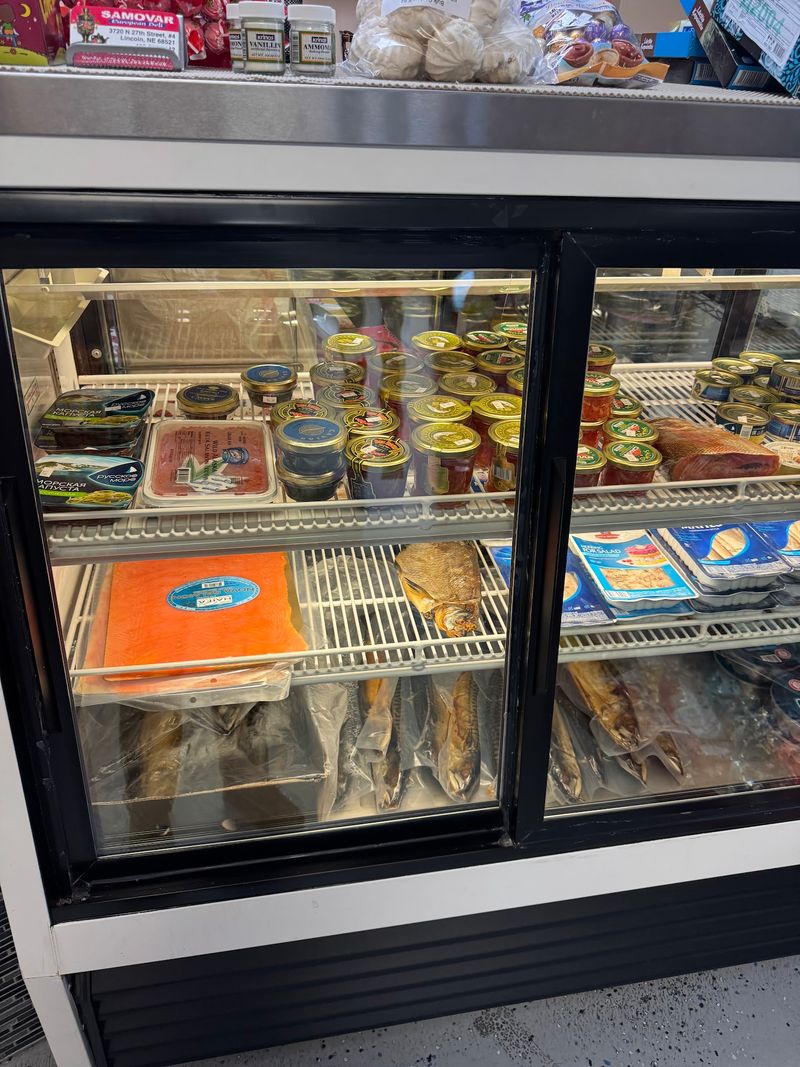
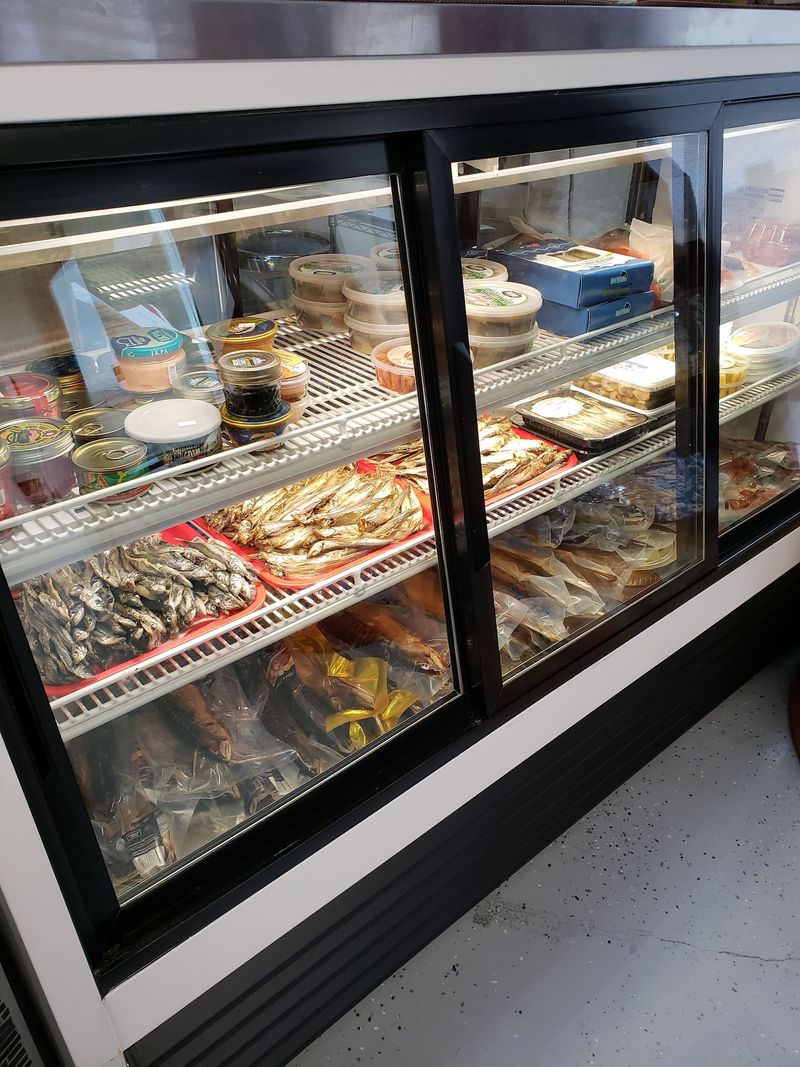
Few things in the store draw a longer stare than the fish. Whole dried specimens, salt-cured and firm, sold in packages that look nothing like anything in a standard American seafood case.
Dried barracuda has turned up among them.
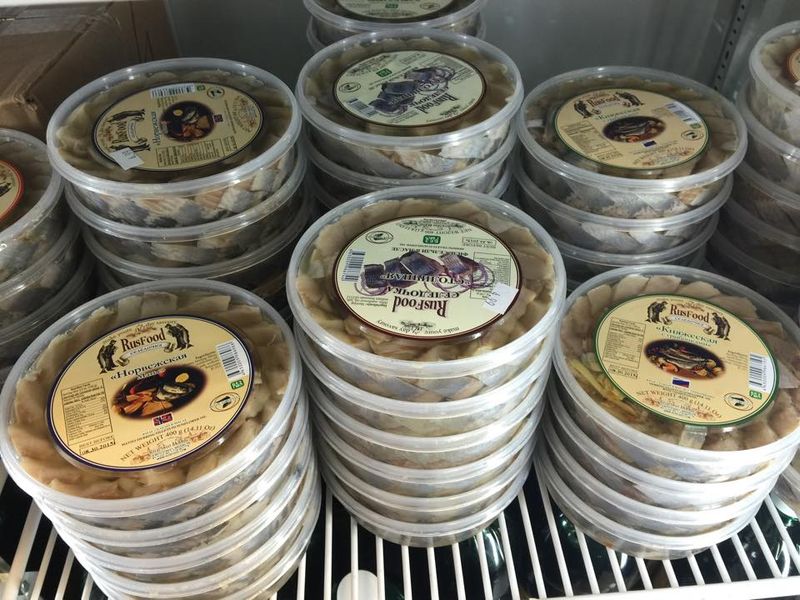
Frozen herring imported from Russia stocks the freezer, and smoked fish shows up in the cooler alongside it. Tinned fish fills a stretch of shelf, small cans with illustrated labels that reward slow browsing.
Caviar has appeared in the case too. Preserved fish carries enormous weight in Eastern European cooking, showing up in salads, on buttered rye, and in dishes served at holidays.
For anyone who grew up eating this way, the section works as a supply run. For everyone else, it functions as an education.
Point at something unfamiliar and ask what to do with it.
Nebraska sits about as far from any ocean as a state can, which makes a well-stocked dried fish wall in Lincoln genuinely unlikely and mildly wonderful.
A Wall of Foil-Wrapped Candy
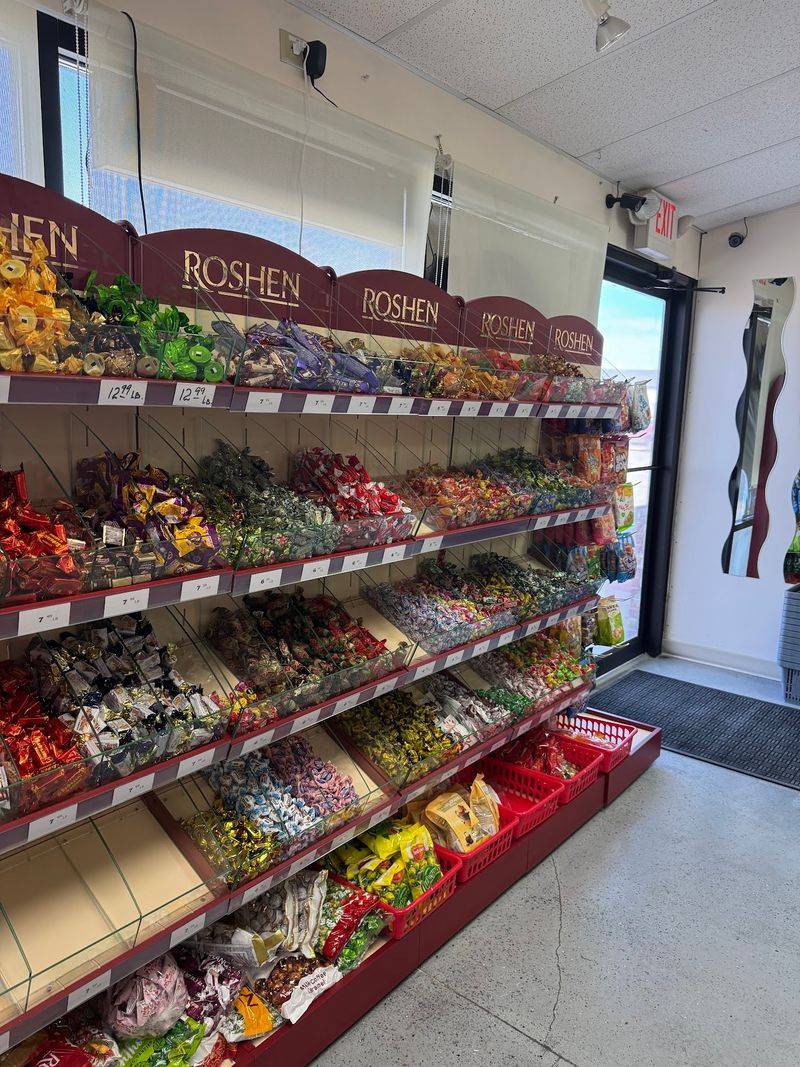
Color hits you near the entrance. An entire wall of candy, wrappers in red and gold and deep blue, foil twisted at both ends the way sweets have been wrapped in this part of the world for generations.
Russia, Ukraine and Germany all contribute. Chocolate bars, filled candies, wafer sweets, and the kind of confections that come loose by the handful so you can build your own mixed bag.
Kids figure this section out within about four seconds. Adults take longer, mostly because the pictures on the wrappers do not always explain the filling, and the guessing becomes part of the enjoyment.
Chocolate here runs richer and less sweet than most American bars, with fillings like condensed milk, poppy seed, and crushed nuts showing up regularly.
If somebody in your family grew up with these, a small bag brings back more than a photograph would. If nobody did, it is still one of the more entertaining dollars you can spend in Lincoln.
Freshness varies, so check dates before you buy.
More Than a Hundred Sausages Behind Glass
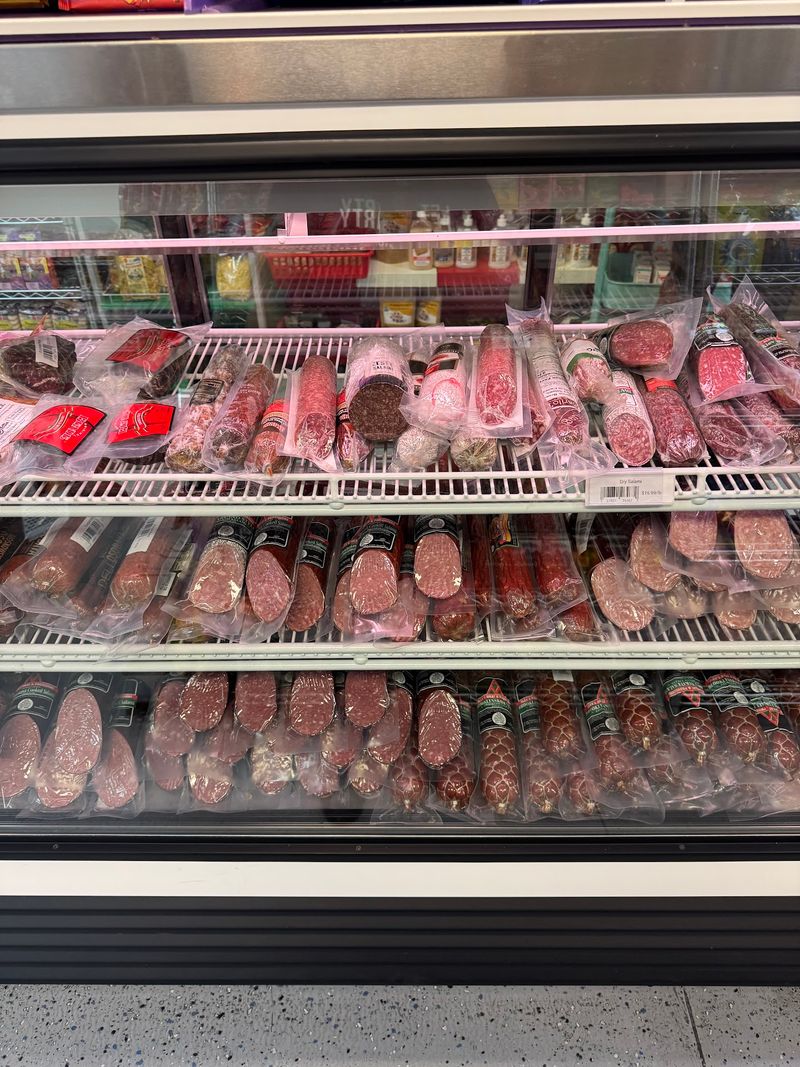
Count the sausages and you run out of patience before you run out of sausages. The deli case holds well over a hundred varieties of sausage, salumi and cooked bacon, hanging and stacked and coiled behind the glass.
Smoked, cured, fresh, garlicky, peppery, paprika-stained. Some slice thin for sandwiches.
Others get cut thick and warmed in a pan. The bologna here has its own quiet following around town.
Ask for slicing and it happens on the spot, which turns a mystery log of meat into something you can actually pack into lunches for the week.
Quality control matters in a category like this, and the store keeps its case clean and its stock moving. Cured meat rewards a fast turnover.
What makes the counter worth lingering at is the staff. Describe what you want to cook and somebody will walk you toward the right one, then explain how it is usually served.
You will pay more than supermarket rates. You are also buying things no supermarket in Nebraska stocks.
Piroshki, Pelmeni and Borscht Made Fresh
Fresh cooking happens here daily, which is not something the word deli always guarantees. Red borscht in the classic style.
Olivie salad, Vinaigretten salad, and herring under the coat, that layered beet-topped dish that looks like a cross-section of geology.
Pastries come out warm. Beef piroshki, fried potato piroshki, feta cheese pies.
Grab one for the drive home and you will regret not buying two.
The freezer holds pelmeni and vareniki in meat and vegetarian versions, plus stuffed cabbage rolls ready to reheat. For anyone who has tried folding dumplings by hand, buying them already made feels like a small mercy.
Much of this arrives by truck from New York, part of a supply chain that links a Lincoln strip mall to importers on the East Coast and producers across Europe.
Around Orthodox Easter and the winter holidays, these shelves matter enormously to families who otherwise could not assemble the meal they grew up with in Nebraska.
Prepared food moves fast, so earlier in the day gives you the fullest case.
Pantry Goods From a Dozen Countries
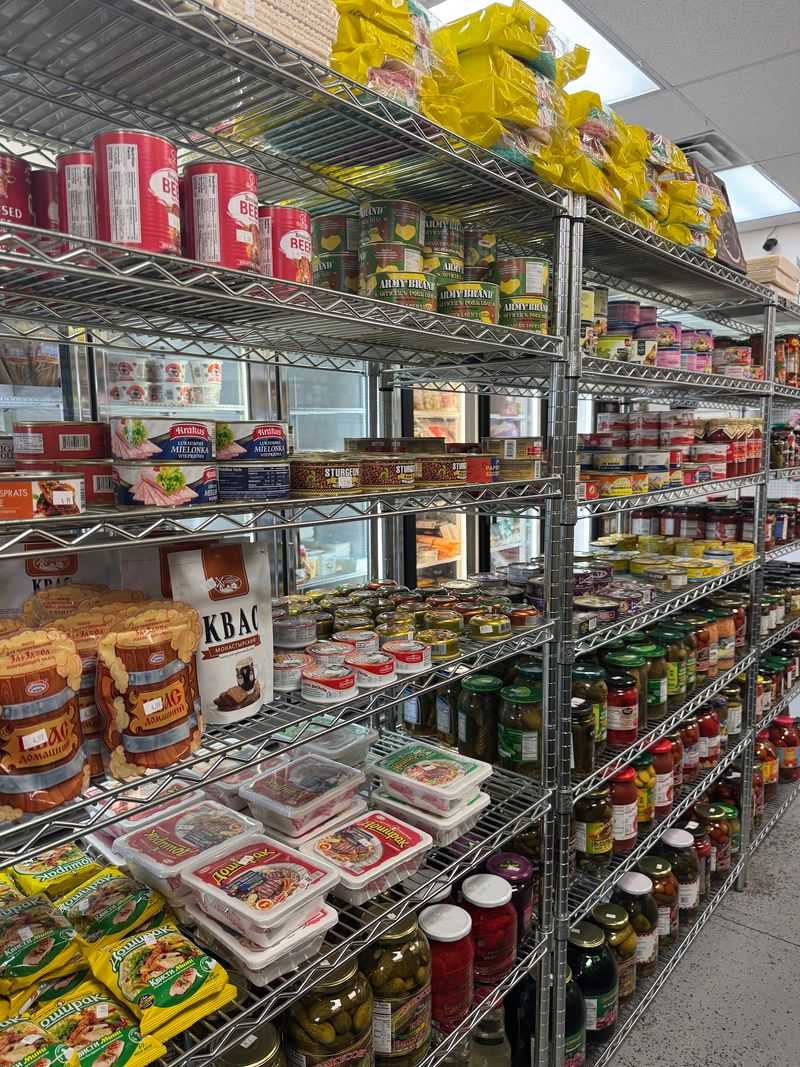
Honey from Kyrgyzstan sits on a shelf in Lincoln. So do Polish pickles, canned goods with Cyrillic labels, and biscuits from bakeries most Americans could not locate on a map.
Fruit preserves come in from Azerbaijan, Armenia and Ukraine, thick with whole berries or cherries. Cakes arrive from Germany, the Czech Republic, Lithuania and Ukraine, boxed and waiting in the freezer.
Speaking of freezers, they hold European berries and wild mushrooms, the sort of ingredients that quietly transform a soup or a sauce.
Teas and dried herbs occupy their own corner, including varieties that are difficult to source anywhere else in the region. Ketchup and mayonnaise in unfamiliar formulations round things out, and yes, they taste different from the American versions.
Georgian products have appeared on the shelves, as has Guarana soda for anyone chasing a specific childhood flavor.
Wandering these aisles is closer to browsing than shopping. You go in for one thing and come out with four you cannot pronounce.
The People Behind the Counter
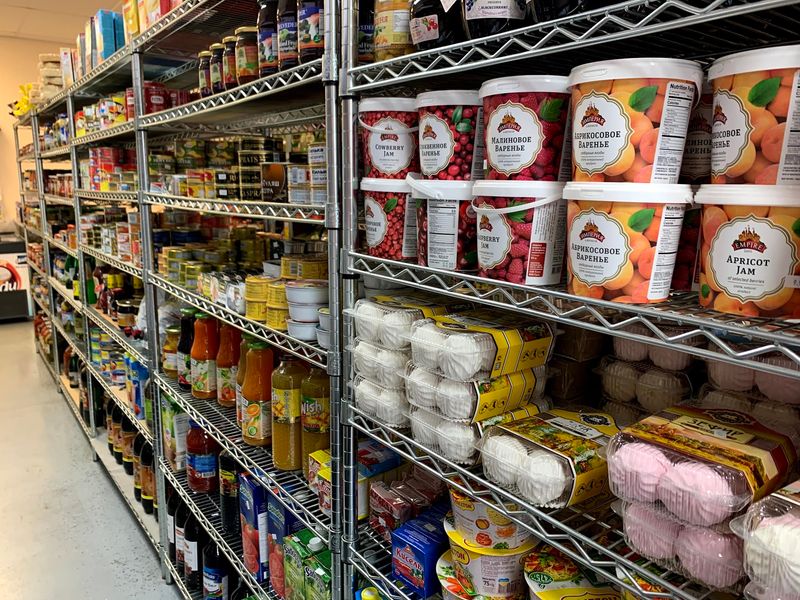
Label confusion is the standard first-timer experience. Cyrillic on one shelf, Polish on the next, a jar whose illustration could mean three different things.
Help is a question away.
Staff here explain products without making anyone feel foolish about asking. What is in it, how it is cooked, what it goes with, whether it is sweet or savory.
That kind of guidance is the difference between a confusing trip and a useful one.
Regulars mention the owners being quick to answer questions and willing to walk someone through an unfamiliar item. Slicing requests get handled at the counter without fuss.
Not every interaction has landed well. A few shoppers have described an unpleasant exchange, and a small number have flagged a sweet or salad that was not at its best.
The store averages 4.7 stars across roughly 150 reviews, so those experiences run against the grain rather than with it.
Mostly what you get is a family business happy to see somebody curious walk through the door.
Who Gets the Most out of a Visit
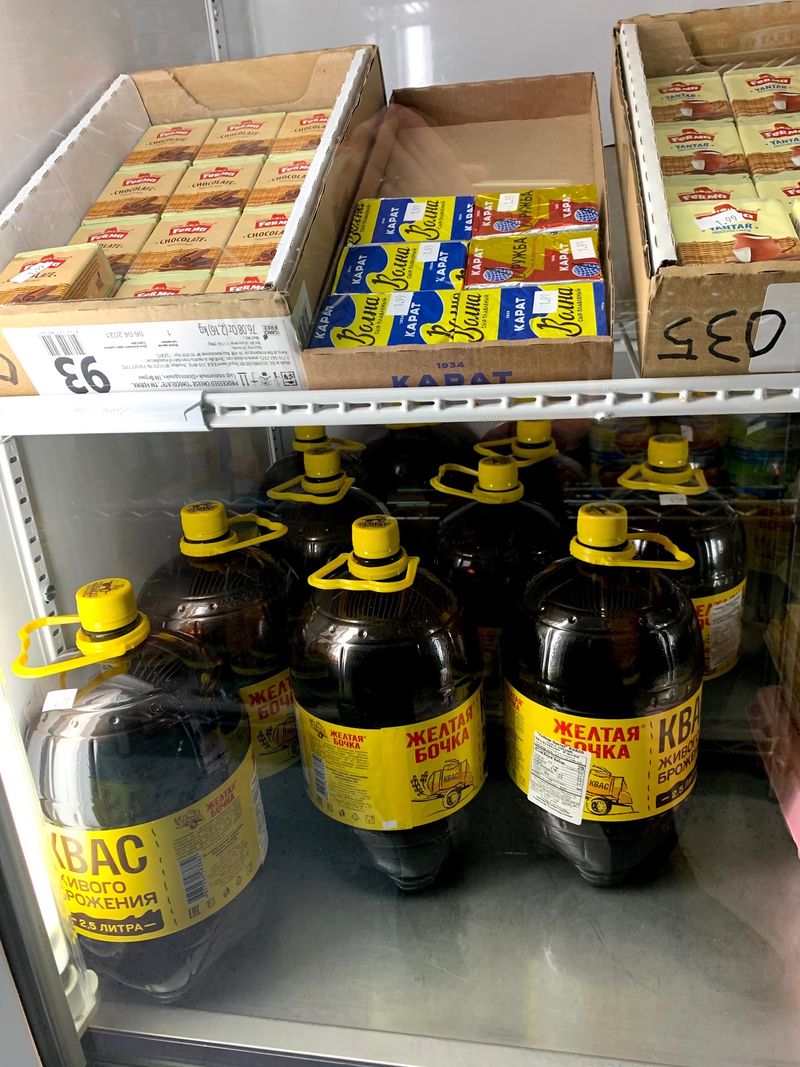
Two very different shoppers walk out of here happy. The first grew up with this food, whether in Ukraine, Russia, Georgia, Poland, or in one of the Germans from Russia families that settled across the Plains generations ago.
For them, it is a supply line to a specific table.
The second has never tasted any of it and wants to. Curiosity is currency in a store like this, and there is no penalty for asking basic questions.
Home cooks do particularly well. Dumpling wrappers, farmer cheese, wild mushrooms, and preserves open up recipes that are otherwise hard to attempt in Nebraska.
Families with kids can make the candy wall the whole outing, cheap and genuinely entertaining. Retirees with a nostalgic streak often find teas and sweets they have not seen in decades.
One practical note. This is a market, not a cafe, so there is no seating.
You buy, you leave, you eat in your kitchen or your car.
Planning the Drive to Lincoln
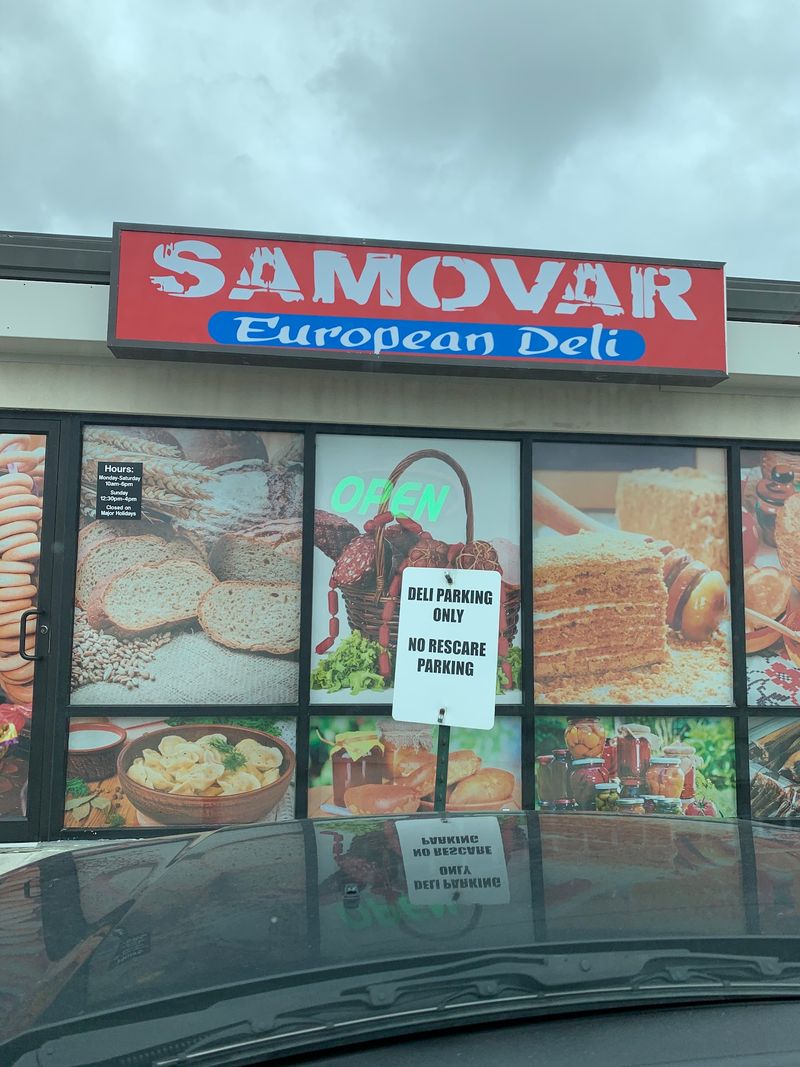
Getting there is simple. The address is 3720 N 27th St #6, Lincoln, NE 68521, in a north Lincoln commercial strip that sits a short hop off Interstate 80, which makes it an easy detour for anyone crossing the state.
From Omaha it is under an hour. From Grand Island, Beatrice, Seward or York, it fits comfortably inside an afternoon with time left for other errands.
Doors open mid-morning most days and close in the early evening, with a shorter window on Sunday. Hours shift, so a quick check before driving in from out of town saves frustration.
Prices land above supermarket level on imported items, which is what importing costs. Candy and pastries stay cheap enough to experiment with freely.
Bring a cooler bag if you are buying fish, sausage or prepared salads and have a long drive ahead. Parking sits right out front, free and rarely tight.
Cash or card both work fine, and the store is compact enough to see thoroughly in half an hour.
Why the Trip Sticks With You
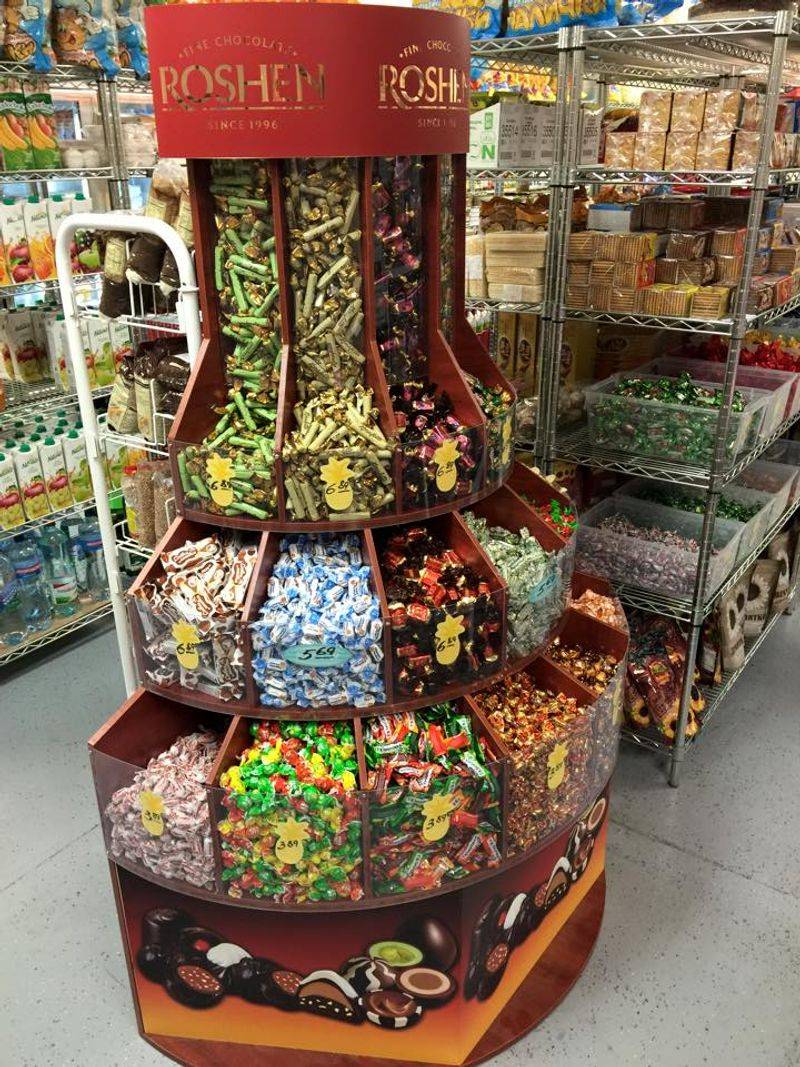
Something odd happens on the drive home. You start planning meals around whatever is in the bag, which is not how a normal grocery run works.
A store this small carrying this much is unusual anywhere, and finding it in a Lincoln strip mall rather than a coastal city makes it stranger still. The inventory covers Ukraine, Russia, Poland, Germany, Georgia, Lithuania, the Czech Republic, Armenia, Azerbaijan and Kyrgyzstan, all inside a footprint you could cross in twenty steps.
Behind the stock is a family that landed in Nebraska in 1996 and built something their neighbors now depend on. That story sits under every shelf.
Go hungry, go curious, and leave room in your schedule to read labels and ask questions. Buy one thing you recognize and two you do not.
Plenty of Nebraskans have driven past this suite for years without knowing what was behind the glass. Once you have been inside, the north 27th Street corridor looks a little different on every trip afterward.