This Alaska Hilltop Delivers Some Of The Darkest Skies For Aurora Viewing
Aurora watching sounds romantic until clouds, city glow, and freezing wind join the plan.
Alaska has a hilltop where elevation and darker surroundings can improve the odds of getting a clearer look at the night sky. That immediately makes the drive more convincing to me.
I would rather shiver somewhere with a better chance of seeing green curtains overhead.
The summit also carries its own history and daytime scenery, so the trip does not have to depend entirely on one unpredictable light show.
Fair warning, patience still matters. The sky makes the final decision, and that uncertainty may be part of the thrill.
Cold War Watchtower Roots
Long before camera tripods crowded this parking lot, uniformed radar operators were the only ones watching the sky here.
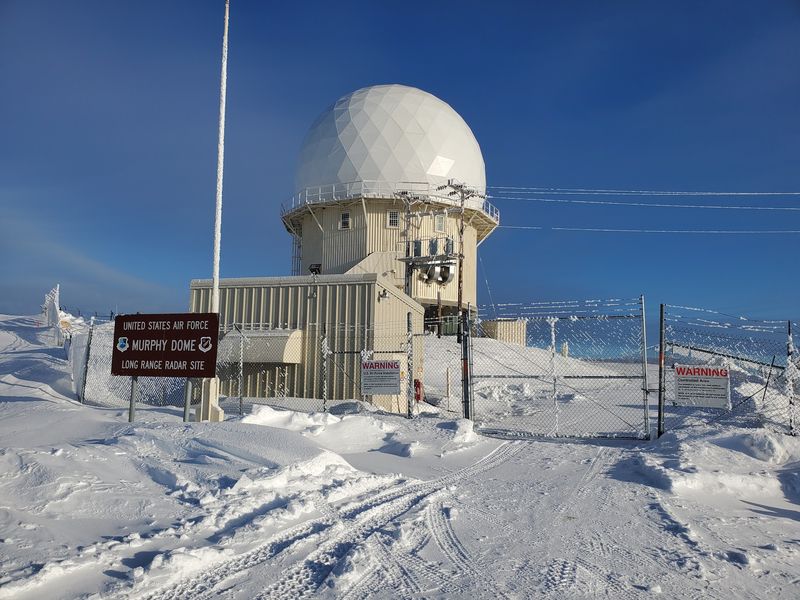
In the early 1950s the summit became Murphy Dome Air Force Station, one of Alaska’s first aircraft control and warning sites.
The installation occupied about 846 acres, while the 744th Aircraft Control and Warning Squadron was authorized for 249 personnel after its activation at Murphy Dome in 1953.
Crews operated and maintained the radar station as part of Alaska’s Cold War air-defense network, with later modernization allowing radar information to be transmitted to the regional control center at Elmendorf.
Murphy Dome also served as a northern control center before modernization shifted regional air-defense operations to Elmendorf in 1983.
The installation was redesignated as a Long Range Radar Site, and an operational AN/FPS-117 radar remains remotely operated and maintained today.
Most of the old complex has been cleared away, which is why the hilltop now feels so wide open.
Follow Murphy Dome Road to the summit area northwest of Fairbanks, where the public viewing and recreation area sits near the active radar site.
Highest Point Near Fairbanks
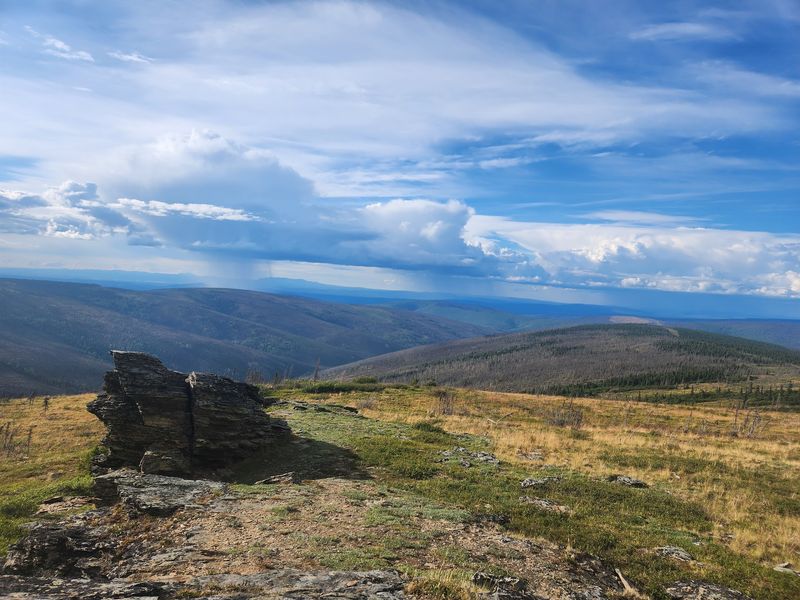
Elevation is the whole secret here, and the numbers back it up. The summit reaches about 2,877 feet, making Murphy Dome the highest point close to Fairbanks.
The summit rises well above the lower Fairbanks-area valleys, creating broad views across Interior Alaska.
The drive climbs out of thick boreal forest and into open tundra, and you can feel the trees give up as the road rises.
Up top, the vegetation stays low and scrubby, which is exactly what stargazers want. Low tundra vegetation around the upper slopes creates broad views, although the radar facility, communications structures, and scattered small spruce remain visible.
Summer turns the hills a soft rolling green, while winter buries everything under white. Both versions are worth the trip, though they feel like two different planets.
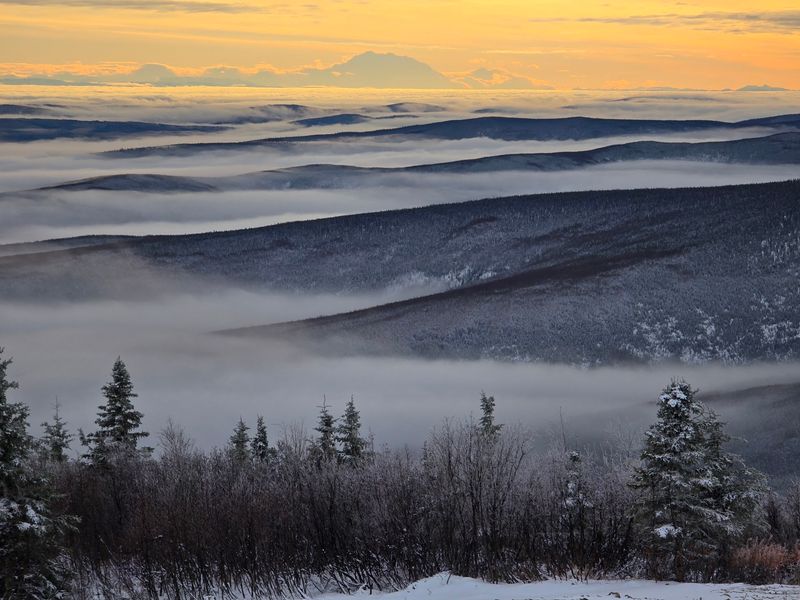
The higher elevation can sometimes place Murphy Dome above low-lying ice fog or inversion conditions affecting the Fairbanks valleys, although clouds can still obscure the sky.
The scale of the landscape from here is hard to overstate. Interior Alaska stretches out raw and unfinished, and you are standing right on top of it.
Where The Sky Performs
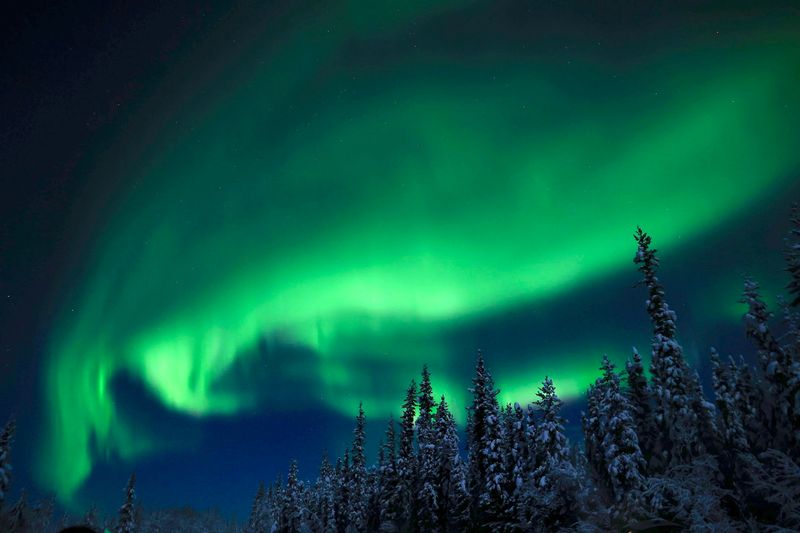
Darkness has a texture up here, and you notice it the second your eyes adjust.
At roughly 25 miles from Fairbanks, Murphy Dome provides darker surroundings than central city locations and is officially promoted as an aurora-viewing viewpoint.
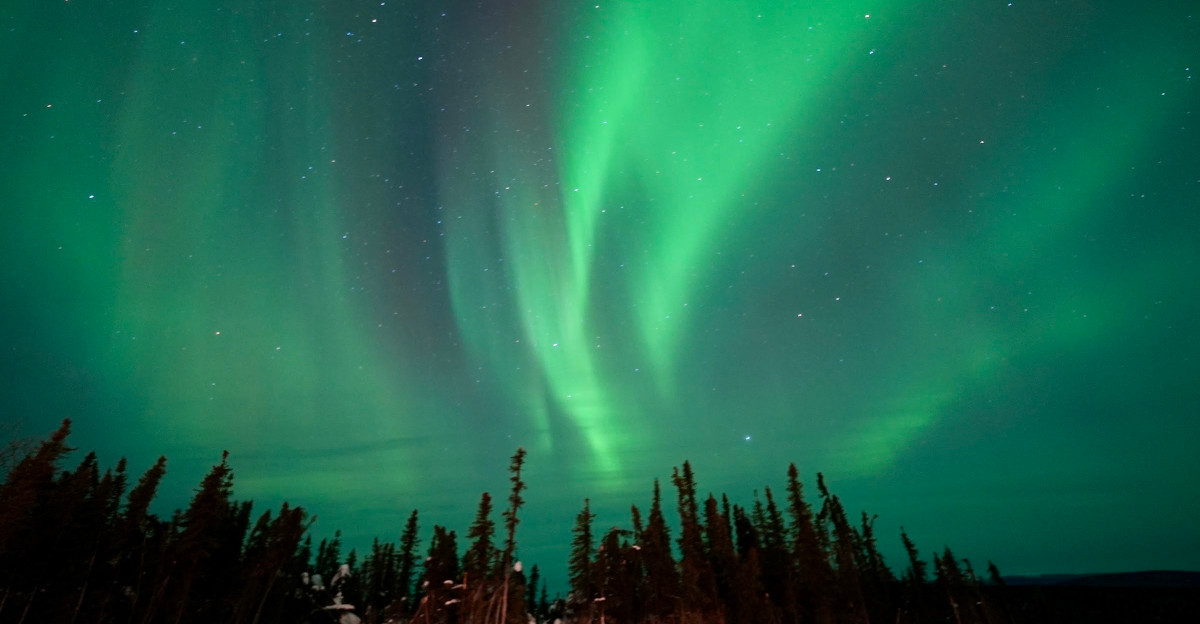
The aurora arrives in different moods. Sometimes it is a quiet green arc along the north, other nights it swells into shifting curtains and slow spirals overhead.
Color varies too. Green dominates, but active displays can throw in pink, red, purple, or a ghostly white that photographs beautifully.
On sufficiently dark, clear nights, stars and the Milky Way can become much easier to see away from brighter city lighting.
Wind is part of the deal. The exposed summit can be windy and extremely cold, so dress for prolonged time outdoors and use your vehicle as shelter when needed.
The active radar and communications facilities introduce some artificial light, so Murphy Dome should not be described as completely free of light pollution.
Once safely parked, minimizing unnecessary bright lights can help preserve night vision and avoid interfering with other aurora watchers and photographers.
Timing Your Aurora Night
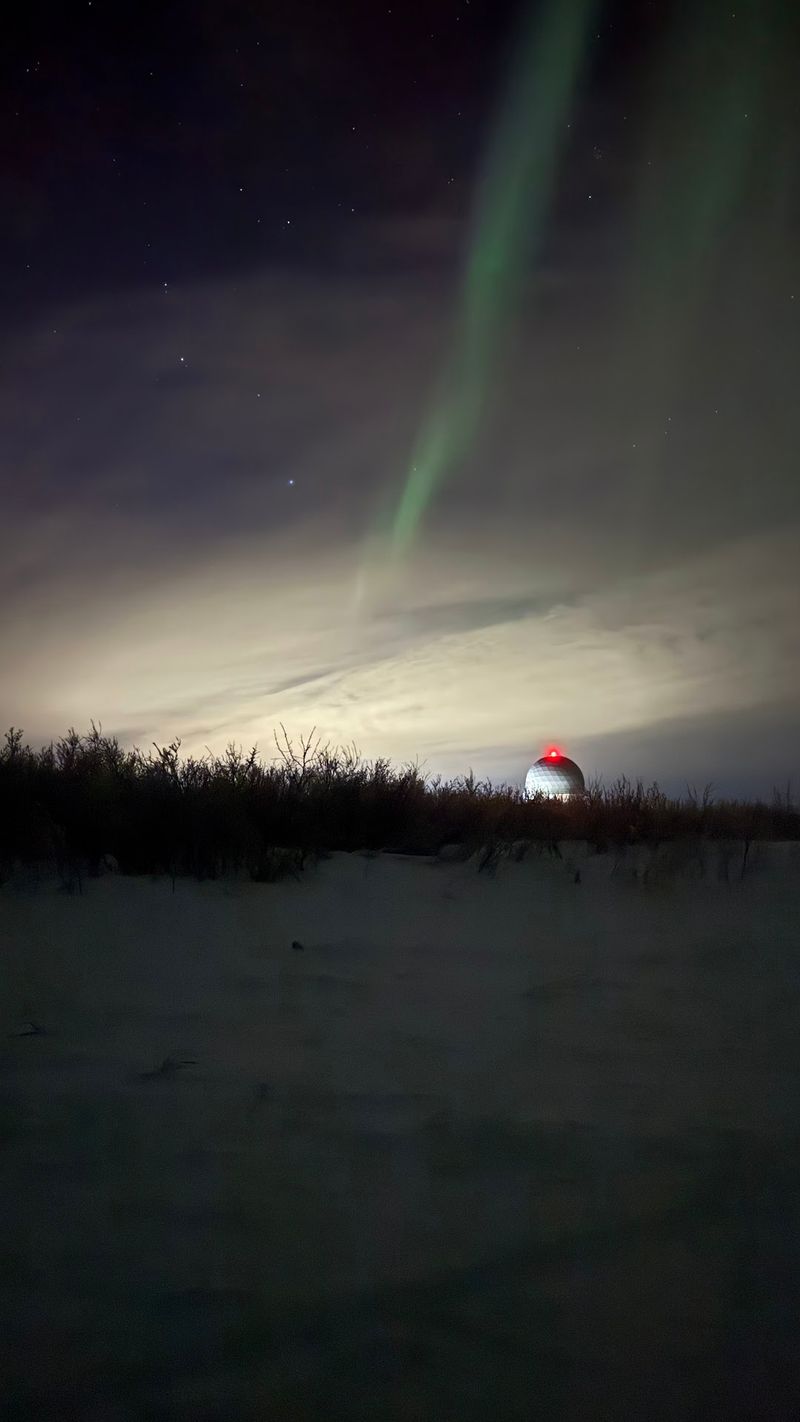
Patience wins here more often than luck does. Fairbanks’ official Aurora Season runs from August 21 through April 21, when skies become dark enough to see the northern lights.
Aurora viewing is often best around midnight to 3:00 AM, although displays can appear anytime the sky is sufficiently dark and conditions align.
Both cloud cover and auroral activity matter, so check the weather and a current aurora forecast before committing to the drive.
Layers are not optional. Temperatures at this elevation drop hard, and the wind above the treeline turns cold into something much sharper.
Plan your logistics in town, because there are no restrooms or facilities at the summit. Water and snacks help, since a round trip from Fairbanks easily eats several hours.
Aurora activity can change considerably through the night, so allowing plenty of time improves your chances compared with making only a brief stop.
Cautious optimism is the right mindset for any night out here.
The Drive Up There
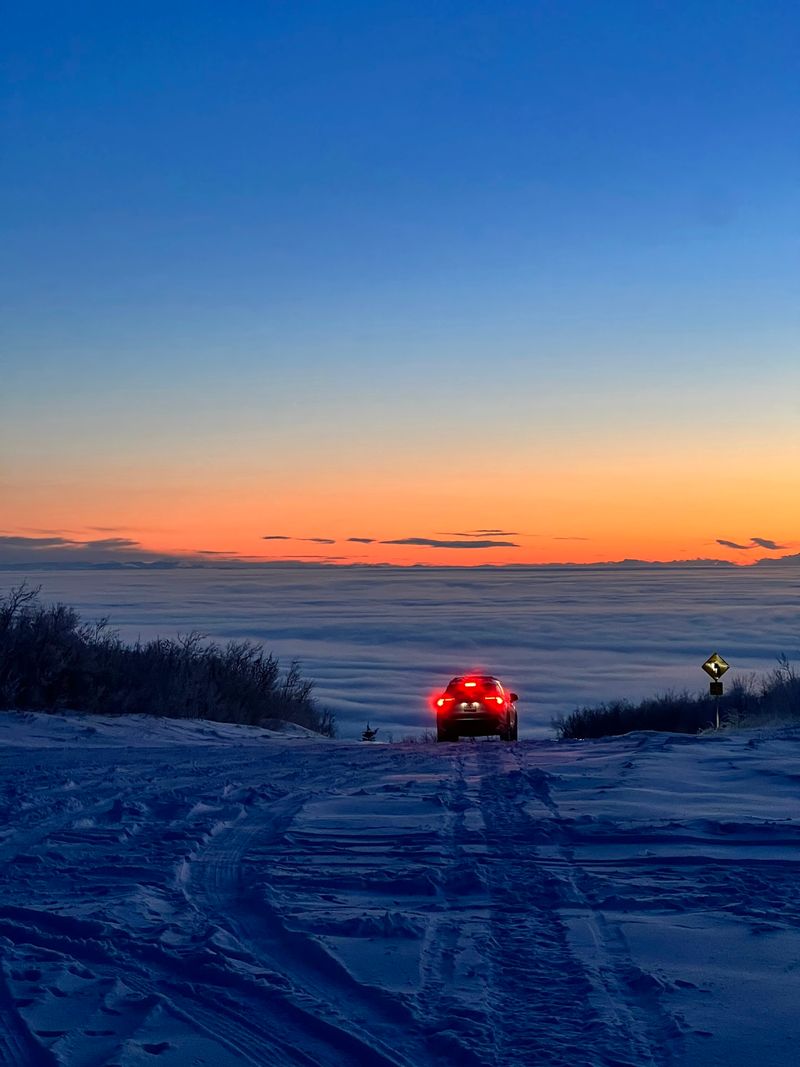
Getting here is half the story, and it deserves respect. Murphy Dome sits about 25 miles from Fairbanks, with driving time varying according to road and weather conditions.
From the Parks Highway, drivers can approach via Goldstream Road, while Sheep Creek Road provides another approach from the Steese Highway side before both connect with Murphy Dome Road.
Pavement gives way partway up, and the last stretch is packed dirt and gravel. Expect potholes, frost heaves, and loose rock in warmer months.
Winter changes the math. Snow and ice make all-wheel drive or 4×4 strongly advisable, especially with steep pitches and blind corners on the way up.
The Alaska Department of Transportation and Public Facilities has a project to rehabilitate the first two miles of Murphy Dome Road, addressing narrow shoulders, unstable embankments, pavement, culverts, and drainage.
A large dirt and gravel lot waits at the top with room for cars, trucks, and trailers. Cell service can be spotty around Murphy Dome, so tell someone your plans before heading out.
Wildlife And Wildflowers
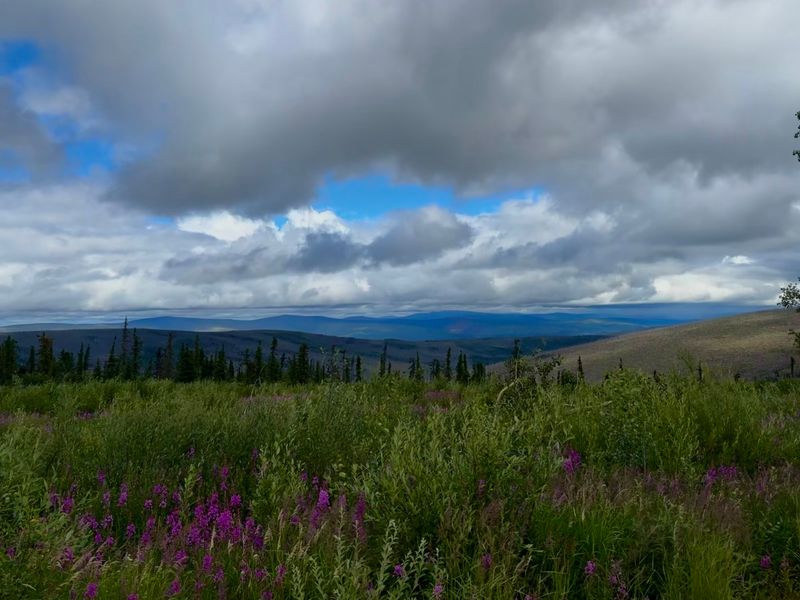
Snowmelt flips a switch on this hillside. Green floods the tundra, and wildflowers scatter color across ground that spent months buried.
Interior Alaska supports wildlife including moose, foxes, ermine, and beavers, but sightings at Murphy Dome are never guaranteed.
Open tundra and surrounding Interior habitat can attract a variety of birds, but the species seen on any particular visit vary with season and conditions.
Bears can occur in the area, so stay alert, make your presence known by talking or calling out, keep your distance, and consider carrying accessible bear spray. Bear bells are less effective than using your voice to avoid surprising a bear.
Low tundra vegetation opens broad views, but visitors should favor established routes and durable surfaces to avoid damaging the fragile upper slopes.
Late-summer visitors should respect land ownership, posted restrictions, and fragile vegetation while exploring the summit area.
One warning that is not negotiable: Alaska summers come with serious mosquitoes. Strong repellent turns a miserable outing into a comfortable one.
The ecosystem thriving around Murphy Dome reminds you that this hilltop is far more than a nighttime parking lot. Daylight hours have their own cast of characters.
Daylight Trails And Tors
Sunshine visitors get a completely different hilltop. Hikers, ATV riders, and off-roaders all use the routes branching away from the summit.
One path follows a scenic ridge line before dropping toward the Chatanika River, opening up long views along the way. Another wanders past a cluster of tors, granite formations that rise as high as 25 feet.
Those rock outcrops are fun to scramble around, and they frame the surrounding wilderness nicely. Be aware that some routes are rutted ATV tracks rather than groomed footpaths, so sturdy boots help.
Short hikes are possible on the ATV routes and existing tracks around Murphy Dome, while staying on established surfaces helps limit damage to the tundra.
From roughly May 17 through July 27, Fairbanks experiences continuous usable daylight, with the sun sometimes dipping just below the horizon while civil twilight keeps the night bright.
Continuous summer twilight can leave enough natural light for outdoor activity around midnight, although carrying a light remains sensible.
Meteor showers are another fine excuse to drive up.
Why The Darkness Wins
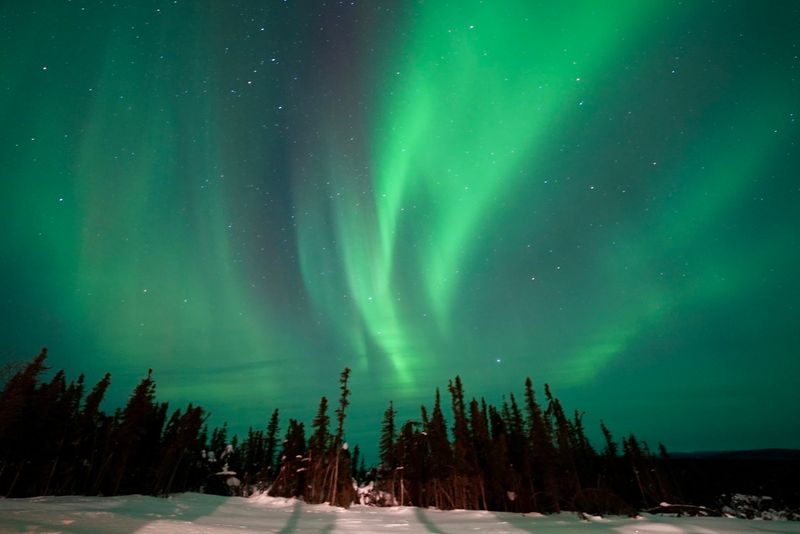
Murphy Dome combines elevation, open terrain, and distance from central Fairbanks, all useful qualities for an aurora-viewing location.
Its 2,877-foot elevation can sometimes put the summit above lower-level ice fog or inversion conditions, but elevation does not guarantee clear skies.
When lower valleys are affected by fog while the summit remains clear, the higher viewpoint can provide better visibility, but conditions vary from night to night.
Distance from Fairbanks matters just as much. Fewer artificial lights reach this far out, so the natural darkness stays mostly undisturbed.
Low vegetation creates broad sightlines around much of the summit, although the active radar facility and communications structures interrupt parts of the horizon.
Auroral light is produced when energy carried into Earth’s upper atmosphere ultimately excites oxygen and nitrogen, which emit different colors of light as they return to lower-energy states.
Combine elevation, distance from central Fairbanks, and broad views, and it is easy to understand why Murphy Dome appears on the region’s official list of aurora-viewing locations.
Darkness, it turns out, is the real attraction.