9 Forgotten Ruins In Ohio Hiding Some Seriously Creepy History
Creepy does not always mean haunted. Sometimes history is unsettling enough on its own.
Ohio has ruins where abandoned industry, crumbling structures, tunnels, and old stonework create an eerie mood before folklore even enters the story.
Then the local legends arrive and complicate everything. Now that is where things get interesting.
A quiet trail can suddenly feel heavier once you know what happened there decades ago.
Some places may seem peaceful in daylight, then completely different under longer shadows.
These ruins offer more than spooky scenery. They carry real stories, which can make the atmosphere far harder to shrug off.
1. Squire’s Castle, Willoughby Hills
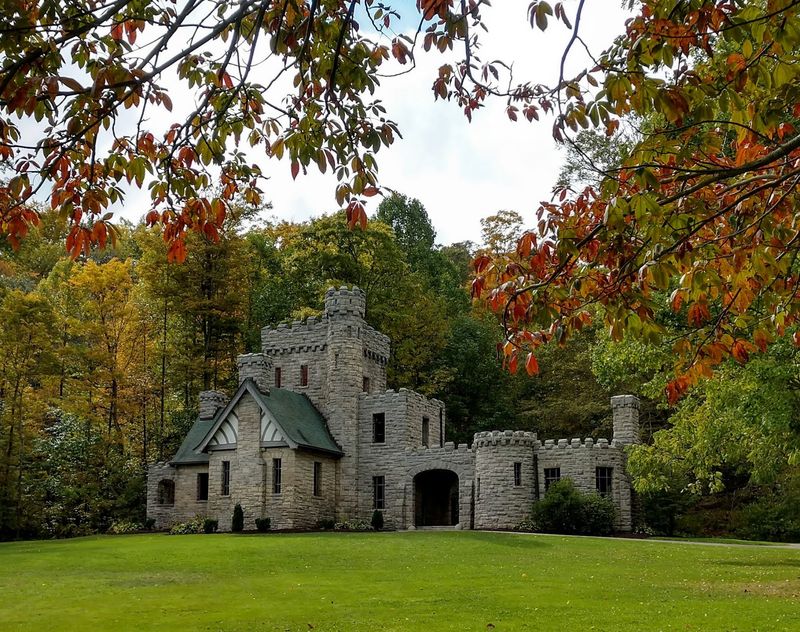
Just imagine for a second a medieval gatehouse sitting alone among tall trees, guarding a mansion that never appeared. The stone shell belongs to Squire’s Castle in Willoughby Hills, and its story is stranger than its looks.
Feargus B. Squire, a Standard Oil executive, built it in the 1890s as the entrance lodge for a grand country estate. The main house was never constructed, so the gatehouse became the whole dream.
Cleveland Metroparks acquired the property in 1925, and later alterations removed the upper floors and filled in the basement.
What remains is a barebones structure inside North Chagrin Reservation, with thick walls and an exposed roof framework overhead.
Folklore did the rest of the work.
A long-running legend says Squire’s wife died after being frightened in the gatehouse and falling down the stairs, but historical records show she died elsewhere, making the story folklore rather than documented history.
Later versions of the ghost story add details such as a woman carrying a red lantern, but those elements belong to local folklore rather than the documented history of the property.
Daylight brings picnickers, wedding photographers, and families hiking nearby trails.
Go early for soft light and fewer crowds, and stay on marked paths since the stonework is old. You can find the atmospheric ruin at 2844 River Road, and it costs nothing to wander through.
Creepy legends aside, this is one seriously photogenic slice of Ohio history.
2. Leetonia Beehive Coke Ovens Park
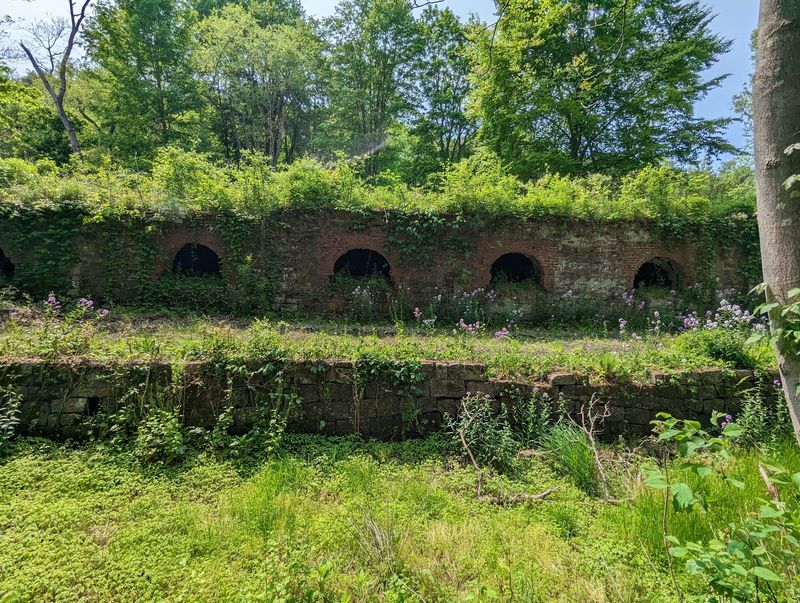
Leetonia Beehive Coke Ovens Park in Leetonia holds over 200 of these strange structures, each roughly seven feet tall and twelve feet across.
Groundbreaking began in the winter of 1865, and the industrial complex was completed in 1866 under the Leetonia Coal & Iron Company.
Coal dug from nearby hillsides was baked inside the ovens to make coke, the fuel that fed hungry iron and steel mills.
Operations ran hard until 1930, when the company shut down. For more than fifty years the site sat neglected, until local volunteers cleared brush and began preservation work.
Today the public historic park preserves the remains of more than 200 beehive coke ovens from Leetonia’s industrial era. Walking the trails between the arches, you notice an odd stillness where fire once roared day and night.
Ghost stories have grown around the abandoned industrial setting, but the documented history centers on the workers, mines, coke ovens, and blast furnaces that operated here.
Preservation of the abandoned site began in the early 1980s, when local residents and village officials started clearing and protecting the surviving ovens.
Wear sturdy shoes and admire the aging oven structures from safe public areas rather than climbing on or entering deteriorated remains.
Find this eerie industrial corridor at 999 Cherry Valley Road. Few Ohio sites deliver such a heavy dose of goosebumps for free.
3. Hope Furnace Ruins, McArthur
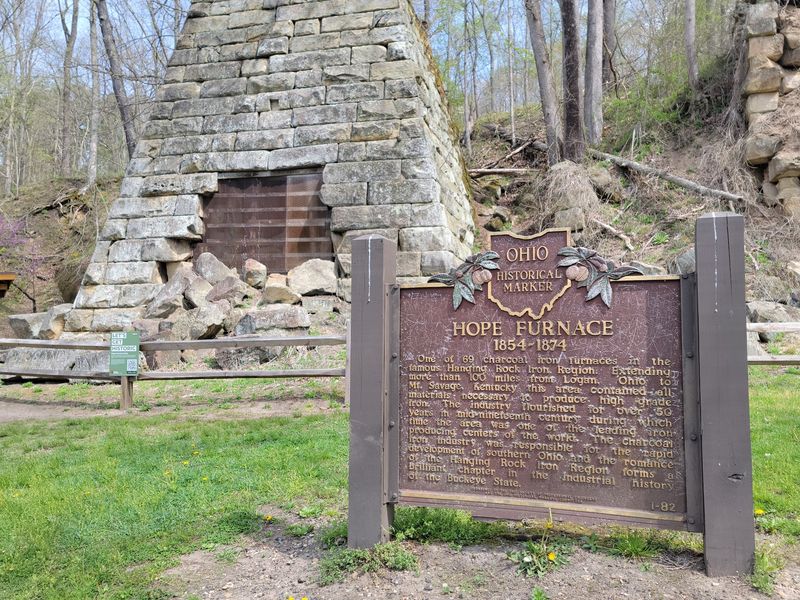
My jaw almost dropped at a massive stone tower rising out of thick woodland like a fantasy relic. Hope Furnace sits quietly near McArthur inside Zaleski State Forest, and it once powered serious industry.
Built in 1853 and 1854, the furnace belonged to the Hanging Rock Iron Region, a national leader in iron production. Charcoal fed the flames, and the appetite was so enormous that surrounding hillsides were stripped nearly bare.
Hundreds of laborers cut timber, hauled ore, and tended fires around the clock. Work stopped in 1874, largely because richer iron ore deposits were discovered farther west.
What survives now is the grand chimney and portions of the original foundation. Look down and you will spot chunks of slag, the glassy leftover from smelting, scattered across the forest floor.
Local ghost lore includes stories of a watchman lingering around Hope Furnace, but those tales are folklore rather than part of the documented industrial record.
Autumn turns the scene golden, with leaves framing the stone into something close to a painting. Nearby Lake Hope trails make it easy to pair the ruin with a longer hike and a picnic.
Wear boots, since the approach can be muddy after rain. Look for Hope Furnace along State Route 278 near Lake Hope State Park and the Hope Furnace trailhead; 27331 State Route 278 is associated with the nearby park facilities.
4. The Ruins At Ariel-Foundation Park, Mount Vernon
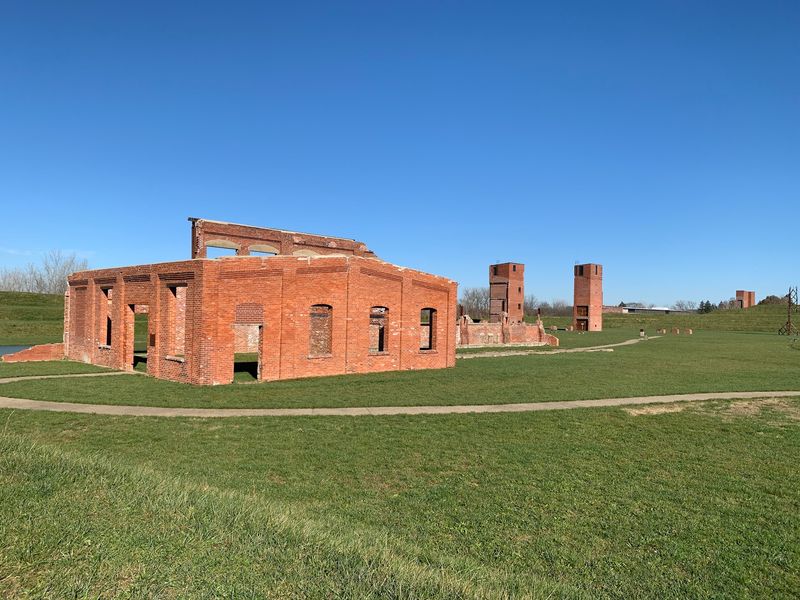
Let me look at it from this angle: industrial decay can become genuinely beautiful art. The Ruins at Ariel-Foundation Park in Mount Vernon prove it across 250 acres of history, sculpture, and open green space.
The land once held the Pittsburgh Plate Glass plant, among the largest plate-glass factories anywhere. Production ended in 1976, and the complex slowly crumbled for decades afterward.
Designers chose celebration over demolition. Sections of the 1900 Coxey Building still stand as skeletal columns, joined by an old carpenter shop and a towering 1951 smokestack.
That smokestack became the 280-foot Rastin Observation Tower, with a spiral staircase leading to a 140-foot deck and sweeping county views. Climbing it at sunset is pure reward for tired legs.
Here’s a quirky detail: structural steel from the Coxey Building was salvaged from the 1893 World’s Columbian Exhibition in Chicago. That same steel was later reshaped into sculptures scattered around the grounds.
The park’s curving earthen terraces were inspired by landscape architect Charles Jencks, while the River of Glass uses blue and green cullet left from the former PPG glassworks.
Fishing lakes, paved paths, and picnic areas make it family friendly by day. The address is 10 Pittsburgh Avenue, and photographers tend to lose track of time completely here.
5. Lockville Canal Park, Carroll
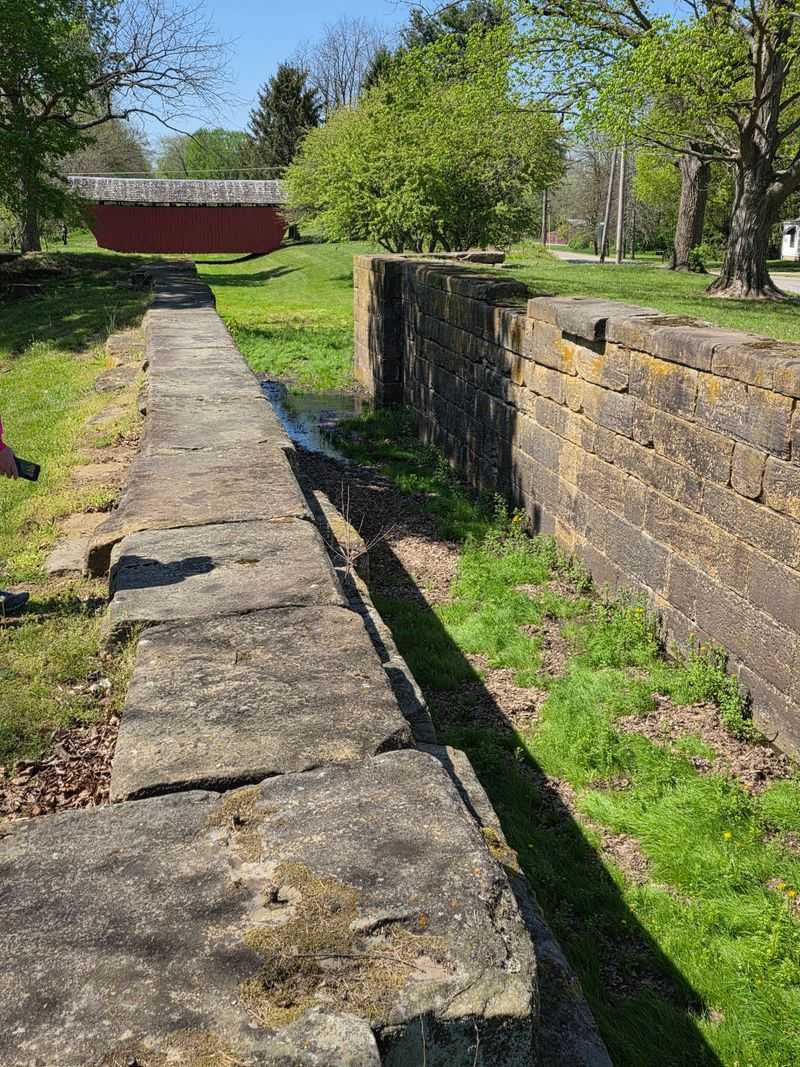
Have you given any thought to how goods crossed Ohio before highways and railroads took over. Lockville Canal Park in Carroll answers that question with stonework you can touch.
The park preserves pieces of the Ohio and Erie Canal, built in the early 1800s to link Lake Erie with the Ohio River. That waterway jumpstarted the state’s economy in a big way.
The park preserves the remains of Ohio & Erie Canal Locks South 11, 12, and 13 along the former canal corridor.
Lockville developed around canal traffic, with businesses and residents serving boats and travelers moving along the Ohio & Erie Canal.
The Hartman Number 2 Covered Bridge adds character to the grounds. Built in 1888 with a queenpost truss and relocated here in 1967, it now spans the dry channel between two locks.
By 1911, much of the southern Ohio & Erie Canal had fallen out of use, and devastating floods in 1913 destroyed many remaining canal structures.
Plan a short stroll, read the interpretive signs, and bring a picnic blanket. The address is 5895 Pickerington Road, and history rarely sits this peacefully.
6. Lockington Locks
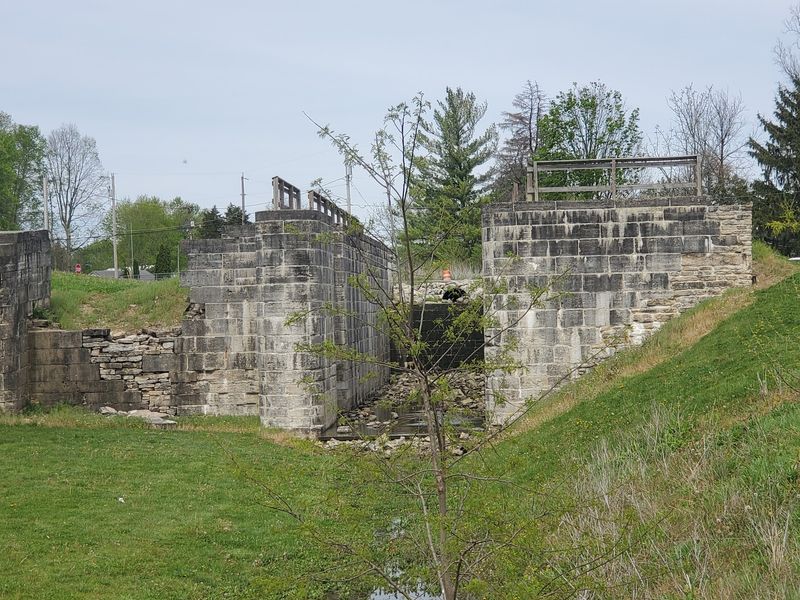
I’m still trying to wrap my head around the engineering packed into a half mile of forgotten waterway. Lockington Locks in Lockington served the Miami and Erie Canal, which once connected Toledo with Cincinnati.
The Lockington flight formed part of the Miami and Erie Canal, which opened for navigation in 1845 between Cincinnati and Toledo.
The surviving lock walls are considered among Ohio’s best-preserved canal engineering remains; Lock 1 was restored in 2014, while four additional visible locks are maintained as historic ruins.
Visitors can also see the former lockmaster’s house, now a private residence, and the remains of a dry-dock basin once used for canal-boat repairs.
The town boomed during canal days, feeding and housing crews who spent hours creeping through the flight of locks. Picture the noise, the mules, and the shouting, then compare it to today’s heavy silence.
Admission is free, and the site stays refreshingly uncrowded. Morning fog settling into the empty chambers makes for unforgettable photos.
Watch your footing near crumbling edges and keep kids close. You can explore the locks along Museum Trail and Cross Trail, where abandoned ambition is carved right into the rock.
7. Viaduct Park, Bedford
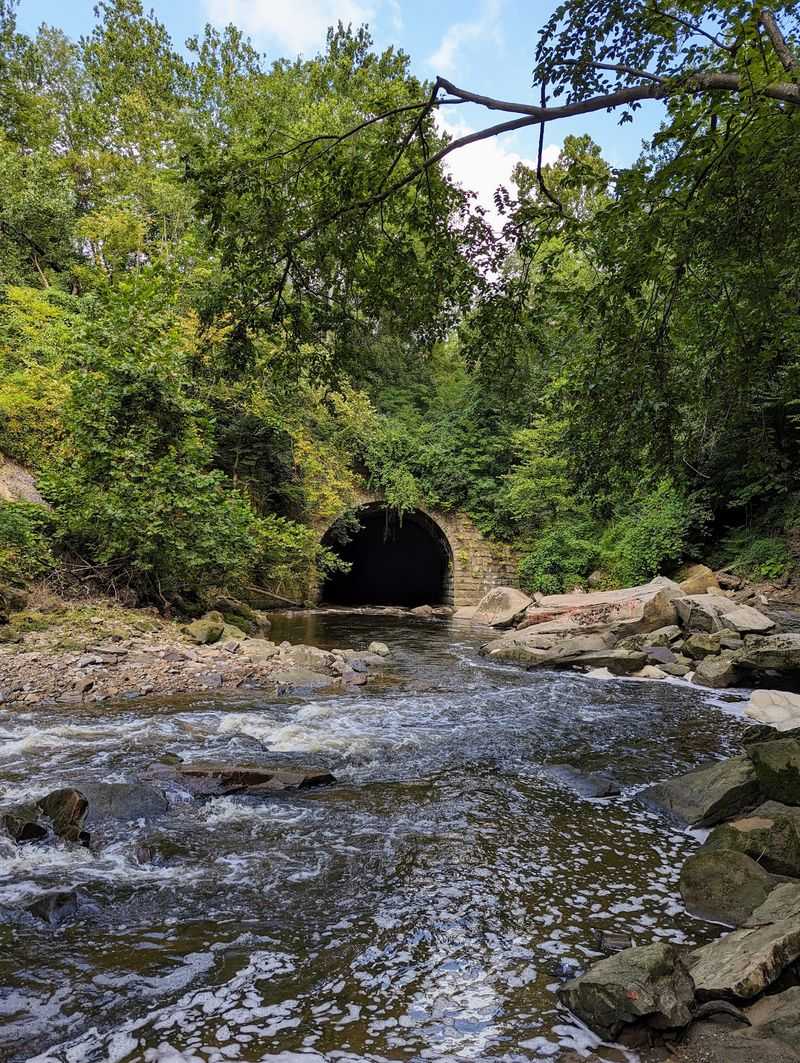
Are you seeing what I’m seeing: a waterfall roaring beneath the bones of an 1860s railroad bridge?
Viaduct Park in Bedford blends industrial leftovers with genuinely gorgeous scenery along Tinker’s Creek.
The centerpiece is the stone Cleveland and Pittsburgh Railroad Viaduct, completed in 1864. Originally about 200 feet long and 100 feet high, it carried four grand arches across the gorge.
A wooden bridge stood here before the stone version arrived. Historical accounts note the Liberty Bell traveled over this viaduct in 1893 while heading toward the Columbia Exposition.
Other remnants lurk nearby, including old grist and saw mills plus an electric power plant that harnessed the Great Falls of Tinker’s Creek. Newer tracks eventually made the viaduct obsolete.
Walking paths and overlooks now lead visitors through the historic industrial landscape and toward views of the Great Falls of Tinker’s Creek.
Paths, overlooks, and interpretive panels explain the mills, railroad structures, and other industrial remains around the falls.
Emerging into the mist beside the cascade makes the shivers worth it. Cleveland Metroparks revitalized and reopened the grounds in 2002, adding overlooks and interpretive panels about Bedford’s industrial roots.
Waterfall flow changes with rainfall and seasonal conditions, while autumn adds fall color to the surrounding gorge. You will find the entrance at 205 Willis Street, where old engineering and rushing water share the spotlight.
8. Vesuvius Furnace Ruins, Pedro
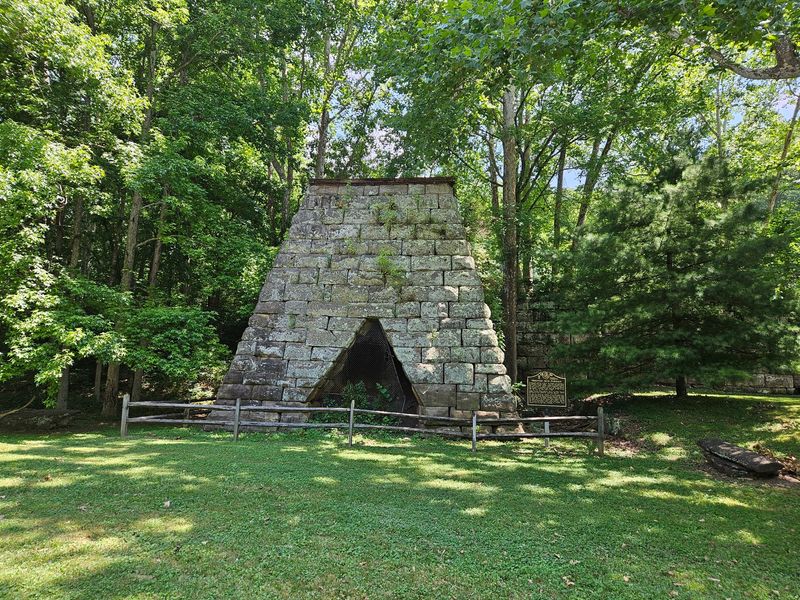
Picture the heat, the sparks, and the constant thunder of a forge swallowing entire forests. Vesuvius Furnace near Pedro anchors that memory in southern Ohio’s Hanging Rock Iron Region.
Built in 1833, Vesuvius Furnace was one of the charcoal iron furnaces that made the Hanging Rock Iron Region a major center of American iron production. The volcanic name hints at the blazing process happening inside those thick stone walls.
No single famous ghost story attaches to the ruin, yet the isolation does plenty of atmospheric work on its own. Vines creep over the masonry, and the arched openings stare out like empty eye sockets.
Crews here kept charcoal fires burning constantly, working long shifts in dangerous heat. Imagine the orange glow flickering across a remote hillside at midnight, the only light for miles.
Standing beside the structure invites real reflection on the lives tied to such punishing labor.
The Hanging Rock Iron Region became one of the country’s major iron-producing areas during the 19th century, leaving furnace ruins such as Vesuvius across southern Ohio.
The surrounding Lake Vesuvius recreation area sweetens the trip with hiking trails, fishing, and shoreline paths. Combining the ruin with a lakeside walk makes for an easy half-day outing.
The furnace stands near the Lake Vesuvius dam off Ellisonville-Paddle Creek Road, with parking and recreation facilities nearby.
9. Moonville Tunnel, Zaleski
Some sites earn their spooky reputation with chilling sincerity.
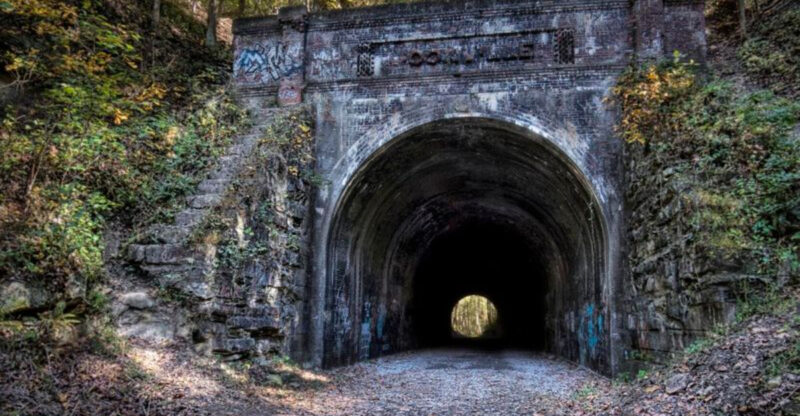
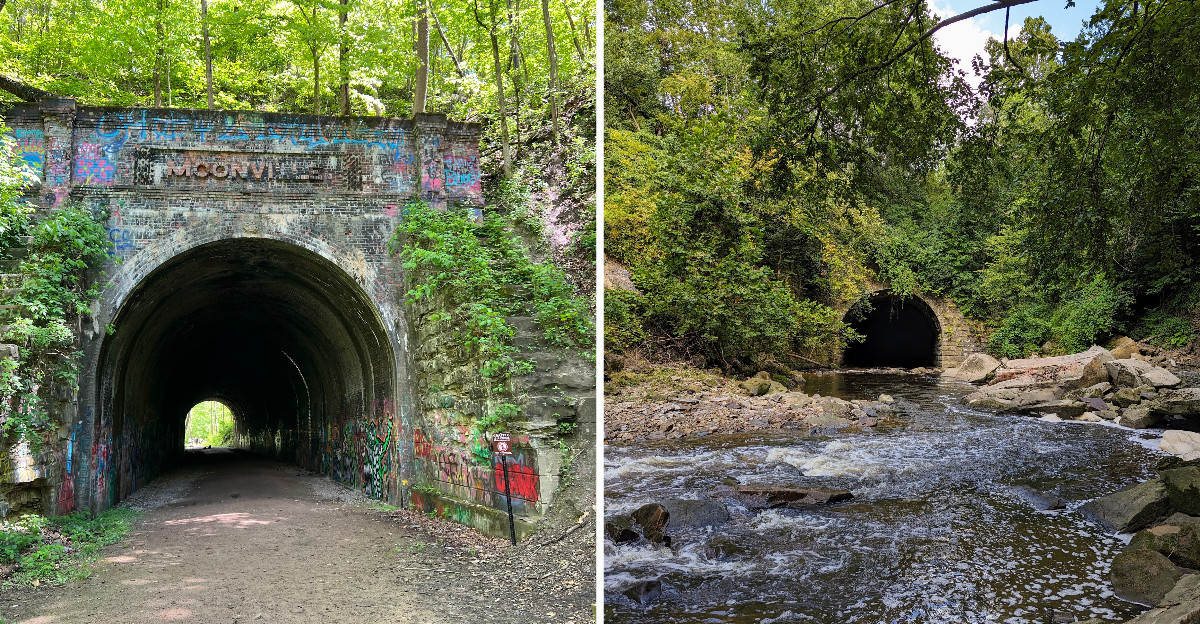
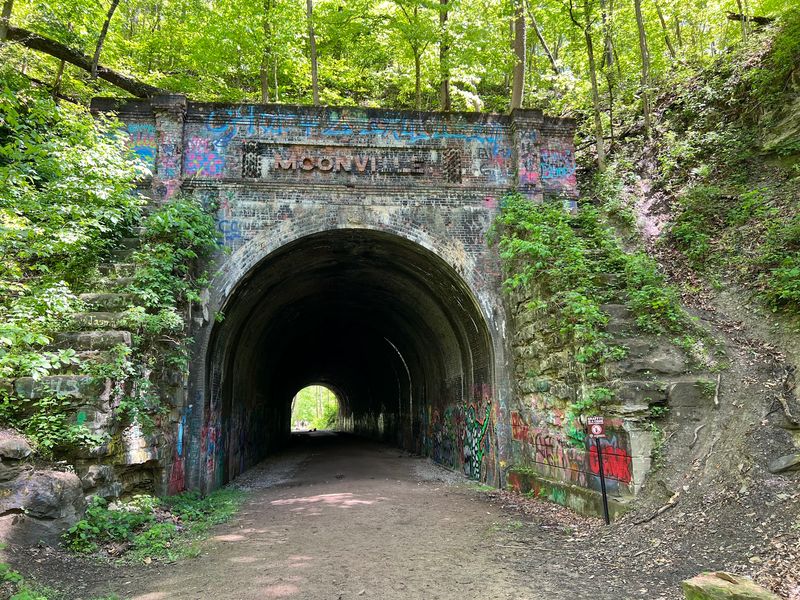
Deep in the forests of southeastern Ohio, Moonville Tunnel has become one of the state’s best-known destinations for railroad history and ghost folklore.
Built along the Marietta and Cincinnati Railroad route in the 1850s, the brick-lined tunnel survives from a small railroad and mining community that gradually disappeared as local industry declined.
The railroad corridor experienced documented train accidents, and those events later became intertwined with Moonville’s extensive ghost folklore.
The most repeated tale involves a brakeman who reportedly still swings his lantern in the darkness.
A railroad signal was installed at Moonville in 1981 for operational safety, but claims that it was installed because engineers repeatedly saw a ghostly lantern are part of later folklore rather than established railroad history.
Moonville’s reputation still inspires organized ghost hikes, while the annual Midnight at Moonville festival in nearby Zaleski celebrates the area’s history and paranormal folklore.
The old rail line now forms a 10-mile rail trail, so hikers get woodland scenery plus folklore in one trip. The surviving brick tunnel and former railroad grade now form historic features along the Moonville Rail Trail.
Reach it via Hope-Moonville Road, and maybe save your walk-through for broad daylight.