This Small California Town Has The Most Stunning Early Fall Foliage In The State
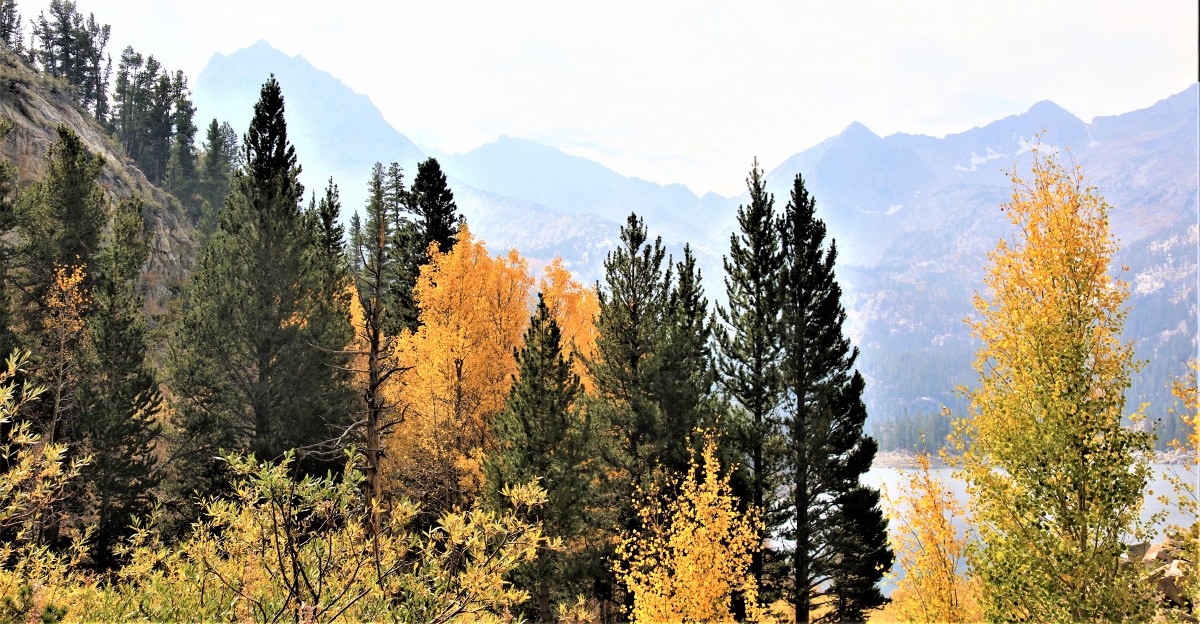
Fall can be impatient in the mountains. While plenty of places are still clinging to summer, one small town is already watching the landscape trade green for gold.
That early arrival gives leaf peepers a tempting excuse to pull out a sweater, grab the car keys, and start paying much closer attention to the trees.
Mountains surrounding the area only make those changing colors harder to ignore.
California may be famous for golden sunshine, but early fall gives one small town a completely different reason to brag about the color.
The transformation does not need flashing signs or elaborate attractions to make an impression.
A quiet road can suddenly become worth slowing down for, and an ordinary morning drive starts demanding far too many stops for photos.
Bishop Creek Canyon Is The Main Event
Head west out of town on Highway 168 and the pavement begins climbing almost immediately into the Sierra Nevada.
The route leads into Bishop Creek Canyon, an area of roughly 30 square miles filled with aspen groves, willow thickets, creek channels and granite ridges.
Visit Bishop points to the canyon as one of the most spectacular fall-color destinations in California, and the reason becomes clear within the first few miles of the drive.
What makes the canyon special is how much variety sits in one drainage.
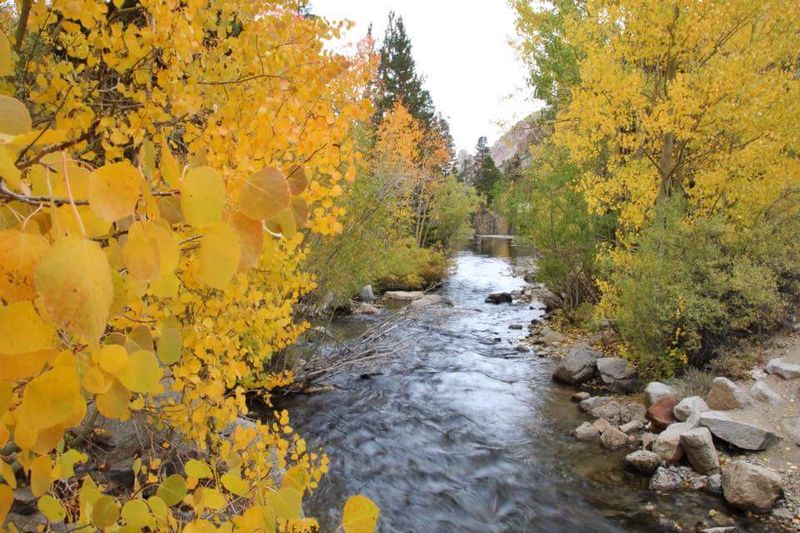
Aspens grow in dense clusters along the creeks and spread up the slopes in ribbons, so color appears in layers rather than in one flat wall of yellow.
Willows fill the lower streamside areas and often shift earlier than the trees around them.
Pacing matters more than distance here. The main road and its side branches cover a modest number of miles, but the elevation gain slows driving considerably, and frequent stops stretch the trip.
Setting aside a full half day allows time to pull over, walk a short distance from the car and actually look around instead of rushing.
Color Can Begin Surprisingly Early Here
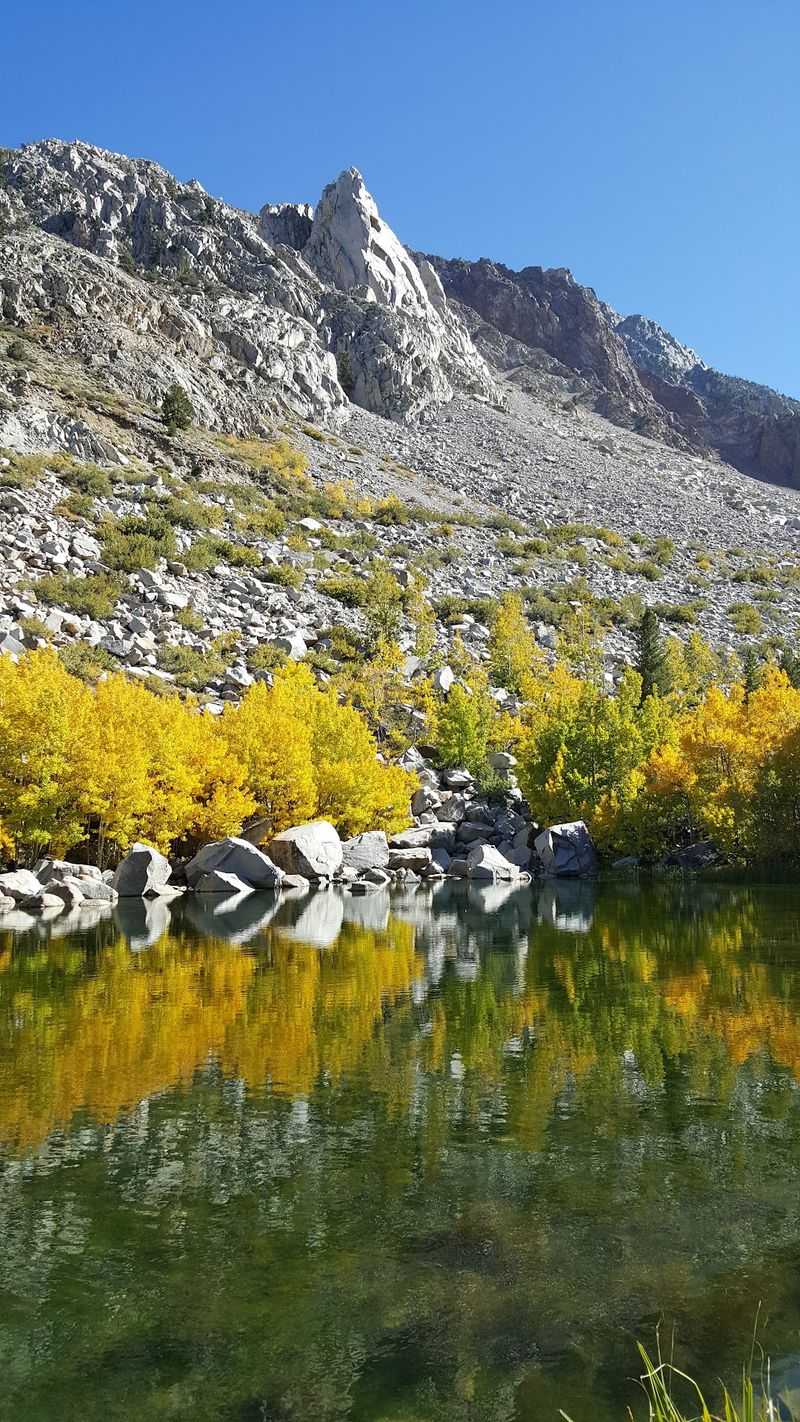
Most people think of fall color as an October event, and in much of the state that holds true. The elevation spread around Bishop changes the math.
Town sits at about 4,150 feet, while the upper lakes reach past 9,700 feet, and cold nights arrive in the high country weeks before they settle into the valley.
Color starts up high and works its way downhill toward the Owens Valley over the following weeks.
Willows are often the first to shift, glowing yellow along creek banks while the aspens nearby still look summer green.
A September visit means aiming high, spending time near the upper lakes where cold air collects, and treating lower stretches of the canyon as a bonus rather than the goal.
Weather plays a role every year, so the exact timing shifts. Warm stretches can slow the change, while an early cold snap can speed things up noticeably.
Checking a current color report before leaving home turns guesswork into a reasonable plan and saves a long drive at the wrong moment.
Lake Sabrina Sits High On The Early Watch List
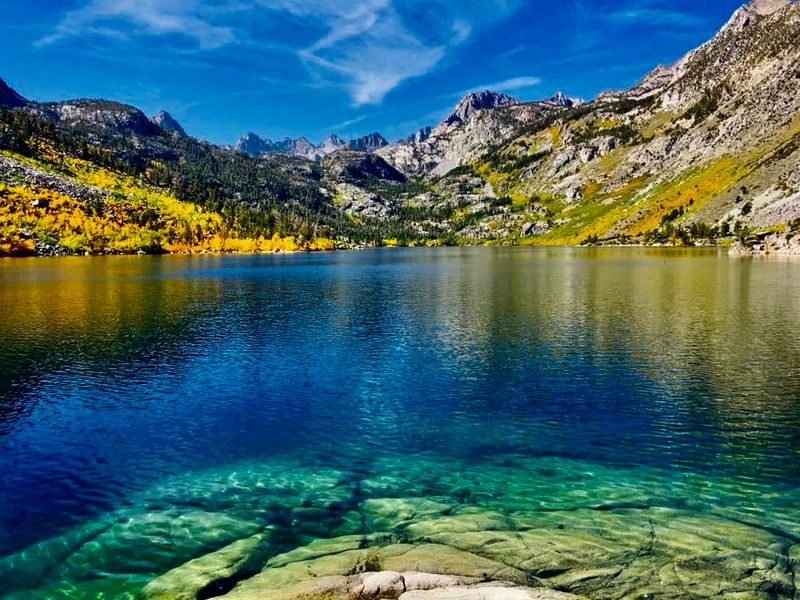
Cold air settles fast around a lake ringed by granite, and that works in favor of anyone chasing early color.
Lake Sabrina rests high in the Sierra Nevada at roughly 9,138 feet, near the end of the main Highway 168 drive.
Aspen groves grow along the approach and around the shoreline area, so golden leaves often appear against deep blue water with rugged peaks rising behind.
The contrast is what people remember. Yellow foliage, dark conifers, gray rock and reflective water all sit in one frame without any hiking required, since the road brings visitors right to the lake area.
Because the lake sits above 9,000 feet, color here frequently arrives ahead of lower spots in the canyon. Mid to late September visits often catch groves turning while the valley below still looks green.
A few practical notes help. Thin air at this elevation makes even short walks feel harder than expected, so slow steps and water are worth remembering, especially for anyone arriving from sea level the same day.
North Lake Delivers The Classic Aspen Shot
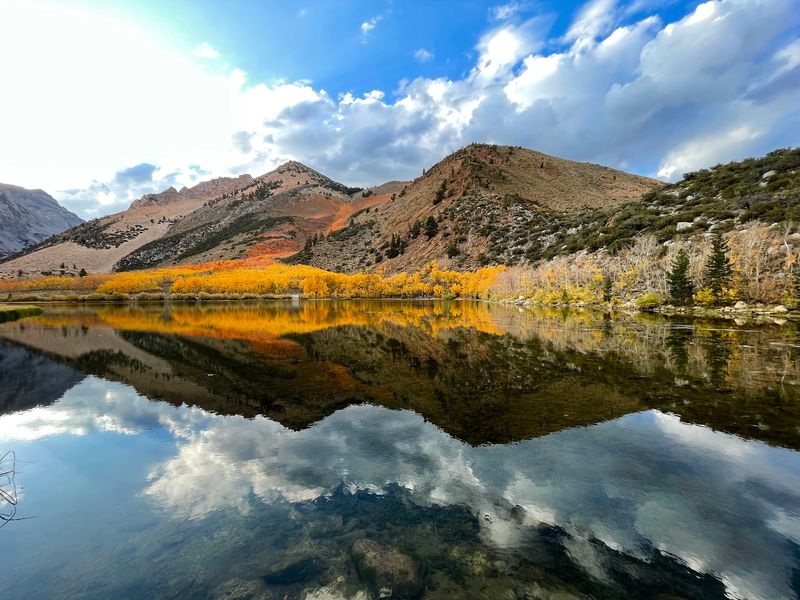
Photographers talk about one spot more than any other in this canyon, and it tends to be North Lake.
Sitting above 9,000 feet, the lake is surrounded by thick aspen groves and steep peaks that rise directly behind the water.
When the leaves turn and the surface goes still, the reflection doubles the color and creates the postcard scene that draws people from across California.
Historically, peak conditions here can arrive before October, often somewhere between mid September and early October, with the brightest displays frequently near the end of September.
Getting there requires a short drive on a narrow dirt road branching off the main highway.
The surface is generally passable for standard cars in dry conditions, though it is rough, dusty and tight in places, so slow speeds and patience help.
Parking space along that road is genuinely small, and it fills quickly during peak color weekends.
Early mornings are calmer for both traffic and wind, which matters because a breeze scatters the reflection.
South Lake Adds Granite Peaks To The Background
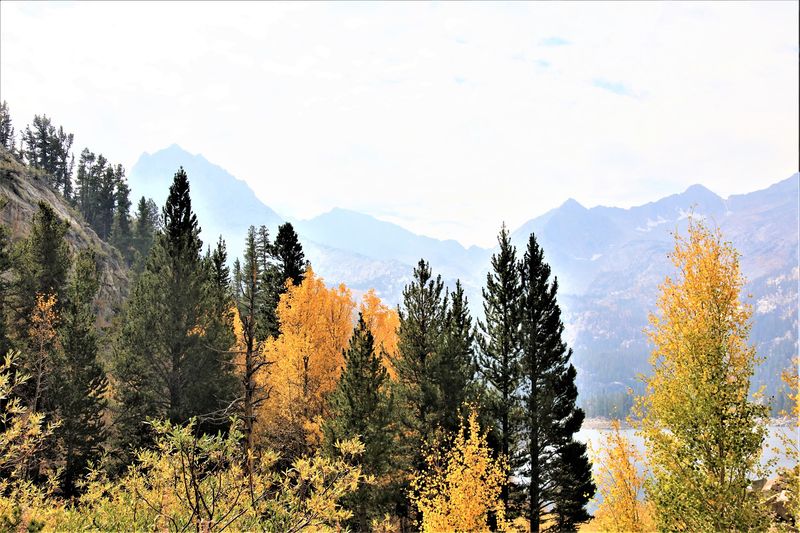
Some views earn attention through sheer scale, and the backdrop here does most of that work.
South Lake sits at roughly 9,768 feet, the highest of the three main lakes reached by paved road in Bishop Creek Canyon.
Foliage around the shoreline commonly turns yellow during the September color season, with touches of orange and red mixed in, all framed by the gray Sierra crest.
The drive out South Lake Road climbs steadily and offers several pullouts with open views down the drainage. Aspen stands appear in patches along the way, so the scenery builds rather than arriving all at once.
Elevation brings real weather. Afternoon clouds can build quickly, temperatures drop fast once the sun drops behind the ridgeline, and wind through the canyon can feel sharp even on sunny days.
A jacket, sturdy shoes and a slower pace make the visit far more comfortable. Anyone sensitive to altitude should plan for shorter walks and frequent breaks rather than pushing uphill.
Because the lake sits at the road’s end, traffic backs up during popular weekends in late September.
No Serious Hiking Required For Big Views
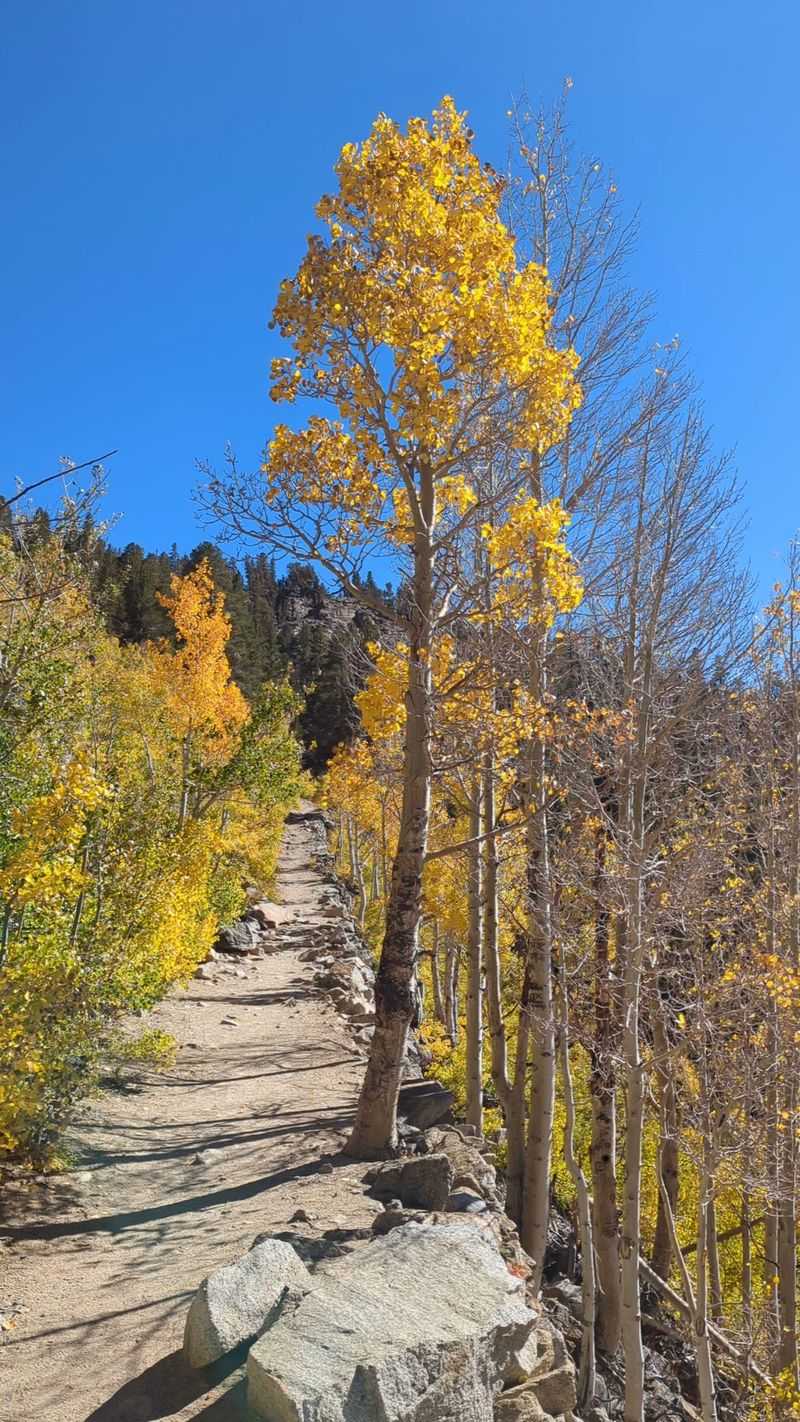
Plenty of fall-color destinations demand a long climb before the scenery pays off, and that is not the case in this canyon.
Paved roads carry visitors deep into Bishop Creek Canyon, with deciduous trees lining the roadsides and aspen groves spreading across nearby slopes.
A driving trip alone can cover a surprising amount of the display, and turnouts along with trailhead parking areas provide closer looks without committing to a real hike.
That accessibility opens the area up to a wide range of travelers. Families with small children, older visitors and anyone adjusting to the altitude can still see the best groves from short distances.
A sensible approach is to drive the main highway first, then pick one or two side roads based on where the color looks strongest that week.
Short strolls of a few hundred feet from a turnout often reveal angles that are invisible from the car seat.
Road shoulders here are narrow in many spots, so pulling fully into a designated turnout matters for safety. Leaving space for other vehicles also keeps traffic moving on the two-lane sections.
Mist Falls Pairs Falling Water With Autumn Leaves
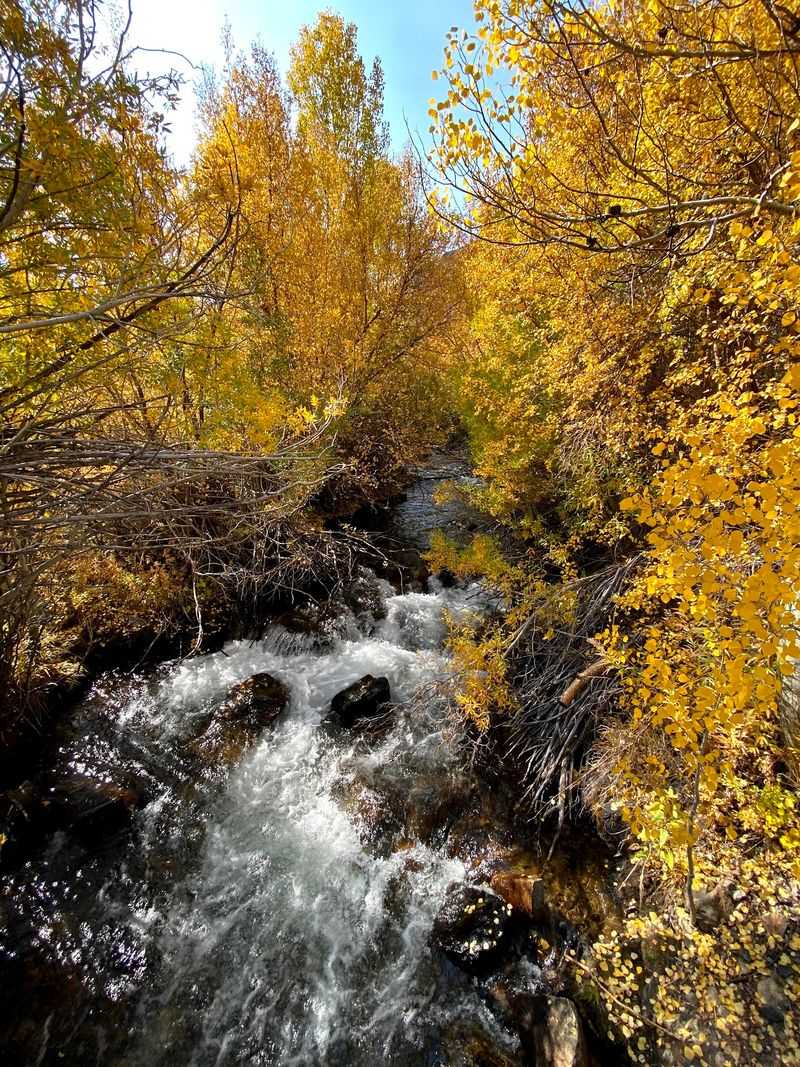
Water adds motion and sound to a scene that is otherwise all color and stillness.
Mist Falls is a spring-fed waterfall in Bishop Creek Canyon, surrounded by aspens that can turn gold, orange and red as the season moves along.
The falls can be seen from the roadside along South Lake Road, making it one of the easiest stops of the day.
Because the water comes from a spring, the flow stays more consistent than a snowmelt stream that thins out by autumn.
The result is a steady ribbon of white cutting through warm foliage on the slope above the road.
Light changes the look considerably. Morning shade keeps the water soft and the leaves saturated, while midday sun can wash out the brighter yellows and create harsh contrast.
Viewing happens from the road corridor, so finding a safe pullout and watching for passing traffic is essential. The shoulder is not wide, and cars move faster than expected on the downhill stretch.
Spray keeps nearby rocks and vegetation damp, which means footing close to the water can be slick. Staying on solid ground and enjoying the view from a short distance is the comfortable choice.
Aspendell Stretches The Color Hunt Longer
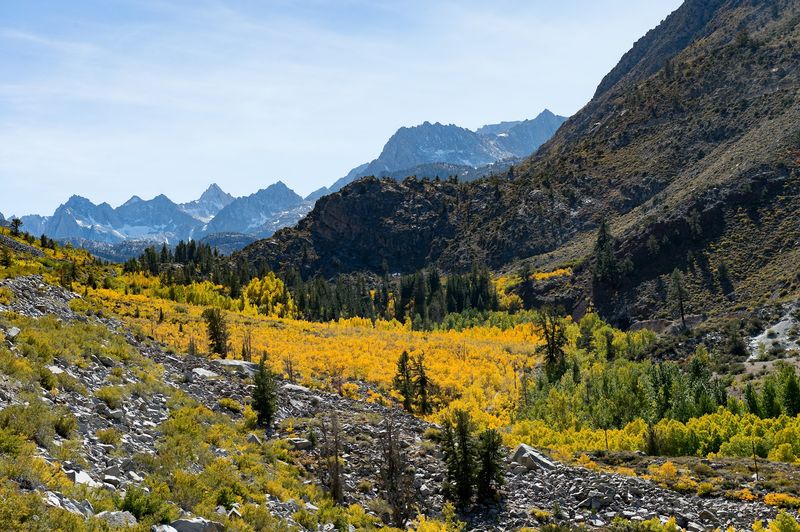
A small cluster of mountain cabins tucked among aspens turns out to be a useful timing tool.
Aspendell sits around 8,400 feet along the Highway 168 corridor in Bishop Creek Canyon, well below the upper lakes but far above town.
Groves surrounding the community do not necessarily change at the same moment as the higher elevations, which helps extend the overall foliage season in the area.
That offset matters for anyone planning a trip. When the highest lakes have already dropped their leaves, the slopes near this elevation can still be holding strong color.
Historical reports back that up. On September 29, 2025, groves above Aspendell were noted among the strongest displays in the canyon, alongside Lake Sabrina and North Lake Road.
Driving through calls for some courtesy, since this is a residential mountain community with narrow roads and private property lining them.
Staying on public roadways and pulling over only where it is clearly allowed keeps the visit respectful.
The area also serves as a natural checkpoint on the drive up or down. A quick look at the trees here gives a reliable sense of how far the color has progressed down the canyon that week.
Owens Valley Eventually Takes Its Turn
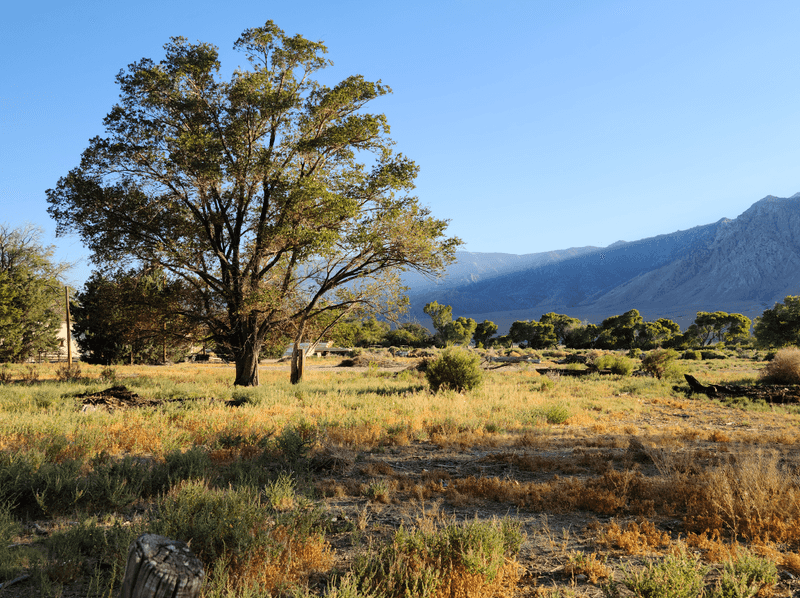
Mountains hold the spotlight in September, then the low country steps forward.
Cottonwood trees around Bishop and throughout the broader Owens Valley typically turn later in the season, once colder conditions settle down onto the valley floor.
That delay stretches the fall-color window for the whole area well past the peak weeks up in the canyon.
The character of the display is different down here. Cottonwoods grow tall and broad, often lining irrigation ditches, ranch roads and creek corridors, so the color spreads across open ground instead of climbing a slope.
For travelers, the valley portion of the season is easy to combine with other plans.
Flat roads, wide views and mild afternoon temperatures make for relaxed driving compared with the steep climb west.
Wind is a regular feature on the valley floor and can pick up in the afternoon.
Morning outings usually feel calmer and offer better light across the open ground and the Sierra wall rising behind it.