Thousands Of Glowing Pumpkins Take Over This California Garden Every Fall
A garden after dark already carries a little mystery.
Fill the paths with glowing pumpkins and enough autumn light to transform familiar greenery, and an evening stroll becomes something entirely different.
Every fall, one garden gets a dramatic seasonal makeover that is far removed from the usual daytime visit.
Once the sun disappears, the displays begin doing the talking, and ordinary pathways suddenly feel like part of a carefully staged October world.
California does not always wait for leaves to change color before putting on a spectacular fall show.
The real fun comes from not knowing what the next turn will reveal. Some moments feel playful, others lean wonderfully eerie, and the darkness makes even small details seem more dramatic.
Thousands Of Hand-Carved Pumpkins

Carving one pumpkin takes patience. Carving thousands takes a team, and that is exactly what fills the trail here each fall.
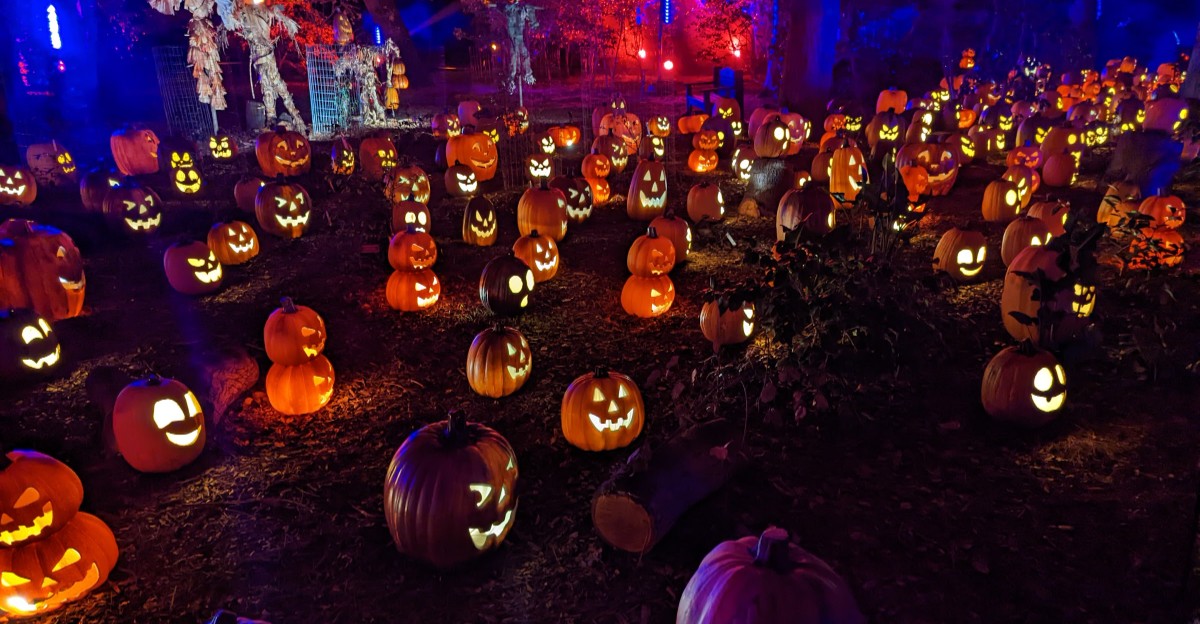
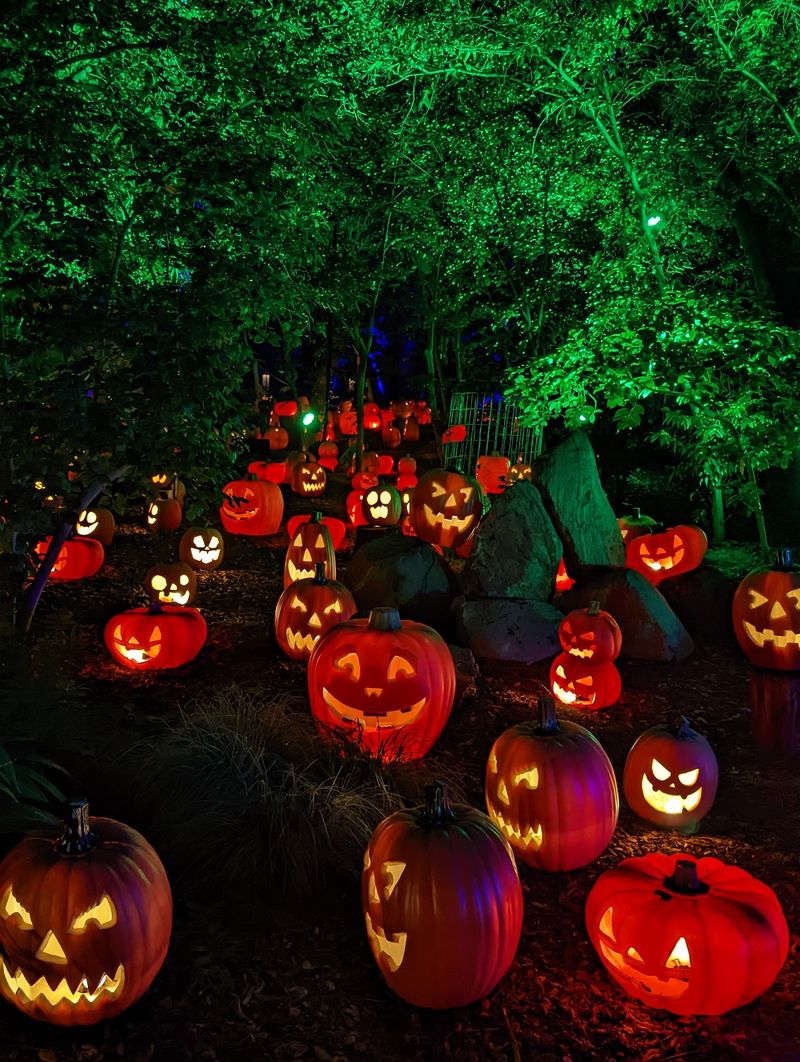
The 2026 edition of Carved features thousands of hand-carved pumpkins placed throughout the route.
Some sit in tidy clusters along the edges of walkways, while others are stacked or grouped into larger arrangements that catch the eye from a distance.
Faces range from classic triangle-eyed grins to far more detailed patterns cut with fine lines and shading.
Looking closely reveals how different each one is, since no two carvers work exactly the same way.
The light itself is worth noticing. Warm glow spills out through cut openings and lands on gravel, mulch, and nearby leaves, which softens the whole setting rather than spotlighting it.
Walking slowly helps here. Many visitors move quickly past the first groupings, then slow down once they realize how much variation there is in the carving work.
Fresh pumpkins do not last forever, so displays are maintained across the run of the event. That means a visit in mid-October and a visit in late October may show slightly different pumpkins in the same spots.
After Dark, The Garden Changes Character
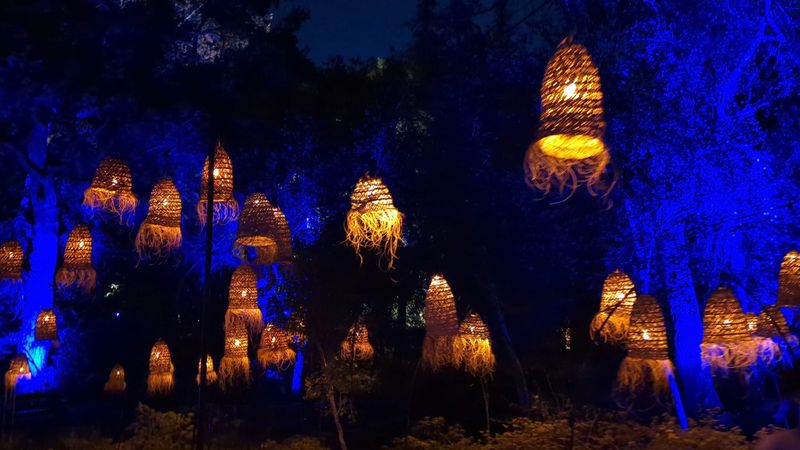
Daytime visits to this garden usually mean camellias, oak shade, and birdsong. Once evening arrives during Carved, the same grounds read completely differently.
Gates for the event open at 6 p.m. and the trail stays open until 10 p.m. each night from October 2 through November 1 in 2026.
Darkness does a lot of the work. Shapes that blend into green foliage during daylight become outlines and shadows, and the carved pumpkins become the brightest thing in view.
Sound shifts too. Crowds tend to speak more softly at night, and the usual daytime garden noise gives way to footsteps and quiet conversation.
The early time slots often feel different from the later ones. Arriving right at 6 p.m. in early October may mean some remaining daylight, while a 8 p.m. arrival delivers full darkness and stronger contrast.
Later slots can also feel calmer as families with younger children head home. Anyone hoping for photographs without many people in frame may prefer the last hour.
Pathway lighting is intentionally low, which is part of the appeal but also worth planning around.
Sturdy shoes and a slow pace make the walk more comfortable, especially where surfaces change from paved to packed decomposed granite.
Following The Mile-Long Trail
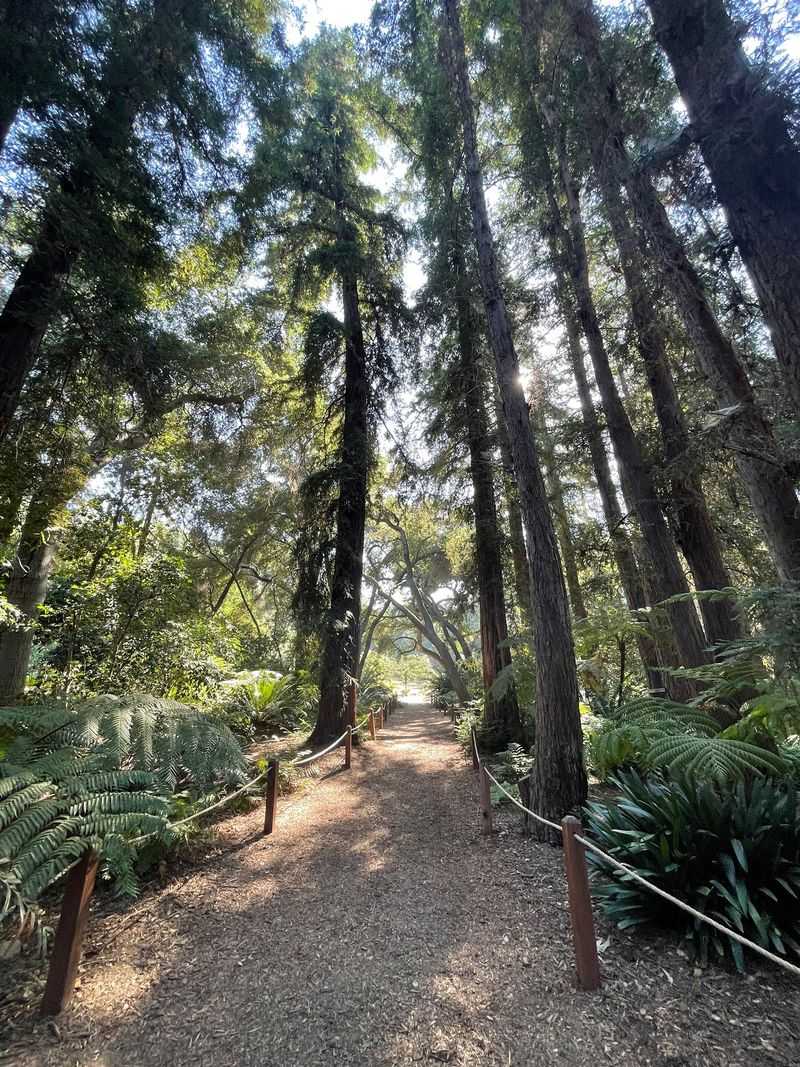
Roughly a mile of walking covers the full Carved route, which sounds short until stopping to look at everything stretches it out.
The path loops through different sections of the garden rather than running in a straight line. Each bend brings a new installation into view, which keeps the pace interesting without requiring a map.
Most people finish the trail in about an hour at a relaxed speed. Groups that pause often for photos may want to allow more time, especially on busier nights.
Surfaces vary along the way. Some stretches are smooth and paved while others are firm garden path material, so wheels and strollers move best where the ground is level.
Benches appear at intervals, which helps anyone who prefers to break the walk into shorter segments. Stopping also gives eyes a moment to adjust between bright displays and darker stretches.
The route is one direction for the most part, which reduces crowding and keeps traffic moving.
Backtracking to revisit a favorite spot is possible in places, though it can feel awkward when foot traffic is heavy.
A practical tip: check the map at the entrance before starting. Knowing roughly where the trail ends helps with pacing energy, especially for families walking with small kids.
Oversized Gourds That Steal Attention

Not every pumpkin on the trail fits in two hands. Some are large enough that a person standing beside one looks small in comparison.
Giant hand-carved pumpkins are a specific part of the Carved experience, separate from the many smaller jack-o’-lanterns. Their size allows for deeper cuts and more layered designs than a standard pumpkin can hold.
Detail is where these stand out. Carvers can work in shading, texture, and portrait-style features because there is simply more surface and thicker walls to carve into.
They tend to serve as stopping points along the route. People naturally gather, look closer, and take photos, which creates small pauses in the flow of foot traffic.
Standing slightly off to the side makes for a better view and avoids blocking the path for others behind. It also gives a cleaner angle for photos without other visitors in the frame.
Growing pumpkins to that size takes months of careful work, which adds to the appreciation once the carving is finished and lit.
Since these are real gourds rather than synthetic props, their condition changes over the season.
Wire Figures Glowing In The Labyrinth
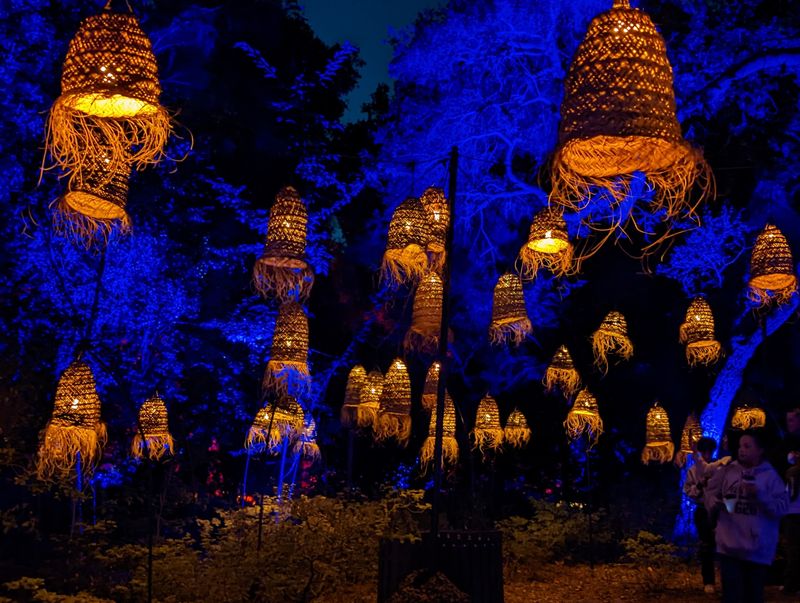
New for 2026, a quieter installation sits inside the garden labyrinth and works in a very different visual language than the pumpkins.
Helsinki-based artist Alexander Reichstein is making his U.S. exhibition debut here with life-size wire figures illuminated by UV light. The forms read as ghostly outlines rather than solid bodies.
UV lighting makes the thin wire appear to float. Edges glow while the space between stays dark, so the figures seem to hover just above the labyrinth paths.
The effect is eerie without being frightening. Nothing moves or makes noise, and the mood feels closer to a gallery piece placed outdoors than a Halloween scare.
Labyrinth layouts naturally slow people down, which suits this section well. Walking the turns gives multiple angles on the same figures, and the shapes change depending on where a viewer stands.
Craftsmanship shows in the line work. Each figure is built from continuous wire that suggests posture, limbs, and gesture using very little material.
Photographs of UV-lit subjects can look unpredictable on phones, so some trial and error helps.
Staying still for a moment and letting the camera settle usually gives a cleaner result than shooting while walking.
Rhizome Finds A New Home In The Oak Grove
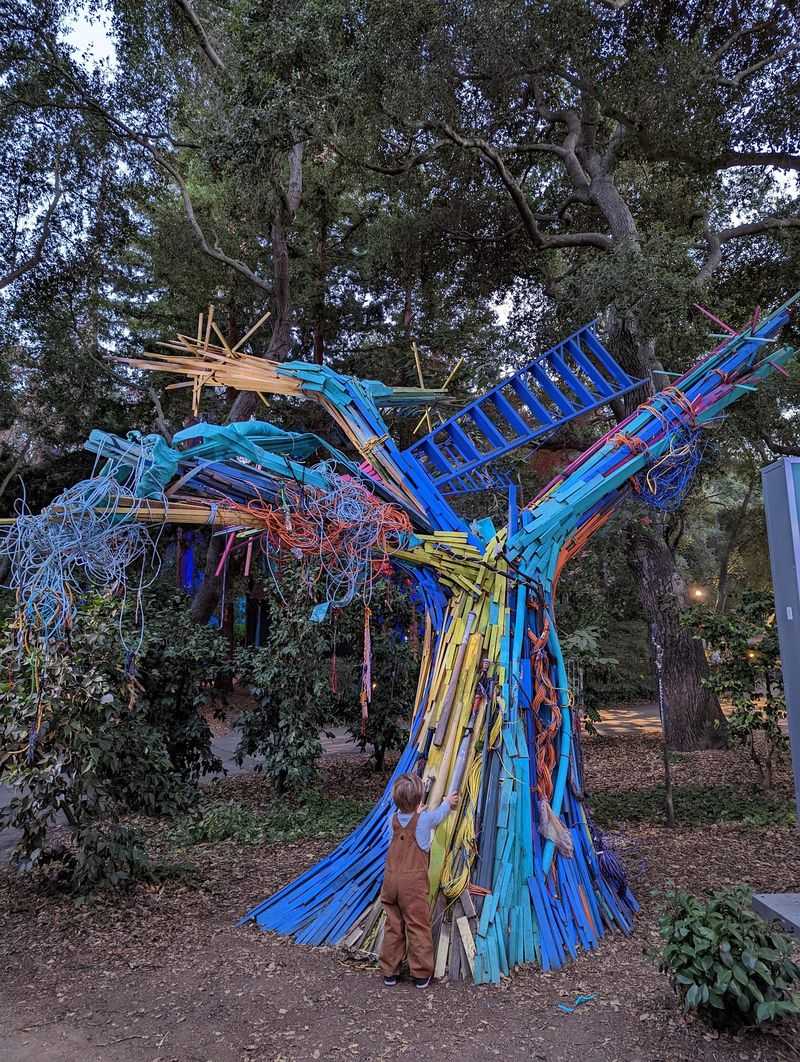
Bright neon lines threaded among centuries-old oaks make for one of the more unexpected pairings on the route.
The colorful Rhizome installation returns for 2026 and moves into the Oak Grove, giving the piece a new backdrop of heavy trunks and low branches.
Glowing ropes trace winding paths through the space. The shapes suggest roots or underground networks, which is where the name comes from in plant biology.
Color is the big shift here. After long stretches of warm orange pumpkin light, the cooler and more saturated tones read as a genuine change of scenery.
Oak bark takes the light in an interesting way. Rough, deeply furrowed surfaces catch the glow unevenly, so the trees themselves become part of the artwork.
Returning visitors who saw Rhizome in a previous location will notice how much the setting changes the feel.
Placement among mature trees makes the lines feel more tangled and organic than an open placement would.
The grove is a good spot to pause. Looking up rather than straight ahead reveals how the light interacts with the canopy, which is easy to miss while focused on the path.
Foot traffic tends to bunch here, so stepping aside before stopping keeps things moving smoothly.
Pumpkin Architecture And Other Surprises

Lining pumpkins along a path is one approach. Building structures out of them is another, and that is where the creativity really shows.
Recent Carved installations have included elaborate creations such as a pumpkin house, along with pumpkin sculptures assembled into larger forms.
Past years have also featured playful scenes like a creature appearing to rise out of a pond, built entirely from gourds. The surprise factor is a big part of the appeal.
Construction like this requires planning. Pumpkins must be arranged so the weight works, the lighting reaches the right places, and the overall silhouette reads clearly from a distance in the dark.
Standing back gives the full shape, while stepping closer reveals the individual carved faces that make up the whole. Both views are worth taking.
Installations change from year to year, so what appears one season may not return the next. Anyone who visited before will likely find at least a few new arrangements.
Kids often respond most strongly to these sections because the scenes tell small stories rather than simply glowing. Pointing out details helps hold interest between larger displays.
Since designs vary by season, checking the event page before a visit gives the clearest picture of what is currently on the trail.
Planning A Comfortable Visit
A little preparation makes the evening go much more smoothly, especially on busier weekend nights.
Descanso Gardens sits at 1418 Descanso Drive, La Canada Flintridge, California 91011, with free parking available on site for visitors.
Capacity is limited, and the garden recommends purchasing Carved tickets in advance. Timed entry is used to manage how many people enter at once, which keeps the trail from getting too congested.
Ticket prices vary by date and time slot, and members often receive discounts along with earlier access. Children aged two and under enter free but still need a ticket.
Hours run nightly from 6 p.m. to 10 p.m. between October 2 and November 1 in 2026. On October 31, a trick-or-treat activity is included with regular Carved admission.
Comfortable closed-toe shoes make sense given the mix of path surfaces and low lighting. Layers help too, since foothill evenings cool down after sunset.
Restrooms are located around the grounds, and seasonal food and drink options are typically offered during the event. Outside picnics are not permitted inside the gardens.
Weeknight slots generally feel less crowded than weekends. Anyone hoping for a slower, quieter walk may want to aim for a Tuesday or Wednesday rather than a Saturday.